Compliance Just Got Easier: Stay ahead of regulatory changes with instant notifications on updates that matter.
['Family and Medical Leave Act (FMLA)']
['Family and Medical Leave Act (FMLA)']
2025-06-24T05:00:00Z
JOIN TODAY TO CONTINUE READING THIS ARTICLE & OTHER INDUSTRY NEWS!
You'll also get exclusive access to:
A database of easy-to-understand regulationsAsk unlimited questions to our expertsPre-led discussions forumsAnd more
TRY IT FREE TODAY
Already have an account? Log in now.

Copyright 2026 J. J. Keller & Associate, Inc. For re-use options please contact copyright@jjkeller.com or call 800-558-5011.
NewsChange NoticesChange NoticeAssociate Benefits & CompensationHR GeneralistFamily and Medical Leave Act (FMLA)WashingtonFamily and Medical Leave Act (FMLA)Associate RelationsEnglishHR ManagementFocus AreaTalent Management & RecruitingHuman Resources
Washington Paid Family and Medical Leave law expanded
2025-06-24T05:00:00Z
Effective date: January 1, 2026
This applies to: Employers with 8 or more employees in Washington
Description of change: On May 20, 2025, Washington Governor Bob Ferguson signed a bill expanding the WA Paid Family and Medical Leave (PFML) law in a variety of ways. The program was funded through the state appropriations budget for the 2025-2027 biennium. The expansion is effective on January 1, 2026.
Employee eligibility
To be eligible for the leave, employees will need to have worked for their employer for at least 180 days before the start of their leave, regardless of how many hours they have worked.
Currently, employees must have worked for their employer for at least 12 months and worked at least 1,250 hours in the year before the start of their leave.
Concurrency
Currently, federal FMLA and WA PFML run concurrently only if the employee chooses to use the WA PFML. Employees may opt to take WA PFML leave after exhausting FMLA leave or to forego WA PFML leave altogether. Also, in some cases, employees may not qualify for leave under the FMLA when they do qualify for leave under the WA PFML.
The amendments indicate that employers may count FMLA leave toward the total amount of leave entitled to job protection under the WA PFML if the employee was eligible for WA PFML but did not apply for and receive it.
To take advantage of this, employers must give employees a written notice within five business days of employees’ initial request for or use of FMLA leave, whichever comes first, and then monthly thereafter for the remainder of the employer’s FMLA 12-month period.
The change reduces the minimum increment of time off from eight consecutive hours to four consecutive hours.
Job protection/reinstatement
More employers will need to provide job protections, based on their size, as follows:
- 25–49 employees: January 1, 2026
- 15–24 employees: January 1, 2027
- 8–14 employees: January 1, 2028
Unless there is a written agreement that says otherwise, employees lose their right to reinstatement unless they exercise it on the earlier of the first scheduled workday after:
- The actual leave period under the FMLA and/or WA PFML or
- 16 weeks (or 18 weeks for incapacity due to pregnancy) of continuous or combined intermittent leave during 52 consecutive calendar weeks.
Employers will need to give employees a new written notice of reinstatement rights when employees take more than two weeks of continuous leave or more than 14 days of intermittent leave. Employers must give the new notice to the employee at least five business days before the return-to-work date. It must include the estimated expiration of the right of employment restoration and the date of the employee’s first scheduled workday after their leave.
Benefit continuation
The new law expands the employer’s requirement to maintain health insurance coverage to any period of leave in the WA PFML Program in which the employee is also entitled to job protection. Currently, employers must continue health insurance coverage during both FMLA and WA PFML leaves only if there is at least one day of overlap between the two types of leave.
View related state info: FMLA - Washington


NewsChange NoticesChange NoticeAssociate Benefits & CompensationHR GeneralistFamily and Medical Leave Act (FMLA)WashingtonFamily and Medical Leave Act (FMLA)Associate RelationsEnglishHR ManagementFocus AreaTalent Management & RecruitingHuman Resources
Washington Paid Family and Medical Leave law expanded
2025-06-24T05:00:00Z
Effective date: January 1, 2026
This applies to: Employers with 8 or more employees in Washington
Description of change: On May 20, 2025, Washington Governor Bob Ferguson signed a bill expanding the WA Paid Family and Medical Leave (PFML) law in a variety of ways. The program was funded through the state appropriations budget for the 2025-2027 biennium. The expansion is effective on January 1, 2026.
Employee eligibility
To be eligible for the leave, employees will need to have worked for their employer for at least 180 days before the start of their leave, regardless of how many hours they have worked.
Currently, employees must have worked for their employer for at least 12 months and worked at least 1,250 hours in the year before the start of their leave.
Concurrency
Currently, federal FMLA and WA PFML run concurrently only if the employee chooses to use the WA PFML. Employees may opt to take WA PFML leave after exhausting FMLA leave or to forego WA PFML leave altogether. Also, in some cases, employees may not qualify for leave under the FMLA when they do qualify for leave under the WA PFML.
The amendments indicate that employers may count FMLA leave toward the total amount of leave entitled to job protection under the WA PFML if the employee was eligible for WA PFML but did not apply for and receive it.
To take advantage of this, employers must give employees a written notice within five business days of employees’ initial request for or use of FMLA leave, whichever comes first, and then monthly thereafter for the remainder of the employer’s FMLA 12-month period.
The change reduces the minimum increment of time off from eight consecutive hours to four consecutive hours.
Job protection/reinstatement
More employers will need to provide job protections, based on their size, as follows:
- 25–49 employees: January 1, 2026
- 15–24 employees: January 1, 2027
- 8–14 employees: January 1, 2028
Unless there is a written agreement that says otherwise, employees lose their right to reinstatement unless they exercise it on the earlier of the first scheduled workday after:
- The actual leave period under the FMLA and/or WA PFML or
- 16 weeks (or 18 weeks for incapacity due to pregnancy) of continuous or combined intermittent leave during 52 consecutive calendar weeks.
Employers will need to give employees a new written notice of reinstatement rights when employees take more than two weeks of continuous leave or more than 14 days of intermittent leave. Employers must give the new notice to the employee at least five business days before the return-to-work date. It must include the estimated expiration of the right of employment restoration and the date of the employee’s first scheduled workday after their leave.
Benefit continuation
The new law expands the employer’s requirement to maintain health insurance coverage to any period of leave in the WA PFML Program in which the employee is also entitled to job protection. Currently, employers must continue health insurance coverage during both FMLA and WA PFML leaves only if there is at least one day of overlap between the two types of leave.
View related state info: FMLA - Washington


See More
RELATED NEWS




Specialized Industries
Go beyond the regulations! Visit the Institute for in-depth guidance on a wide range of compliance subjects in safety and health, transportation, environment, and human resources.
J. J. Keller® COMPLIANCE NETWORK is a premier online safety and compliance community, offering members exclusive access to timely regulatory content in workplace safety (OSHA), transportation (DOT), environment (EPA), and human resources (DOL).

Interact With Our Compliance Experts
Puzzled by a regulatory question or issue? Let our renowned experts provide the answers and get your business on track to full compliance!

Upcoming Events
Reference the Compliance Network Safety Calendar to keep track of upcoming safety and compliance events. Browse by industry or search by keyword to see relevant dates and observances, including national safety months, compliance deadlines, and more.

SAFETY & COMPLIANCE NEWS
Keep up with the latest regulatory developments from OSHA, DOT, EPA, DOL, and more.



REGSENSE® REGULATORY REFERENCE
Explore a comprehensive database of word-for-word regulations on a wide range of compliance topics, with simplified explanations and best practices advice from our experts.

THE J. J. KELLER INSTITUTE
The Institute is your destination for in-depth content on 120+ compliance subjects. Discover articles, videos, and interactive exercises that will strengthen your understanding of regulatory concepts relevant to your business.



ADD HAZMAT, ENVIRONMENTAL, & HR RESOURCES
Unlock exclusive content offering expert insights into hazmat, environmental, and human resources compliance with a COMPLIANCE NETWORK EDGE membership.

DIRECT ACCESS TO COMPLIANCE EXPERTS
Struggling with a compliance challenge? Get the solution from our in-house team of experts! You can submit a question to our experts by email, set up a phone or video call, or request a detailed research report.



EVENTS
Register to attend live online events hosted by our experts. These webcasts and virtual conferences feature engaging discussions on important compliance topics in a casual, knowledge-sharing environment.
Most Recent Highlights In Environmental
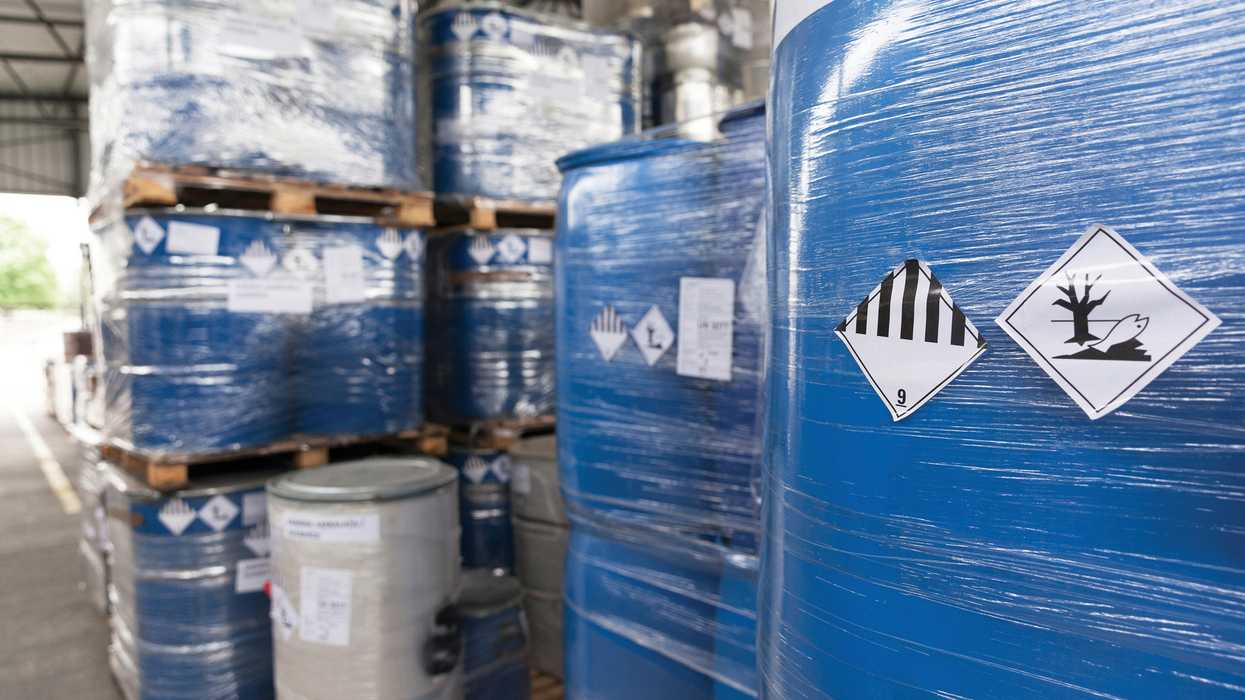
NewsHazardous WasteWaste GeneratorsWaste ManifestsWaste/HazWasteWasteEnvironmental Protection Agency (EPA)In-Depth ArticleEnglishIndustry NewsWaste ReportingWasteTSD FacilitiesWaste ManagementEnvironmentalFocus AreaUSA
2026-06-15T05:00:00Z
Hazardous waste manifest S Codes: What storage and transfer facilities need to know
Have you cracked the “S Code” yet? Starting in 2027, facilities that receive regulated waste for temporary storage and disposal must use S Codes on hazardous waste manifests. If your facility hasn’t made the switch, now’s the time!
Under the Resource Conservation and Recovery Act (RCRA), the Environmental Protection Agency (EPA) requires hazardous waste handlers to track shipments of regulated waste from the generating facility to final treatment, recycling, or disposal. Management Method Codes are key to hazardous waste manifests, and they also affect biennial reporting. The codes answer the vital question, “How’s the hazardous waste managed?"
Effective January 1, 2027, “S Codes” will officially replace Management MethodH141 for Storage and Transfer. EPA adopted these codes to improve the accuracy and transparency of waste tracking, specifically for wastes that travel through transfer facilities before final management. Use this overview to help your facility understand how to comply.
What are S Codes?
In January 2025, EPA added S Codes to the list of Management Method Codes, which identify the type of waste management system used to treat, recover, or dispose of a hazardous waste. Management Method Codes are used for:
- The Uniform Hazardous Waste Manifest (EPA Form 8700-22) and Continuation Sheet (EPA Form 8700-22A); and
- The National Biennial RCRA Hazardous Waste Report (EPA Form 8700-13 A/B), known as the Biennial Report.
S Codes apply to receiving facilities (primarily treatment, storage, and disposal facilities (TSDFs)) that temporarily store and then transfer regulated hazardous waste to another receiving facility without treating, recovering, or disposing of the waste. EPA established S Codes to provide more details than code H141 on waste handling activities, improving tracking and transparency. S Codes indicate two things:
- A hazardous waste was received to be stored or transferred; and
- The hazardous waste will be managed later by the final receiving facility using a certain method (i.e., the final management method).
EPA groups S Codes into three categories:
- Transfer off-site for reclamation and recovery,
- Transfer off-site for destruction or treatment prior to disposal, and
- Transfer off-site for disposal.
Each S Code corresponds to a specific final management method. Examples include metals recovery (S010), chemical treatment (S070), and landfilling (S132).
What’s required?
On January 1, 2027, EPA will remove Management Method Code H141 for Storage and Transfer from the e-Manifest and the Biennial Report forms. As a result, hazardous waste handlers must use S Codes instead of code H141 on manifests and the Biennial Report.
S Codes apply to RCRA hazardous waste that’s transferred off-site, impacting:
- Receiving facilities that store and transfer hazardous waste;
- Permitted TSDFs that receive hazardous waste solely for temporary storage and transfer (i.e., it’s the facility’s only management type); and
- Large quantity generators (LQGs) that report wastes shipped to transfer facilities on the Biennial Report.
Hazardous waste manifests
The first receiving TSDF is responsible for choosing and entering the S Codes on manifests. The storage and transfer facility must:
- Identify the S code that best describes how the hazardous waste will be managed by the final receiving facility, and
- Enter the S Code in Item 19 on the manifest and in Item 36 on the continuation sheet (if used).
Generators aren’t responsible for selecting or entering S Codes.
Biennial Reports
LQGs and TSDFs must use S Codes for the Biennial Report on the:
- Waste Generation and Management (GM) Form in Item 3, and
- Waste Received From Off-site (WR) Form in Item F.
LQGs use S Codes on the GM Form for shipments of hazardous waste off-site to a transfer facility for temporary storage and transfer.
TSDFs that receive hazardous waste for temporary storage and transfer off-site use S Codes on the WR Form. These TSDFs must also use Source Code G61 on the GM Form to report shipments of these transferred wastes.
How can facilities prepare?
Help your facility achieve a smooth shift to S Codes by January 1, 2027, with these tips:
- Identify where your facility currently uses code H141.
- Develop a process for transitioning to S Codes exclusively. Consider any changes your facility may need to make to its operations, such as updating software, adjusting procedures, and revising internal guidance documents.
- Train your employees accordingly.
- Set a deadline for making the switch to S Codes. Aim for a date well ahead of January 1, 2027, to give your facility enough time to address any issues that arise.
Key to remember: Starting in 2027, storage and transfer facilities must use S Codes in place of Management Method Code H141 on RCRA hazardous waste manifests and Biennial Reports.
NewsHazardous WasteWaste GeneratorsWaste ManifestsWaste/HazWasteWasteEnvironmental Protection Agency (EPA)In-Depth ArticleEnglishIndustry NewsWaste ReportingWasteTSD FacilitiesWaste ManagementEnvironmentalFocus AreaUSA
2026-06-15T05:00:00Z
Hazardous waste manifest S Codes: What storage and transfer facilities need to know
Have you cracked the “S Code” yet? Starting in 2027, facilities that receive regulated waste for temporary storage and disposal must use S Codes on hazardous waste manifests. If your facility hasn’t made the switch, now’s the time!
Under the Resource Conservation and Recovery Act (RCRA), the Environmental Protection Agency (EPA) requires hazardous waste handlers to track shipments of regulated waste from the generating facility to final treatment, recycling, or disposal. Management Method Codes are key to hazardous waste manifests, and they also affect biennial reporting. The codes answer the vital question, “How’s the hazardous waste managed?"
Effective January 1, 2027, “S Codes” will officially replace code H141 for Storage and Transfer. EPA adopted these codes to improve the accuracy and transparency of waste tracking, specifically for wastes that travel through transfer facilities before final management. Use this overview to help your facility understand how to comply.
What are S Codes?
In January 2025, EPA added S Codes to the list of Management Method Codes, which identify the type of waste management system used to treat, recover, or dispose of a hazardous waste. Management Method Codes are used for:
- The Uniform Hazardous Waste Manifest (EPA Form 8700-22) and Continuation Sheet (EPA Form 8700-22A); and
- The National Biennial RCRA Hazardous Waste Report (EPA Form 8700-13 A/B), known as the Biennial Report.
S Codes apply to receiving facilities (primarily treatment, storage, and disposal facilities (TSDFs)) that temporarily store and then transfer regulated hazardous waste to another receiving facility without treating, recovering, or disposing of the waste. EPA established S Codes to provide more details than code H141 on waste handling activities, improving tracking and transparency. S Codes indicate two things:
- A hazardous waste was received to be stored or transferred; and
- The hazardous waste will be managed later by the final receiving facility using a certain method (i.e., the final management method).
EPA groups S Codes into three categories:
- Transfer off-site for reclamation and recovery,
- Transfer off-site for destruction or treatment prior to disposal, and
- Transfer off-site for disposal.
Each S Code corresponds to a specific final management method. Examples of these methods include metals recovery (S010), chemical treatment (S070), and landfilling (S132).
What’s required?
On January 1, 2027, EPA will remove Management Method Code H141 for Storage and Transfer from the e-Manifest and the Biennial Report forms. As a result, hazardous waste handlers must use S Codes instead of code H141 on manifests and the Biennial Report.
S Codes apply to RCRA hazardous waste that’s transferred off-site, impacting:
- Receiving facilities that store and transfer hazardous waste;
- Permitted TSDFs that receive hazardous waste solely for temporary storage and transfer (i.e., it’s the facility’s only management type); and
- Large quantity generators (LQGs) that report wastes shipped to transfer facilities on the Biennial Report.
Hazardous waste manifests
The first receiving TSDF is responsible for choosing and entering the S Codes on manifests. The storage and transfer facility must:
- Identify the S code that best describes how the hazardous waste will be managed by the final receiving facility, and
- Enter the S Code in Item 19 on the manifest and in Item 36 on the continuation sheet (if used).
Generators aren’t responsible for selecting or entering S Codes.
Biennial Reports
LQGs and TSDFs must use S Codes for the Biennial Report on the:
- Waste Generation and Management (GM) Form in Item 3, and
- Waste Received From Off-site (WR) Form in Item F.
LQGs use S Codes on the GM Form for shipments of hazardous waste off-site to a transfer facility for temporary storage and transfer.
TSDFs that receive hazardous waste for temporary storage and transfer off-site use S Codes on the WR Form. These TSDFs must also use Source Code G61 on the GM Form to report shipments of these transferred wastes.
How can facilities prepare?
Help your facility achieve a smooth shift to S Codes by January 1, 2027, with these tips:
- Identify where your facility currently uses code H141.
- Develop a process for transitioning to S Codes exclusively. Consider any changes your facility may need to make to its operations, such as updating software, adjusting procedures, and revising internal guidance documents.
- Train your employees accordingly.
- Set a deadline for making the switch to S Codes. Aim for a date well ahead of January 1, 2027, to give your facility enough time to address any issues that arise.
Key to remember: Starting in 2027, storage and transfer facilities must use S Codes in place of code H141 on RCRA hazardous waste manifests and Biennial Reports.

NewsGreenhouse GasesToxic Substances Control Act - EPAToxic Subtances Control Act - EPATSCA ComplianceMonthly Roundup VideoCAA ComplianceUSAHazard CommunicationEnglishIndustry NewsSafety & HealthConstruction SafetyGeneral Industry SafetyMaritime SafetyEnvironmentalFocus AreaHazard CommunicationAir ProgramsVideo
EHS Monthly Round Up - May 2026
In this May 2026 roundup video, we’ll review the most impactful environmental health and safety news.
Hi everyone! Welcome to the monthly news roundup video, where we’ll review the most impactful environmental health and safety news. Let’s take a look at what happened over the past month.
The first compliance date for the revised HazCom standard took effect May 19. Employers who work with chemical substances that are aerosols, desensitized explosives, or flammable gases should start to see updated safety data sheets and labels. On a related note, OSHA revised its HazCom directive for inspectors. It instructs OSHA officers on how to conduct inspections and issue citations under the standard. However, it also provides chemical manufacturers, importers, distributors, and employers with insight into what officers will be assessing.
OSHA revoked a standard that prohibited open fires and fires in drums or similar containers in marine terminals. The agency stated that since this is no longer typical practice, removing the standard would lessen the compliance burden without compromising worker safety.
OSHA received the backing of an advisory committee as it advances a comprehensive Tree Care Operations proposal. During the Advisory Committee on Construction Safety and Health meeting, the group unanimously voted in favor of moving ahead. This clears the path for OSHA to publish its long-awaited proposal.
Turning to environmental news, EPA extended the submission date for the TSCA Section 8(d) Health and Safety Data Reporting Rule one-time report from May 22, 2026, to May 21, 2027.
EPA published the first round of expiring confidential business information claims for information submitted under TSCA. The list covers claims that expire from June 22 to July 31, 2026. Businesses must submit extension requests to keep the information protected.
EPA postponed the effective compliance date for trichloroethylene users with TSCA Section 6(g) exemptions until pending judicial review is concluded. The agency has yet to establish a new compliance date.
And finally, EPA revised HFC use restrictions for certain subsectors. This applies to entities that are subject to the 2023 Technology Transition Rule requirements. The agency also proposed a rule that would exempt transportation refrigeration units from leak repair requirements regardless of charge size.
Thanks for tuning in to the monthly news roundup. We’ll see you next month!

NewsGreenhouse GasesEnforcement and Audits - OSHAMonthly Roundup VideoWalking Working SurfacesCAA ComplianceUSAInjury and Illness RecordkeepingLaddersEnglishIndustry NewsEnforcement and Audits - OSHAOSHA InspectionsSafety & HealthInjury and Illness Recording CriteriaGeneral Industry SafetyEnvironmentalFocus AreaAir ProgramsVideo
EHS Monthly Round Up - February 2026
In this Februrary 2026 roundup video, we'll discuss the most impactful environmental health and safety news.
Hi everyone! Welcome to the monthly news roundup video, where we’ll review the most impactful environmental health and safety news. Let’s take a look at what happened over the past month.
Fatal work injuries fell 4 percent in 2024, largely due to a decline in workplace drug- and alcohol-related overdoses. According to the Bureau of Labor Statistics, overdose fatalities fell from 512 in 2023 to 410 in 2024. Across all types of workplace incidents, there were 5,070 fatal work injuries in 2024, compared to 5,283 in 2023. Transportation incidents continue to be the most frequent type of fatal event, accounting for over 38 percent of all occupational fatalities in 2024.
OSHA is fast-tracking a proposal to remove the 2036 obligation to upgrade fall protection systems on fixed ladders that extend over 24 feet. This follows an industry petition from major chemical and petroleum industry groups, which argue the provision is unjustified, costly, and not supported by the rulemaking record. OSHA frames the upcoming proposed action as deregulatory, allowing employers to update fixed ladders at the end of their service lives. We’ll provide updates as more information becomes available.
As OSHA leans into “deregulatory” actions, lawmakers are moving to pressure the agency to issue “regulatory” rulemaking to protect American workers. The latest legislative wave of bills aims to fill regulatory gaps, tackle emerging hazards, expand OSHA authority, and raise penalties. Topics addressed by these bills include musculoskeletal disorders, heat stress, infectious diseases, wildfire smoke, and workplace violence.
In a recently issued letter of interpretation, OSHA states that a burn injury caused by a personal lithium-ion battery fire is work related if it occurs in the workplace during assigned working hours. The letter details an incident where an employee was burned when their rechargeable lithium-ion batteries for e-cigarettes sparked a fire after coming into contact with a key used for work.
A new report from the Department of Labor Office of Inspector General concludes that OSHA struggles to meet its mission, particularly in high-risk industries like healthcare, construction, and manufacturing. Several pages point to OSHA’s difficulties in effectively enforcing annual injury and illness reporting requirements, reaching the nation’s high-risk worksites for inspection, and addressing workplace violence by regulatory or other action.
Turning to environmental news, EPA extended the deadlines for Facility Evaluation Reports and related requirements for coal combustion residuals facilities. In most instances, the deadlines have been moved one or two years out.
And finally, EPA announced a final rule eliminating the 2009 Endangerment Finding and related greenhouse gas emission requirements for on-highway vehicles and vehicle engines. When the final rule takes effect, manufacturers and importers of new motor vehicles and motor vehicle engines will no longer have to measure, report, certify, or comply with federal greenhouse gas emission standards.
Thanks for tuning in to the monthly news roundup. We’ll see you next month!

NewsWaste ManifestsEnforcement and Audits - OSHAWaste/HazWasteWater ProgramsMonthly Roundup VideoCAA ComplianceUSACWA ComplianceStormwaterEnglishAir ProgramsIndustry NewsEnforcement and Audits - OSHAMunicipal WastewaterSafety & HealthGeneral Industry SafetyWasteEnvironmentalFocus AreaAir ProgramsVideo
EHS Monthly Round Up - March 2026
In this March 2026 roundup video, we'll review the most impactful environmental health and safety news.
Hi everyone! Welcome to the monthly news roundup video, where we’ll review the most impactful environmental health and safety news. Let’s take a look at what happened over the past month.
OSHA released an updated Job Safety and Health poster. Employers can use either the revised version or the older one, but the poster must be displayed in a conspicuous place where workers can easily see it.
OSHA recently removed a link from its Data topic webpage that displayed a list of “high-penalty cases” at or over $40,000 since 2015. The agency says it discontinued and removed it in December. The data is frozen and archived elsewhere.
OSHA published two new resources as part of its newly launched Safety Champions Program. The fact sheet provides an overview of how the program works, eligibility criteria, and key benefits. The step-by-step guide helps businesses navigate the core elements of OSHA’s Recommended Practices for Safety and Health Programs.
Several forces are nudging OSHA to address a number of workplace hazards and high-hazard industries. This comes from other agencies, safety organizations, watchdogs, legislative proposals, and persistent injury/fatality data. Among the hazards are combustible dust; first aid; personal protective equipment; and workplace violence. How all this translates into new regulations, guidance, programmed inspections, or other initiatives remains to be seen.
Turning to environmental news, EPA issued a proposed rule to require waste handlers to use electronic manifests to track all RCRA hazardous waste shipments. Stakeholders have until May 4 to comment on the proposal.
On March 10, EPA finalized stronger emission limits for new and existing large municipal waste combustors and made other changes to related standards.
And finally, EPA temporarily extended coverage under the 2021 Multi-Sector General Permit for industrial stormwater discharges until the agency issues a new general permit. The permit expired February 28 and remains in effect for facilities previously covered. EPA won’t take enforcement action against new facilities for unpermitted stormwater discharges if the facilities meet specific conditions.
Thanks for tuning in to the monthly news roundup. We’ll see you next month!
Most Recent Highlights In Transportation

NewsGreenhouse GasesWaste/HazWasteToxic Substances Control Act - EPASafe Drinking WaterWater AnalysisWater ProgramsWater QualityMaximum Contaminant LevelsWalking Working SurfacesMonthly Roundup VideoCAA ComplianceSolid WasteCWA ComplianceLaddersEnglishUSAHeat StressIndustry NewsHeat and Cold ExposureSafety & HealthGeneral Industry SafetyWasteMaritime SafetyEnvironmentalFocus AreaWater MonitoringVolatile Organic CompoundsAir ProgramsStationary Emission SourcesVideo
EHS Monthly Round Up - April 2026
In this April 2026 roundup video, we’ll review the most impactful environmental health and safety news.
Hi everyone! Welcome to the monthly news roundup video, where we’ll review the most impactful environmental health and safety news. Let’s take a look at what happened over the past month.
OSHA revised its National Emphasis Program on heat-related hazards. Going forward, the agency will prioritize inspections in 55 high-risk industries in indoor and outdoor work settings. The program remains in effect for 5 years from its April 10 effective date.
An OSHA proposed rule seeks to eliminate the November 18, 2036, deadline in the Walking-Working Surfaces standard that would require all fixed ladders extending more than 24 feet above a lower level to be equipped with personal fall arrest systems or ladder safety systems. OSHA also seeks feedback on nine specific questions related to the proposal, with comments due on June 5.
On April 17, OSHA revoked its House Falls in Marine Terminals standard at 1917.41. The agency said that because most cargo has been containerized and is moved by cranes, the standard is no longer necessary to protect employees.
Turning to environmental news, an EPA final rule further delays the submission period for the one-time PFAS report required of manufacturers. It pushes the start of the submission period to either 60 days after the effective date of a future final rule updating the PFAS Reporting Rule or January 31, 2027, whichever comes first.
An EPA final rule makes technical changes to the emission standards established in March 2024 for crude oil and natural gas facilities. The changes take effect June 8.
EPA published the draft 6th Contaminant Candidate List for the next group of contaminants to be considered for regulation under the Safe Drinking Water Act. The proposed list designates microplastics and pharmaceuticals as priority contaminant groups for the first time.
And finally, EPA plans to make significant changes to coal combustion residuals requirements. A proposed rule published April 13 would revise the regulations governing the disposal of coal combustion residuals in landfills and surface impoundments, as well as the beneficial use of coal combustion residuals.
Thanks for tuning in to the monthly news roundup. We’ll see you next month!

NewsCERCLA, SARA, EPCRA CERCLA, SARA, EPCRASafety and Health Programs and TrainingElectronic Reporting of Injury and Illness RecordsWater ProgramsMonthly Roundup VideoSafety and Health Programs and TrainingUSAWater ProgramsHazard CommunicationInjury and Illness RecordkeepingEnglishTier II Inventory ReportingIndustry NewsSafety & HealthInjury and Illness RecordkeepingWater ReportingGeneral Industry SafetyEnvironmentalHazard CommunicationSARA ComplianceFocus AreaVideo
EHS Monthly Round Up - January 2026
In this January 2026 roundup video, we'll review the most impactful environmental health and safety news.
Hi everyone! Welcome to the monthly news roundup video, where we’ll review the most impactful environmental health and safety news. Let’s take a look at what happened over the past month.
Chemical manufacturers, importers, distributors, and employers will have an extra four months to comply with the provisions of OSHA’s revised Hazard Communication standard. When the rule was revised in 2024, it contained staggered compliance dates for those who classify or use chemical substances and mixtures. The first compliance date is now May 19 rather than January 19 of 2026.
On January 8, OSHA issued further technical corrections to its Hazard Communication final rule. An initial set of corrections was published in October 2024, and OSHA continued to review the standard for errors. The agency said these corrections should reduce confusion during the chemical classification process and prevent errors on labels and safety data sheets.
In 2024, private industry employers reported 2.5 million nonfatal workplace injuries and illnesses, according to the Bureau of Labor Statistics. This is down 3.1 percent from 2023 and largely due to a decrease in respiratory illnesses. The greatest number of cases involving days away from work, job restriction, or transfer were caused by overexertion, repetitive motion, and bodily conditions, followed by contact incidents.
Registration is open for OSHA’s Safety Champions Program, which is designed to help employers develop and implement effective safety and health programs. Participants can work at their own pace through Introductory, Intermediate, and Advanced levels.
Turning to environmental news, on January 9, EPA withdrew its direct final rule on SDS/Tier II reporting tied to OSHA HazCom, before it had a chance to take effect. The direct final rule was published back on November 17, 2025, and was intended to relax the Tier II and safety data sheet reporting requirements and align with OSHA’s HazCom standard. EPA said it plans to write a new rule addressing all public comments.
And finally, EPA published a final rule that changes certain requirements for wastewater discharges from coal-fired steam electric power plants. It applies to the deadlines established by the preceding rule finalized in 2024.
Thanks for tuning in to the monthly news roundup. We’ll see you next month!

NewsIndustry NewsIndustry NewsToxic Substances Control Act - EPATSCA ComplianceEnvironmental Protection Agency (EPA)EnvironmentalEnglishPolychlorinated BiphenylsFocus AreaUSA
2026-06-05T05:00:00Z
Agency offers electronic submission of PCB annual reports
The Environmental Protection Agency (EPA) now allows facilities to submit polychlorinated biphenyl (PCB) annual reports electronically through the agency’s Resource Conservation and Recovery Act (RCRA) Info System (RCRAInfo). Facilities may submit reports electronically starting with the upcoming annual report due by July 15, 2026.
Who’s impacted?
EPA’s electronic reporting option applies to PCB commercial storage facilities and PCB disposal facilities (including those that dispose of their own waste and don’t receive or generate manifests) that are:
- Required to submit the PCB Annual Report Form (PCB Annual Report) per 40 CFR 761.180(b)(3), and
- Have a RCRA-issued EPA identification (ID) number.
RCRAInfo doesn’t currently support submissions from PCB facilities with EPA ID numbers issued under the Toxic Substances Control Act (TSCA), but the agency plans to update the system to allow such submissions in the future. Until then, PCB facilities with TSCA-issued EPA IDs must continue submitting the annual report by mail and email.
What are the changes?
Qualifying PCB facilities may now submit the PCB Annual Report (EPA Form 6200-025):
- Electronically through RCRAInfo, or
- By mail and email.
Electronic submissions
Facilities must establish a RCRAInfo Industry Application account to submit PCB Annual Reports electronically. RCRAInfo offers an in-depth user guide for registering as an industry user.
Mail and email
Facilities that submit paper reports must:
- Mail the printed form and any attachments to EPA, and
- Email an electronic copy of the form and any attachments to EPA.
Key to remember: PCB commercial storage and disposal facilities with RCRA-issued EPA ID numbers now have the option to submit the PCB Annual Report electronically.

NewsAir QualityIndustry NewsIndustry NewsAir ProgramsEnvironmental Protection Agency (EPA)Hazardous Air PollutantsCAA ComplianceEnvironmentalFocus AreaEnglishAir ProgramsStationary Emission SourcesUSA
2026-06-03T05:00:00Z
EPA adds new HAPs to hazardous waste combustor requirements
The Environmental Protection Agency (EPA) finalized the residual risk and technology review of the National Emission Standards for Hazardous Air Pollutants (NESHAP) from Hazardous Waste Combustors (HWCs). Most significantly, the final rule:
- Maintains the existing standards;
- Adds requirements for previously unregulated hazardous air pollutants from specific major source HWCs; and
- Establishes work practice standards for periods of startup, shutdown, and malfunction (SSM).
Who’s impacted?
EPA’s final rule applies to major sources subject to the HWC NESHAP at 40 CFR 63 Subpart EEE, including:
- Hazardous waste-burning incinerators,
- Cement kilns,
- Lightweight aggregate kilns,
- Solid fuel-fired boilers,
- Liquid fuel-fired boilers, and
- Hydrochloric acid production furnaces.
What are the changes?
The final rule adds hydrogen fluoride (HF) and hydrogen cyanide (HCN) emission standards for specific sources:
| Major source HWC | New regulation(s) |
|---|---|
| Incinerators |
|
| Cement kilns |
|
| Solid fuel boilers |
|
| Liquid fuel boilers |
|
The final rule also:
- Establishes work practice standards for periods of SSM;
- Requires electronic reporting for specific reports (e.g., compliance progress reports, performance tests, Notifications of Compliance); and
- Makes technical changes.
What’s the compliance timeline?
Existing HWCs must:
- Develop, submit to the regulatory authority for approval, and implement SSM plans and start complying with SSM requirements by November 30, 2026;
- Comply with any applicable HF and HCN emission limits and work practice standards by June 3, 2029; and
- Begin electronic reporting by August 3, 2026.
New HWCs must comply upon startup.
Key to remember: EPA's final rule maintains the existing NESHAP regulations for hazardous waste combustors and establishes emission limits and work practice standards for previously unregulated HAPs.
NewsAir QualityAir ProgramsAir EmissionsChange NoticesChange NoticeColoradoCAA ComplianceEnvironmentalAir PermittingFocus AreaEnglishAir ProgramsStationary Emission Sources
2026-06-03T05:00:00Z
Colorado finalizes emission regulations for priority toxic air contaminants
Effective date: June 14, 2026
This applies to: New, modified, and existing stationary sources of priority toxic air contaminants (PTACs)
Description of change: The Colorado Air Quality Control Commission adopted state-level emission control requirements for PTACs. The rules apply to specific source categories of stationary sources that emit one or more PTAC, including benzene, hexavalent chromium, ethylene oxide (EtO), formaldehyde, and hydrogen sulfide. The commission revised Regulation Numbers 24, 26, and 30.
Regulated sources must reduce emissions by implementing new technologies, adjusting work practices, and using fewer toxic materials. The revisions add regulations for emissions of:
- Benzene from petroleum refineries,
- Formaldehyde from stationary spark-ignition reciprocating internal combustion engines and combustion turbines,
- Hexavalent chromium from decorative and functional chrome plating,
- EtO from sterilization facilities, and
- Hydrogen sulfide from asphalt processing products, roofing products, and manure digesters.
Various requirements for different PTACs and sources start on June 14, 2026.
Related state info: Clean air operating permits state comparison
Most Recent Highlights In Safety & Health
NewsMarylandChange NoticesChange NoticeSustainabilitySustainabilityEnvironmentalProduct StewardshipEnglishSustainabilityFocus Area
2026-06-03T05:00:00Z
Maryland adopts regulations for packaging and paper products
Effective date: May 25, 2026
This applies to: Producers of packaging and paper products (covered materials)
Description of change: Maryland’s Department of the Environment adopted regulations to implement the Packaging and Paper Products — Producer Responsibility Plans Act under the department’s Extended Producer Responsibility program.
The rules establish requirements for producers of covered materials to submit producer responsibility plans and comply with other requirements, such as:
- Annual registration of covered materials,
- Recordkeeping, and
- Reporting.
Producers of covered materials must:
- Pay fees;
- Either:
- Join a Producer Responsibility Organization (PRO) Producer Responsibility Plan;
- Have an approved Individual Producer Responsibility Plan (IPP); or
- Have an approved IPP for a specific covered material and join a PRO plan for other covered materials;
- Register annually with the PRO or department;
- Submit reports to the PRO or department; and
- Comply with recordkeeping requirements.
NewsChange NoticesChange NoticeWater ProgramsIndustrial WastewaterEnvironmentalCWA ComplianceEnglishMichiganFocus Area
2026-06-03T05:00:00Z
Michigan adds requirements to wastewater collection systems
Effective date: April 29, 2026
This applies to: Wastewater collection systems with more than 50 connections and retention treatment basin (RTB) facilities
Description of change: The Michigan Department of Environment, Great Lakes, and Energy amended regulations for wastewater collection systems and RTB facilities by requiring:
- Facility classification, and
- Collection system operators to have system-specific certification (and recertify every 3 years).
The rules also streamline wastewater construction permitting, clarifying requirements for privately owned, publicly used systems when applying for Part 41 Permits.
Related state info: Industrial water permitting — Michigan
NewsWater PermittingChange NoticesChange NoticeWater ProgramsWater QualityIndustrial WastewaterFloridaEnvironmentalWater ProgramsEnglishFocus AreaCWA Compliance
2026-06-03T05:00:00Z
Florida amends on-site sewage treatment and disposal rules
Effective date: June 8, 2026
This applies to: On-site sewage treatment and disposal systems (OSTDS)
Description of change: The Florida Department of Environmental Protection amended the regulatory requirements for OSTDS. In addition to streamlining specific permit application processing procedures, the final rule amends the requirements for:
- Installing and locating OSTDS,
- Abandoning OSTDS,
- Treatment receptacle construction standards,
- Registration requirements for septic tanks and Master Septic Tank Contractors,
- Registration certificate renewals,
- Discipline and penalties for registered persons,
- Certification of partnerships and corporations as septic tank contracting businesses, and
- Service and registration fees.
Related state info: Industrial water permitting — Florida

NewsIndustry NewsIndustry NewsAir ProgramsAir EmissionsEnvironmental Protection Agency (EPA)CAA ComplianceEnvironmentalAir PermittingFocus AreaEnglishAir ProgramsStationary Emission SourcesUSA
2026-06-01T05:00:00Z
EPA restores emergency-related affirmative defense provisions for Title V operating permits
In response to a court mandate, the Environmental Protection Agency (EPA) has rescinded a 2023 final rule that removed emergency-related affirmative defense provisions from the Title V operating permit regulations (the 2023 Affirmative Defense Rule) under the Clean Air Act.
The final rule (published on June 1, 2026) reinstates the emergency-related affirmative defense provisions for state and federal Title V operating permit programs (at 40 CFR 70.6(g) and 71.6(g), respectively).
Who’s impacted?
EPA’s final rule affects stationary sources subject to Title V operating permit requirements.
What does this mean?
The emergency-related affirmative defense provisions establish a framework for regulated facilities to assert an affirmative defense in enforcement proceedings for violations of technology-based emission limits caused by sudden, unavoidable emergencies, provided certain conditions are met.
To rely on the emergency-related affirmative defense, stationary sources must demonstrate that:
- A qualifying emergency occurred,
- The facility was being properly operated,
- The facility took all reasonable actions to limit excess emissions, and
- The facility properly notified the permitting authority.
EPA’s demonstration requirements are listed at 70.6(g)(3)/71.6(g)(3).
What affirmative defense covers
An “emergency,” as defined by 70.6(g)(1)/71.6(g)(1), generally refers to a sudden, unforeseeable event beyond the facility’s control that causes noncompliance with technology-based emission limits established in its Title V operating permit.
What affirmative defense doesn’t cover
The provisions don’t apply to noncompliance due to:
- Improperly designed equipment,
- Lack of preventive maintenance,
- Careless or improper operation, or
- Operator error.
Key to remember: EPA has restored the emergency-related affirmative defense provisions for Title V operating permits, allowing stationary sources to assert a regulatory affirmative defense for certain emission violations caused by events beyond the facility’s control.

NewsIndustry NewsSustainabilityIn-Depth ArticleSustainabilityWaste MinimizationEnvironmentalEnglishSustainabilityFocus AreaUSA
2026-05-29T05:00:00Z
Water reuse: Put your facility’s wastewater to work
Did you know that one entity’s wastewater may be another organization’s treasure? Through water reuse, businesses reclaim municipal and industrial stormwater and wastewater, treat it to make it safe, and repurpose it for beneficial uses.
Reusing water can help companies lower costs, secure a more reliable water supply, and reduce environmental impact. While water reuse is usually voluntary, it must align with federal discharge requirements and state reuse regulations.
The Environmental Protection Agency (EPA) recently launched Water Reuse Action Plan (WRAP) 2.0, an initiative that seeks to advance water reuse in the industrial, technology, and energy sectors. Published in May 2026, Water Reuse Action Plan 2.0: Multiplying Water Benefits, Maximizing American Prosperity provides a comprehensive overview of WRAP 2.0, including specific case studies of how entities have improved operational efficiency by reusing water.
Let’s look at three of these successful water reuse examples and consider factors to help you determine whether water reuse can benefit your business.
Real-world examples of water reuse
Water reuse has been successfully integrated into operations across a range of industries by all types of businesses (from local car washes to national food production companies).
Automobile manufacturing
Painting uses more water than other processes in automobile manufacturing. One major vehicle manufacturer has addressed this through water reuse. At one of its Kentucky assembly plants, the manufacturer started reusing treated wastewater in the paint pretreatment process.
As a result, the assembly plant sends less wastewater to the publicly owned treatment works, uses less freshwater in the manufacturing process, and achieves cost savings by purchasing less water. For instance, during the first year of implementation, the water reuse initiative saved the plant about $50,000.
Stadium operations
A large stadium in Georgia contains a stormwater management system, including a cistern that catches rainwater runoff from the stadium’s roof and plaza structure. The stadium uses this rainwater runoff for exterior landscape irrigation and for make-up water for its cooling towers.
Additionally, nearly all of the plumbing fixtures installed in the stadium are low-flow fixtures, using less water than traditional fixtures.
Similar to the automobile manufacturer, reusing water means that the stadium purchases less water. The stadium’s water reuse efforts have also helped the facility secure a reputation for sustainability.
Refinery processing
A major refinery in California partners with the municipal utility district to reuse recycled water for its boilers.
Boilers require high-purity water, so the utility treats the recycled water with specific technologies (including reverse osmosis) to meet the quality standards. The utility treats the wastewater on-site, supplying the refinery with the recycled water. The refinery then uses the water in its boilers to generate steam needed to manufacture gasoline, diesel, and other products.
By reusing water, the refinery greatly reduces the amount of freshwater it uses (and therefore, reduces the cost of purchasing water). It also allows the refinery to continue operations during drought restrictions, making it more resilient to weather-related changes.
How’s water reuse regulated?
Water reuse is generally voluntary; however, it operates within existing regulatory frameworks that govern wastewater discharges and water quality.
Most states regulate water reuse, although some programs may be implemented at the local level. In California, for instance, the Regional Water Quality Control Boards issue water reuse permits in their respective covered areas, whereas the Texas Commission on Environmental Quality (a state agency) regulates water reuse projects.
Tip: Use EPA’s REUSExplorer tool to find water reuse guidelines or regulations for your facility’s state.
Can water reuse benefit your business?
Each company must evaluate its operational processes to determine whether water reuse can help improve efficiency. Use these tips as a starting point:
- First, assess existing processes to determine whether and how water can be reused.
- Estimate the costs of implementing water reuse projects, such as installing or upgrading the facility’s equipment or infrastructure.
- Compare the potential benefits to the associated costs of reusing water. Consider both the short-term and long-term effects.
- Confirm the compliance requirements for water reuse with the proper regulatory authority (generally, the state environmental agency).
Water reuse may offer your business the opportunity to put its wastewater to work.
Key to remember: Water reuse implemented in compliance with applicable regulations can help facilities improve operational efficiency, lower costs, and reduce environmental impact.
Most Recent Highlights In Human Resources

NewsGreenhouse GasesIndustry NewsIndustry NewsEnvironmental Protection Agency (EPA)CAA ComplianceEnvironmentalFocus AreaEnglishAir ProgramsAir ProgramsUSA
2026-05-27T05:00:00Z
Final rule revises HFC use restrictions and compliance timelines for specific subsectors
On May 26, 2026, the Environmental Protection Agency (EPA) finalized a rule (2026 Final Rule) revising regulations on the use of hydrofluorocarbons (HFCs) in certain subsectors. The final rule specifically amends requirements established by the 2023 Technology Transitions Rule under the American Innovation and Manufacturing Act of 2020 (AIM Act).
EPA also published a proposed rule to exempt road and intermodal container transport refrigeration units (TRUs) from leak repair requirements set by the 2024 Emissions Reduction and Reclamation (ER&R) Rule.
Who’s impacted?
The 2026 Final Rule applies to entities that are subject to the 2023 Technology Transition Rule requirements (40 CFR 84.54) for these subsectors:
- Refrigerated transport — intermodal containers,
- Industrial process refrigeration (IPR) and chillers for IPR used in semiconductor manufacturing,
- Retail food — supermarket systems,
- Retail food — remote condensing units,
- Cold storage warehouses,
- Residential and light commercial air conditioning and heat pumps (RACHP), and
- IPR (not using chillers) — refrigerated laboratory centrifuges and refrigerated laboratory shakers.
The 2026 proposed rule applies to refrigerant-containing road and intermodal container transport refrigeration units (TRUs) regulated by the 2024 ER&R Rule.
What are the changes?
The 2026 Final Rule:
- Adjusts the lower bound temperature and measurement location for refrigerated transport intermodal containers from -50°C to -35°C;
- Extends the compliance dates to January 1, 2030, for restrictions on uses of HFCs and HFC blends by IPR and chillers for IPR in semiconductor manufacturing process equipment (limited to equipment with a charge size of 100 pounds or less);
- Allows retail food supermarket systems to increase the cooling capacity of existing systems by up to 15 percent without triggering new installation requirements;
- Establishes temporary, relaxed interim global warming potential (GWP) limits (implementing stricter GWP limits starting on January 1, 2032) for:
- Retail food supermarket systems,
- Retail food remote condensing unit systems, and
- Cold storage warehouses.
- Allows RACHP equipment using specific components that were domestically manufactured or imported before January 1, 2025, to continue to be installed; and
- Delays the compliance dates to January 1, 2028, for restrictions on uses of HFCs and HFC blends by refrigerated laboratory centrifuges and refrigerated laboratory shakers.
Please note that the final rule states that EPA maintains existing requirements for new condensing units used as replacements in the RACHP subsector.
What’s the proposed rule?
The 2024 ER&R Rule added leak repair requirements (84.106) for refrigerant-containing appliances with a charge size of 15 pounds or more containing an HFC or a specific HFC substitute, which took effect on January 1, 2026. Examples of the requirements include leak inspections, appliance repairs, and reporting.
EPA proposes to exempt all refrigerant-containing road and intermodal container TRUs from the leak repair provisions (regardless of charge size).
Key to remember: EPA has issued a final rule revising HFC use restrictions for certain subsectors and has proposed a rule exempting transportation refrigeration units from leak repair requirements.

NewsEnforcement and Audits - OSHAPesticidesWorker Protection from PesticidesIn-Depth ArticleHazard CommunicationHR ManagementEnglishUSAIndustry NewsOSHA InspectionsSafety & HealthContingent WorkforceConstruction SafetyGeneral Industry SafetyAgriculture SafetyMaritime SafetyEnvironmentalHazard CommunicationTemporary EmployeesFocus AreaPesticidesHuman Resources
2026-05-26T05:00:00Z
OSHA packs new HazCom directive with enforcement clues
The first compliance date for the amended Hazard Communication (HazCom) standard has arrived, and OSHA finally issued its updated directive. The CPL instructs OSHA officers on how to conduct inspections and issue citations under the standard. However, it also provides chemical manufacturers, importers, distributors, and employers with insight into what officers will be assessing.
In effect, this CPL translates regulatory text into inspector expectations. It shows what adherence to the standard looks like in practice. That makes it a critical resource given recent and upcoming dates at 29 CFR 1910.1200(j).
CPL rewritten for the 2024 standard
On May 19, 2026, OSHA posted a revised CPL 02-02-079, “Inspection Procedures for the Hazard Communication Standard (HCS 2024),” replacing the July 9, 2015, version. The 132-page document reflects the reconfigured HazCom standard published May 20, 2024, effective on July 19, 2024, along with corrections issued through early 2026.
The agency designed this enforcement playbook to maintain uniform inspections during the transition period and after full implementation. Because of the extensive regulatory changes to definitions, hazard classification, labeling, safety data sheets, and trade secrets, the CPL is not a light refresh.
For those familiar with the rulemaking, the new CPL edits will not be surprising. Still, the directive should provide more clarity than the regulatory text.
Front matter and appendices
Updates to Sections I to IX are typical of a CPL, including:
- Cancellation of the 2015 CPL;
- A modified title and references to the 2024 final rule and corrections;
- Alignment with revisions 7 and 8 of the United Nations Globally Harmonized System of Classification and Labelling of Chemicals (GHS); and
- A new summary of changes, historical background, and compliance dates.
OSHA also modernized appendices for dates, hazard lists, pictogram hazards, SDS review guidance, chemical resources, and related directives.
Reworked inspection guidelines
Section X outlines inspector instructions for paragraphs (b) through (j) of the standard. The latest modifications impact most sections:
- Scope, applicability, and exemptions — The directive offers new examples and expanded explanations, such as:
- A formaldehyde hazard example for hair smoothing products;
- An overview of pesticide labeling requirements and exemptions;
- Discussion of the EPA Agricultural Worker Protection standard preemption; and
- Greater detail about biological hazards from plants.
- Definitions — The document introduces terms and explains bulk shipment, immediate outer package, physical hazard, released for shipment, and more. It also revisits the terms combustible dust and manufacturer. Lithium-ion batteries are now referenced in the distributor context.
- Hazard classification — The directive instructs OSHA officers to consider the classification of:
- Hazards associated with a chemical’s intrinsic properties, including changes in physical form and reactions from known or reasonably anticipated uses; and
- Impurities, additives, and individual constituents.
- Written plan — The directive clarifies:
- Employers must revise programs by the compliance dates when new information is received from suppliers;
- The use of computers and third-party administrators of safety data sheets (SDSs); and
- The written program must describe how employees will be trained in a language and at a literacy level they understand.
- Labeling — The directive broadens the sections on Department of Transportation labeling, bulk shipments, and small container labeling. It incorporates final rule flexibility too:
- Phased-in compliance dates for labeling;
- Hazards not otherwise classified (HNOCs) and hazards identified and classified under 1910.1200(d)(1)(ii) don’t need to be addressed on the container;
- The exclamation mark pictogram is permitted (but not required) for HNOCs, under certain conditions;
- Minor textual variations for precautionary statements are allowed; and
- OSHA offers alternatives for chemical containers released for shipment.
- Safety data sheets (SDSs) — Amended text focuses on U.S. jurisdiction and technical provisions, such as:
- Phased-in compliance dates for SDSs;
- Importer SDS responsibilities;
- Using a U.S. address and phone number;
- The hazard class and category reflecting intrinsic properties;
- Required Chemical Abstracts Service (CAS) number or other unique identifiers; and
- No need to obtain updated SDSs to replace already received SDSs.
- Employee information/training — The directive references a temporary workers bulletin. It also emphasizes:
- Phased-in compliance dates for necessary training adjustments; and
- Delivering training in a language employees understand.
- Trade secrets — The instruction aligns with the 2024 rule:
- Allows the exact percentage, exact concentration range, or CAS number to be withheld if certain criteria are met; and
- Addresses the use of confidentiality agreements.
- Dates — The directive overhauls compliance timelines and discusses documentation of due diligence and good faith efforts.
In addition, the directive softens citation language with phrases like “should normally cite” instead of “shall cite.” This shift suggests inspectors may have greater discretion based on case-specific circumstances.
Key to remember
While 1910.1200 remains the baseline for employers and chemical manufacturers, importers, and distributors, the revised CPL 02-02-079 provides an enforcement lens. With implementation underway, regulated entities can use the CPL to steer their efforts and conform with how OSHA will inspect them in the field.
NewsIndustry NewsSafety & HealthGeneral Industry SafetyIndoor Air QualityIndustrial HygieneCAA ComplianceEnvironmentalIn-Depth ArticleEnglishFocus AreaUSA
2026-05-22T05:00:00Z
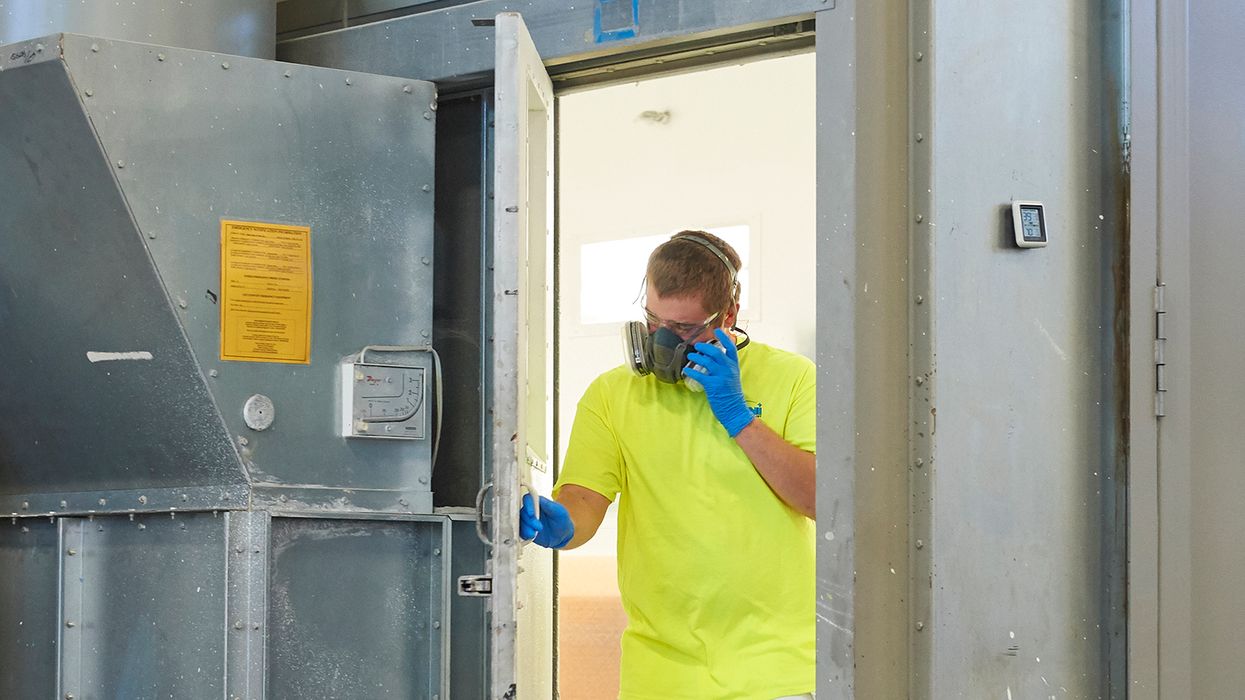
Where workplace exposure meets air permitting: Bridging OSHA industrial hygiene and EPA air programs
Air quality inside a facility and emissions leaving a stack are closely linked. The same chemicals that drive occupational exposure limits under the Occupational Safety and Health Administration (OSHA) often form the basis of regulated air pollutants under the Environmental Protection Agency's (EPA's) programs.
When industrial hygiene (IH) and environmental compliance teams work together, they can spot risks sooner, strengthen controls, and avoid surprises in permits or inspections. The overlap is practical. Worker exposure data can inform stack testing, and permit conditions can signal where IH monitoring should focus.
Shared chemistry, different lenses
Both programs start with the same substances, such as solvents, metals, acids, and combustion byproducts. IH focuses on what workers breathe in the workplace. It uses exposure limits such as OSHA permissible exposure limits or more protective guidelines from the National Institute for Occupational Safety and Health (NIOSH) and the American Conference of Governmental Industrial Hygienists (ACGIH). Environmental air programs focus on what leaves the property. They regulate criteria pollutants, hazardous air pollutants (HAPs), and toxics using emission limits, control requirements, and reporting rules.
The data tools look similar. IH uses personal and area sampling, direct-reading instruments, and task-based assessments. Environmental programs use emission factors, mass balance, continuous monitoring, and periodic stack testing. Both require documentation, quality control, and records.
Key differences that matter
The point of exposure is the biggest difference. IH evaluates the breathing zone of a worker during a task or shift. Environmental programs measure emissions at a release point, such as a stack, or estimate them across the site.
The time frame also differs. IH often looks at short-term peaks and full-shift averages to protect health during work. Air permits may set hourly, daily, or annual limits, and they may cap total emissions per year. Control strategies follow these goals. IH may rely on local exhaust ventilation, enclosure, or work practice changes. Air permits may require add-on controls such as thermal oxidizers, scrubbers, or filters.
Practical crossover: Using IH to inform permitting
IH data can reveal which tasks generate the highest concentrations and which compounds dominate exposure. That insight can refine emission estimates. For example, if wipe cleaning with a solvent produces the highest worker exposure, the same solvent may drive facility-wide volatile organic compound (VOC) emissions. The environmental team can use that knowledge to prioritize accurate emission factors, refine mass balance, or plan stack testing during peak operations.
IH data also helps define realistic operating scenarios for compliance testing. Stack tests that occur only at typical loads may miss worst-case conditions. Pairing test timing with identified peak tasks can provide a more representative test and reduce the risk of later noncompliance.
Practical crossover: Using permits to inform IH
Air permits define regulated compounds, control devices, and operating limits. These details can guide IH planning. If a permit lists specific HAPs or requires a control device for a process, there's a clear signal that exposure to those compounds is possible near the source. IH can target those areas for baseline sampling, validate control performance, and confirm that capture systems are effective where workers are present.
Permit conditions also flag upset and startup modes. These periods can increase emissions. IH can align monitoring during these windows to assess short-term exposures and ensure that work practices and protective measures are adequate.
Aligning controls for dual benefit
Engineering controls can serve both goals when designed as a system. Capture at the source reduces worker exposure and lowers emissions to the stack. Good enclosure and balanced ventilation improve control efficiency and reduce fugitive releases. Preventive maintenance on control devices supports permit limits and keeps workplace air clean.
Administrative controls can align as well. Standard operating procedures can link production rates, control device settings, and ventilation checks. Change management should include both an IH review and an air permitting check to see if a modification triggers a permit update.
Communication and workflows
Successful crossover depends on routine communication. Regular meetings enable safety and environmental staff to share results, plan sampling, and coordinate testing windows. Shared inventories of chemicals and processes reduce duplication and errors. A common data platform, or at least a consistent file structure, makes it easier to compare IH results with emission estimates and permit limits.
Clear triggers help teams act. Examples include a new chemical introduction, a process change, a spike in IH results, or a deviation in control device performance. Each trigger should prompt both an IH review and an environmental compliance check.
Key to remember: When teams connect their data and plans, they gain a clearer picture of risk. The results are stronger compliance, better worker protection, and more efficient operations.

NewsIndustry NewsIndustry NewsToxic Substances Control Act - EPAToxic Subtances Control Act - EPATSCA ComplianceEnvironmental Protection Agency (EPA)EnvironmentalEnglishFocus AreaUSA
2026-05-22T05:00:00Z
Final rule extends TSCA Section 8(d) health and safety reporting deadline
The Environmental Protection Agency (EPA) issued a final rule on May 22, 2026, extending the reporting deadline for the Toxic Substances Control Act (TSCA) Section 8(d) Health and Safety Data Reporting Rule from May 22, 2026, to May 21, 2027.
Who’s impacted?
The TSCA Section 8(d) Health and Safety Data Reporting Rule applies to manufacturers (including importers) of any of the 16 chemical substances listed at 40 CFR 716.120(d), including:
- Entities that currently manufacture (including import) any of the chemicals; and
- Entities that have manufactured (including imported) or have proposed to manufacture (including import) any of the chemicals since January 13, 2015.
What’s required?
The rule requires covered manufacturers (including importers) to submit a one-time report of data on the chemicals from unpublished studies on:
- Health and safety;
- Environmental effects; and
- Occupational, general population, and consumer exposure.
Which chemicals are covered?
The TSCA Section 8(d) Health and Safety Data Reporting Rule applies to:
|
|
Why the delay?
EPA has extended the deadline to allow additional time to reconsider the rule’s scope and possibly propose revisions to the regulations. Once any major changes are finalized, EPA will communicate the updated reporting requirements and timelines accordingly.
Key to remember: EPA has extended the submission date for the TSCA Section 8(d) Health and Safety Data Reporting Rule’s one-time report to May 2027.

NewsIndustry NewsIndustry NewsSafe Drinking WaterWater ProgramsWater QualityEnvironmental Protection Agency (EPA)Maximum Contaminant LevelsEnvironmentalUSAWater ProgramsEnglishFocus AreaCWA Compliance
2026-05-20T05:00:00Z
EPA floats major changes to current PFAS drinking water rules
The Environmental Protection Agency (EPA) has released two proposed rules that, if finalized, would have major impacts on drinking water regulations for per- and polyfluoroalkyl substances (PFAS), specifically, the 2024 National Primary Drinking Water Regulation (NPDWR) for PFAS (2024 PFAS NPDWR).
Proposed rule: MCL compliance extension
The first rule proposes to establish a federal exemption that allows public water systems (PWSs) to request an extension of the deadline to comply with the Maximum Contaminant Levels (MCLs) for perfluorooctanoic acid (PFOA) and perfluorooctane sulfonic acid (PFOS) from April 26, 2029, to April 26, 2031.
The rule would require PWSs that meet the eligibility requirements to submit a request to EPA for the federal exemption within 180 days of the date a final rule is published. PWSs would have to provide specific information in the request (such as recent water sample results and a certified statement that the system can’t comply with the original MCL deadline).
Additionally, EPA’s proposed rule would require:
- All PWSs with the federal exemption to notify customers of the exemption, and
- PWSs with PFOA or PFOS levels at or above 12 parts per trillion to implement two control measures (from six options) during the exemption period.
Who would be impacted?
The proposed federal exemption would apply to PWSs:
- Regulated by the 2024 PFAS NPDWR for PFOA and PFOS;
- In operation on or before June 25, 2024;
- Not under a variance for small systems for the PFOA and PFOS MCLs; and
- In a state that doesn’t have primacy for the 2024 PFAS NPDWR.
PWSs in states with primacy for the 2024 PFAS NPDWR may request an exemption from the primacy agency.
Proposed rule: Rescinding PFAS NPDWRs
The second rule proposes to rescind EPA’s determinations to regulate:
- Perfluorohexane sulfonic acid (PFHxS);
- Perfluorononanoic acid (PFNA);
- Hexafluoropropylene oxide dimer acid and its ammonium salt (HFPO-DA, called GenX chemicals); and
- Perfluorobutane sulfonic acid (PFBS).
It also proposes to remove the related 2024 PFAS NPDWR provisions from 40 CFR Parts 141 and 142, including:
- The MCLs and MCL Goals (MCLGs) for PFHxS, PFNA, and HFPO-DA;
- The MCL and MCLG for mixtures with two or more of PFHxS, PFNA, HFPO-DA, and PFBS (referred to as the Index PFAS); and
- All other compliance requirements.
The proposed rule would maintain the 2024 PFAS NPDWR requirements for PFOA and PFOS.
Who would be impacted?
The rule would impact PWSs, including community water systems (CWSs) and non-transient non-CWSs, subject to the 2024 PFAS NPDWR standards for PFHxS, PFNA, HFPO-DA, or the Index PFAS.
How do I give feedback?
EPA will hold a virtual public hearing for verbal comments on the proposed rules on July 7, 2026. Written comments for the proposed compliance extension rule (Docket ID No. EPA-HQ-OW-2025-1742) and proposed rescission rule (Docket ID No. EPA-HQ-OW-2025-0654) are due by July 20, 2026.
Key to remember: EPA has proposed major changes to the national drinking water regulations for PFAS.
New Network Poll


No active poll
Please come back soon!
Most Popular Highlights In Environmental
NewsHazardous WasteWaste GeneratorsWaste ManifestsWaste/HazWasteWasteEnvironmental Protection Agency (EPA)In-Depth ArticleEnglishIndustry NewsWaste ReportingWasteTSD FacilitiesWaste ManagementEnvironmentalFocus AreaUSA
2026-06-15T05:00:00Z
Hazardous waste manifest S Codes: What storage and transfer facilities need to know
Have you cracked the “S Code” yet? Starting in 2027, facilities that receive regulated waste for temporary storage and disposal must use S Codes on hazardous waste manifests. If your facility hasn’t made the switch, now’s the time!
Under the Resource Conservation and Recovery Act (RCRA), the Environmental Protection Agency (EPA) requires hazardous waste handlers to track shipments of regulated waste from the generating facility to final treatment, recycling, or disposal. Management Method Codes are key to hazardous waste manifests, and they also affect biennial reporting. The codes answer the vital question, “How’s the hazardous waste managed?"
Effective January 1, 2027, “S Codes” will officially replace code H141 for Storage and Transfer. EPA adopted these codes to improve the accuracy and transparency of waste tracking, specifically for wastes that travel through transfer facilities before final management. Use this overview to help your facility understand how to comply.
What are S Codes?
In January 2025, EPA added S Codes to the list of Management Method Codes, which identify the type of waste management system used to treat, recover, or dispose of a hazardous waste. Management Method Codes are used for:
- The Uniform Hazardous Waste Manifest (EPA Form 8700-22) and Continuation Sheet (EPA Form 8700-22A); and
- The National Biennial RCRA Hazardous Waste Report (EPA Form 8700-13 A/B), known as the Biennial Report.
S Codes apply to receiving facilities (primarily treatment, storage, and disposal facilities (TSDFs)) that temporarily store and then transfer regulated hazardous waste to another receiving facility without treating, recovering, or disposing of the waste. EPA established S Codes to provide more details than code H141 on waste handling activities, improving tracking and transparency. S Codes indicate two things:
- A hazardous waste was received to be stored or transferred; and
- The hazardous waste will be managed later by the final receiving facility using a certain method (i.e., the final management method).
EPA groups S Codes into three categories:
- Transfer off-site for reclamation and recovery,
- Transfer off-site for destruction or treatment prior to disposal, and
- Transfer off-site for disposal.
Each S Code corresponds to a specific final management method. Examples of these methods include metals recovery (S010), chemical treatment (S070), and landfilling (S132).
What’s required?
On January 1, 2027, EPA will remove Management Method Code H141 for Storage and Transfer from the e-Manifest and the Biennial Report forms. As a result, hazardous waste handlers must use S Codes instead of code H141 on manifests and the Biennial Report.
S Codes apply to RCRA hazardous waste that’s transferred off-site, impacting:
- Receiving facilities that store and transfer hazardous waste;
- Permitted TSDFs that receive hazardous waste solely for temporary storage and transfer (i.e., it’s the facility’s only management type); and
- Large quantity generators (LQGs) that report wastes shipped to transfer facilities on the Biennial Report.
Hazardous waste manifests
The first receiving TSDF is responsible for choosing and entering the S Codes on manifests. The storage and transfer facility must:
- Identify the S code that best describes how the hazardous waste will be managed by the final receiving facility, and
- Enter the S Code in Item 19 on the manifest and in Item 36 on the continuation sheet (if used).
Generators aren’t responsible for selecting or entering S Codes.
Biennial Reports
LQGs and TSDFs must use S Codes for the Biennial Report on the:
- Waste Generation and Management (GM) Form in Item 3, and
- Waste Received From Off-site (WR) Form in Item F.
LQGs use S Codes on the GM Form for shipments of hazardous waste off-site to a transfer facility for temporary storage and transfer.
TSDFs that receive hazardous waste for temporary storage and transfer off-site use S Codes on the WR Form. These TSDFs must also use Source Code G61 on the GM Form to report shipments of these transferred wastes.
How can facilities prepare?
Help your facility achieve a smooth shift to S Codes by January 1, 2027, with these tips:
- Identify where your facility currently uses code H141.
- Develop a process for transitioning to S Codes exclusively. Consider any changes your facility may need to make to its operations, such as updating software, adjusting procedures, and revising internal guidance documents.
- Train your employees accordingly.
- Set a deadline for making the switch to S Codes. Aim for a date well ahead of January 1, 2027, to give your facility enough time to address any issues that arise.
Key to remember: Starting in 2027, storage and transfer facilities must use S Codes in place of code H141 on RCRA hazardous waste manifests and Biennial Reports.
NewsIndustry NewsWaste/HazWasteSafety & HealthConstruction SafetyGeneral Industry SafetyWasteEnvironmentalIn-Depth ArticleCWA ComplianceUsed OilEnglishFocus AreaUSA
2025-03-03T06:00:00Z
Used oil disposal: How to stay compliant with EPA, OSHA, and your state
Used oil disposal is a critical issue for safety managers and shop supervisors in industrial settings. Whether your facility generates used oil from machinery, vehicles, or hydraulic systems, you must understand the regulatory requirements to ensure compliance and avoid hefty fines.
Used oil is not always considered hazardous waste, but improper handling, storage, or disposal can lead to regulatory violations and environmental hazards. Understanding how used oil is classified, when it is considered hazardous, and how to manage it in compliance with 40 CFR Part 279 is essential.
Let’s uncover the regulatory framework for used oil disposal, including storage requirements, transportation rules, and best practices to ensure compliance at both the federal and state levels.
What is used oil?
The EPA defines used oil as any petroleum-based or synthetic oil that has been used and is contaminated by physical or chemical impurities. Common sources of used oil in industrial operations include:
- Motor oil and lubricants from vehicle maintenance
- Hydraulic fluids used in heavy machinery
- Metalworking fluids and coolants
- Compressor oils used in air compression systems
According to EPA regulations (40 CFR Part 279), used oil is presumed to be managed under the less stringent used oil management standards unless it meets hazardous waste criteria.
Used oil becomes hazardous waste if:
- It is mixed with hazardous waste (e.g., solvents or heavy metals)
- It contains more than 1,000 parts per million (ppm) of total halogens, unless proven otherwise, or
- It is disposed of improperly, leading to environmental contamination.
If used oil is classified as hazardous waste, it must be managed in accordance with the applicable solid and hazardous waste requirements.
EPA requirements for used oil disposal
The EPA requirements for used oil consist of three different aspects, as outlined below.
1. Storage Requirements
Use leak-proof tanks and containers made of durable, non-earthen materials (e.g., steel, plastic, or concrete). Label all used oil containers with the words "Used Oil" to prevent misidentification. Prevent leaks and spills by using secondary containment systems and regularly inspecting tanks. Never mix used oil with hazardous waste unless authorized.
2. Transportation and Disposal
Used oil generators may transport up to 55 gallons of used oil to a registered collection center without an EPA ID number. If contracting a used oil transporter, ensure they have an EPA Identification Number.
Used oil must be:
- Recycled or re-refined into new oil.
- Burned for energy recovery in approved furnaces or boilers.
- Disposed of at an authorized hazardous waste facility if deemed hazardous.
3. Spill Prevention and Cleanup
Facilities storing large amounts of used oil must have a Spill Prevention, Control, and Countermeasure (SPCC) Plan. SPCC plans establish procedures, methods, and equipment requirements to prevent oil from reaching waterways, and to contain discharges of oil.
Any spills must be cleaned up immediately, and absorbent materials must be disposed of properly. Rags and shop towels contaminated with hazardous materials may be classified as hazardous waste.
OSHA regulations for handling used oil
While the EPA focuses on environmental compliance, OSHA (29 CFR Part 1910) regulates worker safety when handling used oil. Key OSHA requirements include:
1. Personal Protective Equipment (PPE)
Workers handling used oil must wear gloves and protective clothing to prevent skin exposure. Safety goggles or face shields are also important to avoid eye contact.
2. Hazard communication (HazCom) program
Employers must label all used oil containers with appropriate hazard information and train employees on safe handling procedures and emergency response.
3. Fire and Explosion Safety
Always store used oil away from ignition sources to prevent fire hazards. Ensure storage areas are ventilated to avoid vapor buildup.
State-Specific used oil disposal regulations
Many states have stricter used oil regulations than federal laws. For example:
- California classifies used oil as hazardous waste unless it meets specific recycling criteria.
- Texas requires additional storage permits for large generators.
- New York mandates annual reporting on used oil disposal activities.
To ensure compliance, check with your state’s environmental agency for state-specific used oil disposal rules and whether used oil is considered hazardous. Additional permits for transporting or processing used oil may be necessary.
Staying compliant with used oil disposal requirements
Ensuring compliance with EPA, OSHA, and state laws is essential for safety managers and shop supervisors handling used oil. By following proper storage, transportation, and disposal practices, businesses can reduce environmental risks, improve workplace safety, and avoid costly fines.
Key to remember: By staying informed and proactive, your facility can maintain safe, sustainable, and compliant used oil management practices.
NewsAir QualityIndustry NewsIndustry NewsAir ProgramsEnvironmental Protection Agency (EPA)Hazardous Air PollutantsCAA ComplianceEnvironmentalFocus AreaEnglishAir ProgramsStationary Emission SourcesUSA
2026-06-03T05:00:00Z
EPA adds new HAPs to hazardous waste combustor requirements
The Environmental Protection Agency (EPA) finalized the residual risk and technology review of the National Emission Standards for Hazardous Air Pollutants (NESHAP) from Hazardous Waste Combustors (HWCs). Most significantly, the final rule:
- Maintains the existing standards;
- Adds requirements for previously unregulated hazardous air pollutants from specific major source HWCs; and
- Establishes work practice standards for periods of startup, shutdown, and malfunction (SSM).
Who’s impacted?
EPA’s final rule applies to major sources subject to the HWC NESHAP at 40 CFR 63 Subpart EEE, including:
- Hazardous waste-burning incinerators,
- Cement kilns,
- Lightweight aggregate kilns,
- Solid fuel-fired boilers,
- Liquid fuel-fired boilers, and
- Hydrochloric acid production furnaces.
What are the changes?
The final rule adds hydrogen fluoride (HF) and hydrogen cyanide (HCN) emission standards for specific sources:
| Major source HWC | New regulation(s) |
|---|---|
| Incinerators |
|
| Cement kilns |
|
| Solid fuel boilers |
|
| Liquid fuel boilers |
|
The final rule also:
- Establishes work practice standards for periods of SSM;
- Requires electronic reporting for specific reports (e.g., compliance progress reports, performance tests, Notifications of Compliance); and
- Makes technical changes.
What’s the compliance timeline?
Existing HWCs must:
- Develop, submit to the regulatory authority for approval, and implement SSM plans and start complying with SSM requirements by November 30, 2026;
- Comply with any applicable HF and HCN emission limits and work practice standards by June 3, 2029; and
- Begin electronic reporting by August 3, 2026.
New HWCs must comply upon startup.
Key to remember: EPA's final rule maintains the existing NESHAP regulations for hazardous waste combustors and establishes emission limits and work practice standards for previously unregulated HAPs.

NewsHazardous WasteIndustry NewsWaste ManifestsWaste/HazWasteWasteEnvironmentalIn-Depth ArticleEnglishFocus AreaUSA
2023-08-30T05:00:00Z
EPA announces new e-manifest fees for FY2024-25
Receiving facilities will experience higher charges for scanned images within the e-Manifest system during fiscal years 2024 and 2025. These updated rates aim to boost a complete transition to electronic submissions. The Environmental Protection Agency (EPA) creates these charges based on the method of manifest submission and the combined processing expenses for each manifest category. It is unsurprising that fully electronic and hybrid manifests come with notably lower costs.
The latest fees For fiscal years 2024 and 2025 (October 1, 2023, through September 30, 2025), the new user fees are as follows:
- $22.00 for uploading scanned images (formerly $20.00)
- $10.00 for uploading data and images (formerly $13.00)
- $6.00 for fully electronic and hybrid submissions (unchanged from $6.00)
The application of user charges also aligns with the broader trend of digitization and modernization in regulatory procedures. By transitioning from paper-based manifest systems to digital platforms, the e-Manifest system trims administrative burdens, reduces the risk of errors, and expedites information flow. These user fees provide the resources to maintain and improve these digital capabilities. It benefits waste management stakeholders by streamlining reporting obligations and enhancing overall efficiency.
More on the user fees for the e-manifest system and amendments to manifest regulations
The Hazardous Waste Electronic Manifest Establishment Act (e-Manifest Act) itself does not determine e-Manifest user fees; rather, it grants EPA the authority to establish user fees through regulations. The Final User Fee rule addresses the following key aspects:
- Which users of manifests or manifest data will be charged user? User fees are not directly charged to generators or transporters. Instead, EPA enforces charges on receiving facilities for each submitted manifest. However, it is likely that increased costs will have a ripple effect across the industry.
- What transactions or services will give rise to fee? The submission of the final copy of each manifest to the system by receiving facilities triggers the user fee requirement. The fee depends on the type of manifest submission. Receiving facilities will also incur charges for manifests involving rejected wastes that are being sent back from the facility to the generator.
- How will users be billed for e-Manifest services and make their fee payments? Receiving facilities will receive a monthly electronic invoice detailing their manifest activity from the previous month. Each facility will be directed to the Treasury’s Pay.gov website to make their payments.
- What model or formula will EPA rely upon for the determination of users’ fees? The final rule’s fee calculation relies heavily on the total program-related costs incurred by EPA and the number of manifests over which these costs are distributed. When adjusting user fee schedules, EPA will reapply its fee formula using the most up-to-date data on program costs and manifest counts. The final rule also incorporates fee adjustment factors to account for inflation and revenue losses resulting from inaccurate estimates of manifests in use.
- How will the rule address fee schedule revisions? Revisions to user fees will not require a new rulemaking. EPA will re-run the fee formula at two-year intervals, with the most recent program cost and manifest usage numbers being used in running the fee formula to calculate the fees for each manifest submission type. The result will be a fee schedule that announces the fees for each of the next two fiscal years.
| For more information see our EzExplanation on Hazardous waste manifests |
Key to remember: Receiving facilities will see increased user fees for scanned images in the e-Manifest system for fiscal years 2024 and 2025. Using fully electronic waste manifests will cost significantly less.
NewsHazardous WasteWaste GeneratorsWaste ManifestsWaste/HazWasteWasteEnvironmental Protection Agency (EPA)In-Depth ArticleEnglishIndustry NewsWaste ReportingWasteTSD FacilitiesWaste ManagementEnvironmentalFocus AreaUSA
2026-06-15T05:00:00Z
Hazardous waste manifest S Codes: What storage and transfer facilities need to know
Have you cracked the “S Code” yet? Starting in 2027, facilities that receive regulated waste for temporary storage and disposal must use S Codes on hazardous waste manifests. If your facility hasn’t made the switch, now’s the time!
Under the Resource Conservation and Recovery Act (RCRA), the Environmental Protection Agency (EPA) requires hazardous waste handlers to track shipments of regulated waste from the generating facility to final treatment, recycling, or disposal. Management Method Codes are key to hazardous waste manifests, and they also affect biennial reporting. The codes answer the vital question, “How’s the hazardous waste managed?"
Effective January 1, 2027, “S Codes” will officially replace Management MethodH141 for Storage and Transfer. EPA adopted these codes to improve the accuracy and transparency of waste tracking, specifically for wastes that travel through transfer facilities before final management. Use this overview to help your facility understand how to comply.
What are S Codes?
In January 2025, EPA added S Codes to the list of Management Method Codes, which identify the type of waste management system used to treat, recover, or dispose of a hazardous waste. Management Method Codes are used for:
- The Uniform Hazardous Waste Manifest (EPA Form 8700-22) and Continuation Sheet (EPA Form 8700-22A); and
- The National Biennial RCRA Hazardous Waste Report (EPA Form 8700-13 A/B), known as the Biennial Report.
S Codes apply to receiving facilities (primarily treatment, storage, and disposal facilities (TSDFs)) that temporarily store and then transfer regulated hazardous waste to another receiving facility without treating, recovering, or disposing of the waste. EPA established S Codes to provide more details than code H141 on waste handling activities, improving tracking and transparency. S Codes indicate two things:
- A hazardous waste was received to be stored or transferred; and
- The hazardous waste will be managed later by the final receiving facility using a certain method (i.e., the final management method).
EPA groups S Codes into three categories:
- Transfer off-site for reclamation and recovery,
- Transfer off-site for destruction or treatment prior to disposal, and
- Transfer off-site for disposal.
Each S Code corresponds to a specific final management method. Examples include metals recovery (S010), chemical treatment (S070), and landfilling (S132).
What’s required?
On January 1, 2027, EPA will remove Management Method Code H141 for Storage and Transfer from the e-Manifest and the Biennial Report forms. As a result, hazardous waste handlers must use S Codes instead of code H141 on manifests and the Biennial Report.
S Codes apply to RCRA hazardous waste that’s transferred off-site, impacting:
- Receiving facilities that store and transfer hazardous waste;
- Permitted TSDFs that receive hazardous waste solely for temporary storage and transfer (i.e., it’s the facility’s only management type); and
- Large quantity generators (LQGs) that report wastes shipped to transfer facilities on the Biennial Report.
Hazardous waste manifests
The first receiving TSDF is responsible for choosing and entering the S Codes on manifests. The storage and transfer facility must:
- Identify the S code that best describes how the hazardous waste will be managed by the final receiving facility, and
- Enter the S Code in Item 19 on the manifest and in Item 36 on the continuation sheet (if used).
Generators aren’t responsible for selecting or entering S Codes.
Biennial Reports
LQGs and TSDFs must use S Codes for the Biennial Report on the:
- Waste Generation and Management (GM) Form in Item 3, and
- Waste Received From Off-site (WR) Form in Item F.
LQGs use S Codes on the GM Form for shipments of hazardous waste off-site to a transfer facility for temporary storage and transfer.
TSDFs that receive hazardous waste for temporary storage and transfer off-site use S Codes on the WR Form. These TSDFs must also use Source Code G61 on the GM Form to report shipments of these transferred wastes.
How can facilities prepare?
Help your facility achieve a smooth shift to S Codes by January 1, 2027, with these tips:
- Identify where your facility currently uses code H141.
- Develop a process for transitioning to S Codes exclusively. Consider any changes your facility may need to make to its operations, such as updating software, adjusting procedures, and revising internal guidance documents.
- Train your employees accordingly.
- Set a deadline for making the switch to S Codes. Aim for a date well ahead of January 1, 2027, to give your facility enough time to address any issues that arise.
Key to remember: Starting in 2027, storage and transfer facilities must use S Codes in place of Management Method Code H141 on RCRA hazardous waste manifests and Biennial Reports.
NewsEnforcement and Audits - OSHAPesticidesWorker Protection from PesticidesIn-Depth ArticleHazard CommunicationHR ManagementEnglishUSAIndustry NewsOSHA InspectionsSafety & HealthContingent WorkforceConstruction SafetyGeneral Industry SafetyAgriculture SafetyMaritime SafetyEnvironmentalHazard CommunicationTemporary EmployeesFocus AreaPesticidesHuman Resources
2026-05-26T05:00:00Z
OSHA packs new HazCom directive with enforcement clues
The first compliance date for the amended Hazard Communication (HazCom) standard has arrived, and OSHA finally issued its updated directive. The CPL instructs OSHA officers on how to conduct inspections and issue citations under the standard. However, it also provides chemical manufacturers, importers, distributors, and employers with insight into what officers will be assessing.
In effect, this CPL translates regulatory text into inspector expectations. It shows what adherence to the standard looks like in practice. That makes it a critical resource given recent and upcoming dates at 29 CFR 1910.1200(j).
CPL rewritten for the 2024 standard
On May 19, 2026, OSHA posted a revised CPL 02-02-079, “Inspection Procedures for the Hazard Communication Standard (HCS 2024),” replacing the July 9, 2015, version. The 132-page document reflects the reconfigured HazCom standard published May 20, 2024, effective on July 19, 2024, along with corrections issued through early 2026.
The agency designed this enforcement playbook to maintain uniform inspections during the transition period and after full implementation. Because of the extensive regulatory changes to definitions, hazard classification, labeling, safety data sheets, and trade secrets, the CPL is not a light refresh.
For those familiar with the rulemaking, the new CPL edits will not be surprising. Still, the directive should provide more clarity than the regulatory text.
Front matter and appendices
Updates to Sections I to IX are typical of a CPL, including:
- Cancellation of the 2015 CPL;
- A modified title and references to the 2024 final rule and corrections;
- Alignment with revisions 7 and 8 of the United Nations Globally Harmonized System of Classification and Labelling of Chemicals (GHS); and
- A new summary of changes, historical background, and compliance dates.
OSHA also modernized appendices for dates, hazard lists, pictogram hazards, SDS review guidance, chemical resources, and related directives.
Reworked inspection guidelines
Section X outlines inspector instructions for paragraphs (b) through (j) of the standard. The latest modifications impact most sections:
- Scope, applicability, and exemptions — The directive offers new examples and expanded explanations, such as:
- A formaldehyde hazard example for hair smoothing products;
- An overview of pesticide labeling requirements and exemptions;
- Discussion of the EPA Agricultural Worker Protection standard preemption; and
- Greater detail about biological hazards from plants.
- Definitions — The document introduces terms and explains bulk shipment, immediate outer package, physical hazard, released for shipment, and more. It also revisits the terms combustible dust and manufacturer. Lithium-ion batteries are now referenced in the distributor context.
- Hazard classification — The directive instructs OSHA officers to consider the classification of:
- Hazards associated with a chemical’s intrinsic properties, including changes in physical form and reactions from known or reasonably anticipated uses; and
- Impurities, additives, and individual constituents.
- Written plan — The directive clarifies:
- Employers must revise programs by the compliance dates when new information is received from suppliers;
- The use of computers and third-party administrators of safety data sheets (SDSs); and
- The written program must describe how employees will be trained in a language and at a literacy level they understand.
- Labeling — The directive broadens the sections on Department of Transportation labeling, bulk shipments, and small container labeling. It incorporates final rule flexibility too:
- Phased-in compliance dates for labeling;
- Hazards not otherwise classified (HNOCs) and hazards identified and classified under 1910.1200(d)(1)(ii) don’t need to be addressed on the container;
- The exclamation mark pictogram is permitted (but not required) for HNOCs, under certain conditions;
- Minor textual variations for precautionary statements are allowed; and
- OSHA offers alternatives for chemical containers released for shipment.
- Safety data sheets (SDSs) — Amended text focuses on U.S. jurisdiction and technical provisions, such as:
- Phased-in compliance dates for SDSs;
- Importer SDS responsibilities;
- Using a U.S. address and phone number;
- The hazard class and category reflecting intrinsic properties;
- Required Chemical Abstracts Service (CAS) number or other unique identifiers; and
- No need to obtain updated SDSs to replace already received SDSs.
- Employee information/training — The directive references a temporary workers bulletin. It also emphasizes:
- Phased-in compliance dates for necessary training adjustments; and
- Delivering training in a language employees understand.
- Trade secrets — The instruction aligns with the 2024 rule:
- Allows the exact percentage, exact concentration range, or CAS number to be withheld if certain criteria are met; and
- Addresses the use of confidentiality agreements.
- Dates — The directive overhauls compliance timelines and discusses documentation of due diligence and good faith efforts.
In addition, the directive softens citation language with phrases like “should normally cite” instead of “shall cite.” This shift suggests inspectors may have greater discretion based on case-specific circumstances.
Key to remember
While 1910.1200 remains the baseline for employers and chemical manufacturers, importers, and distributors, the revised CPL 02-02-079 provides an enforcement lens. With implementation underway, regulated entities can use the CPL to steer their efforts and conform with how OSHA will inspect them in the field.
Most Popular Highlights In Transportation

NewsIndustry NewsInternational Registration Plan (IRP)Vehicle Registration PermitsFocus AreaIn-Depth ArticleFleet OperationsCommercial motor vehicle definitionEnglishCommercial motor vehicle definitionTransportationRegistration and Permits - Motor CarrierUSA
2021-12-13T06:00:00Z
Your vehicle weight might not be what you thought
The International Registration Plan (IRP) uses several different weight terms and acronyms, and it can be easy to misinterpret the meaning of some of them. Check out the descriptions below to make sure you understand the terms and acronyms — and what they mean — when registering your vehicles.
Gross vehicle weight rating (GVWR)
The gross vehicle weight rating is the maximum operating weight of a vehicle as specified by the manufacturer including the vehicle’s chassis, body, engine, engine fluids, fuel, accessories, driver, passengers, and cargo but excluding that of any trailers.
Gross combined weight rating (GCWR)
The gross combined weight rating is the specific weight determined by the manufacturer to be the maximum weight of a loaded vehicle and its attached loaded trailer. This is the weight that is shown on the IRP cab card.
- Insider tip:
- Weight plate: A vehicle’s GVWR and GCWR are normally found on a manufacturer’s plate attached to the door or glove box, or on the front of each trailer.
Registered weight
Registered weight means the weight for which a vehicle or combination of vehicles has been licensed or registered.
Note that this weight will not always be the same as the GVWR or GCWR. It can be less if the carrier never travels at the maximum weight, but never more than the vehicle is rated to carry as this presents a safety issue.
- Insider tip:
- A vehicle’s weight rating should not be confused with its registered weight. To reduce registration fees, vehicles are often registered at a lower weight than they are rated to carry.
Gross vehicle weight (GVW)
Though not defined by IRP, a vehicle’s gross vehicle weight is commonly held to be the actual weight of the vehicle itself (curb weight) plus all cargo and passengers. The GVW is not a limit or specification; rather it is the actual weight that is obtained when the fully loaded vehicle is driven onto a scale at any given time.
Gross combination weight (GCW)
Also not specifically defined by IRP, the gross combination weight is understood to be the weight of a loaded towing vehicle (GVW) plus the weight of the fully loaded trailer(s) (plus passengers, fuel, etc.). It is the actual weight obtained when the vehicle and trailer(s) are weighed together on a scale.
Which numbers should be used under IRP?
Apportionable vehicles must be registered under IRP. The Plan defines an apportionable vehicle as any vehicle that is used or intended for use in two or more member jurisdictions and that is used for the transportation of persons for hire or designed, used, or maintained primarily for the transportation of property, and:
- Has two axles and a gross vehicle weight or registered gross vehicle weight in excess of 26,000 pounds (11,793.401 kilograms), or
- Has three or more axles, regardless of weight, or
- Is used in combination, when the gross vehicle weight of such combination (GCW) exceeds 26,000 pounds (11,793.401 kilograms).
Apportionment optional for smaller trucks
Two-axle vehicles, or combinations thereof, having a GVW of 26,000 pounds or less may be issued apportioned registration (IRP) at the option of the registrant. Why would you choose to do this?
For trucks between 10,001 and 26,000 pounds, some jurisdictions — but not all — require trip permits or apportioned plates to operate legally. Permits may be required for traveling through the jurisdiction or when engaging in intrastate transportation. If you frequently operate vehicles over 10,000 pounds in a state with this requirement, it might make sense to register with apportioned plates. Be sure to check with the jurisdictions in which your vehicles operate to learn the requirements.

NewsIndustry NewsFleet SafetyExpert InsightsBusiness policies and procedures - Motor CarrierBusiness planning - Motor CarrierFocus AreaFleet OperationsEnglishTransportationBusiness planning - Motor CarrierUSA
2026-06-12T05:00:00Z
Expert Insights: Motus — FMCSA's forward momentum
The Federal Motor Carrier Safety Administration (FMCSA) has rolled out the first phase of Motus, a new USDOT registration system designed to streamline compliance and modernize the way motor carriers, brokers, and supporting companies manage their regulatory obligations. Motus, which is Latin for movement/motion, represents a significant shift from the current systems and will involve consolidating USDOT numbers, biennial updates, hazmat registrations, and other filings into one secure, user friendly platform.
The initiative aims to simplify processes, enhance fraud prevention, and provide registrants with intuitive tools such as auto population, real time data validation, and mobile accessibility.
Troubleshooting Motus issues
Many carriers are running into obstacles when registering for Motus. The most frequent issue is not being able to claim DOT numbers, and the most common reason for this is that the carrier didn’t update its information before the deadline.
For example, only the company official can claim your USDOT number. This means that if your company official left earlier this year and you didn’t update this information in your portal, then you won’t be able to claim your USDOT number.
If you’re struggling to get your Motus account set up or claim your USDOT number, you must contact FMCSA at 800-832-5660. FMCSA will only work directly with the motor carrier at this point. Once you have set up your account, you can then grant permissions to other individuals — both within and outside of your organization.
Motus watchouts
Motus gives you more control over your registration, but it also puts more responsibility on you. For example, Motus has simplified applying for operating authority, but knowing which authority your company needs remains unclear. Obtaining the incorrect authority type can be costly, and making mistakes on your application can lead to long delays.
Without the correct authority in place, you may run into:
- A delay in approval, which would lead to a delay in beginning operations.
- Additional application fees, as you may need to reapply.
- Compliance issues, which could lead to expensive fees, audits, or even being placed out of service.
Key to remember: FMCSA has rolled out the first phase of Motus, which aims to streamline and simplify compliance, but it also comes with a few additional challenges for motor carriers.

NewsIndustry NewsIndustry NewsElectronic logging device (ELD)Electronic logging device (ELD)Focus AreaFleet OperationsEnglishTransportationUSA
2026-06-11T05:00:00Z
Last chance to replace your ELDs: 12 total removed from FMCSA’s list
A total of 12 devices were recently removed from the FMCSA’s list of registered electronic logging devices (ELDs).
On May 20, 2026, the following ELDs were removed for not meeting the minimum requirements in 49 CFR 395, Subpart B, Appendix A:
- 888 ELD
- DRAGON E
- ACTION ELD
- Mondo ELD HOS
- FIRST ELD
- FIRST ELD V2.0
- MTL ELD
- USPower ELD
- Sam Freight ELD
- DSGELOGS
- COBRA ELD
- GT USA ELOGS
The Federal Motor Carrier Safety Administration (FMCSA) has moved these devices to its “revoked devices” list.
Carriers and drivers have until toward the end of next month on July 20, 2026, to replace them with compliant ELDs.
Many ELD providers remove their devices from the list voluntarily, but the FMCSA has the authority to remove any ELD that does not comply with regulations.
Next steps for commercial carriers
Commercial carriers and drivers who use the above-listed devices must stop using the devices and switch to paper logs or logging software to record their hours of service.
In addition, they must replace the devices with ELDs listed on the FMCSA’s ELD registry and begin using those compliant devices before the posted dates.
ELD providers who correct device deficiencies can be placed back on the list of registered devices. The FMCSA will inform the industry when revoked devices are compliant again.
ELD compliance standards
During the 60-day replacement period, the FMCSA has instructed safety officials to review affected drivers’ hours-of-service data using logging software, paper logs, or the ELD display.
After July 20, respectively, any motor carrier that continues to use the revoked devices will be considered operating without an ELD. Drivers will be placed out of service and cited for “No record of duty status” (395.8(a)(1)).
Review the full list of registered devices at https://eld.fmcsa.dot.gov/List.

NewsIndustry NewsHazmat SafetyHazmat: HighwayFocus AreaIn-Depth ArticleHazmat EnforcementEnglishTransportationUSA
2022-12-27T06:00:00Z
Placarding responsibility – Whose is it?
Many shippers are unaware of their responsibility to provide placards to drivers, but the responsibility shifts as soon as the driver hits the road.
Check the regulations
According to Section 172.506 of the Hazardous Materials Regulations (HMR), a shipper offering a hazardous material for transportation by highway must provide the motor carrier with the required placards for the material being offered. The shipper must offer the placards to the carrier prior to, or at the same time as, the material is offered for transportation — unless the vehicle is already placarded for the hazmat.
Section 172.506 also states that no motor carrier may transport a hazardous material in a motor vehicle unless the required placards for the hazmat are affixed to the vehicle. Before transport, the driver is responsible for displaying the required placards for all the hazmat that is on the vehicle.
Avoid issues with shippers
Many trailers are equipped with flip placards that represent most classes of hazardous materials but without adequate training, shippers may not understand their responsibility to provide the driver with the required placards. If a driver arrives and the shipper fails to provide placards, the driver should contact dispatch for additional instructions or drive to a truck stop to secure the necessary placards. The driver becomes responsible for placards as soon as the trailer enters a public highway, so train your drivers to temporarily refuse the shipment until the proper placards can be obtained. If necessary, the driver must bobtail or leave empty before driving to pick up placards.
Another common placarding question with shippers involves combination loads. If a driver arrives at a shipper’s location and is already transporting a hazardous material below the placarding threshold, is the shipper required to provide placards for the combination load on the trailer? In this scenario, the driver already has 600 pounds of a Class 8 corrosive material on the trailer, and the shipper is offering an additional 500 pounds of the same commodity. The regulations state that the shipper is only required to provide placards for the commodity that is being offered, not for the aggregate weight of both shipments. In this scenario, the driver is responsible for providing placards since it involves a combination load.
The Hazardous Materials Regulations are complex, especially for newer employees. Drivers that can speak “hazmat” to shippers often secure additional business, so be sure to train your drivers and give them the confidence to have impactful conversations with shippers.
Key to remember: Carry extra placards in case a shipper is unable to supply the required placards or a combination of hazmat on the vehicle requires different placards.

NewsIndustry NewsFleet SafetyHours of Service14-hour ruleFocus AreaIn-Depth ArticleEnglishTransportationUSA
2022-06-08T05:00:00Z
Pausing the 14-hour clock
The 14-hour limit has been around for nearly two decades, but truck drivers are still seeking ways around it.
Lucky for them, there is a way to “pause” the 14-hour clock for a stretch of two or more hours, at least for those who qualify.
The rule
The 14-hour limit in the federal hours-of-service rules (at 395.3(a)(2)) says that drivers of property-carrying commercial motor vehicles must stop driving once they reach the end of the 14th consecutive hour of the workday.
Because the rule is based on consecutive time, the 14-hour clock keeps ticking away until it’s reset with a 10-hour break. As a result, lunch breaks, waiting time, and other non-productive activities take away from a driver’s available work hours. Being able to stop the clock is thus seen as a huge benefit in terms of productivity.
Pausing the 14-hour clock
Perhaps the biggest benefit for most truck drivers was the change that allows a driver to pause the 14-hour clock, if the driver has access to a sleeper berth that complies with 49 CFR 393.76.
To pause the 14-hour clock:
- The driver must take a break of at least two consecutive hours sometime during the day, either off duty, in a sleeper berth, or using a combination of the two. This break will pause the clock if the remaining conditions are met.
- The time before and after the break cannot include any driving after the 11th hour of driving or after the 14th hour of time (but the break itself can be excluded from the 14-hour total).
- The driver must get another break of at least seven consecutive hours spent entirely in a sleeper berth sometime before or after the shorter break. Without this time in a sleeper berth, the shorter break won’t pause the clock.
- The two breaks together must add up to at least 10 hours (for example: 2+8, 3+7, 4+11, 2.5+7.5, etc.).
As soon as a driver completes the two mandatory breaks, the 11- and 14-hour limits can be recalculated starting at the end of the first break (all time spent before the first break no longer counts). Neither break counts toward the 14-hour limit, and any 10-hour break will reset the limit.
If there is any off-duty time connected to (consecutive with) either break, that time may also be excluded from the 14-hour calculation.
What if? In the accompanying image, what happens if the driver is stopped for an inspection between 2:00 p.m. and 5:00 p.m.? The officer should assume the driver will be getting at least seven hours in a sleeper berth later in the day and is compliant.
Key to remember: Drivers who have access to a sleeper berth may pause their 14-hour clock with a two-hour break if certain conditions are met.

NewsIndustry NewsFleet SafetyDriver qualificationsDrivers qualification (DQ file)Driver qualification and hiringFocus AreaIn-Depth ArticleEnglishTransportationUSA
2026-06-01T05:00:00Z
Driver qualification FAQs: Avoiding common compliance pitfalls
Managing driver qualification (DQ) files is a critical part of any motor carrier’s compliance program. While most trucking professionals understand the core requirements of maintaining DQ files, there are other safety aspects that come into play. Applying DQ file rules inconsistently in day-to-day operations can raise questions and open the door for an audit. When real-world situations don’t fit neatly into the regulations, carriers increase risk exposure.
Across the transport industry, a few questions consistently rise to the top. Here are some of the most common carrier questions, along with practical answers.
What is a commercial motor vehicle (CMV)?
The definition of a CMV comes straight from 49 CFR 390.5. At a high level, a CMV is a vehicle used in interstate commerce that:
- Has a gross vehicle weight rating (GVWR) or gross combination weight rating (GCWR), or gross vehicle weight (GVW) or gross combination weight (GCW) of 10,001 pounds or more, whichever is greater;
- Transports passengers above specific thresholds; or
- Requires placarding for hazardous materials.
Motor carriers often run into trouble with the weight threshold, especially when trailers are involved.
For example, a pickup with a GVWR – and actual weight – of 7,500 pounds isn’t a CMV on its own. But if a driver attaches a trailer with a GVWR of 3,000 pounds, the combined weight rating exceeds 10,001 pounds. At that point, the vehicle meets the CMV definition, and a driver becomes subject to the Federal Motor Carrier Safety Regulations.
What if a commercial driver only operates in intrastate transport?
Intrastate transportation requirements are set at the state level. Definitions of a CMV can vary, adding to the complexity. Some states follow the 10,001-pound federal threshold, while others align more closely with the 26,001-pound commercial driver’s license (CDL) standard — or fall somewhere in between.
Because of that, there’s no one-size-fits-all answer.
From a practical standpoint, many carriers adopt a consistent approach and qualify all drivers at the 10,001-pound threshold. That approach creates uniformity and helps prevent compliance gaps as operations evolve or expand across state lines.
What if a CDL driver’s medical card doesn’t appear on the motor vehicle record (MVR)?
The Federal Motor Carrier Safety Administration currently allows CDL drivers to carry a medical certificate for up to 60 days via an exemption issued through October 11, 2026. Carriers should still verify that certification appears on the MVR promptly.
In most cases, it shows up within a few days. If it doesn’t appear within about 5 days, motor carriers should:
- Check with the medical examiner for validation errors (often caused by mismatched driver data);
- If necessary, have the examiner resubmit the results to the National Registry; or
- Contact the state licensing agency to locate the record. When calling the state, carriers should ask to speak with someone in the CDL department directly.
Most issues should be resolved when taking these steps.
Must a carrier give a CDL driver a road test?
Not always. A valid CDL can be accepted in place of a road test.
However, if the driver will operate equipment requiring a tanker, double, or triple endorsement, a road test will be required.
Even when not mandated, many carriers conduct road tests as a risk-management practice. It’s one of the few opportunities to confirm a driver can safely operate the specific equipment they’ll be assigned.
Must a driver be re-examined after an injury or illness?
Under 49 CFR 391.45(b), if a driver’s ability to perform normal duties is impaired by a medical condition, they must be re-evaluated and medically certified before returning to duty.
This includes conditions like heart attacks, seizures, or anything else that could affect safe operation.
If a carrier is aware of a potential issue, they have an obligation to act. Allowing a driver to continue operating without re-evaluation creates significant risk exposure.
Key to remember: Consistency in how you apply DQ requirements day to day is what ultimately keeps your program compliant and your risk in check.
Most Popular Highlights In Human Resources
NewsEnglishChange NoticesChange NoticeColoradoAssociate RelationsAssociate Benefits & CompensationHR GeneralistLeaveTime offHR ManagementLeaveFocus AreaHuman Resources
2026-06-16T05:00:00Z
Colorado employee voting leave law expands
Effective date: June 1, 2026
This applies to: Employers with employees in Colorado
Description of change: Effective June 1, 2026, employees may take up to 2 hours of job-protected, paid time off any day when voter service and polling centers are open.
Previously, voting leave was only required on the day of the election.
Because polling centers are open well before Election Day, employees now have a bigger window during which they may request this leave.
Employees must apply for the voting absence before the day of the election for which leave is requested.
The change also specifies that employers may deny an employee's request for voting leave if the employee has 3 or more consecutive hours off while the polls are open.
View related state info: Leave - Colorado

NewsIndustry NewsRecruiting and hiringHR GeneralistBackground ChecksIn-Depth ArticleFair Credit Reporting Act (FCRA)Associate RelationsEnglishUSAHR ManagementFocus AreaTalent Management & RecruitingHuman Resources
2026-06-10T05:00:00Z
Applicant says trucking company’s background check forms were too confusing and files class action
An applicant for a trucking job alleged that the company violated the Fair Credit Reporting Act (FCRA) by making background check disclosure forms too complicated. He filed a class action on behalf of applicants and employees who had received the forms.
In Askins v. CRST Expedited, Inc., a California appellate court addressed whether workers or job applicants must show actual harm in order to sue under the federal FCRA for improper background check disclosures.
Background
The complainant had applied for a job with a trucking company. During the hiring process and employment, the company conducted background checks and provided disclosure and authorization forms related to those checks.
The FCRA requires background check forms to be stand-alone documents. It states that before a background check, called a consumer report, can be ordered for employment purposes, a document that “consists solely of the disclosure that a consumer report may be obtained for employment purposes” must be provided to the applicant or employee.
The complainant alleged, however, that the forms provided by the trucking company violated the FCRA because they:
- Were confusing,
- Contained extraneous information, and
- Didn’t comply with the law’s standalone disclosure requirements.
He filed a class action on behalf of applicants and employees who allegedly received noncompliant disclosure and authorization forms before background checks were obtained. A trial court initially certified the class, but later, relying on another California case, Limon v. Circle K Stores Inc., the employer argued the class should be decertified because the driver couldn’t show a “concrete injury” or actual harm from the alleged FCRA violations. The trial court agreed and decertified the class. An appeal was filed.
Appellate court’s decision
The California Court of Appeal reversed the decertification order and held that:
- The FCRA allows recovery of statutory damages for willful violations even when no actual harm or concrete injury can be proven; and
- A violation of the employee’s statutory rights under the FCRA is enough to establish standing in California state court.
The court emphasized that Congress intentionally created statutory damages under the FCRA to allow claims even where measurable harm couldn’t be shown. It also rejected the reasoning from Limon, concluding that the earlier case interpreted the statute too narrowly.
The appeals court sent the case back to the trial court for further proceedings.
Employer takeaways
Despite this ruling coming from a California appeals court, the FCRA is a federal law, so employers nationwide should view this case as a reminder that FCRA compliance matters.
The case shows that:
- Employers may face FCRA class actions even when applicants or employees can’t show actual harm or financial loss.
- Background check disclosure and authorization forms should be reviewed carefully for strict compliance with the FCRA’s standalone disclosure requirements.
- Forms should be clear, concise, and free from unrelated or extraneous information.
- Employers using background checks should audit onboarding packets and vendor-provided forms regularly.
Key to remember: A ruling from a California appeals court should serve as a reminder to employers nationwide that FCRA forms must be clear and concise.

NewsIndustry NewsIndustry NewsHR GeneralistFamily and Medical Leave Act (FMLA)Family and Medical Leave Act (FMLA)USAHR ManagementEnglishFocus AreaHuman Resources
2023-09-06T05:00:00Z
Appellate court sided with employee's (almost) 3-year-delayed FMLA claim
Back in October 2018, Laffon had a medical emergency and needed some time off under the federal Family and Medical Leave Act (FMLA).
Her leave lasted until November 15. Ten days after she returned to work, on November 26, her employer terminated her.
She sued, arguing that the employer retaliated against her because of her FMLA leave.
The catch? She didn't bring the suit until almost three years later.
No link between leave and termination
In court, the employer argued that there was no causal link between Laffon taking FMLA leave and her termination. Although the court documents aren't robust, they do reveal that the employer indicated that Laffon's allegations didn't show that her taking FMLA leave was a factor in the decision to terminate her. The documents showed only that the termination chronologically followed her leave.
The court agreed with the employer. It also agreed that Laffon failed to allege a willful violation of the FMLA, which would allow her to benefit from the FMLA's three-year statute of limitations.
Laffon appealed the case to the Ninth Circuit.
Statute of limitations
Under the FMLA, employees have two years from the date of the last event constituting the alleged violation for which they can bring a claim.
Those two years are extended to three years if the employer's actions were "willful." This means that an employee must show that the employer either knew or showed reckless disregard for whether its conduct violated the FMLA.
Ruling overturned
Fast forward to August 2023, when the Ninth Circuit reversed the lower court's decision. It indicated that, based on Laffon's amended complaint and liberally construing the law, her allegations establish that her leave was causally connected to her termination and that the employer's action (her termination) was willful.
Glymph v. CT Corporation Systems, No. 22-35735, Ninth Circuit Court of Appeals, August 22, 2023.
Key to remember: Terminating an employee soon after returning from FMLA leave is risky, unless there is a clear, well-documented, non-leave-related reason. Case documents did not show such a clear reason, which can also increase the risk of a willful finding. Employees have time to file claims, even years.
NewsFamily and Medical Leave Act (FMLA)New JerseyLeaveTime offHR ManagementEnglishLeaveFamily and Medical Leave Act (FMLA)Associate Benefits & CompensationDisability BenefitsChange NoticesChange NoticeHR GeneralistAssociate RelationsFocus AreaHuman Resources
2026-06-11T05:00:00Z
New Jersey Family Leave Act expanded
Effective date: July 17, 2026
This applies to: Employers with 15 or more employees in New Jersey as of July 17, 2026.
Description of change: More employers will be covered by the law, and more employees will be eligible to take New Jersey Family Leave Act (NJFLA) leave.
On July 17, 2026, employers with 15 or more employees are covered by the law.
Currently, for employees to be eligible for NJFLA job-protected leave, they must have:
- Worked for the employer for at least 12 months, and
- Performed at least 1,000 hours of work in the last 12 months.
The law is changed such that for employees to be eligible for NJFLA, they must have:
- Worked for the employer for at least 3 months, and
- Performed at least 250 hours of work in the preceding 3 months.
Employees who utilize New Jersey Temporary Disability Insurance benefits (TDI) for their own medical needs have additional protections. Employers must restore employees to their position or a position of equivalent seniority, pay, and benefits upon their return.
Employees control the sequence of what form of leave to use, whether TDI, NJFLA, or earned sick leave; thereby allowing stacking of leave. Employers may not dictate the sequence.
View related state info: FMLA – New Jersey

NewsIndustry NewsAssociate RelationsHR GeneralistIn-Depth ArticleLabor Law PostersHR ManagementEnglishLabor Law PostersUSAFocus AreaHuman Resources
2026-06-01T05:00:00Z
Be ready for summertime workplace posting updates
Summer brings vacations, sunshine, and relaxation as well as some mid-year workplace posting updates. Before hitting beach or jumping in the pool this year, be aware that these posting changes are on deck:
Alaska: The minimum wage increases to $14 per hour on July 1, and an updated Minimum Wage poster is needed. In addition, an updated Safety and Health Protection on the Job posting is also required, as the state has updated information about how to file a discrimination complaint. Employers can also display an updated Child Labor posting, as it includes new address information.
District of Columbia: The district’s minimum wage will increase to $18.40 per hour on July 1, bringing mandatory changes to the Minimum Wage and Universal Wage Law postings. In addition, the district’s Time Off to Vote posting has been revised with information about fall elections and the updated version needs to be posted.
Nevada: Although the state’s minimum wage will remain at $12 per hour, the state releases new Minimum Wage and Overtime Bulletins each year. Employers will need to display the annual bulletins showing the minimum wage and overtime rates in effect as of July 1.
Nebraska: Amendments to the state’s Wage and Hour Act bring changes to the youth minimum wage for workers ages 14 and 15 and the training wage, with both set at $13.50 per hour as of July 17. This is likely to bring a mandatory posting change to the state’s Minimum Wage poster.
Oregon: The minimum wage will increase on July 1, bringing a mandatory change to the state’s Minimum Wage poster. The new standard rate will be $15.05 per hour. The rate will be $14.05 per hour in nonurban counties and $16.30 per hour in the Portland Metro area.
New Jersey: The state’s Family Leave Act will apply to more employers as of July 17 and will be coordinated with other state leave laws. This may bring changes to the Temporary Disability Insurance, Family Leave Insurance, and Earned Sick Leave Laws postings, as will the Family Leave Act posting.
Virginia: The state’s Covenants Not to Compete law, which currently covers low wage workers, will be revised on July 1 to cover more employees. The revised law will need to be posted, as the law requires employers to post a copy of that section of the state code.
Local minimum wage changes
Some cities and counties raise their minimum wage on July 1. Employers in these communities should be ready to display updated posters:
California
- Alameda
- Berkeley
- Emeryville
- Fremont
- Los Angeles
- Los Angeles County
- Malibu
- Milpitas
- Pasadena
- San Francisco
- Santa Monica
- Santa Rosa
- West Hollywood
Illinois
- Chicago
- Cook County
Maryland
- Howard County
- Montgomery County
Minnesota
- St. Paul
Key to remember: Some states, cities, and counties make mandatory mid-year posting changes. Employers should be ready to display the updated posters.

NewsIndustry NewsRecordkeepingRecordkeepingHR GeneralistFamily and Medical Leave Act (FMLA)In-Depth ArticleFamily and Medical Leave Act (FMLA)HR ManagementEnglishUSAFocus AreaHuman Resources
2026-05-20T05:00:00Z
Do the FMLA notices and certifications expire in June?
The answer to that question for employers is, “No.” The answer to that question for the U.S. Government’s Office of Management and Budget (OMB), however, is, “Yes.”
Employers might notice that the following federal Family and Medical Leave Act (FMLA) documents from the U.S. Department of Labor (DOL) have an expiration date listed as “6/30/26” in the upper right-hand corner:
- WH-381: Eligibility/Rights and Responsibilities Notice
- WH-382: Designation notice
- WH-380-E: Certification of an employee’s serious health condition
- WH-380-F: Certification of a family member’s serious health condition
- WH-384: Certification of a qualifying exigency
- WH-385: Certification for military caregiver of a current military member
- WH-385-V: Certification for military caregiver of a veteran
This, however, doesn’t mean that employers aren’t allowed to use these forms after that date. They may. Employers and employees are allowed to use the current forms beyond that date because the content remains applicable under FMLA law.
The June 30, 2026, date on the FMLA notices and certification forms, doesn’t represent a deadline for FMLA leave itself. It’s the OMB’s expiration date for the forms’ collection and recordkeeping requirements, not the end of the forms’ legal validity.
What the date means
These government documents are subject to certain checks and balances, such as the following:
- OMB control number 1235‑0003 governs the collection of information from employers and employees for DOL compliance purposes.
- The June 30, 2026, date is when the latest version of the forms will be replaced by a new OMB‑approved version.
The OMB has to review the FMLA notices and certification forms every 3 years. The last time it did so, it didn’t make any material changes.
The OMB is part of the U.S. Executive Office and helps the president meet policy and budget, manage details, oversee regulatory objectives, and helps fulfill the agency’s statutory responsibilities.
Model forms optional
Employers aren’t required to use the DOL’s model forms. Many do, however, because it’s easier than creating their own forms. Using the DOL’s forms also helps ensure the notices provide enough information and the certifications don’t ask employees for information beyond what the FMLA allows.
Key to remember: The June 30, 2026, expiration date of FMLA documents is just a form‑collection deadline, not a legal cutoff for FMLA leave or certification. Employers may still use the current forms until a new version is issued.
Most Popular Highlights In Safety & Health

NewsIndustry NewsSafety and Health Programs and TrainingSafety & HealthConstruction SafetyGeneral Industry SafetyExpert InsightsSafety and Health Programs and TrainingEnglishFocus AreaUSA
2026-06-12T05:00:00Z
Expert Insights: Coaching safety on the front line
Frontline managers play one of the most critical roles in workplace safety, yet they often face the greatest challenges. Positioned between senior leadership expectations and frontline realities, they are responsible for translating and coordinating safety from a written policy into everyday practice.
Whether safety becomes proactive and sustainable or reactive and compliance driven often depends on how well these leaders are supported and equipped to lead.
Reactive or proactive…that is the question
A key shift many organizations must make is moving from a “safety cop” mindset to a “safety coach” approach. Reactive leadership tends to emerge only after an incident occurs, focusing on enforcement and documentation. Proactive leadership intervenes before someone gets hurt by asking questions, listening to employees, identifying hazards early, and working together to fix issues. When safety happens with employees instead of to them, engagement and accountability increase.
That shift begins with upper management who sets the tone, provides resources, and signals what truly matters. True commitment is demonstrated by where leaders focus their time, how visible they are, and how they behave day to day. When safety is linked to business goals such as productivity, quality, and cost control, it becomes part of how decisions are made rather than a competing priority.
Actionable goals for upper management include:
- Link safety to business performance by tying injury trends, near miss data, and hazard correction rates to cost savings and productivity.
- Include safety in leadership key performance indicators and reviews, so leaders are held accountable for participation and results.
- Be visibly involved in safety walks, toolbox talks, audits, and frontline conversations.
- Shift focus to leading indicators such as training participation, near miss reporting, and corrective action closure.
- Recognize proactive safety success, not just react to incidents after they occur.
When senior leaders consistently show these behaviors, they give frontline managers the confidence and support to focus on preventing problems instead of reacting to them.
Safety culture improves when employees help shape it
Safety culture is realized at the employee level. Frontline managers are the bridge between leadership intent and workforce action. Employees are far more likely to engage when they see leaders listen, follow through, and set clear expectations.
Actionable goals for engaging employees include:
- Lead by example every day by consistently following safety rules, procedures, and PPE requirements.
- Involve employees early in hazard assessments, process changes, equipment trials, and pilot programs.
- Define specific, observable safe behaviors for each role instead of using blanket safe work practices and vague messages like “be careful.” •Integrate safety into daily routines such as shift huddles, job planning, and production meetings.
- Make reporting easy and safe with simple tools, anonymous options if needed, and zero tolerance for retaliation.
- Recognize and reinforce safe behaviors through immediate verbal feedback and formal recognition programs.
- Empower stop work authority and openly support employees who speak up when something isn’t safe.
Training reinforces these efforts when it is practical, hands on, and continuous. Adults learn best through real world application, discussion, and reinforcement, not annual check the box training alone. Short toolbox talks, demonstrations, and regular reminders keep safety relevant and actionable.
As you consider your organization’s safety leadership, remember that when leaders support frontline managers who stay connected to their teams, safety is built into how work gets done.

NewsIndustry NewsAccident Investigation - OSHAAccident Investigation - OSHASafety & HealthConstruction SafetyGeneral Industry SafetyIn-Depth ArticleEnglishFocus AreaUSA
2026-06-16T05:00:00Z
Tank implosion tragedy highlights pressure hazards
A May 2026 incident at a paper mill in Washington put a spotlight on a hazard that doesn’t always get the same attention as over-pressure, vacuum induced tank collapse. The event involved a large chemical storage vessel and led to multiple fatalities and serious injuries. The U.S. Chemical Safety and Hazard Investigation Board (CSB) has opened an investigation to figure out what went wrong and how to keep it from happening again.
While that investigation plays out, there’s a clear takeaway, tank failures aren’t just an over-pressure problem. Vacuum conditions, or under pressure, can be just as destructive. We design for it, we talk about it, but it doesn’t always get the same focus in day‑to‑day operations, maintenance, or hazard reviews, and that’s where things can break down.
Understanding what happened
An implosion happens when the pressure inside a tank drops below the pressure outside it. When that happens, the outside air pushes in and the tank can collapse. Most people think about explosions. Fewer think about implosions. But the damage can be just as severe.
The tricky part is how this can develop during normal work. It doesn’t take a rare event and can happen during everyday tasks like:
- Draining a tank too fast without letting air flow back in;
- Cooling vapors or condensing material inside the tank;
- Steam cleaning and then cooling things down too quickly; and
- Vents that are blocked, closed, or just not sized right.
In industries like pulp and paper, chemical processing, and wastewater treatment, these situations aren’t unusual. In many cases, they’re part of day-to-day operations. That’s what makes vacuum-induced failure a real risk and a preventable one.
What OSHA expects for tank safety
While this incident puts a spotlight on an implosion hazard, OSHA’s expectations go beyond just one type of failure. The focus is on overall tank and pressure vessel safety, which includes both over-pressure and vacuum conditions.
Under the General Duty Clause, employers are required to protect workers from recognized hazards. Tank failure, whether it’s caused by pressure or vacuum, is a known risk, so OSHA expects it to be addressed. In practice, that means employers need to:
- Design for how the system actually operates, including pressure going in both directions;
- Control pressure risks with properly sized relief devices and venting systems that work when needed;
- Follow recognized engineering practices like ASME (American Society of Mechanical Engineers) and API (American Petroleum Institute) standards; and
- Keep equipment in good shape through inspection, testing, and maintenance.
Additionally, if Process Safety Management (29 CFR 1910.119) applies, expectations get more specific. Employers need to have:
- A mechanical integrity program that covers tanks and relief systems;
- Process hazard analyses that look at normal operations, abnormal conditions, and maintenance work; and
- Clear procedures and training so people know how to manage the risks.
Even if PSM doesn’t apply, the expectation doesn’t change. You still need to understand how the system can fail and make sure the right protections are in place.
Strengthening tank safety where it counts
This incident is a good reminder to take a step back and look at your organization’s overall tank and pressure vessel safety, not just one specific hazard. Strong programs come down to solid controls and making sure they hold up in day-to-day operations. Here’s where to focus your attention:
- Evaluate all pressure scenarios: Consider both over-pressure and vacuum conditions during normal, shutdown, and when things don’t go as planned;
- Verify relief and venting systems: Ensure devices are properly sized, installed, and not isolated or obstructed;
- Confirm design limits: Validate that tanks are rated for the full range of expected conditions;
- Strengthen inspection and maintenance: Regularly check vents, valves, and vessel integrity as part of a structured program; and
- Train employees on system behavior: Help operators understand how everyday actions, like emptying a tank, rinsing it out, or closing vents, can affect pressure conditions.
Key to remember: Expectation is clear, tanks must be safe under all operating conditions, not just ideal ones. That only happens when design, controls, and maintenance all line up with how the system really runs.

NewsFire Protection and PreventionIn-Depth ArticleEnglishEmergency Planning - OSHAIndustry NewsSafety & HealthEmergency PreparednessEmergency Planning (OSHA)Emergency ExitsExit RoutesConstruction SafetyGeneral Industry SafetyAgriculture SafetyMaritime SafetyFire Protection and PreventionMine SafetyFocus AreaUSA
2023-12-28T06:00:00Z
Does my office need an exit sign?
One of the most common questions inspectors get when evaluating workplace emergency safeguards is, “Does my office need an exit sign?” Section 29 CFR 1910.37 requires employers to provide specific safeguards and operational features for exit routes. OSHA’s intent is to minimize danger to employees and requiring proper exit route marking is one way to do so.
In short, smaller rooms or offices with only one door don’t necessarily need an exit sign. OSHA standards for exit signage are based on NFPA 101, Life Safety Code, which OSHA incorporated by reference. OSHA 1910.37(b)(4) states, “If the direction of travel to the exit or exit discharge is not immediately apparent, signs must be posted along the exit access indicating the direction of travel to the nearest exit and exit discharge. Additionally, the line-of-sight to an exit sign must clearly be visible at all times.”
Other exit signage requirements to consider
The International Fire Code (IFC) was not adopted by OSHA; however, it’s likely to be referenced by local fire marshals. The IFC states, “Exit signs are not required in rooms or areas that require only one exit or exit access.” Generally, a room or area that holds fewer than 50 people is permitted to have only one exit. These rooms are typically smaller with an exit that is close and obvious, so an exit sign shouldn’t be needed inside the room. For example, individual offices, small conference rooms, storage rooms, and bathrooms usually don’t have exit signs because the way out is obvious.
Additional requirements for office exits require they:
- Are free of obstructions. No materials or equipment may be placed, either permanently or temporarily, within the exit route.
- Are arranged so that employees aren’t required to travel toward a high hazard area unless the path of travel is effectively shielded from the high hazard area by suitable partitions or other physical barriers.
- Don’t pass through a room that can be locked, such as a bathroom, to reach an exit or exit discharge, or lead into a dead-end corridor.
- Are adequately lighted so that an employee with normal vision can see along the exit route.
- Have each exit route door be free of decorations or signs that obscure the visibility of the exit route door.
Key to remember
When considering exit signs for smaller offices, employers must determine the size of the room, path of travel to an exit, and how obvious the exit would be based on room size. Generally, a room intended to hold fewer than 50 people is permitted to have only one exit and would not require an exit sign.

NewsIndustry NewsAt-Will EmploymentSafety & HealthGeneral Industry SafetyTerminationHR GeneralistIn-Depth ArticleUSAHR ManagementEnglishTerminationFocus AreaHuman Resources
2024-08-28T05:00:00Z
When to skip a PIP and move to terminate an employee
The U.S. Bureau of Labor statistics reported in July 2024 that there are 8.2 million job openings in the U.S., but only 7.2 million unemployed workers.
With that in mind, employers might choose to hang onto employees even if they’re under performing. But what about when complaints are rolling in from different angles? Take, for example, a lackluster supervisor who’s annoying employees and disappointing customers.
An employer could be hesitant to let the supervisor go, especially if there’s no documentation backing up claims of misconduct. The employer must weigh their options to decide if putting the supervisor on a performance improvement plan (PIP) or moving right to termination is the ideal choice.
At-will employment
For starters, in most states employers may terminate an employee at-will, meaning they can fire employees for pretty much any reason as long as it doesn’t discriminate against someone in a protected class based on sex, age, race, religion, etc. Employers also cannot terminate in retaliation for an employee making a claim of harassment, discrimination, or safety concerns.
Aside from these limits, employers can terminate employees for good cause, bad cause, or no cause at all.
PIP or terminate
Deciding whether to put an employee on a PIP or terminate must be decided on a case-by-case basis.
A PIP is usually for job performance issues (hence, performance improvement plan). This could mean anything from not making enough sales to being inept at the job’s essential functions. If job performance doesn’t improve under the PIP, termination may be the end result depending on company policies and practices.
Even if an employee has job performance issues, the employer can terminate without going through the PIP process first, unless the usual process is to implement a PIP with employees who have had similar problems. In that case, not doing a PIP could be seen as discrimination against an employee, especially if the person falls into a protected class.
Workplace misconduct, however, is another situation altogether. This could be anything from a one-off poor joke to pervasive harassment. Snapping at customers or coworkers (or worse), for example, is a conduct issue. An employer could issue a warning or move right to termination if the behavior is clearly illegal or a serious threat to workplace safety.
| Read more: ezExplanation on discharging employees |
Termination tips
If an employer decides to terminate, they should treat the employee as respectfully as possible during the termination process. Also, an employer should carefully and clearly communicate the job-related reasons for the termination to avoid any hint of discrimination. Lastly, an employer should document the reasons and reiterate the steps taken leading up to the termination and keep those records handy in case the employee files a wrongful termination lawsuit.
Key to remember: Employers sometimes struggle when making termination decisions. Having a process in place and documenting steps along the way can help if a case lands in court.

NewsIndustry NewsEnglishSafety & HealthConstruction SafetyGeneral Industry SafetyIn-Depth ArticleHazard CommunicationHazard CommunicationHazcom LabelingUSAFocus AreaHazCom Written ProgramHazCom Information and Training
2026-05-28T05:00:00Z
November's HazCom GHS 7 Deadline: What employers need to know
OSHA’s updated Hazard Communication Standard, now aligned with the 7th revised edition of the Globally Harmonized System of Classification and Labeling of Chemicals (GHS 7), is being rolled out in phases. One deadline passed in May, and the next arrives in November. For employers, this means now is the time to start making updates. This revision introduces enough meaningful changes that relying on an old hazard communication checklist will not be enough.
First, a Quick Refresher on What HazCom Actually Is
At its core, OSHA’s Hazard Communication Standard is designed to make sure workers know what chemicals they are working with and what hazards those chemicals present. It covers the labels on chemical containers, the Safety Data Sheets (SDSs) that provide detailed hazard information, and the training employees need so they can understand and use that information effectively.
HazCom is tied to the Globally Harmonized System, or GHS, an international framework developed by the United Nations to create a more consistent approach to classifying and communicating chemical hazards. When the UN updates the GHS, OSHA eventually updates HazCom to better align with it. That is what is happening now with GHS 7, and those updates are beginning to work their way into supplier documents and workplace compliance expectations.
What’s Actually Changing in GHS 7
So what is different this time? GHS 7 includes several substantive changes that affect how chemicals are classified, how SDSs are written, and how labels are presented. These are not just wording updates. In some cases, they can change how hazards are described and how information is communicated to workers. The changes are:
- New and Revised Hazard Categories: GHS 7 expands classification for certain health and physical hazards. Desensitized explosives, for example, now have their own hazard class. Some existing categories have been refined with new subcategories that require different labeling and SDS language.
- Updated SDS Requirements: Section formatting and content requirements are being revised in several areas. Employers and chemical manufacturers will need to review existing SDS documents to ensure they reflect the updated classification criteria and language. If you’re an employer who receives SDS from suppliers, you’ll need to verify that incoming documents meet the new standard.
- Label Changes: Some products will require updated pictograms, signal words, or hazard statements based on reclassification under GHS 7. That means physical labels on containers may need to be reprinted and replaced.
- Exposure Limits and Inhalation Hazards: GHS 7 brings more specificity to how inhalation hazards are communicated, particularly for aerosols and mixtures.
What the May Deadline Covered
OSHA’s GHS 7 update was not designed as a single cutoff date. Instead, it was rolled out in phases, with different obligations applying at different points in time. The May 2026 deadline primarily affected chemical manufacturers, importers, and distributors. By then, those upstream parties were expected to update chemical classifications and begin issuing labels and SDSs that align with the revised standard.
For employers, that phase matters because it marks the point when updated information should begin flowing into the workplace. If you receive hazardous chemicals from suppliers, the SDSs and shipped labels you get should increasingly reflect the new classification language and formatting requirements.
That does not mean employers can treat compliance as only a supplier issue. You are still responsible for making sure the SDSs in your workplace are current, your labels reflect the hazards of the chemicals in use, and employees are trained on the information they rely on. If a supplier is slow to update documentation, that gap can quickly become your problem during an inspection.
That is why now is the time to start reaching out to chemical vendors and reviewing your own program. Ask suppliers whether their SDSs have been updated to GHS 7 standards, track what you receive, and follow up on anything that is missing or unclear. November will arrive quickly, and employers that wait too long may find themselves rushing through updates that should have been planned in advance.
Roadmap for November Update
The best way to approach the November deadline is as a practical compliance project rather than a last-minute document review.
- Chemical inventory audit: You cannot update what you have not identified, so pull together a complete inventory of every chemical in the workplace, including cleaning products, maintenance supplies, and production materials. That inventory becomes the baseline for everything that follows.
- Review and update your SDS library: Contact suppliers and request GHS 7-compliant SDSs for each product on your inventory. Do not assume existing files are already current. Create a simple tracking system so you know which documents have been updated, which are still pending, and where follow-up is needed.
- Audit your physical labels: Walk the facility and compare container labels to the updated hazard information you are receiving. If products have been reclassified or now use different pictograms, signal words, or hazard statements, your in-house labels may also need to change. Starting early is important, especially for larger facilities where relabeling can take time.
- Revise your written HazCom program: This should be treated as a living document that reflects current practice. Review it carefully and update language, procedures, and responsibilities so they align with the revised standard and with the way your facility actually manages chemical hazards.
- Retrain your workforce and brief supervisors: Employees need to understand what changed, what updated labels and SDSs mean, and how those changes affect handling, storage, and response expectations. Supervisors should receive deeper guidance so they can answer questions, recognize compliance gaps, and reinforce the updated program in day-to-day operations.
Key to remember: Now is the time to prepare for November's Hazard Communication Standard deadline.

NewsPersonal Protective EquipmentIn-Depth ArticleUSAEnglishPersonal Protective EquipmentFoot ProtectionIndustry NewsHead ProtectionEye and Face ProtectionElectrical Protective EquipmentWeather-specific PPESafety & HealthConstruction SafetyGeneral Industry SafetyHand ProtectionHearing ProtectionRespiratory ProtectionFocus AreaSafety Vests
2024-02-02T06:00:00Z
Understanding PPE Exceptions: When and How to Accommodate Employees
Did you know there are situations where employees may need exceptions from wearing personal protective equipment (PPE) due to medical reasons or safety concerns? In these cases, employers must engage in an interactive process to determine if a reasonable accommodation can be made. Let's explore the guidelines and best practices for handling PPE exceptions and ensuring the safety of all employees.
OSHA's yearly list of the "Top 10 most frequently cited standards" consistently includes noncompliance with personal protective equipment (PPE) regulations. It's important to note that these violations are specific to OSHA citations and do not encompass the wide range of PPE challenges that safety professionals encounter daily, like exceptions.
Based on a 2023 study by the J. J. Keller Center for Market Insights, safety professionals feel training employees on most topics related to PPE usage is increasingly challenging. Getting employees to wear PPE continues to be challenging, with over 70% of participants saying they have employee PPE compliance issues. Employers must figure out if, in fact, compliance issues may instead be needs for accommodations or exceptions.
Free PPE or Not
OSHA (Occupational Safety and Health Administration) has rules requiring employers to give their employees protective gear, like hard hats, gloves, goggles, and safety shoes if needed to keep them safe at work. These rules are in place to prevent injuries and illnesses. However, it's worth noting that not all these rules say that the employer must provide the gear for free.
Right to Use PPE
OSHA's PPE standards do not allow employees to waive their right to use PPE. However, if an employee has a medical condition that would make them eligible for protection under the Americans with Disabilities Act, the employer would be expected to make reasonable accommodations that do not compromise safety.
OSHA also addresses the refusal to wear PPE due to religious beliefs in a specific directive. There is no indication that OSHA would accept a signed waiver from an employee who refuses to wear necessary PPE or follow other safety rules.
Medical Accommodations
When it comes to accommodating an employee who states they cannot wear personal protective equipment (PPE) due to a medical reason, employers must engage in an interactive process to determine if a reasonable accommodation can be made. The employer should work with the employee and, if necessary, consult with medical professionals to assess the situation.
The goal is to find a solution that allows the employee to perform their job safely while considering their medical condition. However, it's important to note that the accommodation must not pose an undue hardship on the employer or compromise the employee's or others' safety in the workplace. Each situation is unique, so employers should consult with legal counsel or compliance experts to ensure they follow the appropriate guidelines and regulations.
Allergies to PPE
When employees are allergic to the available materials for required personal protective equipment (PPE), employers should take the following steps to address the situation:
- Assess the Allergy: Employers should gather information about the specific allergy and its severity. This may involve consulting with medical professionals or requesting documentation from the employee's healthcare provider.
- Explore Alternative Options: Employers should work with the employee to identify alternative materials or PPE types suitable for their allergy. This could involve researching and sourcing different hypoallergenic PPE products or made from materials the employee is not allergic to.
- Test and Evaluate: Before implementing any alternative PPE, it's important to conduct testing and evaluation to ensure that the new materials do not cause an allergic reaction for the employee. This may involve conducting patch tests or having the employee try out different options under controlled conditions.
- Document Accommodation: If an alternative PPE solution is found, employers should document the accommodation process, including the steps taken, the alternative PPE selected, and any agreements reached with the employee. This documentation helps demonstrate compliance with regulations and records the accommodation made.
- Ongoing Monitoring: Employers should regularly monitor the employee's condition and the effectiveness of the alternative PPE. Any issues or changes should be addressed promptly to ensure the employee's safety and well-being.
Employers need to consult with legal counsel or compliance experts to ensure they are following the appropriate guidelines and regulations when accommodating employees with allergies to PPE materials.
Key to Remember
Getting employees to wear PPE continues to be challenging, with over 70% of participants saying they have employee PPE compliance issues. Employers must figure out if, in fact, compliance issues may instead be needs for accommodations or exceptions.
Saved to my EVENT CALENDAR!
View your saved links by clicking the arrow next to your profile picture located in the header. Then, click “My Activity” to view the Event Calendar on your Activity page.
OK
J. J. Keller is the trusted source for DOT / Transportation, OSHA / Workplace Safety, Human Resources, Construction Safety and Hazmat / Hazardous Materials regulation compliance products and services. J. J. Keller helps you increase safety awareness, reduce risk, follow best practices, improve safety training, and stay current with changing regulations.
Copyright 2026 J. J. Keller & Associate, Inc. For re-use options please contact copyright@jjkeller.com or call 800-558-5011.