Compliance Just Got Easier: Stay ahead of regulatory changes with instant notifications on updates that matter.
['CERCLA, SARA, EPCRA']
['Toxics Release Inventory Reporting']
2026-03-27T05:00:00Z
JOIN TODAY TO CONTINUE READING THIS ARTICLE & OTHER INDUSTRY NEWS!
You'll also get exclusive access to:
A database of easy-to-understand regulationsAsk unlimited questions to our expertsPre-led discussions forumsAnd more
TRY IT FREE TODAY
Already have an account? Log in now.

Copyright 2026 J. J. Keller & Associate, Inc. For re-use options please contact copyright@jjkeller.com or call 800-558-5011.
NewsIndustry NewsCERCLA, SARA, EPCRAToxics Release Inventory ReportingEnvironmentalIn-Depth ArticleEnglishSARA ComplianceFocus AreaUSA
Expert Insights: Four commonly overlooked categories in TRI reporting
2026-03-27T05:00:00Z
Toxics Release Inventory (TRI) reporting can be tricky, even for seasoned EHS teams. Many facilities meet all the requirements but still miss chemicals that should be reported. Most oversights fall into four key categories. Here’s what they are and why they get missed, along with a few simple examples that show up in routine operations.
Newly added or updated TRI chemicals
The TRI list changes more often than many people realize. The Environmental Protection Agency (EPA) regularly updates it and recently added new per- and polyfluoroalkyl substances (PFAS) and even a full diisononyl phthalate (DINP) chemical category. When facilities don’t review these updates each year, they may keep using materials that now contain reportable chemicals without realizing it. For example, PFAS were expanded for Reporting Years 2024 and 2025, and the DINP category was added in 2023. These changes mean that everyday items like coatings, lubricants, and flexible plastics can suddenly trigger TRI thresholds.
“Otherwise used” chemicals
Not every reportable chemical is manufactured or processed. Many are simply “otherwise used,” including solvents, degreasers, cleaners, and maintenance chemicals. Facilities often overlook these because they aren’t part of the product mix, but they can add up fast. Even common shop chemicals, when used across a year, can exceed the 10,000-pound threshold and require reporting.
Coincidentally manufactured byproducts
Some chemicals are created unintentionally during normal operations. Ammonia may form during baking or heating steps, nitrates often appear in wastewater treatment, and metal compounds can be generated during welding, machining, or corrosion. These substances count as “manufactured” under TRI even if they weren’t intentionally manufactured. Examples like ammonia, nitrates, metal compounds, and diesel byproducts such as naphthalene and polycyclic aromatic compounds are regularly overlooked in TRI reporting because they’re easy to underestimate.
Impurities or additives in mixtures
Many reportable chemicals hide inside mixtures, oils, coatings, lubricants, and chemical blends. If a facility focuses only on the main ingredients, it may miss the smaller additive or impurity that’s actually subject to TRI reporting. These overlooked components can push a facility over a reporting threshold, even when the product is used in small amounts.
TRI oversights usually occur not because facilities ignore the rules but because chemicals show up in unexpected forms. Keeping an eye on updates, tracking cleaners and maintenance chemicals, monitoring byproducts, and checking mixtures closely can prevent the most common reporting mistakes.


NewsIndustry NewsCERCLA, SARA, EPCRAToxics Release Inventory ReportingEnvironmentalIn-Depth ArticleEnglishSARA ComplianceFocus AreaUSA
Expert Insights: Four commonly overlooked categories in TRI reporting
2026-03-27T05:00:00Z

Written by
Jeffery Kennedy
Editor - EHS
Jeffery Kennedy
M.S., Industrial and Environmental Engineering, University of Nebraska-Lincoln; B.S., Industrial Engineering, University of Nebraska-Lincoln
Compliance expert at J. J. Keller & Associates specializing in environmental compliance. Jeff has over 30 years of engineering experience dealing with complex air, waste, and water issues.
Toxics Release Inventory (TRI) reporting can be tricky, even for seasoned EHS teams. Many facilities meet all the requirements but still miss chemicals that should be reported. Most oversights fall into four key categories. Here’s what they are and why they get missed, along with a few simple examples that show up in routine operations.
Newly added or updated TRI chemicals
The TRI list changes more often than many people realize. The Environmental Protection Agency (EPA) regularly updates it and recently added new per- and polyfluoroalkyl substances (PFAS) and even a full diisononyl phthalate (DINP) chemical category. When facilities don’t review these updates each year, they may keep using materials that now contain reportable chemicals without realizing it. For example, PFAS were expanded for Reporting Years 2024 and 2025, and the DINP category was added in 2023. These changes mean that everyday items like coatings, lubricants, and flexible plastics can suddenly trigger TRI thresholds.
“Otherwise used” chemicals
Not every reportable chemical is manufactured or processed. Many are simply “otherwise used,” including solvents, degreasers, cleaners, and maintenance chemicals. Facilities often overlook these because they aren’t part of the product mix, but they can add up fast. Even common shop chemicals, when used across a year, can exceed the 10,000-pound threshold and require reporting.
Coincidentally manufactured byproducts
Some chemicals are created unintentionally during normal operations. Ammonia may form during baking or heating steps, nitrates often appear in wastewater treatment, and metal compounds can be generated during welding, machining, or corrosion. These substances count as “manufactured” under TRI even if they weren’t intentionally manufactured. Examples like ammonia, nitrates, metal compounds, and diesel byproducts such as naphthalene and polycyclic aromatic compounds are regularly overlooked in TRI reporting because they’re easy to underestimate.
Impurities or additives in mixtures
Many reportable chemicals hide inside mixtures, oils, coatings, lubricants, and chemical blends. If a facility focuses only on the main ingredients, it may miss the smaller additive or impurity that’s actually subject to TRI reporting. These overlooked components can push a facility over a reporting threshold, even when the product is used in small amounts.
TRI oversights usually occur not because facilities ignore the rules but because chemicals show up in unexpected forms. Keeping an eye on updates, tracking cleaners and maintenance chemicals, monitoring byproducts, and checking mixtures closely can prevent the most common reporting mistakes.


See More
RELATED NEWS


Specialized Industries
Go beyond the regulations! Visit the Institute for in-depth guidance on a wide range of compliance subjects in safety and health, transportation, environment, and human resources.
J. J. Keller® COMPLIANCE NETWORK is a premier online safety and compliance community, offering members exclusive access to timely regulatory content in workplace safety (OSHA), transportation (DOT), environment (EPA), and human resources (DOL).

Interact With Our Compliance Experts
Puzzled by a regulatory question or issue? Let our renowned experts provide the answers and get your business on track to full compliance!

Upcoming Events
Reference the Compliance Network Safety Calendar to keep track of upcoming safety and compliance events. Browse by industry or search by keyword to see relevant dates and observances, including national safety months, compliance deadlines, and more.

SAFETY & COMPLIANCE NEWS
Keep up with the latest regulatory developments from OSHA, DOT, EPA, DOL, and more.



REGSENSE® REGULATORY REFERENCE
Explore a comprehensive database of word-for-word regulations on a wide range of compliance topics, with simplified explanations and best practices advice from our experts.

THE J. J. KELLER INSTITUTE
The Institute is your destination for in-depth content on 120+ compliance subjects. Discover articles, videos, and interactive exercises that will strengthen your understanding of regulatory concepts relevant to your business.



ADD HAZMAT, ENVIRONMENTAL, & HR RESOURCES
Unlock exclusive content offering expert insights into hazmat, environmental, and human resources compliance with a COMPLIANCE NETWORK EDGE membership.

DIRECT ACCESS TO COMPLIANCE EXPERTS
Struggling with a compliance challenge? Get the solution from our in-house team of experts! You can submit a question to our experts by email, set up a phone or video call, or request a detailed research report.



EVENTS
Register to attend live online events hosted by our experts. These webcasts and virtual conferences feature engaging discussions on important compliance topics in a casual, knowledge-sharing environment.
Most Recent Highlights In Environmental

NewsGreenhouse GasesWaste/HazWasteToxic Substances Control Act - EPASafe Drinking WaterWater AnalysisWater ProgramsWater QualityMaximum Contaminant LevelsWalking Working SurfacesMonthly Roundup VideoCAA ComplianceSolid WasteCWA ComplianceLaddersEnglishUSAHeat StressIndustry NewsHeat and Cold ExposureSafety & HealthGeneral Industry SafetyWasteMaritime SafetyEnvironmentalFocus AreaWater MonitoringVolatile Organic CompoundsAir ProgramsStationary Emission SourcesVideo
EHS Monthly Round Up - April 2026
In this April 2026 roundup video, we’ll review the most impactful environmental health and safety news.
Hi everyone! Welcome to the monthly news roundup video, where we’ll review the most impactful environmental health and safety news. Let’s take a look at what happened over the past month.
OSHA revised its National Emphasis Program on heat-related hazards. Going forward, the agency will prioritize inspections in 55 high-risk industries in indoor and outdoor work settings. The program remains in effect for 5 years from its April 10 effective date.
An OSHA proposed rule seeks to eliminate the November 18, 2036, deadline in the Walking-Working Surfaces standard that would require all fixed ladders extending more than 24 feet above a lower level to be equipped with personal fall arrest systems or ladder safety systems. OSHA also seeks feedback on nine specific questions related to the proposal, with comments due on June 5.
On April 17, OSHA revoked its House Falls in Marine Terminals standard at 1917.41. The agency said that because most cargo has been containerized and is moved by cranes, the standard is no longer necessary to protect employees.
Turning to environmental news, an EPA final rule further delays the submission period for the one-time PFAS report required of manufacturers. It pushes the start of the submission period to either 60 days after the effective date of a future final rule updating the PFAS Reporting Rule or January 31, 2027, whichever comes first.
An EPA final rule makes technical changes to the emission standards established in March 2024 for crude oil and natural gas facilities. The changes take effect June 8.
EPA published the draft 6th Contaminant Candidate List for the next group of contaminants to be considered for regulation under the Safe Drinking Water Act. The proposed list designates microplastics and pharmaceuticals as priority contaminant groups for the first time.
And finally, EPA plans to make significant changes to coal combustion residuals requirements. A proposed rule published April 13 would revise the regulations governing the disposal of coal combustion residuals in landfills and surface impoundments, as well as the beneficial use of coal combustion residuals.
Thanks for tuning in to the monthly news roundup. We’ll see you next month!

NewsGreenhouse GasesEnforcement and Audits - OSHAMonthly Roundup VideoWalking Working SurfacesCAA ComplianceUSAInjury and Illness RecordkeepingLaddersEnglishIndustry NewsEnforcement and Audits - OSHAOSHA InspectionsSafety & HealthInjury and Illness Recording CriteriaGeneral Industry SafetyEnvironmentalFocus AreaAir ProgramsVideo
EHS Monthly Round Up - February 2026
In this Februrary 2026 roundup video, we'll discuss the most impactful environmental health and safety news.
Hi everyone! Welcome to the monthly news roundup video, where we’ll review the most impactful environmental health and safety news. Let’s take a look at what happened over the past month.
Fatal work injuries fell 4 percent in 2024, largely due to a decline in workplace drug- and alcohol-related overdoses. According to the Bureau of Labor Statistics, overdose fatalities fell from 512 in 2023 to 410 in 2024. Across all types of workplace incidents, there were 5,070 fatal work injuries in 2024, compared to 5,283 in 2023. Transportation incidents continue to be the most frequent type of fatal event, accounting for over 38 percent of all occupational fatalities in 2024.
OSHA is fast-tracking a proposal to remove the 2036 obligation to upgrade fall protection systems on fixed ladders that extend over 24 feet. This follows an industry petition from major chemical and petroleum industry groups, which argue the provision is unjustified, costly, and not supported by the rulemaking record. OSHA frames the upcoming proposed action as deregulatory, allowing employers to update fixed ladders at the end of their service lives. We’ll provide updates as more information becomes available.
As OSHA leans into “deregulatory” actions, lawmakers are moving to pressure the agency to issue “regulatory” rulemaking to protect American workers. The latest legislative wave of bills aims to fill regulatory gaps, tackle emerging hazards, expand OSHA authority, and raise penalties. Topics addressed by these bills include musculoskeletal disorders, heat stress, infectious diseases, wildfire smoke, and workplace violence.
In a recently issued letter of interpretation, OSHA states that a burn injury caused by a personal lithium-ion battery fire is work related if it occurs in the workplace during assigned working hours. The letter details an incident where an employee was burned when their rechargeable lithium-ion batteries for e-cigarettes sparked a fire after coming into contact with a key used for work.
A new report from the Department of Labor Office of Inspector General concludes that OSHA struggles to meet its mission, particularly in high-risk industries like healthcare, construction, and manufacturing. Several pages point to OSHA’s difficulties in effectively enforcing annual injury and illness reporting requirements, reaching the nation’s high-risk worksites for inspection, and addressing workplace violence by regulatory or other action.
Turning to environmental news, EPA extended the deadlines for Facility Evaluation Reports and related requirements for coal combustion residuals facilities. In most instances, the deadlines have been moved one or two years out.
And finally, EPA announced a final rule eliminating the 2009 Endangerment Finding and related greenhouse gas emission requirements for on-highway vehicles and vehicle engines. When the final rule takes effect, manufacturers and importers of new motor vehicles and motor vehicle engines will no longer have to measure, report, certify, or comply with federal greenhouse gas emission standards.
Thanks for tuning in to the monthly news roundup. We’ll see you next month!

NewsWaste ManifestsEnforcement and Audits - OSHAWaste/HazWasteWater ProgramsMonthly Roundup VideoCAA ComplianceUSACWA ComplianceStormwaterEnglishAir ProgramsIndustry NewsEnforcement and Audits - OSHAMunicipal WastewaterSafety & HealthGeneral Industry SafetyWasteEnvironmentalFocus AreaAir ProgramsVideo
EHS Monthly Round Up - March 2026
In this March 2026 roundup video, we'll review the most impactful environmental health and safety news.
Hi everyone! Welcome to the monthly news roundup video, where we’ll review the most impactful environmental health and safety news. Let’s take a look at what happened over the past month.
OSHA released an updated Job Safety and Health poster. Employers can use either the revised version or the older one, but the poster must be displayed in a conspicuous place where workers can easily see it.
OSHA recently removed a link from its Data topic webpage that displayed a list of “high-penalty cases” at or over $40,000 since 2015. The agency says it discontinued and removed it in December. The data is frozen and archived elsewhere.
OSHA published two new resources as part of its newly launched Safety Champions Program. The fact sheet provides an overview of how the program works, eligibility criteria, and key benefits. The step-by-step guide helps businesses navigate the core elements of OSHA’s Recommended Practices for Safety and Health Programs.
Several forces are nudging OSHA to address a number of workplace hazards and high-hazard industries. This comes from other agencies, safety organizations, watchdogs, legislative proposals, and persistent injury/fatality data. Among the hazards are combustible dust; first aid; personal protective equipment; and workplace violence. How all this translates into new regulations, guidance, programmed inspections, or other initiatives remains to be seen.
Turning to environmental news, EPA issued a proposed rule to require waste handlers to use electronic manifests to track all RCRA hazardous waste shipments. Stakeholders have until May 4 to comment on the proposal.
On March 10, EPA finalized stronger emission limits for new and existing large municipal waste combustors and made other changes to related standards.
And finally, EPA temporarily extended coverage under the 2021 Multi-Sector General Permit for industrial stormwater discharges until the agency issues a new general permit. The permit expired February 28 and remains in effect for facilities previously covered. EPA won’t take enforcement action against new facilities for unpermitted stormwater discharges if the facilities meet specific conditions.
Thanks for tuning in to the monthly news roundup. We’ll see you next month!
NewsCERCLA, SARA, EPCRA CERCLA, SARA, EPCRASafety and Health Programs and TrainingElectronic Reporting of Injury and Illness RecordsWater ProgramsMonthly Roundup VideoSafety and Health Programs and TrainingUSAWater ProgramsHazard CommunicationInjury and Illness RecordkeepingEnglishTier II Inventory ReportingIndustry NewsSafety & HealthInjury and Illness RecordkeepingWater ReportingGeneral Industry SafetyEnvironmentalHazard CommunicationSARA ComplianceFocus AreaVideo
EHS Monthly Round Up - January 2026
In this January 2026 roundup video, we'll review the most impactful environmental health and safety news.
Hi everyone! Welcome to the monthly news roundup video, where we’ll review the most impactful environmental health and safety news. Let’s take a look at what happened over the past month.
Chemical manufacturers, importers, distributors, and employers will have an extra four months to comply with the provisions of OSHA’s revised Hazard Communication standard. When the rule was revised in 2024, it contained staggered compliance dates for those who classify or use chemical substances and mixtures. The first compliance date is now May 19 rather than January 19 of 2026.
On January 8, OSHA issued further technical corrections to its Hazard Communication final rule. An initial set of corrections was published in October 2024, and OSHA continued to review the standard for errors. The agency said these corrections should reduce confusion during the chemical classification process and prevent errors on labels and safety data sheets.
In 2024, private industry employers reported 2.5 million nonfatal workplace injuries and illnesses, according to the Bureau of Labor Statistics. This is down 3.1 percent from 2023 and largely due to a decrease in respiratory illnesses. The greatest number of cases involving days away from work, job restriction, or transfer were caused by overexertion, repetitive motion, and bodily conditions, followed by contact incidents.
Registration is open for OSHA’s Safety Champions Program, which is designed to help employers develop and implement effective safety and health programs. Participants can work at their own pace through Introductory, Intermediate, and Advanced levels.
Turning to environmental news, on January 9, EPA withdrew its direct final rule on SDS/Tier II reporting tied to OSHA HazCom, before it had a chance to take effect. The direct final rule was published back on November 17, 2025, and was intended to relax the Tier II and safety data sheet reporting requirements and align with OSHA’s HazCom standard. EPA said it plans to write a new rule addressing all public comments.
And finally, EPA published a final rule that changes certain requirements for wastewater discharges from coal-fired steam electric power plants. It applies to the deadlines established by the preceding rule finalized in 2024.
Thanks for tuning in to the monthly news roundup. We’ll see you next month!

NewsIndustry NewsIndustry NewsToxic Substances Control Act - EPAToxic Subtances Control Act - EPATSCA ComplianceToxic Substances - EPAEnvironmental Protection Agency (EPA)EnvironmentalEnglishFocus AreaUSA
2026-05-07T05:00:00Z
EPA postpones compliance for TCE uses with TSCA Section 6(g) exemptions
On May 5, 2026, the Environmental Protection Agency (EPA) published a final rule postponing the effective date of compliance requirements for trichloroethylene (TCE) uses with Toxic Substances Control Act (TSCA) Section 6(g) exemptions until pending judicial review is concluded.
Who’s impacted?
The delay applies to the conditions imposed on each TSCA Section 6(g) exemption at 40 CFR 751.325, including the Workplace Chemical Protection Program requirements at 751.315.
Since the compliance requirements haven’t taken effect, facilities that use TCE with TSCA Section 6(g) exemptions don’t have to comply with the provisions yet.
Why the delay?
In December 2024, EPA released the final TCE rule (2024 TCE rule). The rule ultimately bans all uses of TCE, but it allows uses with TSCA Section 6(g) exemptions to continue for a limited time as long as facilities comply with strict workplace controls. Currently, the 2024 TCE rule is under judicial review. EPA has delayed the effective date of the requirements for TCE uses with TSCA Section 6(g) exemptions until the judicial challenges to the 2024 TCE rule are resolved.
If you have a sense of déjà vu, it’s for a good reason. This is the fifth time the agency has delayed the compliance requirements for TSCA Section 6(g) exemptions. However, EPA’s previous postponements established specific dates for the provisions to take effect, but this rule doesn’t.
Key to remember: EPA has delayed the compliance requirements for TCE uses with TSCA Section 6(g) exemptions until pending judicial review is concluded.
Most Recent Highlights In Transportation
NewsSafe Drinking WaterChange NoticesChange NoticeWater ProgramsEnvironmentalCWA ComplianceEnglishWisconsinFocus Area
2026-05-04T05:00:00Z
Wisconsin adds requirements to federal lead and copper drinking water rule
Effective date: May 1, 2026
This applies to: Public water systems
Description of change: The Wisconsin Department of Natural Resources (department) finalized amendments to align state regulations with the Environmental Protection Agency’s (EPA’s) updated lead and copper control requirements for drinking water. While most of the amendments conform to federal standards, the state has additional standards. The department also:
- Requires community water systems to make four contact attempts (two more than federal requirements) by two different means for elementary schools and childcare facilities to schedule lead monitoring,
- Requires public water systems on reduced annual monitoring to analyze and report the same number of sample results for copper and lead (instead of the federal requirements that only half of the copper samples are analyzed),
- Requires public water systems undergoing temporary treatment or source water changes (unregulated by EPA) for more than 30 days to notify the department 10 days before the planned change or as soon as possible for an unplanned emergency change,
- Requires groundwater system water suppliers that request to limit their entry point sampling to obtain prior approval from the department,
- Requires water suppliers that provide point-of-use treatment devices for the corrosion control treatment compliance flexibility option to submit a written plan to the department (not required by the federal rule),
- Grants the department the authority to require analysis of total and dissolved lead during distribution system and site assessments where the federal rule doesn’t provide this authority to the state,
- Requires water suppliers that request to invalidate a reported sample result to provide substantial evidence that the sample meets one of the invalidation criteria in the rule, and
- Combines the lead and copper monitoring waivers into one waiver and requires public water systems to complete at least two 6-month rounds of standard tap water monitoring (for which the federal rule only requires one 6-month round).
NewsDistrict of ColumbiaChange NoticesChange NoticeCAA ComplianceEnvironmentalAir PermittingFocus AreaEnglishAir Programs
2026-05-04T05:00:00Z
District of Columbia updates odor control permit rules
Effective date: April 10, 2026
This applies to: Entities required to obtain an operating air permit under Nuisance Odor Regulations
Description of change: The District of Columbia’s Department of Energy and Environment (DOEE) finalized a rulemaking that allows sources of nuisance odors to implement odor controls before obtaining an operating air permit under 20 DCMR Section 200.
To qualify, an entity must obtain from the DOEE written approval of the controls in the Odor Control Plan (OCP) decision letter. Additionally, the source must apply for an operating permit under 200.2 within 60 days of receiving an OCP decision letter.
Related state info: Clean air operating permits state comparison
NewsChange NoticesChange NoticeCaliforniaMobile Emission SourcesCAA ComplianceEnvironmentalFocus AreaEnglishAir Programs
2026-05-04T05:00:00Z
California permanently adopts emergency vehicle rules
Effective date: April 1, 2026
This applies to: New vehicle and engine manufacturers
Description of change: The California Air Resources Board (CARB) permanently adopted the Emergency Vehicle Emissions Regulations, which CARB adopted in 2025 as a temporary measure.
The rule reverts the emission standards and requirements for vehicle and engine manufacturers to the regulations in effect before the adoption of:
- Advanced Clean Cars II (ACC II), and
- Heavy-Duty Engine and Vehicle Omnibus Low NOx (Omnibus).
CARB allows manufacturers to comply with ACC II and Omnibus requirements voluntarily.
In 2025, the Environmental Protection Agency revoked CARB’s waivers to implement the ACC II, Omnibus, and Advanced Clean Trucks rules.

NewsHazardous WasteIndustry NewsWaste GeneratorsWaste ManifestsWaste/HazWasteWaste HandlersWasteEnvironmental Protection Agency (EPA)TSD FacilitiesEnvironmentalIn-Depth ArticleEnglishFocus AreaUSA
2026-04-28T05:00:00Z
Hazardous waste manifests: Hybrid vs. fully electronic
More industries are embracing the exclusive use of electronic platforms. For example, digital payments are replacing cash, news sites are going fully online, and cloud storage is eclipsing external computer storage. And, based on recent proposed rulemaking, hazardous waste manifests may join the list.
The Environmental Protection Agency (EPA) proposed the Paper Manifest Sunset Rule in March 2026, planning to shift to electronic-only manifests for tracking hazardous waste that’s regulated by the Resource Conservation and Recovery Act (RCRA).
If the proposed rule is finalized, regulated entities will have to track all hazardous waste shipments electronically. Specifically, generators, transporters, and receiving facilities could only use hybrid or fully electronic manifests on the Hazardous Waste Electronic Manifest System (e-Manifest).
So, what are the differences between hybrid and fully electronic manifests? Let’s compare the distinctions and explore some of the benefits that electronic manifests can offer.
What’s a hybrid manifest?
EPA initially established the hybrid manifest for generators that couldn’t fully participate in electronic manifests when the e-Manifest launched in 2018. The hybrid manifest combines paper and electronic manifests, allowing generators that aren’t registered in e-Manifest or don’t have an EPA identification (ID) number to sign printed copies of electronic manifests.
Here’s the general hybrid manifest process:
- The first transporter initiates an electronic manifest in e-Manifest. A hard copy of the electronic manifest is printed out, and the generator and initial transporter sign the paper copy.
- The generator keeps a signed paper copy on-site. The transporter keeps a signed paper copy with the shipment until it’s delivered to the receiving facility.
- From that point forward, the initial transporter and all subsequent waste handlers track the shipment in e-Manifest (using electronic signatures and electronic transmissions).
- The manifest is complete when the receiving facility or exporter electronically signs it on e-Manifest.
What’s a fully electronic manifest?
The fully electronic manifest is tracked completely online. All handlers — generators, transporters, and receiving facilities or exporters — must have an EPA ID number and be registered in e-Manifest to use the fully electronic manifest.
The entire process is conducted on e-Manifest:
- The manifest is created electronically in e-Manifest.
- All handlers electronically sign the manifest in e-Manifest.
- The manifest is complete when the receiving facility or exporter electronically signs it on e-Manifest.
What benefits do electronic manifests offer?
Regardless of whether EPA’s rule is finalized as is, electronic manifests offer hazardous waste handlers a range of benefits. Consider the following potential perks.
Compliance with existing regulations
Many handlers are already required to embrace electronic manifesting. In July 2024, EPA finalized the e-Manifest Third Rule, which requires:
- Large quantity generators and small quantity generators to register for e-Manifest,
- Exporters to submit manifests and continuation sheets to e-Manifest (and pay the associated fees), and
- Waste handlers to submit manifest-related reports and data corrections to e-Manifest.
Streamlined recordkeeping for generators
Hazardous waste handlers using e-Manifest automatically meet the recordkeeping requirements to maintain records of manifests (paper or electronic) since the manifests are retained electronically in the system.
This eliminates the need to keep hard copies. It also provides a centralized place where handlers can access these documents at any time.
However, the provision doesn’t apply to generators using hybrid manifests; they must keep the initial paper copies of the electronic manifest for 3 years.
Reduced costs
Embracing electronic manifesting removes the costs associated with printing paper manifests from EPA-approved sources.
Keep in mind, there’s an unavoidable cost for receiving facilities and exporters. These entities have to pay user fees for each manifest they submit to e-Manifest.
Proactive preparation
EPA’s proposed Paper Manifest Sunset Rule would prohibit the use of paper manifests 2 years after the publication of a final rule. Hazardous waste handlers who transition to using only electronic manifests now will be better prepared to comply with future regulations. It gives businesses time to coordinate resources and address any unexpected issues.
Key to remember: Do you know the differences between hybrid and fully electronic hazardous waste manifests? The distinctions could be the difference between compliance and noncompliance.

NewsIndustry NewsIndustry NewsToxic Substances Control Act - EPAToxic Subtances Control Act - EPATSCA ComplianceEnvironmental Protection Agency (EPA)EnvironmentalEnglishFocus AreaUSA
2026-04-27T05:00:00Z
EPA publishes first round of expiring TSCA CBI claims
The Environmental Protection Agency (EPA) published the first list of expiring Confidential Business Information (CBI) claims for information submitted under the Toxic Substances Control Act (TSCA). The list covers CBI claims that expire from June 22, 2026, to July 31, 2026.
What are expiring CBI claims?
The Frank R. Lautenberg Chemical Safety for the 21st Century Act (which became law in June 2016) set an automatic 10-year expiration for most CBI claims made under TSCA. The first round of expiring claims starts in June 2026.
EPA allows businesses to request extensions of CBI protection for up to another 10 years.
How do I know if my CBI claims are expiring?
EPA will notify businesses of expiring CBI claims directly through the Central Data Exchange (CDX).
The agency will also release public lists of upcoming expiring CBI claims monthly on the “CBI Claim Expiration” webpage. The agency encourages businesses to review the lists to verify whether any of their claims are included.
How do I request an extension of expiring CBI claims?
Businesses seeking to extend a CBI claim beyond its expiration date must submit an extension request at least 30 days before the claim expires using the newly launched TSCA Section 14(e) CBI Claim Extension Request application in EPA’s CDX.
Here’s the general process:
- EPA notifies the business of an expiring CBI claim directly through CDX and via the public lists on the “CBI Claim Expiration” webpage.
- The business submits a request for extension through EPA’s CDX at least 30 days before the CBI claim expires. Requests must comply with the substantiation requirements at 40 CFR 703.5(a) and (b).
- EPA reviews the submission and either grants or denies the request.
What are the possible results?
If EPA approves the extension request, the information in the CBI claim will remain protected for up to another 10 years.
If EPA denies the extension request, the agency can publicize the information in the claim 30 days after notifying the submitter in CDX. Further, if a business doesn’t submit an extension request at least 30 days before the expiration date, EPA may publicize the information without notifying the submitter.
Key to remember: EPA published the first round of expiring CBI claims for information submitted under TSCA. Businesses must submit extension requests to keep the information protected.
Most Recent Highlights In Safety & Health
NewsChange NoticesAboveground Storage TanksChange NoticeEnvironmentalStorage TanksFocus AreaEnglishNorth DakotaTank Systems
2026-04-24T05:00:00Z
North Dakota establishes AST regulations
Effective date: April 1, 2026
This applies to: Owners and operators of aboveground storage tanks (ASTs) and liquid fuel storage tanks
Description of change: The Department of Environmental Quality adopted technical standards and corrective action requirements for ASTs. The department also approved amendments to the registration dates and fee categories of the Petroleum Tank Release Compensation Fund for liquid fuels storage tanks.
Related state info: Aboveground storage tanks (ASTs) state comparison — ASTs
NewsWater PermittingPublicly Owned Treatment WorksChange NoticesChange NoticeOhioWater ProgramsEnvironmentalWater ProgramsEnglishFocus AreaCWA Compliance
2026-04-24T05:00:00Z
Ohio finalizes sewage sludge amendments
Effective date: March 1, 2026
This applies to: Facilities regulated by the sewage sludge program
Description of change: The Ohio Environmental Protection Agency finalized changes to the sewage sludge program through its 5-year review of the regulations. The approved amendments:
- Add professional operator of record requirements for privately owned treatment works;
- Increase and add isolation distances for facilities;
- Prohibit beneficial use of biosolids within a vulnerable hydrogeological setting;
- Remove dioxin monitoring requirements; and
- Add requirements for beneficial user certification (including the application and examination process, recordkeeping requirements, and reasons for suspending or revoking a certification).
NewsNew MexicoNew Mexico Environment Department (NMED)Change NoticesChange NoticeMobile Emission SourcesCAA ComplianceEnvironmentalFocus AreaEnglishAir Programs
2026-04-24T05:00:00Z
New Mexico adopts Clean Transportation Fuel Program rules
Effective date: April 1, 2026
This applies to: Transportation fuel produced in, imported into, or dispensed for use in New Mexico
Description of change: The New Mexico Environment Department finalized regulations to implement the Clean Transportation Fuel Program (CTFP) to reduce the carbon intensity of transportation fuel (including gasoline and diesel). The program covers transportation fuel producers, importers, and dispensers.
The CTFP:
- Establishes annual statewide carbon intensity standards that apply to transportation fuel (e.g., gasoline and diesel) produced, imported, and dispensed for use in New Mexico;
- Allocates credits and calculates deficits for regulated entities based on the fuel’s carbon intensity; and
- Sets up a marketplace for selling and purchasing credits to comply with the carbon intensity standards.
The first compliance period runs from April 1, 2026, to December 31, 2027. The first compliance period report is due by April 30, 2028. Annual compliance reports will be due by April 30 for the previous calendar year.
NewsRecyclingChange NoticesChange NoticeMaineSustainabilityProduct StewardshipSustainabilityWaste MinimizationEnvironmentalEnglishSustainabilityFocus Area
2026-04-24T05:00:00Z
Maine lists materials covered for packaging stewardship program
Effective date: March 3, 2026
This applies to: Entities subject to the Stewardship Program for Packaging Regulations
Description of change: The Maine Department of Environmental Protection’s amendments to the Stewardship Program for Packaging Regulations (06-096 C.M.R. Chapter 428) include:
- Aligning the rules with changes made by An Act to Improve Recycling by Updating the Stewardship Program for Packaging (L.D. 1423), and
- Adding Appendix A — The Packaging Material Types List to the Stewardship Program for Packaging Regulations.
L.D. 1423:
- Excludes certain commercial, cosmetic, medical, environmental, dangerous, hazardous, and flammable product packaging from the program requirements;
- Excludes packaging of products related to public health and water quality testing from the program requirements;
- Requires the department to adopt a process for approving a producer payment system; and
- Updates definitions for clarity.
Appendix A defines packaging material and designates the material types readily recyclable as applicable. It may also designate materials as compostable or reusable.
NewsWaste/HazWasteChange NoticesChange NoticeWasteCaliforniaEnvironmentalSolid WasteEnglishFocus Area
2026-04-24T05:00:00Z
California adopts permanent illegal disposal rules
Effective date: March 4, 2026
This applies to: Entities that handle, transfer, compost, transform, or dispose of solid waste
Description of change: CalRecycle made permanent the current illegal disposal emergency regulations, allowing enforcement agencies to take action against any person who illegally disposes of solid waste.
The rule also:
- Adds the land application activities to the regulations, making the activities subject to the permitting tier structure and associated requirements (i.e., operator filing requirements, state minimum standards, recordkeeping, and enforcement agency inspection requirements); and
- Amends sampling and recordkeeping for solid waste facilities, operations, and activities.
Most Recent Highlights In Human Resources
NewsWest VirginiaChange NoticesChange NoticeWater ProgramsEnvironmentalCWA ComplianceEnglishUnderground Injection ControlFocus Area
2026-04-24T05:00:00Z
West Virginia establishes fee schedule for UIC Program
Effective date: March 4, 2026
This applies to: Underground Injection Control (UIC) Program permittees
Description of change: This rule establishes the schedules of fees for carbon dioxide capture and sequestration authorized by the West Virginia Department of Environmental Protection’s (WVDEP’s) Division of Water and Waste Management.
EPA granted primacy to the WVDEP to implement the UIC Program for Class VI wells in February 2025.
NewsGreenhouse GasesChange NoticesChange NoticeColoradoCAA ComplianceEnvironmentalFocus AreaEnglishAir Programs
2026-04-24T05:00:00Z
Colorado extends timeline to comply with GHG intensity targets
Effective date: April 14, 2026
This applies to: Small operators in the oil and gas sector
Description of change: The Colorado Air Quality Control Commission revised the intensity targets for reducing greenhouse gas (GHG) emissions for small oil and gas operators (those with less than 45 thousand barrels of oil equivalent (kBOE) production in 2025). The commission extended the first deadline to 2030 for small operators to meet applicable intensity requirements.
However, small operators must still submit the intensity plan for the 2027 targets, which is due by June 30, 2026.
Related state info: Clean air operating permits state comparison — Clean air operating permits
NewsWater PermittingChange NoticesChange NoticeWater ProgramsColoradoEnvironmentalCWA ComplianceEnglishFocus Area
2026-04-24T05:00:00Z
Colorado finalizes state dredge and fill permit regulations
Effective date: March 30, 2026
This applies to: Projects that require preconstruction notification or compensatory mitigation
Description of change: The Colorado Water Quality Control Division finalized rules for implementing a state dredge and fill discharge authorization program established by HB24-1379. The program covers state waters that aren’t subject to federal dredge and fill permitting requirements under Section 404 of the Clean Water Act.
The division will continue issuing Temporary Authorizations until August 31, 2026. After that, applicants must apply for coverage under General Authorizations. The division already accepts applications for Individual Authorizations.
Related state info: Construction water permitting — Colorado
NewsNew YorkWater PermittingPublicly Owned Treatment WorksMunicipal WastewaterChange NoticesChange NoticeWater ProgramsWater ReportingIndustrial WastewaterEnvironmentalCWA ComplianceEnglishFocus Area
2026-04-24T05:00:00Z
New York adds wastewater cybersecurity rules
Effective date: March 26, 2026
This applies to: Wastewater treatment facilities
Description of change: The New York State Department of Environmental Conservation added cybersecurity regulations for wastewater treatment facilities. The rules:
- Require all State Pollutant Discharge Elimination System (SPDES) permittees to report cybersecurity incidents,
- Require publicly owned treatment works (POTWs) to establish, maintain, and implement an Emergency Response Plan and certify compliance with the provisions annually by March 28;
- Establish baseline cybersecurity control requirements;
- Add network monitoring and logging for certain POTWs with design flows of 10 million+ gallons per day; and
- Require wastewater treatment plant operators to complete a minimum number of training hours within their existing required hours on cybersecurity to renew certification every 5 years.
NewsHazardous WasteWaste/HazWasteChange NoticesChange NoticeWasteSpecial WasteCaliforniaEnvironmentalEnglishFocus Area
2026-04-24T05:00:00Z
California permanently adopts EPA’s conditional exemption for airbag waste
Effective date: March 6, 2026
This applies to: Airbag waste handlers and transporters
Description of change: The California Department of Toxic Substances Control permanently adopted the Environmental Protection Agency’s (EPA’s) interim final rule that allows airbag waste handlers and transporters to meet less stringent hazardous waste requirements (e.g., not manifesting the waste) if they meet certain conditions. Once the airbag waste is received at a collection facility or designated facility for proper disposal, it must be managed as hazardous waste.
The scope of the rule applies to all airbag waste, including recalled airbag inflators.
Related state info: Hazardous waste generators — California
New Network Poll
§63.14 Incorporations by reference.
May 11, 2026
(a)(1) Certain material is incorporated by reference into this part with the approval of the Director of the Federal Register under 5 U.S.C. 552(a) and 1 CFR part 51. To enforce any edition other than that specified in this section, the U.S. Environmental Protection Agency (EPA) must publish a document in the Federal Register and the material must be available to the public. All approved incorporation by reference (IBR) material is available for inspection at the EPA and at the National Archives and Records Administration (NARA). Contact the EPA at: EPA Docket Center, Public Reading Room, EPA WJC West, Room 3334, 1301 Constitution Ave. NW, Washington, DC; phone: (202) 566-1744. For information on the availability of this material at NARA, visit www.archives.gov/federal-register/cfr/ibr-locations or email fr.inspection@nara.gov .
(2) The IBR material may be obtained from the sources in the following paragraphs of this section or from one or more private resellers listed in this paragraph (a)(2). For material that is no longer commercially available, contact: the EPA (see paragraph (a)(1) of this section).
(i) Accuris Standards Store, 321 Inverness Drive, South Englewood, CO, 80112; phone: (800) 332-6077; website: https://store.accuristech.com .
(ii) American National Standards Institute (ANSI), 25 West 43rd Street, Fourth Floor, New York, NY 10036-7417; phone: (212) 642-4980; email: info@ansi.org ; website: www.ansi.org .
(iii) GlobalSpec, 257 Fuller Road, Suite NFE 1100, Albany, NY 12203-3621; phone: (800) 261-2052; website: https://standards.globalspec.com .
(iv) Nimonik Document Center, 401 Roland Way, Suite 224, Oakland, CA, 94624; phone (650) 591-7600; email: info@document-center.com ; website: www.document-center.com .
(v) Techstreet, phone: (855) 999-9870; email: store@techstreet.com ; website: www.techstreet.com .
(b) American Conference of Governmental Industrial Hygienists (ACGIH), Customer Service Department, 1330 Kemper Meadow Drive, Cincinnati, Ohio 45240, telephone number (513) 742-2020.
(1) Industrial Ventilation: A Manual of Recommended Practice, 22nd Edition, 1995, Chapter 3, “Local Exhaust Hoods” and Chapter 5, “Exhaust System Design Procedure.” IBR approved for §§63.843(b) and 63.844(b).
(2) Industrial Ventilation: A Manual of Recommended Practice, 23rd Edition, 1998, Chapter 3, “Local Exhaust Hoods” and Chapter 5, “Exhaust System Design Procedure.” IBR approved for §§63.1503, 63.1506(c), 63.1512(e), Table 2 to subpart RRR, Table 3 to subpart RRR, and appendix A to subpart RRR, and §63.2984(e).
(3) Industrial Ventilation: A Manual of Recommended Practice for Design, 27th Edition, 2010. IBR approved for §§63.1503, 63.1506(c), 63.1512(e), Table 2 to subpart RRR, Table 3 to subpart RRR, and appendix A to subpart RRR, and §63.2984(e).
(c) American Petroleum Institute (API), 200 Massachusetts Ave. NW, Suite 1100, Washington, DC 20001; phone: (202) 682-8000; website: www.api.org .
(1) API Publication 2517, Evaporative Loss from External Floating-Roof Tanks, Third Edition, February 1989; IBR approved for §§63.111; 63.1402; 63.2406; 63.7944.
(2) API Publication 2518, Evaporative Loss from Fixed-roof Tanks, Second Edition, October 1991; IBR approved for §63.150(g).
(3) API Manual of Petroleum Measurement Specifications (MPMS) Chapter 19.2 (API MPMS 19.2), Evaporative Loss From Floating-Roof Tanks, First Edition, April 1997; IBR approved for §§63.1251; 63.12005.
(4) API Manual of Petroleum Measurement Specifications (MPMS) Chapter 19.2 (API MPMS 19.2), Evaporative Loss From Floating-Roof Tanks, Fourth Edition, August 2020; IBR approved for §63.101(b).
(d) American Public Health Association, 1015 18th Street NW, Washington, DC 20036; phone (844) 232-3707; email: standardmethods@subscritpionoffice.com ; website: www.standardmethods.org .
(1) Standard Method 5210, Biochemical Oxygen Demand (BOD), revised December 10, 2019; IBR approved for § 63.457(c)
(2) [Reserved]
(e) American Society of Heating, Refrigerating, and Air-Conditioning Engineers at 1791 Tullie Circle, NE., Atlanta, GA 30329 orders@ashrae.org.
(1) American Society of Heating, Refrigerating, and Air Conditioning Engineers Method 52.1, “Gravimetric and Dust-Spot Procedures for Testing Air-Cleaning Devices Used in General Ventilation for Removing Particulate Matter, June 4, 1992,” IBR approved for §§63.11173(e) and 63.11516(d).
(2) ANSI/ASHRAE Standard 52.2-2017, Method of Testing General Ventilation Air-Cleaning Devices for Removal Efficiency by Particle Size, copyright 2017; IBR approved for §63.11173(e).
(f) American Society of Mechanical Engineers (ASME), Two Park Avenue, New York, NY 10016-5990; phone: (800) 843-2763; email: CustomerCare@asme.org ; website: www.asme.org .
(1) ANSI/ASME PTC 19.10-1981, Flue and Exhaust Gas Analyses [Part 10, Instruments and Apparatus], issued August 31, 1981; IBR approved for §§63.309(k); 63.365(b); 63.457(k); 63.772(e) and (h); 63.865(b); 63.997(e); 63.1282(d) and (g); 63.1450(a), (b), (d), (e), and (g); 63.1625(b); table 5 to subpart EEEE; §§63.3166(a); 63.3360(e); 63.3545(a); 63.3555(a); 63.4166(a); 63.4362(a); 63.4766(a); 63.4965(a); 63.5160(d); table 4 to subpart UUUU; table 3 to subpart YYYY; table 4 to subpart AAAAA; §63.7322(b); table 5 to subpart DDDDD; §§63.7822(b); 63.7824(e); 63.7825(b); 63.8000(d); table 4 to subpart JJJJJ; table 4 to subpart KKKKK; §§63.9307(c); 63.9323(a); 63.9621(b) and (c);table 4 to subpart SSSSS; tables 4 and 5 of subpart UUUUU; table 1 to subpart ZZZZZ; §§63.11148(e); 63.11155(e); 63.11162(f); 63.11163(g); table 4 to subpart JJJJJJ; §§63.11410(j); 63.11551(a); 63.11646(a); 63.11945.
(2) [Reserved]
(g) The Association of Florida Phosphate Chemists, P.O. Box 1645, Bartow, Florida 33830.
(1) Book of Methods Used and Adopted By The Association of Florida Phosphate Chemists, Seventh Edition 1991:
(i) Section IX, Methods of Analysis for Phosphate Rock, No. 1 Preparation of Sample, IBR approved for §63.606(f), §63.626(f).
(ii) Section IX, Methods of Analysis for Phosphate Rock, No. 3 Phosphorus-P2O5 or Ca3(PO4)2, Method A - Volumetric Method, IBR approved for §63.606(f), §63.626(f).
(iii) Section IX, Methods of Analysis for Phosphate Rock, No. 3 Phosphorus-P2O5 or Ca3(PO4)2, Method B - Gravimetric Quimociac Method, IBR approved for §63.606(f), §63.626(f).
(iv) Section IX, Methods of Analysis For Phosphate Rock, No. 3 Phosphorus-P2O5 or Ca3(PO4)2, Method C - Spectrophotometric Method, IBR approved for §63.606(f), §63.626(f).
(v) Section XI, Methods of Analysis for Phosphoric Acid, Superphosphate, Triple Superphosphate, and Ammonium Phosphates, No. 3 Total Phosphorus-P2O5, Method A - Volumetric Method, IBR approved for §63.606(f), §63.626(f), and (g).
(vi) Section XI, Methods of Analysis for Phosphoric Acid, Superphosphate, Triple Superphosphate, and Ammonium Phosphates, No. 3 Total Phosphorus-P2O5, Method B - Gravimetric Quimociac Method, IBR approved for §63.606(f), §63.626(f), and (g).
(vii) Section XI, Methods of Analysis for Phosphoric Acid, Superphosphate, Triple Superphosphate, and Ammonium Phosphates, No. 3 Total Phosphorus-P2O5, Method C - Spectrophotometric Method, IBR approved for §63.606(f), §63.626(f), and (g).
(2) [Reserved]
(h) Association of Official Analytical Chemists (AOAC) International, Customer Services, Suite 400, 2200 Wilson Boulevard, Arlington, Virginia 22201-3301, Telephone (703) 522-3032, Fax (703) 522-5468.
(1) AOAC Official Method 929.01 Sampling of Solid Fertilizers, Sixteenth edition, 1995, IBR approved for §63.626(g).
(2) AOAC Official Method 929.02 Preparation of Fertilizer Sample, Sixteenth edition, 1995, IBR approved for §63.626(g).
(3) AOAC Official Method 957.02 Phosphorus (Total) in Fertilizers, Preparation of Sample Solution, Sixteenth edition, 1995, IBR approved for §63.626(g).
(4) AOAC Official Method 958.01 Phosphorus (Total) in Fertilizers, Spectrophotometric Molybdovanadophosphate Method, Sixteenth edition, 1995, IBR approved for §63.626(g).
(5) AOAC Official Method 962.02 Phosphorus (Total) in Fertilizers, Gravimetric Quinolinium Molybdophosphate Method, Sixteenth edition, 1995, IBR approved for §63.626(g).
(6) AOAC Official Method 969.02 Phosphorus (Total) in Fertilizers, Alkalimetric Quinolinium Molybdophosphate Method, Sixteenth edition, 1995, IBR approved for §63.626(g).
(7) AOAC Official Method 978.01 Phosphorus (Total) in Fertilizers, Automated Method, Sixteenth edition, 1995, IBR approved for §63.626(g).
(i) ASTM International, 100 Barr Harbor Drive, P.O. Box CB700, West Conshohocken, Pennsylvania 19428-2959; phone: (800) 262-1373; website: www.astm.org .
(1) ASTM D95-05 (Reapproved 2010), Standard Test Method for Water in Petroleum Products and Bituminous Materials by Distillation, approved May 1, 2010, IBR approved for §63.10005(i) and table 6 to subpart DDDDD.
(2) ASTM D240-09 Standard Test Method for Heat of Combustion of Liquid Hydrocarbon Fuels by Bomb Calorimeter, approved July 1, 2009, IBR approved for table 6 to subpart DDDDD.
(3) ASTM Method D388-05, Standard Classification of Coals by Rank, approved September 15, 2005, IBR approved for §§63.7575, 63.10042, and 63.11237.
(4) ASTM Method D396-10, Standard Specification for Fuel Oils, including Appendix X1, approved October 1, 2010, IBR approved for §63.10042.
(5) ASTM D396-10, Standard Specification for Fuel Oils, approved October 1, 2010, IBR approved for §§63.7575 and 63.11237.
(6) ASTM D523-89, Standard Test Method for Specular Gloss, IBR approved for §63.782.
(7) ASTM D975-11b, Standard Specification for Diesel Fuel Oils, approved December 1, 2011, IBR approved for §63.7575.
(8) ASTM D1193-77, Standard Specification for Reagent Water, IBR approved for appendix A to part 63: Method 306, Sections 7.1.1 and 7.4.2.
(9) ASTM D1193-91, Standard Specification for Reagent Water, IBR approved for appendix A to part 63: Method 306, Sections 7.1.1 and 7.4.2.
(10) ASTM D1331-89, Standard Test Methods for Surface and Interfacial Tension of Solutions of Surface Active Agents, IBR approved for appendix A to part 63: Method 306B, Sections 6.2, 11.1, and 12.2.2.
(11) ASTM D1475-90, Standard Test Method for Density of Paint, Varnish Lacquer, and Related Products, IBR approved for appendix A to subpart II.
(12) ASTM D1475-13, Standard Test Method for Density of Liquid Coatings, Inks, and Related Products, approved November 1, 2013, IBR approved for §§63.3151(b), 63.3941(b) and (c), 63.3951(c), 63.4141(b) and (c), 63.4551(c), 63.4741(b) and (c), 63.4751(c), and 63.4941(b) and (c).
(13) ASTM Method D1835-05, Standard Specification for Liquefied Petroleum (LP) Gases, approved April 1, 2005, IBR approved for §§63.7575 and 63.11237.
(14) ASTM D1945-03 (Reapproved 2010), Standard Test Method for Analysis of Natural Gas by Gas Chromatography, Approved January 1, 2010, IBR approved for §§63.670(j), 63.772(h), and 63.1282(g).
(15) ASTM D1945-14, Standard Test Method for Analysis of Natural Gas by Gas Chromatography, Approved November 1, 2014, IBR approved for §63.670(j).
(16) ASTM D1946-77, Standard Method for Analysis of Reformed Gas by Gas Chromatography, IBR approved for §63.11(b).
(17) ASTM D1946-90 (Reapproved 1994), Standard Method for Analysis of Reformed Gas by Gas Chromatography, 1994, IBR approved for §§63.11(b), 63.987(b), and 63.1412.
(18) ASTM D1963-85 (Reapproved 1996), Standard Test Method for Specific Gravity of Drying Oils, Varnishes, Resins, and Related Materials at 25/25 °C, approved November 29, 1985, IBR approved for §63.3360(c).
(19) ASTM D2013/D2013M-09, Standard Practice for Preparing Coal Samples for Analysis, (Approved November 1, 2009), IBR approved for table 6 to subpart DDDDD and table 5 to subpart JJJJJJ.
(20) ASTM D2099-00, Standard Test Method for Dynamic Water Resistance of Shoe Upper Leather by the Maeser Water Penetration Tester, IBR approved for §63.5350.
(21) ASTM D2111-10 (Reapproved 2015), Standard Test Methods for Specific Gravity and Density of Halogenated Organic Solvents and Their Admixtures, approved June 1, 2015, IBR approved for §§63.3360(c), 63.3951(c), 63.4141(b) and (c), 63.4551(c), and 63.4741(a).
(22) ASTM D2216-05, Standard Test Methods for Laboratory Determination of Water (Moisture) Content of Soil and Rock by Mass, IBR approved for the definition of “Free organic liquids” in §63.10692.
(23) ASTM D2234/D2234M-10, Standard Practice for Collection of a Gross Sample of Coal, approved January 1, 2010, IBR approved for table 6 to subpart DDDDD and table 5 to subpart JJJJJJ.
(24) ASTM D2369-93, Standard Test Method for Volatile Content of Coatings, IBR approved for appendix A to subpart II.
(25) ASTM D2369-95, Standard Test Method for Volatile Content of Coatings, IBR approved for appendix A to subpart II.
(26) ASTM D2369-10 (Reapproved 2015)e1, Standard Test Method for Volatile Content of Coatings, approved June 1, 2015, IBR approved for §§63.3151(a), 63.3360(c), 63.3961(j), 63.4141(a) and (b), 63.4161(h), 63.4321(e), 63.4341(e), 63.4351(d), 63.4541(a), and 63.4561(j), appendix A to subpart PPPP, and §§63.4741(a), 63.4941(a) and (b), 63.4961(j), and 63.8055(b).
(27) ASTM D2382-76, Heat of Combustion of Hydrocarbon Fuels by Bomb Calorimeter (High-Precision Method), IBR approved for §63.11(b).
(28) ASTM D2382-88, Heat of Combustion of Hydrocarbon Fuels by Bomb Calorimeter (High-Precision Method), IBR approved for §63.11(b).
(29) ASTM D2697-86 (Reapproved 1998), Standard Test Method for Volume Nonvolatile Matter in Clear or Pigmented Coatings, IBR approved for §§63.3521(b), and 63.5160(c).
(30) ASTM D2697-03 (Reapproved 2014), Standard Test Method for Volume Nonvolatile Matter in Clear or Pigmented Coatings, approved July 1, 2014, IBR approved for §§63.3161(f), 63.3360(c), 63.3941(b), 63.4141(b), 63.4741(a) and (b), 63.4941(b), and 63.8055(b).
(31) ASTM D2879-83, Standard Method for Vapor Pressure-Temperature Relationship and Initial Decomposition Temperature of Liquids by Isoteniscope, Approved November 28, 1983, IBR approved for §§63.111, 63.1402, 63.2406, 63.7944, and 63.12005.
(33) ASTM D2879-23, Standard Test Method for Vapor Pressure-Temperature Relationship and Initial Decomposition Temperature of Liquids by Isoteniscope, approved December 1, 2023; IBR approved for §63.101(b).
(32) ASTM D2879-96, Test Method for Vapor Pressure-Temperature Relationship and Initial Decomposition Temperature of Liquids by Isoteniscope, (Approved 1996), IBR approved for §§63.111, and 63.12005.
(34) ASTM D2908-74, Standard Practice for Measuring Volatile Organic Matter in Water by Aqueous-Injection Gas Chromatography, Approved June 27, 1974, IBR approved for §63.1329(c).
(35) ASTM D2908-91, Standard Practice for Measuring Volatile Organic Matter in Water by Aqueous-Injection Gas Chromatography, Approved December 15, 1991, IBR approved for §63.1329(c).
(36) ASTM D2908-91(Reapproved 2001), Standard Practice for Measuring Volatile Organic Matter in Water by Aqueous-Injection Gas Chromatography, Approved December 15, 1991, IBR approved for §63.1329(c).
(37) ASTM D2908-91(Reapproved 2005), Standard Practice for Measuring Volatile Organic Matter in Water by Aqueous-Injection Gas Chromatography, Approved December 1, 2005, IBR approved for §63.1329(c).
(38) ASTM D2908-91(Reapproved 2011), Standard Practice for Measuring Volatile Organic Matter in Water by Aqueous-Injection Gas Chromatography, Approved May 1, 2011, IBR approved for §63.1329(c).
(39) ASTM D2986-95A, “Standard Practice for Evaluation of Air Assay Media by the Monodisperse DOP (Dioctyl Phthalate) Smoke Test,” approved September 10, 1995, IBR approved for section 7.1.1 of Method 315 in appendix A to this part.
(40) ASTM D3173-03 (Reapproved 2008), Standard Test Method for Moisture in the Analysis Sample of Coal and Coke, (Approved February 1, 2008), IBR approved for table 6 to subpart DDDDD and table 5 to subpart JJJJJJ.
(41) ASTM D3257-93, Standard Test Methods for Aromatics in Mineral Spirits by Gas Chromatography, IBR approved for §63.786(b).
(42) ASTM D3370-76, Standard Practices for Sampling Water, Approved August 27, 1976, IBR approved for §63.1329(c).
(43) ASTM D3370-95a, Standard Practices for Sampling Water from Closed Conduits, Approved September 10, 1995, IBR approved for §63.1329(c).
(44) ASTM D3370-07, Standard Practices for Sampling Water from Closed Conduits, Approved December 1, 2007, IBR approved for §63.1329(c).
(45) ASTM D3370-08, Standard Practices for Sampling Water from Closed Conduits, Approved October 1, 2008, IBR approved for §63.1329(c).
(46) ASTM D3370-10, Standard Practices for Sampling Water from Closed Conduits, Approved December 1, 2010, IBR approved for §63.1329(c).
(47) ASTM D3588-98 (Reapproved 2003), Standard Practice for Calculating Heat Value, Compressibility Factor, and Relative Density of Gaseous Fuels, (Approved May 10, 2003), IBR approved for §§63.772(h) and 63.1282(g).
(48) ASTM D3695-88, Standard Test Method for Volatile Alcohols in Water by Direct Aqueous-Injection Gas Chromatography, IBR approved for §63.365(e).
(49) ASTM D3792-91, Standard Method for Water Content of Water-Reducible Paints by Direct Injection into a Gas Chromatograph, IBR approved for appendix A to subpart II.
(50) ASTM D3912-80, Standard Test Method for Chemical Resistance of Coatings Used in Light-Water Nuclear Power Plants, IBR approved for §63.782.
(51) ASTM D3960-98, Standard Practice for Determining Volatile Organic Compound (VOC) Content of Paints and Related Coatings, approved November 10, 1998, IBR approved for §§63.3360(c) and 63.8055(b).
(52) ASTM D4006-11, Standard Test Method for Water in Crude Oil by Distillation, including Annex A1 and Appendix X1, (Approved June 1, 2011), IBR approved for §63.10005(i) and table 6 to subpart DDDDD.
(53) ASTM D4017-81, Standard Test Method for Water in Paints and Paint Materials by the Karl Fischer Titration Method, IBR approved for appendix A to subpart II.
(54) ASTM D4017-90, Standard Test Method for Water in Paints and Paint Materials by the Karl Fischer Titration Method, IBR approved for appendix A to subpart II.
(55) ASTM D4017-96a, Standard Test Method for Water in Paints and Paint Materials by the Karl Fischer Titration Method, IBR approved for appendix A to subpart II.
(56) ASTM D4057-06 (Reapproved 2011), Standard Practice for Manual Sampling of Petroleum and Petroleum Products, including Annex A1, (Approved June 1, 2011), IBR approved for §63.10005(i) and table 6 to subpart DDDDD.
(57) ASTM D4082-89, Standard Test Method for Effects of Gamma Radiation on Coatings for Use in Light-Water Nuclear Power Plants, IBR approved for §63.782.
(58) ASTM D4084-07, Standard Test Method for Analysis of Hydrogen Sulfide in Gaseous Fuels (Lead Acetate Reaction Rate Method), (Approved June 1, 2007), IBR approved for table 6 to subpart DDDDD.
(59) ASTM D4177-95 (Reapproved 2010), Standard Practice for Automatic Sampling of Petroleum and Petroleum Products, including Annexes A1 through A6 and Appendices X1 and X2, (Approved May 1, 2010), IBR approved for §63.10005(i) and table 6 to subpart DDDDD.
(60) ASTM D4208-02 (Reapproved 2007), Standard Test Method for Total Chlorine in Coal by the Oxygen Bomb Combustion/Ion Selective Electrode Method, approved May 1, 2007, IBR approved for table 6 to subpart DDDDD.
(61) ASTM D4239-14e1, “Standard Test Method for Sulfur in the Analysis Sample of Coal and Coke Using High-Temperature Tube Furnace Combustion,” approved March 1, 2014, IBR approved for §63.849(f).
(62) ASTM D4256-89, Standard Test Method for Determination of the Decontaminability of Coatings Used in Light-Water Nuclear Power Plants, IBR approved for §63.782.
(63) ASTM D4256-89 (Reapproved 94), Standard Test Method for Determination of the Decontaminability of Coatings Used in Light-Water Nuclear Power Plants, IBR approved for §63.782.
(64) ASTM D4282-15, Standard Test Method for Determination of Free Cyanide in Water and Wastewater by Microdiffusion, Approved July 15, 2015, IBR approved for §63.1103(g).
(65) ASTM D4606-03 (Reapproved 2007), Standard Test Method for Determination of Arsenic and Selenium in Coal by the Hydride Generation/Atomic Absorption Method, (Approved October 1, 2007), IBR approved for table 6 to subpart DDDDD.
(66) ASTM D4809-95, Standard Test Method for Heat of Combustion of Liquid Hydrocarbon Fuels by Bomb Calorimeter (Precision Method), IBR approved for §63.11(b).
(67) ASTM D4840-99 (Reapproved 2018) e , Standard Guide for Sampling Chain-of-Custody Procedures, approved August 15, 2018, IBR approved for appendix A to part 63.
(68) ASTM D4891-89 (Reapproved 2006), Standard Test Method for Heating Value of Gases in Natural Gas Range by Stoichiometric Combustion, (Approved June 1, 2006), IBR approved for §§63.772(h) and 63.1282(g).
(69) ASTM D5066-91 (Reapproved 2017), Standard Test Method for Determination of the Transfer Efficiency Under Production Conditions for Spray Application of Automotive Paints-Weight Basis, approved June 1, 2017, IBR approved for §63.3161(g).
(70) ASTM D5087-02, Standard Test Method for Determining Amount of Volatile Organic Compound (VOC) Released from Solventborne Automotive Coatings and Available for Removal in a VOC Control Device (Abatement), IBR approved for §63.3165(e) and appendix A to subpart IIII.
(71) ASTM D5192-09, Standard Practice for Collection of Coal Samples from Core, (Approved June 1, 2009), IBR approved for table 6 to subpart DDDDD.
(72) ASTM D5198-09, Standard Practice for Nitric Acid Digestion of Solid Waste, (Approved February 1, 2009), IBR approved for table 6 to subpart DDDDD and table 5 to subpart JJJJJJ.
(73) ASTM D5228-92, Standard Test Method for Determination of Butane Working Capacity of Activated Carbon, (Reapproved 2005), IBR approved for §63.11092(b).
(74) ASTM D5291-02, Standard Test Methods for Instrumental Determination of Carbon, Hydrogen, and Nitrogen in Petroleum Products and Lubricants, IBR approved for appendix A to subpart MMMM.
(75) ASTM D5790-95 (Reapproved 2012), Standard Test Method for Measurement of Purgeable Organic Compounds in Water by Capillary Column Gas Chromatography/Mass Spectrometry, Approved June 15, 2012, IBR approved for §63.2485(h) and Table 4 to subpart UUUU.
(76) ASTM D5864-11, Standard Test Method for Determining Aerobic Aquatic Biodegradation of Lubricants or Their Components, (Approved March 1, 2011), IBR approved for table 6 to subpart DDDDD.
(77) ASTM D5865-10a, Standard Test Method for Gross Calorific Value of Coal and Coke, (Approved May 1, 2010), IBR approved for table 6 to subpart DDDDD and table 5 to subpart JJJJJJ.
(78) ASTM D5954-98 (Reapproved 2006), Test Method for Mercury Sampling and Measurement in Natural Gas by Atomic Absorption Spectroscopy, (Approved December 1, 2006), IBR approved for table 6 to subpart DDDDD.
(79) ASTM D5965-02 (Reapproved 2013), Standard Test Methods for Specific Gravity of Coating Powders, approved June 1, 2013, IBR approved for §§63.3151(b) and 63.3951(c).
(80) ASTM D6053-00, Standard Test Method for Determination of Volatile Organic Compound (VOC) Content of Electrical Insulating Varnishes, IBR approved for appendix A to subpart MMMM.
(81) ASTM D6093-97 (Reapproved 2003), Standard Test Method for Percent Volume Nonvolatile Matter in Clear or Pigmented Coatings Using a Helium Gas Pycnometer, IBR approved for §§63.3521 and 63.5160(c).
(82) ASTM D6093-97 (Reapproved 2016), Standard Test Method for Percent Volume Nonvolatile Matter in Clear or Pigmented Coatings Using a Helium Gas Pycnometer, approved December 1, 2016, IBR approved for §§63.3161(f), 63.3360(c), 63.3941(b), 63.4141(b), 63.4741(a) and (b), and 63.4941(b).
(83) ASTM D6196-03 (Reapproved 2009), Standard Practice for Selection of Sorbents, Sampling, and Thermal Desorption Analysis Procedures for Volatile Organic Compounds in Air, Approved March 1, 2009, IBR approved for appendix A to this part: Method 325A and Method 325B.
(84) ASTM D6266-00a (Reapproved 2017), Standard Test Method for Determining the Amount of Volatile Organic Compound (VOC) Released from Waterborne Automotive Coatings and Available for Removal in a VOC Control Device (Abatement), approved July 1, 2017, IBR approved for §63.3165(e).
(85) ASTM D6323-98 (Reapproved 2003), Standard Guide for Laboratory Subsampling of Media Related to Waste Management Activities, (Approved August 10, 2003), IBR approved for table 6 to subpart DDDDD and table 5 to subpart JJJJJJ.
(86) ASTM D6348-03, Standard Test Method for Determination of Gaseous Compounds by Extractive Direct Interface Fourier Transform Infrared (FTIR) Spectroscopy, including Annexes A1 through A8, Approved October 1, 2003, IBR approved for §§63.457(b), 63.997(e), and 63.1349, table 4 to subpart DDDD, table 5 to subpart EEEE, table 4 to subpart UUUU, table 4 subpart ZZZZ, and table 8 to subpart HHHHHHH.
(87) ASTM D6348-03 (Reapproved 2010), Standard Test Method for Determination of Gaseous Compounds by Extractive Direct Interface Fourier Transform Infrared (FTIR) Spectroscopy, including Annexes A1 through A8, Approved October 1, 2010, IBR approved for §§63.1571(a), 63.4751(i), 63.4752(e), 63.4766(b), 63.7142(a) and (b), tables 4 and 5 to subpart JJJJJ, tables 4 and 6 to subpart KKKKK, tables 1, 2, and 5 to subpart UUUUU and appendix B to subpart UUUUU.
(88) ASTM D6348-12 (Reapproved 2020), Standard Test Method for Determination of Gaseous Compounds by Extractive Direct Interface Fourier Transform Infrared (FTIR) Spectroscopy, Approved February 1, 2012; IBR approved for §§63.365(b); 63.7322(d), (e), and (g); 63.7825(g) and (h).
(89) ASTM D6348-12 (Reapproved 2020), Standard Test Method for Determination of Gaseous Compounds by Extractive Direct Interface Fourier Transform Infrared (FTIR) Spectroscopy, approved December 1, 2020; IBR approved for §§63.109(a); 63.365(b); 63.509(a); 63.7825(g) and (h).
(90) ASTM D6350-98 (Reapproved 2003), Standard Test Method for Mercury Sampling and Analysis in Natural Gas by Atomic Fluorescence Spectroscopy, (Approved May 10, 2003), IBR approved for table 6 to subpart DDDDD.
(91) ASTM D6357-11, Test Methods for Determination of Trace Elements in Coal, Coke, and Combustion Residues from Coal Utilization Processes by Inductively Coupled Plasma Atomic Emission Spectrometry, (Approved April 1, 2011), IBR approved for table 6 to subpart DDDDD.
(92) ASTM D6376-10, “Standard Test Method for Determination of Trace Metals in Petroleum Coke by Wavelength Dispersive X-Ray Fluorescence Spectroscopy,” Approved July 1, 2010, IBR approved for §63.849(f).
(93) ASTM D6420-99, Standard Test Method for Determination of Gaseous Organic Compounds by Direct Interface Gas Chromatography-Mass Spectrometry, IBR approved for §§63.5799 and 63.5850.
(94) ASTM D6420-99 (Reapproved 2004), Standard Test Method for Determination of Gaseous Organic Compounds by Direct Interface Gas Chromatography-Mass Spectrometry (Approved October 1, 2004), IBR approved for §§63.457(b), 63.772(a), 63.772(e), 63.1282(a) and (d), and table 8 to subpart HHHHHHH.
(95) ASTM D6420-99 (Reapproved 2010), Standard Test Method for Determination of Gaseous Organic Compounds by Direct Interface Gas Chromatography-Mass Spectrometry, Approved October 1, 2010, IBR approved for §§63.670(j); table 4 to subpart UUUU; 63.1450(f); 63.7142(b); appendix A to this part.
(96) ASTM D6420-18, Standard Test Method for Determination of Gaseous Organic Compounds by Direct Interface Gas Chromatography-Mass Spectrometry, approved November 1, 2018; IBR approved for §§63.101(b); 63.115(g); 63.116(c); 63.126(d); 63.128(a); 63.139(c); 63.145(d) and (i); 63.150(g); 63.180(d); 63.482(b); 63.485(t); 63.488(b); 63.490(c) and (e); 63.496(b); 63.500(c); 63.501(a); 63.502(j); 63.503(a) and(g); 63.525(a) and (e); 63.987(b); 63.997(e); 63.2354(b;, table 5 to subpart EEEE; §§63.2450(j); 63.8000(d).
(97) ASTM D6522-00, Standard Test Method for Determination of Nitrogen Oxides, Carbon Monoxide, and Oxygen Concentrations in Emissions from Natural Gas Fired Reciprocating Engines, Combustion Turbines, Boilers, and Process Heaters Using Portable Analyzers, IBR approved for §63.9307(c).
(98) ASTM D6522-00 (Reapproved 2005), Standard Test Method for Determination of Nitrogen Oxides, Carbon Monoxide, and Oxygen Concentrations in Emissions from Natural Gas Fired Reciprocating Engines, Combustion Turbines, Boilers, and Process Heaters Using Portable Analyzers, (Approved October 1, 2005), IBR approved for table 4 to subpart ZZZZ, table 5 to subpart DDDDDD, table 4 to subpart JJJJJJ, and §§63.772(e) and (h)) and 63.1282(d) and (g).
(99) ASTM D6522-11 Standard Test Method for Determination of Nitrogen Oxides, Carbon Monoxide, and Oxygen Concentrations in Emissions from Natural Gas-Fired Reciprocating Engines, Combustion Turbines, Boilers, and Process Heaters Using Portable Analyzers, Approved December 1, 2011, IBR approved for §63.1961(a) and table 3 to subpart YYYY.
(100) ASTM D6721-01 (Reapproved 2006), Standard Test Method for Determination of Chlorine in Coal by Oxidative Hydrolysis Microcoulometry, (Approved April 1, 2006), IBR approved for table 6 to subpart DDDDD.
(101) ASTM D6722-01 (Reapproved 2006), Standard Test Method for Total Mercury in Coal and Coal Combustion Residues by the Direct Combustion Analysis, (Approved April 1, 2006), IBR approved for Table 6 to subpart DDDDD and Table 5 to subpart JJJJJJ.
(102) ASTM D6735-01 (Reapproved 2009), Standard Test Method for Measurement of Gaseous Chlorides and Fluorides from Mineral Calcining Exhaust Sources - Impinger Method, IBR approved for §63.7142(b), tables 4 and 5 to subpart JJJJJ, and tables 4 and 6 to subpart KKKKK.
(103) ASTM D6751-11b, Standard Specification for Biodiesel Fuel Blend Stock (B100) for Middle Distillate Fuels, (Approved July 15, 2011), IBR approved for §§63.7575 and 63.11237.
(104) ASTM D6784-02 (Reapproved 2008), Standard Test Method for Elemental, Oxidized, Particle-Bound and Total Mercury in Flue Gas Generated from Coal-Fired Stationary Sources (Ontario Hydro Method), Approved April 1, 2008; IBR approved for §§63.2465(d); 63.11646(a); 63.11647(a) and (d); tables 1, 2, 5, 11, 12t, and 13 to subpart DDDDD; tables 4 and 5 to subpart JJJJJ; tables 4 and 6 to subpart KKKKK; table 4 to subpart JJJJJJ. [Change Notice]
(105) ASTM D6784-16, Standard Test Method for Elemental, Oxidized, Particle-Bound and Total Mercury in Flue Gas Generated from Coal-Fired Stationary Sources (Ontario Hydro Method), Approved March 1, 2016; IBR approved for §§63.1450(d); 63.9621; table 5 to subpart UUUUU; appendix A to subpart UUUUU. [Change Notice][Previous Text]
(106) ASTM D6883-04, Standard Practice for Manual Sampling of Stationary Coal from Railroad Cars, Barges, Trucks, or Stockpiles, (Approved June 1, 2004), IBR approved for table 6 to subpart DDDDD.
(107) ASTM D6886-18, Standard Test Method for Determination of the Weight Percent Individual Volatile Organic Compounds in Waterborne Air-Dry Coatings by Gas Chromatography, approved October 1, 2018, IBR approved for §63.2354(c).
(108) ASTM D7237-18, Standard Test Method for Free Cyanide and Aquatic Free Cyanide with Flow Injection Analysis (FIA) Utilizing Gas Diffusion Separation and Amperometric Detection, Approved December 1, 2018, IBR approved for §63.1103(g).
(109) ASTM D7430-11ae1, Standard Practice for Mechanical Sampling of Coal, (Approved October 1, 2011), IBR approved for table 6 to subpart DDDDD.
[Editor’s Note: Paragraph (i)(110) is revised effective July 15, 2024.][New Text]
(110) ASTM D7520-16, Standard Test Method for Determining the Opacity of a Plume in the Outdoor Ambient Atmosphere, approved April 1, 2016; IBR approved for §§63.1450(c), (e), and (g); 63.1453(h); 63.1625(b); table 3 to subpart LLLLL; §§63.7823(c) through (e); 63.7833(g); 63.11423(c). [Previous Text]
(111) [Reserved][New Text]
(112) ASTM E145-94 (Reapproved 2001), Standard Specification for Gravity-Convection and Forced-Ventilation Ovens, IBR approved for appendix A to subpart PPPP.
(113) ASTM E180-93, Standard Practice for Determining the Precision of ASTM Methods for Analysis and Testing of Industrial Chemicals, IBR approved for §63.786(b).
(114) ASTM E260-91, General Practice for Packed Column Gas Chromatography, IBR approved for §§63.750(b) and 63.786(b).
(115) ASTM E260-96, General Practice for Packed Column Gas Chromatography, IBR approved for §§63.750(b) and 63.786(b).
(116) ASTM E515-95 (Reapproved 2000), Standard Test Method for Leaks Using Bubble Emission Techniques, IBR approved for §63.425(i).
(117) ASTM E711-87 (Reapproved 2004), Standard Test Method for Gross Calorific Value of Refuse-Derived Fuel by the Bomb Calorimeter, (Approved August28, 1987), IBR approved for table 6 to subpart DDDDD and table 5 to subpart JJJJJJ.
(118) ASTM E776-87 (Reapproved 2009), Standard Test Method for Forms of Chlorine in Refuse-Derived Fuel, (Approved July 1, 2009), IBR approved for table 6 to subpart DDDDD.
(119) ASTM E871-82 (Reapproved 2006), Standard Test Method for Moisture Analysis of Particulate Wood Fuels, (Approved November 1, 2006), IBR approved for table 6 to subpart DDDDD and table 5 to subpart JJJJJJ.
(120) ASTM UOP539-12, Refinery Gas Analysis by GC, Copyright 2012 (to UOP), IBR approved for §63.670(j).
Note 2 to paragraph (i):
Standards listed in this paragraph (i) may also be available from standards resellers including the Standards Store, https://global.ihs.com.
(j) Bay Area Air Quality Management District (BAAQMD), 939 Ellis Street, San Francisco, California 94109, http://www.arb.ca.gov/DRDB/BA/CURHTML/ST/st30.pdf.
(1) “BAAQMD Source Test Procedure ST-30 - Static Pressure Integrity Test, Underground Storage Tanks,” adopted November 30, 1983, and amended December 21, 1994, IBR approved for §63.11120(a).
(2) [Reserved]
(k) British Standards Institute, 389 Chiswick High Road, London W4 4AL, United Kingdom.
(1) BS EN 1593:1999, Non-destructive Testing: Leak Testing - Bubble Emission Techniques, IBR approved for §63.425(i).
(2) BS EN 14662-4:2005, Ambient air quality standard method for the measurement of benzene concentrations - Part 4: Diffusive sampling followed by thermal desorption and gas chromatography, Published June 27, 2005, IBR approved for appendix A to this part: Method 325A and Method 325B.
(l) California Air Resources Board (CARB), 1001 I Street, P.O. Box 2815, Sacramento, CA 95812-2815, Telephone (916) 327-0900, http://www.arb.ca.gov/ .
(1) Method 310, “Determination of Volatile Organic Compounds (VOC) in Consumer Products and Reactive Organic Compounds (ROC) in Aerosol Coating Products,” amended May 25, 2018, IBR approved for §63.8055(b).
(2) Method 428, “Determination Of Polychlorinated Dibenzo-P-Dioxin (PCDD), Polychlorinated Dibenzofuran (PCDF), and Polychlorinated Biphenyle Emissions from Stationary Sources,” amended September 12, 1990, IBR approved for §63.849(a)(13) and (14).
(3) Method 429, Determination of Polycyclic Aromatic Hydrocarbon (PAH) Emissions from Stationary Sources, Adopted September 12, 1989, Amended July 28, 1997, IBR approved for §63.1625(b).
(4) California Air Resources Board Vapor Recovery Test Procedure TP-201.1 - “Volumetric Efficiency for Phase I Vapor Recovery Systems,” adopted April 12, 1996, and amended February 1, 2001 and October 8, 2003, IBR approved for §63.11120(b).
(5) California Air Resources Board Vapor Recovery Test Procedure TP-201.1E - “Leak Rate and Cracking Pressure of Pressure/Vacuum Vent Valves,” adopted October 8, 2003, IBR approved for §63.11120(a).
(6) California Air Resources Board Vapor Recovery Test Procedure TP-201.3 - “Determination of 2-Inch WC Static Pressure Performance of Vapor Recovery Systems of Dispensing Facilities,” adopted April 12, 1996 and amended March 17, 1999, IBR approved for §63.11120(a).
(m) Composite Panel Association, 19465 Deerfield Avenue, Suite 306, Leesburg, VA 20176, Telephone (703)724-1128, and www.compositepanel.org.
(1) ANSI A135.4-2012, Basic Hardboard, approved June 8, 2012, IBR approved for §63.4781.
(2) [Reserved]
(n) Environmental Protection Agency. Air and Radiation Docket and Information Center, 1200 Pennsylvania Avenue NW., Washington, DC 20460, telephone number (202) 566-1745.
(1) California Regulatory Requirements Applicable to the Air Toxics Program, November 16, 2010, IBR approved for §63.99(a).
(2) New Jersey's Toxic Catastrophe Prevention Act Program, (July 20, 1998), IBR approved for §63.99(a).
(3) [Reserved]
(4) EPA-454/R-98-015, Office of Air Quality Planning and Standards (OAQPS), Fabric Filter Bag Leak Detection Guidance, September 1997, https://nepis.epa.gov/Exe/ZyPDF.cgi?Dockey=2000D5T6.PDF; IBR approved for §§63.548(e); 63.864(e); 63.7525(j); 63.8450(e); 63.8600(e); 63.9632(a); 63.9804(f); 63.11224(f); 63.11423(e).
(5) Massachusetts Department of Environmental Protection regulations at 310 CMR 7.26(10)-(16), Air Pollution Control, effective as of September 5, 2008, corrected March 6, 2009, and 310 CMR 70.00, Environmental Results Program Certification, effective as of December 28, 2007. IBR approved for §63.99(a).
(6)(i) New Hampshire Regulations at Env-Sw 2100, Management and Control of Asbestos Disposal Sites Not Operated after July 9, 1981, effective September 1, 2018, (including a letter from Robert R. Scott, Commissioner, Department of Environmental Services, State of New Hampshire, to David J. Alukonis, Director, Office of Legislative Services, dated October 23, 2018, certifying that the enclosed rule, Env-Sw 2100, is the official version of this rule),IBR approved for §63.99(a).
(ii) New Hampshire Code of Administrative Rules: Chapter Env-A 1800, Asbestos Management and Control, effective as of May 5, 2017 (certified with June 23, 2017 letter from Clark B. Freise, Assistant Commissioner, Department of Environmental Services, State of New Hampshire), as follows: Revision Notes #1 and #2; Part Env-A 1801-1807, excluding Env-A 1801.02(e), Env-A 1801.07, Env-A 1802.02, Env-A 1802.04, Env-A 1802.07-1802.09, Env-A 1802.13, Env-A 1802.15-1802.17, Env-A 1802.25, Env-A 1802.31, Env-A 1802.37, Env-A 1802.40, Env-A 1802.44, and Env-A 1803.05-1803.09; and Appendices B, C, and D; IBR approved for §63.99(a).
(7) Maine Department of Environmental Protection regulations at Chapter 125, Perchloroethylene Dry Cleaner Regulation, effective as of June 2, 1991, last amended on June 24, 2009. IBR approved for §63.99(a).
(8) California South Coast Air Quality Management District's “Spray Equipment Transfer Efficiency Test Procedure for Equipment User, May 24, 1989,” IBR approved for §§63.11173(e) and 63.11516(d).
(9) California South Coast Air Quality Management District's “Guidelines for Demonstrating Equivalency with District Approved Transfer Efficient Spray Guns, September 26, 2002,” Revision 0, IBR approved for §§63.11173(e) and 63.11516(d).
(10) Rhode Island Regulations at Title 250 Department of Environmental Management, Chapter 120 Air Resources, Subchapter 05 Air Pollution Control:
(i) 250–RICR–120–05–0. Part 0 General Definitions Regulation, effective as of January 4, 2022, excluding 0.2 “Application”; IBR approved for § 63.99(a).
(ii) 250–RICR–120–05–36. Part 36 Control of Emissions from Organic Solvent Cleaning, effective as of June 13, 2022, excluding 36.2 “Application”, 36.5.A.28, “Industrial solvent cleaning”, 36.6.D, and 36.17 “Requirements for Industrial Cleaning Solvents”; IBR approved for § 63.99(a).
(11) Rhode Island Air Pollution Control, General Definitions Regulation, effective July 19, 2007, last amended October 9, 2008. IBR approved for §63.99(a).
(12) Alaska Statute 42.45.045.Renewable energy grant fund and recommendation program, available at http://www.legis.state.ak.us/basis/folio.asp, IBR approved for §63.6675.
(13) Vermont Air Pollution Control Regulations, Chapter 5, Air Pollution Control, section 5-253.11, Perchloroethylene Dry Cleaning, effective as of December 15, 2016. Incorporation by reference approved for §63.99(a).
(o) U.S. Environmental Protection Agency (EPA), 1200 Pennsylvania Avenue NW, Washington, DC 20460; phone: (202) 272-0167; website: www.epa.gov/aboutepa/forms/contact-epa .
(1) EPA-453/R-08-002, Protocol for Determining the Daily Volatile Organic Compound Emission Rate of Automobile and Light-Duty Truck Primer-Surfacer and Topcoat, published September 2008; IBR approved for §§63.3130(c); 63.3161(d) and (g); 63.3165(e); appendix A to subpart IIII.
(2) EPA-453/R-01-005, National Emission Standards for Hazardous Air Pollutants (NESHAP) for Integrated Iron and Steel Plants—Background Information for Proposed Standards, Final Report, January 2001; IBR approved for §63.7491(g).
(3) EPA-454/B-08-002, Quality Assurance Handbook for Air Pollution Measurement Systems; Volume IV: Meteorological Measurements, Version 2.0 (Final), Issued March 2008; IBR approved for §§63.184(c); 63.7792(b).
(4) EPA-454/R-98-015, Office of Air Quality Planning and Standards (OAQPS), Fabric Filter Bag Leak Detection Guidance, September 1997; IBR approved for §§63.548(e); 63.864(e); 63.7525(j); 63.8450(e); 63.8600(e); 63.9632(a); 63.9804(f); 63.11224(f); 63.11423(e). (Available at: https://nepis.epa.gov/Exe/ZyPDF.cgi?Dockey=2000D5T6.pdf).
(5) EPA-454/R-99-005, Office of Air Quality Planning and Standards (OAQPS), Meteorological Monitoring Guidance for Regulatory Modeling Applications, February 2000; IBR approved for appendix A to this part.
(6) EPA/600/R-12/531, EPA Traceability Protocol for Assay and Certification of Gaseous Calibration Standards, May 2012; IBR approved for §63.2163(b).
(7) EPA-625/3-89-016, Interim Procedures for Estimating Risks Associated with Exposures to Mixtures of Chlorinated Dibenzo-p-Dioxins and -Dibenzofurans (CDDs and CDFs) and 1989 Update, March 1989; IBR approved for §63.1513(d).
(8) EPA-821-R-02-019, Method 1631 Revision E, Mercury in Water by Oxidation, Purge and Trap, and Cold Vapor Atomic Absorption Fluorescence Spectrometry, Revision E, August 2002; IBR approved for table 6 to subpart DDDDD.
(9) EPA Method 200.8, Determination of Trace Elements in Waters and Wastes by Inductively Coupled Plasma—Mass Spectrometry, Revision 5.4, 1994; IBR approved for table 6 to subpart DDDDD.
(10) In EPA Publication No. SW-846, Test Methods for Evaluating Solid Waste, Physical/Chemical Methods (Available from: www.epa.gov/hw-sw846/sw-846-compendium):
(i) SW-846-0011, Sampling for Selected Aldehyde and Ketone Emissions from Stationary Sources, Revision 0, December 1996; IBR approved for table 4 to subpart DDDD.
(ii) SW-846-3020A, Acid Digestion of Aqueous Samples And Extracts For Total Metals For Analysis By GFAA Spectroscopy, Revision 1, July 1992; IBR approved for table 6 to subpart DDDDD; table 5 to subpart JJJJJJ.
(iii) SW-846-3050B, Acid Digestion of Sediments, Sludges, and Soils, Revision 2, December 1996; IBR approved for table 6 to subpart DDDDD; table 5 to subpart JJJJJJ.
(iv) SW-846-5030B, Purge-And-Trap For Aqueous Samples, Revision 2, December 1996; IBR approved for §§63.109(b), (c), (d), and (e); 63.509(b) and (c); 63.2492(b) and (c).
(v) SW-846-5031, Volatile, Nonpurgeable, Water-Soluble Compounds by Azeotropic Distillation, Revision 0, December 1996; IBR approved for §§63.109(b), (c), (d), and (e); 63.509(b) and (c); 63.2492(b) and (c).
(vi) SW-846-7470A, Mercury In Liquid Waste (Manual Cold-Vapor Technique), Revision 1, September 1994; IBR approved for table 6 to subpart DDDDD; table 5 to subpart JJJJJJ.
(vii) SW-846-7471B, Mercury In Solid Or Semisolid Waste (Manual Cold-Vapor Technique), Revision 2, February 2007; IBR approved for table 6 to subpart DDDDD; table 5 to subpart JJJJJJ.
(viii) SW-846-8015C, Nonhalogenated Organics by Gas Chromatography, Revision 3, February 2007; IBR approved for §§63.11960; 63.11980; table 10 to subpart HHHHHHH.
(ix) SW-846-8260B, Volatile Organic Compounds by Gas Chromatography/Mass Spectrometry (GC/MS), Revision 2, December 1996; IBR approved for §§63.1107(a); 63.11960; 63.11980; table 10 to subpart HHHHHHH.
(x) SW-846-8260D, Volatile Organic Compounds By Gas Chromatography/Mass Spectrometry, Revision 4, June 2018; IBR approved for §§63.109(b), (c), (d), and (e); 63.509(b) and (c); 63.2492(b) and (c).
(xi) SW-846-8270D, Semivolatile Organic Compounds by Gas Chromatography/Mass Spectrometry (GC/MS), Revision 4, February 2007; IBR approved for §§63.1107(a); 63.11960; 63.11980; table 10 to subpart HHHHHHH.
(xii) SW-846-8315A, Determination of Carbonyl Compounds by High Performance Liquid Chromatography (HPLC), Revision 1, December 1996; IBR approved for §§63.11960; 63.11980; table 10 to subpart HHHHHHH.
(xiii) SW-846-5050, Bomb Preparation Method for Solid Waste, Revision 0, September 1994; IBR approved for table 6 to subpart DDDDD.
(xiv) SW-846-6010C, Inductively Coupled Plasma-Atomic Emission Spectrometry, Revision 3, February 2007; IBR approved for table 6 to subpart DDDDD.
(xv) SW-846-6020A, Inductively Coupled Plasma-Mass Spectrometry, Revision 1, February 2007; IBR approved for table 6 to subpart DDDDD.
(xvi) SW-846-7060A, Arsenic (Atomic Absorption, Furnace Technique), Revision 1, September 1994; IBR approved for table 6 to subpart DDDDD.
(xvii) SW-846-7740, Selenium (Atomic Absorption, Furnace Technique), Revision 0, September 1986; IBR approved for table 6 to subpart DDDDD.
(xviii) SW-846-9056, Determination of Inorganic Anions by Ion Chromatography, Revision 1, February 2007; IBR approved for table 6 to subpart DDDDD.
(xix) SW-846-9076, Test Method for Total Chlorine in New and Used Petroleum Products by Oxidative Combustion and Microcoulometry, Revision 0, September 1994; IBR approved for table 6 to subpart DDDDD.
(xx) SW-846-9250, Chloride (Colorimetric, Automated Ferricyanide AAI), Revision 0, September 1986; IBR approved for table 6 to subpart DDDDD.
(p) International Standards Organization (ISO), 1, ch. de la Voie-Creuse, Case postale 56, CH-1211 Geneva 20, Switzerland, + 41 22 749 01 11, http://www.iso.org/iso/home.htm.
(1) ISO 6978-1:2003(E), Natural Gas - Determination of Mercury - Part 1: Sampling of Mercury by Chemisorption on Iodine, First edition, October 15, 2003, IBR approved for table 6 to subpart DDDDD.
(2) ISO 6978-2:2003(E), Natural gas - Determination of Mercury - Part 2: Sampling of Mercury by Amalgamation on Gold/Platinum Alloy, First edition, October 15, 2003, IBR approved for table 6 to subpart DDDDD.
(3) ISO 16017-2:2003(E): Indoor, ambient and workplace air - sampling and analysis of volatile organic compounds by sorbent tube/thermal desorption/capillary gas chromatography - Part 2: Diffusive sampling, May 15, 2003, IBR approved for appendix A to this part: Method 325A and Method 325B.
(q) National Council of the Paper Industry for Air and Stream Improvement, Inc. (NCASI), P.O. Box 133318, Research Triangle Park, NC 27709-3318 or at http://www.ncasi.org.
(1) NCASI Method DI/MEOH-94.03, Methanol in Process Liquids and Wastewaters by GC/FID, Issued May 2000, IBR approved for §§63.457 and 63.459.
(2) NCASI Method CI/WP-98.01, Chilled Impinger Method For Use At Wood Products Mills to Measure Formaldehyde, Methanol, and Phenol, 1998, Methods Manual, IBR approved for table 4 to subpart DDDD.
(3) NCASI Method DI/HAPS-99.01, Selected HAPs In Condensates by GC/FID, Issued February 2000, IBR approved for §63.459(b).
(4) NCASI Method IM/CAN/WP-99.02, Impinger/Canister Source Sampling Method for Selected HAPs and Other Compounds at Wood Products Facilities, January 2004, Methods Manual, IBR approved for table 4 to subpart DDDD.
(5) NCASI Method ISS/FP A105.01, Impinger Source Sampling Method for Selected Aldehydes, Ketones, and Polar Compounds, December 2005, Methods Manual, IBR approved for table 4 to subpart DDDD and §§63.4751(i) and 63.4752(e).
(r) National Technical Information Service (NTIS), 5285 Port Royal Road, Springfield, VA 22161, (703) 605-6000 or (800) 553-6847; or for purchase from the Superintendent of Documents, U.S. Government Printing Office, Washington, DC 20402, (202) 512-1800.
(1) Handbook 44, Specificiations, Tolerances, and Other Technical Requirements for Weighing and Measuring Devices 1998, IBR approved for §63.1303(e).
(2) “Test Methods for Evaluating Solid Waste, Physical/Chemical Methods,” EPA Publication SW-846, Third Edition. (A suffix of “A” in the method number indicates revision one (the method has been revised once). A suffix of “B” in the method number indicates revision two (the method has been revised twice).
(i) Method 0023A, “Sampling Method for Polychlorinated Dibenzo-p-Dioxins and Polychlorinated Dibenzofuran Emissions from Stationary Sources,” Revision 2, dated August 2018, IBR approved for §63.1208(b).
(ii) Method 9071B, “n-Hexane Extractable Material (HEM) for Sludge, Sediment, and Solid Samples,” dated April 1998, IBR approved for §63.7824(e).
(iii) Method 9095A, “Paint Filter Liquids Test,” dated December 1996, IBR approved for §§63.7700(b) and 63.7765.
(iv) Method 9095B, “Paint Filter Liquids Test,” (revision 2), dated November 2004, IBR approved for the definition of “Free organic liquids” in §§63.10692, 63.10885(a), and the definition of “Free liquids” in §63.10906.
(v) SW-846 74741B, Revision 2, “Mercury in Solid or Semisolid Waste (Manual Cold-Vapor Technique),” February 2007, IBR approved for §63.11647(f).
(3) National Institute of Occupational Safety and Health (NIOSH) test method compendium, “NIOSH Manual of Analytical Methods,” NIOSH publication no. 94-113, Fourth Edition, August 15, 1994.
(i) NIOSH Method 2010, “Amines, Aliphatic,” Issue 2, August 15, 1994, IBR approved for §63.7732(g).
(ii) [Reserved]
(s) North American Electric Reliability Corporation, 1325 G Street, NW., Suite 600, Washington, DC 20005-3801, http://www.nerc.com, http://www.nerc.com/files/EOP0002-3_1.pdf.
(1) North American Electric Reliability Corporation Reliability Standard EOP-002-3, Capacity and Energy Emergencies, adopted August 5, 2010, IBR approved for §63.6640(f).
(2)[Reserved]
(t) Technical Association of the Pulp and Paper Industry (TAPPI), 15 Technology Parkway South, Norcross, GA 30092, (800) 332-8686, http://www.tappi.org.
(1) TAPPI T 266, Determination of Sodium, Calcium, Copper, Iron, and Manganese in Pulp and Paper by Atomic Absorption Spectroscopy (Reaffirmation of T 266 om-02), Draft No. 2, July 2006, IBR approved for table 6 to subpart DDDDD.
(2) [Reserved]
(u) Texas Commission on Environmental Quality (TCEQ) Library, Post Office Box 13087, Austin, Texas 78711-3087; phone: (512) 239-0028; email: info@www.tceq.texas.gov ; website: www.tceq.texas.gov .
(1) “Air Stripping Method (Modified El Paso Method) for Determination of Volatile Organic Compound Emissions from Water Sources,” Revision Number One, dated January 2003, Sampling Procedures Manual, Appendix P: Cooling Tower Monitoring, January 31, 2003; IBR approved for §§63.104(f) and (g); 63.654(c) and (g); 63.655(i); 63.1086(e); 63.1089; 63.2490(d); 63.2525(r); 63.11920. (Available from: www.tceq.texas.gov/downloads/compliance/investigations/assistance/samplingappp.pdf).
(2) [Reserved]
[79 FR 11277, Feb. 27, 2014, as amended at 79 FR 17363, Mar. 27, 2014; 80 FR 37389, June 30, 2015; 80 FR 50436, Aug. 19, 2015; 80 FR 56738, Sept. 18, 2015; 80 FR 62414, Oct. 15, 2015; 80 FR 65520, Oct. 26, 2015; 80 FR 75817, Dec. 4, 2015; 80 FR 75236, Dec. 1, 2015; 82 FR 5407, Jan. 18, 2017; 82 FR 47347, Oct. 11, 2017; 82 FR 48178, Oct. 16, 2017; 83 FR 9218, Mar. 5, 2018; 83 FR 48256, Sept. 24, 2018; 83 FR 51582, Oct. 15, 2018; 84 FR 6692, Feb. 28, 2019; 84 FR 7698; 84 FR 9611, Mar. 15, 2019; 85 FR 10846, Feb, 25, 2020; 85 FR 13539, March 9, 2020; 85 FR 14548, March 12, 2020; 85 FR 17261, March 26, 2020; 85 FR 39994, July 2, 2020; 85 FR 40417, July 6, 2020; 85 FR 40606, July 7, 2020; 85 FR 40760, July 7, 2020; 85 FR 41124, July 8, 2020; 85 FR 41295, July 9, 2020; 85 FR 41702, July 10, 2020; 85 FR 42114, July 13, 2020; 85 FR 44217, July 22, 2020; 85 FR 44976, July 24, 2020; 85 FR 45491, July 28, 2020; 85 FR 49132, Aug. 12, 2020; 85 FR 49454, Aug. 13, 2020; 85 FR 49749, Aug. 14, 2020; 86 FR 66040, Nov. 19, 2021; 86 FR 66062, Nov. 19, 2021; 86 FR 66121, Nov. 19, 2021; 87 FR 31185, May 23, 2022; 87 FR Oct. 6, 2022; 87 FR 67805, Nov. 10, 2022; 88 FR 11589, Feb. 23, 2023; 88 FR 18412, March 29, 2023; 88 FR 60345, Sept.1, 2023; 89 FR 16424, March 6, 2024; 89 FR 23319, April 3, 2024; 89 FR 24171, April 5, 2024; 89 FR 41691, May 13, 2024; 89 FR 45771, May 24, 2024; 89 FR 38564, May 7, 2024; 89 FR 43067, May 16, 2024; 89 FR 55731, July 5, 2024]

No active poll
Please come back soon!
Most Popular Highlights In Environmental
NewsGreenhouse GasesWaste/HazWasteToxic Substances Control Act - EPASafe Drinking WaterWater AnalysisWater ProgramsWater QualityMaximum Contaminant LevelsWalking Working SurfacesMonthly Roundup VideoCAA ComplianceSolid WasteCWA ComplianceLaddersEnglishUSAHeat StressIndustry NewsHeat and Cold ExposureSafety & HealthGeneral Industry SafetyWasteMaritime SafetyEnvironmentalFocus AreaWater MonitoringVolatile Organic CompoundsAir ProgramsStationary Emission SourcesVideo
EHS Monthly Round Up - April 2026
In this April 2026 roundup video, we’ll review the most impactful environmental health and safety news.
Hi everyone! Welcome to the monthly news roundup video, where we’ll review the most impactful environmental health and safety news. Let’s take a look at what happened over the past month.
OSHA revised its National Emphasis Program on heat-related hazards. Going forward, the agency will prioritize inspections in 55 high-risk industries in indoor and outdoor work settings. The program remains in effect for 5 years from its April 10 effective date.
An OSHA proposed rule seeks to eliminate the November 18, 2036, deadline in the Walking-Working Surfaces standard that would require all fixed ladders extending more than 24 feet above a lower level to be equipped with personal fall arrest systems or ladder safety systems. OSHA also seeks feedback on nine specific questions related to the proposal, with comments due on June 5.
On April 17, OSHA revoked its House Falls in Marine Terminals standard at 1917.41. The agency said that because most cargo has been containerized and is moved by cranes, the standard is no longer necessary to protect employees.
Turning to environmental news, an EPA final rule further delays the submission period for the one-time PFAS report required of manufacturers. It pushes the start of the submission period to either 60 days after the effective date of a future final rule updating the PFAS Reporting Rule or January 31, 2027, whichever comes first.
An EPA final rule makes technical changes to the emission standards established in March 2024 for crude oil and natural gas facilities. The changes take effect June 8.
EPA published the draft 6th Contaminant Candidate List for the next group of contaminants to be considered for regulation under the Safe Drinking Water Act. The proposed list designates microplastics and pharmaceuticals as priority contaminant groups for the first time.
And finally, EPA plans to make significant changes to coal combustion residuals requirements. A proposed rule published April 13 would revise the regulations governing the disposal of coal combustion residuals in landfills and surface impoundments, as well as the beneficial use of coal combustion residuals.
Thanks for tuning in to the monthly news roundup. We’ll see you next month!

NewsIndustry NewsTSCA ComplianceCAA ComplianceSustainabilityIn-Depth ArticleCWA ComplianceEnvironmentalEnglishSustainabilityESG (Environmental, Social, and Governance)Focus AreaUSA
2025-12-05T06:00:00Z
EPA’s 2026 regulatory shift: How environmental managers can stay ahead
The clock is ticking for environmental teams. By 2026, several new EPA regulations will reshape compliance obligations for U.S. companies. Organizations that act now will avoid costly penalties and operational disruptions.
What’s changing and why it matters
Although EPA has been deregulating or loosening some requirements, there are still some standards being tightened across multiple fronts in the coming year:
- Renewable fuel standards (RFS): The EPA proposed higher volume requirements for 2026, including 24.02 billion renewable identification numbers (RINs), up nearly 8% from 2025. This increase pushes stricter expectations on fuel producers and organizations purchasing renewable fuels.
- Stormwater multi-sector general permit (MSGP): A new MSGP set to take effect by February 2026 will require quarterly PFAS indicator monitoring, expanded benchmark sampling, and resiliency measures in stormwater control designs.
- PFAS Reporting under the Toxic Substances Control Act (TSCA): TSCA Section 8(a)(7) mandates PFAS manufacturing and import data collection beginning in April 2026, through October 2026, with extended deadlines for certain small manufacturers.
Failure to prepare could lead to fines, reputational damage, supply chain disruptions, and permit delays. Companies that weave compliance planning into their 2026 strategy will be positioned not just to meet legal deadlines but to sustain operations smoothly.
Key areas of impact
- Renewable fuel standards (RFS) and air emissions The proposed increase in 2026 Renewable Identification Numbers (RIN) volumes, from 24.02 billion to 24.46 billion for 2027, signals tightening air and fuels policy that affects fuel use and emissions accounting.
- Stormwater management The upcoming 2026 MSGP requires expanded quarterly PFAS monitoring, new benchmark triggers, corrective action plans, and integration of climate resilience in design standards.
- PFAS disclosure (TSCA Section 8(a)(7)) Manufacturers and importers of PFAS must submit electronic reporting of usage, volumes, disposal, and exposure data between April and October 2026, with extensions available for smaller operations.
Steps to take now
- Audit compliance programs: Cross-check operations against RIN inventory, stormwater permits, and TSCA reporting duties.
- Upgrade monitoring and recordkeeping: Implement robust electronic systems to track PFAS, stormwater quality, fuel volumes, and emissions.
- Staff training: Educate teams on PFAS obligations, new stormwater protocols, and RFS structures.
- Engage regulators early: Comment on proposed rules, consult during permit drafting, and flag issues during the notice-and-comment period.
Looking ahead
The EPA’s 2026 updates reflect a trend toward increased transparency and environmental accountability. Companies that treat compliance as strategic will not only avoid enforcement but also gain resilience and stakeholder trust.
Key to remember: Start planning now. Early action on EPA rule changes will save time, money, and headaches when enforcement begins.

NewsGreenhouse GasesIndustry NewsIndustry NewsAir ProgramsEnvironmental Protection Agency (EPA)CAA ComplianceEnvironmentalFocus AreaEnglishVolatile Organic CompoundsAir ProgramsStationary Emission SourcesUSA
2026-04-10T05:00:00Z
EPA amends specific oil and gas emission standards
On April 9, 2026, the Environmental Protection Agency (EPA) published a final rule that makes technical changes to the emission standards established in March 2024 (2024 Final Rule) for crude oil and natural gas facilities. This rule (2026 Final Rule) amends the requirements for:
- Temporary flaring of associated gas, and
- Vent gas net heating value (NHV) monitoring provisions for flares and enclosed combustion devices (ECDs).
Who’s impacted?
The 2026 Final Rule affects new and existing oil and gas facilities. Specifically, it applies to the regulations for the Crude Oil and Natural Gas source category, including the:
- New Source Performance Standards at 40 CFR 60 Subpart OOOOb, and
- Emission guidelines at 60 Subpart OOOOc.
These emission standards are commonly referred to as OOOOb/c.
What are the changes?
The 2026 Final Rule implements technical changes to the temporary flaring and vent gas NHV monitoring requirements set by the 2024 Final Rule.
Temporary flaring
The rule extends the baseline time limit for temporary flaring of associated gas at well sites in certain situations (like conducting repairs or maintenance) from 24 to 72 hours. Owners and operators must stop temporary flaring as soon as the situation is resolved or the temporary flaring limit is reached (whichever happens first).
It also grants allowances beyond the 72-hour limit if exigent circumstances occur (such as severe weather that prevents safe access to a well site to address an emergency or maintenance issue) and there’s a need to extend duration for repairs, maintenance, or safety issues. Owners and operators must keep records of exigent circumstances and include the information in their annual reports.
NHV monitoring
For new and existing sources, the 2026 Final Rule exempts all flare types (unassisted and assisted) and ECDs from monitoring due to high NHV content, except when inert gases are added to the process streams or for other scenarios that decrease the NHV content of the inlet stream gas. In these cases, EPA requires NHV monitoring via continuous monitoring or the alternative performance test (sampling demonstration) option for all flares and ECDs.
Other significant changes include:
- Replacing the general exemption from NHV monitoring for associated gas for any control device used at well site affected facilities with NHV monitoring requirements,
- Granting operational pauses during weekends and holidays for the consecutive 14-day sampling demonstration requirements (limiting it to no more than 3 operating days from the previous sampling day), and
- Permitting less than 1-hour sampling times for twice daily samples where low or intermittent flow makes it infeasible (as long as owners and operators report the sampling time used and the reason for the reduced time).
The 2026 Final Rule takes effect on June 8, 2026.
Key to remember: EPA’s technical changes to the emission standards for oil and gas facilities apply to temporary flaring provisions and vent gas NHV monitoring requirements.

NewsIndustry NewsIndustry NewsToxic Substances Control Act - EPAToxic Subtances Control Act - EPATSCA ComplianceToxic Substances - EPAEnvironmental Protection Agency (EPA)EnvironmentalEnglishFocus AreaUSA
2026-04-13T05:00:00Z
EPA delays TSCA Section 8(a)(7) PFAS reporting timeline again
On April 13, 2026, the Environmental Protection Agency (EPA) published a final rule that further delays the submission period for the one-time report required of manufacturers on per- and polyfluoroalkyl substances (PFAS) by the PFAS Reporting and Recordkeeping Rule (PFAS Reporting Rule).
This final rule pushes the starting submission period to either 60 days after the effective date of a future final rule updating the PFAS Reporting Rule or January 31, 2027, whichever is earlier.
Who’s impacted?
Established under Toxic Substances Control Act (TSCA) Section 8(a)(7), the PFAS Reporting Rule (40 CFR Part 705) requires any business that manufactured (including imported) any PFAS or PFAS-containing article between 2011 and 2022 to report. Covered manufacturers and importers must submit information on:
- Chemical identity, uses, and volumes made and processed;
- Byproducts;
- Environmental and health effects;
- Worker exposure; and
- Disposal.
What’s the new timeline?
The opening submission period was moved from April 13, 2026, to either 60 days after the effective date of a future final PFAS Reporting Rule or January 31, 2027, whichever is earlier.
Most manufacturers have 6 months to submit the report. Small manufacturers reporting only as importers of PFAS-containing articles have 1 year.
| TSCA Section 8(a)(7) PFAS Reporting Rule submission period | ||
|---|---|---|
| Start date | End date | |
| Most manufacturers | 60 days from effective date of final PFAS Reporting Rule or January 31, 2027 (whichever is earlier) | 6 months from start date or July 31, 2027 (whichever is earlier) |
| Small manufacturers reporting solely as PFAS article importers | 60 days from effective date of final PFAS Reporting Rule or January 31, 2027 (whichever is earlier) | 1 year from start date or January 31, 2028 (whichever is earlier) |
Why the delay?
In November 2025, the agency proposed updates to the PFAS Reporting Rule. EPA has delayed the reporting period to give the agency time to issue a final rule (expected later this year).
Key to remember: EPA has delayed the starting submission deadline for the TSCA Section 8(a)(7) PFAS Reporting Rule from April 2026 to no later than January 2027.

NewsGreenhouse GasesIndustry NewsEnvironmental Protection Agency (EPA)Mobile Emission SourcesCAA ComplianceEnvironmentalIn-Depth ArticleFocus AreaEnglishAir ProgramsUSA
2026-02-25T06:00:00Z
EPA scraps Endangerment Finding, GHG emission standards: What you need to know
“Road Closed Ahead.” That’s the sign that now stands at the entrance of the regulatory road leading to the federal greenhouse gas (GHG) emission standards for vehicle and engine manufacturers.
The Environmental Protection Agency (EPA) finalized a rule on February 18, 2026, to rescind the 2009 Endangerment Finding and repeal all GHG emission standards for new motor vehicles and motor vehicle engines. The final rule applies to vehicles and engines of model years (MYs) 2012 to 2027 and beyond.
This overview will help you navigate EPA’s final rule that puts vehicle GHG emission requirements in the rearview mirror.
What does this mean?
Manufacturers (including importers) of motor vehicles and motor vehicle engines no longer have future obligations to measure, control, report, or comply with federal GHG emission standards for any highway vehicle or engine, including for previously manufactured MYs.
Specifically, the final rule removes the requirements for controlling GHG emissions, which include:
- Emission standards;
- Test procedures;
- Averaging, banking, and trading requirements;
- Reporting requirements; and
- Fleet-average emission requirements.
Additionally, the final rule eliminates off-cycle credits for manufacturers that added certain technologies to their vehicles and engines (like waste heat recovery) and EPA’s incentives for manufacturers to install a start-stop system (which automatically shuts off a vehicle’s engine when idling).
When do the changes apply?
The final rule takes effect on April 20, 2026. However, a legal challenge has already been brought against the rulemaking, and more litigation is likely.
It’s important to keep an eye on the status of the rule. Legal challenges could result in changes to the rule, such as delaying its effective date.
What regulations were removed?
The final rule repeals all GHG emission regulations in 40 CFR:
Why did EPA remove the standards?
The road to reversal begins in 2009. That’s when EPA issued two findings: the Endangerment Finding and the Cause or Contribute Finding. Collectively, these findings are referred to as the 2009 Endangerment Finding. The agency used the 2009 Endangerment Finding as the legal basis under Section 202(a) of the Clean Air Act (CAA) to regulate GHG emissions from new motor vehicles and motor vehicle engines based on global climate change concerns.
However, upon reconsideration, EPA no longer believes that it has the statutory authority under Section 202(a) of the CAA to regulate GHG emissions from new motor vehicles and motor vehicle engines in response to global climate change concerns. The agency bases its determination on three factors:
- EPA concludes that the best reading of Section 202(a) of the CAA authorizes the agency to regulate air pollution that threatens to endanger health and welfare through local and regional exposure. Therefore, the CAA doesn’t give EPA the authority to regulate GHG emissions based on global climate change concerns. The agency conducted the “best reading” by using standard interpretation principles and being informed by the Supreme Court’s overturning of “Chevron deference” in Loper Bright Enterprises v. Raimondo (2024).
- EPA lacks the congressional authorization required to regulate GHG emissions based on global climate change concerns. The agency determined that the major questions doctrine (i.e., federal agencies may not decide issues of major national significance without clear authorization granted by Congress) applies to the 2009 Endangerment Finding and that Congress doesn’t give EPA the authority under Section 202(a) of the CAA to decide a national policy response to global climate change concerns.
- The GHG emission regulations don’t and can’t have a meaningful impact on the identified health and welfare dangers that the 2009 Endangerment Finding attributed to global climate change. EPA based this conclusion on the results of climate impact modeling that the public submitted in response to the proposed rule and on the agency’s modeling analysis used to evaluate the submissions.
By rescinding the 2009 Endangerment Finding, EPA has no legal basis to regulate GHG emissions from new motor vehicles and motor vehicle engines. Accordingly, the final rule also repeals all GHG emission standards for light-, medium-, and heavy-duty vehicles and heavy-duty engines.
Key to remember: EPA’s final rule eliminates the 2009 Endangerment Finding and the related GHG emission requirements for on-highway vehicles and vehicle engines.

NewsHazardous WasteIndustry NewsEnglishWaste ManifestsSafety & HealthGeneral Industry SafetyWasteEnvironmentalIn-Depth ArticleEnvironmental Management SystemsFocus AreaUSA
2026-04-14T05:00:00Z
What to know about the EPA’s proposed manifest sunset rule
The U.S. Environmental Protection Agency (EPA) is taking another major step toward modernizing hazardous waste tracking. The Agency’s proposed “manifest sunset rule” would officially phase out paper hazardous waste manifests and require the exclusive use of the e-Manifest system. For employers, especially those generating or managing hazardous waste, it’s a fundamental shift in how waste shipments are documented, tracked, and audited.
Since 2018, EPA’s e-Manifest system has been available as a digital alternative to paper manifests. Over the years, the agency has added requirements pushing the industry toward adoption, including mandatory registration and electronic data submission. But despite those efforts, many companies have continued to rely on paper manifests, either out of habit, convenience, or because parts of their waste chain weren’t ready to go digital. EPA even states in the proposed rule that less than one percent of all e-manifest users have completely switched to digital manifest. The proposed sunset rule is designed to close that gap. Once finalized, it would set a firm deadline (24 months) after which paper manifests would no longer be allowed.
Why EPA wants to eliminate paper manifests
EPA’s reasoning is pretty straightforward. Paper manifests are slower, easier to lose, and more prone to errors. They rely on manual handling and delayed processing, which can create gaps in tracking and compliance. A fully electronic system, on the other hand, allows for real-time visibility, standardized data entry, and faster correction of mistakes. It also gives regulators a clearer, more immediate picture of what’s happening across the entire waste life cycle.
Addressing one of the biggest digital barriers: signatures
One overlooked part of the proposed rule is how EPA is trying to solve one of the biggest barriers to going fully digital, which is signatures in the field. Anyone who has dealt with manifests knows that the weak point is often the hand-off between the generator and the transporter, especially when drivers don’t have system access or reliable connectivity. To address that, EPA is proposing new functionality that would allow users to sign manifests using quick response (QR) codes or even short message service (SMS). In practice, this could mean a driver scans a QR code or receives a text prompt, then completes the signature process directly from their phone. So, no login or full system access needed. EPA is also exploring the ability to use SMS and QR-based tools to make updates to manifest data without needing full system permissions. That’s a big deal operationally, because it removes one of the most common bottlenecks in needing a registered user at a specific site to make even minor corrections.
Operational challenges companies should expect
With that said, moving to a fully digital system still comes with potential issues. It requires coordination across your entire operation. Generators, transporters, and disposal facilities all have to be aligned and capable of using the system effectively. If one party in that chain struggles, it can create delays or compliance issues for everyone involved. There’s also an upfront investment to consider. Companies may need to upgrade internal systems, ensure reliable connectivity, and train employees in new work processes. For organizations with multiple sites or field operations, which can take some planning. But over time, many of those burdens are expected to decrease. Electronic signatures, reusable templates, and centralized record-keeping can significantly reduce administrative work.
One of the biggest shifts employers will notice is the level of visibility. With paper manifests, there’s often a lag between shipment and final documentation. In a digital system, that lag disappears. Information becomes available almost immediately, and regulators have access to the same data. That means errors or discrepancies are easier to find and harder to ignore.
The good news is that companies don’t have to wait for the final rule to start preparing. Taking a close look at your current manifest process is a good first step. If paper is still a major part of your workflow, that’s a clear signal that changes are coming. Making sure your e-Manifest account is fully set up and that employees understand how to use it, will go a long way in avoiding future disruptions.
Keys to remember: The EPA’s proposed Paper Manifest Sunset Rule would set a firm date to phase out paper hazardous waste manifests and require that all covered shipments be tracked through the agency’s electronic e‑Manifest system, in which the Agency says will improve hazardous‑waste tracking and transparency while reducing administrative burden and saving regulated entities roughly $28.5 million per year.
Most Popular Highlights In Transportation
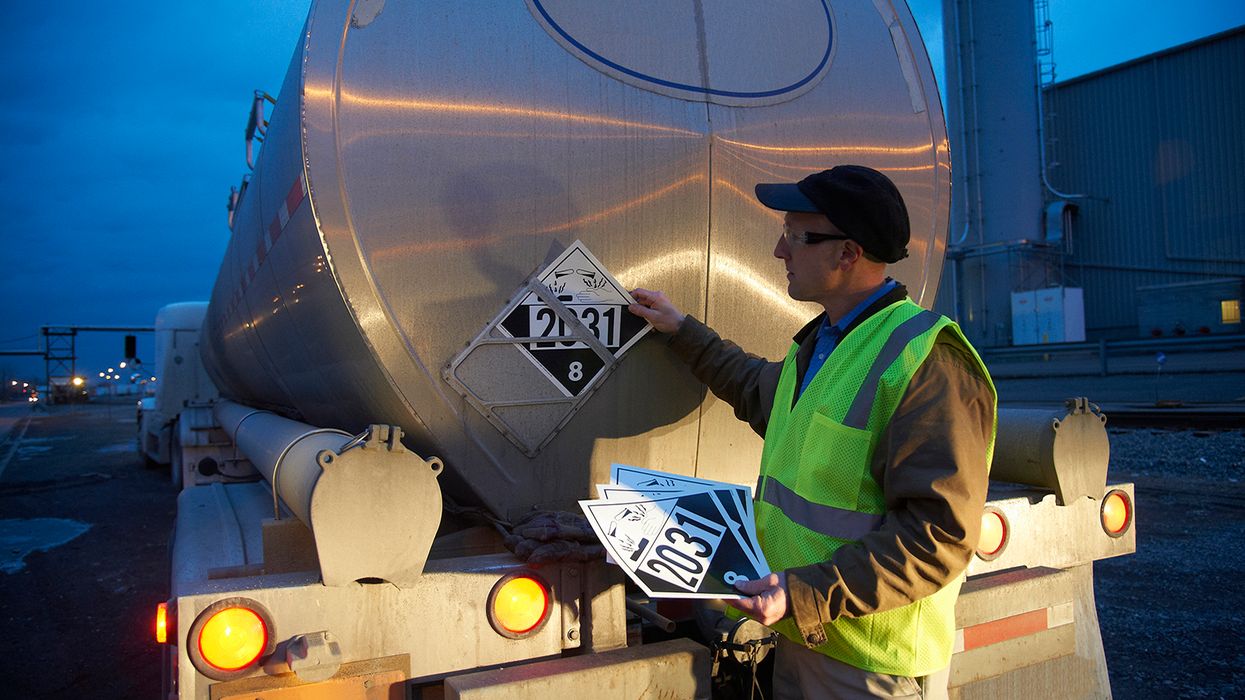
NewsIndustry NewsHazmat SafetyHazmat: HighwayFocus AreaIn-Depth ArticleHazmat EnforcementEnglishTransportationUSA
2022-12-27T06:00:00Z
Placarding responsibility – Whose is it?
Many shippers are unaware of their responsibility to provide placards to drivers, but the responsibility shifts as soon as the driver hits the road.
Check the regulations
According to Section 172.506 of the Hazardous Materials Regulations (HMR), a shipper offering a hazardous material for transportation by highway must provide the motor carrier with the required placards for the material being offered. The shipper must offer the placards to the carrier prior to, or at the same time as, the material is offered for transportation — unless the vehicle is already placarded for the hazmat.
Section 172.506 also states that no motor carrier may transport a hazardous material in a motor vehicle unless the required placards for the hazmat are affixed to the vehicle. Before transport, the driver is responsible for displaying the required placards for all the hazmat that is on the vehicle.
Avoid issues with shippers
Many trailers are equipped with flip placards that represent most classes of hazardous materials but without adequate training, shippers may not understand their responsibility to provide the driver with the required placards. If a driver arrives and the shipper fails to provide placards, the driver should contact dispatch for additional instructions or drive to a truck stop to secure the necessary placards. The driver becomes responsible for placards as soon as the trailer enters a public highway, so train your drivers to temporarily refuse the shipment until the proper placards can be obtained. If necessary, the driver must bobtail or leave empty before driving to pick up placards.
Another common placarding question with shippers involves combination loads. If a driver arrives at a shipper’s location and is already transporting a hazardous material below the placarding threshold, is the shipper required to provide placards for the combination load on the trailer? In this scenario, the driver already has 600 pounds of a Class 8 corrosive material on the trailer, and the shipper is offering an additional 500 pounds of the same commodity. The regulations state that the shipper is only required to provide placards for the commodity that is being offered, not for the aggregate weight of both shipments. In this scenario, the driver is responsible for providing placards since it involves a combination load.
The Hazardous Materials Regulations are complex, especially for newer employees. Drivers that can speak “hazmat” to shippers often secure additional business, so be sure to train your drivers and give them the confidence to have impactful conversations with shippers.
Key to remember: Carry extra placards in case a shipper is unable to supply the required placards or a combination of hazmat on the vehicle requires different placards.
NewsIndustry NewsCMV Parts and MaintenanceParts and Accessories - Motor CarrierFocus AreaIn-Depth ArticleFleet OperationsEnglishTransportationUSA
2026-02-11T06:00:00Z
CARB Clean Truck Check remains enforceable
Don’t misunderstand the recent action from EPA — it does not shut down California’s Clean Truck Check (CTC) program. The state can still enforce the requirements, and trucks operating in the state must continue meeting inspection and emissions requirements.
In January, the U.S. EPA issued a “final partial disapproval” of California's Heavy-Duty Vehicle Inspection and Maintenance (HD I/M) program (also known as Clean Truck Check, or CTC). The move defines which emission reduction credits California can count toward the State Implementation Plan (SIP).
The partial disapproval prevents California from factoring in all of the emission reductions from CTC. Only the emission reductions from California-registered vehicles will count toward the federally mandated attainment demonstration required by the SIP.
What this means for California/CARB
The California Air Resources Board (CARB) may continue state-level enforcement of CTC for all in-state, out-of-state, and foreign-registered vehicles. However, they cannot claim SIP credit for emissions reductions from vehicles not registered in California.
What this means for trucking companies
Trucks not registered in California may still be subject to California enforcement, but EPA will not enforce those requirements federally. California cannot use those inspections or emissions reductions for SIP compliance.
Compliance options for testing
To comply with CARB’s CTC requirements, trucking companies can choose from multiple emissions testing options. Those options include:
- A telematics-based approach: The telematics option is a “set-it-and-forget-it” onboard diagnostics (OBD) test option. With this option, once the telematics device is set up on the vehicle, required data is automatically submitted to CARB.
- Hiring a credentialed tester to perform compliance testing: There are more than 30,000 credentialed testers, 15,000 of which are for hire. The “Credentialed Tester List - CTC-VIS” website features real-time updates to the list.
- Checking out a testing device from specified locations: Anyone can become a credentialed tester by taking the Tester Training Course and passing the exam in the Clean Truck Check-Vehicle Inspection System (CTC-VIS). Fleets can then perform the testing in-house without the need to hire third-party testers.
- Permit option: Finally, for vehicles that rarely operate in California, the HD I/M Regulation includes a five-day pass provision that allows any vehicle in the fleet to be operated in California for up to five consecutive days once per year without meeting the requirements of the rule.
FAQ: Does this regulation apply to my truck or fleet?
CTC applies to almost all diesel, alternative fuel, and hybrid vehicles, with a gross vehicle weight rating over 14,000 pounds, operating on public roads and highways in California — even if they are not registered in California. This includes:
- Government vehicles;
- Motorcoaches;
- Transit, shuttle, and school buses;
- Hybrid vehicles;
- Commercial and personal use vehicles;
- California registered motorhomes; and
- Single-vehicle fleets.
Freight contractors and brokers must:
- Only contract with compliant vehicles or fleets, and
- Comply with the record keeping requirements.
Ports and railyards also have requirements regarding CTC compliance status of vehicles and access to their facility.
Key to remember: EPA’s recent action does not end California’s CTC program. CARB enforcement continues, and trucks operating in the state are still required to comply with all program requirements.

NewsIndustry NewsFleet SafetyPassenger vehiclesPassenger carriersFocus AreaIn-Depth ArticleEnglishSchool busesTransportationUSA
2022-11-11T06:00:00Z
When are “P” and “S” endorsements required?
Drivers who operate passenger-carrying commercial motor vehicles (CMVs) requiring a commercial driver’s license (CDL) per 383.5 must have the correct endorsement(s). Endorsement questions do not always have a simple answer, depending on the circumstances.
This article covers the basics with the “P” (passenger) and “S” (school bus) endorsements and a few less common scenarios.
Endorsement basics
CDL passenger-carrying vehicle drivers may be required to have one or both endorsements below as part of their CDL driving privileges. The following guidance is from Part 383:
- Passenger-carrying vehicle requiring a “P” endorsement: A CDL CMV designed to carry 16 or more passengers, or the vehicle is 26,001 pounds or greater and is designed to carry any number of passengers.
- School bus or vehicle requiring an “S” endorsement: A CDL CMV used to transport pre-primary, primary, or secondary school students between home and school, or to and from school-sponsored events. A school bus endorsement does not include operations of a for-hire motor carrier.
Both endorsements require prior completion of the respective Entry-Level Driver Training (ELDT) module from an entity on the Training Provider Registry (TPR).
- ELDT “P” endorsement training covers operating a passenger-carrying CMV, learning how to load and unload passengers, responding to emergencies, handling troublesome passengers, and other tasks.
- ELDT “S” endorsement training covers how to load and unload children, properly operate the lights, stop signs, and other warning devices on the school bus, and other needs specific to transporting children on a pre-determined bus route to and from their homes and schools.
Both endorsements also require knowledge and skills tests administered by the driver’s CDL licensing authority once the respective ELDT training module is complete. To be eligible for the “S” endorsement tests, a driver must first have their “P” endorsement.
It is important to note that individual states may require special permits to drive non-CDL passenger-carrying CMVs.
Also, drivers operating vehicles that weigh less than 26,001 pounds and are manufacturer-rated for at least nine passengers and fewer than 16 passengers, including the driver, are regulated CMVs but are not required to have a CDL or either endorsement.
Endorsement scenarios
The required endorsements are not always clear when school buses and modified passenger-carrying CDL vehicles are involved.
School buses:
The “P” and “S” endorsements are tied to passenger movement. However, per interpretation 10 from 383.93, only a “P” endorsement is required for operating a school bus when:
- Delivering school buses from the manufacturer,
- Operating empty school buses on test drives, and
- Driving to and from events not sponsored by a school.
Modified vehicles:
A couple of key points on vehicles initially designed to carry passengers are:
- A modified vehicle that no longer carries passengers does not require a CDL unless it is 26,001 pounds or greater, or hauls placardable hazardous materials per interpretations 1 and 11 in 383.5.
- Passenger-carrying CMVs that are 26,001 pounds or greater, modified to have no passenger seating, do not require a “P” endorsement.
The following table covers several endorsement scenarios based on current federal regulatory guidance.
| Scenario | No endorsement | P endorsement | S endorsement |
|---|---|---|---|
| Between school and home or to school-sponsored events | X | X | |
| Non-school sponsored after school events | X | ||
| Mechanic or manufacturer’s representative test drive of an empty school bus | X* | ||
| Modified passenger-carrying CMV of 26,001 pounds or more with passenger seating | X | ||
| Modified passenger-carrying CDL CMV with no passenger seating | X | ||
| Driveaway-towaway from a manufacturer | X* |
Key to remember: When drivers operate passenger-carrying CDL CMVs, be sure which endorsement(s) are needed, if any.

NewsIndustry NewsFleet SafetyDriver qualificationsDrivers qualification (DQ file)Multiple-employer driverDriver qualification and hiringFocus AreaIn-Depth ArticleEnglishTransportationUSA
2022-06-28T05:00:00Z
Temporary driver DQ files - Exceptions exist, but with watchouts
Qualified drivers are in short supply. Utilizing drivers from staffing services (temp agencies) and on loan from other carriers are alternatives to recruiting and hiring company drivers. Often, there is a need to find drivers to cover for a short surge in business, and creating driver qualification (DQ) files is time-intensive.
However, driver qualification files that are compliant with Part 391 are necessary to verify that the drivers operating your commercial motor vehicles (CMV) are safe. There are two exceptions to the complete DQ file requirements, which are:
This article covers basic DQ requirements at the time of hire under Part 391, the two DQ file exceptions, and associated watchouts.
Driver qualification basics
Per 390.5, anyone who operates a CMV in interstate commerce on a “highway” or any area open to the public is a “driver.” All drivers must be fully qualified under the Federal Motor Carrier Safety Regulations (FMCSRs) by the carrier using the driver, regardless of who pays the driver, unless an exception applies. Drivers include, but are not limited to, CMV operators who are:
- Full-time,
- Seasonal or intermittent,
- Loaned by another carrier or from a staffing service,
- Leased owner-operators, or
- Mechanics who test-drive CMVs.
A DQ file at the time of hire must have the following documents per 391.51:
- Driver application,
- Road test certificate or copy of a commercial driver’s license (CDL),
- Initial motor vehicle records (MVRs)*,
- Proof of medical certification (and any exemptions), and
- Verification of the medical examiner’s National Registry listing.
*Initial MVRs from all states where the driver held a vehicle operator’s license within the past three years.
A driver investigation file, or safety performance history, per 391.23 must contain verification of the following within 30 days of the hire date from Department of Transportation (DOT)-regulated employers in the past three years:
- Dates of employment;
- DOT accidents, as defined in 390.5, and any other incidents that an employer wishes to share; and
- DOT drug and alcohol testing violations for drivers of vehicles requiring a CDL.
391.63 Multiple-employer drivers
The multiple-employer exception can be used if a motor carrier uses a driver from a staffing service who is:
- Fully qualified by a carrier, and
- In any period of seven consecutive days, is used as a driver by more than one motor carrier.
Under 391.63, the carrier need not:
- Require a DOT employment application per 391.21;
- Make investigations and inquiries, except CDL drivers, must have DOT drug and alcohol background checks per 382.413 and 40.25(b);
- Perform the annual driving record inquiry per 391.25(a); or
- Perform the annual review of the person’s driving record per 391.25(b).
However, before a temp-agency driver operates a CMV, the carrier must obtain and keep for employment plus three years:
- The driver’s name and Social Security number;
- The driver’s license number, type of license, and issuing authority;
- Medical certificate for non-CDL drivers and proof that the certified medical examiner (CME) was on the National Registry; and
- For CDL-vehicle drivers, the carrier must obtain:
- CDLIS MVR as proof of medical certification after 15 days from the last DOT exam (med card is only allowed as proof in the 15 days after the exam), and the note that the examiner was on the National Registry;
- Confirmation from the driver whether they failed or refused a DOT pre-employment drug test and did not obtain employment in the past two years per 40.25(j); and
- The prior ten years of regulated CDL-vehicle driving employment history per 383.35(c).
Watch-out: FMCSA guidance below gives carriers the option to allow drivers to remain in the temp agency’s DOT testing program under certain conditions. The driver does not have be a multi-employer driver, in other words, does not have to work for two carriers in 7 days to remain in a temp agency’s DOT testing program.
FMCSA guidance regarding the use of a temp agency’s DOT drug and alcohol testing programs is as follows:
- The driver must be in the carrier’s DOT drug and alcohol program unless, at the time of assignment to work for the carrier, the driver is expected to work for the carrier for less than 30 consecutive days.
- If expected to work for the carrier for less than 30 consecutive days, the driver can remain in the temp agency’s compliant DOT drug and alcohol testing program if one exists.
- If the driver is expected to work for the carrier for more than 30 days, the driver must be in the carrier’s DOT drug and alcohol testing program.
Watch-out: FMCSA has not been clear on whether they require a pre-employment query when the driver remains in the temp agency’s DOT program. To be sure the driver isn’t prohibited, run the query.
Best practice is to include a temp driver in the carrier’s DOT testing program even if expected to work for the carrier for less than 30 consecutive days.
391.65 Drivers furnished by other motor carriers
If a secondary carrier employs a driver who is fully qualified by a primary carrier and works for at least two carriers in sevendays, the primary carrier can provide a certificate or written statement that:
- Is signed and dated by an officer or authorized employee of the primary carrier that employs the single-employer driver; • Contains the driver’s name and signature;
- Certifies that the driver is employed as a single-employer driver and is fully qualified to operate a CMV under Part 391;
- States the medical examiner’s certificate expiration date;
- Is substantially following the form in 391.65(a)(2)(vii); and
- Must be retained by the second carrier for three years from the end of driving employment with the second carrier.
Watch-out: The certificate issued under 391.65 is not valid after the driver leaves the primary carrier, if the medical certificate expires, or for any other reason the driver is no longer qualified.
The exception does not cover the Part 382 DOT drug and alcohol requirements. For CDL-vehicle drivers, the secondary carrier must:
- Conduct DOT drug and alcohol background checks per 382.413 and 40.25(b);
- Confirm whether the driver failed or refused a DOT pre-employment drug test and did not obtain employment in the past two years per 40.25(j);
- Obtain the prior ten years of regulated CDL-vehicle driving employment history per 383.35(c);
- Include the driver in the DOT random drug and alcohol testing pool even if using the pre-employment testing exception in 382.301(b) and (c);
- Increase DOT random pulls to account for average additional temp driver(s), and
- Run a pre-employment query.
Watch-out: If a driver works for only one DOT number in any period of seven consecutive days, they are not a “multi-employer driver” as defined in 390.5. The driver must be fully qualified by the carrier using the driver, even if the companies are sister companies with different DOT numbers.
Other regulations that apply when using drivers under both exceptions:
- Part 383 CDL Licensing. Driver must have an active CDL with endorsements for the vehicle(s) operated;
- Part 392 Driving of Motor Vehicles and Part 395 Hours-of-Service (HOS). Comply with applicable regulations and have HOS records under both carriers; and
- Part 393 Parts and Accessories and Part 396 Maintenance and Inspections. Conduct pre-trip and post-trip inspections on each vehicle and fill out DVIRs if a defect is found.
In summary
As a best practice, a carrier may choose to fully qualify each driver to reduce potential risk and compliance issues. Although taking these extra steps takes time and creates more work for carriers, it may pay off in the end.
Keys to remember: A “multi-employer driver” is a driver who works for at least two carrier DOT numbers in each seven-day period and is fully qualified by at least one carrier. Regardless of who pays the driver, the carrier using the driver is accountable for compliance, even when an exception may apply.
NewsIn-Depth ArticleEnglishLifesaving EquipmentIndustry NewsFleet SafetySafety & HealthConstruction SafetyGeneral Industry SafetyAgriculture SafetyMaritime SafetyFirst Aid and MedicalFocus AreaMine SafetyFirst Aid and MedicalTransportationUSA
2023-11-02T05:00:00Z
First aid supplies: Lock ‘em up or leave ‘em out?
One way employers try to handle skyrocketing inflation is to manage first aid supplies. But do OSHA regulations allow employers to lock first aid supplies as a way to control costs?
Our experts are often asked whether OSHA permits locking first aid supplies. In a January 23, 2007, OSHA letter of interpretation (LOI), OSHA confirmed that first aid cabinets can be locked. The LOI stated, however, that first aid supplies must be readily accessible in the event of an emergency. Additionally, 29 CFR 1910.151(b) states: “In the absence of an infirmary, clinic, or hospital in near proximity to the workplace which is used for the treatment of all injured employees, a person or persons shall be adequately trained to render first aid. Adequate first aid supplies shall be readily available.”
What is “readily available”?
OSHA defines “readily available” as accessible within three to five minutes and warns that locking first aid supplies, whether kits or cabinets, may limit employee accessibility per the standard. The agency advises that if an employer was relying on first aid services not provided by a clinic, infirmary, or hospital and adequate first aid supplies were not available when needed, then the employer would be in violation of 1910.151(b).
But my supplies are disappearing at an alarming rate!
If you’re concerned with supplies being used in a manner not intended by the company, there are ways to manage supplies. For example, employers could use vending machines that allow employees to scan their badges and get basic supplies or personal protective equipment free of charge. This can help employers manage their supply chain and evaluate by whom and for what supplies are being used.
If opting to lock your first aid supplies, remember to make supplies readily accessible (within three to five minutes). This may require that additional keys for locks be made available to multiple personnel at all times when workers are present.
What supplies are required for my first aid kits?
Although their recommendations are non-mandatory, OSHA suggests using the American National Standards Institute (ANSI) for reference to determine what supplies you need to have. The contents for Class A kits listed in the ANSI standard should be adequate for small worksites. Class B kits are designed with a broader range and quantity of supplies to deal with injuries in more complex or high-risk environments (for example, larger operations or multiple operations conducted at the same location).
It’s important to note that although OSHA is still citing ANSI’s 1998 standard, an updated version of the standard, ANSI/International Safety Equipment Association (ISEA) Z308.1-2021, was approved on April 15, 2022, and went into effect on October 15, 2022. Major changes to the standard included:
- Changing tourniquet type to ensure it meets first aid needs. The equipment intended to prevent blood loss should be at least 1.5 inches wide and be effective for limb sizes 7–33 inches around.
- Making foil blankets mandatory. This measure was enacted after assessing similar international standards and recognizing “the multiple purposes that the item can serve to respond to first aid emergencies.”
- Providing further guidance on bleeding control kits. According to ISEA, these “contain more advanced first aid supplies to immediately treat life-threatening external bleeding.”
Determining what first aid supplies should be accessible depends on the workplace hazards and potential injuries. A great place to begin is by assessing your Form 300 injury logs to see the types of injuries already reported. Most employers perform risk assessments, beginning with a review of the Form 300 logs, to drive their decisions. OSHA also provides guidance to employers in 1910.151 Appendix A.
Keys to Remember
Employers must understand the accessibility risks associated with locking first aid cabinets even though OSHA and ANSI do not prohibit this practice. First aid supplies must be readily accessible (within three to five minutes) in the event of an emergency.
NewsIndustry NewsFleet SafetyHours of ServiceHours of ServiceCMV drivingFocus AreaIn-Depth ArticleEnglishTransportationUSA
2023-08-31T05:00:00Z
Wired to work: How the hours-of-service utility exemption energizes critical services
Truck drivers face unique challenges on the road and understanding the utility exemption for hours of service can be a game changer. Learn how this exemption empowers drivers to optimize their schedules and enhance efficiency.
The utility exemption explained
This exemption applies to drivers of vehicles that qualify as “utility service vehicles” as defined in 395.2.
Here is a critical point: The vehicle/driver must meet all three requirements listed in the definition of a utility service vehicle provided in 395.2 to be able to use this exemption. The three requirements are:
- The driver/vehicle must be repairing, maintaining, or operating structures or other physical facilities necessary for the delivery of public utility services,
- The driver/vehicle must be involved in activities related to the ultimate delivery of utility services to the consumers, and
- Except for any occasional emergency use, the driver/vehicle must operate primarily within the service area of a utility’s subscribers or consumers.
Drivers involved in building new utility structures in general are not eligible for this exception. However, if the driver is going back and forth from new construction to repairing, maintaining, or operating utility infrastructure, the driver will be covered by the exemption when involved in these activities, but not covered while involved in new construction.
When involved in new construction and covered by the hours-of service requirements, the driver would have to follow the limits in the hours-of-service regulations and maintain a log (or a time record if the 150 air-mile exemption applies). If the driver had to complete a log more than 8 days in the previous 30 days, the driver would have to use an electronic log on the days the driver is required to log.
| Click here to learn more about hours-of-service exemptions. |
What about the other safety regulations?
One point to remember is that when the driver is using the utility service vehicle exemption, all other safety regulations, such as driver qualification and licensing, safe driving, parts and accessories, vehicle inspection and maintenance, and DOT drug and alcohol testing, still apply to the driver and company. The driver is only exempt from the hours-of-service regulations.
While not directly related to the utility service exception, “blanket” exceptions exist for drivers responding to a declared emergency, usually stemming from a natural disaster. Drivers/vehicles that qualify for these exceptions are exempted from all safety regulations when they are responding, with the exception of the CDL and drug and alcohol testing regulations.
Once the driver is done working in support of the declared emergency or the emergency condition is no longer an emergency, the driver and vehicle are once again covered by the regulations.
Key to remember: The utility exemption provides truck drivers with needed flexibility that harmonizes the demands of the job with the importance of maintaining safe and efficient operations on the road.
Most Popular Highlights In Human Resources

NewsIndustry NewsIndustry NewsHR GeneralistFamily and Medical Leave Act (FMLA)Family and Medical Leave Act (FMLA)USAHR ManagementEnglishFocus AreaHuman Resources
2023-09-06T05:00:00Z
Appellate court sided with employee's (almost) 3-year-delayed FMLA claim
Back in October 2018, Laffon had a medical emergency and needed some time off under the federal Family and Medical Leave Act (FMLA).
Her leave lasted until November 15. Ten days after she returned to work, on November 26, her employer terminated her.
She sued, arguing that the employer retaliated against her because of her FMLA leave.
The catch? She didn't bring the suit until almost three years later.
No link between leave and termination
In court, the employer argued that there was no causal link between Laffon taking FMLA leave and her termination. Although the court documents aren't robust, they do reveal that the employer indicated that Laffon's allegations didn't show that her taking FMLA leave was a factor in the decision to terminate her. The documents showed only that the termination chronologically followed her leave.
The court agreed with the employer. It also agreed that Laffon failed to allege a willful violation of the FMLA, which would allow her to benefit from the FMLA's three-year statute of limitations.
Laffon appealed the case to the Ninth Circuit.
Statute of limitations
Under the FMLA, employees have two years from the date of the last event constituting the alleged violation for which they can bring a claim.
Those two years are extended to three years if the employer's actions were "willful." This means that an employee must show that the employer either knew or showed reckless disregard for whether its conduct violated the FMLA.
Ruling overturned
Fast forward to August 2023, when the Ninth Circuit reversed the lower court's decision. It indicated that, based on Laffon's amended complaint and liberally construing the law, her allegations establish that her leave was causally connected to her termination and that the employer's action (her termination) was willful.
Glymph v. CT Corporation Systems, No. 22-35735, Ninth Circuit Court of Appeals, August 22, 2023.
Key to remember: Terminating an employee soon after returning from FMLA leave is risky, unless there is a clear, well-documented, non-leave-related reason. Case documents did not show such a clear reason, which can also increase the risk of a willful finding. Employees have time to file claims, even years.

NewsIndustry NewsAssociate Benefits & CompensationHR GeneralistFamily and Medical Leave Act (FMLA)In-Depth ArticleFamily and Medical Leave Act (FMLA)Associate RelationsEnglishHR ManagementFocus AreaHuman ResourcesUSA
2025-03-27T05:00:00Z
Who can fill out FMLA forms? The answer might surprise you
One of the most common questions involving the federal Family and Medical Leave Act (FMLA) that we see is: “Can ________ fill out the medical certification?”
This question stumps a lot of HR people and can be a little confusing.
It might be easier to start with who CAN’T fill out an FMLA certification. That includes your coworker, best friend, neighbor, or pet.
Jokes aside, often (but not always) a doctor fills out the FMLA certification, and since March 30 is “Doctors’ Day,” this is a great time to discuss this topic.
FMLA certification basics
Employers aren’t required to use certifications, but if they do, the U.S. Department of Labor (DOL) has five different certification forms to use for various FMLA leave situations.
The forms are as follows:
- Certification of Health Care Provider for Employee's Serious Health Condition,
- Certification of Health Care Provider for Family Member's Serious Health Condition,
- Certification of Qualifying Exigency for Military Family Leave,
- Certification for Serious Injury or Illness of a Current Servicemember for Military Family Leave, and
- Certification for Serious Injury or Illness of a Veteran for Military Family Leave.
Let’s focus on the first two, as these are the most common ones HR administrators use.
Who can fill out an FMLA certification?
The FMLA regulations describe the person who has the authority to fill out a certification as a “health care provider.” The good news is, the regulations include a lengthy list of medical professionals who fit this role.
Under the FMLA, a health care provider includes:
- A doctor of medicine or osteopathy,
- A podiatrist,
- A dentist,
- A clinical psychologist,
- An optometrist,
- A chiropractor (limited to manual manipulation of the spine as demonstrated by X-ray),
- A nurse practitioner,
- A nurse midwife,
- A clinical social worker,
- A physician assistant,
- A Christian Science practitioner, and
- Any health care provider from whom the employer or the employer's group health plan's benefits manager will accept a medical certification to substantiate a claim for benefits.
To be qualified to fill out FMLA forms, medical professionals must be authorized to practice in the state and perform within the scope of their practice. This means that the provider must be authorized to diagnose and treat physical or mental health conditions.
What about doctors in a foreign country?
If an employee or an employee's family member is visiting another country, or a family member resides in another country, and a serious health condition develops, the employer must accept a medical certification from a health care provider who practices in that country. This includes second and third opinions.
If a medical certification from a foreign health care provider is not in English, the employee may be required to provide a written translation of the certification.
Key to remember: The FMLA regulations spell out which medical professionals can fill out certification forms.

NewsMonthly Roundup VideoFamily and Medical Leave Act (FMLA)LeaveFamily and Medical Leave Act (FMLA)USAHuman ResourcesLeaveHR ManagementEnglishAssociate Benefits & CompensationDiscriminationIndustry NewsGovernment contractsGovernment ContractsHR GeneralistFocus AreaAssociate RelationsExecutive Order 11246Video
HR Monthly Round Up - April 2026
In this April 2026 roundup video, we’ll review the most impactful HR news.
Welcome, everyone! In the next few minutes, we’ll review the latest HR news. Let’s get started.
Sometimes employees go on leave at really inconvenient times. But the federal Family and Medical Leave Act doesn’t care about that. If an employee’s eligible for FMLA leave and the reason qualifies, employer convenience doesn’t matter. This is true even if the employee is considered an essential worker during hurricane season, as a recent Florida court case showed.
In Burrows v. Prummell, the judge denied the employer’s request to dismiss the case in which a sheriff’s office employee took FMLA leave in the midst of emergency weather. As a result, this case will proceed to a jury trial, unless it’s settled.
Speaking of the FMLA, Nevada recently became the first state to limit what doctors can charge for filling out FMLA certifications for their patients. Effective January 1st, 2026, health care providers in Nevada may not charge more than $30 for this task.
The FMLA doesn’t govern whether or how much health care providers charge for a certification. And not all providers charge a fee, but many do, with some charging more than $100.
Remember, though, no employer — in Nevada or any other state — is required to use FMLA certifications. But many employers DO use them to help verify the leave. Stay tuned to see if other states follow in Nevada’s footsteps.
Two other quick updates. On March 31st, members of Congress introduced first-of-its-kind legislation regarding paid leave. If passed into law, it would require covered employers to provide eligible employees paid leave for reproductive health care reasons. The Reproductive Healthcare Leave Act would allow employees to take up to 12 days of paid leave each calendar year.
And, finally, an Executive Order titled “Addressing DEI Discrimination by Federal Contractors” was issued by President Trump on March 26th. It’s the latest in a series of actions taken by the administration targeting what it views as unlawful Diversity, Equity, and Inclusion practices. Although legal challenges are anticipated, federal contractors and sub-contractors that don’t comply could have contracts cancelled.
That’s all the HR news we have time for today. Thanks for watching. See you next month!

NewsIndustry NewsHR GeneralistFamily and Medical Leave Act (FMLA)In-Depth ArticleFamily and Medical Leave Act (FMLA)HR ManagementEnglishUSAFocus AreaHuman Resources
2022-11-18T06:00:00Z
FMLA — What does (and doesn’t) count toward 1,250 hours worked?
Employers sometimes get tripped up on how to calculate the 1,250 hours worked eligibility criterion when employees need leave under the Family and Medical Leave Act (FMLA).
Does working overtime count toward the 1,250?
Recently, someone asked if overtime hours counted toward the 1,250 hours worked requirement (it does).
All hours actually worked apply to the 1,250, whether overtime or regular time, even if the overtime is not mandatory.
The 1,250 hours is calculated in relation to when the leave will begin, not when the employee puts an employer on notice of the need for leave.
Whether an employee is allowed to work overtime, however, is generally up to company policy. As far as pay goes, remember, if the employee is nonexempt (“hourly”) and works any overtime (mandatory or voluntary) the employee must be paid time and one-half for all hours worked over 40 within the workweek.
More about FMLA leave requirements
To be eligible to take FMLA leave, employees must:
- Have worked at least 1,250 hours in the 12 months before leave is to begin,
- Have worked for their employer at least 12 months, and
- Work at a location with at least 50 company employees within 75 miles.
Whether an employee has worked the minimum 1,250 hours is calculated based on determining compensable hours or work under the Fair Labor Standards Act (FLSA).
Calculating the 1,250 hours worked
When it comes to figuring out if an employee has worked at least 1,250 hours, it can get tricky. As was mentioned above, all hours worked, regular and overtime, must be counted.
Hours not worked should not be counted. The “not worked hours” include such time off as vacation time, sick leave, paid or unpaid holidays, or any other time in which an employee isn’t actually working — which can include disability, bereavement, FMLA and other forms of leave.
Once an employee meets the three eligibility criteria, including the 1,250 hours worked, for a particular leave reason, the employee remains eligible for the duration of the 12-month leave year period.
If the employee needs leave for another, different reason, eligibility would be recalculated.
Key to remember: All hours worked must be included in the 1,250 hours criterion when determining whether an employee is eligible for FMLA leave. Hours that aren’t worked (like vacation) are not included.

NewsIndustry NewsIndustry NewsAssociate Benefits & CompensationAssociate RelationsHR GeneralistFamily and Medical Leave Act (FMLA)Family and Medical Leave Act (FMLA)HR ManagementEnglishFocus AreaHuman ResourcesUSA
2026-04-15T05:00:00Z
Nevada is the first state to limit what doctors can charge for FMLA certifications
Effective January 1, 2026, health care providers in Nevada may not charge more than $30 to complete a certification under the federal Family and Medical Leave Act (FMLA). This is the first state law (HB 305) enacted to address this particular issue. The state will adjust the $30 each January 1 based on the Consumer Price Index.
Why does this matter?
Employers may require that employees support their need for FMLA leave with a certification from a health care provider, but employees bear the cost of the certification. The FMLA doesn’t govern whether or how much health care providers charge for a certification, and in some situations, health care providers charge over $100 to complete them.
Such high costs can deter employees from getting a certification completed. But without a certification, employers might not be able to determine if the reason for the leave qualifies for FMLA protections. Without it, they might risk losing their job.
In some cases, employees might be left trying to find a doctor who doesn’t charge any fees to complete an FMLA certification, or at least charges less.
FMLA certification deadline
Since employees have 15 calendar days to give the employer the requested certification, hunting for a new doctor who doesn’t charge a certification fee can be challenging. The current doctor shortage can make it even harder.
Employers can hold employees to the deadline unless extenuating circumstances are involved. The FMLA regulations don’t explain what does or doesn’t qualify as “extenuating circumstances.” Trying to find a doctor who will complete a certification for a reasonable fee might be an extenuating circumstance. As long as the employee is putting forth a good-faith effort to get a certification, the employer might need to be flexible.
Takeaways for all employers
Nevada isn’t usually a bellwether state, but it’s at the forefront of controlling FMLA certification costs. Now that one state has blazed the trail on curbing certification costs, perhaps others will follow suit.
It’s important to note that no employer — in Nevada or any other state — is required to use FMLA certifications to approve (or deny) an employee’s leave. Many employers use certifications to help verify that the leave qualifies and to obtain information about leave schedules. But it’s not a mandated part of the FMLA process.
Key to remember: Employers in Nevada might find that employees are more forthcoming with FMLA certifications, now that they cost no more than $30.

NewsIndustry NewsEnglishHR GeneralistIn-Depth ArticleUSAHR ManagementWellnessWellnessFocus AreaHuman Resources
Bring some green indoors to enhance job performance and employee well-being
Green is the color of March, as it signals the St. Patrick’s Day holiday as well as the emergence of spring. Did you know that bringing some green into your workplace can have benefits year-round?
A Harvard Business Review study found that bringing small pieces of nature into the workplace positively impacts employee performance and well-being.
The potted plant test
Researchers tested their theory by going into an office at night and placing potted plants by the desks of some employees. They placed office supplies on other employees’ desks.
The employees who were exposed to this small dose of nature displayed higher job performance, an increased desire to help, and enhanced creativity. No one was negatively impacted.
Bringing nature indoors
Live plants can’t be part of every work setting, but they’re not the only way to bring the benefits of nature indoors.
Nature-related elements can include:
- Windows with views of nature
- Indoor water features
- Murals of natural scenes
- Artificial plants or flowers
- Fish aquariums
Design features related to nature can also be more significant and included in building plans. For example, investing in landscaping designs outside office windows or having an indoor garden are ways to positively impact employees.
These options don’t have to break the bank or require a pot of gold, however. Simply allowing employees to place potted plants by their desks is an inexpensive way to enhance the workplace.
With a little luck, everyone will reap the benefits for having a little more green nearby.
Key to remember: Bringing natural touches to the workplace can have a positive impact on job performance, cooperation, and creativity.
Most Popular Highlights In Safety & Health

NewsIndustry NewsSafety & HealthConstruction SafetyGeneral Industry SafetyAgriculture SafetyMaritime SafetyIn-Depth ArticleHazard CommunicationHazCom Written ProgramEnglishFocus AreaUSA
2026-05-06T05:00:00Z
Got chemicals? You may need a written HazCom program
What triggers the need for a written Hazard Communication (HazCom) program? The answer to this popular Expert Help question depends on certain requirements, definitions, and exceptions within the standard at 29 CFR 1910.1200. Simply put, if all four of the following statements apply, you must develop, implement, and maintain a written HazCom program at each workplace:
- Your organization is an employer. OSHA defines “employer” at 1910.1200(c) as “a person engaged in a business where chemicals are either used, distributed, or are produced for use or distribution, including a contractor or subcontractor.”
- The HazCom standard applies. If you’re an employer, the standard applies if you have any hazardous chemical that’s known to be present in the workplace in such a manner that employees may be exposed under normal conditions of use or in a foreseeable emergency. “Hazardous chemical” means any chemical which is classified as a physical or health hazard, simple asphyxiant, combustible dust, or hazard not otherwise classified (HNOC).
- At least one area/operation of the workplace where hazardous chemicals are present is covered by 1910.1200 and not simply exempted under paragraph (b)(3) or (b)(4). According to these paragraphs, OSHA does not require a written HazCom program to be developed for:
- Laboratories [Note: See our Lab applicability FAQ for details on when a laboratory is covered by 1910.1450 or 1910.1200.], or
- Work operations where employees only handle chemicals in sealed containers that are not opened under normal conditions of use, such as those found in marine cargo handling, warehousing, or retail sales.
It should be noted, however, that these operations do have other obligations under the HazCom standard, outlined at 1910.1200(b)(3) and (b)(4).
- At least one hazardous chemical in the workplace is covered by the standard and is not exempted under 1910.1200(b)(6). (Paragraph (b)(6) exempts certain substances from coverage by the HazCom standard.)
What information must the written program include?
Paragraph (e) of 1910.1200 outlines written program requirements. Although the program doesn’t need to be lengthy or complicated, it must include enough detail to explain how your organization is complying with the HazCom standard. There are specific elements OSHA will look for to ensure compliance:
- A list of the hazardous chemicals known to be present in the workplace that matches the identifier on the container label and the safety data sheet (SDS).
- The designation of person(s) responsible for ensuring labeling of in-house containers and the person(s) responsible for ensuring labeling of shipped containers (if any).
- A description of any in-house labeling system(s) and any labeling alternatives used in the facility (if applicable).
- A description of HazCom training provided to employees.
- Procedures to review and update label information when necessary.
- Methods used to inform employees of the hazards of non-routine tasks, such as cleaning reactor vessels, and the hazards of unlabeled pipes in their work areas.
- An explanation of how the employer will comply on multi-employer worksites. Employers on multi-employer worksites who do not use hazardous chemicals, but whose employees are exposed to the chemicals used by other employers on the worksite, are required to have a program and train their employees on the hazards of the chemicals in the work areas.
Key to remember: If you’re covered by the HazCom standard, you may need a written program. It must include specific elements listed in 1910.1200(e).
NewsIndustry NewsMaterials Handling and StorageSafety & HealthGeneral Industry SafetyWalking Working SurfacesFocus AreaIn-Depth ArticleWalking Working SurfacesEnglishMaterials Handling and StorageStorage RacksUSA
2026-01-13T06:00:00Z
Does OSHA require posting load limits for storage and working areas?
OSHA does not specifically require posting load limits on storage racks or walking-working surfaces. However, OSHA has issued General Duty Clause citations for overloading storage racks. Storage areas are treated a bit differently from employee working surfaces.
Walking-Working Surfaces
For many years, employers were required to post a plate on mezzanines, platforms, or similar work areas showing the weight capacity or load rating approved by a building official. OSHA removed that requirement in 2017, so these capacity plates are no longer required.
The current regulation at 1910.22(b) simply requires employers to ensure that each walking-working surface can support the maximum intended load. OSHA reasoned that builders consider maximum loads during design and construction.
Employers can certainly leave existing capacity plates in place and may want to check local building codes, which may still require a weight capacity posting.
Storage areas and racks
OSHA doesn’t explicitly require posting storage areas or shelves with weight capacities. Still, the agency has cited employers for unposted storage systems, particularly if a collapse occurred.
The weight of stored materials must not exceed the safe weight limits of shelving. Most industrial shelving is already labeled, helping identify capacities for each shelf or shelving unit. For shelving not labeled or built in-house, OSHA recommends determining capacity limits using sound engineering calculations, then clearly marking storage equipment with safe load capacities. Again, this isn’t technically required, but it can go a long way toward reducing human error and avoiding a possible General Duty Clause citation.
Other storage hazards
OSHA also looks to ANSI/RMI MH16.1 – Specification for the Design, Testing and Utilization of Industrial Steel Storage Racks, which recommends securing storage racks of various types and heights. This increases their stability and decreases the potential for tipping over.
Damaged shelves or supports, improper installation, and unsafe modifications can all increase the risk of worker injury. Storage shelving must be installed appropriately, limited to a safe height, secured properly, and guarded to prevent damage.
Mitigating shelving hazards
Employers are responsible for identifying and mitigating shelving hazards in the workplace. Some effective ways of protecting workers include:
- Inspect shelving and racking regularly for damage or defects. Train workers to report any damage, loose bolts, or other concerns immediately.
- Remove any damaged shelving or immediately isolate the affected area until it can be repaired or replaced.
- Label shelving and storage racks with load capacities and do not exceed storage capacities.
- Install guards on shelving uprights to prevent damage from incidental vehicle or forklift contact.
- Ensure materials stored on shelving, racks, and other storage devices are stacked, blocked, interlocked, and limited in height so they remain stable and secure.
- Ensure that materials don’t protrude from storage areas, such as boards or other items extending into pedestrian or vehicle aisles.
- Train workers to store heavier loads on lower or middle shelves and lighter loads on higher shelves.
Every employer that maintains sales stock or manufacturing supplies needs a safe and secure way to store those items. Following these best practices helps ensure that the storage itself doesn’t create additional hazards to workers.
Key to remember: Although OSHA no longer requires posting load ratings on working surfaces, employers should have load ratings on storage areas to help prevent overloading.

NewsIndustry NewsElectronic Reporting of Injury and Illness RecordsSafety & HealthConstruction SafetyGeneral Industry SafetyIn-Depth ArticleUSAEnglishFocus AreaInjury and Illness Recordkeeping
2023-03-29T05:00:00Z
Which NAICS code should you use for OSHA?
Employers must select a North American Industry Classification System (NAICS) code for every establishment, which usually means a single business location. This code determines whether the establishment is exempt from keeping an OSHA 300 Log. For locations that must keep a 300 Log, the code determines whether the establishment must submit injury data to OSHA by March 2nd.
Choosing the correct year
The NAICS codes get updated every five years, with 2022 as the most current. Adding confusion, different OSHA regulations use different versions of the codes. For example:
- Employers trying to determine if they’re exempt from keeping a 300 Log under 1904.2 must use the 2002 codes.
- Employers trying to determine if they must submit injury data to OSHA by March 2nd must use the 2017 codes (OSHA updated from the 2012 codes as of January 1, 2024).
Searching codes online may default to the 2022 version, and some codes changed. For example, the 1904.41 appendix lists 4529 for “Other general merchandise stores” which covers retail outlets like dollar stores and variety stores. However, searching that code in the 2022 list shows “no result” since that number changed. The 2022 NAICS code for general merchandise stores is 4552, but that code does not appear in OSHA’s appendix. Employers using the 2022 NAICS codes may incorrectly believe their establishment is not on OSHA’s list.
Employers can search older versions of the NAICS codes at https://www.census.gov/naics/ which also indicates whether a particular code has changed in more recent versions.
Choosing the correct code
In addition to using the NAICS list for the correct year, employers must choose the correct code for each establishment. If a location engages in more than one type of business activity, employers must choose only one NAICS code for OSHA recordkeeping. OSHA says to choose the code for the activity that generates the most revenue or has the most employees.
In some cases, employers can divide a single physical location into more than one “establishment” as defined in 1904.46. To split a single location into multiple establishments, all of the following must apply:
- Each establishment represents a distinctly separate business;
- Each business engages in a different economic activity;
- No single NAICS code applies to the joint activities at the establishments; and
- Separate reports are routinely prepared for each establishment on the number of employees, their wages and salaries, sales or receipts, and other business information.
For example, OSHA noted that if an employer operates a construction company at the same physical location as a lumber yard, the employer may consider each business as a separate establishment.
For employers with multiple establishments, the NAICS code for each location should reflect the primary business activity at each establishment. For example, a manufacturing company might have a separate administration office. Using a manufacturing code for the office might not be appropriate, even though it supports the other manufacturing locations. However, NAICS codes starting 5511 for “Management of Companies and Enterprises” might apply.
For example, code 551114 gives examples as follows:
- Centralized administrative offices
- Head offices
- Corporate offices
- District and regional offices
- Subsidiary management offices
That might better describe a corporate administrative office, if the location does not have any warehousing or manufacturing operations. In fact, codes starting 5511 appear on OSHA’s list of establishments under 1904.2 that are exempt from keeping a 300 Log, so applying the correct code could mean that office doesn’t need a 300 Log at all.
Counting employees
Finally, counting employees gets confusing because some OSHA regulations require counting all employees in the company (combining all locations) and others require counting only the employees at each establishment.
- Section 1904.1 allows an exemption from keeping a 300 Log if the entire company has 10 or fewer employees, combining all establishments.
- Section 1904.2 allows an exemption from keeping a 300 Log based on the NAICS code for each location, regardless of the number of employees at the location.
- Section 1904.41 requires establishments in listed NAICS codes to submit injury data to OSHA annually, but only if the establishment (not the entire company) falls within an employee count range. Establishments with fewer than 20 employees need not submit even if the NAICS code appears in OSHA’s list.
Key to remember: NAICS codes update every five years, and employers must use the correct list, which may differ in various regulations.
NewsIndustry NewsSafety & HealthConstruction SafetyGeneral Industry SafetyWalking Working SurfacesIn-Depth ArticleLaddersEnglishFocus AreaUSA
2026-04-22T05:00:00Z
Ladders, familiar work, serious risks
Ladder-related standards consistently rank among OSHA’s top 10 most cited violations. Every year, serious injuries continue to occur, not because ladders are unsafe, but because they’re used in ways people don’t recognize them as risky.
Preventing ladder incidents starts with recognizing when everyday tasks introduce risk and making deliberate choices to use, position, and reassess ladders before unsafe habits take hold.
Ladders feel safe, until they’re not
Ladders don’t usually trigger a sense of risk because they’re seen as a part of everyday work. When tasks feel quick and familiar, people don’t always stop reassessing the setup. That’s how unsafe ladder habits with big consequences can develop, including:
- standing on the top step “just for a second;”
- reaching too far instead of climbing down;
- using whatever ladder is closest, not the right one; and
- skipping ladder inspections because “it worked last time.”
Ladder safety isn’t going away, and that’s not a bad thing
If ladder safety feels like a repeat conversation, that’s because the same risks keep showing up. New employees are hired; facilities and equipment changes, and old habits stick around longer than they should. Even experienced workers fall into this trap. Familiar tasks start to invite rushing. Rushing leads to shortcuts, and shortcuts are where ladder injuries happen.
Emphasis must be placed on recognizing the risk before the climb starts. This means knowing when a ladder is the wrong choice, repositioning is safer than reaching, and when a quick task deserves the same setup as a longer one.
Most incidents don’t start with bad intentions. They start with “just this once” decisions, one more rung, one quick reach, one skipped check. Effective ladder safety training is about breaking routines and refocusing attention on the decisions that make ladder work safer.
Routine work, repeat injuries
Ladder injuries follow a familiar pattern. They don’t usually come from unusual jobs or unexpected hazards, and they happen during everyday tasks that feel common. Injury reports often look the same, such as short tasks, quick setups, and decisions made under time pressure. The ladder didn’t fail. The setup and the decisions around it did.
Injury data from OSHA and the Bureau of Labor Statistics (BLS) consistently point to the same causes. That’s why the same types of ladder injuries keep occurring repeatedly, not because the hazards are unknown, but because routine work makes those hazards easier to overlook. These reasons include:
- people underestimate the risk because ladders feel familiar;
- jobs feel “too small” to stop and reset the ladder;
- time pressure encourages leaning, rushing, and overreaching; and
- experience leads to comfort, and comfort leads to shortcuts.
The rules are written in injuries
OSHA ladder requirements are built around real injury trends and are based on decades of injury data. Falls from ladders remain one of the leading causes of workplace injuries, which is why OSHA keeps ladders near the top of its enforcement priorities year after year:
OSHA 29 CFR 1910.23 defines how ladders are intended to be used, specifically prohibiting practices such as standing on the top step of a stepladder, using ladders for purposes they were not designed for, and climbing ladders that have not been inspected. These requirements exist because improper use, poor setup, and skipped inspections consistently show up in ladder fall investigations.
OSHA 29 CFR 1910.30 reinforces that preventing ladder injuries depends on training employees to recognize hazards before they climb, understand proper ladder selection and positioning, and know when a ladder is not the right tool for the task. Together, these standards emphasize that ladder injuries are not random events, they are predictable outcomes of routine decisions made during everyday work.
Small choices make a big difference
Ladder safety isn’t only about compliance. Incidents develop from a series of small, moment to moment decisions made during routine work. These choices made daily either reduce risk or quietly add to it. Ladder injuries can be avoided by taking the time to make simple improvements including:
- inspecting and securing the ladder,
- climbing down and repositioning,
- selecting the proper ladder for the task, and
- stopping when the ladder no longer feels stable or safe.
Key to remember: Take the time to choose safer setups, stay alert, and prevent routine decisions from turning into preventable injuries. When employees choose the correct ladder, reposition instead of reaching, and inspect before use, the risk of ladder injuries falls, not your employees.

NewsPersonal Protective EquipmentIn-Depth ArticleWellnessEnglishWellnessIndustry NewsHead ProtectionSafety & HealthConstruction SafetyGeneral Industry SafetyAgriculture SafetyEmployee Mental HealthFocus AreaUSA
2026-04-02T05:00:00Z
From hard hats to headspace: Why mental health is critical for every worker
Protecting workers’ heads takes more than a hard hat. A 2017 National Institute of Health (NIH) study looked at employees across four Kansas worksites and found a clear link between stress and productivity. The study revealed that higher stress scores were significantly associated with lower productivity and greater job dissatisfaction. The result of this study suggests that employers who actively work to reduce stress are not just improving mental health and morale, but they’re boosting productivity as well.
Hidden in plain sight
When Sebastian walked into the office each morning, no one could see the weight he carried. Deadlines were met, meetings attended, yet his smile never faltered. Inside, stress and anxiety were taking a toll, and his story isn’t unique.
One study showed a very interesting contrast: most employees (about 77%) stated they were comfortable supporting a coworker’s mental health. However, when it comes to their own stress or burnout, 42% worry that opening up about it or seeking help could hurt their career or make them a target. Even more striking, one in four have thought about quitting because of mental health challenges. And it’s not just long-term stress. A recent Gallup poll found that 41% of workers felt highly stressed just “yesterday.”
These statistics underscore a troubling theme that employees value and wish to nurture mental wellness; however, stigma, insufficient support, and overwhelming stress persist. Employers need to begin recognizing and proactively addressing workplace mental health in order to cultivate resilient, productive teams.
What one state is doing
The state of Michigan is piloting a new initiative aimed at improving workplace mental health which is increasingly being recognized as an occupational safety and health issue. This expands the state’s historically stringent approach to reducing on-the-job risks.
Michigan’s LEADS program—short for Learn, Educate, Act, Deploy, Study—is a four-month initiative designed to give employers practical tools to tackle stress, burnout, and communication breakdowns that often lead to safety incidents. The idea is simple: when communication falters and stress goes unchecked, mistakes happen. Those mistakes can mean more human errors, higher injury rates, quiet quitting, and turnover.
One of the program’s key features is an evidence-based organizational assessment. Think of it like a safety audit that’s focused on mental health risks rather than physical hazards. Employers get a clear picture of issues such as heavy workloads, unclear roles, workplace conflict or bullying, and weak support systems that can quickly erode a strong safety culture.
The end goal of the LEADS program is not to replace existing safety programs but rather strengthen them. Consider joining Michigan in their effort to enhance communication, better define workers’ roles, support unfettered reporting, and more effectively engage employees.
Key to remember: Stress doesn’t just weigh people down; it can have significant safety and productivity consequences. Programs like Michigan’s LEADS pilot initiative are giving employers the ability to tackle stress and burnout before they lead to mistakes, injuries, or turnover.

NewsIndustry NewsCranes, Lifts, and ScaffoldingOverhead CranesSafety & HealthCranes, Lifts, and ScaffoldingConstruction SafetyGeneral Industry SafetyAgriculture SafetyMaritime SafetyIn-Depth ArticleEnglishFocus AreaUSA
2023-09-25T05:00:00Z
Yes, you must inspect your overhead crane
We all have them and they’re invaluable for handling materials. We’re talking about overhead cranes, which are designed to lift and lower a load and move it horizontally. Overhead and gantry cranes have a horizontal bridge across which a trolley and hoist travel. Materials being moved by overhead cranes are attached to a hoisting mechanism on the trolley.
OSHA requires that frequent and periodic inspections be done as necessary to ensure the safety of employees and the facility. The intervals are dependent upon the nature of the critical components of the crane and the degree of their exposure to wear, deterioration, and malfunction.
Frequent inspections
Frequent inspections are usually done on a daily to monthly interval. Some items that need to be inspected include:
- Operating mechanisms for excessive wear or improper adjustment.
- Air or hydraulic system lines, tanks, valves, pumps for leakage or deterioration.
- Crane hooks for deformation or cracks. A daily inspection of these hooks is required, and a written monthly inspection must also be done and kept on file.
- Hoist chains for wear, twisting or distortion. A visual inspection of these chains is required daily, and a written monthly inspection must also be done and kept on file.
- Rope reeving for noncompliance with manufacturer’s recommendations.
Periodic inspections
Periodic inspections are done at 1- to 12-month intervals. This is more of a complete inspection and includes the frequent inspection requirements listed above, in addition to looking for the following:
- Deformed, cracked, or corroded members.
- Loose bolts or rivets.
- Cracked or worn sheaves and drums.
- Worn, cracked, or distorted parts such as pins, bearings, shafts, gears, rollers, locking and clamping devices.
- Excessive wear on brake system parts, linings, pawls, and ratchets.
- Load, wind, and other indicators over their full range, for any significant inaccuracies.
- Gasoline, diesel, electric, or other powerplants for improper performance or noncompliance with applicable safety requirements.
- Excessive wear of chain drive sprockets and excessive chain stretch.
- Electrical apparatus, for signs of pitting or any deterioration of controller contactors, limit switches, and pushbutton stations.
Wire rope
In addition to the frequent and periodic inspection requirements listed above, all the wire rope on the crane must be inspected at least once a month with:
- A certification record prepared showing the exact ropes inspected, and
- The name of the person doing the inspection.
Keep the record on file. In addition, wire rope installed on a crane that’s been idle must be inspected before the crane is used again.
| Want to ensure you are performing effective overhead crane inspections? See our In-Depth article, “Overhead crane safety Safeguarding success from above.” |
Key to remember
Inspecting your overhead cranes is not only an OSHA requirement, but a necessary safety practice.
Saved to my EVENT CALENDAR!
View your saved links by clicking the arrow next to your profile picture located in the header. Then, click “My Activity” to view the Event Calendar on your Activity page.
OK
J. J. Keller is the trusted source for DOT / Transportation, OSHA / Workplace Safety, Human Resources, Construction Safety and Hazmat / Hazardous Materials regulation compliance products and services. J. J. Keller helps you increase safety awareness, reduce risk, follow best practices, improve safety training, and stay current with changing regulations.
Copyright 2026 J. J. Keller & Associate, Inc. For re-use options please contact copyright@jjkeller.com or call 800-558-5011.