Compliance Just Got Easier: Stay ahead of regulatory changes with instant notifications on updates that matter.
['Cranes, Lifts, and Scaffolding']
['Overhead Cranes']
2012-10-18T05:00:00Z
JOIN TODAY TO CONTINUE READING THIS ARTICLE & OTHER INDUSTRY NEWS!
You'll also get exclusive access to:
A database of easy-to-understand regulationsAsk unlimited questions to our expertsPre-led discussions forumsAnd more
TRY IT FREE TODAY
Already have an account? Log in now.

Copyright 2026 J. J. Keller & Associate, Inc. For re-use options please contact copyright@jjkeller.com or call 800-558-5011.
OSHA clarifies crane operator certification and whether a practical test is required for re-certification
2012-10-18T05:00:00Z
In a recently-released Letter of Interpretation dated August 31, 2012, an employer asked OSHA whether an independent testing organization's recertification of a crane operator could meet the requirements of 1926.1427 if the recertification process includes a minimum number of hours of crane experience in place of a practical exam. OSHA's answer was "yes."
OSHA requires employers to ensure that their crane operators are certified (29 CFR 1926.1427), which mandates that the operator demonstrate sufficient knowledge and skill through both written and practical tests. With respect to the independent certification programs, OSHA does not specify different requirements for recertification of operators who have already been certified, stating only that the testing organization certification program must have "testing procedures for recertification designed to ensure that the operator continues to meet the technical knowledge and skills requirements in paragraphs (j)(1) and (2)" of §1926.1427; §1926.1427(b)(1)(iv); see also §§1926.1427(c)(4) (parallel requirement for audited certification program administered by employers) and (e)(2)(iv) (parallel requirement for certification administered by government entities).
OSHA intended this provision to be a performance-based requirement that provides some flexibility to the nationally recognized accrediting agency and the testing organizations it accredits to determine the appropriate recertification testing procedures. OSHA explained in the preamble to the proposed rule that the negotiated rulemaking committee that developed the provision "believed that testing for recertification would not need to be as rigorous as for initial certification," and that the recertification language in the rule "was therefore included so that recertification procedures appropriate for those who have already been certified would be available." OSHA adopted the language without change in the final rule and without further explanation.
The Agency notes that the recertification procedures must still ensure that the operator possesses the "technical knowledge and skills requirements" in § 1926.1427(j)(1) and (2). Paragraph (j)(2) requires:
A determination through a practical test that the individual has the skills necessary for safe operation of the equipment, including the following:
- Ability to recognize, from visual and auditory observation, the items listed in § 1926.1412(d) (shift inspection).
- Operational and maneuvering skills.
- Application of load chart information.
- Application of safe shut-down and securing procedures.
While the Agency contemplated that recertification could be less rigorous than the initial certification process, at a minimum, there must be some valid assessment of the operator's performance during the time following the previous certification, such as completing the requisite number of hours without any incident that would call into question the operator's skills in the specified areas. In order to provide an effective measurement of the operator's current technical knowledge and skills, as required by § 1927.1427(j), OSHA recommends that any determinations based on demonstrated experience should factor in how recent the operating experience is and count only time spent operating a crane and not time accrued while performing other crane-related activities. Ultimately, however, when a nationally recognized accrediting agency determines that a requisite number of equipment-operation hours are sufficient for verifying an individual's operating skills, no practical exam would be needed for recertification purposes.
OSHA goes on to say that in addition to the practical exam, the recertification process must:
- Include a written exam that meets the requirements of §1926.1427(j)(1);
- Be for the same crane type and capacity for which the operator was previously certified;
- Be for an operator who has not otherwise demonstrated during the previous certification period that he or she lacks the required knowledge or ability to operate the equipment safely; and
- Satisfy all of the other applicable requirements of the cranes standard.


OSHA clarifies crane operator certification and whether a practical test is required for re-certification
2012-10-18T05:00:00Z
In a recently-released Letter of Interpretation dated August 31, 2012, an employer asked OSHA whether an independent testing organization's recertification of a crane operator could meet the requirements of 1926.1427 if the recertification process includes a minimum number of hours of crane experience in place of a practical exam. OSHA's answer was "yes."
OSHA requires employers to ensure that their crane operators are certified (29 CFR 1926.1427), which mandates that the operator demonstrate sufficient knowledge and skill through both written and practical tests. With respect to the independent certification programs, OSHA does not specify different requirements for recertification of operators who have already been certified, stating only that the testing organization certification program must have "testing procedures for recertification designed to ensure that the operator continues to meet the technical knowledge and skills requirements in paragraphs (j)(1) and (2)" of §1926.1427; §1926.1427(b)(1)(iv); see also §§1926.1427(c)(4) (parallel requirement for audited certification program administered by employers) and (e)(2)(iv) (parallel requirement for certification administered by government entities).
OSHA intended this provision to be a performance-based requirement that provides some flexibility to the nationally recognized accrediting agency and the testing organizations it accredits to determine the appropriate recertification testing procedures. OSHA explained in the preamble to the proposed rule that the negotiated rulemaking committee that developed the provision "believed that testing for recertification would not need to be as rigorous as for initial certification," and that the recertification language in the rule "was therefore included so that recertification procedures appropriate for those who have already been certified would be available." OSHA adopted the language without change in the final rule and without further explanation.
The Agency notes that the recertification procedures must still ensure that the operator possesses the "technical knowledge and skills requirements" in § 1926.1427(j)(1) and (2). Paragraph (j)(2) requires:
A determination through a practical test that the individual has the skills necessary for safe operation of the equipment, including the following:
- Ability to recognize, from visual and auditory observation, the items listed in § 1926.1412(d) (shift inspection).
- Operational and maneuvering skills.
- Application of load chart information.
- Application of safe shut-down and securing procedures.
While the Agency contemplated that recertification could be less rigorous than the initial certification process, at a minimum, there must be some valid assessment of the operator's performance during the time following the previous certification, such as completing the requisite number of hours without any incident that would call into question the operator's skills in the specified areas. In order to provide an effective measurement of the operator's current technical knowledge and skills, as required by § 1927.1427(j), OSHA recommends that any determinations based on demonstrated experience should factor in how recent the operating experience is and count only time spent operating a crane and not time accrued while performing other crane-related activities. Ultimately, however, when a nationally recognized accrediting agency determines that a requisite number of equipment-operation hours are sufficient for verifying an individual's operating skills, no practical exam would be needed for recertification purposes.
OSHA goes on to say that in addition to the practical exam, the recertification process must:
- Include a written exam that meets the requirements of §1926.1427(j)(1);
- Be for the same crane type and capacity for which the operator was previously certified;
- Be for an operator who has not otherwise demonstrated during the previous certification period that he or she lacks the required knowledge or ability to operate the equipment safely; and
- Satisfy all of the other applicable requirements of the cranes standard.


See More
RELATED NEWS




Specialized Industries
Go beyond the regulations! Visit the Institute for in-depth guidance on a wide range of compliance subjects in safety and health, transportation, environment, and human resources.
J. J. Keller® COMPLIANCE NETWORK is a premier online safety and compliance community, offering members exclusive access to timely regulatory content in workplace safety (OSHA), transportation (DOT), environment (EPA), and human resources (DOL).

Interact With Our Compliance Experts
Puzzled by a regulatory question or issue? Let our renowned experts provide the answers and get your business on track to full compliance!

Upcoming Events
Reference the Compliance Network Safety Calendar to keep track of upcoming safety and compliance events. Browse by industry or search by keyword to see relevant dates and observances, including national safety months, compliance deadlines, and more.

SAFETY & COMPLIANCE NEWS
Keep up with the latest regulatory developments from OSHA, DOT, EPA, DOL, and more.



REGSENSE® REGULATORY REFERENCE
Explore a comprehensive database of word-for-word regulations on a wide range of compliance topics, with simplified explanations and best practices advice from our experts.

THE J. J. KELLER INSTITUTE
The Institute is your destination for in-depth content on 120+ compliance subjects. Discover articles, videos, and interactive exercises that will strengthen your understanding of regulatory concepts relevant to your business.



ADD HAZMAT, ENVIRONMENTAL, & HR RESOURCES
Unlock exclusive content offering expert insights into hazmat, environmental, and human resources compliance with a COMPLIANCE NETWORK EDGE membership.

DIRECT ACCESS TO COMPLIANCE EXPERTS
Struggling with a compliance challenge? Get the solution from our in-house team of experts! You can submit a question to our experts by email, set up a phone or video call, or request a detailed research report.



EVENTS
Register to attend live online events hosted by our experts. These webcasts and virtual conferences feature engaging discussions on important compliance topics in a casual, knowledge-sharing environment.
Most Recent Highlights In Environmental
NewsIndustry NewsEnvironmental Management SystemsWaste/HazWasteCAA ComplianceSustainabilityIn-Depth ArticleCWA ComplianceEnvironmentalEnglishSustainabilityESG (Environmental, Social, and Governance)Focus AreaUSA
2026-06-26T05:00:00Z
Multi-media inspections are back: How to prepare for comprehensive EPA and state audits
Regulators have returned to routine, in-person inspections, and many are no longer limited to a single program. EPA and state agencies are again conducting multi-media inspections that review air, water, and hazardous waste compliance in one visit. For facilities, this shift raises the stakes. An issue in one program can quickly lead inspectors into others, especially when records or operations do not align.
Most inspectors now arrive with background data already reviewed. Electronic submissions, air reports, discharge monitoring reports, and hazardous waste filings are compared against what they see on site. When numbers, dates, or practices do not match, the scope of the inspection often expands.
What inspectors are really evaluating
While documents are important, inspectors focus on whether procedures match actual operations. They will often start with a walk-through of the facility, tracing how materials move through production and become emissions, discharges, or wastes.
For example:
- Air compliance may be checked by reviewing fuel use, hours of operation, or control device logs.
- Stormwater compliance often involves visual checks for exposed materials and condition of controls.
- Hazardous waste inspections typically focus on labeling, container condition, and accumulation practices.
The common thread is consistency. If a plan says one thing but operators do another, it is likely to result in a finding.
Common gaps seen during multi-media inspections
Across industries, several issues appear repeatedly:
- Records that do not match across programs (e.g., waste logs vs. manifests)
- Missing or incomplete inspection logs for air or stormwater systems
- Assumptions about exemptions without supporting documentation
- Satellite accumulation areas managed informally outside environmental oversight
- Housekeeping issues that create unintended stormwater exposure
Many of these are not complex violations. They are breakdowns in communication, training, or follow-through.
A practical way to prepare
Facilities can improve readiness by conducting an internal, cross-media review that mirrors an actual inspection. This is more effective than reviewing each program in isolation.
Start with a process-based walk-through:
- Identify where raw materials enter the facility
- Follow how they are used, stored, and handled
- Note where wastes, emissions, or discharges are generated
- Confirm how each is managed and documented
At each step, ask two questions:
- Is this activity reflected accurately in our records and plans?
- Would an operator explain it the same way it is written?
This approach often reveals gaps that are not obvious during a desk review.
A recent case: How one issue expands the scope
At a mid-sized manufacturing facility, inspectors began with a routine hazardous waste review. They noticed that waste logs showed periodic disposal of solvent residues, but there were no related air records for emissions tied to cleaning operations.
This led inspectors to review the facility’s air permit assumptions. They found that solvent use had increased over time, but the facility had not updated its potential-to-emit calculations. What started as a simple waste review expanded into an air applicability concern.
The facility ultimately faced findings in both programs, not because of a single major violation, but because information did not align across systems.
Strengthening compliance across programs
Preparation does not require building new systems. It requires making sure existing ones are aligned and consistently followed.
Focus on:
- Clear ownership of compliance tasks across departments
- Regular cross-checks between records (air, water, waste)
- Training staff on how their daily tasks affect compliance
- Maintaining documentation that supports assumptions, exemptions, and limits
Facilities that treat compliance as a connected system, not separate programs, are better positioned during inspections.
Key to remember: A multi-media inspection looks for consistency across air, water, and waste programs, not just isolated compliance. If your records and operations tell the same story, you are far less likely to face expanded scrutiny.
NewsIndustry NewsEnvironmental Management SystemsWaste/HazWasteCAA ComplianceSustainabilityIn-Depth ArticleCWA ComplianceEnvironmentalEnglishSustainabilityESG (Environmental, Social, and Governance)Focus AreaUSA
2026-06-26T05:00:00Z
Multi-media inspections are back: How to prepare for comprehensive EPA and state audits
Regulators have returned to routine, in-person inspections, and many are no longer limited to a single program. EPA and state agencies are again conducting multi-media inspections that review air, water, and hazardous waste compliance in one visit. For facilities, this shift raises the stakes. An issue in one program can quickly lead inspectors into others, especially when records or operations do not align.
Most inspectors now arrive with background data already reviewed. Electronic submissions, air reports, discharge monitoring reports, and hazardous waste filings are compared against what they see on site. When numbers, dates, or practices do not match, the scope of the inspection often expands.
What inspectors are really evaluating
While documents are important, inspectors focus on whether procedures match actual operations. They will often start with a walk-through of the facility, tracing how materials move through production and become emissions, discharges, or wastes.
For example:
- Air compliance may be checked by reviewing fuel use, hours of operation, or control device logs.
- Stormwater compliance often involves visual checks for exposed materials and condition of controls.
- Hazardous waste inspections typically focus on labeling, container condition, and accumulation practices.
The common thread is consistency. If a plan says one thing but operators do another, it is likely to result in a finding.
Common gaps seen during multi-media inspections
Across industries, several issues appear repeatedly:
- Records that do not match across programs (e.g., waste logs vs. manifests)
- Missing or incomplete inspection logs for air or stormwater systems
- Assumptions about exemptions without supporting documentation
- Satellite accumulation areas managed informally outside environmental oversight
- Housekeeping issues that create unintended stormwater exposure
Many of these are not complex violations. They are breakdowns in communication, training, or follow-through.
A practical way to prepare
Facilities can improve readiness by conducting an internal, cross-media review that mirrors an actual inspection. This is more effective than reviewing each program in isolation.
Start with a process-based walk-through:
- Identify where raw materials enter the facility
- Follow how they are used, stored, and handled
- Note where wastes, emissions, or discharges are generated
- Confirm how each is managed and documented
At each step, ask two questions:
- Is this activity reflected accurately in our records and plans?
- Would an operator explain it the same way it is written?
This approach often reveals gaps that are not obvious during a desk review.
A recent case: How one issue expands the scope
At a mid-sized manufacturing facility, inspectors began with a routine hazardous waste review. They noticed that waste logs showed periodic disposal of solvent residues, but there were no related air records for emissions tied to cleaning operations.
This led inspectors to review the facility’s air permit assumptions. They found that solvent use had increased over time, but the facility had not updated its potential-to-emit calculations. What started as a simple waste review expanded into an air applicability concern.
The facility ultimately faced findings in both programs, not because of a single major violation, but because information did not align across systems.
Strengthening compliance across programs
Preparation does not require building new systems. It requires making sure existing ones are aligned and consistently followed.
Focus on:
- Clear ownership of compliance tasks across departments
- Regular cross-checks between records (air, water, waste)
- Training staff on how their daily tasks affect compliance
- Maintaining documentation that supports assumptions, exemptions, and limits
Facilities that treat compliance as a connected system, not separate programs, are better positioned during inspections.
Key to remember: A multi-media inspection looks for consistency across air, water, and waste programs, not just isolated compliance. If your records and operations tell the same story, you are far less likely to face expanded scrutiny.
NewsIndustry NewsEnvironmental Management SystemsWaste/HazWasteCAA ComplianceSustainabilityIn-Depth ArticleCWA ComplianceEnvironmentalEnglishSustainabilityESG (Environmental, Social, and Governance)Focus AreaUSA
2026-06-26T05:00:00Z
Multi-media inspections are back: How to prepare for comprehensive EPA and state audits
Regulators have returned to routine, in-person inspections, and many are no longer limited to a single program. EPA and state agencies are again conducting multi-media inspections that review air, water, and hazardous waste compliance in one visit. For facilities, this shift raises the stakes. An issue in one program can quickly lead inspectors into others, especially when records or operations do not align.
Most inspectors now arrive with background data already reviewed. Electronic submissions, air reports, discharge monitoring reports, and hazardous waste filings are compared against what they see on site. When numbers, dates, or practices do not match, the scope of the inspection often expands.
What inspectors are really evaluating
While documents are important, inspectors focus on whether procedures match actual operations. They will often start with a walk-through of the facility, tracing how materials move through production and become emissions, discharges, or wastes.
For example:
- Air compliance may be checked by reviewing fuel use, hours of operation, or control device logs.
- Stormwater compliance often involves visual checks for exposed materials and condition of controls.
- Hazardous waste inspections typically focus on labeling, container condition, and accumulation practices.
The common thread is consistency. If a plan says one thing but operators do another, it is likely to result in a finding.
Common gaps seen during multi-media inspections
Across industries, several issues appear repeatedly:
- Records that do not match across programs (e.g., waste logs vs. manifests)
- Missing or incomplete inspection logs for air or stormwater systems
- Assumptions about exemptions without supporting documentation
- Satellite accumulation areas managed informally outside environmental oversight
- Housekeeping issues that create unintended stormwater exposure
Many of these are not complex violations. They are breakdowns in communication, training, or follow-through.
A practical way to prepare
Facilities can improve readiness by conducting an internal, cross-media review that mirrors an actual inspection. This is more effective than reviewing each program in isolation.
Start with a process-based walk-through:
- Identify where raw materials enter the facility
- Follow how they are used, stored, and handled
- Note where wastes, emissions, or discharges are generated
- Confirm how each is managed and documented
At each step, ask two questions:
- Is this activity reflected accurately in our records and plans?
- Would an operator explain it the same way it is written?
This approach often reveals gaps that are not obvious during a desk review.
A recent case: How one issue expands the scope
At a mid-sized manufacturing facility, inspectors began with a routine hazardous waste review. They noticed that waste logs showed periodic disposal of solvent residues, but there were no related air records for emissions tied to cleaning operations.
This led inspectors to review the facility’s air permit assumptions. They found that solvent use had increased over time, but the facility had not updated its potential-to-emit calculations. What started as a simple waste review expanded into an air applicability concern.
The facility ultimately faced findings in both programs, not because of a single major violation, but because information did not align across systems.
Strengthening compliance across programs
Preparation does not require building new systems. It requires making sure existing ones are aligned and consistently followed.
Focus on:
- Clear ownership of compliance tasks across departments
- Regular cross-checks between records (air, water, waste)
- Training staff on how their daily tasks affect compliance
- Maintaining documentation that supports assumptions, exemptions, and limits
Facilities that treat compliance as a connected system, not separate programs, are better positioned during inspections.
Key to remember: A multi-media inspection looks for consistency across air, water, and waste programs, not just isolated compliance. If your records and operations tell the same story, you are far less likely to face expanded scrutiny.
NewsHazardous WasteIndustry NewsWaste GeneratorsEnglishWasteEnvironmentalIn-Depth ArticleWaste/HazWasteFocus AreaUSA
2026-06-25T05:00:00Z
Hazardous waste episodic events: What to do when a bad month happens
Every generator has that month. A tank clean-out gets scheduled; a forklift punctures a tote, and suddenly you've generated way more hazardous waste than you normally would. If you're a Very Small Quantity Generator (VSQG) or Small Quantity Generator (SQG), that one bad month could technically bump you into Large Quantity Generator (LQG) status, potentially subjecting the facility to LQG requirements such as contingency planning, personnel training, and biennial reporting.
The good news is that EPA built in an escape hatch. The 2016 Generator Improvements Rule added 40 CFR Part 262, Subpart L (the "episodic event" provision), which lets you keep your normal generator category for that month, if you follow the rules in 40 CFR 262.232 exactly.
Scenario 1: The planned tank clean-out
Picture a metal finishing shop that's normally an SQG, generating about 400 kg/month of spent plating solution. They finally get around to cleaning out an old process tank that's been sitting idle for three years. That clean-out produces about 1,800 kg of sludge in one shot and enough to push them into LQG numbers for the month.
Since this is something the facility planned and scheduled for, it's a planned episodic event. Here's what the employer would need to do:
- Notify EPA (or the delegated state agency) at least 30 calendar days before the clean-out starts, using EPA Form 8700-12. Include the start/end dates, why the event is happening, estimated waste types and quantities, and a 24-hour emergency contact.
- Double-check the facility's EPA ID number to make sure it is current.
- Stage the waste properly with compliant containers or tanks and labeled with the episodic event start date.
- Get it manifested and shipped off-site within 60 calendar days of the start date.
- Hang onto every record including the notification, manifests for 3 years after the event ends.
Scenario 2: The unplanned spill
Next, picture a packaging plant. They are a VSQG generating around 80 kg/month. They have a forklift punch a hole in a 275-gallon tote of listed solvent and by the time cleanup is done, they're looking at about 900 kg of contaminated absorbent and solvent residue. Nobody planned this. It's not part of normal operations. That makes it an unplanned episodic event. Here is what they should do:
- They have 72 hours to notify EPA or the state by phone, email, or fax. There will be no time to fill out paperwork first.
- Follow that up by submitting EPA Form 8700-12 after the fact, documenting what happened since you couldn't give advance notice.
- Keep the spill cleanup waste separate from your routine waste streams and label it with the episodic start date.
- The same 60-day shipping window and 3-year recordkeeping requirement apply here too.
The things you can't skip
Whether the event is planned or unplanned, there are a handful of conditions that apply across the board and missing any one of them could cost you the episodic event relief entirely.
- One event per year, period. Both VSQGs and SQGs get exactly one episodic event a year unless they petition the Regional Administrator under 40 CFR 262.233 for a second. That second one must be the opposite type, so if your first was planned, the next must be unplanned.
- The clock doesn't wait. Exactly 30 days out for planned and 72 hours for unplanned are required. Miss either window or you lose the relief entirely, meaning full LQG status kicks in for that period.
- The 60-day shipping clock starts on day one of the event, not when you send the notification, so make sure to track it immediately.
- Manifest the waste properly. Episodic waste can ship under the standard Subpart B manifest rules, even in the same load as your regular waste.
- Write everything down. Three years of solid records such as dates, causes of event, quantities, and where it went is what separates a clean inspection from an enforcement headache.
Keys to remember: The episodic event provision rewards generators who plan, classify the event correctly, notify on time, ship within 60 days, and document everything for three years.
NewsGreenhouse GasesAir QualityAir EmissionsChange NoticesChange NoticeVirginiaCAA ComplianceEnvironmentalFocus AreaEnglishAir ProgramsAir Programs
2026-06-24T05:00:00Z
Virginia reinstates power plant CO2 budget program
Effective date: April 24, 2026
This applies to: Power plant owners
Description of change: The Virginia Department of Environmental Quality reinstated the Virginia CO2 Budget Trading Program Regulation, which implements the Regional Greenhouse Gas Initiative (RGGI). Participation in the RGGI was stopped in 2023, but the state will resume participation on July 1, 2026, the same date on which the compliance requirements take effect.
The regulation requires fossil fuel-fired units that serve an electricity generator with a capacity of 25 megawatts or more to obtain enough allowances to cover CO2 emissions, which they can purchase in the September and December RGGI auctions.
The department also adopted amendments to the regulations, including establishing a one-time 6-month control period from July 1, 2026, to December 31, 2026.
Related state info: Clean air operating permits state comparison
Most Recent Highlights In Transportation
NewsMunicipal WastewaterChange NoticesChange NoticeWater ProgramsEnvironmentalCWA ComplianceEnglishFocus AreaNorth Carolina
2026-06-24T05:00:00Z
North Carolina approved revisions to wastewater discharge rules
Effective date: May 1, 2026
This applies to: Facilities with domestic wastewater discharges up to 2 million gallons per day
Description of change: The North Carolina Department of Environmental Quality (DEQ) adopted a rule that adds a permitting option to the National Pollutant Discharge Elimination System (NPDES) program for facilities with domestic wastewater discharges of up to 2 million gallons per day.
DEQ removed the ban on new or expanded discharges of oxygen-consuming waste when the 7Q10 and 30Q2 flows are both 0 for these facilities. In other words, it allows systems to discharge domestic wastewater to zero-flow receiving streams, provided the system:
- Meets qualifying criteria,
- Complies with specific effluent limits, and
- Uses low-energy methods before discharging wastewater to the receiving stream.
It’ll likely benefit areas where the cost of piping to a higher-flowing stream farther away is prohibitive.
NewsGroundwaterSafe Drinking WaterWater ProgramsWater QualityWater ProgramsCWA ComplianceEnglishWater PermittingMunicipal WastewaterChange NoticesChange NoticeWater ReportingIndustrial WastewaterEnvironmentalNew HampshireFocus Area
2026-06-24T05:00:00Z
New Hampshire updates sludge management rules
Effective date: May 15, 2026
This applies to: Owners and operators of drinking water and wastewater treatment plants that generate sludge; land application sites; and facilities that treat, manage, or dispose of sludge
Description of change: The New Hampshire Department of Environmental Services amended sludge management rules. Major changes include:
- Reinstating 5-year site and facility permit renewals (instead of 10 years),
- Adding annual reporting requirements for sludge haulers (which already apply to septage haulers), and
- Requiring all applications to be submitted electronically.
The rule also codifies per- and polyfluoroalkyl substances (PFAS) sampling (implemented in 2019 for the sludge quality certificate program).
NewsGroundwaterToxic/Hazardous Substance ReleasesCERCLA, SARA, EPCRASafe Drinking WaterChange NoticesChange NoticeWater ProgramsNew JerseyEnvironmentalCWA ComplianceEnglishFocus Area
2026-06-24T05:00:00Z
New Jersey adopts permanent remediation standards for PFAS
Effective date: June 15, 2026
This applies to: Contaminated sites subject to the remediation regulations for contaminated groundwater, soil, and soil leachate
Description of change: The New Jersey Department of Environmental Protection (NJDEP) formally adopted its interim remediation standards for specific per- and polyfluoroalkyl substances (PFAS), including:
- Groundwater quality standards for hexafluoropropylene oxide dimer acid and its ammonium salt (GenX chemicals); and
- Soil and soil leachate remediation standards for:
- Perfluorononanoic acid (PFNA);
- Perfluorooctane sulfonate (PFOS);
- Perfluorooctanoic acid (PFOA);
- GenX chemicals; and
- Methanol.
The interim standards have been in place since 2022 and 2023, requiring regulated entities to conduct remediation to ensure these PFAS are cleaned up.
Additionally, the NJDEP amended the technical requirements to mandate analyses of the following chemicals in all media when contaminants are unknown or not well documented at a contaminated site:
- PFNA,
- PFOS,
- PFOA,
- GenX chemicals, and
- 2,3,7,8-tetrachlorodibenzo-p-dioxin.
NewsHazardous WasteWaste HandlersChange NoticesChange NoticeWasteWaste/HazWasteWaste ManagementEnvironmentalNevadaEnglishFocus Area
2026-06-24T05:00:00Z
Nevada adds requirements for hazardous waste recyclers
Effective date: June 8, 2026
This applies to: Hazardous waste recyclers
Description of change: The State Environmental Commission adopted regulations to add requirements for entities that recycle certain hazardous waste, including compliance with:
- Certain federal requirements;
- Local zoning requirements, if applicable;
- Specific reporting and notification requirements; and
- Other particular regulations of the commission.
The rules also:
- Exempt owners and operators of certain facilities that recycle certain hazardous materials without storing those materials before they’re recycled from the above requirements, and
- Add fees for written determinations (required to construct or operate a facility or mobile unit for hazardous waste recycling) and for the facilities that recycle certain hazardous materials without storing those materials before they’re recycled.
NewsToxic Substances Control Act - EPAChange NoticesChange NoticeTSCA ComplianceToxic Substances - EPACaliforniaEnvironmentalEnglishFocus Area
2026-06-24T05:00:00Z
California adds TPhP nail products to Priority Products list
Effective date: October 1, 2026
This applies to: Nail products containing triphenyl phosphate (TPhP) at concentrations greater than 250 parts per million (ppm)
Description of change: The California Department of Toxic Substances Control added nail products with concentrations of 250 ppm or more of TPhP to the Priority Product list, making the substance subject to the Safer Consumer Products (SCP) Regulations.
By November 30, 2026, manufacturers must submit a Priority Product Notification. By March 30, 2027, manufacturers must submit:
- A Chemical Removal Intent/Confirmation Notification,
- A Product Removal Intent/Confirmation Notification,
- A Product-Chemical Replacement Intent/Confirmation Notification, or
- A Preliminary Alternatives Analysis Report or alternate reporting options.
Most Recent Highlights In Safety & Health
NewsIndianaSafe Drinking WaterChange NoticesChange NoticeWater ProgramsEnvironmentalCWA ComplianceEnglishUnderground Injection ControlFocus Area
2026-06-24T05:00:00Z
Indiana adds permanent underground carbon dioxide storage rules
Effective date: June 10, 2026
This applies to: Entities that seek to participate in carbon sequestration projects
Description of change: The Natural Resources Commission adopted rules for permanent underground carbon dioxide storage, establishing:
- The applicability of carbon sequestration projects, and
- The rules for the Department of Natural Resources issuing involuntary integration orders and certificates of project completion.
The rules impact entities seeking to participate in carbon sequestration projects under IC 14-39. The regulations also affect pore space owners and surface owners.
NewsTier II Inventory ReportingIndustry NewsIndustry NewsCERCLA, SARA, EPCRAEnvironmental Protection Agency (EPA)Safety Data Sheet ReportingEnvironmentalEnglishSARA ComplianceFocus AreaUSA
2026-06-24T05:00:00Z
EPA aligns EPCRA rules with OSHA’s HazCom amendments
The Environmental Protection Agency (EPA) published a final rule on June 22, 2026, conforming the hazardous chemical inventory reporting regulations under the Emergency Planning and Community Right-to-Know Act (EPCRA) to the Occupational Safety and Health Administration’s (OSHA’s) Hazardous Communication (HazCom) standard amendments of 2012 and 2024.
Who’s covered?
The final rule applies to facilities regulated under EPCRA Sections 311 and 312. These facilities are:
- Required by OSHA’s HazCom standard to maintain Safety Data Sheets (SDSs) for hazardous chemicals on-site at or above the reporting threshold, and
- Required by EPA’s EPCRA Section 312 rules (40 CFR Part 370) to submit annual hazardous chemical inventory reports (commonly known as Tier II reports) for the same chemicals by March 1.
Covered facilities submit SDSs and annual inventory reports to the State Emergency Response Commission (SERC), Local Emergency Planning Committee (LEPC), and local fire department.
How does this impact facilities?
EPA’s final rule replaces the previous EPCRA hazard categories with OSHA’s GHS-aligned hazard classes and hazard categories (totaling 118), which are already used in SDSs. Facilities must use OSHA’s hazard classes with their categories for SDS submissions and hazardous chemical inventory reports required under EPCRA Sections 311 and 312.
Note: SDSs for substances already contain the updated hazard classes and hazard categories. SDSs for mixtures must incorporate them by November 2027.
What’s the compliance timeline?
Covered facilities must use the new hazard categories by January 1, 2028. EPA expects facilities to incorporate them into the reporting year 2027 Tier II report (due March 1, 2028).
Key to remember: EPA has aligned regulations under EPCRA Sections 311 and 312 with OSHA’s HazCom amendments for hazardous chemical reporting requirements.
NewsProcess Safety ManagementRisk Management ProgramRisk Management ProgramCAA ComplianceIn-Depth ArticleEnglishSafety Data SheetsIndustry NewsSafety & HealthGeneral Industry SafetyGeneral Duty ClauseEnvironmentalFocus AreaHazardous Materials Safety - OSHAHazard CommunicationGeneral Duty ClauseAir ProgramsUSA
2026-06-23T05:00:00Z
CSB mounts pressure on OSHA, EPA over deadly process safety gap
Sugar may seem pretty harmless. However, a deadly explosion at a Kentucky caramel coloring facility reveals how this assumption can lead to disaster. The Chemical Safety and Hazard Investigation Board (CSB) is again urging OSHA and EPA to address a gap in their chemical safety regulations.
The board is calling for them to tackle “reactive hazards.” These are the hazards CSB says triggered the tragedy. The familiar message has been repeated since 2002, but the alarm bells grow louder and more urgent now. These warnings are not just for OSHA and EPA. They are also for chemical plants and food ingredient manufacturers. Despite not being covered in the process safety and risk management standards, reactive hazards can and have led to catastrophe.
Runaway reaction
CSB determined that the explosion happened when a 2,500-gallon reactor experienced a runaway decomposition reaction. The reaction involved an “invert sugar” ingredient used to make caramel coloring. It rapidly increased the temperature and pressure. Then it overwhelmed the reactor’s emergency pressure relief system.
The reactor ruptured violently. Two workers died when the blast damaged a control room 40 feet from the reactor. Debris from the incident traveled as far as 400 feet beyond the facility fence line. It also caused approximately $40 million in damage.
CSB found that the reactor’s emergency pressure relief system would have needed to be about four times larger. This would have allowed it to safely relieve pressure generated during the runaway reaction.
Failure to recognize the hazard
CSB’s investigation found that the company did not understand the severe reactive hazards associated with the sugar ingredient. According to the board, this failure contributed to an undersized pressure relief system. It also created confusion on the day of the incident about the increasing pressure.
The report further states that the company’s lack of knowledge stemmed from:
- An incomplete investigation of the ingredients’ reaction potential,
- A lack of industry guidance on the safe manufacture of caramel coloring, and
- No warning on the safety data sheet (SDS) of reaction hazards.
SDS lacked critical information
The board found that the SDS provided by the sugar manufacturer did not warn of its reactivity hazards. CSB concluded that safety information communicated in sugar ingredient SDSs can vary significantly among suppliers. The board noted that improved hazard information in SDSs can help prevent future sugar decomposition incidents. CSB is urging industry groups and suppliers who manufacture invert sugar or corn syrup to update their SDSs for decomposition hazards.
Known regulatory gap
The report emphasizes a gap in:
- OSHA 29 CFR 1910.119, Process Safety Management of Highly Hazardous Chemicals (PSM); and
- EPA 40 CFR 68, Chemical Accident Prevention Provisions, also known as the Risk Management Program (RMP).
That gap is a lack of coverage of facilities processing chemicals with reactive hazards that could have catastrophic consequences.
The Kentucky caramel coloring plant was not subject to PSM and RMP. Had the facility been required to implement either regulation, the reactor designers would have had a better opportunity to be aware of the sugar ingredients’ decomposition hazards, says CSB. The board argues that this may have resulted in a safer design of the emergency pressure relief system.
Repeated recommendations
Since 2002, CSB has reiterated its recommendations for OSHA and EPA to fill the regulatory gap. Neither agency has implemented those recommendations.
Over that same period, the board investigated 15 additional incidents involving reactive chemicals not covered by PSM and RMP. Those incidents resulted in 31 fatalities and hundreds of injuries.
CSB is not deterred
CSB again recommends that OSHA and EPA broaden the coverage of PSM and RMP, respectively, to achieve more comprehensive control of reactive hazards.
Both OSHA and EPA currently use chemical lists to identify the processes subject to coverage. However, CSB claims the two agencies did not adequately consider reactive chemical hazards when developing those chemical lists. As a result, many reactive chemicals are currently not covered.
Word for employers and safety professionals
The latest report highlights the need for:
- Facilities to review not just the SDS for their chemicals but also additional sources of information about their reactive hazards.
- Chemical plants and food manufacturers to address reactive hazards regardless of coverage under 1910.119 and Part 68. At a minimum, these facilities may already be required to meet OSHA’s General Duty Clause and EPA’s Clean Air Act General Duty Clause.
Key to remember
The latest CSB report taps OSHA and EPA to address reactivity hazards. It is also a wake-up call for facilities to understand their reactive chemical hazards. What’s more, the report calls on chemical and food ingredient manufacturers to revisit their SDSs regarding reactive hazards.
NewsProcess Safety ManagementRisk Management ProgramRisk Management ProgramCAA ComplianceIn-Depth ArticleEnglishSafety Data SheetsIndustry NewsSafety & HealthGeneral Industry SafetyGeneral Duty ClauseEnvironmentalFocus AreaHazardous Materials Safety - OSHAHazard CommunicationGeneral Duty ClauseAir ProgramsUSA
2026-06-23T05:00:00Z
CSB mounts pressure on OSHA, EPA over deadly process safety gap
Sugar may seem pretty harmless. However, a deadly explosion at a Kentucky caramel coloring facility reveals how this assumption can lead to disaster. The Chemical Safety and Hazard Investigation Board (CSB) is again urging OSHA and EPA to address a gap in their chemical safety regulations.
The board is calling for them to tackle “reactive hazards.” These are the hazards CSB says triggered the tragedy. The familiar message has been repeated since 2002, but the alarm bells grow louder and more urgent now. These warnings are not just for OSHA and EPA. They are also for chemical plants and food ingredient manufacturers. Despite not being covered in the process safety and risk management standards, reactive hazards can and have led to catastrophe.
Runaway reaction
CSB determined that the explosion happened when a 2,500-gallon reactor experienced a runaway decomposition reaction. The reaction involved an “invert sugar” ingredient used to make caramel coloring. It rapidly increased the temperature and pressure. Then it overwhelmed the reactor’s emergency pressure relief system.
The reactor ruptured violently. Two workers died when the blast damaged a control room 40 feet from the reactor. Debris from the incident traveled as far as 400 feet beyond the facility fence line. It also caused approximately $40 million in damage.
CSB found that the reactor’s emergency pressure relief system would have needed to be about four times larger. This would have allowed it to safely relieve pressure generated during the runaway reaction.
Failure to recognize the hazard
CSB’s investigation found that the company did not understand the severe reactive hazards associated with the sugar ingredient. According to the board, this failure contributed to an undersized pressure relief system. It also created confusion on the day of the incident about the increasing pressure.
The report further states that the company’s lack of knowledge stemmed from:
- An incomplete investigation of the ingredients’ reaction potential,
- A lack of industry guidance on the safe manufacture of caramel coloring, and
- No warning on the safety data sheet (SDS) of reaction hazards.
SDS lacked critical information
The board found that the SDS provided by the sugar manufacturer did not warn of its reactivity hazards. CSB concluded that safety information communicated in sugar ingredient SDSs can vary significantly among suppliers. The board noted that improved hazard information in SDSs can help prevent future sugar decomposition incidents. CSB is urging industry groups and suppliers who manufacture invert sugar or corn syrup to update their SDSs for decomposition hazards.
Known regulatory gap
The report emphasizes a gap in:
- OSHA 29 CFR 1910.119, Process Safety Management of Highly Hazardous Chemicals (PSM); and
- EPA 40 CFR 68, Chemical Accident Prevention Provisions, also known as the Risk Management Program (RMP).
That gap is a lack of coverage of facilities processing chemicals with reactive hazards that could have catastrophic consequences.
The Kentucky caramel coloring plant was not subject to PSM and RMP. Had the facility been required to implement either regulation, the reactor designers would have had a better opportunity to be aware of the sugar ingredients’ decomposition hazards, says CSB. The board argues that this may have resulted in a safer design of the emergency pressure relief system.
Repeated recommendations
Since 2002, CSB has reiterated its recommendations for OSHA and EPA to fill the regulatory gap. Neither agency has implemented those recommendations.
Over that same period, the board investigated 15 additional incidents involving reactive chemicals not covered by PSM and RMP. Those incidents resulted in 31 fatalities and hundreds of injuries.
CSB is not deterred
CSB again recommends that OSHA and EPA broaden the coverage of PSM and RMP, respectively, to achieve more comprehensive control of reactive hazards.
Both OSHA and EPA currently use chemical lists to identify the processes subject to coverage. However, CSB claims the two agencies did not adequately consider reactive chemical hazards when developing those chemical lists. As a result, many reactive chemicals are currently not covered.
Word for employers and safety professionals
The latest report highlights the need for:
- Facilities to review not just the SDS for their chemicals but also additional sources of information about their reactive hazards.
- Chemical plants and food manufacturers to address reactive hazards regardless of coverage under 1910.119 and Part 68. At a minimum, these facilities may already be required to meet OSHA’s General Duty Clause and EPA’s Clean Air Act General Duty Clause.
Key to remember
The latest CSB report taps OSHA and EPA to address reactivity hazards. It is also a wake-up call for facilities to understand their reactive chemical hazards. What’s more, the report calls on chemical and food ingredient manufacturers to revisit their SDSs regarding reactive hazards.
NewsProcess Safety ManagementRisk Management ProgramRisk Management ProgramCAA ComplianceIn-Depth ArticleEnglishSafety Data SheetsIndustry NewsSafety & HealthGeneral Industry SafetyGeneral Duty ClauseEnvironmentalFocus AreaHazardous Materials Safety - OSHAHazard CommunicationGeneral Duty ClauseAir ProgramsUSA
2026-06-23T05:00:00Z
CSB mounts pressure on OSHA, EPA over deadly process safety gap
Sugar may seem pretty harmless. However, a deadly explosion at a Kentucky caramel coloring facility reveals how this assumption can lead to disaster. The Chemical Safety and Hazard Investigation Board (CSB) is again urging OSHA and EPA to address a gap in their chemical safety regulations.
The board is calling for them to tackle “reactive hazards.” These are the hazards CSB says triggered the tragedy. The familiar message has been repeated since 2002, but the alarm bells grow louder and more urgent now. These warnings are not just for OSHA and EPA. They are also for chemical plants and food ingredient manufacturers. Despite not being covered in the process safety and risk management standards, reactive hazards can and have led to catastrophe.
Runaway reaction
CSB determined that the explosion happened when a 2,500-gallon reactor experienced a runaway decomposition reaction. The reaction involved an “invert sugar” ingredient used to make caramel coloring. It rapidly increased the temperature and pressure. Then it overwhelmed the reactor’s emergency pressure relief system.
The reactor ruptured violently. Two workers died when the blast damaged a control room 40 feet from the reactor. Debris from the incident traveled as far as 400 feet beyond the facility fence line. It also caused approximately $40 million in damage.
CSB found that the reactor’s emergency pressure relief system would have needed to be about four times larger. This would have allowed it to safely relieve pressure generated during the runaway reaction.
Failure to recognize the hazard
CSB’s investigation found that the company did not understand the severe reactive hazards associated with the sugar ingredient. According to the board, this failure contributed to an undersized pressure relief system. It also created confusion on the day of the incident about the increasing pressure.
The report further states that the company’s lack of knowledge stemmed from:
- An incomplete investigation of the ingredients’ reaction potential,
- A lack of industry guidance on the safe manufacture of caramel coloring, and
- No warning on the safety data sheet (SDS) of reaction hazards.
SDS lacked critical information
The board found that the SDS provided by the sugar manufacturer did not warn of its reactivity hazards. CSB concluded that safety information communicated in sugar ingredient SDSs can vary significantly among suppliers. The board noted that improved hazard information in SDSs can help prevent future sugar decomposition incidents. CSB is urging industry groups and suppliers who manufacture invert sugar or corn syrup to update their SDSs for decomposition hazards.
Known regulatory gap
The report emphasizes a gap in:
- OSHA 29 CFR 1910.119, Process Safety Management of Highly Hazardous Chemicals (PSM); and
- EPA 40 CFR 68, Chemical Accident Prevention Provisions, also known as the Risk Management Program (RMP).
That gap is a lack of coverage of facilities processing chemicals with reactive hazards that could have catastrophic consequences.
The Kentucky caramel coloring plant was not subject to PSM and RMP. Had the facility been required to implement either regulation, the reactor designers would have had a better opportunity to be aware of the sugar ingredients’ decomposition hazards, says CSB. The board argues that this may have resulted in a safer design of the emergency pressure relief system.
Repeated recommendations
Since 2002, CSB has reiterated its recommendations for OSHA and EPA to fill the regulatory gap. Neither agency has implemented those recommendations.
Over that same period, the board investigated 15 additional incidents involving reactive chemicals not covered by PSM and RMP. Those incidents resulted in 31 fatalities and hundreds of injuries.
CSB is not deterred
CSB again recommends that OSHA and EPA broaden the coverage of PSM and RMP, respectively, to achieve more comprehensive control of reactive hazards.
Both OSHA and EPA currently use chemical lists to identify the processes subject to coverage. However, CSB claims the two agencies did not adequately consider reactive chemical hazards when developing those chemical lists. As a result, many reactive chemicals are currently not covered.
Word for employers and safety professionals
The latest report highlights the need for:
- Facilities to review not just the SDS for their chemicals but also additional sources of information about their reactive hazards.
- Chemical plants and food manufacturers to address reactive hazards regardless of coverage under 1910.119 and Part 68. At a minimum, these facilities may already be required to meet OSHA’s General Duty Clause and EPA’s Clean Air Act General Duty Clause.
Key to remember
The latest CSB report taps OSHA and EPA to address reactivity hazards. It is also a wake-up call for facilities to understand their reactive chemical hazards. What’s more, the report calls on chemical and food ingredient manufacturers to revisit their SDSs regarding reactive hazards.
Most Recent Highlights In Human Resources
NewsProcess Safety ManagementRisk Management ProgramRisk Management ProgramCAA ComplianceIn-Depth ArticleEnglishSafety Data SheetsIndustry NewsSafety & HealthGeneral Industry SafetyGeneral Duty ClauseEnvironmentalFocus AreaHazardous Materials Safety - OSHAHazard CommunicationGeneral Duty ClauseAir ProgramsUSA
2026-06-23T05:00:00Z
CSB mounts pressure on OSHA, EPA over deadly process safety gap
Sugar may seem pretty harmless. However, a deadly explosion at a Kentucky caramel coloring facility reveals how this assumption can lead to disaster. The Chemical Safety and Hazard Investigation Board (CSB) is again urging OSHA and EPA to address a gap in their chemical safety regulations.
The board is calling for them to tackle “reactive hazards.” These are the hazards CSB says triggered the tragedy. The familiar message has been repeated since 2002, but the alarm bells grow louder and more urgent now. These warnings are not just for OSHA and EPA. They are also for chemical plants and food ingredient manufacturers. Despite not being covered in the process safety and risk management standards, reactive hazards can and have led to catastrophe.
Runaway reaction
CSB determined that the explosion happened when a 2,500-gallon reactor experienced a runaway decomposition reaction. The reaction involved an “invert sugar” ingredient used to make caramel coloring. It rapidly increased the temperature and pressure. Then it overwhelmed the reactor’s emergency pressure relief system.
The reactor ruptured violently. Two workers died when the blast damaged a control room 40 feet from the reactor. Debris from the incident traveled as far as 400 feet beyond the facility fence line. It also caused approximately $40 million in damage.
CSB found that the reactor’s emergency pressure relief system would have needed to be about four times larger. This would have allowed it to safely relieve pressure generated during the runaway reaction.
Failure to recognize the hazard
CSB’s investigation found that the company did not understand the severe reactive hazards associated with the sugar ingredient. According to the board, this failure contributed to an undersized pressure relief system. It also created confusion on the day of the incident about the increasing pressure.
The report further states that the company’s lack of knowledge stemmed from:
- An incomplete investigation of the ingredients’ reaction potential,
- A lack of industry guidance on the safe manufacture of caramel coloring, and
- No warning on the safety data sheet (SDS) of reaction hazards.
SDS lacked critical information
The board found that the SDS provided by the sugar manufacturer did not warn of its reactivity hazards. CSB concluded that safety information communicated in sugar ingredient SDSs can vary significantly among suppliers. The board noted that improved hazard information in SDSs can help prevent future sugar decomposition incidents. CSB is urging industry groups and suppliers who manufacture invert sugar or corn syrup to update their SDSs for decomposition hazards.
Known regulatory gap
The report emphasizes a gap in:
- OSHA 29 CFR 1910.119, Process Safety Management of Highly Hazardous Chemicals (PSM); and
- EPA 40 CFR 68, Chemical Accident Prevention Provisions, also known as the Risk Management Program (RMP).
That gap is a lack of coverage of facilities processing chemicals with reactive hazards that could have catastrophic consequences.
The Kentucky caramel coloring plant was not subject to PSM and RMP. Had the facility been required to implement either regulation, the reactor designers would have had a better opportunity to be aware of the sugar ingredients’ decomposition hazards, says CSB. The board argues that this may have resulted in a safer design of the emergency pressure relief system.
Repeated recommendations
Since 2002, CSB has reiterated its recommendations for OSHA and EPA to fill the regulatory gap. Neither agency has implemented those recommendations.
Over that same period, the board investigated 15 additional incidents involving reactive chemicals not covered by PSM and RMP. Those incidents resulted in 31 fatalities and hundreds of injuries.
CSB is not deterred
CSB again recommends that OSHA and EPA broaden the coverage of PSM and RMP, respectively, to achieve more comprehensive control of reactive hazards.
Both OSHA and EPA currently use chemical lists to identify the processes subject to coverage. However, CSB claims the two agencies did not adequately consider reactive chemical hazards when developing those chemical lists. As a result, many reactive chemicals are currently not covered.
Word for employers and safety professionals
The latest report highlights the need for:
- Facilities to review not just the SDS for their chemicals but also additional sources of information about their reactive hazards.
- Chemical plants and food manufacturers to address reactive hazards regardless of coverage under 1910.119 and Part 68. At a minimum, these facilities may already be required to meet OSHA’s General Duty Clause and EPA’s Clean Air Act General Duty Clause.
Key to remember
The latest CSB report taps OSHA and EPA to address reactivity hazards. It is also a wake-up call for facilities to understand their reactive chemical hazards. What’s more, the report calls on chemical and food ingredient manufacturers to revisit their SDSs regarding reactive hazards.
NewsProcess Safety ManagementRisk Management ProgramRisk Management ProgramCAA ComplianceIn-Depth ArticleEnglishSafety Data SheetsIndustry NewsSafety & HealthGeneral Industry SafetyGeneral Duty ClauseEnvironmentalFocus AreaHazardous Materials Safety - OSHAHazard CommunicationGeneral Duty ClauseAir ProgramsUSA
2026-06-23T05:00:00Z
CSB mounts pressure on OSHA, EPA over deadly process safety gap
Sugar may seem pretty harmless. However, a deadly explosion at a Kentucky caramel coloring facility reveals how this assumption can lead to disaster. The Chemical Safety and Hazard Investigation Board (CSB) is again urging OSHA and EPA to address a gap in their chemical safety regulations.
The board is calling for them to tackle “reactive hazards.” These are the hazards CSB says triggered the tragedy. The familiar message has been repeated since 2002, but the alarm bells grow louder and more urgent now. These warnings are not just for OSHA and EPA. They are also for chemical plants and food ingredient manufacturers. Despite not being covered in the process safety and risk management standards, reactive hazards can and have led to catastrophe.
Runaway reaction
CSB determined that the explosion happened when a 2,500-gallon reactor experienced a runaway decomposition reaction. The reaction involved an “invert sugar” ingredient used to make caramel coloring. It rapidly increased the temperature and pressure. Then it overwhelmed the reactor’s emergency pressure relief system.
The reactor ruptured violently. Two workers died when the blast damaged a control room 40 feet from the reactor. Debris from the incident traveled as far as 400 feet beyond the facility fence line. It also caused approximately $40 million in damage.
CSB found that the reactor’s emergency pressure relief system would have needed to be about four times larger. This would have allowed it to safely relieve pressure generated during the runaway reaction.
Failure to recognize the hazard
CSB’s investigation found that the company did not understand the severe reactive hazards associated with the sugar ingredient. According to the board, this failure contributed to an undersized pressure relief system. It also created confusion on the day of the incident about the increasing pressure.
The report further states that the company’s lack of knowledge stemmed from:
- An incomplete investigation of the ingredients’ reaction potential,
- A lack of industry guidance on the safe manufacture of caramel coloring, and
- No warning on the safety data sheet (SDS) of reaction hazards.
SDS lacked critical information
The board found that the SDS provided by the sugar manufacturer did not warn of its reactivity hazards. CSB concluded that safety information communicated in sugar ingredient SDSs can vary significantly among suppliers. The board noted that improved hazard information in SDSs can help prevent future sugar decomposition incidents. CSB is urging industry groups and suppliers who manufacture invert sugar or corn syrup to update their SDSs for decomposition hazards.
Known regulatory gap
The report emphasizes a gap in:
- OSHA 29 CFR 1910.119, Process Safety Management of Highly Hazardous Chemicals (PSM); and
- EPA 40 CFR 68, Chemical Accident Prevention Provisions, also known as the Risk Management Program (RMP).
That gap is a lack of coverage of facilities processing chemicals with reactive hazards that could have catastrophic consequences.
The Kentucky caramel coloring plant was not subject to PSM and RMP. Had the facility been required to implement either regulation, the reactor designers would have had a better opportunity to be aware of the sugar ingredients’ decomposition hazards, says CSB. The board argues that this may have resulted in a safer design of the emergency pressure relief system.
Repeated recommendations
Since 2002, CSB has reiterated its recommendations for OSHA and EPA to fill the regulatory gap. Neither agency has implemented those recommendations.
Over that same period, the board investigated 15 additional incidents involving reactive chemicals not covered by PSM and RMP. Those incidents resulted in 31 fatalities and hundreds of injuries.
CSB is not deterred
CSB again recommends that OSHA and EPA broaden the coverage of PSM and RMP, respectively, to achieve more comprehensive control of reactive hazards.
Both OSHA and EPA currently use chemical lists to identify the processes subject to coverage. However, CSB claims the two agencies did not adequately consider reactive chemical hazards when developing those chemical lists. As a result, many reactive chemicals are currently not covered.
Word for employers and safety professionals
The latest report highlights the need for:
- Facilities to review not just the SDS for their chemicals but also additional sources of information about their reactive hazards.
- Chemical plants and food manufacturers to address reactive hazards regardless of coverage under 1910.119 and Part 68. At a minimum, these facilities may already be required to meet OSHA’s General Duty Clause and EPA’s Clean Air Act General Duty Clause.
Key to remember
The latest CSB report taps OSHA and EPA to address reactivity hazards. It is also a wake-up call for facilities to understand their reactive chemical hazards. What’s more, the report calls on chemical and food ingredient manufacturers to revisit their SDSs regarding reactive hazards.
NewsIndustry NewsWaste IdentificationEnglishWasteWaste ManagementEnvironmentalIn-Depth ArticleWaste/HazWasteFocus AreaUSA
2026-06-18T05:00:00Z
Hazardous waste determinations in practice: Lessons from aerosols, residues, and empty containers
Hazardous waste determinations remain one of the most common sources of noncompliance under RCRA. The requirement is simple on paper. Generators must determine whether a material is a hazardous waste at the point of generation. In practice, facilities often struggle with how the rules apply to everyday situations. Aerosol cans, process residues, and empty containers are frequent gray areas that lead to inconsistent decisions, inspection findings, and, in some cases, enforcement.
At the core, the regulatory expectation is clear: generators must evaluate each waste to determine if it is listed or exhibits a characteristic of hazardous waste (40 CFR 262.11). That evaluation must be made when the waste is first generated and must be documented. The challenge is not the rule itself, but how it applies to materials that fall between operational categories – products, wastes, and residuals.
Aerosols: When a common waste becomes a compliance risk
Aerosol cans are widely used across industries for maintenance, coatings, and cleaning. Facilities often assume that once a can is “empty” or depressurized, it is no longer subject to hazardous waste rules. That assumption can be risky.
If an aerosol can contains a listed solvent or exhibits ignitability (D001), it is a hazardous waste unless managed under an exclusion or alternative standard. Since 2019, many aerosol cans can be managed as universal waste (40 CFR Part 273), which simplifies handling. However, this option introduces its own requirements, including labeling, accumulation time limits, and proper puncturing practices.
A common issue arises at puncturing stations. For example, a maintenance shop installs a puncturing device and begins draining leftover propellant and product into a drum. The cans themselves may now meet the empty container standard, but the collected liquid often remains hazardous waste. In several inspections, regulators have cited facilities not for the cans, but for failing to characterize the accumulated liquid or for allowing it to evaporate without proper controls.
The lesson is straightforward: shifting management methods (e.g., puncturing or using universal waste standards) does not eliminate the obligation to evaluate all resulting waste streams.
Residues: Small quantities, big implications
Residues are another frequent source of confusion. These can include paint booth sludge, tank bottoms, or material left in process equipment. Facilities sometimes view these materials as insignificant or assume they take on the classification of the original product. In reality, residues must be evaluated as newly generated wastes.
For example, a facility cleaning a parts washer may generate a sludge that contains spent solvent. Even if the waste solvent was originally a listed waste (e.g., F003 or F005), the generator must determine whether the residue is itself a listed waste or exhibits a characteristic. Missteps often occur when facilities rely on outdated Safety Data Sheets (SDSs) or assume that dilution or drying changes the classification.
Another scenario involves “letting residues dry out” in containers before disposal. While intended to reduce volume, this practice can be interpreted as treatment if it is done to change the waste’s characteristics (40 CFR 260.10 definition of treatment). For generators without a permit, this creates additional compliance risk.
The key takeaway is that residues are not an afterthought. They are distinct waste streams that require their own evaluation and, in some cases, can trigger more stringent requirements than expected.
Empty containers: A rule often misapplied
The empty container rule (40 CFR 261.7) is widely cited but frequently misunderstood. A container that held hazardous waste is considered empty if all wastes have been removed using common practices (e.g., pouring, pumping), and no more than one inch of residue remains (or 3% by weight for smaller containers).
In practice, facilities often overapply this rule. For example, a drum that held a listed solvent may be declared “empty” even though significant sludge remains at the bottom. Inspectors routinely check this by tipping containers or visually assessing residue. If the container does not meet the standard, it is still subject to full hazardous waste requirements.
Another common issue involves containers that held acute hazardous waste (P-listed). These have stricter emptying standards, including triple rinsing. Facilities that overlook this distinction can inadvertently manage regulated containers as non-hazardous scrap.
Importantly, even when a container meets the empty standard, any removed residue must still be evaluated as a waste. The container may be exempt, but the material removed from it is not.
Bringing it together in practice
Across these examples, a consistent pattern emerges: compliance issues arise when facilities rely on assumptions rather than applying the regulatory framework to each specific situation. Aerosols, residues, and empty containers all sit at the boundary between product use and waste management. That boundary is where most determination errors occur.
Facilities can reduce risk by standardizing evaluation procedures, training staff on common gray areas, and documenting determinations clearly. In inspections, regulators often focus less on the conclusion and more on whether the generator followed a defensible process under 40 CFR 262.11.
Key to remember: Every waste stream, no matter how small or routine, requires a fresh, documented determination at the point of generation. Management shortcuts do not replace regulatory obligations.
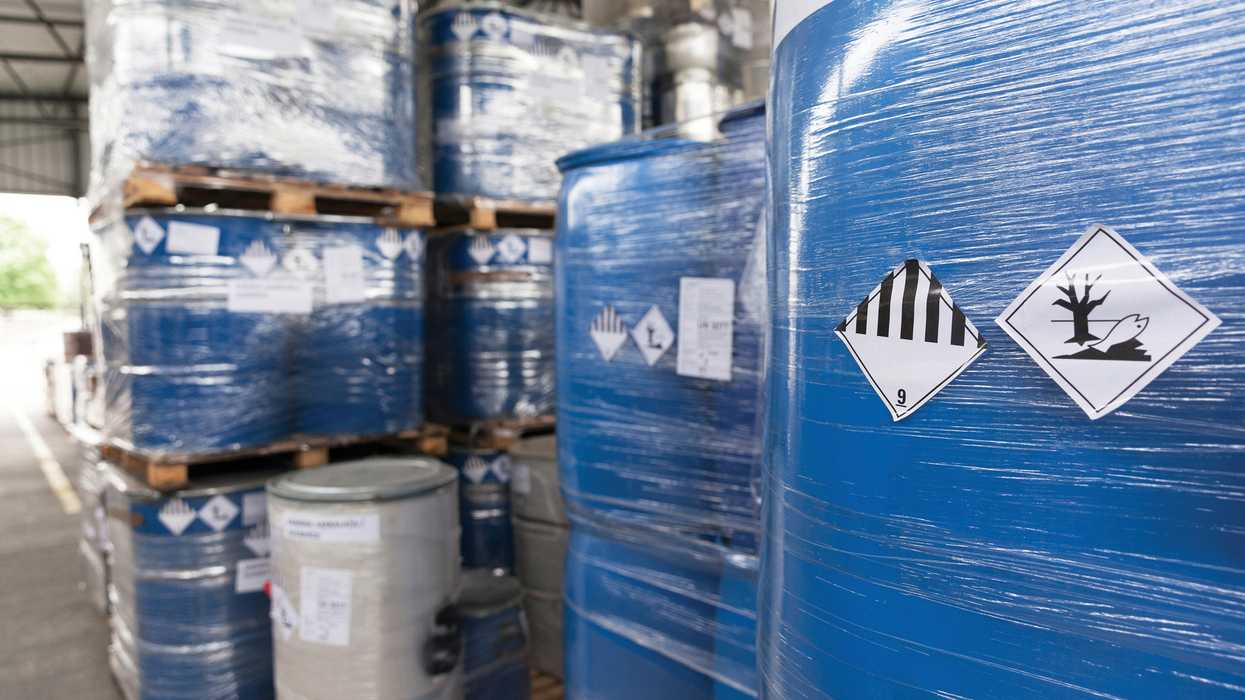
NewsHazardous WasteWaste GeneratorsWaste ManifestsWaste/HazWasteWasteEnvironmental Protection Agency (EPA)In-Depth ArticleEnglishIndustry NewsWaste ReportingWasteTSD FacilitiesWaste ManagementEnvironmentalFocus AreaUSA
2026-06-15T05:00:00Z
Hazardous waste manifest S Codes: What storage and transfer facilities need to know
Have you cracked the “S Code” yet? Starting in 2027, facilities that receive regulated waste for temporary storage and disposal must use S Codes on hazardous waste manifests. If your facility hasn’t made the switch, now’s the time!
Under the Resource Conservation and Recovery Act (RCRA), the Environmental Protection Agency (EPA) requires hazardous waste handlers to track shipments of regulated waste from the generating facility to final treatment, recycling, or disposal. Management Method Codes are key to hazardous waste manifests, and they also affect biennial reporting. The codes answer the vital question, “How’s the hazardous waste managed?"
Effective January 1, 2027, “S Codes” will officially replace Management MethodH141 for Storage and Transfer. EPA adopted these codes to improve the accuracy and transparency of waste tracking, specifically for wastes that travel through transfer facilities before final management. Use this overview to help your facility understand how to comply.
What are S Codes?
In January 2025, EPA added S Codes to the list of Management Method Codes, which identify the type of waste management system used to treat, recover, or dispose of a hazardous waste. Management Method Codes are used for:
- The Uniform Hazardous Waste Manifest (EPA Form 8700-22) and Continuation Sheet (EPA Form 8700-22A); and
- The National Biennial RCRA Hazardous Waste Report (EPA Form 8700-13 A/B), known as the Biennial Report.
S Codes apply to receiving facilities (primarily treatment, storage, and disposal facilities (TSDFs)) that temporarily store and then transfer regulated hazardous waste to another receiving facility without treating, recovering, or disposing of the waste. EPA established S Codes to provide more details than code H141 on waste handling activities, improving tracking and transparency. S Codes indicate two things:
- A hazardous waste was received to be stored or transferred; and
- The hazardous waste will be managed later by the final receiving facility using a certain method (i.e., the final management method).
EPA groups S Codes into three categories:
- Transfer off-site for reclamation and recovery,
- Transfer off-site for destruction or treatment prior to disposal, and
- Transfer off-site for disposal.
Each S Code corresponds to a specific final management method. Examples include metals recovery (S010), chemical treatment (S070), and landfilling (S132).
What’s required?
On January 1, 2027, EPA will remove Management Method Code H141 for Storage and Transfer from the e-Manifest and the Biennial Report forms. As a result, hazardous waste handlers must use S Codes instead of code H141 on manifests and the Biennial Report.
S Codes apply to RCRA hazardous waste that’s transferred off-site, impacting:
- Receiving facilities that store and transfer hazardous waste;
- Permitted TSDFs that receive hazardous waste solely for temporary storage and transfer (i.e., it’s the facility’s only management type); and
- Large quantity generators (LQGs) that report wastes shipped to transfer facilities on the Biennial Report.
Hazardous waste manifests
The first receiving TSDF is responsible for choosing and entering the S Codes on manifests. The storage and transfer facility must:
- Identify the S code that best describes how the hazardous waste will be managed by the final receiving facility, and
- Enter the S Code in Item 19 on the manifest and in Item 36 on the continuation sheet (if used).
Generators aren’t responsible for selecting or entering S Codes.
Biennial Reports
LQGs and TSDFs must use S Codes for the Biennial Report on the:
- Waste Generation and Management (GM) Form in Item 3, and
- Waste Received From Off-site (WR) Form in Item F.
LQGs use S Codes on the GM Form for shipments of hazardous waste off-site to a transfer facility for temporary storage and transfer.
TSDFs that receive hazardous waste for temporary storage and transfer off-site use S Codes on the WR Form. These TSDFs must also use Source Code G61 on the GM Form to report shipments of these transferred wastes.
How can facilities prepare?
Help your facility achieve a smooth shift to S Codes by January 1, 2027, with these tips:
- Identify where your facility currently uses code H141.
- Develop a process for transitioning to S Codes exclusively. Consider any changes your facility may need to make to its operations, such as updating software, adjusting procedures, and revising internal guidance documents.
- Train your employees accordingly.
- Set a deadline for making the switch to S Codes. Aim for a date well ahead of January 1, 2027, to give your facility enough time to address any issues that arise.
Key to remember: Starting in 2027, storage and transfer facilities must use S Codes in place of Management Method Code H141 on RCRA hazardous waste manifests and Biennial Reports.
NewsHazardous WasteWaste GeneratorsWaste ManifestsWaste/HazWasteWasteEnvironmental Protection Agency (EPA)In-Depth ArticleEnglishIndustry NewsWaste ReportingWasteTSD FacilitiesWaste ManagementEnvironmentalFocus AreaUSA
2026-06-15T05:00:00Z
Hazardous waste manifest S Codes: What storage and transfer facilities need to know
Have you cracked the “S Code” yet? Starting in 2027, facilities that receive regulated waste for temporary storage and disposal must use S Codes on hazardous waste manifests. If your facility hasn’t made the switch, now’s the time!
Under the Resource Conservation and Recovery Act (RCRA), the Environmental Protection Agency (EPA) requires hazardous waste handlers to track shipments of regulated waste from the generating facility to final treatment, recycling, or disposal. Management Method Codes are key to hazardous waste manifests, and they also affect biennial reporting. The codes answer the vital question, “How’s the hazardous waste managed?"
Effective January 1, 2027, “S Codes” will officially replace code H141 for Storage and Transfer. EPA adopted these codes to improve the accuracy and transparency of waste tracking, specifically for wastes that travel through transfer facilities before final management. Use this overview to help your facility understand how to comply.
What are S Codes?
In January 2025, EPA added S Codes to the list of Management Method Codes, which identify the type of waste management system used to treat, recover, or dispose of a hazardous waste. Management Method Codes are used for:
- The Uniform Hazardous Waste Manifest (EPA Form 8700-22) and Continuation Sheet (EPA Form 8700-22A); and
- The National Biennial RCRA Hazardous Waste Report (EPA Form 8700-13 A/B), known as the Biennial Report.
S Codes apply to receiving facilities (primarily treatment, storage, and disposal facilities (TSDFs)) that temporarily store and then transfer regulated hazardous waste to another receiving facility without treating, recovering, or disposing of the waste. EPA established S Codes to provide more details than code H141 on waste handling activities, improving tracking and transparency. S Codes indicate two things:
- A hazardous waste was received to be stored or transferred; and
- The hazardous waste will be managed later by the final receiving facility using a certain method (i.e., the final management method).
EPA groups S Codes into three categories:
- Transfer off-site for reclamation and recovery,
- Transfer off-site for destruction or treatment prior to disposal, and
- Transfer off-site for disposal.
Each S Code corresponds to a specific final management method. Examples of these methods include metals recovery (S010), chemical treatment (S070), and landfilling (S132).
What’s required?
On January 1, 2027, EPA will remove Management Method Code H141 for Storage and Transfer from the e-Manifest and the Biennial Report forms. As a result, hazardous waste handlers must use S Codes instead of code H141 on manifests and the Biennial Report.
S Codes apply to RCRA hazardous waste that’s transferred off-site, impacting:
- Receiving facilities that store and transfer hazardous waste;
- Permitted TSDFs that receive hazardous waste solely for temporary storage and transfer (i.e., it’s the facility’s only management type); and
- Large quantity generators (LQGs) that report wastes shipped to transfer facilities on the Biennial Report.
Hazardous waste manifests
The first receiving TSDF is responsible for choosing and entering the S Codes on manifests. The storage and transfer facility must:
- Identify the S code that best describes how the hazardous waste will be managed by the final receiving facility, and
- Enter the S Code in Item 19 on the manifest and in Item 36 on the continuation sheet (if used).
Generators aren’t responsible for selecting or entering S Codes.
Biennial Reports
LQGs and TSDFs must use S Codes for the Biennial Report on the:
- Waste Generation and Management (GM) Form in Item 3, and
- Waste Received From Off-site (WR) Form in Item F.
LQGs use S Codes on the GM Form for shipments of hazardous waste off-site to a transfer facility for temporary storage and transfer.
TSDFs that receive hazardous waste for temporary storage and transfer off-site use S Codes on the WR Form. These TSDFs must also use Source Code G61 on the GM Form to report shipments of these transferred wastes.
How can facilities prepare?
Help your facility achieve a smooth shift to S Codes by January 1, 2027, with these tips:
- Identify where your facility currently uses code H141.
- Develop a process for transitioning to S Codes exclusively. Consider any changes your facility may need to make to its operations, such as updating software, adjusting procedures, and revising internal guidance documents.
- Train your employees accordingly.
- Set a deadline for making the switch to S Codes. Aim for a date well ahead of January 1, 2027, to give your facility enough time to address any issues that arise.
Key to remember: Starting in 2027, storage and transfer facilities must use S Codes in place of code H141 on RCRA hazardous waste manifests and Biennial Reports.
New Network Poll


No active poll
Please come back soon!
Most Popular Highlights In Environmental
2026-01-02T06:00:00Z
Florida adds grease waste hauler requirements
Effective date: December 7, 2025
This applies to: Haulers of grease waste from food establishments
Description of change: The Florida Department of Environmental Protection established removal and disposal regulations for haulers of grease waste from originator food establishments. Haulers must dispose of grease waste at certified facilities and document removals and disposals using a service manifest.

NewsIndustry NewsSafety & HealthVentilationGeneral Industry SafetyIndoor Air QualityIndustrial HygieneCAA ComplianceEnvironmentalIn-Depth ArticleEnglishFocus AreaUSA
2022-10-26T05:00:00Z
CDC and EPA offer guidance on MERV rating for air filters
Indoor air quality took a front seat during the pandemic and the need to filter COVID-19-containing particles from the air became paramount. A Minimum Efficiency Reporting Value (MERV) rating between 9 and 12 is considered a generally good filter for commercial spaces wanting a higher level of indoor air quality. The CDC and EPA recommend filters with a MERV rating of 13 or higher to trap smaller particles, including viruses.
Air filters are rated on their effectiveness through the MERV system, which is a filter’s ability to capture larger particles between 0.3 and 10 microns (µm). This value is helpful in comparing the performance of different filters. The rating is derived from a test method developed by the American Society of Heating, Refrigerating, and Air Conditioning Engineers. The higher the MERV rating the better the filter is at trapping specific types of particles.
| MERV Rating | Average Particle Size Efficiency in Microns |
|---|---|
| 1 - 7 | 3.0 - 10.0 |
| 8 - 10 | 1.0 - 3.0 |
| 11 - 16 | 0.3 - 1.0 |
In general, increasing ventilation and filtration is usually appropriate when improving indoor air quality; however, due to the complexity and diversity of building types, sizes, construction styles, HVAC system components, and other building features, one should use caution when selecting a filter solely based on the MERV rating. Even if the filter fits, your system may not be designed to support that specific filter and it could actually impair system performance.
Higher MERV rated filters are typically designed for environments where air quality is critical, such as hospital laboratories and surgery centers. HVAC systems in these environments are designed to operate with these filters in place due to the extra energy required. A higher-rated filter used in the wrong environment can create resistance to air flow, which can lower efficiency, impair indoor air quality, and put a strain on the inner workings of the system.
If your system does not allow higher-rated filters, there are additional tools you can implement to improve indoor ventilation. Keep in mind, while these strategies can help reduce particle concentration, not all interventions will work in all scenarios, and caution should be taken in highly polluted areas. The following tools identify ways to improve ventilation:
- Increasing the introduction of outdoor air by opening outdoor air dampers, windows, and doors;
- Using fans to increase the effectiveness of open windows;
- Rebalancing or adjusting HVAC systems to increase total airflow to occupied spaces;
- Turning off any demand-controlled ventilation controls that reduce air supply based on occupancy or temperature during occupied hours;
- Ensuring restroom exhaust fans are functional and operating;
- Using portable high-efficiency particulate air (HEPA) fan/filtrations systems; and
- Running the HVAC system at maximum outside airflow for 2 hours before and after the building is occupied.
Key to remember: Air filters with a higher MERV rating are more effective at improving indoor air quality.

NewsIndustry NewsEnvironmental Protection Agency (EPA)Mobile Emission SourcesCAA ComplianceEnvironmentalIn-Depth ArticleFocus AreaEnglishAir ProgramsUSA
2024-10-07T05:00:00Z
Vehicle emissions defeat devices: Steer clear!
The Environmental Protection Agency (EPA) regulates emissions from motor vehicles, engines, and the fuels used to operate them. The agency requires vehicle manufacturers to install control devices that limit the amount of air pollutants a vehicle may emit. However, defeat devices attempt to detour around these controls and allow emissions beyond federal limits.
Excess vehicle emissions can threaten the health of others, impair state and local efforts to maintain national air quality standards, and — as one company and its owner learned — subject you and your business to steep monetary penalties.
Steer clear of defeat devices to ensure a smooth regulatory road.
Company learns multimillion-dollar lesson
EPA and the U.S. Department of Justice reached a settlement agreement with a North Carolina automotive parts company and its owner for violating the Clean Air Act (CAA) requirements for mobile sources by:
- Manufacturing, selling, and installing more than 250,000 defeat devices on diesel pickup trucks; and
- Installing aftermarket defeat devices on hundreds of diesel pickup trucks.
The company and its owner face civil and criminal consequences and will pay a total of $10 million in fees and penalties.
Civil enforcement
A July 2024 consent decree (pending court approval) requires both parties to pay a combined $7 million penalty. It also bans the company and owner from:
- Manufacturing, selling, offering to sell, and installing defeat devices;
- Transferring intellectual property to help others make or sell defeat devices; and
- Investing in or profiting from other businesses’ defeat devices.
Criminal enforcement
Both the company and owner pleaded guilty to conspiring to violate the CAA. The federal court ordered the company to pay a $2.4 million fine and complete three years of organizational probation. It also ordered the owner to pay a $600,000 fine and serve three years of probation.
What are defeat devices?
A defeat device is any component that “bypasses, impairs, defeats, or disables the control of emissions of any regulated pollutant” (40 CFR 1068.101(b)(2)). Put simply, it’s an illegal device that removes or disables a vehicle’s emissions controls.
There are generally two types of defeat devices: hardware (such as modified automotive parts) and software (like delete tuners). In fact, many of the devices consist of both types that work in tandem. Federal law (and EPA regulations at 1068.101(b)) bans defeat devices used to swerve around vehicle emissions controls. Section 203(a)(3) of the CAA prohibits anyone from:
- Tampering with an EPA-certified vehicle’s emissions control devices to remove them or make them inoperative before selling the vehicle,
- Knowingly tampering with an EPA-certified vehicle’s emissions control devices to remove them or make them inoperative after the vehicle is sold and delivered to the purchaser, and
- Knowingly manufacturing, selling, offering to sell, or installing defeat devices that bypass, defeat, or render inoperative any emission control device.
Common emission control devices include:
- Onboard diagnostic systems,
- Catalytic converters,
- Electronic control units,
- Fuel systems, and
- Diesel particulate filters.
Who do the regulations affect?
The prohibition on defeat devices applies to everyone, from the original equipment manufacturer that installs the vehicle emissions controls to the vehicle owner and operators.
The 1990 CAA Amendments expanded the tampering provision in Section 203(a)(3) to include “any person.” Further, EPA’s regulations at 1068.101(b) “apply to everyone,” such as:
- Vehicle manufacturers;
- Vehicle dealers;
- Automobile repair shops;
- Commercial mechanics;
- Fleet operators;
- Aftermarket automotive part manufacturers, sellers, and installers;
- Owners; and
- Operators.
Compliance tips
Consider these helpful suggestions for maintaining compliance:
- Check and comply with your state and local regulations, as they may be more stringent than federal requirements and impose additional rules. For example, states may require certified technicians to conduct automotive maintenance services on emission controls. States may also prohibit operating, selling, and/or registering tampered vehicles.
- Purchase aftermarket automotive parts only from reputable sources. Obtain proof that the aftermarket parts won’t increase emissions.
- Self-disclose any potential violations you find to EPA and/or the state environmental agency. EPA and many states will lower or waive civil penalties for self-reporting violations.
The case against this automotive parts company and owner serves as a multimillion-dollar reminder about making, selling, installing, or using defeat devices — steer clear!
Key to remember: Steer clear of defeat devices that try to detour around EPA’s vehicle emissions controls to ensure a smooth regulatory road.

NewsIndustry NewsTSCA ComplianceCAA ComplianceSustainabilityIn-Depth ArticleCWA ComplianceEnvironmentalEnglishSustainabilityESG (Environmental, Social, and Governance)Focus AreaUSA
2025-12-05T06:00:00Z
EPA’s 2026 regulatory shift: How environmental managers can stay ahead
The clock is ticking for environmental teams. By 2026, several new EPA regulations will reshape compliance obligations for U.S. companies. Organizations that act now will avoid costly penalties and operational disruptions.
What’s changing and why it matters
Although EPA has been deregulating or loosening some requirements, there are still some standards being tightened across multiple fronts in the coming year:
- Renewable fuel standards (RFS): The EPA proposed higher volume requirements for 2026, including 24.02 billion renewable identification numbers (RINs), up nearly 8% from 2025. This increase pushes stricter expectations on fuel producers and organizations purchasing renewable fuels.
- Stormwater multi-sector general permit (MSGP): A new MSGP set to take effect by February 2026 will require quarterly PFAS indicator monitoring, expanded benchmark sampling, and resiliency measures in stormwater control designs.
- PFAS Reporting under the Toxic Substances Control Act (TSCA): TSCA Section 8(a)(7) mandates PFAS manufacturing and import data collection beginning in April 2026, through October 2026, with extended deadlines for certain small manufacturers.
Failure to prepare could lead to fines, reputational damage, supply chain disruptions, and permit delays. Companies that weave compliance planning into their 2026 strategy will be positioned not just to meet legal deadlines but to sustain operations smoothly.
Key areas of impact
- Renewable fuel standards (RFS) and air emissions The proposed increase in 2026 Renewable Identification Numbers (RIN) volumes, from 24.02 billion to 24.46 billion for 2027, signals tightening air and fuels policy that affects fuel use and emissions accounting.
- Stormwater management The upcoming 2026 MSGP requires expanded quarterly PFAS monitoring, new benchmark triggers, corrective action plans, and integration of climate resilience in design standards.
- PFAS disclosure (TSCA Section 8(a)(7)) Manufacturers and importers of PFAS must submit electronic reporting of usage, volumes, disposal, and exposure data between April and October 2026, with extensions available for smaller operations.
Steps to take now
- Audit compliance programs: Cross-check operations against RIN inventory, stormwater permits, and TSCA reporting duties.
- Upgrade monitoring and recordkeeping: Implement robust electronic systems to track PFAS, stormwater quality, fuel volumes, and emissions.
- Staff training: Educate teams on PFAS obligations, new stormwater protocols, and RFS structures.
- Engage regulators early: Comment on proposed rules, consult during permit drafting, and flag issues during the notice-and-comment period.
Looking ahead
The EPA’s 2026 updates reflect a trend toward increased transparency and environmental accountability. Companies that treat compliance as strategic will not only avoid enforcement but also gain resilience and stakeholder trust.
Key to remember: Start planning now. Early action on EPA rule changes will save time, money, and headaches when enforcement begins.

NewsIndustry NewsWaste/HazWasteSustainabilityCAA ComplianceEnvironmentalIn-Depth ArticleCWA ComplianceEnglishSustainabilityFocus AreaUSA
2024-06-28T05:00:00Z
Ready, set, adapt! EPA unveils new climate adaptation plan
Heat waves disrupting factory production? Rising sea levels threatening coastal businesses? The Environmental Protection Agency (EPA) is taking concrete steps to combat climate change with the release of its 2024-2027 Climate Adaptation Plan. The plan outlines a series of actions the agency will take over the next four years to make sure it's prepared for the challenges of a changing climate.
What does the plan do?
The plan focuses on several key areas.
Building a climate-smart workforce
EPA is investing in ongoing education and training for its staff to equip them with knowledge about the future impacts of climate change, how EPA programs might be affected, and different strategies for adapting. One example is the agency-wide "Climate Conversations" webinar series, which fosters collaboration and knowledge sharing among staff.
Strengthening facility resilience
EPA is continuing to conduct facility resiliency assessments to identify areas vulnerable to climate change impacts. Based on these assessments, the agency will make recommendations for improvements to make facilities more resilient.
Building stronger supply chains
EPA is now considering climate hazards as part of its overall supply chain risk management plan. It will conduct assessments this year to identify potential disruptions and develop strategies to mitigate them.
Funding climate-ready communities
EPA is modernizing its financial assistance programs to encourage investments in communities and Tribal lands that are more resilient to climate change. The agency also launched the internal Climate-Resilient Investments Clearinghouse website to help staff integrate climate considerations into funding decisions.
Empowering informed decisions
EPA is providing communities and recipients of their financial resources with the tools, data, and technical support they need to assess their own climate risks. This empowers them to develop targeted solutions that work best for their specific situations.
Climate-proofing regulations
EPA is integrating climate change considerations into the rulemaking processes where appropriate to ensure its regulations remain effective even with a changing climate.
How does this affect industrial facilities?
Industrial facilities aren’t immune to the effects of climate change. Extreme weather events can damage infrastructure, disrupt operations, and lead to costly shutdowns. By taking steps to adapt to climate change, industrial facilities can protect their businesses, their employees, and the communities where they operate.
Facilities should be on the lookout for potential new requirements as EPA plans to integrate climate adaptation into future rulemakings. New rules could require businesses to consider future weather extremes, like stronger storms or floods. This could lead to fortifying buildings or raising critical equipment, which upfront might be costly but could prevent far more expensive damage down the line.
An example of the agency’s new commitment to include climate adaptation requirements is reflected in the final amendments of the Risk Management Plan rule. Facilities that manage hazardous materials must now develop response plans to prepare for the largest foreseeable discharges in adverse weather conditions, including more extreme weather conditions expected as the climate changes.
Key to remember: EPA released the 2024-2027 Climate Adaptation Plan, which describes agency actions to address the impacts of climate change. It incorporates climate adaptation into the agency’s programs, policies, rules, enforcement activities, and operations.

NewsHazardous WasteIndustry NewsWaste ManifestsWaste/HazWasteWasteEnvironmentalIn-Depth ArticleEnglishFocus AreaUSA
2023-08-30T05:00:00Z
EPA announces new e-manifest fees for FY2024-25
Receiving facilities will experience higher charges for scanned images within the e-Manifest system during fiscal years 2024 and 2025. These updated rates aim to boost a complete transition to electronic submissions. The Environmental Protection Agency (EPA) creates these charges based on the method of manifest submission and the combined processing expenses for each manifest category. It is unsurprising that fully electronic and hybrid manifests come with notably lower costs.
The latest fees For fiscal years 2024 and 2025 (October 1, 2023, through September 30, 2025), the new user fees are as follows:
- $22.00 for uploading scanned images (formerly $20.00)
- $10.00 for uploading data and images (formerly $13.00)
- $6.00 for fully electronic and hybrid submissions (unchanged from $6.00)
The application of user charges also aligns with the broader trend of digitization and modernization in regulatory procedures. By transitioning from paper-based manifest systems to digital platforms, the e-Manifest system trims administrative burdens, reduces the risk of errors, and expedites information flow. These user fees provide the resources to maintain and improve these digital capabilities. It benefits waste management stakeholders by streamlining reporting obligations and enhancing overall efficiency.
More on the user fees for the e-manifest system and amendments to manifest regulations
The Hazardous Waste Electronic Manifest Establishment Act (e-Manifest Act) itself does not determine e-Manifest user fees; rather, it grants EPA the authority to establish user fees through regulations. The Final User Fee rule addresses the following key aspects:
- Which users of manifests or manifest data will be charged user? User fees are not directly charged to generators or transporters. Instead, EPA enforces charges on receiving facilities for each submitted manifest. However, it is likely that increased costs will have a ripple effect across the industry.
- What transactions or services will give rise to fee? The submission of the final copy of each manifest to the system by receiving facilities triggers the user fee requirement. The fee depends on the type of manifest submission. Receiving facilities will also incur charges for manifests involving rejected wastes that are being sent back from the facility to the generator.
- How will users be billed for e-Manifest services and make their fee payments? Receiving facilities will receive a monthly electronic invoice detailing their manifest activity from the previous month. Each facility will be directed to the Treasury’s Pay.gov website to make their payments.
- What model or formula will EPA rely upon for the determination of users’ fees? The final rule’s fee calculation relies heavily on the total program-related costs incurred by EPA and the number of manifests over which these costs are distributed. When adjusting user fee schedules, EPA will reapply its fee formula using the most up-to-date data on program costs and manifest counts. The final rule also incorporates fee adjustment factors to account for inflation and revenue losses resulting from inaccurate estimates of manifests in use.
- How will the rule address fee schedule revisions? Revisions to user fees will not require a new rulemaking. EPA will re-run the fee formula at two-year intervals, with the most recent program cost and manifest usage numbers being used in running the fee formula to calculate the fees for each manifest submission type. The result will be a fee schedule that announces the fees for each of the next two fiscal years.
| For more information see our EzExplanation on Hazardous waste manifests |
Key to remember: Receiving facilities will see increased user fees for scanned images in the e-Manifest system for fiscal years 2024 and 2025. Using fully electronic waste manifests will cost significantly less.
Most Popular Highlights In Transportation

NewsIndustry NewsFleet OperationsEnglishFocus AreaIn-Depth ArticleHighway use - Mileage taxFleet TaxesInternational Fuel Tax Agreement (IFTA)Fleet taxesTransportationUSA
2024-09-19T05:00:00Z
Your HUT decals are expiring: Registration open Oct. 1
For carriers operating in New York, registration and decals expire December 31, 2024, for the Highway Use Tax (HUT) and Automotive Fuel Carrier (AFC) programs. Take steps now to make sure you receive your new decals before the current ones expire. You need a new certificate of registration and decal for each vehicle. And you must place the new decals on your vehicles before January 1, 2025.
The period to renew your 24th series HUT and AFC certificates of registration begins October 1, 2024. Act now to avoid delays and keep your highway use tax credentials active.
To-do before October 1
Get ready for renewal by taking the following steps now:
- File all your highway use tax returns that are due.
- Pay your taxes. The state will not issue a new certificate of registration if you owe back taxes. Before you apply to renew, make sure that you’ve paid all taxes due under any of the programs administered by the New York State Tax Department, including:
- HUT,
- personal income tax,
- International Fuel Tax Agreement (IFTA),
- sales tax, and
- withholding tax.
- Create an online account if you do not already have one and you want to renew your credentials and pay online (https://www.oscar.ny.gov/).
- Make sure your vehicle registration information is correct and accurate. Review and update your information as soon as possible. Incorrect information will delay the processing of your certificates and decals.
Beginning October 1
Once the renewal period opens, renew your credentials and pay your renewal fees online with One Stop Credentialing and Registration (OSCAR).
Submit your renewal application by November 30, 2024, to make sure you receive your decals in time to place them on your vehicles before January 1, 2025.
If you are already enrolled in OSCAR, use your current OSCAR password to renew online.
If you are not enrolled, visit OSCAR, and select Enroll Now. You must have a United States Department of Transportation (USDOT) number and an employer identification number (EIN).
To renew your registration:
- Visit the OSCAR website and select HUT Renewal from the Business Type drop-down.
- Enter your information in the USDOT#, NYS Tax ID#, and Password fields, then select Log in.
- If you have 300 or fewer vehicles, choose either:
- Renew all HUT/AFC Certificates of Registration to renew all your active current series permits, or
- Select HUT/AFC Certificates of Registration to renew specific permits.
- If you have more than 300 vehicles, choose either:
- Renew all to renew all your active current series permits, or
- File renewal to renew select permits.
If you are unable to renew electronically, you may file Form TMT-1.2, Renewal Application for Highway Use Tax (HUT) and Automotive Fuel Carrier (AFC) Certificates of Registrations and Decals – 25th Series.
Key to remember: Take steps now to renew your NY HUT and ensure you receive your new decals before the current ones expire.

NewsIndustry NewsIndustry NewsFleet SafetyFederal Motor Carrier Safety Administration (FMCSA), DOTFocus AreaVision - Motor CarrierUSAEnglishTransportationPhysical exam - Motor Carrier
2022-01-24T06:00:00Z
Alternate vision standard final rule
FMCSA published the alternative vision standard final rule with an effective date of March 22, 2022, for CMV drivers who do not meet the vision standard in the worse eye. If specified conditions and vision criteria are met, the driver can qualify for the vision portion of the DOT exam based on the vision in the better eye with or without corrective lenses.
To be qualified for the alternate vision standard (§391.44), the driver must:
- Have in the better eye a field of vision of at least 70 degrees in the horizontal meridian and vision of at least 20/40 with or without corrective lenses;
- Be able to recognize the colors of traffic signals with red, green, and amber;
- Have a stable vision deficiency; and
- Have had sufficient time for the vision deficiency to be stable.
To meet the alternate standard:
- An ophthalmologist or optometrist evaluates the driver;
- The ophthalmologist or optometrist completes the new Vision Evaluation Report Form MCSA-5871;
- The certified medical examiner performs a DOT exam not more than 45 days from the date on the MCSA-5871 and determines if the driver meets the alternative vision standard, as well as FMCSA’s other medical qualification standards;
- The driver receives a Medical Examiner’s Certificate (MEC), Form MCSA-5876, for a maximum of 12 months if determined to be medically qualified; and
- Drivers qualified under the alternative vision standard for the first time must satisfactorily complete an employer-administered road test before operating in interstate commerce, subject to limited exceptions.
This final rule eliminates the need for the current federal vision exemption program and the grandfather provision in §391.64. Individuals currently qualified under the grandfather provision and exemption holders have one year after the effective date of this rule to comply.

NewsIndustry NewsFleet SafetyCompliance, Safety, Accountability CSAPerformance ManagementCompliance, Safety, Accountability CSAFocus AreaIn-Depth ArticleEnglishTransportationRegistration and Permits - Motor CarrierUSA
2022-12-02T06:00:00Z
Understanding the National Safety Code (NSC): Part 1
These days, operating a commercial fleet involves many different compliance issues, regulations, standardized licensing, and permits involved with operating a commercial trucking vehicle are the norm. In Canada, provincial regulations governing commercial vehicles, drivers, and motor carriers are based on the National Safety Code (NSC) standards.
But what is the NSC and what are the standards? It’s a complicated answer because there are 16 standards involved. The NSC is designed to create a comprehensive code of minimum performance standards for the safe operation of passenger and commercial vehicles. The NSC provides guidance for legislative, regulatory, and administrative action by each jurisdiction and focuses on three components:
- Drivers,
- Vehicles, and
- Motor carriers.
Over this three-part article series, we will look at each of these components and break down the NSC standards that fit within each of the three. You’ll learn what is key to know to ensure compliance, and more importantly, a safer operation.
What is the NSC?
In 1987, the federal, provincial, and territorial Ministers responsible for Transportation and Highway Safety recognized that due to the deregulation of transportation, there was a need for harmonization and reciprocity in the management of commercial vehicles across Canada. The ministers then signed a memorandum of understanding to develop and implement the NSC to encourage road safety, promote efficiency in the motor carrier industry, and achieve consistent safety standards. The National Safety Code standards remain important instruments of public policy in promoting public safety and the safe and efficient movement of people and goods on Canadian roads.
What are the 16 standards?
The NSC is a set of minimum performance standards, applying to all persons responsible for the safe operation of commercial vehicles. There are 16 NSC standards made up of the following:
- Standard 1 Single Driver Licence Concept
- Standard 2 Knowledge and Performance Tests (Drivers)
- Standard 3 Driver Examiner Training Program
- Standard 4 Driver Licencing Classification
- Standard 5 Self-Certification Standards and Procedures
- Standard 6 Determining Driver Fitness in Canada
- Standard 7 Carrier and Driver Profiles
- Standard 8 Short-Term Suspension
- Standard 9 Commercial Vehicle Drivers Hours of Service
- Standard 10 Cargo Securement
- Standard 11 Maintenance and Periodic Inspection
- Standard 12 CVSA On-Road Inspection
- Standard 13 Trip Inspection
- Standard 14 Safety Rating
- Standard 15 Facility Audits
- Standard 16 Entry Level Training (Class 1)
Now that we have a better understanding of what the NSC represents and what the 16 standards are, let’s take a deeper dive into the standards that apply, starting with Motor Carriers.
NSC Standard 14 — Safety Rating
You might be wondering why we are starting with Standard 14. All provinces in Canada are required to issue an NSC number to all commercial carriers in their governing jurisdiction. A Safety Fitness Certificate (SFC) contains the NSC number, which is the unique identifier for each commercial operator. Ontario calls this number a Commercial Vehicle Operator’s Registration or CVOR.
If you have registered a vehicle that is regulated under the National Safety Code program in Canada, you are required to apply for a SFC or CVOR (Ontario). The SFC or CVOR gives you permission to operate a commercial vehicle.
There have been many new changes recently to the process of not only applying for an SFC but also in maintaining the required certificate. For example, in Alberta, it includes completing an NSC knowledge test online or NSC in a registry office, completing an NSC audit within 12 months of obtaining your SFC, and renewing your certificate every three years.
A provincial authority may not issue a safety fitness certificate to an extra-provincial motor carrier undertaking unless the provincial authority has determined that the undertaking has a “satisfactory”, “satisfactory unaudited” or “conditional” safety rating, as set out in section 5 of Part C of NSC Standard #14.
Safety Rating Categories
Responsibility for motor carrier safety resides, first and foremost, with motor carrier management. The Safety Rating Standard (Standard 14) establishes the motor carrier safety rating framework by which each jurisdiction shall assess the safety performance of motor carriers. There are four safety rating categories as follows:
| Rating | Details |
| Satisfactory-Unaudited | Assigned to all new commercial motor carriers. This rating does not change until a carrier has been audited. |
| Satisfactory-Audited | Assigned when a motor carrier has successfully passed a facility audit and all 3 thresholds - convictions, at-fault collisions and inspections - are below 85%. |
| Conditional | Assigned to a motor carrier who has failed a facility audit and/or 1 or more thresholds are at or above 85%. |
| Unsatisfactory | Assigned by Carrier and Vehicle Safety Services when a carrier is deemed unfit. |
- Using the information in the motor carrier profile;
- Assigning a value to each of the data listed in the motor carrier profile taking into account its severity and potential safety impact, in accordance with the National Safety Code Standard 7, Carrier Profile:
- For the 24 months preceding the determination; or
- In the case of a motor carrier whose motor carrier profile was established less than 24 months prior to the determination, for the period since its establishment;
- Normalizing the weighted data using the motor carrier’s fleet size to reflect the motor carrier’s exposure to risk; and
- Assigning a safety rating to the motor carrier in accordance with the safety rating categories.
The NSC’s safety fitness rests on three building blocks:
- NSC Standard 7: Carrier and Driver Profiles
- NSC Standard 14: Safety Rating
- NSC Standard 15: Facility Audit
Together, these standards provide the safety rating and management framework by which each jurisdiction assesses the safety performance of motor carriers. In part 3, we’ll cover Standards 7 and 15 in greater detail.
Key to remember: We have just touched the surface of the NSC standards and covered likely one of the most important when it comes to maintaining a safe rating and compliance with Jurisdictional regulations.

NewsIndustry NewsFleet SafetyExpert InsightsBusiness policies and procedures - Motor CarrierBusiness planning - Motor CarrierFocus AreaFleet OperationsEnglishTransportationBusiness planning - Motor CarrierUSA
2026-06-12T05:00:00Z
Expert Insights: Motus — FMCSA's forward momentum
The Federal Motor Carrier Safety Administration (FMCSA) has rolled out the first phase of Motus, a new USDOT registration system designed to streamline compliance and modernize the way motor carriers, brokers, and supporting companies manage their regulatory obligations. Motus, which is Latin for movement/motion, represents a significant shift from the current systems and will involve consolidating USDOT numbers, biennial updates, hazmat registrations, and other filings into one secure, user friendly platform.
The initiative aims to simplify processes, enhance fraud prevention, and provide registrants with intuitive tools such as auto population, real time data validation, and mobile accessibility.
Troubleshooting Motus issues
Many carriers are running into obstacles when registering for Motus. The most frequent issue is not being able to claim DOT numbers, and the most common reason for this is that the carrier didn’t update its information before the deadline.
For example, only the company official can claim your USDOT number. This means that if your company official left earlier this year and you didn’t update this information in your portal, then you won’t be able to claim your USDOT number.
If you’re struggling to get your Motus account set up or claim your USDOT number, you must contact FMCSA at 800-832-5660. FMCSA will only work directly with the motor carrier at this point. Once you have set up your account, you can then grant permissions to other individuals — both within and outside of your organization.
Motus watchouts
Motus gives you more control over your registration, but it also puts more responsibility on you. For example, Motus has simplified applying for operating authority, but knowing which authority your company needs remains unclear. Obtaining the incorrect authority type can be costly, and making mistakes on your application can lead to long delays.
Without the correct authority in place, you may run into:
- A delay in approval, which would lead to a delay in beginning operations.
- Additional application fees, as you may need to reapply.
- Compliance issues, which could lead to expensive fees, audits, or even being placed out of service.
Key to remember: FMCSA has rolled out the first phase of Motus, which aims to streamline and simplify compliance, but it also comes with a few additional challenges for motor carriers.

NewsIndustry NewsEnglishFuel/Mileage Tax PermitsIRP and IFTA recordkeepingFocus AreaIn-Depth ArticleFleet OperationsFleet TaxesInternational Fuel Tax Agreement (IFTA)Fleet taxesTransportationUSA
2023-07-21T05:00:00Z
Tips for successful IFTA quarterly reports
Second quarter fuel tax reports are due by July 31 for carriers operating under the International Fuel Tax Agreement (IFTA). These reports document the mileage traveled and fuel purchased in each state or province during the reporting period. Check out the following tips to avoid common mistakes that could get you audited.
Tip 1: Correctly report operations under trip permits
Include miles traveled while using a fuel trip permit:
- In “total IFTA miles,” and
- As part of the total IFTA miles traveled in the applicable jurisdiction.
Do not include them as taxable miles traveled for that jurisdiction. For fuel purchases made while operating under a fuel trip permit, include the following for each jurisdiction:
- Total gallons purchased (to accurately calculate the miles per gallon), and
- Tax-paid gallons purchased, only if taxes were paid at the time the fuel was purchased.
Tip 2: Account for all miles, even gap miles
Always do your best to accurately report miles traveled on your quarterly IFTA tax report. Remember that you must report every mile driven by every vehicle licensed under IFTA on your report.
“Gap miles” are the difference in the miles recorded for a trip on your trip sheet and the actual miles traveled based on the beginning and ending odometer or hubometer readings for that trip. Gap miles will create an issue when an audit occurs.
Gap miles should be allocated to the jurisdiction(s) where the travel most likely occurred.
Tip 3: Use the correct rate chart
Jurisdiction tax rates often change from quarter to quarter. Be sure to use the tax rate chart for the specific quarter being filed. Rate charts are available online at iftach.org.
Tip 4: Double-check your tax-paid gallons
The total tax-paid gallons purchased should never exceed the total gallons purchased.
If your operation includes bulk storage, only include in tax-paid gallons the number of gallons actually removed from bulk storage and delivered into your IFTA qualified vehicles during the reporting period being filed.
Hint: Generally speaking, total gallons and total tax-paid gallons should be the same, unless:
- Fuel receipts are missing;
- Fuel was not tax paid (i.e., purchased on an Indian reservation); or
- Fuel records do not include all required elements.
| Learn more about the recordkeeping requirements for IFTA and IRP. |
Tip 5: File every quarter, even if you have no activity to report
Tax returns are required even if no operations were conducted or no taxable fuel was used during the reporting period. Returns that are not filed or not paid in full are considered late and can be assessed penalties and interest.
Tip 6: Check your lease
Review all lease contracts carefully and ensure the IFTA tax reporting responsibility is clearly defined.
| Get more detail about leasing requirements for motor carriers. |
Key to remember: Carefully documenting miles traveled and fuel purchased for your IFTA fleet can help you avoid common mistakes that could get you audited.

NewsIndustry NewsCarrier profiles, safety ratings and facility auditsSafety fitness certificatesFleet SafetyRecordkeepingRecordkeepingBusiness policies and procedures - Motor CarrierFocus AreaIn-Depth ArticleFleet OperationsEnglishTransportationBusiness planning - Motor CarrierUSA
2023-04-14T05:00:00Z
Carrier profile advice for Canadian carriers
The National Safety Code (NSC) Standard 7 requires all Canadian jurisdictions to maintain a Carrier Profile on those carriers regulated under the provincial NSC programs. While the Carrier Profile is designed to identify high-risk motor carriers to provincial regulators, did you know that you can use it to evaluate the effectiveness of your safety and maintenance programs? Your Carrier Profile is a “Report Card” of your company’s compliance with on-road and administrative requirements and performance based on information collected from across Canada and the United States. The data on your Carrier Profile can tell you in what areas you’re doing well and in what areas you’re doing not so well. The key is to regularly request your profile and analyze it for potential areas for improvement. Here, we take a look at how you can get your hands on the data and how to use it to your advantage.
What exactly is on my Carrier Profile and how do I get one?
Carrier profile formats vary between jurisdictions. The standard Carrier Profile includes information regarding:
- A motor carrier’s Safety Fitness Rating;
- A motor carrier’s Operating Status (federal or provincial); and
- Twelve months of events involving NSC vehicles registered in the motor carrier’s name and the persons driving those vehicles. Events include:
- Convictions;
- CVSA inspections;
- Reportable collisions from all Canadian jurisdictions; and
- Violations identified in the province where no charges were laid.
Only the motor carrier named in the Carrier Profile, their authorized agent, or an enforcement agency can obtain a copy of the full profile information. Many provinces allow you to request the profile online. Contact your provincial transportation safety office for guidance.
How to read and interpret your Carrier Profile Report
The Carrier Profile is divided into five parts:
- Part 1 - Carrier Information
- Part 2 - Conviction Information
- Part 3 - CVSA Inspection Information
- Part 4 - Collision Information
- Part 5 - Violation Information
Part 1 – Carrier Information
Part 1 of the Carrier Profile gives an overall snapshot of a company’s current safety status including current Safety Fitness Rating, , and a summary of Conviction, CVSA Inspection, and Collision event history. Part 1 always displays the last 12 months of data, and the motor carrier’s current Safety Fitness Rating as of the date the Carrier Profile was requested.
Also displayed is the motor carrier’s current Operating Status of “provincial” or “federal” (as applicable by jurisdiction). Having the proper Operating Status is critical to a motor carrier’s operation. Motor carriers found operating with the wrong Operating Status may be charged with an offence and detained until the appropriate Operating Status has been obtained.
What to look for: When reviewing this part of your profile, always ensure the data here looks current and accurate.
Part 2 – Conviction Information
The information recorded in this part reflects convictions shown in order of offence date, with the most recent shown first. Conviction points remain on a Carrier’s Profile for one year from the conviction date.
Points ranging from 0 to 5 are assigned to a conviction depending on the severity of the offence with 5 points assigned to the most serious offences. These point values are recommended by the Canadian Council of Motor Transportation Administrators (CCMTA) at the national level to provide consistency amongst jurisdiction’s monitoring programs. As an example:
- Faulty lights, not resulting in Out of Service, 1 point
- Speed 21−30 kilometres per hour over, 2 points
- No permit or contravene conditions of permit, 3 points
- Drive while disqualified, 5 points
What to look for: Convictions here can help clue you into where you may need to make adjustments. For example, if you find that your drivers are frequently speeding, you should address it and possibly look at your policies and disciplinary process.
Part 3 – CVSA Inspection Information
Part 3 provides information on inspections conducted under the Commercial Vehicle Safety Alliance (CVSA) inspection program both in Canada and the U.S. for the time period requested. CVSA inspections remain on a Carrier’s Profile for one year from the date the inspection occurred.
What to look for: In this part you can determine the breakdown of defects from “Out of Service” and “Requires Attention” to assist you with identifying possible deficiencies in your inspection and maintenance program.
Part 4 – Collision Information
Part 4 provides collision information supplied by enforcement agencies across Canada and the U.S. The collisions are considered reportable under the jurisdiction’s legislation in which the collision event occurred. Collision points remain on a Carrier’s Profile for one year from the date the event occurred.
All reportable collisions appear on a carrier’s profile at least 45 days after the event date. This is to allow motor carriers the option to have the collision evaluated for preventability prior to the collision appearing on the profile.
What to look for: Reviewing and evaluating this part can help you identify areas where safety and compliance can be improved and potential opportunities for additional training.
Part 5 – Violation Information
Part 5 is a summary of violations documented by enforcement agencies. Each violation is a contravention of an act or regulation where no prosecution has been entered.
No points will be assigned to violations under this part; however, violations may be considered when reviewing a motor carrier’s overall safety fitness. Violations will remain on a Carrier’s Profile for one year from the date the event occurred.
Information in this part includes an analysis of violations by offense type, occurrence date, time, vehicle plate number, location of the offense, a generic offense description, and the driver’s name.
What to look for: This part will assist you in identifying the main areas of non-compliance with regulations such as Hours of Service.
A useful tool, if used properly
Although the Carrier Profile only provides after-the-fact information on motor carriers on-road and administrative compliance, the Carrier Profile can help you to become more proactive rather than reactive. You can look forward and adjust your driver training programs, driver coaching frequency maintenance programs, vehicle inspections...etc. etc... You may need to address and update policies and procedures...
Carriers that do not make changes and that continuously represent an unacceptable risk to the public may have their safety fitness certificates cancelled. This would result in the carrier not being able to register or operate an NSC vehicle. Failing to address known issues appearing on your carrier profile is risky business. Be sure to regularly request your profile and track your progress.
Key to remember: The Carrier Profile allows motor carriers to identify and take appropriate corrective action thereby helping prevent further violations.
Most Popular Highlights In Human Resources

NewsIndustry NewsIndustry NewsHR GeneralistFamily and Medical Leave Act (FMLA)Family and Medical Leave Act (FMLA)USAHR ManagementEnglishFocus AreaHuman Resources
2023-09-06T05:00:00Z
Appellate court sided with employee's (almost) 3-year-delayed FMLA claim
Back in October 2018, Laffon had a medical emergency and needed some time off under the federal Family and Medical Leave Act (FMLA).
Her leave lasted until November 15. Ten days after she returned to work, on November 26, her employer terminated her.
She sued, arguing that the employer retaliated against her because of her FMLA leave.
The catch? She didn't bring the suit until almost three years later.
No link between leave and termination
In court, the employer argued that there was no causal link between Laffon taking FMLA leave and her termination. Although the court documents aren't robust, they do reveal that the employer indicated that Laffon's allegations didn't show that her taking FMLA leave was a factor in the decision to terminate her. The documents showed only that the termination chronologically followed her leave.
The court agreed with the employer. It also agreed that Laffon failed to allege a willful violation of the FMLA, which would allow her to benefit from the FMLA's three-year statute of limitations.
Laffon appealed the case to the Ninth Circuit.
Statute of limitations
Under the FMLA, employees have two years from the date of the last event constituting the alleged violation for which they can bring a claim.
Those two years are extended to three years if the employer's actions were "willful." This means that an employee must show that the employer either knew or showed reckless disregard for whether its conduct violated the FMLA.
Ruling overturned
Fast forward to August 2023, when the Ninth Circuit reversed the lower court's decision. It indicated that, based on Laffon's amended complaint and liberally construing the law, her allegations establish that her leave was causally connected to her termination and that the employer's action (her termination) was willful.
Glymph v. CT Corporation Systems, No. 22-35735, Ninth Circuit Court of Appeals, August 22, 2023.
Key to remember: Terminating an employee soon after returning from FMLA leave is risky, unless there is a clear, well-documented, non-leave-related reason. Case documents did not show such a clear reason, which can also increase the risk of a willful finding. Employees have time to file claims, even years.

NewsI-9sI-9sHuman Resource ManagementEmployee RelationsIn-Depth ArticleUSAHR ManagementEnglishTalent Management & RecruitingIndustry NewsRecruiting and hiringAudits - HREmployee RelationsHR GeneralistApplications/ApplicantsAssociate RelationsFocus AreaHuman Resources
2022-12-22T06:00:00Z
Name change tops list of employer questions about Form I-9
Does the Form I-9 need to be updated when an employee’s name changes?
That was the most frequently asked listener question during a recent J. J. Keller & Associates webcast about the Form I-9.
Name change not (technically) required on Form I-9
When an employee has a legal name change because of marriage, divorce, or another reason, the U.S. Citizenship and Immigration Services (USCIS) does not require employers to update the Form I-9.
However, the agency does recommend that the employer note the name change in Section 3 of the form. The agency suggests that employers maintain correct information on the form.
Employers need to be sure of an employee’s identity
Employers shouldn’t simply take an employee’s word for it when it comes to a name change. The agency recommends that employers ask for proof.
Once again, the agency doesn’t require this, but it is certainly a good idea. The agency recommends that employers take steps to be reasonably assured of an employee’s identity, and this may involve asking the employee to provide documentation of the legal name change.
Keeping documentation of name change a best practice
Information about a name change is kept with the employee’s I-9.
That way if an employer’s I-9 forms are audited by a government agency, and the employee’s form is inspected, having this documentation shows the actions that were taken to verify identity.
Accepting documents with different names
An employer may also encounter name issues when an employee presents the documents needed to initially complete the Form I-9.
If an employee presents two documents with different last names, and one name matches the name the employee entered in Section 1, the employer may accept the documents.
The USCIS suggests that an employer attach a brief memo to the form that explains the reason for the different names. Any supporting documentation provided by the employee should also be attached.
The employee is not required to provide the documents explaining the name change. However, the employer is allowed to ask for other acceptable documents if there is something suspicious about the document with a different name that makes the employer question whether it is genuine.
Key to remember: An employer is not required to update an employee’s Form I-9 when the employee’s name change, but it is recommended.
NewsIndustry NewsHR GeneralistFamily and Medical Leave Act (FMLA)In-Depth ArticleFamily and Medical Leave Act (FMLA)HR ManagementEnglishFocus AreaHuman ResourcesUSA
2026-06-23T05:00:00Z
Elective procedures and the FMLA
With employees being more open to obtaining elective medical procedures again, employers might see an increase in employees asking for time off for them. Employees might be entitled to job-protected leave under the federal Family and Medical Leave Act (FMLA) for such procedures. Just because a procedure is deemed “elective” doesn’t always matter.
What the FMLA regulations say
Employers might think that the FMLA regulations say that employees don’t get FMLA leave for elective procedures. The regulations, however, make it clear that, in some situations, employees may, and that just because a procedure is elective doesn’t automatically mean it’s not FMLA-qualifying.
“Conditions for which cosmetic treatments are administered (such as most treatments for acne or plastic surgery) aren’t serious health conditions unless inpatient hospital care is required or unless complications develop.” [29 CFR 825.113(d)]
The word “unless” means that there are exceptions.
Therefore, if an employee has an overnight stay in a health care facility, whether the procedure is elective or not, it won’t matter; it’s an FMLA-qualifying serious health condition. If, for example, a perfectly healthy employee decides to donate a kidney to a sibling, the time off for the procedure and recovery from it will fall under the FMLA, as the employee will be kept overnight in the hospital — it will be an inpatient situation.
Another example would include a situation in which an employee’s procedure results in a period of incapacity for more than 3 consecutive calendar days, and any subsequent treatment that also involves:
- Treatment two or more times, within 30 days of the first day of incapacity, unless extenuating circumstances exist, or
- Treatment by a health care provider on at least one occasion, which results in a regimen of continuing treatment under the supervision of the health care provider.
Some of the more common elective procedures employers might have employees ask for time off include:
- Hysterectomy
- Liposuction
- Breast reduction/augmentation
- Joint replacement
- Facelift
- Rhinoplasty
- Cataract removal
- Tonsillectomy
Some elective procedures are designed to improve the quality of life as opposed to saving lives in emergencies.
Employers shouldn’t focus on the name of the condition or procedure, but on whether the condition meets the FMLA’s definition of a serious health condition, which is on the last page of the certification.
When employees ask for time off for what might be an FMLA-qualifying reason, employers should treat the situation as they would any FMLA leave request, including asking for a certification supporting the need for leave. It should give employers enough information to determine if the condition meets the FMLA’s definition of a serious health condition.
Key to remember: Employees could be entitled to FMLA leave for elective medical procedures, depending on all the facts involved.

NewsIndustry NewsEnglishHR GeneralistFamily and Medical Leave Act (FMLA)LeaveIn-Depth ArticleFamily and Medical Leave Act (FMLA)HR ManagementLeaveUSAFocus AreaHuman Resources
2025-01-21T06:00:00Z
DOL: Employers are to treat state paid leave like workers’ comp or STD
Time off under the federal Family and Medical Leave Act (FMLA) is unpaid. Employees, however, have the right to use their accrued paid time off (PTO) to supplement their income while they’re on unpaid FMLA leave. Employers may also require employees to use their PTO in these types of situations, and many do.
When employees receive pay from other sources, like short-term disability (STD) or workers' compensation, they may not “double dip” and use their PTO for the FMLA leave (and employers may not require it). They might, however, use PTO to “round out” their pay since these other benefits usually only provide a percentage of income.
What about situations where employees take paid leave under state laws?
The DOL chimes in
In an interpretive opinion letter released on January 14, 2025, the U.S. Department of Labor (DOL) said that employers should treat state paid leave the same.
Employers need to keep some information in mind:
- Designating leave: When employees take leave under a state paid family or medical leave law if the leave is also covered by the FMLA, employers must designate it as FMLA leave and give the employee a designation notice, which should include the amount of leave to be counted against the employee’s FMLA leave entitlement.
- Receiving state pay: During FMLA leave, when employees receive pay from a state family or medical leave law, the FMLA “substitution” provision does not apply to the part of leave that is paid. As a result, employees may not use PTO, and employers may not require it when leave is paid by state law.
- Supplementing pay: If employees are receiving pay through state paid family or medical leave that doesn’t fully pay for their FMLA-covered leave, and employees have available PTO, employers, and employees may agree, where state law permits, that employees may use their PTO to supplement their pay under a state leave law.
- Qualifying conditions: If employees use state paid family and medical leave for reasons that don’t qualify as FMLA leave, employers may not count the leave against the employee's FMLA leave entitlement. If, for example, a state paid family leave law allows for paid leave to care for a family member with a medical condition that is not an FMLA-qualifying serious health condition or serious injury or illness, employers may not count the leave taken under such circumstances against the employee’s FMLA leave entitlement.
- Exhausting leave: If employees’ leave under a state paid family or medical leave program ends before the employees have exhausted the 12 weeks of FMLA leave, employees are still entitled to the FMLA protections. If, therefore, employees use up all the state paid leave, after that, the FMLA substitution provision would apply and employees would be able to elect, or the employer would be able to require the employee, to substitute employer-provided accrued paid leave.
Key to remember: Employers may not require employees to use their accrued paid time off when employees are receiving pay under a state paid leave law. Employees are also not allowed to do so. Employees, however, might be able to use PTO to round out their income and bring it to full pay.

NewsDrug and Alcohol TestingDrug and alcohol policy - Motor CarrierDrug and Alcohol TestingDrug and Alcohol Testing - DOTDrug testing - Motor CarrierDrug and alcohol training - Motor CarrierIn-Depth ArticleUSAHR ManagementEnglishIndustry NewsFleet SafetySafety & HealthGeneral Industry SafetyFocus AreaPre-employment drug testing - Motor CarrierSafety-sensitive function - Motor CarrierTransportationHuman Resources
2023-09-28T05:00:00Z
Canada’s drug testing rules will leave you in a haze
Ever since Canada legalized recreational cannabis back in 2018, it has left many motor carriers wondering if they can drug test their drivers. Impairment from cannabis use is a safety risk, and for most employers, performing drug tests to manage the risk is not an option. Where do motor carriers and drivers fit in, and what are their options?
Submitting employees to drug tests
Can motor carriers drug test their drivers? The short answer is no. Canada does not have a federal regulation that requires drug testing for drivers. However, this does not mean that Canadian motor carriers cannot implement and enforce a drug and alcohol policy for their drivers. In fact, many carriers have developed successful policies that minimize the risk of getting in trouble with the law and ensure the safety of their drivers and the public.
For the most part, drug testing not only violates the Human Rights Code, but it is also a gross infringement on an individual’s reasonable right to protection of privacy. Motor carriers operating in Canada need to make sure they consider the human rights and privacy rights of their drivers when implementing any type of drug testing program and policy.
Motor carriers have the right to expect their drivers to arrive at work fit for duty and remain that way throughout the duration of their shift. Communicating this expectation to them is important and, at a minimum, should be communicated by implementing a ”fit-for-work” policy that makes your expectations around impairment of any kind clear.
When drug testing may be permissible
There are some circumstances in which drug testing is allowed, though they are rare and very specific.
1. Safety-sensitive positions: Universal random drug testing would be acceptable in workplaces that can be shown to be extremely dangerous and where a worker’s impairment would likely result in catastrophe. Based on this definition commercial truck drivers would be considered to be in a safety-sensitive position.
2. Reasonable suspicion of impairment: If an employee appears to be obviously impaired, drug testing may be permissible, especially if they’re involved in a collision and there is reasonable suspicion that they are under the influence of drugs.
3. As part of a rehabilitation/return-to-work program: A driver with substance abuse disorder may be subject to unannounced drug testing to be carried out as part of a rehabilitation program and return-to-work program.
Unlike in the United States, pre-employment drug testing is generally not permitted in Canada, except in limited circumstances. Each Canadian province has its own legislation regarding testing for drugs. In Alberta, the courts have been less protective of individual privacy rights and have allowed drug testing in the oil and gas sector. Most companies in Ontario and British Columbia opt not to test for drugs, adhering to human rights legislation and privacy concerns.
Policies must be clear
Motor carriers must inform their drivers about the drug and alcohol policy and unlike U.S. testing programs, are required to obtain their consent before conducting any test. By working together, motor carriers and drivers can create a safe and healthy work environment for everyone involved.
Carriers should update their policies addressing drug and alcohol use at least once per year. Carriers must pay close attention to:
- Permissible testing for the jurisdictions they operate in, including if they cross the border into the United States;
- Frequent reminders for drivers on their obligations under the policies; and
- Training for managers and supervisors on detecting impairment through physical symptoms.
Key to remember: Drug testing in Canada is legal but not regulated, so carriers must exercise caution when implementing a drug testing policy. There’s a fine line between allowable testing and human rights/employee privacy violations.

NewsIndustry NewsHR GeneralistFamily and Medical Leave Act (FMLA)In-Depth ArticleFamily and Medical Leave Act (FMLA)HR ManagementEnglishUSAFocus AreaHuman Resources
2023-11-07T06:00:00Z
Shhhh — FMLA and confidentiality
When processing a leave request under the federal Family and Medical Leave Act (FMLA), employees share personal information with their employers. Often, this includes medical facts. Without these details, employers are usually unable to determine whether the situation qualifies for FMLA protections.
The FMLA, however, restricts what employers may do with the information.
Keep it confidential
Employers must keep FMLA records and documents relating to certifications, recertifications, or medical histories of employees or their family members as confidential medical records. They must keep this information in separate files/records apart from the usual personnel files.
The FMLA does not dictate how employers should keep the information confidential. Storing it under lock and key and restricting access to only those who handle FMLA leave would be appropriate. That could be in a secure cabinet or office.
Employers often confuse the privacy provisions of the Health Insurance Portability and Accountability Act (HIPAA) with the confidentiality provisions of the federal Americans with Disabilities Act (ADA). The ADA, however, was the inspiration for the FMLA’s confidentiality rules.
Exceptions
Employers may share some information in certain situations:
- Leave administrators may inform supervisors and managers about necessary restrictions of an employee’s work or duties and necessary accommodations.
While leave administrators are free to inform managers that an employee is on FMLA leave, and when the employee is expected to be out, they should not disclose the employee’s medical information.
Leave administrators may request a certification supporting the need for FMLA leave, but they must keep the details on that certification confidential.
In that same vein, managers should not ask employees for more medical information. Managers may tell other employees that someone is out, but should not share more details without the employee’s voluntary permission.
If managers find out information about an employee (or family member) medical situation, perhaps because an employee volunteered it, the manager should keep the details private and secure.
- First aid and safety personnel may be informed (when appropriate) if the employee’s physical or medical condition might require emergency treatment.
Like managers, leave administrators must keep employee FMLA information confidential. If, however, an employee has a workplace medical emergency, leave administrators may inform first aid and safety personnel about the condition if helpful.
- Government officials investigating compliance with FMLA (or other pertinent law) must be provided relevant information upon request.
If a representative of the U.S. Department of Labor were to ask to see FMLA certifications or other related documents, employers are required to provide them.
Key to remember: Employers have a responsibility to keep certain employee FMLA information private and secure, with limited exceptions. Failure to do so could risk a claim.
Most Popular Highlights In Safety & Health
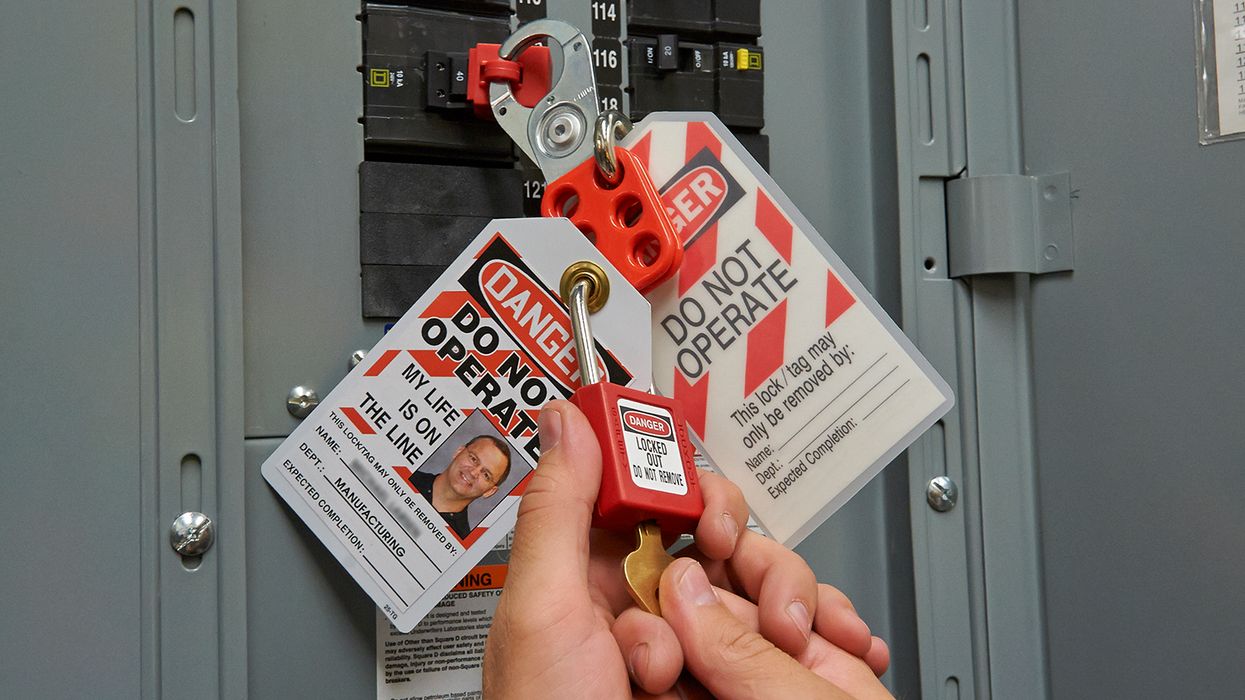
NewsIndustry NewsLockout/TagoutSafety & HealthLockout/TagoutGeneral Industry SafetyIn-Depth ArticleEnglishLockout/Tagout Authorized WorkersFocus AreaUSA
2020-12-30T06:00:00Z
Recognizing lockout/tagout training concerns
All employees involved in lockout/tagout require training. The authorized employees (those doing the maintenance work) have the most responsibility and require the most training. However, affected employees (those who operate machines being serviced) also need some training. In addition, some other employees (those working in an area where lockout or tagout is used) may require training so they don’t inadvertently interfere with the lockout/tagout process.
Retraining is required when there’s a change in the job, equipment, or process. Those changes could impact all categories of employees (authorized, affected, and other).
Retraining is also required when a periodic inspection reveals a problem. The periodic inspection is an annual review of the energy control procedure to ensure that it is adequate and is actually being followed.
Follow the procedures
Mechanics may work on dozens of machines, and each machine may have unique lockout/tagout procedures. But do the mechanics actually read and follow the procedures for each machine? Or do they just “know what to do” based on experience? Could other maintenance staff follow the procedures as written?
Make sure that authorized employees actually follow the procedures. If they are unsure about any part of a procedure, or if they skip a step that doesn’t make sense, then the procedure should be updated.
If additional training is needed, it may be best to conduct the training at the machine and ask the mechanics to indicate where the procedure is unclear. If the questions are more than the training group can handle, you may need to call in an expert (electrician, engineer, etc.).
As necessary, revise the procedure until it’s understandable. You want the procedures to be accurate and easy to use. If veteran mechanics think the procedure is hard to follow (or if they have ideas on how to improve the written steps), you want to correct those issues before contractors or new employees need to rely on the procedure.
Complete and accurate procedures not only keep your company in compliance, but help keep your employees safe.

NewsIndustry NewsSafety & HealthGeneral Industry SafetyForklifts and Powered TrucksFocus AreaIn-Depth ArticleEnglishPIT InspectionsUSA
2022-07-05T05:00:00Z
Safely maintaining forklift batteries
If employees work with forklifts and their batteries, they must understand the hazards of the liquid in those batteries.
According to OSHA’s forklift standard at 1910.178(g)(7), “When charging batteries, acid shall be poured into water; water shall not be poured into acid.” This can be confusing because workers commonly add distilled water to battery cells.
What OSHA is referring to is the initial mixing of sulfuric acid with water to create an electrolyte solution. Electrolyte solution is added to battery cells when the acid level is so low that a charge cannot be maintained.
What is an electrolyte?
Pure water will not carry an electric current, but adding sulfuric acid creates an electrolyte solution that allows the electric current to pass. Employees may need to mix concentrated sulfuric acid with distilled (pure) water to make the electrolyte solution.
The chemical reaction of mixing sulfuric acid with water can generate heat, resulting in a violent reaction. Because of this reaction, when mixing an electrolyte solution for forklift batteries, always add acid to the water to avoid the hazard of smoking and splattering.
When transferring acid from a large container, it’s a good idea to use a siphon. It’s much easier to control, reducing the chance for spilling or splashing. Splashed acid will eat holes in cloth and skin, so wearing protective equipment during this task is essential, including gloves, long sleeves, and goggles.
Maintaining battery cells
Normal forklift operations cause water in the battery cells to evaporate. If the fluid level in the cells is low, add distilled water before charging. Never add water immediately after a charge.
When the electrolyte level is low, clean off the top of the battery. Remove the battery’s filter caps and add distilled water to the cells. Be sure that the filter caps are tightened securely after the cells are filled.
If workers are not fully trained and authorized to perform this function, they must not attempt to add fluids of any kind to batteries.

NewsIndustry NewsSafety & HealthGeneral Industry SafetyWalking Working SurfacesIn-Depth ArticleWalking Working SurfacesEnglishFocus AreaUSA
2021-12-16T06:00:00Z
Walking-working Surface Handout
Don’t get tripped up by OSHA’s walking-working surfaces standard
There are many slips, trips, and fall hazards on construction sites. Employers must be proactive to find and fix these workplace hazards BEFORE they become an issue. Exposure to these types of hazards can pose a significant risk of death or serious harm to workers.
Employers can use a fall protection method or system that works best for the work operation. Regular inspections and training will help employers prevent and eliminate walking-working surface hazards.
What is a walking-working surface?
OSHA’s 1926.500(b)(2) says a walking-working surface is a horizontal or vertical surface. For example, it would include floors, roofs, ramps, bridges, runways, formwork, and concrete reinforcing steel but not include ladders, vehicles, or trailers where employees can stand. You must identify and eliminate walking-working surface hazards with proactive measures such as fall protection. Fall protection includes using: covers, designated areas, guardrails, handrails, personal fall protection systems, ladder safety systems, and safety nets.
Employers should perform regular inspections to identify and mitigate slips, trips, and fall hazards.
Things to keep in mind while performing these inspections include:
- Passageways, storerooms, service rooms, and walking-working surfaces must be kept clean, orderly, and sanitary.
- Walking-working surfaces must have a proper load rating to safely support loads applied to it.
- If a corrective action or repair cannot be made immediately, the hazard must be guarded to prevent employees from using the walking-working surface.
- False floors, platforms, and mats must be provided when wet processes are used;
- Hazardous conditions on walking-working surfaces must be corrected or repaired before an employee can use it again.
- Employers must provide safe access and egress to and from walking-working surfaces.
- Protruding objects, loose boards, corrosion, leaks, spills, snow, and ice, are not allowed on walking-working surfaces.
- Only a qualified person can repair structural integrity issues on a walking-working surface.

NewsIndustry NewsEnglishSafety & HealthConstruction SafetyGeneral Industry SafetyAgriculture SafetyMaritime SafetyIn-Depth ArticleHazard CommunicationHazcom LabelingFocus AreaUSA
2022-09-19T05:00:00Z
Labeling secondary containers in the workplace
“Do we have to label secondary containers?” That’s a common question regarding the requirements of the hazard communication, or HazCom, standard, so if you’ve ever wondered about that, you’re not alone.
And the answer is… It depends
The HazCom standard says, in part, “the employer is not required to label portable containers into which hazardous chemicals are transferred from labeled containers, and which are intended only for the immediate use of the employee who performs the transfer.”
The regulations define “immediate use” to mean that “the hazardous chemical will be under the control of and used only by the person who transfers it from a labeled container and only within the work shift in which it is transferred.”
So if the situation is such that the definition of immediate use is met, no label is needed. If this isn’t the case, however, you’ll need to label the container.
What kind of labeling is needed?
All workplace HazCom labels must include the product identifier and general information regarding all of the hazards of the chemical(s) even when using the NFPA or HMIS® system. In some cases, all hazards are not addressed by a particular rating system (e.g., chronic health hazards), and therefore, hazards not addressed must be communicated by words, pictures, symbols, or a combination thereof in addition to the NFPA or HMIS® rating system.
The HazCom regulations provide a few workplace labeling options. You can use:
- The elements required under HazCom on shipped containers, with the exception of contact information — product identifier, signal word, hazard statement(s), pictogram(s), and precautionary statement(s).
- In-house labels that include the product identifier and words, pictures, symbols, or a combination of these, which provide at least general information regarding the hazards of the chemicals.
- The HMIS® III or NFPA system.
Regardless of the workplace labeling option you use for secondary containers, you must ensure that your training program instructs employees on how to use and understand the labeling systems.
Keep in mind that the purpose of a label under HazCom is to serve as an immediate visual warning of the hazards associated with the chemical. The identity of the chemical leads to the more detailed information on the safety data sheet (SDS), but the hazard warning gives immediate information to employees working with the substance about the hazards associated with exposure.
Key to remember: A label is needed for secondary containers if the definition of “immediate use” is not met. “Immediate use” means that “the hazardous chemical will be under the control of and used only by the person who transfers it from a labeled container and only within the work shift in which it is transferred.”
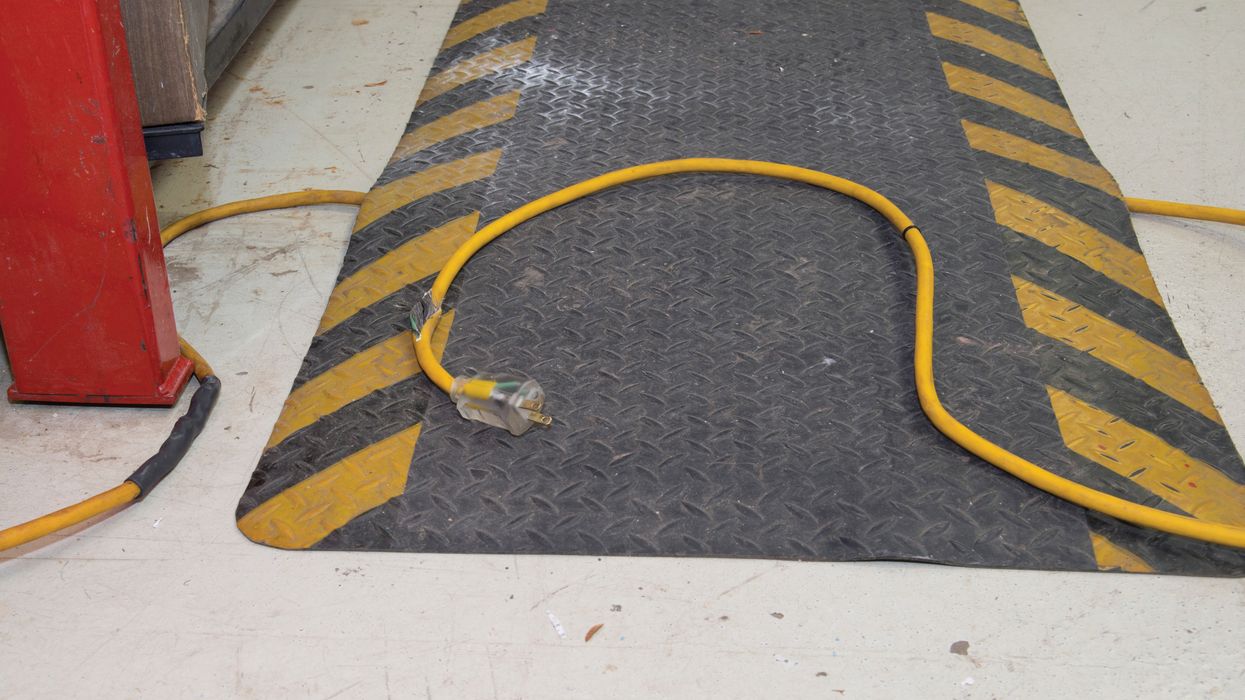
NewsIndustry NewsSafety & HealthElectrical SafetyGeneral Industry SafetyElectrical SafetyIn-Depth ArticleEnglishClearance DistancesFocus AreaUSA
2025-11-14T06:00:00Z
Beware of these common electrical safety violations
Electrical safety violations are among the most-cited General Industry standards. The combined total citations under 1910.303 and 1910.305 exceeded the machine guarding violations last year. Neither standard requires training, but training could help avoid citations and injuries.
The industries most often cited under those two standards include manufacturing, retail, wholesale, lodging and food service, and transportation and warehousing. OSHA commonly issues citations for things like:
- Using portable fans that were not approved for industrial locations,
- Leaving electrical boxes open,
- Failing to maintain sufficient space around electrical boxes, and
- Improperly using flexible cords or extension cords.
Use equipment properly
Paragraph 1910.303(b) covers examination, installation, and use of equipment. It includes a kind of a “general duty clause” that states, “Electric equipment shall be free from recognized hazards that are likely to cause death or serious physical harm to employees.”
Since electricity could cause serious harm, OSHA can cite that paragraph for a number of hazards. Citations include things like damaged insulation on wiring or exposed electrical parts of equipment motors. However, that isn’t the most frequently cited paragraph.
Sub-paragraph 1910.303(b)(2) gets cited most often. It states, “Listed or labeled equipment shall be installed and used in accordance with any instructions included in the listing or labeling.” Essentially, this tells employers to follow manufacturer instructions when using electrical equipment. OSHA uses this for violations like improperly using power strips or allowing employees to use outlets that were not correctly installed.
For related information, see our article, Five things to know before letting employees work with electricity.
Another frequently cited issue is failing to maintain access and working space around electrical equipment. Paragraph 1910.303(g)(1) requires sufficient access and space to allow safe operation and maintenance, describes specific distances, prohibits using the working space for storage, and requires guarding when live parts are exposed for inspection or service.
Wiring issues
The other commonly-cited electrical standard is 1910.305, covering wiring methods and more. These violations include issues such as outlets or switches without covers, or improperly using flexible cords (such as extension cords) where permanent wiring should be used.
One of the most-cited paragraphs is 1910.305(b)(1)(ii) which says, “Unused openings in cabinets, boxes, and fittings shall be effectively closed.” For example, if a circuit breaker panel has an unused breaker space, it must be filled with a blank. It cannot be left open, and placing tape over the empty slot is not sufficient.
Another frequently-cited paragraph is (g)(2)(iii), which says: “Flexible cords and cables shall be connected to devices and fittings so that strain relief is provided that will prevent pull from being directly transmitted to joints or terminal screws.” OSHA uses this when saws or other equipment gets power through flexible cables coming from an electrical panel.
The Bureau of Labor Statistics lists more than 2,000 injuries from exposure to electricity each year and around 150 deaths per year. Neither of the above standards specifically requires training workers on electrical safety, but employers should provide training on properly using (and not improperly using) electrical equipment and tools. For related information, see our article, What is the difference between qualified and unqualified electrical workers?
Key to remember: Electrical hazards from exposed electrical lines and improperly using equipment could be mitigated by training employees.
NewsEnforcement and Audits - OSHASafety and Health Programs and TrainingErgonomicsLockout/TagoutLockout/TagoutSafety and Health Programs and TrainingIn-Depth ArticleEnglishHeat StressErgonomicsOSHA Violations and PenaltiesIndustry NewsHeat and Cold ExposureSafety & HealthConstruction SafetyGeneral Industry SafetyAgriculture SafetyMaritime SafetyFocus AreaUSA
2026-06-24T05:00:00Z
Congress pushes OSHA and workplace safety in competing directions
A divided Capitol Hill is sending mixed signals on workplace safety policy. Some lawmakers are pressing for greater worker protection while others seek to block new rulemaking. Yet there is agreement that emerging safety challenges are on the rise. How these competing priorities will influence the OSHA landscape remains to be seen.
Pushback over Heat proposal
Dominating the pack of recent legislation affecting safety and health is the Heat Workforce Standards Act (S. 4427). The bill, introduced on April 29 by Senator Bill Cassidy, M.D. (R-LA) seeks to stop OSHA from finalizing, implementing, or enforcing a Heat Injury and Illness Prevention standard based on or similar to the August 30, 2024, proposal. This legislation underscores how OSHA rulemakings can face resistance around feasibility and cost.
The Senator calls the OSHA proposed rule burdensome, overly prescriptive, one-size-fits-all, and nearly impossible for employers to comply with. The lawmaker also argues that the rule would raise costs for small businesses. He adds that the proposal, if promulgated, would cause confusion.
It should be noted that a companion bill in the House (H.R. 6213) was introduced last November. In addition, two bills (H.R. 4443 and S. 2298) introduced last July would require OSHA to issue a standard to protect workers from heat-related injuries and illnesses.
Efforts to expand worker protection
To commemorate Workers’ Memorial Day on April 28, Senator Bernie Sanders (I-VT) introduced the Protecting America’s Workers Act (S. 4413). The legislation would reform the Occupational Safety and Health Act (OSH Act) to:
- Impose higher monetary penalties and criminal charges;
- Protect whistleblowers who report unsafe working conditions;
- Mandate that OSHA investigate all cases of workplace deaths or serious injuries;
- Require employers to inform workers of their right to a safe workplace; and
- Extend safety and health protections to federal, state, and local public employees.
This bill is a companion to last year’s House bill (H.R. 3036) by the same name. Both bills work to expand OSHA’s authority.
Emerging safety and health challenges
The House Workforce Protections Subcommittee held a hearing on May 14 to help shape the conversation about evolving workplace safety and health issues. Subcommittee Chairman Ryan Mackenzie (R-PA) explained that the idea was to “better prevent serious injuries and fatalities in the modern workplace.” Those who testified spoke about:
- Leading indicators,
- Safety and health management systems,
- Artificial intelligence,
- Advances in lockout/tagout systems,
- Worker wellbeing,
- Work violence,
- Opioid overdoses,
- Cannabis impairment,
- Silica dust exposure,
- New chemical exposures,
- Heat illness,
- Vehicle driving risks,
- Performance-based OSHA standards rather than prescriptive ones, and
- An accelerated OSHA variance program for new technologies.
Information from the hearing may shape future legislation or OSHA regulations.
Worker safety in meat plants
Senator Cory Booker (D-NJ) and four other legislators sent a letter to the U.S. Department of Agriculture (USDA) on April 30. The letter opposes the department’s proposed rules that would increase line speeds for poultry and swine processing plants. The lawmakers also oppose the removal of requirements for these establishments to submit annual worker safety data called attestations.
The letter urges USDA not to move forward with the proposals. It points to the USDA’s research on musculoskeletal disorders among poultry and swine slaughter workers. The letter also spotlights amputations in poultry facilities and meatpacking.
When USDA issued its research in 2025, Acting Labor Secretary Julie Su stated, “The findings in USDA's report on worker safety in poultry and swine plants show that injuries, including chronic pain and musculoskeletal disorders are too common. These kinds of injuries often go unreported. The study found that the increased risk of injuries created by increasing line speeds could be mitigated with other controls, specifically having more workers on the line and having effective ergonomic plans.”
While OSHA does not set line speeds in food plants, the issue illustrates how workplace safety is related to policy decisions in other agencies.
Consensus standards targeted
Another piece of legislation introduced March 19 seeks to provide public access to incorporated by reference consensus standards without requiring payment. Some standards are made freely available online, but not all.
The Pro Codes Act (S. 4145), if passed, would ensure that a consensus standard does not lose its copyright protection simply because it is incorporated by reference into law or regulation. However, the catch is the standard must be available for free viewing on a publicly accessible website. That website would be searchable. Plus, the standards organization could not use any personally identifiable information of site visitors without their consent.
Senator Chris Coons (D-DE) said of his bill, “This bipartisan legislation … will make the public safer by ensuring non-profits know they can develop better standards without fear of losing them.”
A companion House bill (H.R. 4072) by the same name was introduced in June last year.
Key to remember
In recent months, lawmakers have turned their attention to five areas impacting safety — blocking OSHA’s Heat proposal, strengthening the OSH Act, exploring emerging workplace safety issues, opposing faster line speeds, and increasing access to consensus standards.
Saved to my EVENT CALENDAR!
View your saved links by clicking the arrow next to your profile picture located in the header. Then, click “My Activity” to view the Event Calendar on your Activity page.
OK
J. J. Keller is the trusted source for DOT / Transportation, OSHA / Workplace Safety, Human Resources, Construction Safety and Hazmat / Hazardous Materials regulation compliance products and services. J. J. Keller helps you increase safety awareness, reduce risk, follow best practices, improve safety training, and stay current with changing regulations.
Copyright 2026 J. J. Keller & Associate, Inc. For re-use options please contact copyright@jjkeller.com or call 800-558-5011.