FMLA confidentiality and OSHA recordkeeping
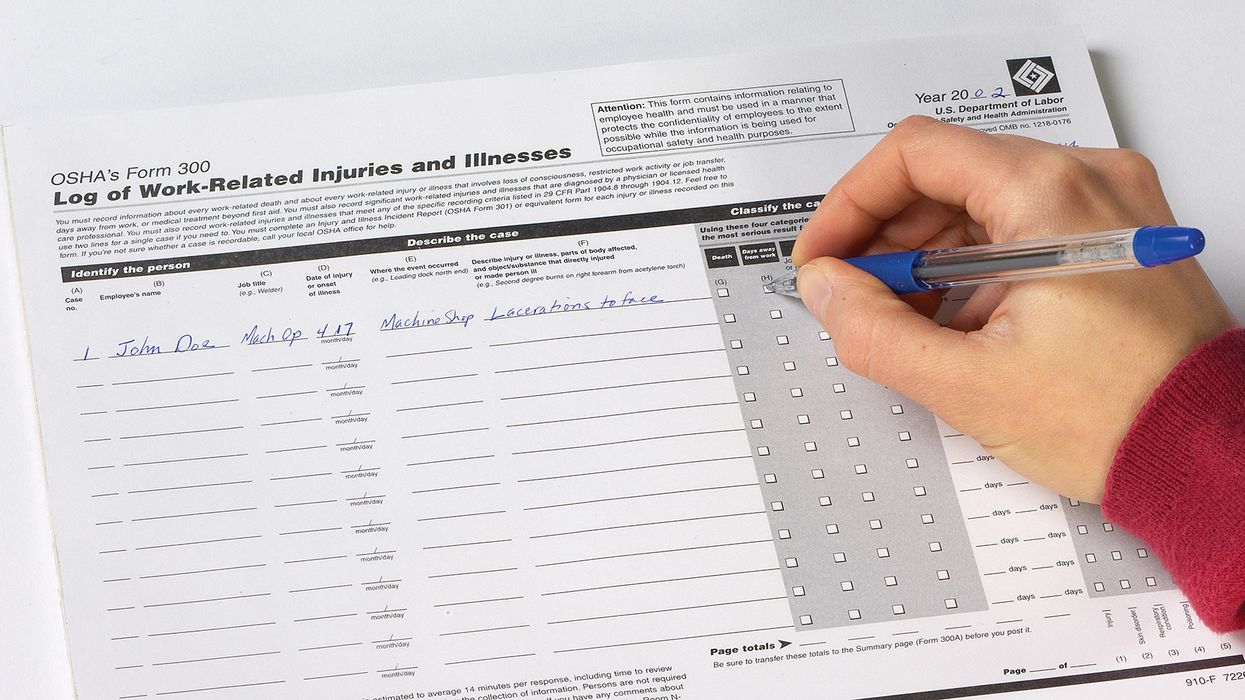
Sometimes, a situation involving the federal Family and Medical Leave Act (FMLA) and the federal Occupational Safety and Health Act (OSHA) intertwine. One such situation is if an employer receives an FMLA certification that indicates that the employee’s condition is work-related. Are employers obligated to use that information to record a condition on the OSHA 300 or 301 form?
No, according to the Occupational Safety and Health Review Commission (OSHRC) which reviews OSHA citations or penalties stemming from inspections, these events don’t need to be recorded on those forms.
Dust exposure, allergies, and poor air quality
A related case involved an employee who was exposed to dust at work, causing an allergic reaction. The employee asked for FMLA leave for the condition. The FMLA certification indicated that the employee had an FMLA serious health condition that was caused exclusively by her work environment.
The employee also complained about the workplace air quality to OSHA.
Investigation into OSHA recordkeeping
OSHA investigated and asked to see the company’s recordkeeping reports. The OSHA inspector noticed that the employer did not record the incident related to the employee’s condition on the OSHA logs. The company said that the FMLA’s confidentiality provisions precluded it from recording the incident on those OSHA reports.
OSHA felt that, because the FMLA certification indicated that the employee had a work-related illness, the employer had to record it on the OSHA logs.
Employers must keep medical info confidential, says the FMLA
The case went to the OSHRC, which ruled that the FMLA confidentiality provisions do preclude employers from reviewing FMLA certifications for OSHA recordkeeping purposes.
Employers are to record occupational injuries or illnesses if they know or should have known about an employee’s work-related illness. Having such information in an FMLA certification does not, however, give employers that knowledge, according to OSHRC.
The FMLA requires employers to keep medical information confidential and separate from the general personnel file. While there are limited exceptions, sharing information for OSHA recordkeeping is not one of the exceptions.
Secretary of Labor v. USPS, No. 08-1547, September 29, 2014.
Key to remember: Employers are not required to review FMLA certifications to determine if they are required to record the condition on the OSHA logs.