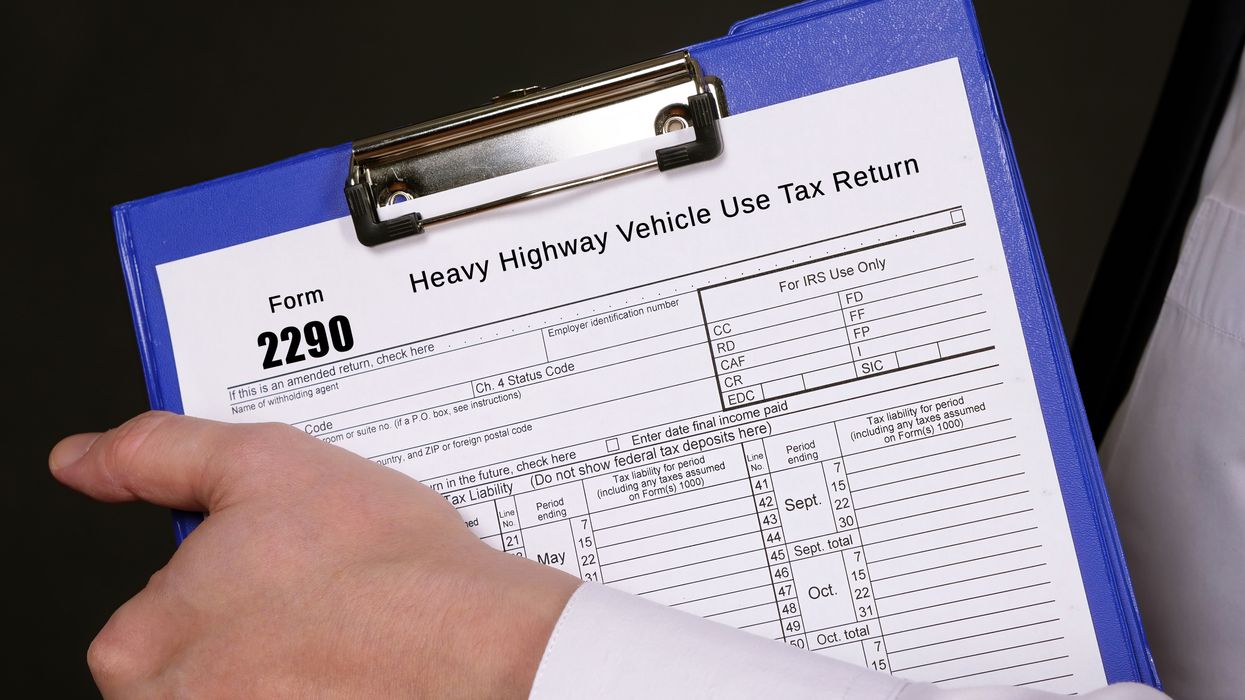
The low-stress way to file Form 2290
Missing or delayed Heavy Vehicle Use Tax (HVUT) filings can do more than create paperwork headaches. They can sideline trucks, delay registrations, and disrupt operations.
E-filing your Form 2290 takes the anxiety out of the process by providing near-instant confirmation, built-in error checks, and reliable documentation, so you can file with confidence, avoid unnecessary delays, and keep your business moving.
Much faster processing
Waiting weeks for a stamped Schedule 1 can delay registrations and keep your trucks off the road. When e-filing, you’ll typically receive your stamped Schedule 1 within minutes after acceptance. This is your receipt for filing the HVUT, which is critical for vehicle registration and renewals.
Paper filers may wait 6–8 weeks (or longer) for processing and to receive their stamped Schedule 1 to return by mail.
When e-filed, a watermarked (stamped) Schedule 1 is available for download or email almost immediately. All state DMVs accept the electronically stamped Schedule 1 for registration and renewal.
Reduced errors and rejections
Speed is only part of the equation; accuracy matters just as much. Even a small mistake can push your filing back weeks, and every delay puts registrations (and revenue) at risk.
E-filing systems perform automatic checks for VIN length, EIN format, weight categories, and math errors, reducing the chance of rejected filings.
Paper forms are more prone to manual errors that can delay processing for weeks.
It’s mandatory for larger fleets
In fact, the IRS considers e-filing so reliable that it’s required for larger fleets. E-filing is mandatory if you are reporting 25 or more taxable vehicles on Form 2290.
But even smaller fleets and owner-operators are strongly encouraged to e-file due to the efficiency and reliability of the online process.
More payment options
E-filing also gives you more control over how you pay, allowing electronic payment by:
- Electronic funds withdrawal (EFW),
- Electronic Federal Tax Payment System (EFTPS), and
- Credit or debit card.
All of these options are faster and easier to track than mailing a check. No more wondering if your paperwork arrived.
Lower administrative burden
And once your payment is handled, the paperwork gets easier too. E-filing streamlines HVUT compliance by saving time, reducing clutter, and making recordkeeping far simpler, with:
- No printing, postage, or certified mail tracking;
- No waiting and watching for mailed confirmations; and
- Digital records that are easier to store, retrieve, and reproduce for audits or DMV requests.
Faster corrections and amendments
When corrections are unavoidable, e-filing makes those easier too. VIN corrections, weight increases, or suspended-vehicle updates can be filed and processed quickly with e-filing.
Paper filing: What to know
Paper filing is still allowed in certain cases, but it comes with important tradeoffs, including:
- Significantly longer processing times,
- Greater risk of delayed registrations, and
- Inconvenience for time-sensitive filings.
Those tradeoffs can directly affect uptime and cash flow. If you’re filing close to a registration or renewal deadline, processing time matters.
Key to remember: For most carriers, e-filing Form 2290 is the simplest way to stay on track, especially during registrations, renewals, or fleet changes. With fewer delays and fewer avoidable mistakes than paper filing, e-filing can ease the anxiety that comes with waiting and wondering, while helping keep your trucks on the road where they belong.