Compliance Just Got Easier: Stay ahead of regulatory changes with instant notifications on updates that matter.
['Registration and Permits - Motor Carrier']
['International Registration Plan (IRP)', 'Temporary trip permits']
2026-05-12T05:00:00Z
JOIN TODAY TO CONTINUE READING THIS ARTICLE & OTHER INDUSTRY NEWS!
You'll also get exclusive access to:
A database of easy-to-understand regulationsAsk unlimited questions to our expertsPre-led discussions forumsAnd more
TRY IT FREE TODAY
Already have an account? Log in now.

Copyright 2026 J. J. Keller & Associate, Inc. For re-use options please contact copyright@jjkeller.com or call 800-558-5011.
NewsIndustry NewsInternational Registration Plan (IRP)Temporary trip permitsFocus AreaIn-Depth ArticleFleet OperationsEnglishTransportationRegistration and Permits - Motor CarrierUSA
Your cab card is not one size fits all (states)
2026-05-12T05:00:00Z
If you’ve ever looked closely at your apportioned cab card, you may have noticed that not every state lists the same maximum weight. One jurisdiction might show 90,000 pounds, another 80,000, and others even lower. Is that a mistake? Usually not. But understanding what those numbers mean can help you avoid tickets, out-of-service orders, and audit headaches.
Why weights vary by state
Under the International Registration Plan (IRP), carriers register vehicles at declared weights for each participating jurisdiction. The weight shown for each state reflects what you paid to operate in that jurisdiction. It’s not a blanket authorization to run that weight everywhere.
Several factors drive the differences:
- State maximums: States allow defined maximum weights on their roads, and they’re not necessarily the same as what neighboring states allow.
- Axle and configuration limits: Some states may allow heavier weights with specific axle spacing or configurations.
- The registration weight you declared (and paid for): If you only declared 80,000 pounds for a particular state to reduce your registration fees, that’s the limit the cab card will show, even if the state allows more. Carriers often declare lower weights in some states to reduce IRP fees.
- Permits vs. registration: Higher weights often require overweight permits, which do not appear on the cab card.
What enforcement looks at
At roadside, enforcement is less concerned with why weights differ and more concerned with three things:
- Are you operating within your registered weight for that state? If your cab card says 80,000 for that jurisdiction, running heavier without a valid permit is a violation.
- Does your axle configuration comply with state law? Even if your total weight is within your registered weight, improper axle spacing can still put you over legal limits.
- Do you have required permits in-hand or electronically available? Operating under an overweight permit but failing to have the permit available during a roadside inspection can lead to citations or temporary out-of-service orders until proof is provided.
A common misconception is that enforcement defaults to 80,000 pounds. In reality, officers rely on what is printed on your cab card for each jurisdiction, combined with state axle laws and permit requirements.
Before crossing a state line, check:
- The cab card row for that state,
- Your current gross weight, and
- Whether a permit is required and available.
Avoid these mistakes
Common carrier mistakes include:
- Assuming the highest weight on the cab card applies everywhere,
- Running permit-only weights without a permit because the cab card shows a higher number in another state,
- Failing to update registered weights after changes in equipment or operations, and
- Letting drivers guess instead of helping them understand how to read the cab card correctly.
Key to remember: Your cab card is a state-by-state permission slip, not a universal weight pass. Understanding why the numbers differ and how enforcement uses them can prevent violations, delays, and costly compliance issues. When in doubt, verify the registered weight for a specific jurisdiction before rolling across the state line.

NewsIndustry NewsInternational Registration Plan (IRP)Temporary trip permitsFocus AreaIn-Depth ArticleFleet OperationsEnglishTransportationRegistration and Permits - Motor CarrierUSA
Your cab card is not one size fits all (states)
2026-05-12T05:00:00Z

Written by
Corrina Peterson
Compliance Expert - Transportation
Corrina Peterson
University of Michigan
Compliance Expert at J. J. Keller & Associates, specializing in fleet taxes, registration, permitting, and hazardous materials.
If you’ve ever looked closely at your apportioned cab card, you may have noticed that not every state lists the same maximum weight. One jurisdiction might show 90,000 pounds, another 80,000, and others even lower. Is that a mistake? Usually not. But understanding what those numbers mean can help you avoid tickets, out-of-service orders, and audit headaches.
Why weights vary by state
Under the International Registration Plan (IRP), carriers register vehicles at declared weights for each participating jurisdiction. The weight shown for each state reflects what you paid to operate in that jurisdiction. It’s not a blanket authorization to run that weight everywhere.
Several factors drive the differences:
- State maximums: States allow defined maximum weights on their roads, and they’re not necessarily the same as what neighboring states allow.
- Axle and configuration limits: Some states may allow heavier weights with specific axle spacing or configurations.
- The registration weight you declared (and paid for): If you only declared 80,000 pounds for a particular state to reduce your registration fees, that’s the limit the cab card will show, even if the state allows more. Carriers often declare lower weights in some states to reduce IRP fees.
- Permits vs. registration: Higher weights often require overweight permits, which do not appear on the cab card.
What enforcement looks at
At roadside, enforcement is less concerned with why weights differ and more concerned with three things:
- Are you operating within your registered weight for that state? If your cab card says 80,000 for that jurisdiction, running heavier without a valid permit is a violation.
- Does your axle configuration comply with state law? Even if your total weight is within your registered weight, improper axle spacing can still put you over legal limits.
- Do you have required permits in-hand or electronically available? Operating under an overweight permit but failing to have the permit available during a roadside inspection can lead to citations or temporary out-of-service orders until proof is provided.
A common misconception is that enforcement defaults to 80,000 pounds. In reality, officers rely on what is printed on your cab card for each jurisdiction, combined with state axle laws and permit requirements.
Before crossing a state line, check:
- The cab card row for that state,
- Your current gross weight, and
- Whether a permit is required and available.
Avoid these mistakes
Common carrier mistakes include:
- Assuming the highest weight on the cab card applies everywhere,
- Running permit-only weights without a permit because the cab card shows a higher number in another state,
- Failing to update registered weights after changes in equipment or operations, and
- Letting drivers guess instead of helping them understand how to read the cab card correctly.
Key to remember: Your cab card is a state-by-state permission slip, not a universal weight pass. Understanding why the numbers differ and how enforcement uses them can prevent violations, delays, and costly compliance issues. When in doubt, verify the registered weight for a specific jurisdiction before rolling across the state line.


See More
RELATED NEWS

NewsIndustry NewsFleet SafetyInternational Registration Plan (IRP)TransportationVehicle Registration PermitsIn-Depth ArticleRegistrationCommercial motor vehicle definitionEnglishCommercial motor vehicle definitionFocus AreaRegistration and Permits - Motor CarrierUSA
09/08/2022
Your vehicle weight might not be what you thought
NewsIndustry NewsInternational Registration Plan (IRP)Vehicle Registration PermitsFocus AreaIn-Depth ArticleFleet OperationsCommercial motor vehicle definitionEnglishCommercial motor vehicle definitionTransportationRegistration and Permits - Motor CarrierUSA
12/13/2021
Your vehicle weight might not be what you thought

NewsIndustry NewsInternational Registration Plan (IRP)Vehicle registration exemptionsMotorcoach vehicle license or registrationVehicle Registration PermitsFocus AreaIn-Depth ArticleFleet OperationsEnglishTransportationRegistration and Permits - Motor CarrierUSA
07/09/2026
Does your registration still match your operations?


Specialized Industries
Go beyond the regulations! Visit the Institute for in-depth guidance on a wide range of compliance subjects in safety and health, transportation, environment, and human resources.
J. J. Keller® COMPLIANCE NETWORK is a premier online safety and compliance community, offering members exclusive access to timely regulatory content in workplace safety (OSHA), transportation (DOT), environment (EPA), and human resources (DOL).

Interact With Our Compliance Experts
Puzzled by a regulatory question or issue? Let our renowned experts provide the answers and get your business on track to full compliance!

Upcoming Events
Reference the Compliance Network Safety Calendar to keep track of upcoming safety and compliance events. Browse by industry or search by keyword to see relevant dates and observances, including national safety months, compliance deadlines, and more.

SAFETY & COMPLIANCE NEWS
Keep up with the latest regulatory developments from OSHA, DOT, EPA, DOL, and more.



REGSENSE® REGULATORY REFERENCE
Explore a comprehensive database of word-for-word regulations on a wide range of compliance topics, with simplified explanations and best practices advice from our experts.

THE J. J. KELLER INSTITUTE
The Institute is your destination for in-depth content on 120+ compliance subjects. Discover articles, videos, and interactive exercises that will strengthen your understanding of regulatory concepts relevant to your business.



ADD HAZMAT, ENVIRONMENTAL, & HR RESOURCES
Unlock exclusive content offering expert insights into hazmat, environmental, and human resources compliance with a COMPLIANCE NETWORK EDGE membership.

DIRECT ACCESS TO COMPLIANCE EXPERTS
Struggling with a compliance challenge? Get the solution from our in-house team of experts! You can submit a question to our experts by email, set up a phone or video call, or request a detailed research report.



EVENTS
Register to attend live online events hosted by our experts. These webcasts and virtual conferences feature engaging discussions on important compliance topics in a casual, knowledge-sharing environment.
Most Recent Highlights In Environmental

NewsGreenhouse GasesIndustry NewsIndustry NewsEnvironmental Protection Agency (EPA)Air ProgramsCAA ComplianceEnvironmentalEnglishFocus AreaAir ProgramsUSA
2026-09-17T05:00:00Z
EPA repeals most 2024 Carbon Pollution Standards for fossil fuel-fired power plants
On September 17, 2026, the Environmental Protection Agency (EPA) finalized a rule repealing a majority of the greenhouse gas (GHG) emission requirements established by the 2024 Carbon Pollution Standards (CPS) for fossil fuel-fired power plants. The agency also issued a supplemental proposed rule to rescind all other GHG emission standards for fossil fuel-fired power plants.
Who’s impacted?
EPA’s final rule applies to the fossil fuel-fired electric generating unit (EGU) source category, including:
- Fossil fuel-fired electric utility steam generating units, and
- Stationary combustion turbine EGUs.
The final rule specifically impacts:
- Existing fossil fuel-fired steam generating EGUs (subject to 40 CFR Part 60 Subpart UUUUb),
- Coal-fired steam generating units conducting a large modification (subject to Part 60 Subpart TTTTa), and
- New base load stationary combustion turbines (subject to Part 60 Subpart TTTTa).
Final rule: Repeal 2024 CPS regulations
The agency finalized the alternative option from its June 2025 proposed rule, repealing parts of the 2024 CPS and revising the associated best system of emission reduction (BSER) determinations.
EPA’s final rule removes most of the 2024 CPS regulations, including:
- The emission guidelines for existing coal-, oil-, and natural gas-fired steam generating units (the entirety of Part 60 Subpart UUUUb);
- The carbon capture and sequestration/storage (CCS)-based standards for coal-fired EGUs conducting a large modification; and
- The CCS-based standards for new base load stationary combustion turbines (the Phase 2 standards).
The final rule doesn’t repeal or revise the 2024 CPS efficiency-based standards for new stationary combustion turbines (the Phase 1 standards). However, EPA addresses them in the supplemental proposed rule.
Proposed rule: Repeal remaining GHG emission requirements
EPA also issued a supplemental proposed rule to rescind all remaining GHG emission requirements for fossil fuel-fired power plants, including the Phase 1 standards for new stationary combustion turbines. It would require the same regulatory changes as the June 2025 proposed rule but for different reasons.
The supplemental proposed rule would repeal all GHG emission standards in 60 Subparts TTTT and TTTTa for the fossil fuel-fired EGU source category, including the 2015 New Source Performance Standards (NSPS) and the 2024 CPS.
Specifically, EPA would repeal the:
- Partial CCS-based standards for new and efficiency-based standards for reconstructed or modified steam generating units and integrated gasification combined cycle facilities, and
- Efficiency-based standards for new or reconstructed stationary combustion turbines.
If the rule is finalized as proposed, fossil fuel-fired EGUs would no longer be required to comply with the GHG emission standards established under the 2015 NSPS or the 2024 CPS regulations.
Key to remember: EPA’s final rule repeals a majority of the greenhouse gas (GHG) emission standards established by the 2024 Carbon Pollution Standards for fossil fuel-fired power plants. The agency also proposes to remove the remaining GHG emission requirements for fossil fuel-fired power plants.

NewsIndustry NewsEnglishEnvironmental Management SystemsEMS PlanningEnvironmentalIn-Depth ArticleEMS Roles and ResponsibilitiesEnvironmental Management SystemsFocus AreaUSA
2026-09-15T05:00:00Z
Expert Insights: The hidden compliance risk of employee turnover
When environmental professionals think about compliance risks, they often focus on permits, inspections, regulatory changes, and reporting deadlines. Those are certainly important concerns. Yet one of the most significant compliance risks faced by many organizations today has little to do with regulations themselves. It's employee turnover.
Environmental compliance programs depend heavily on institutional knowledge. Over time, employees develop an understanding of permit requirements, reporting schedules, waste streams, inspection practices, agency expectations, and operational nuances that may never be fully captured in a written procedure. When those employees retire, resign, or move into different roles, valuable compliance knowledge can leave with them.
This challenge is becoming more common as organizations experience workforce transitions, retirements, organizational restructuring, and ongoing competition for skilled employees. In some cases, a facility may discover that a single individual has been managing key compliance responsibilities for years with little backup or documentation. Everything may appear to function smoothly until that person is no longer available.
The greatest risks are often not the obvious ones. A permit doesn't disappear when an employee leaves. A reporting deadline doesn't change. Hazardous waste, air emissions, and wastewater obligations continue regardless of who occupies a particular position. The risk arises when important information about those obligations exists primarily in someone's memory rather than within the organization's management system.
Consider a few common examples. An environmental manager may know that a particular production process must be included in annual emissions calculations. A maintenance supervisor may understand why certain inspection frequencies were established. An operations employee may know that a wastewater treatment unit requires additional monitoring during specific production conditions. In some cases, long-term employees have developed productive working relationships with regulatory inspectors and agency staff. They understand how the facility has historically addressed compliance challenges, what information regulators typically request, and the context behind prior inspections or permitting decisions. Experienced personnel often carry these insights with them, yet organizations frequently neglect to capture and document the information for their successors.
Organizations sometimes discover these gaps only after an audit, inspection, or missed deadline. By then, correcting the problem can be far more difficult than preventing it. Fortunately, reducing this risk doesn't necessarily require significant investment. It begins with recognizing that compliance knowledge is an organizational asset rather than an individual asset. Facilities can strengthen resiliency by documenting critical compliance activities, maintaining current procedures, developing training materials, and cross-training employees on key responsibilities. Succession planning shouldn't be limited to leadership positions. It should also include the individuals who perform essential environmental compliance functions.
Environmental management systems can play an important role in this effort. Well-documented processes help ensure that compliance activities continue consistently regardless of changes in personnel. Recordkeeping systems, compliance calendars, written procedures, and periodic reviews all contribute to preserving institutional knowledge and reducing dependence on any single employee.
Every organization experiences personnel changes. The question is whether compliance programs are prepared for them. Facilities that proactively capture knowledge and distribute responsibilities are often better positioned to maintain compliance during periods of transition. In contrast, organizations that rely heavily on individual expertise may discover that employee turnover creates risks they never anticipated.
Environmental compliance is often viewed through the lens of regulations. Increasingly, however, it may be equally important to view compliance through the lens of knowledge management. After all, one of the most valuable environmental assets a facility possesses may be what its employees know and how effectively that knowledge is shared.
NewsHazardous WasteIndustry NewsEnglishWaste ManifestsWaste HandlersWasteEnvironmental Protection Agency (EPA)EnvironmentalIn-Depth ArticleWaste/HazWasteFocus AreaUSA
2026-09-14T05:00:00Z
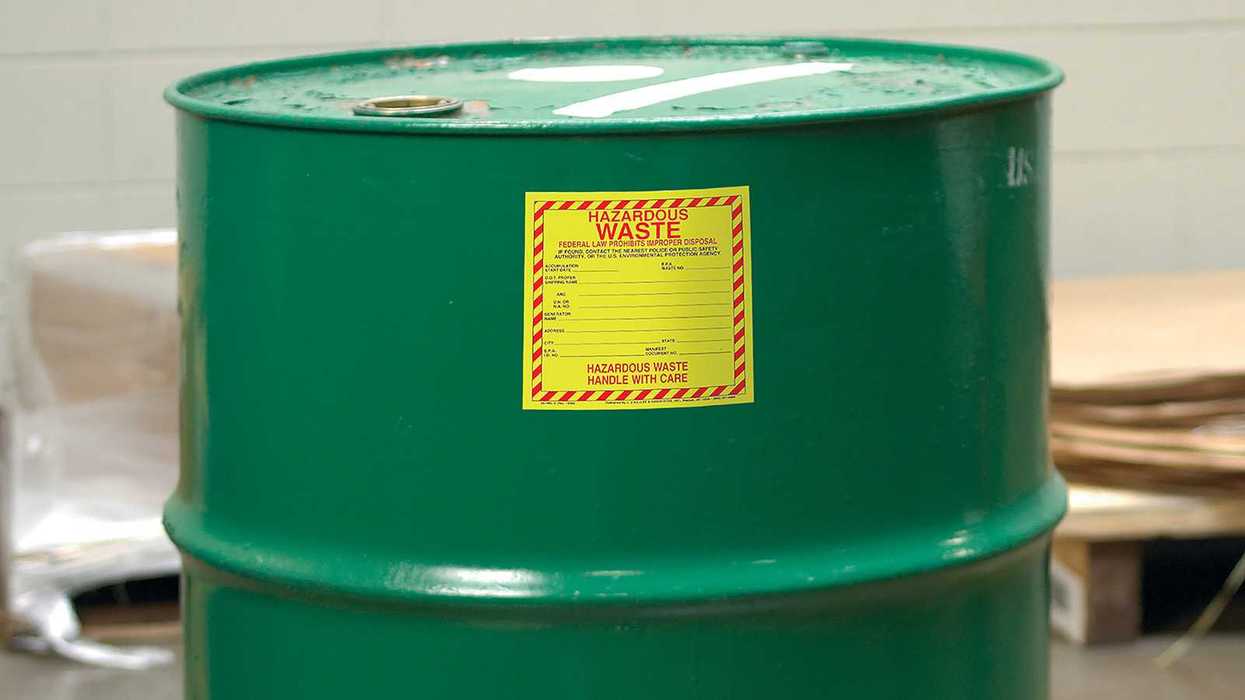
Hazardous waste e-Manifest report card: Tips for improving your facility’s manifests
With the school year fully underway, report cards will soon start to appear. But these performance evaluations aren’t limited to students in the classroom. A recent assessment serves as a “report card” for the federal e-Manifest system, an electronic platform that tracks hazardous waste shipments. And just like a student’s report card, the report reveals areas for improvement.
On August 11, 2026, the Environmental Protection Agency (EPA) Office of Inspector General (OIG) published Evaluation of the EPA’s e-Manifest System. The report identifies the leading errors made by hazardous waste handlers, including:
- Generators;
- Transporters; and
- Treatment, storage, and disposal facilities (TSDFs).
The e-Manifest system’s “report card” offers hazardous waste handlers valuable lessons to help them deliver A+ manifests.
e-Manifest report card results
The OIG analyzed 2022–2024 e-Manifest system data and identified the most frequent errors:
- Incorrect EPA identification (ID) numbers, and
- Overstated shipping volumes of hazardous waste.
The report also found that more than 99 percent of manifest submissions between 2019 and 2024 were “data + image” submissions. With this submission type, all hazardous waste handlers use a paper manifest. The TSDF transcribes the data from the paper manifest into an electronic data file and then uploads a scanned image of the final paper manifest and the electronic data file to the e-Manifest system.
The OIG found that most of the errors occurred when TSDFs manually transcribed data from the final paper manifest into the electronic data file.
Incorrect EPA ID numbers
According to the report, about 40 percent of hazardous waste generator EPA ID number entries and 50 percent of TSDF EPA ID number entries were invalid. Many errors were due to entering EPA ID numbers incorrectly, but a notable number of them were connected to very small quantity generators (VSQGs) using paper manifests. VSQGs need an EPA ID number only to use electronic manifests, not paper ones. On paper manifests, VSQGs frequently leave the EPA ID number blank or enter different information to indicate that they don’t have an EPA ID number.
Overstated shipping volumes
Overall, the OIG concluded the most significant errors involved overstated shipping volumes caused by incorrect manifest entries or inaccurate transcriptions of paper manifest data into the e-Manifest system.
Common errors made when copying data from the paper manifests into electronic data files included:
- Entering incorrect units of measurement (such as using tons for volumes that were calculated in pounds on the paper manifest);
- Omitting or placing decimal points for volumes in the wrong place (e.g., 941,250 tons instead of 94.1250 tons);
- Entering data that’s incorrect on the paper manifest; and
- Duplicating data entries.
Lessons for hazardous waste handlers
Although the OIG’s report was developed for EPA, it offers valuable insights for hazardous waste handlers required to fill out manifests.
Here are some helpful tips gleaned from the report that all hazardous waste handlers can use:
- Verify that your EPA ID number is entered correctly.
- Verify that the stated volumes match the units of measurement.
- Double-check decimal places.
- If you’re filling out a paper manifest, ensure the information is legible. If you encounter illegible information on a paper manifest, confirm the data with the handler who filled it out.
- Look for unreasonable information. For example, if the volume on the manifest indicates that thousands of tons (instead of thousands of pounds) of hazardous waste are being shipped, an error likely occurred.
If you don’t have one already, consider developing a checklist for filling out hazardous waste manifests. You can add the tips above and any other parts of your organization’s manifest process to the checklist.
Benefits of electronic manifests
The OIG’s report also emphasizes that electronic manifests offer specific advantages over paper manifests, especially when all hazardous waste handlers use them.
Potential improvements include the following:
- Increased data accuracy: Because hazardous waste handlers don’t have to copy data from paper manifests into the e-Manifest system, there’s a much lower risk of entering data incorrectly. Plus, electronic manifests solve the issue of illegible entries.
- Streamlined process: Electronic manifests simplify the data-entry process by removing the need to reenter data from paper manifests into the e-Manifest system.
- Easier recordkeeping: The e-Manifest system retains all manifest records, so electronic manifest users don’t have to keep paper copies (except for generators that use hybrid manifests).
- Compliance with possible future regulations: EPA proposed a rule in March 2026 that would require the use of electronic manifests (hybrid or fully electronic) and phase out the use of paper manifests. By shifting to electronic manifests now, hazardous waste handlers would be better prepared to comply with the rule if it’s finalized.
Key to remember: A recent report evaluating EPA’s e-Manifest system offers hazardous waste handlers valuable insights into common manifest errors to avoid.
NewsWater PermittingChange NoticesChange NoticeWater ProgramsWater ReportingWater AnalysisVirginiaEnvironmentalWater MonitoringWater ProgramsEnglishFocus AreaCWA Compliance
2026-09-10T05:00:00Z
Virginia adds PFAS requirements to biosolids permit
Effective date: September 23, 2026
This applies to: Owners of sewage treatment works and other biosolids permit holders that land apply, market, or distribute treated sewage sludge (i.e., biosolids)
Description of change: The Virginia State Water Control Board’s revisions to two rules add requirements for per- and polyfluoroalkyl substances (PFAS) to biosolids permits.
Starting January 1, 2027, treatment works must test biosolids for PFAS and report concentrations of perfluorooctanoic acid (PFOA), perfluorooctane sulfonate (PFOS), and all other target analytes to the Department of Environmental Quality (DEQ) and to the entities that apply the biosolids from the treatment works. The requirement also applies to out-of-state sources of biosolids that will be land applied in the state.
Starting July 1, 2027, the DEQ will limit the distribution, marketing, and land application of PFAS-containing biosolids based on concentrations of PFOA and PFOS. Additionally, companies that land apply PFAS-containing biosolids must provide landowners with PFAS monitoring results at least 2 weeks before application.
Starting July 1, 2029, the DEQ will strengthen limits on the distribution, marketing, and land application of PFAS-containing biosolids, basing them on the combined concentrations of PFOA and PFOS.
NewsGreenhouse GasesAir EmissionsChange NoticesChange NoticeWasteCaliforniaCAA ComplianceEnvironmentalLand Disposal RestrictionsFocus AreaEnglishAir ProgramsAir Programs
2026-09-10T05:00:00Z
California updates Landfill Methane Regulation
Effective date: January 1, 2027
This applies to: Owners and operators of municipal solid waste landfills
Description of change: The California Air Resources Board (CARB) updated the Landfill Methane Regulation (LMR). Major amendments include:
- Requiring inspection and repair when operators are notified of a remotely detected methane emission plume;
- Making the landfill surface and component leak monitoring procedures more stringent by removing monitoring exemptions, reducing corrective action timelines, and increasing monitoring frequency at certain landfills;
- Establishing a process to evaluate and approve emerging alternative leak detection technologies and requiring tools (e.g., drone-mounted laser scanners) to identify leaks in inaccessible areas previously excluded from monitoring;
- Requiring the earlier installation and operation of gas collection infrastructure in new waste deposition areas;
- Limiting periods of gas collection and control system downtime and mitigating the emissions from unavoidable downtime;
- Increasing wellhead monitoring parameters and analysis and requiring response actions for out-of-range values and large value changes;
- Mandating more frequent monitoring, analysis, and mitigation measures (including cover improvements) and requiring more frequent subsurface temperature, oxygen, and liquid level monitoring; and
- Managing declining gas generation at closed landfills.
The changes to the LMR set stricter requirements than the federal environmental regulations for:
- Landfill gas collection and control,
- Component leak testing, and
- Surface emissions monitoring.
Most Recent Highlights In Transportation
NewsTennesseeChange NoticeChange NoticesCAA ComplianceEnvironmentalAir PermittingFocus AreaEnglishAir ProgramsAir Programs
2026-09-10T05:00:00Z
Tennessee extends air quality construction general permit eligibility
Effective date: November 2, 2026
This applies to: Conditional major sources of emissions
Description of change: The Tennessee Air Pollution Control Board approved amendments granting eligibility for air quality construction general permit coverage to conditional major sources of emissions. The general permit must adequately limit the facility’s potential to emit and include recordkeeping requirements for demonstrating compliance.
Conditional major sources accept federally enforceable permit limitations to avoid obtaining an individual major source operating permit (i.e., complying with the Title V operating permit program).
Related state info: Clean air operating permits state comparison — Tennessee
NewsEnforcement and Audits - OSHANon-Point SourcesToxic Substances Control Act - EPASafety and Health Programs and TrainingToxic Subtances Control Act - EPATSCA ComplianceWater ProgramsWater QualityMonthly Roundup VideoMiningSafety and Health Programs and TrainingUSACWA ComplianceEnglishOSHA Emphasis ProgramsIndustry NewsWater PermittingSafety & HealthNew Source PerformanceGeneral Industry SafetySpecialized IndustriesEnvironmentalFocus AreaVideo
EHS Monthly Round Up - August 2026
In this August 2026 monthly roundup video, we'll review the most impactful environmental health and safety news.
Hi everyone! Welcome to the monthly news roundup video, where we’ll review the most impactful environmental health and safety news. Let’s take a look at what happened over the past month.
Citing elevated injury and illness rates, OSHA relaunched a National Emphasis Program, or NEP, on Warehousing and Distribution Center Operations. Retail operations are no longer targeted by this NEP, as they were previously. Inspectors will focus on common hazards in warehousing and distribution such as powered industrial vehicle operations, materials handling and storage, and fire protection. The NEP also offers OSHA greater discretion in whether to expand an inspection.
OSHA state-plan enforcement continued to gain momentum in fiscal year 2025. In an upward trend, inspection numbers, violation counts, and penalty amounts all increased. The latest data stem from the Occupational Safety and Health Plan Association’s Grassroots Worker Protection report.
OSHA’s Safe+Sound Week was held August 10 through the 16. The event gave employers an opportunity to highlight their safety and health programs and bring attention to common workplace hazards.
The Mine Safety and Health Administration reopened the comment period for proposed changes to the approval criteria for its mine roof control and ventilation plans. The new deadline for comments is September 30.
Turning to environmental news, EPA extended the compliance dates of certain Workplace Chemical Protection Program requirements for perchloroethylene and carbon tetrachloride. The revised deadlines affect facilities subject to the TSCA PCE and CTC risk management rules finalized in 2024.
And finally, EPA published a proposed 2027 general stormwater permit for construction. It applies to construction activities in areas where EPA is the NPDES permitting authority, including Massachusetts, New Hampshire, New Mexico, and the District of Columbia. If finalized, the rule will replace the existing 2022 permit, which expires in early 2027.
Thanks for tuning in to the monthly news roundup. We’ll see you next month!

NewsIndustry NewsIndustry NewsAir EmissionsEnvironmental Protection Agency (EPA)Renewable and Alternative EnergyBiofuelCAA ComplianceEnvironmentalFocus AreaEnglishAir ProgramsAir ProgramsUSA
2026-09-03T05:00:00Z
EPA extends RFS annual compliance report deadline
The Environmental Protection Agency (EPA) issued a prepublication of a final rule extending the Renewable Fuel Standard (RFS) annual compliance reporting deadline for the 2025 compliance year from September 1 to October 1, 2026.
Who’s impacted?
The RFS annual compliance report applies to obligated parties, including:
- Refiners of gasoline or diesel fuel (transportation fuel), and
- Importers of transportation fuel.
Under the RFS program, obligated parties with renewable volume obligations (RVOs) must retire enough Renewable Identification Numbers (RINs) to meet their RVOs for the calendar year.
What’s the change?
EPA extended the 2025 RFS compliance reporting deadline to October 1, 2026, giving obligated parties additional time to comply with their 2025 RVOs and submit their annual compliance reports.
Why the change?
EPA recently released its small refinery exemption (SRE) decisions for the 2025 compliance year, exempting 1.76 billion RINs for 29 small refineries. SREs affect the cost and availability of RINs for all obligated parties. The extension gives obligated parties more time to assess the impact of the SRE decisions and adjust their strategies before completing their 2025 RFS reporting obligations.
Key to remember: EPA has extended the Renewable Fuel Standard annual compliance reporting deadline from September 1 to October 1, 2026.

NewsEnvironmental Management SystemsEMS PlanningCAA ComplianceEnvironmental Management SystemsIn-Depth ArticleCWA ComplianceWaste/HazWasteEnglishIndustry NewsEMS GoalsEMS Audits and EvaluationsEnvironmentalFocus AreaUSA
2026-09-01T05:00:00Z
10 operational changes that should trigger an environmental compliance review
Environmental compliance issues often arise not because regulations change, but because operations change.
A facility may replace equipment, begin using a new chemical, increase production, or modify a process for legitimate business reasons. However, even routine operational changes can affect permits, reporting obligations, waste generation, emissions, wastewater discharges, or stormwater exposure.
Organizations that review environmental impacts before implementing changes are better positioned to identify compliance obligations early and avoid costly surprises.
What's an environmental compliance review?
An environmental compliance review is a structured evaluation of how a proposed change could affect a facility's environmental obligations.
Many organizations incorporate environmental reviews into an environmental management system (EMS) or formal change-management process. These procedures help ensure that environmental obligations are evaluated before operational changes are implemented. The updated ISO 14001 standard places greater emphasis on managing changes that may affect environmental performance, reinforcing the need to assess environmental impacts before decisions are made.
The review doesn't need to be complicated. In many cases, it involves determining whether the change could affect air permits, wastewater discharges, stormwater permits, hazardous waste management, chemical reporting, spill prevention requirements, or other environmental programs.
The goal is to identify environmental impacts before a change is implemented rather than after a regulator, auditor, or inspector discovers a problem.
Production increases
Increasing production is often viewed as a business decision rather than an environmental one. However, greater production may increase air emissions, wastewater generation, chemical usage, and waste generation.
Facilities should evaluate whether higher throughput could affect permit limits, reporting thresholds, or compliance obligations before production levels increase.
New chemicals or raw materials
A new chemical can trigger a wide range of environmental requirements.
Changes in raw materials may affect hazardous waste determinations, emergency planning requirements, air emissions calculations, Toxics Release Inventory reporting, spill prevention planning, or wastewater characteristics.
Before purchasing or introducing a new chemical, facilities should evaluate its environmental implications and ensure required controls are in place.
Equipment replacements and upgrades
Many organizations assume replacing equipment is simply a maintenance activity. In reality, equipment changes can have environmental consequences.
Replacing a boiler, coating operation, storage tank, dust collector, scrubber, or process equipment may affect emissions, waste streams, monitoring requirements, or permit applicability. Even when equipment serves the same function, environmental impacts should be evaluated before installation.
Process modifications
Changing how a product is manufactured can create environmental consequences even when production levels stay the same.
New process steps, altered operating conditions, different fuels, or modified treatment systems can affect emissions, waste generation, water usage, and permit conditions. Process changes should be reviewed to determine whether existing permits and operating procedures remain appropriate.
Facility expansions
Building additions, new production lines, warehouse expansions, and site development projects often involve environmental considerations beyond construction activities.
Organizations should evaluate potential impacts on air permits, stormwater management, wastewater infrastructure, storage capacity, and environmental monitoring programs before expansion projects begin.
Changes in waste management practices
Facilities occasionally change waste vendors, storage practices, recycling programs, treatment methods, or waste handling procedures to improve efficiency or reduce costs.
While these changes may appear administrative, they can affect generator status, accumulation practices, recordkeeping obligations, and waste determinations. Environmental personnel should review proposed changes before implementation.
New products or services
New products often require new materials, equipment, or processes that may affect existing environmental obligations.
Contractor activities
Contractor activities involving chemicals, waste management, tank cleaning, painting, excavation, demolition, or maintenance may create environmental compliance implications that warrant review.
Property and infrastructure changes
Changes to storage areas, containment systems, drainage patterns, tanks, or utilities can affect stormwater exposure and other environmental obligations.
Acquisitions and ownership changes
Acquiring a facility or business can introduce new permits, reporting obligations, and compliance responsibilities that should be evaluated during due diligence.
Train employees to recognize when a review may be needed
Environmental departments cannot review changes they never hear about.
Engineering, maintenance, operations, purchasing, project management, and production personnel are often the first to learn about proposed changes. Providing basic awareness training can help these groups recognize situations that may have environmental implications.
Employees don't need to become environmental experts. Instead, they should know when to notify EHS and ask whether a compliance review is warranted. A simple "check with EHS before proceeding" expectation can prevent significant compliance problems and reduce the likelihood that environmental requirements will be discovered too late.
Key to remember: Many environmental compliance issues begin with an operational change. Establishing a process to identify and review changes before implementation can help organizations avoid permit problems, reporting errors, and unexpected regulatory obligations.

NewsIndustry NewsWater ProgramsWater QualityEnvironmental Protection Agency (EPA)Industrial WastewaterEnvironmentalIn-Depth ArticleCWA ComplianceEnglishFocus AreaUSA
2026-08-26T05:00:00Z
National wastewater pretreatment program: What type of industrial user is your facility?
Before the wastewater can flow from your facility into a municipal treatment plant, there’s something you need to know: What type of industrial user is your facility? The answer to this question determines the federal environmental regulations your facility must meet.
The Environmental Protection Agency (EPA) regulates wastewater discharges from industrial and commercial facilities to publicly owned treatment works (POTWs) through the National Pretreatment Program. These facilities, known as industrial users (IUs), must obtain a permit or other control mechanism to send wastewater to a POTW. However, IUs must comply with all applicable federal, state, and local pretreatment requirements, regardless of whether the facility has been issued a permit or other control mechanism.
The National Pretreatment Program applies to:
- Industrial users (IUs),
- Significant IUs (SIUs), and
- Categorical IUs (CIUs).
EPA’s regulations at 40 CFR Part 403 contain compliance requirements for all IUs as well as additional requirements for SIUs and CIUs. To know which regulations to comply with, you must identify the types of IUs that apply to your facility.
Is my facility an IU?
The first type of user is the easiest determination to make. If your industrial or commercial facility discharges wastewater to a POTW, it’s an IU.
Is my facility an SIU?
If your facility can answer “yes” to any of these four questions, it qualifies as an SIU:
- Is the facility subject to the categorical pretreatment standards under 403.6 and Subchapter N?
- Does the facility discharge an average of at least 25,000 gallons daily of process wastewater to the POTW (not including sanitary, noncontact cooling, and boiler blowdown wastewater)?
- Does the facility contribute a process waste stream that makes up at least 5 percent of the POTW’s average dry weather hydraulic or organic capacity?
- Is your facility designated as an SIU by the control authority (i.e., the POTW, state, or EPA)?
Even if the first three criteria don’t apply, the control authority may designate your facility as an SIU if it determines that there’s a reasonable potential for your facility’s wastewater discharges:
- To adversely affect the POTW’s operation, or
- To violate the pretreatment standards.
Limited exceptions allow the control authority to designate a facility as a non-significant CIU (if the facility meets specific conditions according to 403.3(v)(2)) or to determine that the facility has no reasonable potential to harm POTW operations or violate the standards (403.3(v)(3)).
Is my facility a CIU?
The National Pretreatment Program has rules that apply to specific industrial processes, known as categorical pretreatment standards. If your facility is subject to a categorical requirement in Parts 405–471, it’s considered a CIU. Examples of covered categories include:
- Metal finishing (Part 433);
- Organic chemical, plastic, and synthetic fiber manufacturing (Part 414); and
- Petroleum refining (Part 419).
Submit a category determination request
The control authority director determines whether any of the categorical standards apply to a facility through a process called “categorical determination.” IUs may submit a category determination request when a new categorical standard is established that could apply to their existing facility. Additionally, EPA requires IUs to request a determination when:
- An existing facility adds or changes an operation or process that may make it subject to an existing categorical pretreatment standard, and
- A facility becomes a new source of discharge to a POTW.
The director will issue a final decision as to whether any of the regulations in Parts 405–471 apply to the facility.
Which pretreatment regulations apply?
The control authority will include the applicable regulations in the facility’s permit or implement the requirements through other control mechanisms. These will be at least as stringent as the following federal standards.
Requirements for all IUs
General and specific prohibitions apply to all types of IUs, banning facilities from discharging pollutants and categories of pollutants that can cause pass through or interference at the POTW.
Additionally, all IUs must report specific discharges and changes to existing discharge practices to the control authority.
Requirements for SIUs
SIUs have additional compliance obligations, such as:
- Conducting self-monitoring and submitting periodic compliance reports every 6 months for SIUs not subject to categorical standards, and
- Developing and implementing a slug control plan if required.
Requirements for CIUs
CIUs also have more requirements, including (but not limited to):
- The applicable categorical pretreatment standards (Parts 405–471),
- The categorical standards at 403.6, and
- Additional reporting and notification requirements.
Understanding the types of IUs that characterize your facility can help clarify which federal wastewater rules apply.
Key to remember: The type of industrial user determines the National Pretreatment Program requirements applicable to facilities that discharge wastewater to publicly owned treatment plants.
Most Recent Highlights In Safety & Health
NewsEnglishToxic Substances Control Act - EPAChange NoticesChange NoticeTSCA ComplianceWasteToxic Substances - EPAEnvironmentalSolid WasteWaste/HazWasteNew HampshireFocus Area
2026-08-25T05:00:00Z
New Hampshire adopts PFAS product regulations
Effective date: July 17, 2026
This applies to: Any entity that manufactures or supplies specific consumer products with intentionally added per- and polyfluoroalkyl substances (PFAS)
Description of change: The New Hampshire Department of Environmental Services adopted rules to implement the Per- and Polyfluoroalkyl Substances Products Control Program, which bans certain PFAS-added consumer products from being sold, offered for sale, or distributed for sale or promotional purposes.
The regulations:
- Ban certain products with intentionally added PFAS from being sold or distributed in New Hampshire (unless specifically exempt);
- Establish the certificate of compliance (COC) process, under which manufacturers and suppliers must provide a COC upon request of the department to demonstrate compliance; and
- Establish exemptions.
The ban applies to PFAS-added products manufactured on or after January 1, 2027. Product categories include:
- Carpets and rugs;
- Cosmetics;
- Feminine hygiene products;
- Food packaging and containers;
- Juvenile products;
- Textile furnishings;
- Textile treatments;
- Upholstered furniture; and
- Waxes for use on boats; skis; surfboards; bodyboards; and skimboards.
Examples of exempted products include all products manufactured before January 1, 2027; secondhand products; and products with at least 85 percent recycled content.
NewsWater PermittingChange NoticesChange NoticeWater ProgramsWater QualityEnvironmentalWater ProgramsEnglishNew HampshireFocus AreaCWA Compliance
2026-08-25T05:00:00Z
New Hampshire requires electronic applications for AOT permits
Effective date: August 6, 2026
This applies to: Projects that will disturb more than 100,000 square feet of terrain (or 50,000 square feet if it’s within the protected shoreline) and projects that will disturb any area with a 25 percent or steeper land slope that’s within 50 feet of surface water
Description of change: The New Hampshire Department of Environmental Services amended the regulations for Alteration of Terrain (AOT) permitting, requiring applicants to submit all permit applications and permits by notification online through its new e-permitting system, NHEnviro.
The department also made other changes, such as:
- Expanding the general permit rule to cover specific steep slope projects, and
- Exempting excavation and mining projects from the 5-acre open area disturbance limit.

NewsIndustry NewsEnglishEnvironmental Management SystemsSustainabilityIn-Depth ArticleEnvironmentalEMS Roles and ResponsibilitiesEnvironmental Management SystemsFocus AreaUSA
2026-08-21T05:00:00Z
Maintenance and environmental compliance go hand in hand
Environmental compliance is often viewed as the responsibility of the environmental, health, and safety (EHS) department. In reality, many compliance successes and failures occur on the plant floor, in maintenance shops, and around equipment managed by maintenance personnel.
Maintenance employees regularly handle used oil, inspect tanks, repair air pollution control equipment, respond to spills, and maintain secondary containment systems. Their daily decisions can directly affect compliance with federal, state, and local environmental requirements. As facilities face increased scrutiny of air emissions, waste management, and spill prevention programs, coordination between environmental and maintenance personnel has become increasingly important. That's why one of the most valuable members of an environmental compliance team is often someone from maintenance.
Used oil management starts in the shop
Many maintenance departments generate used oil from equipment servicing, vehicle maintenance, and hydraulic system repairs. While used oil can often be managed under streamlined regulations, improper handling can quickly create compliance problems.
Common issues include storing used oil in unlabeled containers, mixing used oil with hazardous waste, and failing to address leaks from storage containers. Even small mistakes can increase disposal costs or change how the waste must be managed.
Maintenance personnel can help reduce these risks by ensuring used oil containers remain closed when not in use, are properly labeled, and are routinely inspected for signs of leakage or deterioration.
Spill response depends on employees closest to the release
When a spill occurs, maintenance staff members are often among the first employees on scene.
Their actions during the first few minutes can affect both environmental impacts and regulatory obligations. Quickly stopping the source of a release, protecting drains, and containing spilled material can prevent a minor incident from becoming a reportable event.
Facilities should ensure maintenance personnel understand spill response procedures, know where response equipment is located, and recognize when environmental staff or emergency responders must be notified.
Even facilities with formal spill response plans depend on maintenance employees to implement many of the initial response actions.
Air compliance requires reliable equipment
Many facilities rely on air pollution control devices such as baghouses, scrubbers, thermal oxidizers, and dust collection systems to comply with permit requirements.
Environmental managers may be responsible for reporting emissions and maintaining permit records, but maintenance staff members are often responsible for keeping control equipment operating properly.
A failed pressure gauge, malfunctioning fan, broken duct connection, or neglected preventive maintenance task can affect emissions performance and potentially result in permit deviations.
Facilities should ensure maintenance programs include environmental control equipment and that maintenance personnel understand which equipment has environmental significance.
Tanks and containment need routine attention
Storage tanks and secondary containment systems are another area where maintenance and environmental responsibilities overlap.
Maintenance personnel may also maintain stormwater controls, drainage structures, and outdoor storage areas that affect permit compliance.
Routine inspections can identify corrosion, damaged coatings, leaking fittings, deteriorated hoses, and cracks before they become larger problems. These conditions may not seem urgent from an operational perspective, but they can increase the risk of releases and regulatory violations.
Facilities should establish inspection procedures, clearly define responsibilities, and document findings. A simple inspection program can often identify problems early, reducing both environmental risk and repair costs.
Communication helps prevent violations
Many environmental compliance issues occur when operational changes are made without considering environmental impacts.
New equipment, replacement tanks, process modifications, and maintenance projects can affect air emissions, waste generation, chemical storage, and spill prevention requirements. Environmental staff may not become aware of these changes until after installation.
Regular communication between maintenance and environmental personnel can help identify potential compliance concerns before work begins. In many cases, a short conversation during project planning can prevent significant compliance challenges later.
Building a partnership between maintenance and environmental teams
Environmental compliance is most effective when it's integrated into daily operations. Maintenance teams often have the best understanding of equipment conditions, storage systems, and operational changes occurring throughout a facility.
Environmental awareness training, maintenance involvement in inspections, and regular communication can strengthen compliance programs and identify problems sooner.
Environmental managers bring regulatory expertise. Maintenance personnel bring operational knowledge. Together, they create a stronger foundation for compliance than either group can achieve alone.
Key to remember: Environmental compliance isn't solely an EHS responsibility. Maintenance staff members play a critical role in preventing spills, managing used oil, maintaining compliance equipment, and identifying problems before they become violations.
NewsNon-Point SourcesPublicly Owned Treatment WorksMunicipal WastewaterChange NoticesChange NoticeWater ProgramsIndustrial WastewaterVirginiaEnvironmentalWater MonitoringCWA ComplianceEnglishFocus Area
2026-08-14T05:00:00Z
Virginia requires PFAS monitoring for wastewater
Effective date: September 9, 2026
This applies to: Publicly owned treatment works (POTW)
Description of change: The Virginia State Water Control Board adopted amendments to the Virginia Pollutant Discharge Elimination System (VPDES) Permit regulation. The updated regulations:
- Require POTWs to mandate quarterly discharge monitoring for per- and polyfluoroalkyl substances (PFAS) for certain industrial user categories,
- Establish a 30-day reporting deadline for monitoring results, and
- Specify acceptable test methods.
Covered industrial categories include:
- PFAS manufacturing facilities;
- Electroplating and metal finishing facilities using PFAS;
- Semiconductor and circuit board facilities using PFAS;
- Paper and packaging manufacturing facilities using PFAS;
- Textile mills and tanneries using PFAS and leather, fabric, and carpet treaters using PFAS;
- Centralized waste treatment industrial facilities;
- Industrial launderers; and
- Any other facility or site that’s a source of PFAS (such as landfills).
The POTWs must report results quarterly to the Virginia Department of Environmental Quality. Additionally, industrial users must report monitoring results within 30 days of receiving the laboratory results.
Related state info: Industrial water permitting — Virginia
NewsGroundwaterChange NoticesChange NoticeWater ProgramsWater ReportingVirginiaEnvironmentalWater ProgramsEnglishFocus AreaCWA Compliance
2026-08-14T05:00:00Z
Virginia amends water withdrawal reporting requirements
Effective date: September 9, 2026
This applies to: Water users providing water to another person off-site
Description of the change: The Virginia State Water Control Board amended water withdrawal reporting requirements for water users providing water to another person off-site. These users are now required to report monthly (or quarterly if applicable) the total volumes of potable water and reclaimed water that they provided:
- To a data center with an air permit from the Virginia Department of Environmental Quality; and
- For domestic, commercial, industrial, and all other non-categorized purposes.
The reporting requirement takes effect on January 1, 2027.
Most Recent Highlights In Human Resources

NewsIndustry NewsToxic Substances Control Act - EPAToxic Subtances Control Act - EPATSCA ComplianceToxic Substances - EPAEnvironmental Protection Agency (EPA)EnvironmentalIn-Depth ArticleEnglishFocus AreaUSA
2026-08-14T05:00:00Z
TSCA Exposure Control Plan: 5 FAQs answered
Do you have a toxic work environment — literally? For facilities that handle chemicals, the answer is likely yes. And for specific chemicals, federal environmental regulations require facilities to protect workers by controlling their exposure to these substances.
The Workplace Chemical Protection Program (WCPP) is one way the Environmental Protection Agency (EPA) protects potentially exposed workers from hazardous chemicals in the workplace. And at the core of the WCPP is the Exposure Control Plan (ECP); it’s the roadmap documenting how a facility will keep its employees safe. If your business manufactures (including imports), processes, distributes, uses, or disposes of a chemical substance subject to risk management regulations under Section 6 of the Toxic Substances Control Act (TSCA), an ECP may be required.
Consider these FAQs to help you implement an effective ECP that guards your workers against a “toxic work environment."
What’s an ECP?
An ECP is a strategic document explaining:
- What exposure controls the facility takes to reduce occupational exposure to a regulated chemical to or below EPA’s exposure limits; and
- How the facility will implement the other WCPP requirements (such as implementing exposure controls, establishing regulated areas, and providing training).
Any time a facility uses a TSCA Section 6 chemical that’s subject to the WCPP regulations (40 CFR Part 751), an ECP is required. This applies even if exposure monitoring determines that the concentration of a regulated chemical substance is below the existing chemical exposure limit or action level.
How do you develop an ECP?
Owners or operators must establish an ECP using the hierarchy of controls framework, following a sequence of actions to identify the control measures that will best reduce hazardous workplace exposures. The hierarchy of controls is ordered from the most to the least effective methods:
- Elimination stops the use of the chemical.
- Substitution replaces the chemical with a safer alternative.
- Engineering controls prevent people from coming into contact with the chemical (e.g., local exhaust ventilation and protective barriers).
- Administrative controls establish work practices that reduce the duration, frequency, or intensity of chemical exposure (like limiting access to exposure areas).
- Personal protective equipment (PPE), such as respirators, reduces or mitigates exposure.
EPA requires owners or operators to consider every level of the hierarchy. PPE should be a last resort and used only when other controls aren’t possible or when other methods don’t sufficiently reduce hazardous exposure to safe levels.
What’s in an ECP?
Generally, an ECP must include the following:
- The exposure control measures that were considered using the hierarchy of controls;
- The reason why each control measure was selected or not selected based on feasibility, effectiveness, or other relevant information;
- The actions required to implement the selected controls (e.g., installation, maintenance, training);
- The regulated areas (workplace locations where worker exposure may exceed exposure limits), how they’re identified, and the people authorized to enter them;
- The process for reviewing and updating the ECP to ensure that the exposure controls are effective, updated when needed, and properly implemented; and
- The procedures for responding to new sources of or increases in exposure to the regulated chemical, including taking corrective actions.
Owners or operators must review and update ECPs when making major changes to the WCPP. However, EPA’s chemical-specific rules limit the length of time between reviews. The review frequency in the chemical-specific rule is the minimum requirement.
For example, the perchloroethylene rule (751.607) requires facilities to review and update the ECP at least every 5 years, while the chrysotile asbestos rule (751.511) requires facilities to review and update the ECP at least annually.
Can an ECP be added to an existing safety program?
Yes! Owners or operators can either:
- Incorporate the ECP into an existing industrial hygiene or chemical management program (like a chemical hygiene plan) if the ECP contains all the required components, or
- Develop an individual document for the ECP.
Can one ECP be used for multiple regulated chemicals?
EPA allows owners or operators to develop one standalone ECP that covers multiple chemicals subject to TSCA Section 6 regulations if the plan complies with each chemical’s specific requirements.
Key to remember: The Exposure Control Plan explains how a facility will implement the Workplace Chemical Protection Program and the exposure controls needed to protect workers from hazardous chemical exposures.

NewsIndustry NewsCERCLA, SARA, EPCRA CERCLA, SARA, EPCRATSCA ComplianceWaste/HazWasteCAA ComplianceEnvironmentalIn-Depth ArticleCWA ComplianceEnglishSARA ComplianceFocus AreaUSA
2026-08-13T05:00:00Z
The environmental compliance program hiding in your chemical inventory
Environmental programs may appear unrelated, but most rely on accurate information about the chemicals a facility uses, stores, or generates. Air permits, hazardous waste determinations, emergency planning, chemical reporting, and spill response programs all depend on knowing what chemicals are on site.
Yet chemical inventory management is often divided among multiple departments. Purchasing tracks what comes in, operations tracks what is used, maintenance stores products for later use, and environmental staff may only become involved when reporting deadlines approach. When inventories are incomplete or outdated, compliance problems can quickly follow.
A single source of truth supports multiple programs
Before a facility can determine its environmental obligations, it must first understand what chemicals are present on site.
The information contained in a chemical inventory supports numerous environmental programs, and different inventory data serve different purposes. Product quantities may affect EPCRA reporting. Chemical constituents help identify TRI chemicals and estimate releases. Usage data support air emissions calculations, while information about spent materials can help determine whether hazardous waste rules apply. Storage quantities, container types, and locations may also affect spill prevention and emergency response planning.
Consider a facility that introduces a new solvent for equipment cleaning. Purchasing may view it as a routine substitution, but the environmental implications may be much broader. The solvent may contain volatile organic compounds (VOCs) that affect air permits, TRI-listed constituents, or chemicals subject to EPCRA. If the spent solvent is discarded, hazardous waste regulations may also come into play. A complete inventory and chemical review process can identify these issues before the product enters service.
When departments maintain separate inventories using different data sources, inconsistencies can develop. One database may show a product as active while another indicates it is no longer used. A chemical stored in a maintenance room may never make its way into environmental records. These gaps can create reporting errors and complicate inspections.
Small changes can have large compliance impacts
Chemical inventories are not static. New products are introduced, suppliers change formulations, production processes evolve, and maintenance departments purchase materials to address operational needs.
Even seemingly minor changes can affect compliance programs. A reformulated product may contain a reportable constituent that it did not contain previously. A new coating operation may increase air emissions. Additional chemical storage may trigger emergency planning requirements or affect secondary containment needs.
Without a chemical review process involving environmental, safety, operations, and purchasing personnel, facilities may not recognize these implications until well after a change has occurred. This approach helps identify regulatory concerns before products are ordered, stored, or put into use.
Inspections often begin with inventory questions
Environmental inspectors often compare records against actual site conditions. Chemical inventories frequently become a focal point because they intersect with multiple regulatory programs.
Inspectors may compare inventory records with container labels, safety data sheets (SDSs), storage areas, waste accumulation locations, or reported chemical quantities. Discrepancies can raise questions about reporting accuracy and program oversight.
A well-maintained inventory shows that a facility has systems to manage compliance and allows personnel to quickly answer questions about chemical storage and use.
Building a stronger inventory program
The challenge is deciding what information to track and how to keep it current. An effective chemical inventory program does not need to be complicated, but it should be consistent.
At a minimum, facilities should track product names, storage locations, quantities on site, usage rates, SDS information, and key chemical constituents. Different data elements support different programs. Storage quantities may affect EPCRA reporting, chemical constituents may drive TRI evaluations, and usage rates often provide critical data for air emissions calculations. Some organizations also identify whether a product contains TRI chemicals, hazardous air pollutants (HAPs), VOCs, PFAS, or other substances subject to reporting or permitting requirements. Centralizing this information can simplify environmental evaluations throughout the year.
Facilities should establish clear ownership of inventory data, periodically verify inventory accuracy in the field, review new chemicals before purchase, and ensure information is shared across departments. Environmental staff should also periodically compare inventory data against reporting submissions, air permits, waste records, and emergency planning documentation. The goal is not simply to maintain a list of chemicals, but to create a reliable foundation for environmental decision making. A well-managed inventory supports air permitting, chemical reporting, emergency planning, spill prevention, and hazardous waste programs. When inventory data is accurate and readily available, environmental professionals spend less time chasing information and more time managing compliance risks.
Key to remember: Chemical inventory management is more than a recordkeeping exercise. A complete and accurate inventory provides the information needed to support air, waste, emergency planning, spill prevention, and chemical reporting programs, helping facilities identify compliance obligations before problems arise.

NewsHazardous WasteSARA ComplianceCommunity Right to KnowPesticidesMine SafetyPesticide Registration and LabelingTSCA ComplianceWater ProgramsBenzeneWater QualitySafety Data Sheet ReportingMiningWaste/HazWasteTier II Inventory ReportingEnforcement and Audits - OSHASafety & HealthToxic and Hazardous Substances - OSHAEnvironmentalAir ProgramsToxic and Hazardous Substances - OSHAVideoAir QualityEnforcement and Audits - OSHACERCLA, SARA, EPCRAToxic Substances Control Act - EPAAir EmissionsMonthly Roundup VideoCAA ComplianceCWA ComplianceEnglishIndustry News
EHS Monthly Round Up - July 2026
In this July 2026 monthly roundup video, we'll review the most impactful environmental health and safety news.
Hi everyone! Welcome to the monthly news roundup video, where we’ll review the most impactful environmental health and safety news. Let’s take a look at what happened over the past month.
OSHA published its 2026 regulatory agenda on July 3. Of note, the agency projects an April 2027 date for the Emergency Response final rule, and the Heat Illness proposal is slated to be finalized in October 2027. In November 2026, OSHA also expects to publish a final rule addressing the use of subpoenas during investigations.
OSHA reopened the comment period for 14 chemical-specific proposals. This allows the public 30 days to comment on recommendations made by OSHA’s Advisory Committee on Construction Safety and Health.
OSHA updated its Voluntary Protection Programs, which recognize workplaces with strong safety and health programs and low injury rates. The changes align with the seven core elements in the agency’s Recommended Practices for Safety and Health Programs.
The Mine Safety and Health Administration withdrew 4 regulations that it says address outdated effective dates and requirements for various industry equipment and procedures. These relate to conveyor belts, blacksmith shops, diesel emission limits, and permissible flame safety lamps.
Turning to environmental news, EPA released detailed instructions and deadlines for pesticide registrants to begin compliance with the bilingual labeling requirements in the My PeST application. The first compliance deadline was July 31.
EPA aligned regulations under EPCRA Sections 311 and 312 with OSHA’s Hazard Communication amendments for hazardous chemical reporting requirements. Facilities must use OSHA’s hazard classes with their categories for safety data sheet submissions and hazardous chemical inventory reports required under EPCRA Sections 311 and 312.
And finally, EPA published its 2026 regulatory agenda on July 3. Many of the proposed and final rules support the agency’s continued deregulatory efforts and may impact regulatory compliance with air, land, and water rules.
Thanks for tuning in to the monthly news roundup. We’ll see you next month!

NewsGreenhouse GasesEnforcement and Audits - OSHAMonthly Roundup VideoWalking Working SurfacesCAA ComplianceUSAInjury and Illness RecordkeepingLaddersEnglishIndustry NewsEnforcement and Audits - OSHAOSHA InspectionsSafety & HealthInjury and Illness Recording CriteriaGeneral Industry SafetyEnvironmentalFocus AreaAir ProgramsVideo
EHS Monthly Round Up - February 2026
In this Februrary 2026 roundup video, we'll discuss the most impactful environmental health and safety news.
Hi everyone! Welcome to the monthly news roundup video, where we’ll review the most impactful environmental health and safety news. Let’s take a look at what happened over the past month.
Fatal work injuries fell 4 percent in 2024, largely due to a decline in workplace drug- and alcohol-related overdoses. According to the Bureau of Labor Statistics, overdose fatalities fell from 512 in 2023 to 410 in 2024. Across all types of workplace incidents, there were 5,070 fatal work injuries in 2024, compared to 5,283 in 2023. Transportation incidents continue to be the most frequent type of fatal event, accounting for over 38 percent of all occupational fatalities in 2024.
OSHA is fast-tracking a proposal to remove the 2036 obligation to upgrade fall protection systems on fixed ladders that extend over 24 feet. This follows an industry petition from major chemical and petroleum industry groups, which argue the provision is unjustified, costly, and not supported by the rulemaking record. OSHA frames the upcoming proposed action as deregulatory, allowing employers to update fixed ladders at the end of their service lives. We’ll provide updates as more information becomes available.
As OSHA leans into “deregulatory” actions, lawmakers are moving to pressure the agency to issue “regulatory” rulemaking to protect American workers. The latest legislative wave of bills aims to fill regulatory gaps, tackle emerging hazards, expand OSHA authority, and raise penalties. Topics addressed by these bills include musculoskeletal disorders, heat stress, infectious diseases, wildfire smoke, and workplace violence.
In a recently issued letter of interpretation, OSHA states that a burn injury caused by a personal lithium-ion battery fire is work related if it occurs in the workplace during assigned working hours. The letter details an incident where an employee was burned when their rechargeable lithium-ion batteries for e-cigarettes sparked a fire after coming into contact with a key used for work.
A new report from the Department of Labor Office of Inspector General concludes that OSHA struggles to meet its mission, particularly in high-risk industries like healthcare, construction, and manufacturing. Several pages point to OSHA’s difficulties in effectively enforcing annual injury and illness reporting requirements, reaching the nation’s high-risk worksites for inspection, and addressing workplace violence by regulatory or other action.
Turning to environmental news, EPA extended the deadlines for Facility Evaluation Reports and related requirements for coal combustion residuals facilities. In most instances, the deadlines have been moved one or two years out.
And finally, EPA announced a final rule eliminating the 2009 Endangerment Finding and related greenhouse gas emission requirements for on-highway vehicles and vehicle engines. When the final rule takes effect, manufacturers and importers of new motor vehicles and motor vehicle engines will no longer have to measure, report, certify, or comply with federal greenhouse gas emission standards.
Thanks for tuning in to the monthly news roundup. We’ll see you next month!

NewsGreenhouse GasesToxic Substances Control Act - EPAToxic Subtances Control Act - EPATSCA ComplianceMonthly Roundup VideoCAA ComplianceUSAHazard CommunicationEnglishIndustry NewsSafety & HealthConstruction SafetyGeneral Industry SafetyMaritime SafetyEnvironmentalFocus AreaHazard CommunicationAir ProgramsVideo
EHS Monthly Round Up - May 2026
In this May 2026 roundup video, we’ll review the most impactful environmental health and safety news.
Hi everyone! Welcome to the monthly news roundup video, where we’ll review the most impactful environmental health and safety news. Let’s take a look at what happened over the past month.
The first compliance date for the revised HazCom standard took effect May 19. Employers who work with chemical substances that are aerosols, desensitized explosives, or flammable gases should start to see updated safety data sheets and labels. On a related note, OSHA revised its HazCom directive for inspectors. It instructs OSHA officers on how to conduct inspections and issue citations under the standard. However, it also provides chemical manufacturers, importers, distributors, and employers with insight into what officers will be assessing.
OSHA revoked a standard that prohibited open fires and fires in drums or similar containers in marine terminals. The agency stated that since this is no longer typical practice, removing the standard would lessen the compliance burden without compromising worker safety.
OSHA received the backing of an advisory committee as it advances a comprehensive Tree Care Operations proposal. During the Advisory Committee on Construction Safety and Health meeting, the group unanimously voted in favor of moving ahead. This clears the path for OSHA to publish its long-awaited proposal.
Turning to environmental news, EPA extended the submission date for the TSCA Section 8(d) Health and Safety Data Reporting Rule one-time report from May 22, 2026, to May 21, 2027.
EPA published the first round of expiring confidential business information claims for information submitted under TSCA. The list covers claims that expire from June 22 to July 31, 2026. Businesses must submit extension requests to keep the information protected.
EPA postponed the effective compliance date for trichloroethylene users with TSCA Section 6(g) exemptions until pending judicial review is concluded. The agency has yet to establish a new compliance date.
And finally, EPA revised HFC use restrictions for certain subsectors. This applies to entities that are subject to the 2023 Technology Transition Rule requirements. The agency also proposed a rule that would exempt transportation refrigeration units from leak repair requirements regardless of charge size.
Thanks for tuning in to the monthly news roundup. We’ll see you next month!
New Network Poll


No active poll
Please come back soon!
Most Popular Highlights In Environmental
NewsEnforcement and Audits - OSHANon-Point SourcesToxic Substances Control Act - EPASafety and Health Programs and TrainingToxic Subtances Control Act - EPATSCA ComplianceWater ProgramsWater QualityMonthly Roundup VideoMiningSafety and Health Programs and TrainingUSACWA ComplianceEnglishOSHA Emphasis ProgramsIndustry NewsWater PermittingSafety & HealthNew Source PerformanceGeneral Industry SafetySpecialized IndustriesEnvironmentalFocus AreaVideo
EHS Monthly Round Up - August 2026
In this August 2026 monthly roundup video, we'll review the most impactful environmental health and safety news.
Hi everyone! Welcome to the monthly news roundup video, where we’ll review the most impactful environmental health and safety news. Let’s take a look at what happened over the past month.
Citing elevated injury and illness rates, OSHA relaunched a National Emphasis Program, or NEP, on Warehousing and Distribution Center Operations. Retail operations are no longer targeted by this NEP, as they were previously. Inspectors will focus on common hazards in warehousing and distribution such as powered industrial vehicle operations, materials handling and storage, and fire protection. The NEP also offers OSHA greater discretion in whether to expand an inspection.
OSHA state-plan enforcement continued to gain momentum in fiscal year 2025. In an upward trend, inspection numbers, violation counts, and penalty amounts all increased. The latest data stem from the Occupational Safety and Health Plan Association’s Grassroots Worker Protection report.
OSHA’s Safe+Sound Week was held August 10 through the 16. The event gave employers an opportunity to highlight their safety and health programs and bring attention to common workplace hazards.
The Mine Safety and Health Administration reopened the comment period for proposed changes to the approval criteria for its mine roof control and ventilation plans. The new deadline for comments is September 30.
Turning to environmental news, EPA extended the compliance dates of certain Workplace Chemical Protection Program requirements for perchloroethylene and carbon tetrachloride. The revised deadlines affect facilities subject to the TSCA PCE and CTC risk management rules finalized in 2024.
And finally, EPA published a proposed 2027 general stormwater permit for construction. It applies to construction activities in areas where EPA is the NPDES permitting authority, including Massachusetts, New Hampshire, New Mexico, and the District of Columbia. If finalized, the rule will replace the existing 2022 permit, which expires in early 2027.
Thanks for tuning in to the monthly news roundup. We’ll see you next month!
NewsGreenhouse GasesIndustry NewsIndustry NewsEnvironmental Protection Agency (EPA)Air ProgramsCAA ComplianceEnvironmentalEnglishFocus AreaAir ProgramsUSA
2026-09-17T05:00:00Z
EPA repeals most 2024 Carbon Pollution Standards for fossil fuel-fired power plants
On September 17, 2026, the Environmental Protection Agency (EPA) finalized a rule repealing a majority of the greenhouse gas (GHG) emission requirements established by the 2024 Carbon Pollution Standards (CPS) for fossil fuel-fired power plants. The agency also issued a supplemental proposed rule to rescind all other GHG emission standards for fossil fuel-fired power plants.
Who’s impacted?
EPA’s final rule applies to the fossil fuel-fired electric generating unit (EGU) source category, including:
- Fossil fuel-fired electric utility steam generating units, and
- Stationary combustion turbine EGUs.
The final rule specifically impacts:
- Existing fossil fuel-fired steam generating EGUs (subject to 40 CFR Part 60 Subpart UUUUb),
- Coal-fired steam generating units conducting a large modification (subject to Part 60 Subpart TTTTa), and
- New base load stationary combustion turbines (subject to Part 60 Subpart TTTTa).
Final rule: Repeal 2024 CPS regulations
The agency finalized the alternative option from its June 2025 proposed rule, repealing parts of the 2024 CPS and revising the associated best system of emission reduction (BSER) determinations.
EPA’s final rule removes most of the 2024 CPS regulations, including:
- The emission guidelines for existing coal-, oil-, and natural gas-fired steam generating units (the entirety of Part 60 Subpart UUUUb);
- The carbon capture and sequestration/storage (CCS)-based standards for coal-fired EGUs conducting a large modification; and
- The CCS-based standards for new base load stationary combustion turbines (the Phase 2 standards).
The final rule doesn’t repeal or revise the 2024 CPS efficiency-based standards for new stationary combustion turbines (the Phase 1 standards). However, EPA addresses them in the supplemental proposed rule.
Proposed rule: Repeal remaining GHG emission requirements
EPA also issued a supplemental proposed rule to rescind all remaining GHG emission requirements for fossil fuel-fired power plants, including the Phase 1 standards for new stationary combustion turbines. It would require the same regulatory changes as the June 2025 proposed rule but for different reasons.
The supplemental proposed rule would repeal all GHG emission standards in 60 Subparts TTTT and TTTTa for the fossil fuel-fired EGU source category, including the 2015 New Source Performance Standards (NSPS) and the 2024 CPS.
Specifically, EPA would repeal the:
- Partial CCS-based standards for new and efficiency-based standards for reconstructed or modified steam generating units and integrated gasification combined cycle facilities, and
- Efficiency-based standards for new or reconstructed stationary combustion turbines.
If the rule is finalized as proposed, fossil fuel-fired EGUs would no longer be required to comply with the GHG emission standards established under the 2015 NSPS or the 2024 CPS regulations.
Key to remember: EPA’s final rule repeals a majority of the greenhouse gas (GHG) emission standards established by the 2024 Carbon Pollution Standards for fossil fuel-fired power plants. The agency also proposes to remove the remaining GHG emission requirements for fossil fuel-fired power plants.
NewsPersonal Protective EquipmentFall ProtectionWalking Working SurfacesFall ProtectionIn-Depth ArticleStorage TanksLaddersEnglishPersonal Protective EquipmentIndustry NewsSafety & HealthGeneral Industry SafetyEnvironmentalFocus AreaUSA
2026-01-26T06:00:00Z
Proposal expected: OSHA to step away from costly fixed-ladder deadline
OSHA is fast-tracking a proposed rule to remove a 2036 mandate to upgrade fall protection systems on fixed ladders that extend over 24 feet. The agency says the change, sparked by an industry petition, would allow employers to update their ladders at the end of their service lives, rather than by a hard compliance date. OSHA frames the move as deregulatory.
| News Update: OSHA’s proposed Walking-Working Surfaces rule appears in the April 6, 2026, Federal Register, available here. The proposal would strike 29 CFR 1910.28(b)(9)(i)(D) from the regulations, removing the 2036 deadline by which all fixed ladders extending more than 24 feet must be equipped with personal fall arrest systems or ladder safety systems. The remaining subparagraphs of 1910.28(b)(9)(i) would remain essentially the same, meaning new or replacement ladders over 24 feet would still be required to be equipped with a personal fall arrest system or a ladder safety system. However, without the hard deadline, required upgrades could wait until the fixed ladders reach the end of their service lives. OSHA is also seeking comment on whether to repeal or revise the requirement that employers use personal fall arrest systems on all fixed ladders over 24 feet, and instead permit the continued use of ladder cages or wells. OSHA asks whether cages and wells provide equivalent safety outcomes compared to personal fall arrest systems or ladder safety systems. This question and eight others are listed in the proposed rule. Comments and information are due on or before June 5, 2026. |
The affected regulation, 29 CFR 1910.28(b)(9)(i)(D), currently reads: “(i) For fixed ladders that extend more than 24 feet (7.3 m) above a lower level, the employer must ensure: … (D) Final deadline. On and after November 18, 2036, all fixed ladders are equipped with a personal fall arrest system or a ladder safety system.”
What’s happened?
A quick look at the rule’s development shows:
- 7/28/2025 — OSHA received a petition for rulemaking that covers obligations for ladder retrofits under 1910.28(b)(9).
- 9/15/2025 — OSHA posted a memo confirming it intends to eliminate 1910.28(b)(9)(i)(D).
- 12/18/2025 — OSHA sent its Walking-Working Surfaces (WWS) - Fixed Ladders proposal to the Office of Management and Budget (OMB) Office of Information and Regulatory Affairs (OIRA).
- 1/13/2026 — OIRA and OSHA met with the American Fuel and Petrochemical Manufacturers (AFPM).
- 1/21/2026 — OIRA and OSHA met with the Employers OSHA Modernization Coalition.
- 1/27/2026 — OIRA plans to meet with attorneys representing the American Petroleum Institute (API).
What did the petition request?
The seven-page petition, written by legal counsel on behalf of the AFPM, API, and American Chemistry Council (ACC), requests that OSHA:
- Withdraw the provision under the WWS standard for fixed ladders that extend more than 24 feet to be equipped with personal fall arrest systems (allowing the continued use of ladder cages or wells); or
- Grandfather fixed ladders installed before a particular date (authorizing the continued use of existing ladder cages or wells for those ladders).
Unjustified provision?
Petitioners argue that OSHA, in its 2010 proposed WWS rule, failed to:
- Take comments on the effectiveness of cages in protecting workers from falls,
- Disclose that the agency was evaluating whether to prohibit cages, and
- Give stakeholders a chance to submit evidence regarding cages.
The petition outlines the differences between the earlier proposed and final rules, noting that the 2010 proposal gave employers the choice to use any of four fall-protection types — cages, wells, ladder safety systems, or personal fall protection systems. However, the 2016 final rule gave a 2036 phase-out date for cages and wells.
The petition goes on to contend that:
- OSHA lacks sufficient evidence to justify prohibiting cages and wells;
- Data collected during the rulemaking process leaned toward preserving employer choices for fall protection; and
- Although the 2016 rulemaking preamble acknowledged the shift away from cages and wells, it did not fully discuss evidence in favor of cages and wells.
Other arguments in the petition
The petition raises several points questioning the benefits of paragraph (b)(9)(i)(D), stating that:
- In the past decade, AFPM, API, and ACC facilities have suffered only a few injuries, with no fatalities involving cages and wells;
- Cages offer passive protection, whereas ladder safety systems and personal fall arrest systems require workers to take action to comply;
- Personal protective equipment (PPE) lies at the bottom of the hierarchy of controls;
- Safety risks also exist for ladder safety systems and personal fall arrest systems; and
- Installing new ladders or retrofitting existing ones introduces hazards to those performing that work.
Finally, the petition addresses significant compliance costs, estimating several billion dollars for tens of thousands of ladders at U.S. refineries alone. Petitioners also cited additional expenses for rerating pressure vessels and engineering any process equipment changes.
What does OSHA say?
OSHA officially announced in a September 2025 memo that it is proposing to remove 1910.28(b)(9)(i)(D). The agency calls it a deregulatory action in line with Executive Order 14192. The memo reasons, “OSHA anticipates this change will allow employers to update their ladders when the ladders reach the end of their service lives, accommodating the lengthy service life of fixed ladders, while significantly reducing costs and offering greater flexibility.”
The WWS - Fixed Ladders proposal reached OIRA on December 18. OIRA typically takes 90 to 120 days for review, but recently a maximum 28-day review period for deregulatory actions was implemented. That means we anticipate OIRA will rush this proposal, so that OSHA may publish it in the Federal Register.
Key to remember
An upcoming OSHA proposal would withdraw 1910.28(b)(9)(i)(D). The rule was spurred by a petition.

NewsIndustry NewsWaste GeneratorsWaste IdentificationWaste/HazWasteWasteEnvironmentalIn-Depth ArticleSolid WasteEnglishFocus AreaUSA
2025-09-22T05:00:00Z
The new rules of waste: How 2025 legislation is reshaping corporate environmental compliance
In 2025, sweeping changes to waste laws across the U.S. are forcing companies to rethink packaging, disposal, and reporting practices. From statewide bans on single-use plastics to expanded Extended Producer Responsibility (EPR) programs and chemical recycling reclassification, these updates carry significant compliance implications for corporate Environmental Health and Safety (EHS) teams.
Single-use plastics: New bans and restrictions
Several states have enacted new bans on polystyrene foam containers, plastic straws, and produce bags:
- California SB 1046: As of January 1, 2025, expanded polystyrene (EPS) food containers are banned unless they meet a 25% recycling rate. Pre-checkout bags must be compostable or made of recycled paper.
- Delaware SB 51: Foam containers and plastic stirrers are banned unless requested by the customer.
- Oregon SB 543: Bans EPS containers and food packaging with intentionally added PFAS.
- Virginia: No food vendor may use EPS containers starting July 1, 2025.
Compliance tip: Audit your packaging inventory and supplier certifications. Ensure alternatives meet compostability or recyclability standards.
Extended producer responsibility (EPR): Expanding nationwide
EPR laws now apply in several states. These laws require companies to help pay for recycling and report packaging data.
- Maryland SB 901: Allows multiple Producer Responsibility Organizations (PROs) and mandates cost-sharing for recycling.
- Washington SB 5284: Targets consumer packaging with compliance deadlines starting in 2028.
- Colorado: Unregistered producers are banned from selling covered products as of July 1, 2025.
- California SB 54: Revised draft rules released in May 2025 include new compliance dates and exemptions.
Compliance tip: Register with your state’s PRO, submit packaging data, and prepare for fee schedules. Track deadlines and exemptions closely.
Chemical recycling: Regulatory reclassification and impacts
States like Texas and Pennsylvania now classify chemical recycling as manufacturing, not waste management. This shift encourages investment but also changes permitting and emissions reporting obligations.
Compliance tip: If your facility uses or contracts chemical recycling, review air and water permits. Ensure alignment with manufacturing regulations.
Per and polyfluoroalkyl substances (PFAS): Phase-outs and hazardous waste updates
More states are banning PFAS in packaging and cookware:
- Minnesota, Oregon, Rhode Island, and New Mexico have banned or phased out PFAS in consumer products.
- Illinois SB 727: Aligns PFAS limits with EPA standards.
Compliance tip: Update product safety data sheets (SDS) and conduct PFAS audits. Prepare for new reporting under TSCA Section 8(a)(7), including data on manufacture, use, and disposal.
Circular economy and composting: Recent mandates
States are setting zero-waste goals and requiring composting:
- Hawaii HB 750: Launches a statewide recycling needs assessment.
- Maine LD 1065: Requires large food waste generators to compost by 2030.
Compliance Tip: Evaluate organics diversion programs and infrastructure. Consider partnerships with composting facilities.
EHS teams: What to do now
- Map your regulatory exposure: Identify which state laws apply to your operations.
- Engage with PROs: Register, report, and participate in rulemaking.
- Train staff: Ensure procurement, operations, and legal teams understand new requirements.
- Audit packaging and waste streams: Replace banned materials and optimize recycling.
- Monitor emerging legislation: Stay ahead of new bills and compliance deadlines.
Key to remember: Staying compliant in 2025 means more than avoiding fines. EHS teams must lead efforts to meet new waste laws and support sustainability goals.

NewsWaste/HazWasteTransportationHazmat SafetyIn-Depth ArticleEnglishIndustry NewsFleet SafetyTransportation SecurityCPRSafety & HealthConstruction SafetyFirst Aid and MedicalGeneral Industry SafetyAgriculture SafetyMaritime SafetyEnvironmentalFocus AreaFleet OperationsMine SafetyFirst Aid and MedicalAutomated External DefibrillatorsUSA
2023-06-16T05:00:00Z
Are you meeting OSHA’s requirements for CPR and AEDs in the workplace?
Quick action using cardiopulmonary resuscitation (CPR) and automated external defibrillators (AEDs) can save the lives of the nearly 350,000 cardiac event victims each year outside of a hospital setting. But what does OSHA require for the workplace? What you didn’t know about OSHA regulations regarding AEDs may surprise you.
The importance of CPR and early defibrillation
For every minute a patient is in cardiac arrest, their chances of survival decrease dramatically. When a patient doesn’t have a pulse and isn’t breathing, CPR should be performed until an AED is available. It’s important to note that CPR alone does not restart the heart. CPR is an oxygen circulation procedure. AEDs, on the other hand, are meant for lifesaving intervention.
CPR and early defibrillation are vital components of the emergency medical services (EMS) chain of survival that increases the odds of cardiac patient survival. However, according to the American Heart Association (AHA), even the best CPR can’t provide enough circulation of oxygen to the brain and heart for more than a few minutes. In fact, a patient whose brain is deprived of oxygen for 10 minutes or more seldom recovers.
Signs and symptoms of cardiac compromise
Just like a reliable vehicle, the circulatory system is the human body’s blood transportation system, and the heart is the engine. Amazingly, the heart generates its own electrical impulses, pumping in a regular, rhythmic manner. As with any engine, the heart requires a certain amount of pressure to function and doesn’t work well when clogged with grease or debris. The most common causes of sudden cardiac arrest include a heart attack, electrocution, and asphyxiation — all of which could occur in the workplace. Common signs and symptoms include:
- Chest pain accompanied by a crushing or squeezing sensation,
- Pain that radiates to the jaw or arm,
- Irregular pulse and/or abnormal blood pressure,
- Shortness of breath,
- Cool and sweaty skin,
- Nausea and vomiting, and
- Anxiety or feeling of impending doom.
CPR provides the pressure for the body’s “engine” to oxygen circulating, while an AED provides the electrical impulses to keep the engine pumping.
OSHA requirements regarding CPR
OSHA 1910.151 requires first aid treatment be provided in the absence of an infirmary, clinic, or hospital in near proximity to the workplace used to treat injured employees. This may include assisting a victim of cardiac arrest using CPR or defibrillation.
OSHA requirements for CPR and defibrillation differ considerably. Standards requiring CPR include:
- 1910.146 Permit-required Confined Spaces
- 1910.266 Appendix B: Logging Operations – First Aid and CPR Training
- 1910.269 Electric Power Generation, Transmission, and Distribution
- 1910.410 Qualifications of Dive Team and
- 1926.950 Construction Subpart V, Power Transmission and Distribution
OSHA recommends basic adult CPR refresher training and retesting every year, and first aid training at least once every three years. CPR training include facilitated discussion along with ’hands-on’ skills training that uses mannequins and partner practice.
OSHA requirements regarding AEDs — you might need a prescription
Though OSHA recognizes AEDs as important lifesaving technology that plays a role in treating cardiac arrest, the agency doesn’t currently require their use in the workplace. Instead, OSHA wants employers to assess their own requirements for AEDs as part of their first aid response.
AEDs are considered Class III medical devices which means the Food and Drug Administration (FDA) has some oversight on their use. Almost all AEDs require the purchaser to obtain a prescription from a physician under FDA regulations. The prescription process is meant as a quality control mechanism to ensure AEDs are properly maintained, that all designated responders are properly trained, and assist employers with establishing an emergency response plan for their workplace AED program.
The AHA requires AED operators to also receive CPR training as an “integral part of providing lifesaving aid to people suffering sudden cardiac arrest.” Though easy to use, each AED is slightly different, so training helps users understand the unique traits and supplies for the individual units at their workplace. Additionally, AED users must be trained to understand the signs of a sudden cardiac arrest, when to activate the EMS system, and how to perform CPR.
AEDs are light, portable, easy to use, and inexpensive. They’re best placed near high-hazard areas such as confined spaces, near electrical energy, or in remote work areas. Response time to reach AEDs should be kept within 3–5-minutes.
| Need more information on defibrillators in the workplace? See our ezExplanation on AEDs. |
Training requirements
Many states require or encourage CPR and AED training from nationally recognized organizations. Any AED training should include CPR training. OSHA doesn’t offer first aid or CPR training, nor certify trainers. Training by a nationally recognized organization, such as AHA, the American Red Cross, or National Safety Council is recommended.
Keys to Remember
While OSHA doesn’t currently require the use of AEDs in the workplace, they do expect employers to assess their own AED requirements as part of their first aid response. AED training is required by most states and should include CPR with a hands-on practical component.
NewsIndustry NewsEnglishEnvironmental Management SystemsEMS PlanningEnvironmentalIn-Depth ArticleEMS Roles and ResponsibilitiesEnvironmental Management SystemsFocus AreaUSA
2026-09-15T05:00:00Z
Expert Insights: The hidden compliance risk of employee turnover
When environmental professionals think about compliance risks, they often focus on permits, inspections, regulatory changes, and reporting deadlines. Those are certainly important concerns. Yet one of the most significant compliance risks faced by many organizations today has little to do with regulations themselves. It's employee turnover.
Environmental compliance programs depend heavily on institutional knowledge. Over time, employees develop an understanding of permit requirements, reporting schedules, waste streams, inspection practices, agency expectations, and operational nuances that may never be fully captured in a written procedure. When those employees retire, resign, or move into different roles, valuable compliance knowledge can leave with them.
This challenge is becoming more common as organizations experience workforce transitions, retirements, organizational restructuring, and ongoing competition for skilled employees. In some cases, a facility may discover that a single individual has been managing key compliance responsibilities for years with little backup or documentation. Everything may appear to function smoothly until that person is no longer available.
The greatest risks are often not the obvious ones. A permit doesn't disappear when an employee leaves. A reporting deadline doesn't change. Hazardous waste, air emissions, and wastewater obligations continue regardless of who occupies a particular position. The risk arises when important information about those obligations exists primarily in someone's memory rather than within the organization's management system.
Consider a few common examples. An environmental manager may know that a particular production process must be included in annual emissions calculations. A maintenance supervisor may understand why certain inspection frequencies were established. An operations employee may know that a wastewater treatment unit requires additional monitoring during specific production conditions. In some cases, long-term employees have developed productive working relationships with regulatory inspectors and agency staff. They understand how the facility has historically addressed compliance challenges, what information regulators typically request, and the context behind prior inspections or permitting decisions. Experienced personnel often carry these insights with them, yet organizations frequently neglect to capture and document the information for their successors.
Organizations sometimes discover these gaps only after an audit, inspection, or missed deadline. By then, correcting the problem can be far more difficult than preventing it. Fortunately, reducing this risk doesn't necessarily require significant investment. It begins with recognizing that compliance knowledge is an organizational asset rather than an individual asset. Facilities can strengthen resiliency by documenting critical compliance activities, maintaining current procedures, developing training materials, and cross-training employees on key responsibilities. Succession planning shouldn't be limited to leadership positions. It should also include the individuals who perform essential environmental compliance functions.
Environmental management systems can play an important role in this effort. Well-documented processes help ensure that compliance activities continue consistently regardless of changes in personnel. Recordkeeping systems, compliance calendars, written procedures, and periodic reviews all contribute to preserving institutional knowledge and reducing dependence on any single employee.
Every organization experiences personnel changes. The question is whether compliance programs are prepared for them. Facilities that proactively capture knowledge and distribute responsibilities are often better positioned to maintain compliance during periods of transition. In contrast, organizations that rely heavily on individual expertise may discover that employee turnover creates risks they never anticipated.
Environmental compliance is often viewed through the lens of regulations. Increasingly, however, it may be equally important to view compliance through the lens of knowledge management. After all, one of the most valuable environmental assets a facility possesses may be what its employees know and how effectively that knowledge is shared.
Most Popular Highlights In Transportation

NewsIndustry NewsEnglishFleet SafetyDriver qualificationsTransportationDriver qualification and hiringIn-Depth ArticleEnforcement - DOTFocus AreaUSA
2026-09-10T05:00:00Z
Driver qualification issues during roadside inspections in 2026 — Most common (and most preventable) violations
When driver qualification violations show up during roadside inspections, they fall into familiar areas: licensing, medical qualification, and English language proficiency. In fact, of the top 10 driver qualification violations issued so far this year, they all fall into one of these categories. That may not be surprising, but it’s a useful reminder that some of the most common issues are also the easiest to prevent.
This matters for motor carriers of every size. The Driver Fitness BASIC is a sensitive Compliance, Safety, Accountability (CSA) category. Even one violation can significantly affect a carrier’s CSA score, as well as overall visibility and compliance.
Licensing issues
Under the minimum Federal Motor Carrier Safety Regulations (FMCSR) requirement, carriers must obtain a driver’s motor vehicle record (MVR) from each state the driver has held a license in prior 3 years within 30 days of hire and at least once every 12 months after that. For commercial driver’s license (CDL) drivers, the MVR must be obtained and used to verify DOT medical certification status before the driver operates a commercial motor vehicle (CMV).
Even though the regulations allow up to 30 days to complete the new-hire MVR inquiry, it’s a best practice to review an MVR before allowing any driver to operate a CMV. That review helps confirm the:
- License class,
- Endorsements,
- Restrictions,
- Expiration date, and
- Any disqualifying information.
Endorsements and restrictions deserve close attention. If a driver has a corrective lens restriction, for example, the driver must wear corrective lenses whenever operating.
Carrier policies should also set clear expectations for drivers to report license changes, convictions, suspensions, restrictions, medical-certification issues, or anything else that could affect their qualification.
Because the minimum MVR schedule leaves time for status changes to go unnoticed, MVR monitoring or more frequent reviews throughout the year can help prevent a carrier from being blindsided by a disqualified driver.
Medical qualification
Medical qualification violations often come from simple oversights, such as:
- Expired certificates,
- Missing documentation, or
- Errors in the transmission process from the medical examiner to state driver’s licensing agency.
Carriers should track expiration dates far enough in advance to allow for exams, follow-up, short-term certifications, and state processing time. Waiting until the last minute to schedule a driver for their exam, can easily leave a carrier with an unqualified driver.
With the Federal Motor Carrier Safety Administration’s exemption allowing CDL drivers to use a DOT medical card as proof of certification for 60 days expiring on October 11, it’s even more critical to schedule drivers for their DOT medical exams well in advance of expiration. After October 11, if a CDL driver is stopped and their medical information is expired on their record, a violation may be issued.
English language proficiency
English language proficiency isn’t new, but enforcement focus has made it an immediate concern. CDL drivers must be able to read and speak English well enough to:
- Converse with the public,
- Understand highway signs and signals,
- Respond to official inquiries, and
- Make required entries on reports and records.
When hiring new drivers, carriers should consider conducting interviews in English, even if the interviewer (or applicant) is fluent in another language.
The interviewer could ask a job candidate practical questions that the driver might face during a roadside inspection, such as:
- “Where are you coming from?”
- ”Where are you going?”
- “What are you hauling?”
- “Where are the required documents located?”
Carriers may also use a consistent pre-employment knowledge assessment, such as reviewing common highway signs and asking the applicant to explain their meaning.
Whatever process is used to help prevent noncompliance with some of the most common violations, carriers should document how each driver met (or didn’t meet) the requirements. Review processes should include all potential drivers, as well as current drivers to assess their ability to meet the standards and help pass roadside inspections.
Key to remember: Driver qualification violations are often preventable when carriers have clear, easy-to-follow policies and procedures in place. Making sure everyone involved understands their role and responsibilities – and taking action when deficiencies are found – can help ensure drivers are qualified before they’re placed behind the wheel.

NewsIndustry NewsFleet SafetyDrug and Alcohol Testing - DOTFocus AreaIn-Depth ArticleUSAEnglishDrug and alcohol recordkeeping - Motor CarrierTransportationDrug and Alcohol Clearinghouse - Motor Carrier
2026-09-17T05:00:00Z
Clearinghouse data challenges have their limits
Commercial drivers who disagree with information on their Drug and Alcohol Clearinghouse record can dispute the data in most cases. However, not everything can be challenged.
Reported failed test results: Unchangeable
The Federal Motor Carrier Safety Administration (FMCSA) states that a test result can’t be challenged.
Drug tests. Split specimen procedures already provide a rebuttal process for the driver. During the collection process, the specimen is divided into two samples. If the primary specimen is found to be positive for drugs, substituted, or adulterated, the driver is offered the opportunity to question the lab result. This occurs when the medical review officer (MRO) contacts the driver during the verification process.
The driver has 72 hours to request that the other half of the specimen be sent to a different lab for processing. If the driver fails to request the analysis, or the split specimen result confirms the original result, the violation stands. If the split specimen is found to be negative, the MRO will remove the violation from the driver’s Clearinghouse record.
Alcohol tests. A driver is given due process through the alcohol-testing procedures, so there is no opportunity to challenge the actual test result. An alcohol screening test resulting in a BAC of 0.02 or greater is followed by a confirmation test. If the confirmation test is 0.04 or greater, the employer reports it to the Clearinghouse.
Employer’s actual knowledge: A debatable matter
Drivers are permitted to challenge an employer’s report of actual knowledge of drug or alcohol use in violation of DOT testing rules. Actual knowledge encompasses several scenarios, including:
- An employer’s direct observation of drug or alcohol use,
- A driver’s admission of drug or alcohol use to the employer (aside from a self-admission policy),
- Information provided by previous employers indicating a DOT testing violation, or
- A traffic citation for driving a CDL CMV while under the influence of drugs or alcohol.
A driver may challenge a report of actual knowledge when incorrectly classified by the employer. In addition, a driver whose DUI didn’t result in a conviction may petition FMCSA to add documentary evidence of the non-conviction to their Clearinghouse record.
This documentation may, for example, include a certificate of disposition from the court, a letter from a prosecutor stating that the charge has been dropped, or a screenshot from a court online docket system displaying the disposition. A statement from the driver, even if provided in the form of an affidavit, will not be considered unless it’s accompanied by documentary evidence as described above.
Refusals to test: Events that don’t qualify
As noted, an MRO’s refusal-to-test determination based on a substituted or adulterated specimen can’t be challenged. However, when the designated employer representative (DER) makes a refusal-to-test determination, the driver may only challenge the violation if it doesn’t meet the criteria for reporting. For example, if a driver fails to appear for a pre-employment drug test, it doesn’t fall within the scope of what constitutes a refusal to test. It shouldn’t have been reported to the Clearinghouse by the DER, and the driver can ask that it be removed from their record.
False statements: More than a misunderstanding
Although rare, there may be occasions when an employer or service agent knowingly submits false information about a driver to the Clearinghouse.
Drivers may challenge actual knowledge or refusal-to-test incidents that were maliciously reported. If FMCSA determines the information was false, it will be removed from the driver’s record. In addition, responsible parties may be subject to criminal and/or civil penalties.
Administrative errors: Simple fixes
There may be instances in which information on a driver’s record contains errors that are not the result of misunderstandings of the rule or malicious intent. Drivers may request that FMCSA correct administrative errors, such as data-entry mistakes or duplicate reports.
How to remove incorrect Clearinghouse data
A driver may use DataQs to file concerns about their Drug and Alcohol Clearinghouse information through a request for data review (RDR). DataQs is designed to help motor carriers, drivers, and service providers request a review of records. Before submitting an RDR, individuals must register with DataQs by creating a free user account.
To be successful, the submissions require documentation to support the claims. Within 45 days of receiving a complete petition, FMCSA will inform the driver, in writing (by email or letter), of its decision to retain, remove, or correct the information and provide the basis for the decision.
Key to remember: Drivers may use DataQs to challenge information on their Clearinghouse record with the exception of actual test results.

NewsIndustry NewsFederal Motor Carrier Safety RegulationsFleet SafetyFocus AreaIn-Depth ArticleEnglishTransportationBusiness planning - Motor CarrierUSA
2026-02-19T06:00:00Z
FMCSA finalizes 12 deregulatory changes
The Federal Motor Carrier Safety Administration (FMCSA) has finalized a broad array of deregulatory changes affecting vehicle standards, inspection requirements, emergency equipment, licensing rules, and more.
Published February 19, 2026, the rule changes have limited impact but they represent the FMCSA’s first salvo at providing regulatory relief under the Trump administration. More rule changes are expected in the near future.
What’s changing
Motor carriers should review the changes now to determine how they might impact their operations. Except as noted, the new rules take effect on March 23, 2026:
- Bumper labels: Motor carriers will no longer need to ensure that their vehicles’ rear-impact guards have a permanent certification label from the manufacturer. These labels often fall off or become unreadable over time, resulting in citations even when guards meet the safety standard.
- License-plate lamps: Tractors will no longer need a working rear license-plate lamp while pulling a trailer. If there’s no trailer, the light will need to be operational.
- Spare fuses (effective April 20, 2026): Drivers will no longer be required to carry spare fuses for powering required equipment. The FMCSA says today’s vehicles don’t commonly suffer from blown fuses, making the requirement unnecessary.
- eDVIRs: Though already allowed under 49 CFR 390.32, the vehicle inspection rules in Part 396 will explicitly allow drivers and motor carriers to use electronic drivers’ vehicle inspection reports (DVIRs).
- Auxiliary fuel pumps: Motor carriers will be able to use gravity- or siphon-fed auxiliary fuel pumps with tanks up to 5 gallons, mounted on the trailer and used only when the vehicle is not in motion. The rule revises 393.65(d) to reflect modern small-capacity auxiliary systems used for trailer-mounted equipment. capacity auxiliary systems used for trailer-mounted equipment.
- Fuel tank fill limit: It will no longer be a violation to use fuel tanks that can be filled beyond 95 percent of their capacity. Modern liquid-fuel tanks have vented caps that can safely accommodate a 100-percent fill, the FMCSA says.
- Liquid-burning flares: The FMCSA has removed the option to use liquid-burning flares as emergency warning devices. Drivers must use reflective triangles or solid-fuel flares instead.
- CDLs for military techs: Dual-status military technicians (as defined in 10 U.S.C. 10216) are now explicitly included in the commercial driver’s license (CDL) exemption for military vehicle operations. Previously, only National Guard technicians qualified; Air Force Reserve and Army Reserve technicians were excluded.
- Portable conveyors: Portable conveyors used in the aggregate industry and manufactured before 2010 are now exempt from the “brakes on all wheels” requirement, provided certain weight and speed limits are met.
- Tire markings: The FMCSA has clarified that its rules do not require tire load-rating markings on sidewalls. That requirement falls to manufacturers only, not motor carriers.
- Vision waivers: An obsolete grandfathering provision related to an old vision waiver study program has been removed from the regulations (391.64) in favor of today’s alternative vision standard in 391.44.
- Water carriers: The FMCSA has removed outdated references to “water carriers,” updating parts 365, 370, 379, 386, and 390 to reflect the agency’s lack of jurisdiction over maritime carriers.
More rules on the way?
Additional deregulatory actions proposed last May are still in process but are expected to be finalized soon. This includes rules to:
- Remove the need to carry a user manual for electronic logging devices (ELDs).
- Remove the requirement for drivers to self-report moving violations.
- End the requirement that carriers return completed roadside inspection reports unless requested by the issuing agency.
- Exempt certain buses and hazmat drivers from stopping at railroad crossings equipped with active warning devices (unless the devices are activated).
- Record information about accidents where medical treatment consisted only of imaging or a prescription without actual treatment.
- Delete the outdated requirement to retrofit older trailers with retroreflective tape.
Key to remember: The FMCSA has finalized 12 deregulatory actions among 18 proposed in May 2025. The changes could save time and money for both motor carriers and drivers.

NewsIndustry NewsHazmat SafetyHazmat: HighwayFocus AreaIn-Depth ArticleHazmat EnforcementEnglishTransportationUSA
2022-12-27T06:00:00Z
Placarding responsibility – Whose is it?
Many shippers are unaware of their responsibility to provide placards to drivers, but the responsibility shifts as soon as the driver hits the road.
Check the regulations
According to Section 172.506 of the Hazardous Materials Regulations (HMR), a shipper offering a hazardous material for transportation by highway must provide the motor carrier with the required placards for the material being offered. The shipper must offer the placards to the carrier prior to, or at the same time as, the material is offered for transportation — unless the vehicle is already placarded for the hazmat.
Section 172.506 also states that no motor carrier may transport a hazardous material in a motor vehicle unless the required placards for the hazmat are affixed to the vehicle. Before transport, the driver is responsible for displaying the required placards for all the hazmat that is on the vehicle.
Avoid issues with shippers
Many trailers are equipped with flip placards that represent most classes of hazardous materials but without adequate training, shippers may not understand their responsibility to provide the driver with the required placards. If a driver arrives and the shipper fails to provide placards, the driver should contact dispatch for additional instructions or drive to a truck stop to secure the necessary placards. The driver becomes responsible for placards as soon as the trailer enters a public highway, so train your drivers to temporarily refuse the shipment until the proper placards can be obtained. If necessary, the driver must bobtail or leave empty before driving to pick up placards.
Another common placarding question with shippers involves combination loads. If a driver arrives at a shipper’s location and is already transporting a hazardous material below the placarding threshold, is the shipper required to provide placards for the combination load on the trailer? In this scenario, the driver already has 600 pounds of a Class 8 corrosive material on the trailer, and the shipper is offering an additional 500 pounds of the same commodity. The regulations state that the shipper is only required to provide placards for the commodity that is being offered, not for the aggregate weight of both shipments. In this scenario, the driver is responsible for providing placards since it involves a combination load.
The Hazardous Materials Regulations are complex, especially for newer employees. Drivers that can speak “hazmat” to shippers often secure additional business, so be sure to train your drivers and give them the confidence to have impactful conversations with shippers.
Key to remember: Carry extra placards in case a shipper is unable to supply the required placards or a combination of hazmat on the vehicle requires different placards.

NewsIndustry NewsFleet SafetyDriver qualificationsDriving RecordsEnforcement - DOTFocus AreaIn-Depth ArticleEnglishRoadside InspectionsTransportationUSA
2024-01-12T06:00:00Z
Answers to 3 key questions to keep commercial drivers compliant after vision surgery
Options for corrective vision surgery have significantly increased over the past 25 years. Commercial drivers who meet vision standards post-surgery must update their licensing and medical certifications. They must also understand the consequences of inaction.
During a roadside inspection after vision surgery, if the driver's license or medical card states that corrective lenses are required, the driver must prove they are wearing them. If the driver is not wearing glasses or contacts, but the driver's license or medical card still lists them as required, the driver will be cited and placed out of service.
Three key questions
Below are three questions and the answers to which can help avoid citations and out-of-service orders relating to vision requirements.
1. What must a driver do after vision surgery if they no longer require corrective lenses?
Answer: The driver must:
- Take a vision test at the motor vehicle department to have the corrective lenses restriction removed from their license, and
- Contact a certified medical examiner (CME) from the National Registry for an exam to remove the corrective lenses requirement from their medical certification.
The driver may also need to undergo an eye exam from an optometrist or ophthalmologist if requested by the CME.
2. If a medical certification says corrective lenses are required, but the license does not, or vice versa, is this a violation in a roadside inspection?
Answer: Yes. If the driver is not wearing corrective lenses, it is a medical qualification violation per Federal Motor Carrier Safety Administration Regulations (FMCSRs) §391.11(b)(4), and the driver must be placed out of service.
Alternatively, if the license says corrective lenses are required, and the driver is not wearing them, then the citation is written as a licensing violation (§391.11(b)(5) or §383.21(a)(2)), and the driver must also be placed out of service.
3. Is the discrepancy a violation if the driver wears corrective lenses as specified by their medical certification but not on their license?
Answer: No. The violation only exists if the license or the medical certification requires corrective lenses and the driver is not wearing them.
Some states do not use the same criteria for requiring corrective lenses as are specified in the FMCSRs vision standard in §391.41(b)(10), so there's a difference it's not a violation. In many states, it is possible to have a license without the corrective lens restriction and not be able to pass the federal vision standard.
Drivers are usually licensed for more than five years. Vision can change during periods far longer than the maximum two-year medical certification.
Keep in mind, a medical qualification violation cannot be challenged in the FMCSA's DataQs system because "the driver didn't need corrective lenses anymore." Post-surgery, the medical certification, and license must reflect that no corrective lenses are needed, or the driver will face consequences.
Key to remember: Educate drivers on the requirement to update their license and medical certification after corrective vision surgery to keep them compliant.

NewsIndustry NewsFleet SafetyTransportationFocus AreaIn-Depth ArticleEnglishDriver recruiting and retentionDriver recruiting and retentionUSA
2025-03-24T05:00:00Z
Safe CMV operation is key concern, survey shows
In a recent survey, 58 percent of fleet managers rated a driver's ability to correctly operate an assigned vehicle as their “most important” concern.
The survey, conducted by the J. J. Keller & Associates, Inc.® Center for Market Insights entitled “State of Fleet Management,” asked fleet managers to rate what they considered most important when it came to driver knowledge and skill. In distant second at 27 percent, was knowledge of the safety regulations.
Regulatory requirements
According to the regulations, a carrier must ensure that all its drivers can safely operate the assigned vehicle based on either training and/or experience (see 391.11(b)(3)).
To assure the driver operates safely and compliantly, one of the regulatory requirements is that the carrier do a road test (391.31). Also, to make sure the driver’s vehicle will be able to do what is asked of it, the carrier must make sure the driver knows the vehicle systems and how to inspect them (see 392.7, 393.1, and 396.1).
There are also the safety management control requirements found in 385.5. These require the carrier to have systems, policies, programs, practices, and procedures in place to operate safely and compliantly. Finally, the carrier must make sure its drivers operate in compliance with the state and local laws (the traffic codes, see 392.2).
Practical requirements
Regulations aside, there are several reasons carriers must make sure their drivers are safely operating their assigned vehicle. If the carrier’s drivers are not operating safely, the carrier will have serious on-road compliance issues (violations and citations) and a high crash rate. Also, if a carrier chooses to put an unqualified or unsafe driver on the road, when that driver is involved in a crash the carrier will be dealing with an extensive investigation by a safety agency and a serious lawsuit, and the additional liability that comes from negligence.
Solutions
So how does a carrier address this concern? Through hiring practices, policies, procedures, training, and tracking.
- Hiring: This involves having a hiring standard that exceeds the requirements, such as no more than two traffic violations in the last three years, no disqualifying traffic violations in the last five years, and no more than three crashes in the last five years and then screening all applicants against the standard. It also involves using all possible tools (application verification, a live interview, the Pre-employment Screening Program, full background checks, etc.) when screening applicants. Once hired, there should be an onboarding process that verifies the driver’s knowledge, skills, and fit with the company.
- Policies and procedures: These, when used correctly, establish your expectations for the drivers. One key policy here will be one that requires drivers to drive compliantly, safely, and defensively at all times.
- Training: Once the expectations are known, the next step is to provide the drivers with the tools necessary to meet the expectations. This is done through training. In this case, the applicable training would be on traffic codes and defensive driving. The final step in the training should be testing to verify that the drivers have the knowledge and skills needed to operate compliantly, safely, and defensively.
- Tracking: This involves watching various measures (hard braking incidents, complaints, roadside violations, citations, crashes, etc.) and using the measures to locate drivers that are not operating compliantly, safely, and defensively.
Key to remember: Drivers correctly operating the vehicles assigned to them is an important issue to carriers, and using the solutions to make sure that happens should be a priority.
Most Popular Highlights In Human Resources

NewsIndustry NewsIndustry NewsHR GeneralistFamily and Medical Leave Act (FMLA)Family and Medical Leave Act (FMLA)USAHR ManagementEnglishFocus AreaHuman Resources
2023-09-06T05:00:00Z
Appellate court sided with employee's (almost) 3-year-delayed FMLA claim
Back in October 2018, Laffon had a medical emergency and needed some time off under the federal Family and Medical Leave Act (FMLA).
Her leave lasted until November 15. Ten days after she returned to work, on November 26, her employer terminated her.
She sued, arguing that the employer retaliated against her because of her FMLA leave.
The catch? She didn't bring the suit until almost three years later.
No link between leave and termination
In court, the employer argued that there was no causal link between Laffon taking FMLA leave and her termination. Although the court documents aren't robust, they do reveal that the employer indicated that Laffon's allegations didn't show that her taking FMLA leave was a factor in the decision to terminate her. The documents showed only that the termination chronologically followed her leave.
The court agreed with the employer. It also agreed that Laffon failed to allege a willful violation of the FMLA, which would allow her to benefit from the FMLA's three-year statute of limitations.
Laffon appealed the case to the Ninth Circuit.
Statute of limitations
Under the FMLA, employees have two years from the date of the last event constituting the alleged violation for which they can bring a claim.
Those two years are extended to three years if the employer's actions were "willful." This means that an employee must show that the employer either knew or showed reckless disregard for whether its conduct violated the FMLA.
Ruling overturned
Fast forward to August 2023, when the Ninth Circuit reversed the lower court's decision. It indicated that, based on Laffon's amended complaint and liberally construing the law, her allegations establish that her leave was causally connected to her termination and that the employer's action (her termination) was willful.
Glymph v. CT Corporation Systems, No. 22-35735, Ninth Circuit Court of Appeals, August 22, 2023.
Key to remember: Terminating an employee soon after returning from FMLA leave is risky, unless there is a clear, well-documented, non-leave-related reason. Case documents did not show such a clear reason, which can also increase the risk of a willful finding. Employees have time to file claims, even years.

NewsNational Labor Relations Board (NLRB)Employee RelationsIn-Depth ArticleDress codesUnions/Labor RelationsEnglishHR ManagementUSAIndustry NewsHR GeneralistUnions/Labor RelationsAssociate RelationsFocus AreaHuman Resources
2026-09-11T05:00:00Z
Understanding dress code limits can be a tall order for employers
Between a more casual approach to work attire and the increase in remote work, dress code policies have been on HR’s back burner. A recent case, however, returns dress codes to the limelight.
The case
In early September, the U.S. Court of Appeals for the Second Circuit rejected the National Labor Relations Board’s (NLRB) view of employer dress code policies adopted in 2022.
In the case, a union representing workers in a New York City location of a national coffeehouse chain challenged these three parts of the company’s dress code policy:
- In addition to company-approved or issued pins, cafe employees may wear on their apron “one reasonably sized and placed button or pin that identifies a particular labor organization or a partner’s support for that organization, except if it interferes with safety or threatens to harm customer relations or otherwise unreasonably interferes with the company’s public image.”
- Employees are “not permitted to wear buttons or pins that advocate a political, religious or personal issue.”
- While employee shirts may have a small manufacturer logo, they may not have “other colors, designs, logos or writings” other than those pre-approved by the company.
The Second Circuit refused to enforce the NLRB’s findings that these policies were unlawful, reasoning that the NLRB’s reliance on its decision in Tesla, Inc., 371 NLRB No. 131 (Aug. 29, 2022), misapplies precedent and rests on “erroneous legal foundations.”
Finding the right balance
In Tesla, the NLRB adopted the presumption that all employer dress code policies that limit an employee’s right to display union insignia are presumed to be unlawful. The Second Circuit now joins the Fifth Circuit in refusing to enforce Tesla. The Second Circuit said that Tesla was inconsistent with precedent.
Referencing U.S. Supreme Court precedent from Republic Aviation, 324 U.S. 793 (1945), the Second Circuit urged a return to the balancing test between “the undisputed right of self-organization assured to employees … and the equally undisputed right of employers to maintain discipline in their establishments.”
The court added that employees have the right to wear items that relate to unionization and other protected matters at work, but employers aren’t prevented from making and enforcing reasonable rules covering the conduct of employees on company time, because “working time is for work.”
The Second Circuit sent the case back to the NLRB asking the board to “apply a more evenly measured balancing test” and suggested what to consider in its analysis, including:
- How much the rule limits employees’ Section 7 rights (i.e., whether the employer enforces a full or partial ban on union insignia during working time);
- Whether the employer’s policy is neutral on its face, nondiscriminatory, and consistently enforced; and
- The context, or legitimate business reasons underlying the rule.
The Second Circuit also addressed how much weight courts must give NLRB decisions. Under the U.S. Supreme Court’s 2024 decision in Loper Bright Enterprises v. Raimondo, courts aren't required to defer to a federal agency’s interpretation of the law it administers.
Takeaways for employers
The decision gives employers in the Second and Fifth Circuits more leeway to draft neutral dress code policies that limit union insignia.
Employers should also be aware that the legal standard may continue to change. In August, the NLRB’s General Counsel listed dress codes and a possible reversal of Tesla as future priorities. Employers should, therefore, review appearance policies carefully, document the reasons for restrictions, and consult counsel before limiting union-related clothing or insignia.
Key to remember: A federal appeals court rejected the NLRB’s presumption that dress-code limits on union insignia are automatically unlawful.
Starbucks Reserve Roastery v. National Labor Relations Board, No. 24-3168 (2nd Cir. September 2, 2026)

NewsIn-Depth ArticleUSAHR ManagementEnglishMental Health ParityAssociate Benefits & CompensationIndustry NewsEmployee BenefitsEmployee BenefitsBenefits communicationHR GeneralistFlexible BenefitsAssociate RelationsFocus AreaHuman Resources
2026-09-02T05:00:00Z
How to accommodate your anxious employee — Tapping into benefits, resources
Everyone experiences some level of anxiety during their life; that’s normal. What isn’t “normal” is when the anxiety becomes so severe it affects a person’s day-to-day tasks. In the workplace, that could look like:
- Increased absences
- Tardies
- Conflicts with coworkers
- Missed deadlines
When an employer notices these types of behaviors (or an employee says they’re struggling), the employer should address it, but not jump to conclusions or diagnose an employee with an anxiety disorder.
The employer should start with a private conversation and ask, “What can we do to help?” Focus on problem-solving solutions, which could mean tapping into company benefits/programs, connecting the employee with community resources, or finding a workplace accommodation.
Where to start?
If an employee is missing work or needs time off due to their anxiety disorder or stress-related condition, employers should start thinking of the federal Family and Medical Leave Act (FMLA).
The FMLA provides job-protected, unpaid leave for physical and mental health conditions, among other reasons. An FMLA-eligible employee may take up to 12 workweeks of leave in a 12-month period for qualifying reasons. The time off could be for therapy appointments or to manage their symptoms.
The employer can ask that the employee support the leave with a certification, which can help the employer know what time off is needed and approximately when. The certification also lets an employer know if the condition qualifies for FMLA leave. Not everyone with anxiety will need (or qualify for) FMLA leave.
The FMLA mandates that employers continue group health care benefits during an employee’s leave. Other benefits may still be offered, and employees may have certain rights governing those benefits.
There might also be state-related leave laws that could come into play that would protect an employee’s time off to treat their anxiety.
What about workplace accommodations?
The federal Americans with Disabilities Act (ADA) somewhat picks up where the FMLA leaves off; however, the two laws can run together or be separate.
The ADA requires employers to reasonably accommodate the known physical or mental limitations of an otherwise qualified applicant or employee with a disability, unless doing so would impose an undue hardship on the operation of the employer's business.
Time off could be seen as a workplace accommodation for an employee with an anxiety disorder, but there could be other ideas, such as:
- Flexible scheduling
- Remote work
- Additional break times
- Adjustments to company policies
Employers determine accommodations on a case-by-case basis through an interactive process with the employee or applicant. Ultimately, though, the employer has the final say in what type of accommodation they will implement.
What else should employers do?
Beyond the FMLA, ADA, and state laws, when employees are mentally struggling, employers should tap into other resources that the company offers, such as an employee assistance program.
Many communities also have various support systems in place that could provide additional help. Employers should keep a list of their available options handy for when an employee shows signs that they’re struggling or if they walk in and say, “I’m not okay.”
Key to remember: Having a plan in place and knowing what steps to follow can help employers support employees dealing with anxiety disorders or stress-related conditions.

NewsIndustry NewsIndustry NewsAssociate Benefits & CompensationHR GeneralistFamily and Medical Leave Act (FMLA)Family and Medical Leave Act (FMLA)Associate RelationsEnglishHR ManagementFocus AreaHuman ResourcesUSA
2026-09-10T05:00:00Z
DOL releases latest FMLA forms and notices
The federal Family and Medical Leave Act (FMLA) requires employers to give employees certain notices regarding their eligibility to take job-protected leave and whether they’ll count an absence as FMLA leave. Employers may also ask employees to give them a certification supporting the need for leave for most situations.
The U.S. Department of Labor (DOL) has models of these notices and forms, and they had an expiration date of 6/30/26. Recently, the DOL released the latest versions of those notices and forms, with a new expiration date of 8/31/29.
The forms don’t really expire. The date is an internal government check-and-balance date. The DOL has to review the documents every 3 years, even if they make no changes, and it appears this time around no changes were made.
Key to remember: The DOL published its latest FMLA notices and forms, but employers may continue to use the ones with the 6/30/26 expiration date.

NewsIndustry NewsHome workersEmployee RelationsEmployee RelationsHR GeneralistIn-Depth ArticleUSAHR ManagementEnglishFocus AreaHuman Resources
2023-03-13T05:00:00Z
Hybrid workers feel connected to company culture; managers don’t
As more employees adopt hybrid working arrangements, employers may be questioning the effect on company culture.
According to a 2022 Gallup poll, hybrid workers are doing better when it comes to feeling connected to their organization’s culture than those who are either 100 percent remote or in the office full time.
An organization’s culture is the way its employees and management interact in the work environment to achieve its mission and values. It is how people work together.
Gallup’s poll analysis revealed that 23 percent of U.S. hybrid workers strongly agree that they feel connected to their organization, compared with 20 percent of employees overall.
These results fly in the face of the oft-made assumption that when employees are physically together, they develop important social bonds that cannot be replaced by email or virtual meetings.
Why feeling connected matters
The Gallup analysis further explained that employees who strongly agree that they feel connected to their culture are:
- 3.7 times as likely to be engaged at work
- 5.2 times as likely to recommend their organization as a great place to work
- 37 percent more likely to be thriving
- 68 percent less likely to feel burned out at work always or very often
- 55 percent less likely to be looking for a job
Hybrid workers might feel more strongly that their organization cares about them as an individual, which makes them feel more connected to the organization’s values, mission, and purpose.
That all sounds like good news for hybrid organizations. There is one exception, however: managers. Gallup’s analysis found that hybrid managers feel less connected to their company culture.
Why hybrid managers feel less connected
Much of remote and hybrid work planning has focused on helping the individual employee. Early in the pandemic, managers were busy ensuring their teams had everything they needed to be productive, from equipment to schedule flexibility to communications from leadership.
Now that employees have settled into this new arrangement, managers are challenged with interpreting company values and culture in a different type of workplace.
While individual team members may benefit from fewer office distractions, managers might be struggling to create an equitable and engaging work environment for everyone on their teams.
In the past, managers often leaned on other managers in their peer group to help them navigate challenges, but those peers may not be as available as they were when everyone was in the office every day. Managers might feel less connected to company culture because they are missing peer and organizational support, even as they support their teams to thrive in a hybrid workplace.
What can you do to support hybrid managers
It’s possible your organization lost manager-to-manager conversations in the transition to hybrid work. These conversations might have provided managers with innovative ideas, ways to improve efficiency, and social bonding.
To fill that gap, leaders should consider intentional ways of bringing managers together for culture building.
Key to remember: Hybrid work arrangements leave employees and managers feeling different about company culture. Encourage managers to communicate with each other in addition to their team members to help build that connection to company culture for everyone.

NewsFamily and Medical Leave Act (FMLA)Family and Medical Leave Act (FMLA)In-Depth ArticleHR ManagementEnglishHuman ResourcesAssociate Benefits & CompensationIndustry NewsCompensationEmployee BenefitsEmployee BenefitsBenefits communicationHR GeneralistCompensationFocus AreaUSA
2024-10-22T05:00:00Z
How FMLA leave affects (or doesn’t affect) holiday pay
It might be October, but holiday decorations are already on retail shelves. While holidays creep into stores earlier and earlier, they might even show up at work, not as decorations, but as questions about holiday pay, including for employees on leave under the federal Family and Medical Leave Act (FMLA).
This begs questions for these two scenarios:
- Do employees get holiday pay if they are on FMLA leave?
- What if they don’t work the day before or after the holiday, as many company policies require?
The FMLA regulations state:
“An employee's entitlement to benefits other than group health benefits during a period of FMLA leave (e.g., holiday pay) is to be determined by the employer's established policy for providing such benefits when the employee is on other forms of leave (paid or unpaid, as appropriate).”
Reference: 29 CFR 825.209(h)
Therefore, whether employees receive holiday pay (or not) while on FMLA leave is up to company policies.
Workplace policies rule
Many company policies require employees to be at work the day before and after the holiday to receive holiday pay.
In that situation, if an employee is not at work the day before and after the holiday because they are on FMLA leave, they would not be entitled to holiday pay – unless the policy specifically says they do.
Remember, the FMLA rarely governs employee pay; it provides for job-protected, unpaid leave.
Such a policy doesn’t always include how the FMLA leave is treated, but that doesn’t mean it can’t.
If a company has no related policy, it will need to see how it addressed such situations in the past. If a company never had to handle such a situation, it would need to figure out how to proceed., being careful not to set an unwanted precedent.
Now’s a good time to plan
For employers that would like to craft a holiday pay policy, now might be a good time to do so. A new policy could indicate whether employees on FMLA leave would be entitled to holiday pay or not. That way, employees will know what to expect before the first snowflakes begin to fall.
Knowledgeable legal counsel should review all policies, so getting a head start is suggested.
Employers that already have holiday pay policies might want to review them. If they don’t include information about the pay during FMLA leave, perhaps it’s time to add such information.
Key to remember: Employees on FMLA leave are entitled to holiday pay based on company policy, not on the FMLA statute or regulations.
Most Popular Highlights In Safety & Health

NewsIndustry NewsSafety and Health Programs and TrainingSafety & HealthBehavior Based SafetyConstruction SafetyGeneral Industry SafetyIn-Depth ArticleEnglishFocus AreaUSA
2026-09-11T05:00:00Z
Can safety risk change during a shift? Let's talk about that.
Safety rules don't change during work shifts. The conditions that affect employees, however, can. Attention, energy, reaction time, and decision-making can change as fatigue, repetition, stress, and production pressures build throughout the shift. Those changes can create safety pressure points throughout the workday. Recognizing them can help employers provide support at the right time.
Watch for pressure points
Certain parts of a work shift can create conditions that increase the likelihood of distraction, fatigue, or rushing:
- Start of shift: Employees may not immediately recognize what has changed since the previous shift, leading to missed updates, overlooked hazards, or incomplete inspections.
- Before breaks or lunch: The desire to finish "just one more thing" can lead to rushing, skipped procedural steps, or leaving work in an unsafe condition.
- Mid-to-late shift: Fatigue, heat, and repetitive work can accumulate throughout the shift, increasing physical and mental strain.
- End of shift: Cleanup, production goals, and shift handoffs can all compete for attention at the same time.
These pressure points won't look the same in every workplace. Hours worked, task demands, staffing levels, environmental conditions, and production pressures can all influence when employees are most likely to be distracted, fatigued, or rushed. Rather than offering another reminder to "be careful," employers should look for the factors creating the pressure and address them.
Why safety risk can change
OSHA and NIOSH both recognize that fatigue can affect safety. As work hours increase, attention, reaction time, and judgment can decline. Factors such as extended shifts, demanding work, heat, stress, and nontraditional schedules can make those effects more noticeable. and dangerous.
Fatigue and other pressures can make it harder to notice changing conditions, follow established procedures, or choose the safest response. A routine task can become riskier when something changes, and no one recognizes it in time.
Situational awareness plays a role as well. As tasks become repetitive, familiar safety checks can start to feel automatic. When that happens, it may lead to overlooking a changing condition, a new hazard, or something out of the ordinary.
For example, an employee who has safely moved materials dozens of times during a shift may be less likely to notice an obstacle in the travel path or a load that has shifted unexpectedly.
Let your own records tell the story
There's no universally dangerous time that applies to every workplace. Your own records may provide the best insight. Review incident investigations, near-miss reports, first-aid cases, and hazard observations. Look for patterns involving:
- The point in the shift when the event occurred;
- Hours worked;
- Time since the last break;
- Overtime;
- Staffing levels;
- Workload and production demands;
- Environmental conditions; and
- Whether a break, deadline, shift change, or quitting time was approaching.
Look for trends rather than focusing on individual incidents. The goal is to identify when employees face the greatest pressures and determine what factors may be contributing to the risk.
Act on what you find
Once employers identify where safety pressure points exist, they can take steps to reduce the risk before an incident occurs. Practical strategies may include:
- Empowering supervisors to pause or adjust work when conditions raise safety concerns;
- Holding brief hazard reviews at the start of a shift or when conditions change;
- Reviewing overtime, staffing, workload, and production demands;
- Rotating repetitive or demanding tasks when practical;
- Providing meaningful opportunities for rest, stretching, and hydration;
- Assessing environmental factors such as lighting and temperature;
- Planning safe stopping points before breaks and shift changes; and
- Using consistent shift handoffs to communicate hazards and operational changes.
Key to Remember: Safety expectations don't change with the clock, but the conditions affecting your people do. Find your pressure points, dig into what's driving them, and fix them before they cause an incident.

NewsIndustry NewsSafety & HealthConstruction SafetyGeneral Industry SafetyMaritime SafetyOccupational Safety and Health Administration (OSHA), DOLIn-Depth ArticleHazard CommunicationHazard CommunicationEnglishFocus AreaUSA
2026-09-17T05:00:00Z
Heads up! HazCom employer compliance deadline approaching fast
OSHA’s revised Hazard Communication (HazCom) standard contains multiple compliance dates at 29 CFR 1910.1200 paragraph (j) for chemical manufacturers, importers, distributors, and employers. In fact, the next compliance date is for employers, and it’s just over two months away! The November 20, 2026, employer deadline is driven by changes to chemical hazard classifications for aerosols, desensitized explosives, and flammable gases.
Reclassification impacts downstream chemical users
According to 1910.1200(j), chemical manufacturers, importers, and distributors evaluating substances (see the definition in 1910.1200(c)) based on the new classifications had until May 19, 2026, to:
- Reclassify the substances under revised criteria,
- Update their safety data sheets (SDSs) and shipping labels for these substances, and
- Otherwise be in compliance with all the modified provisions of the standard for those substances.
Hazard classification is the process of identifying a chemical’s hazards and determining how severe those hazards are. Chemical manufacturers and importers use 1910.1200(d), along with Appendix A (for health hazards) and Appendix B (for physical hazards) to make these determinations. When OSHA aligned HazCom with Revision 7 of the Globally Harmonized System of Classification and Labeling of Chemicals (GHS) in 2024, the agency revised its classification categories for aerosols, desensitized explosives, and flammable gases.
Once a classification is determined, it dictates the warnings, pictograms, hazard statements, and other safety and health information that must appear on SDSs and shipping labels. OSHA explains that the classification should provide downstream users with sufficient information to perform a hazard assessment specific to their own workplace and to understand how employees must use the chemical product there.
How the November 20 deadline impacts employers
Employers who purchase substances that are aerosols, desensitized explosives, and flammable gases will receive (or may already have received) revised SDSs and see updated container labels with their shipments.
In addition, according to 1910.1200(j), all employers must, as necessary:
- Update any alternative workplace (in-house) labeling per 1910.1200(f)(6);
- Update their HazCom training program required by 1910.1200(h)(1); and
- Provide additional employee training in line with 1910.1200(h)(3) for newly identified physical, health, or other hazards covered by the standard.
Employers will also need to retain any new SDSs they receive. However, if they have not purchased new inventory, they’re not required to contact the manufacturer, importer, or distributor for a new SDS. Still, an employer may proactively request new ones from their suppliers anyway.
Further HazCom compliance dates in paragraph (j)
Chemical manufacturers, importers, and distributors evaluating mixtures (as defined in 1910.1200(c)) based on the new classifications have until November 19, 2027, to reclassify them based on the new criteria, update their SDSs and shipping labels, and otherwise be in compliance with all the modified provisions of the standard for those mixtures.
Also, for mixtures, employers have until May 19, 2028, to update any alternative workplace labeling, update their HazCom training program, and provide additional employee training for newly identified physical, health, or other hazards.
Key to remember: OSHA paragraph (j) to 1910.1200 has several compliance dates for chemical manufacturers, importers, distributors, and employers. One date has already passed, and the next one (November 20, 2026) applies to employers. Two more are slated for November 19, 2027, and May 19, 2028.

NewsIndustry NewsSafety & HealthElectrical SafetyGeneral Industry SafetyElectrical SafetyOccupational Safety and Health Administration (OSHA), DOLIn-Depth ArticleEnglishFocus AreaUSA
2026-09-10T05:00:00Z
Electrical safety: Facts about the flash
Arc flashes kill an average of 400 workers every single year when an electrical fault creates a sudden release of energy that sends extreme heat, intense light, and a powerful pressure wave blasting toward the worker. These events can also cause serious, and often permanent, injuries such as severe burns and hearing loss, as well as significant equipment damage that results in operational downtime. Understanding the risks and implementing preventive measures is essential for protecting workers and maintaining a safe work environment.
Where the danger lies
The three key terms in arc safety are electric arc, arc flash, and arc blast. These terms are often confused with one another or used interchangeably; however, they are quite different phenomena. Understanding their distinction is essential for effective safe work practices.
- Electric arc: The breakdown of electrical insulation allowing current to reach the air or take another unintended path.
- Arc flash: The intense light and heat generated during electrical arcing. The flash is essentially an electrical explosion that occurs when an electrical current leaves its intended path and travels through the air from one conductor to another or to the ground.
- Arc blast: The extreme pressure wave created from the electric arc. The blast follows shortly after the flash and is the result of vaporized copper expanding at an alarming rate.
An electrical arcing incident occurs when a short circuit an electric current is sustained outside of its normal conductive pathway like through the air (think: lightning). Although air is usually clean and non-conductive, it becomes conductive when particles gain or lose electrons while floating in the air. The change in electrons creates plasma, which gives the current a new and extremely dangerous path which results in a flash followed by a blast.
Respect the numbers[
The numbers associated with an electrical arcing incident should, alone, be enough to show why arc flash and blast safety matters:
- Temperatures during an arc flash can reach up to 35,000°F which is approximately 4 times hotter than the surface of the sun.
- During an arc blast, copper vaporizes and expands by a factor of 67,000 times.
- Pressure from an arc blast can reach up to 2,000 pounds of force which is the equivalent of a full-grown draft horse plowing into a person’s body.
- Blasts from an arc flash can propel molten metal and debris at up to 700 miles per hour, which is faster than the cruising speed of a commercial airplane.
- More than 2,000 people a year are treated in burn centers for arc flash-related injuries, resulting in 6 to 8 months of lost work time.
- Penalties for arc flash-related injuries can be over $160,000 per violation.
- Average medical expenses for an arc-flash survivor is $1.5 million with an additional $5 million to $10 million in litigation settlements.
Key Elements of Arc Flash Safety
Prioritizing arc flash and blast safety demonstrates a commitment to employee well-being and operational integrity. An effective arc flash safety program will include:
- Conducting a thorough arc flash risk assessment to identify potential hazards, calculate incident energy levels, and label equipment accordingly.
- Implementing engineering design solutions such as arc-resistant equipment;
- Maintaining electrical systems and good housekeeping to reduce the likelihood of faults that lead to arc flashes or dust accumulation that can provide a travel path for rogue arcs.
- Providing appropriate personal protective equipment (PPE), such as flame-resistant clothing, face shields, and insulated gloves, based on the calculated risk level and enforcing employee use.
- Delivering regular training on electrical hazards, safe work practices, and emergency response procedures.
- Encouraging employees to report electrical hazards, safety issues, near misses, and incidents so preventative measures can be taken.
- Ensuring compliance with OSHA and consensus standards like NFPA 70E so safety measures meet legal requirements and industry best practices.
Key to remember: Electrical arcing incidents kill hundreds of workers each year and can cause catastrophic injuries, property damage, and downtime. Understanding the hazards of electric arcs, arc flash, and arc blast is essential for implementing the right protective measures in the workplace.
NewsIndustry NewsIndustry NewsHeat and Cold ExposureSafety & HealthConstruction SafetyGeneral Industry SafetyAgriculture SafetyMaritime SafetyEnglishHeat StressFocus AreaUSA
2026-09-10T05:00:00Z
OSHA’s proposed heat rule debated during House subcommittee hearing
OSHA’s proposed heat illness and prevention rule took center stage during a September 2 hearing held by the House Workforce Protections Subcommittee.
Elizabeth Milito of the National Federation of Independent Business urged Congress to pass a bill that would prevent OSHA from issuing a permanent heat rule, citing the General Duty Clause already protects workers from heat-related hazards. Rebecca Reindel, director of occupational safety and health for the American Federation of Labor and Congress of Industrial Organizations (AFL-CIO) countered that the clause has a “broader, higher burden of proof” than a regular OSHA standard, including the need to satisfy a four-part test to issue a citation.
The rule, originally published in the Federal Register on August 30, 2024, would apply to employers conducting outdoor and indoor work in general industry, construction, maritime, and agriculture sectors where OSHA has jurisdiction and require them to implement a heat injury and illness prevention plan, along with other provisions.

NewsIndustry NewsIndustry NewsEnglishSafety and Health Programs and TrainingSafety & HealthConstruction SafetySafety and Health Programs and TrainingEmployee Mental HealthWellnessFocus AreaUSA
2026-09-14T05:00:00Z
Construction Suicide Prevention Week takes place September 14-18
Each September, Construction Suicide Prevention Week raises awareness about the unique challenges that contribute to suicide among construction workers. This year’s event takes place September 14-18. Additionally, the industry will observe a national stand-down at 11:50 a.m. Pacific time on September 14 in remembrance of construction workers lost to suicide.
In 2019, a group of volunteers launched the initiative to address the higher-than-average number of suicides in the construction industry by providing resources to help prevent those deaths. Recent data shows a decline in suicide and drug-related deaths, but this year’s theme, Building on Progress, means “honoring what’s working while continuing to push forward.”
Participants can register for the event on the construction suicide prevention webpage, which also offers resources such as toolbox talks, crisis response guides, and workplace consultation services.
![OSHA Heat rule: 5 core elements win consensus with advisory committee [UPDATED]](https://jjkellercompliancenetwork.com/media-library/image.jpg?id=29723619&width=1245&height=700&quality=50&coordinates=0%2C0%2C0%2C0)
NewsEnforcement and Audits - OSHAIn-Depth ArticleEnglishHeat StressOSHA Emphasis ProgramsIndustry NewsHeat and Cold ExposureSafety & HealthConstruction SafetyGeneral Industry SafetyAgriculture SafetyMaritime SafetyGeneral Duty ClauseGeneral Duty ClauseFocus AreaUSA
2023-06-12T05:00:00Z
OSHA Heat rule: 5 core elements win consensus with advisory committee [UPDATED]
OSHA’s getting pelted from many directions to quickly issue a rulemaking on worker heat protections. The latest news comes out of its own advisory committee, which recommends the agency include five core elements in any rule on heat illness prevention. This 11-page, five-element framework, found within Docket Number OSHA-2023-0003, will guide OSHA as it develops a rule.
| NEWS UPDATE: OSHA scheduled a small business panel to convene on or about August 21, 2023, which is the next step for the Heat rulemaking. See "OSHA Seeks Industry Input on Heat Standard" (6/28/2023). Also, learn more about OSHA's Heat rule and enforcement by clicking these two links: "Heat Rulemaking Is Up for Comment" and "Deep-dive into OSHA's Heat Exposure NEP." |
However, the framework document is not meant to be a comprehensive list of elements for a potential rule. Rather, it's a list of core elements that provide “consensus” from a work group within the National Advisory Committee on Occupational Safety & Health (NACOSH).
The core elements took 15 months for the work group to find agreement. The framework dated April 27th was then approved by the full NACOSH committee on May 31st. NACOSH is established by law to advise OSHA on worker safety and health programs and policies.
What are the core elements?
The elements in the approved framework include:
- A written exposure control plan,
- Employee and supervisor training,
- Environmental monitoring,
- Engineering and work practice controls, and
- Employee acclimatization.
Embedded within the five elements, you’ll also find suggested mandates for:
- Hazard assessment,
- Heat emergency reporting and response,
- Employee participation, and
- Anti-retaliation.
At first glance, the list of elements and mandates seems robust. Yet, it’s missing some things that typically wind up in an OSHA rule. These include an action threshold(s), employee notification, signage, medical evaluation, inspection, incident investigation, and recordkeeping. The omitted items may have posed division among the work group members. These items may still appear in an OSHA rulemaking. They just don’t have work group consensus behind them.
Sources of the core elements
The framework document provides source links, and the work group referred to the following source types when creating the document:
- Existing standards, laws, and other frameworks;
- Proposed standards and legislation;
- Peer-reviewed research;
- Organizational and industry programs and consensus standards; and
- Comments and evidence from OSHA’s Heat Illness Prevention in Outdoor and Indoor Work Settings pre-rule.
NACOSH also sent a spreadsheet (located in the docket) to OSHA that compares existing heat standards from the National Institute for Occupational Safety & Health (NIOSH), the American Conference of Governmental Industrial Hygienists (ACGIH), nine states (California, Colorado, Florida, Maryland, Minnesota, Nevada, Oregon, Virginia, and Washington), the U.S. Army and Navy, and British Columbia.
NACOSH member concerns
During the May 31st meeting, some NACOSH members wanted to restructure the framework. The hope was to raise some of the embedded mandates to the element level. However, in its haste to present the framework to OSHA, the committee voted in favor of sending it “as-is,” with one exception. The committee added the recommendation for OSHA to include a sample written plan in the rule.
Andrew Levinson, Director of the OSHA Directorate of Standards and Guidance, assured NACOSH members that his agency has the flexibility to restructure the content of a rulemaking. Comments from any proposal may also prompt OSHA to restructure a final standard.
Other requests for an OSHA rulemaking
The NACOSH action comes on the heels of a report from Public Citizen. Hot Take: The Demand for Immediate Worker Protections Increases as Dangerous Temperatures Rise urges Congress to pass legislation to force OSHA to issue a rule quickly.
We anticipate that members of the House and Senate may reintroduce a bill(s) to require OSHA to issue a federal heat standard.
AFL-CIO’s April 2023 Death on the Job report also calls on OSHA to issue a Heat Illness and Injury Prevention rule.
Similarly, NIOSH has long recommended that OSHA promulgate a heat rule. Its last push came with Publication Number 2016-106, NIOSH Criteria for a Recommended Standard: Occupational Exposure to Heat and Hot Environments.
Status of OSHA’s Heat rulemaking
OSHA published a pre-rule in the Federal Register on October 27, 2021. Currently, we’re awaiting an announcement from the agency about the initiation of a small business panel for the Heat Illness Prevention in Outdoor and Indoor Work Settings rulemaking. This could happen any day.
Once the panel convenes, OSHA may release a copy of a draft standard or outline. The panel will hold meetings with small entities regarding the released materials. It will then issue a report to OSHA that summarizes overall recommendations from small business. From there, OSHA is free to propose a rule.
NEWS UPDATE: On June 22, 2023, OSHA announced the initiation of the small business panel. The panel is scheduled to convene on or about August 21, 2023, to consider OSHA’s “options” for regulatory elements to prevent or reduce heat injury and illness in outdoor and indoor settings. The agency says the panel will consider options that include:
For details, see our article, "OSHA Seeks Industry Input on Heat Standard" (6/28/2023). Also visit OSHA’s Heat Injury and Illness SBREFA webpage. |
Keys to remember
NACOSH found consensus over five elements related to heat illness and injury prevention. These elements make up an 11-page framework document that was recently sent to OSHA as the agency develops a rulemaking. OSHA’s next step is to initiate a small business panel. We may see a draft rule at that time, possibly as early as this summer.
Saved to my EVENT CALENDAR!
View your saved links by clicking the arrow next to your profile picture located in the header. Then, click “My Activity” to view the Event Calendar on your Activity page.
OK
J. J. Keller is the trusted source for DOT / Transportation, OSHA / Workplace Safety, Human Resources, Construction Safety and Hazmat / Hazardous Materials regulation compliance products and services. J. J. Keller helps you increase safety awareness, reduce risk, follow best practices, improve safety training, and stay current with changing regulations.
Copyright 2026 J. J. Keller & Associate, Inc. For re-use options please contact copyright@jjkeller.com or call 800-558-5011.