Answering the labor law poster question of the year
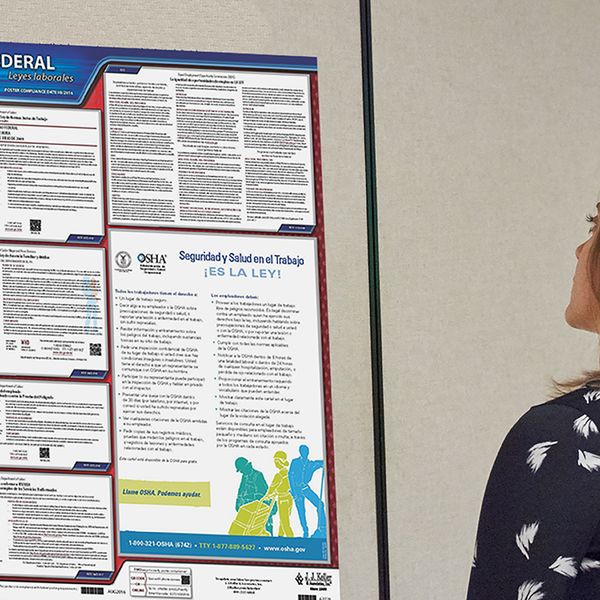
To wrap up 2025 and start 2026 on the right note, let’s clear up one of the questions we get most often: Do I need Spanish posters?
The answer is: Maybe.
Some laws require Spanish postings
There is no overall national or state law that says employers always need to have Spanish posters. Each posting is required under a different law, and some mention posting in Spanish or a language other than English.
Most of these laws come with stipulations. For example, the federal FMLA poster, which must be posted by employers with 50 or more employees, must be displayed in a language other than English if a “significant” portion of workers are not literate in English. The federal government does not define “significant,” so that determination is up to the employer.
Some state laws also mention posting in Spanish. For example, the New Mexico Notice on Human Trafficking must be posted in English and Spanish. In Massachusetts, the Paid Family and Medical Leave poster must be posted in Spanish if an employer has five or more employees whose primary language is Spanish.
In addition, when a city or county has its own minimum wage law, the minimum wage poster must usually be posted in Spanish or other languages commonly spoken in the community.
Always a good idea when Spanish is the primary language
Even when a Spanish poster isn’t specifically required in a law, posting in Spanish is always a good idea if you have workers who primarily communicate in Spanish.
Employers have a responsibility to inform employees of their rights under employment laws. When a Spanish poster is the best way to do this, it makes sense to display it.
Key to remember: Some postings must be displayed in Spanish under certain circumstances. Posting in Spanish is always a good idea when employees usually communicate in that language.