Compliance Just Got Easier: Stay ahead of regulatory changes with instant notifications on updates that matter.
['Forklifts and Powered Trucks']
['Forklifts and Powered Trucks', 'Safe Operation of PITs']
06/16/2026

Copyright 2026 J. J. Keller & Associate, Inc. For re-use options please contact copyright@jjkeller.com or call 800-558-5011.
:
|
InstituteSafety & HealthForklifts and Powered TrucksGeneral Industry SafetyForklifts and Powered TrucksEnglishSafe Operation of PITsAnalysisFocus AreaCompliance and Exceptions (Level 2)USA
What are the design requirements?
['Forklifts and Powered Trucks']
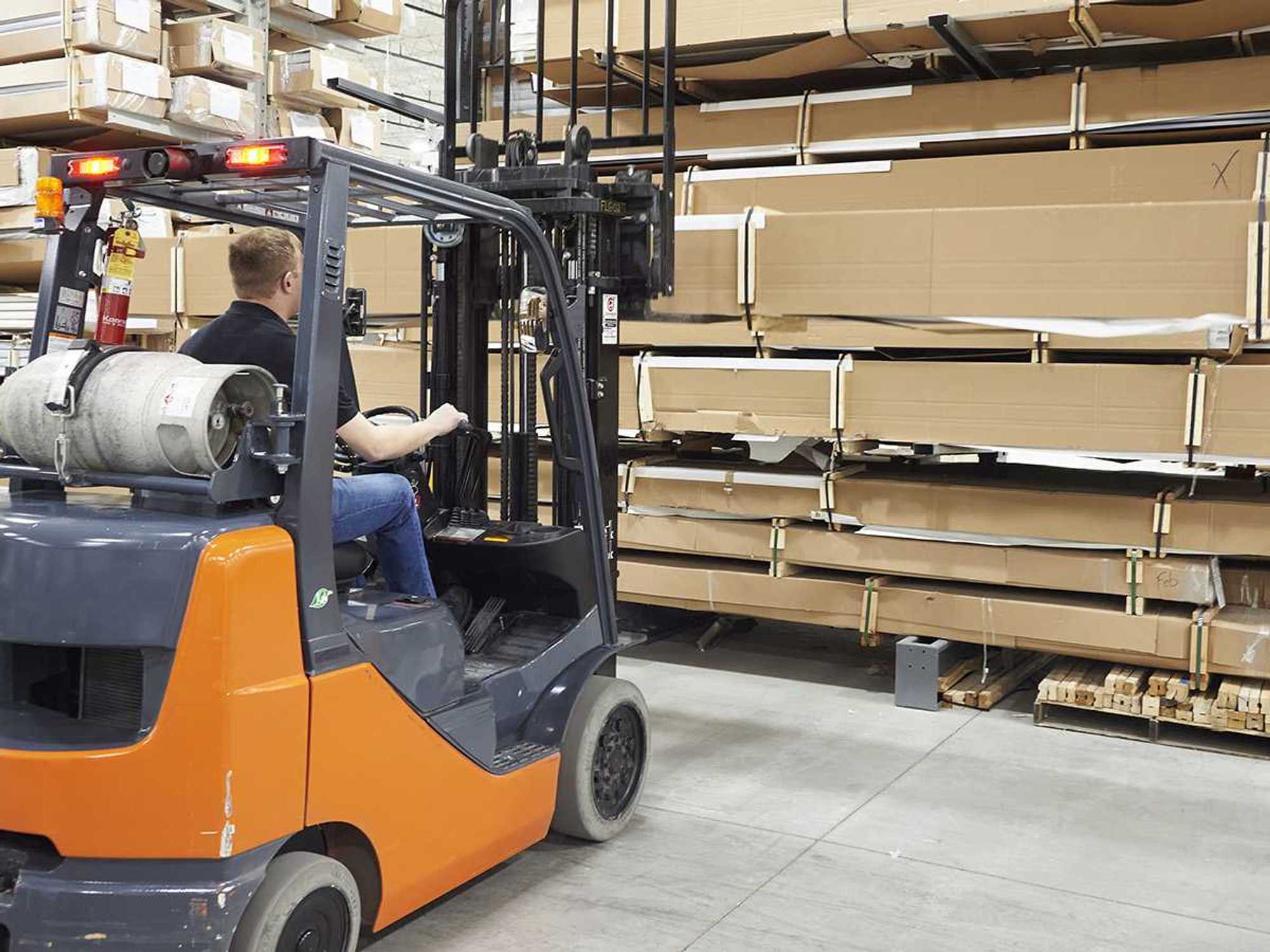
- OSHA requires that all PITs comply with the ANSI standard for safety.
The most basic provision in the Occupational Safety and Health Administration’s (OSHA) Powered Industrial Truck (PIT) standard is that equipment must be designed to meet certain safety standards. In doing this, OSHA requires that all new or acquired PIT equipment comply with the American National Standards Institute (ANSI) B56.1-1969, Safety Standard for Powered Industrial Trucks.
The ANSI standard has undergone several revisions — the most current being ANSI/ITSDF B56.1-2020, Safety Standard for Low Lift and High Lift Trucks — so most equipment purchased will likely be made to a newer version of ANSI B56.1 than the one from 1969. As a historical note, on February 16, 2022, OSHA proposed to modernize the design and construction requirements for its PITs standard to add reference to the latest ANSI/ITSDF design and construction standards. These include ANSI/ITSDF B56.1-2020, B56.5-2019, and B56.6-2021. PIT manufacturers and users will want to watch for the issuance of a final rule.
Employers must pay particular attention with the rapid changes in technology for safety devices and attachments for forklifts and other PITs:
- Barcode scanners and Radio Frequency Identification (RFID) technology so employers can control who operates and inspects the equipment,
- GPS systems so employers can track equipment,
- Attachments to lift anything from a drum to carpet roll,
- QR codes that can link to training videos right from a smartphone, and
- Lights and alarms.
As long as equipment comes with these devices already installed by the manufacturer, there is usually no issue in regard to OSHA accepting the design, even though these devices may not have been available when the original OSHA standard was written.
:
forklifts-and-powered-trucks
forklifts-and-powered-trucks
FOUNDATIONAL LEARNING
What are the design requirements?
InstituteSafety & HealthForklifts and Powered TrucksGeneral Industry SafetyForklifts and Powered TrucksEnglishSafe Operation of PITsAnalysisFocus AreaCompliance and Exceptions (Level 2)USA
['Forklifts and Powered Trucks']
- OSHA requires that all PITs comply with the ANSI standard for safety.
The most basic provision in the Occupational Safety and Health Administration’s (OSHA) Powered Industrial Truck (PIT) standard is that equipment must be designed to meet certain safety standards. In doing this, OSHA requires that all new or acquired PIT equipment comply with the American National Standards Institute (ANSI) B56.1-1969, Safety Standard for Powered Industrial Trucks.
The ANSI standard has undergone several revisions — the most current being ANSI/ITSDF B56.1-2020, Safety Standard for Low Lift and High Lift Trucks — so most equipment purchased will likely be made to a newer version of ANSI B56.1 than the one from 1969. As a historical note, on February 16, 2022, OSHA proposed to modernize the design and construction requirements for its PITs standard to add reference to the latest ANSI/ITSDF design and construction standards. These include ANSI/ITSDF B56.1-2020, B56.5-2019, and B56.6-2021. PIT manufacturers and users will want to watch for the issuance of a final rule.
Employers must pay particular attention with the rapid changes in technology for safety devices and attachments for forklifts and other PITs:
- Barcode scanners and Radio Frequency Identification (RFID) technology so employers can control who operates and inspects the equipment,
- GPS systems so employers can track equipment,
- Attachments to lift anything from a drum to carpet roll,
- QR codes that can link to training videos right from a smartphone, and
- Lights and alarms.
As long as equipment comes with these devices already installed by the manufacturer, there is usually no issue in regard to OSHA accepting the design, even though these devices may not have been available when the original OSHA standard was written.
2656866826
2656866345
UPGRADE TO CONTINUE READING
RELATED TOPICS
J. J. Keller is the trusted source for DOT / Transportation, OSHA / Workplace Safety, Human Resources, Construction Safety and Hazmat / Hazardous Materials regulation compliance products and services. J. J. Keller helps you increase safety awareness, reduce risk, follow best practices, improve safety training, and stay current with changing regulations.
Copyright 2026 J. J. Keller & Associate, Inc. For re-use options please contact copyright@jjkeller.com or call 800-558-5011.