Compliance Just Got Easier: Stay ahead of regulatory changes with instant notifications on updates that matter.
['Forklifts and Powered Trucks']
['Safe Operation of PITs', 'Forklifts and Powered Trucks']
10/20/2026

Copyright 2026 J. J. Keller & Associate, Inc. For re-use options please contact copyright@jjkeller.com or call 800-558-5011.
:
|
InstituteSafety & HealthForklifts and Powered TrucksGeneral Industry SafetyForklifts and Powered TrucksEnglishSafe Operation of PITsAnalysisFocus AreaCompliance and Exceptions (Level 2)USA
How do employees operate safely around pedestrians?
['Forklifts and Powered Trucks']
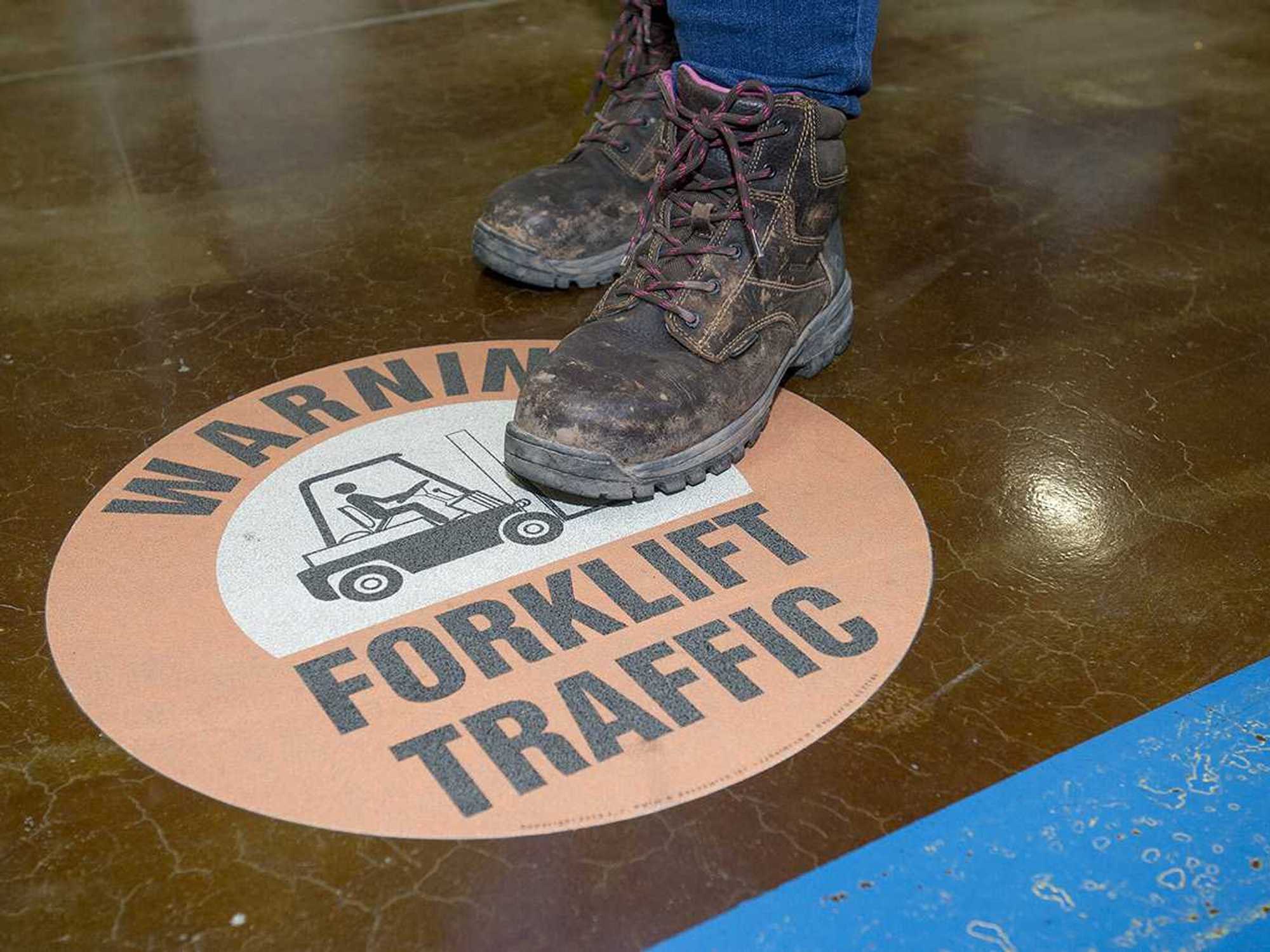
- OSHA has specific requirements for workplace environments where PITs are being operated to ensure pedestrian safety.
Powered industrial trucks (PITs) present significant hazards to pedestrians in the workplace. These hazards include being struck by moving equipment, crushed between equipment and fixed objects, or injured by falling loads. Pedestrians may be exposed to hazards such as:
- Being struck by moving PITs or loads,
- Limited visibility due to loads or blind corners,
- Unexpected equipment movement in congested areas,
- Noise that prevents employees from hearing alarms or warnings, and
- Working in close proximity to loading/unloading operations.
Although the Occupational Safety and Health Administration’s PIT standard at 1910.178 does not contain a standalone “pedestrian safety” section, employers are required to address these hazards through:
- Operator training (1910.178(l)), which includes workplace-related topics such as pedestrian traffic.
- General safety training (1926.21) for construction operations.
- The General Duty Clause (Section 5(a)(1) of the Occupational Safety and Health Act), which requires employers to provide a workplace free from recognized, serious hazards.
In addition, pedestrians working around PITs should be trained to:
- Remain in designated walkways,
- Make eye contact with PIT operators before approaching equipment,
- Avoid walking under raised loads, and
- Stay clear of operating zones unless necessary.
Employers should also implement controls to minimize interaction between pedestrians and PITs. These may include:
- Establishing designated travel lanes for PITs,
- Creating clearly marked pedestrian walkways,
- Installing barriers or guardrails where feasible,
- Using mirrors at intersections and blind corners, and
- Posting warning signs in high-traffic areas.
Where possible, employers should separate pedestrian and vehicle traffic.
At the same time, PIT operators must:
- Maintain a safe speed and remain alert to pedestrian presence;
- Yield the right-of-way to pedestrians;
- Sound the horn at intersections, blind spots, or when vision is obstructed; and
- Avoid operating equipment when visibility is impaired.
:
forklifts-and-powered-trucks
forklifts-and-powered-trucks
FOUNDATIONAL LEARNING
How do employees operate safely around pedestrians?
InstituteSafety & HealthForklifts and Powered TrucksGeneral Industry SafetyForklifts and Powered TrucksEnglishSafe Operation of PITsAnalysisFocus AreaCompliance and Exceptions (Level 2)USA
['Forklifts and Powered Trucks']
- OSHA has specific requirements for workplace environments where PITs are being operated to ensure pedestrian safety.
Powered industrial trucks (PITs) present significant hazards to pedestrians in the workplace. These hazards include being struck by moving equipment, crushed between equipment and fixed objects, or injured by falling loads. Pedestrians may be exposed to hazards such as:
- Being struck by moving PITs or loads,
- Limited visibility due to loads or blind corners,
- Unexpected equipment movement in congested areas,
- Noise that prevents employees from hearing alarms or warnings, and
- Working in close proximity to loading/unloading operations.
Although the Occupational Safety and Health Administration’s PIT standard at 1910.178 does not contain a standalone “pedestrian safety” section, employers are required to address these hazards through:
- Operator training (1910.178(l)), which includes workplace-related topics such as pedestrian traffic.
- General safety training (1926.21) for construction operations.
- The General Duty Clause (Section 5(a)(1) of the Occupational Safety and Health Act), which requires employers to provide a workplace free from recognized, serious hazards.
In addition, pedestrians working around PITs should be trained to:
- Remain in designated walkways,
- Make eye contact with PIT operators before approaching equipment,
- Avoid walking under raised loads, and
- Stay clear of operating zones unless necessary.
Employers should also implement controls to minimize interaction between pedestrians and PITs. These may include:
- Establishing designated travel lanes for PITs,
- Creating clearly marked pedestrian walkways,
- Installing barriers or guardrails where feasible,
- Using mirrors at intersections and blind corners, and
- Posting warning signs in high-traffic areas.
Where possible, employers should separate pedestrian and vehicle traffic.
At the same time, PIT operators must:
- Maintain a safe speed and remain alert to pedestrian presence;
- Yield the right-of-way to pedestrians;
- Sound the horn at intersections, blind spots, or when vision is obstructed; and
- Avoid operating equipment when visibility is impaired.
2656866578
2656870846
UPGRADE TO CONTINUE READING
RELATED TOPICS
J. J. Keller is the trusted source for DOT / Transportation, OSHA / Workplace Safety, Human Resources, Construction Safety and Hazmat / Hazardous Materials regulation compliance products and services. J. J. Keller helps you increase safety awareness, reduce risk, follow best practices, improve safety training, and stay current with changing regulations.
Copyright 2026 J. J. Keller & Associate, Inc. For re-use options please contact copyright@jjkeller.com or call 800-558-5011.