Compliance Just Got Easier: Stay ahead of regulatory changes with instant notifications on updates that matter.
['Lockout/Tagout']
['Lockout/Tagout', 'Lockout/Tagout Affected Workers', 'Lockout/Tagout Periodic Evaluation', 'Lockout/Tagout Written Program', 'Lockout/Tagout Authorized Workers']
04/25/2025

Copyright 2026 J. J. Keller & Associate, Inc. For re-use options please contact copyright@jjkeller.com or call 800-558-5011.
:
|
InstituteLockout/TagoutLockout/Tagout Authorized WorkersLockout/TagoutLockout/Tagout Written ProgramLockout/Tagout Affected WorkersLockout/Tagout Periodic EvaluationUSAEnglishAnalysisFocus AreaIn Depth (Level 3)
Requirements for lockout/tagout devices
['Lockout/Tagout']
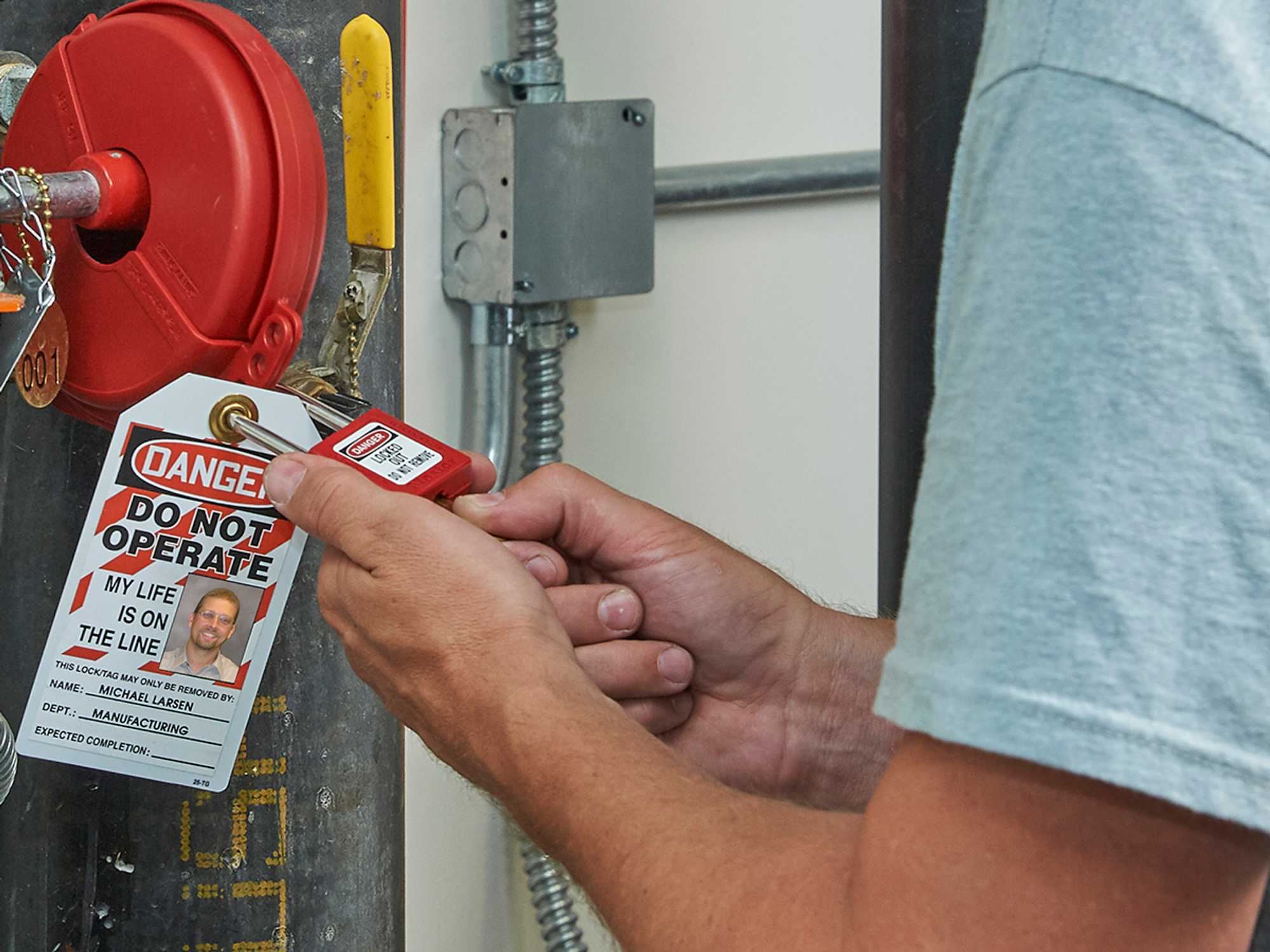
Whether lockout or tagout devices are used, they must be the only devices the employer uses in conjunction with energy-isolating devices to control hazardous energy. The employer must provide these devices and they must be singularly identified and not used for other purposes. In addition, they must have the following characteristics:
- Durable enough to withstand workplace conditions. Tagout devices must not deteriorate or become illegible even when used with corrosive components such as acid or alkali chemicals or in wet environments.
- Standardized according to color, shape, or size. Tagout devices also must be standardized according to print and format. Tags must be legible and understandable by all employees. They must warn employees about the hazards if the machine is energized, and offer employees clear instruction such as: “Do Not Start,” “Do Not Open,” “Do Not Close,” “Do Not Energize,” or “Do Not Operate.”
- Substantial enough to minimize the likelihood of premature or accidental removal. Employees should be able to remove locks only by using excessive force with special tools such as bolt cutters or other metal-cutting tools. Tag attachments must be non-reusable, self-locking, and non-releasable, with a minimum unlocking strength of 50 pounds. Tags must be attachable by hand, and the device for attaching the tag should be a one-piece nylon cable tie or its equivalent so it can withstand all environments and conditions.
- Labeled to identify the specific employees authorized to apply and remove them.
:
lockouttagout
lockouttagout
FOUNDATIONAL LEARNING
InstituteLockout/TagoutLockout/Tagout Authorized WorkersSafety & HealthLockout/TagoutGeneral Industry SafetyLockout/Tagout Written ProgramLockout/Tagout Affected WorkersLockout/Tagout Periodic EvaluationEnglishAnalysisFocus AreaCompliance and Exceptions (Level 2)USA
What are the requirements of the lockout/tagout standard? (General industry)
InstituteLockout/TagoutLockout/Tagout Authorized WorkersSafety & HealthLockout/TagoutGeneral Industry SafetyLockout/Tagout Written ProgramLockout/Tagout Affected WorkersLockout/Tagout Periodic EvaluationIn Depth (Level 3)EnglishAnalysisFocus AreaUSA
What are the requirements for periodic inspections?
InstituteLockout/TagoutAnalysisLockout/TagoutLockout/Tagout Written ProgramLockout/Tagout Periodic EvaluationLockout/Tagout Affected WorkersEnglishLockout/Tagout Authorized WorkersFocus AreaCompliance and Exceptions (Level 2)USA
What are the requirements of the lockout/tagout standard? (Construction)
Requirements for lockout/tagout devices
InstituteLockout/TagoutLockout/Tagout Authorized WorkersLockout/TagoutLockout/Tagout Written ProgramLockout/Tagout Affected WorkersLockout/Tagout Periodic EvaluationUSAEnglishAnalysisFocus AreaIn Depth (Level 3)
['Lockout/Tagout']
Whether lockout or tagout devices are used, they must be the only devices the employer uses in conjunction with energy-isolating devices to control hazardous energy. The employer must provide these devices and they must be singularly identified and not used for other purposes. In addition, they must have the following characteristics:
- Durable enough to withstand workplace conditions. Tagout devices must not deteriorate or become illegible even when used with corrosive components such as acid or alkali chemicals or in wet environments.
- Standardized according to color, shape, or size. Tagout devices also must be standardized according to print and format. Tags must be legible and understandable by all employees. They must warn employees about the hazards if the machine is energized, and offer employees clear instruction such as: “Do Not Start,” “Do Not Open,” “Do Not Close,” “Do Not Energize,” or “Do Not Operate.”
- Substantial enough to minimize the likelihood of premature or accidental removal. Employees should be able to remove locks only by using excessive force with special tools such as bolt cutters or other metal-cutting tools. Tag attachments must be non-reusable, self-locking, and non-releasable, with a minimum unlocking strength of 50 pounds. Tags must be attachable by hand, and the device for attaching the tag should be a one-piece nylon cable tie or its equivalent so it can withstand all environments and conditions.
- Labeled to identify the specific employees authorized to apply and remove them.
2659661973
2659759085
UPGRADE TO CONTINUE READING
J. J. Keller is the trusted source for DOT / Transportation, OSHA / Workplace Safety, Human Resources, Construction Safety and Hazmat / Hazardous Materials regulation compliance products and services. J. J. Keller helps you increase safety awareness, reduce risk, follow best practices, improve safety training, and stay current with changing regulations.
Copyright 2026 J. J. Keller & Associate, Inc. For re-use options please contact copyright@jjkeller.com or call 800-558-5011.