Compliance Just Got Easier: Stay ahead of regulatory changes with instant notifications on updates that matter.
['Forklifts and Powered Trucks']
['Specialized Equipment', 'Forklifts and Powered Trucks', 'Safe Operation of PITs']
06/16/2026

Copyright 2026 J. J. Keller & Associate, Inc. For re-use options please contact copyright@jjkeller.com or call 800-558-5011.
:
|
InstituteEnglishSafety & HealthForklifts and Powered TrucksGeneral Industry SafetyForklifts and Powered TrucksUSASpecialized EquipmentSafe Operation of PITsAnalysisFocus AreaIn Depth (Level 3)
Personnel platforms/Manbaskets
['Forklifts and Powered Trucks']
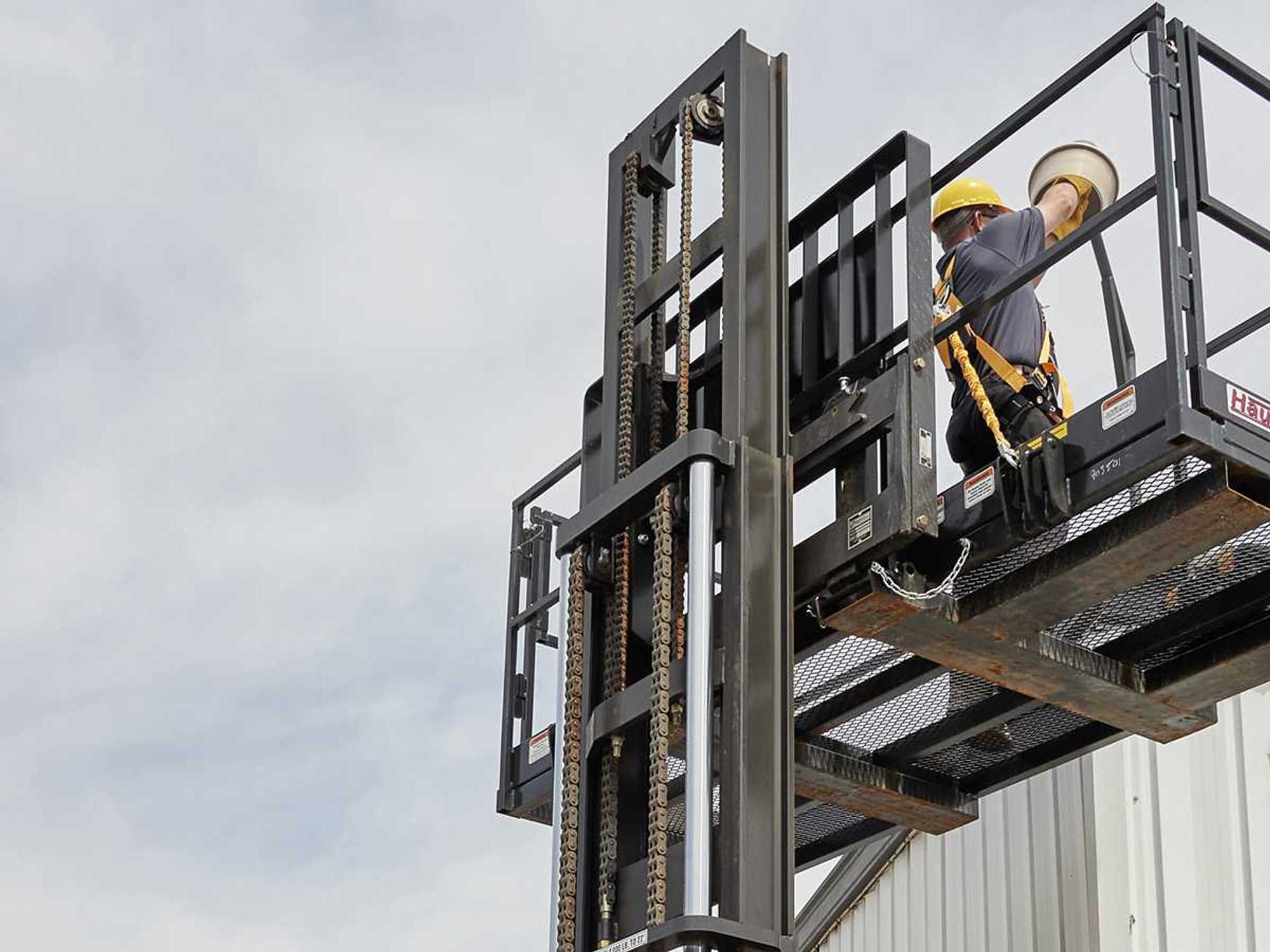
- When workers use a regular forklift to lift personnel, special safety precautions must be used.
There are many occasions when employees need to work at heights. Ideally, equipment designed for that specific purpose would be used (e.g., ladder or aerial lift), but there are times when it may be necessary to utilize a forklift to elevate personnel. There are only a few ways this can be done safely.
First, operators must never be allowed to lift workers who are standing on the forks, pallet, or load. Serious injury or fatality can occur, and the Occupational Safety and Health Administration (OSHA) prohibits this practice.
Instead, workers must turn to either manbaskets, order pickers, or similar solutions.
Manbaskets
When it comes to elevating personnel on a platform attached to a forklift, OSHA regulations do not specifically address the issue. However, OSHA does address forklift modifications/additions in general (which includes personnel platforms) by requiring that employers obtain the manufacturer’s prior written approval before making any modifications or additions that affect capacity and safe operation.
OSHA bulletin SHIB 06-03-2021, “Hazards of Using Job-Made Boxes/Baskets/Platforms,” alerts employers and employees about the sometimes-fatal fall, crush, and struck-by hazards associated with job-made boxes. Job-made boxes, baskets, and platforms are makeshift attachments for powered industrial trucks, such as forklifts. Since these makeshift aids for assisting with working at heights are not manufacturer-approved or stability/load tested, they are not permitted under 29 CFR 1910.178.
When either the manufacturer or a professional engineer has determined it is safe to lift personnel using a specifically designed platform, OSHA requires proper fall protection be provided, either built into the platform itself in the form of railing, or using personal fall arrest systems (e.g., lanyards, harnesses). For example, an employee was operating a platform when he fell approximately 16 feet to the floor, suffering a concussion. The employee was not tied off to the lift at the time of the incident.
In addition, the platform should be secured to the forks, and personnel protected from moving parts of the forklift.
:
forklifts-and-powered-trucks
forklifts-and-powered-trucks
FOUNDATIONAL LEARNING
Personnel platforms/Manbaskets
InstituteEnglishSafety & HealthForklifts and Powered TrucksGeneral Industry SafetyForklifts and Powered TrucksUSASpecialized EquipmentSafe Operation of PITsAnalysisFocus AreaIn Depth (Level 3)
['Forklifts and Powered Trucks']
- When workers use a regular forklift to lift personnel, special safety precautions must be used.
There are many occasions when employees need to work at heights. Ideally, equipment designed for that specific purpose would be used (e.g., ladder or aerial lift), but there are times when it may be necessary to utilize a forklift to elevate personnel. There are only a few ways this can be done safely.
First, operators must never be allowed to lift workers who are standing on the forks, pallet, or load. Serious injury or fatality can occur, and the Occupational Safety and Health Administration (OSHA) prohibits this practice.
Instead, workers must turn to either manbaskets, order pickers, or similar solutions.
Manbaskets
When it comes to elevating personnel on a platform attached to a forklift, OSHA regulations do not specifically address the issue. However, OSHA does address forklift modifications/additions in general (which includes personnel platforms) by requiring that employers obtain the manufacturer’s prior written approval before making any modifications or additions that affect capacity and safe operation.
OSHA bulletin SHIB 06-03-2021, “Hazards of Using Job-Made Boxes/Baskets/Platforms,” alerts employers and employees about the sometimes-fatal fall, crush, and struck-by hazards associated with job-made boxes. Job-made boxes, baskets, and platforms are makeshift attachments for powered industrial trucks, such as forklifts. Since these makeshift aids for assisting with working at heights are not manufacturer-approved or stability/load tested, they are not permitted under 29 CFR 1910.178.
When either the manufacturer or a professional engineer has determined it is safe to lift personnel using a specifically designed platform, OSHA requires proper fall protection be provided, either built into the platform itself in the form of railing, or using personal fall arrest systems (e.g., lanyards, harnesses). For example, an employee was operating a platform when he fell approximately 16 feet to the floor, suffering a concussion. The employee was not tied off to the lift at the time of the incident.
In addition, the platform should be secured to the forks, and personnel protected from moving parts of the forklift.
2656869305
UPGRADE TO CONTINUE READING
RELATED TOPICS
J. J. Keller is the trusted source for DOT / Transportation, OSHA / Workplace Safety, Human Resources, Construction Safety and Hazmat / Hazardous Materials regulation compliance products and services. J. J. Keller helps you increase safety awareness, reduce risk, follow best practices, improve safety training, and stay current with changing regulations.
Copyright 2026 J. J. Keller & Associate, Inc. For re-use options please contact copyright@jjkeller.com or call 800-558-5011.