Compliance Just Got Easier: Stay ahead of regulatory changes with instant notifications on updates that matter.
['Forklifts and Powered Trucks']
['PIT Parking and Fueling', 'Forklifts and Powered Trucks', 'Safe Operation of PITs']
04/30/2026

Copyright 2026 J. J. Keller & Associate, Inc. For re-use options please contact copyright@jjkeller.com or call 800-558-5011.
:
|
InstituteAnalysisSafety & HealthForklifts and Powered TrucksIn Depth Sub Topics (Level 4)General Industry SafetyForklifts and Powered TrucksEnglishSafe Operation of PITsPIT Parking and FuelingFocus AreaUSA
OSHA/FMCSA jurisdiction
['Forklifts and Powered Trucks']
- FMCSA has its own set of regulations for CMV brakes that preempt OSHA’s for CMVs in interstate commerce.
- OSHA's wheel chocking requirements still apply in certain situations, but an enforcement directive offers flexibility.
- OSHA requires dockboards be strong and secure enough to handle PIT operation.
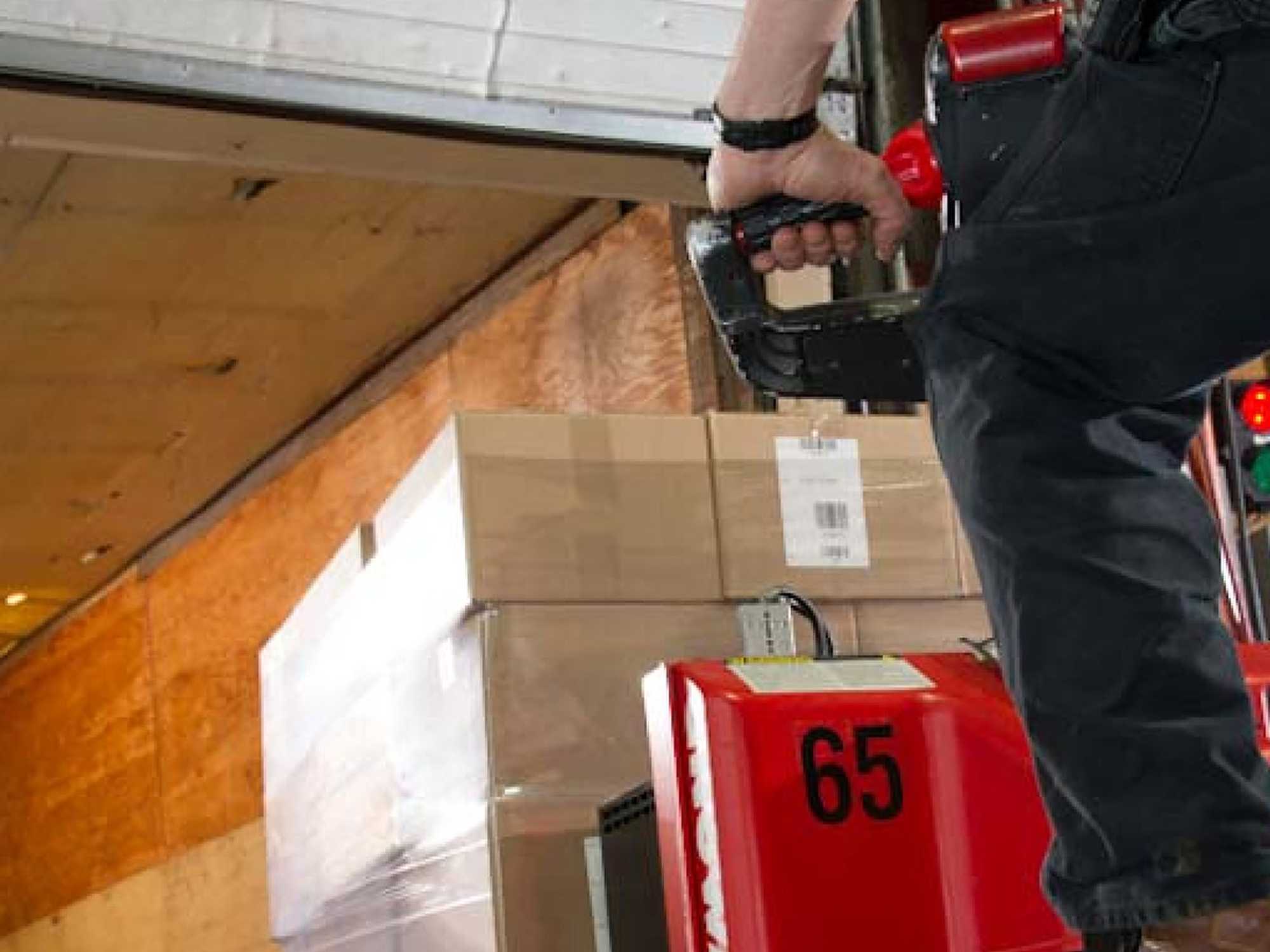
One of the common uses of forklifts and pallet jacks is to load/unload trucks, trailers, or rail cars. This requires the powered industrial truck (PIT) to enter the transport vehicle over a dockboard (also known as a bridge plate) at loading docks.
OSHA forklift regulations
The Occupational Safety and Health Administration (OSHA) PIT provisions (at 29 CFR 1910.178(k) and (m)(7)) list a number of situations in which special procedures must be followed before starting entry into a truck, trailer, or rail car:
- The brakes of highway trucks must be set, and either wheel chocks or wheel blocks placed under the rear wheels to prevent the trucks from rolling while they are boarded with PITs.
- The brakes shall be set and wheel blocks must be in place to prevent movement of uncoupled trailers while loading or unloading.
- Wheel stops or other recognized positive protection must be provided to prevent railroad cars from moving during loading or unloading operations.
- Fixed jacks may be necessary to support a semi-trailer and prevent upending during the loading or unloading when the trailer is not coupled to a tractor. (Note that OSHA’s standard does not specify a particular type of jack, nor the number and placement of such jacks, but the agency strongly recommends following both the trailer and the jack manufacturer’s instructions on the appropriate number and placement of these jacks.)
- Positive protection must be provided to prevent railroad cars from being moved while dockboards or bridge plates are in position.
OSHA enforcement directive
Be aware that OSHA enforcement directive STD 01-11-007, dated August 5, 1981, explains that under the following conditions, failure to use wheel chocks in accordance with 1910.178(k)(1) and (m)(7) will be deemed to be de minimis violations and will not be cited:
- A positive mechanical means to secure trucks or trailers to a loading dock is allowed provided the system is installed and used in a manner that effectively prevents movement of trucks and trailers during loading, unloading, and boarding by hand trucks and PITs;
- All of the mechanical equipment is installed, maintained, and used as recommended by the manufacturer; and
- Any damaged mechanical equipment will be removed from service immediately.
Under the STD, OSHA will regard failure to use wheel chocks or blocks as a de minimis violation and no citation will be issued if alternative methods of preventing truck movement are used. A September 14, 2005, OSHA letter of interpretation explains that these alternatives may include the use of dock lock mechanisms, dock monitoring systems, or other systems which will prevent the unintentional movement of trucks and trailers while being boarded with PITs.
DOT jurisdiction
In addition, there are some jurisdictional issues with the Department of Transportation (DOT) parking-brake requirement, which that agency deems appropriate to prohibit movement of vehicles during all loading conditions. Section 4(b)(1) of the Occupational Safety and Health (OSH) Act bars the application of the OSH Act to working conditions regulated by other federal agencies.
The Federal Motor Carrier Safety Administration's (FMCSA's) braking regulations at 49 CFR 393, Subpart C, preempt OSHA from enforcing 1910.178(k)(1), requiring the chocking of highway trucks while they are being boarded by PITs, and 1910.178(m)(7), requiring the blocking of trucks, trailers, or railroad cars while loading or unloading, against operators of commercial motor vehicles (CMVs).
Therefore, if the trailer is a CMV, as defined in 49 U.S.C. 31132(1), OSHA would not enforce its chocking requirements under 1910.178. The U.S. Code defines a “commercial motor vehicle" as, among other things, a self-propelled or towed vehicle used on the highways in interstate commerce, if the vehicle:
- Has a gross vehicle weight rating or gross vehicle weight of at least 10,001 pounds, whichever is greater; or
- Is used in transporting materials found by the DOT to be hazardous as defined by DOT regulations and transported in a quantity requiring placarding under DOT regulations (per 49 U.S.C. 31132).
OSHA jurisdiction
However, if the trailer is not considered a CMV, OSHA would enforce its chocking requirements at 1910.178. Because the FMCSA parking-brake regulations do not apply to vehicles that are not CMVs, OSHA is not pre-empted from enforcing its chocking requirements with respect to those non-CMV vehicles.
Furthermore, because the FMCSA parking-brake regulations do not apply to employers that do not own, operate, or lease CMVs, OSHA has authority to enforce standards requiring such employers to take precautions to protect their employees (like forklift operators) from the movement of trailers.
OSHA state-plan states
Note that the OSHA jurisdictional limits pursuant to section 4(b)(1) of the OSH Act and relevant case law are not directly applicable to the OSHA state-plan states. The 22 state plans covering the private sector are not required to have a provision equivalent to section 4(b)(1) in their state enabling legislation and may have different statutory language regarding overlap of jurisdictional authority with other federal agencies. If a state does not honor the federal jurisdictional limitations, it would be expected to litigate any challenges to its exercise of a broader authority to establish its own body of relevant case law.
More information
For further information, see the following OSHA letters of interpretation:
- November 8, 2005, “Chocking requirements for trailers docked to buildings with downward approaches.”
- March 7, 2011, “Clarification of OSHA's authority to enforce wheel chocking of commercial motor vehicles and related safety hazards at loading facilities.”
- June 14, 2011, “Enforcement of wheel chocking requirements in State Plan States.”
:
forklifts-and-powered-trucks
forklifts-and-powered-trucks
FOUNDATIONAL LEARNING
OSHA/FMCSA jurisdiction
InstituteAnalysisSafety & HealthForklifts and Powered TrucksIn Depth Sub Topics (Level 4)General Industry SafetyForklifts and Powered TrucksEnglishSafe Operation of PITsPIT Parking and FuelingFocus AreaUSA
['Forklifts and Powered Trucks']
- FMCSA has its own set of regulations for CMV brakes that preempt OSHA’s for CMVs in interstate commerce.
- OSHA's wheel chocking requirements still apply in certain situations, but an enforcement directive offers flexibility.
- OSHA requires dockboards be strong and secure enough to handle PIT operation.
One of the common uses of forklifts and pallet jacks is to load/unload trucks, trailers, or rail cars. This requires the powered industrial truck (PIT) to enter the transport vehicle over a dockboard (also known as a bridge plate) at loading docks.
OSHA forklift regulations
The Occupational Safety and Health Administration (OSHA) PIT provisions (at 29 CFR 1910.178(k) and (m)(7)) list a number of situations in which special procedures must be followed before starting entry into a truck, trailer, or rail car:
- The brakes of highway trucks must be set, and either wheel chocks or wheel blocks placed under the rear wheels to prevent the trucks from rolling while they are boarded with PITs.
- The brakes shall be set and wheel blocks must be in place to prevent movement of uncoupled trailers while loading or unloading.
- Wheel stops or other recognized positive protection must be provided to prevent railroad cars from moving during loading or unloading operations.
- Fixed jacks may be necessary to support a semi-trailer and prevent upending during the loading or unloading when the trailer is not coupled to a tractor. (Note that OSHA’s standard does not specify a particular type of jack, nor the number and placement of such jacks, but the agency strongly recommends following both the trailer and the jack manufacturer’s instructions on the appropriate number and placement of these jacks.)
- Positive protection must be provided to prevent railroad cars from being moved while dockboards or bridge plates are in position.
OSHA enforcement directive
Be aware that OSHA enforcement directive STD 01-11-007, dated August 5, 1981, explains that under the following conditions, failure to use wheel chocks in accordance with 1910.178(k)(1) and (m)(7) will be deemed to be de minimis violations and will not be cited:
- A positive mechanical means to secure trucks or trailers to a loading dock is allowed provided the system is installed and used in a manner that effectively prevents movement of trucks and trailers during loading, unloading, and boarding by hand trucks and PITs;
- All of the mechanical equipment is installed, maintained, and used as recommended by the manufacturer; and
- Any damaged mechanical equipment will be removed from service immediately.
Under the STD, OSHA will regard failure to use wheel chocks or blocks as a de minimis violation and no citation will be issued if alternative methods of preventing truck movement are used. A September 14, 2005, OSHA letter of interpretation explains that these alternatives may include the use of dock lock mechanisms, dock monitoring systems, or other systems which will prevent the unintentional movement of trucks and trailers while being boarded with PITs.
DOT jurisdiction
In addition, there are some jurisdictional issues with the Department of Transportation (DOT) parking-brake requirement, which that agency deems appropriate to prohibit movement of vehicles during all loading conditions. Section 4(b)(1) of the Occupational Safety and Health (OSH) Act bars the application of the OSH Act to working conditions regulated by other federal agencies.
The Federal Motor Carrier Safety Administration's (FMCSA's) braking regulations at 49 CFR 393, Subpart C, preempt OSHA from enforcing 1910.178(k)(1), requiring the chocking of highway trucks while they are being boarded by PITs, and 1910.178(m)(7), requiring the blocking of trucks, trailers, or railroad cars while loading or unloading, against operators of commercial motor vehicles (CMVs).
Therefore, if the trailer is a CMV, as defined in 49 U.S.C. 31132(1), OSHA would not enforce its chocking requirements under 1910.178. The U.S. Code defines a “commercial motor vehicle" as, among other things, a self-propelled or towed vehicle used on the highways in interstate commerce, if the vehicle:
- Has a gross vehicle weight rating or gross vehicle weight of at least 10,001 pounds, whichever is greater; or
- Is used in transporting materials found by the DOT to be hazardous as defined by DOT regulations and transported in a quantity requiring placarding under DOT regulations (per 49 U.S.C. 31132).
OSHA jurisdiction
However, if the trailer is not considered a CMV, OSHA would enforce its chocking requirements at 1910.178. Because the FMCSA parking-brake regulations do not apply to vehicles that are not CMVs, OSHA is not pre-empted from enforcing its chocking requirements with respect to those non-CMV vehicles.
Furthermore, because the FMCSA parking-brake regulations do not apply to employers that do not own, operate, or lease CMVs, OSHA has authority to enforce standards requiring such employers to take precautions to protect their employees (like forklift operators) from the movement of trailers.
OSHA state-plan states
Note that the OSHA jurisdictional limits pursuant to section 4(b)(1) of the OSH Act and relevant case law are not directly applicable to the OSHA state-plan states. The 22 state plans covering the private sector are not required to have a provision equivalent to section 4(b)(1) in their state enabling legislation and may have different statutory language regarding overlap of jurisdictional authority with other federal agencies. If a state does not honor the federal jurisdictional limitations, it would be expected to litigate any challenges to its exercise of a broader authority to establish its own body of relevant case law.
More information
For further information, see the following OSHA letters of interpretation:
- November 8, 2005, “Chocking requirements for trailers docked to buildings with downward approaches.”
- March 7, 2011, “Clarification of OSHA's authority to enforce wheel chocking of commercial motor vehicles and related safety hazards at loading facilities.”
- June 14, 2011, “Enforcement of wheel chocking requirements in State Plan States.”
2656866346
2656872308
UPGRADE TO CONTINUE READING
RELATED TOPICS
J. J. Keller is the trusted source for DOT / Transportation, OSHA / Workplace Safety, Human Resources, Construction Safety and Hazmat / Hazardous Materials regulation compliance products and services. J. J. Keller helps you increase safety awareness, reduce risk, follow best practices, improve safety training, and stay current with changing regulations.
Copyright 2026 J. J. Keller & Associate, Inc. For re-use options please contact copyright@jjkeller.com or call 800-558-5011.