Compliance Just Got Easier: Stay ahead of regulatory changes with instant notifications on updates that matter.
['Forklifts and Powered Trucks']
['PIT Parking and Fueling', 'Forklifts and Powered Trucks', 'Safe Operation of PITs']
04/30/2026

Copyright 2026 J. J. Keller & Associate, Inc. For re-use options please contact copyright@jjkeller.com or call 800-558-5011.
:
|
InstituteAnalysisSafety & HealthForklifts and Powered TrucksGeneral Industry SafetyForklifts and Powered TrucksUSAEnglishSafe Operation of PITsPIT Parking and FuelingFocus AreaIn Depth (Level 3)
LPG cylinders
['Forklifts and Powered Trucks']
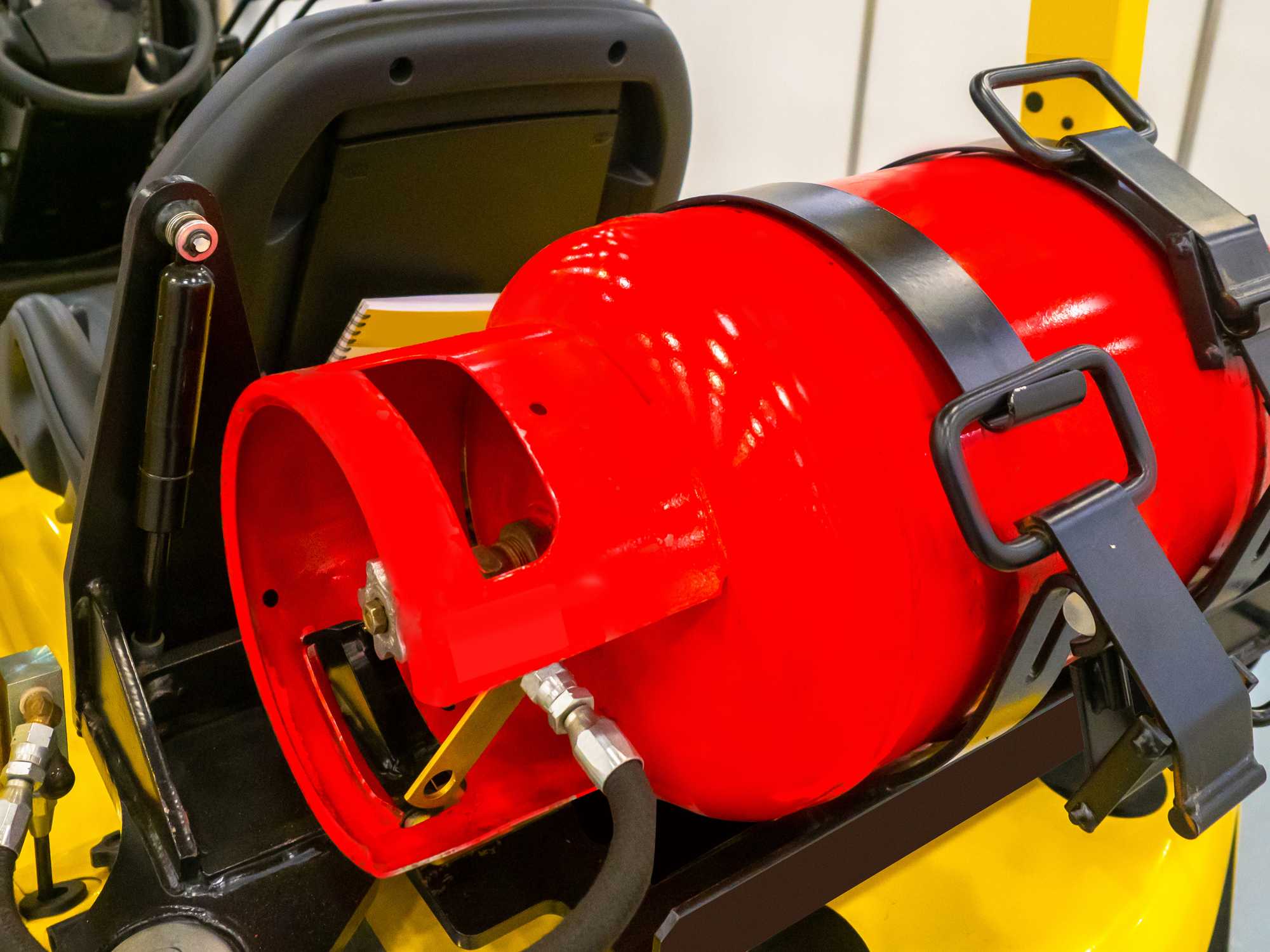
- Industry best practices for handling cylinders on LPG-powered forklifts ensure employee safety.
Liquefied petroleum gas (LPG) is a commonly used fuel for powered industrial trucks (PITs). It is a safe fuel when handled properly. However, when handled improperly, it can cause serious injury or death. In fact, LPG vapor is heavier than air and will seek the lowest lying area. If not adequately dissipated, it will collect in pockets and possibly ignite when exposed to a heat source.
What’s more, LPG is extremely flammable, and it is extremely cold when exposed to the atmosphere. If skin is exposed to LPG, it can get frostbite. To combat these hazards, employers should adhere to the following:
- Not refuel LPG-powered trucks in confined areas where LPG vapors could collect if a leak occurs.
- Not leave LPG-powered trucks near heat sources, stairways, exits, or other egress areas.
- Turn the service valve off when parking LPG-powered trucks for a long period of time.
- Only allow trained and authorized personnel to replace LPG containers.
- Follow proper procedures for storing and handling LPG, under 29 CFR 1910.110.
While the Occupational Safety and Health Administration (OSHA) Powered Industrial Truck (PIT) standard does not specifically address changing cylinders on liquid petroleum gas (LPG)-powered forklifts, industry best practices include:
- Wearing protective gloves to avoid freeze burn from contact with LPG.
- Before starting, employees should close the fuel line valve on the cylinder, then run the engine until it stops to empty the connection hose.
- Employees should shut off the ignition, disconnect the hose and the holding straps, and remove the empty cylinder.
- Employees should never use metal tools to change a cylinder. One small spark could ignite a fire or explosion.
- Employees should replace the empty cylinder with a full one in the proper position.
- The locating pin should engage the hole in the cylinder handle, so the relief valve is straight up in the 12 o’clock position.
- Employees should connect the holding straps, tighten the connecting nut, and check the hose to make sure it’s tight.
- Employees should slowly open the valve on the cylinder part way and check for leaks: employees should smell, listen, and look for leaks. A solution of soap and water to test the seal can be used to check the seal. Matches or a flame should never be used.
- If the valve leaks, the employee must:
- Tighten the nut and continue.
- If it still leaks, change the cylinder.
- If it still leaks after that, have the hose changed or repaired.
- Once there are no leaks, the employee can slowly open the valve all the way, secure the cylinder, and start the engine.
:
forklifts-and-powered-trucks
forklifts-and-powered-trucks
FOUNDATIONAL LEARNING
- Industry best practices for handling cylinders on LPG-powered forklifts ensure employee safety.
Liquefied petroleum gas (LPG) is a commonly used fuel for powered industrial trucks (PITs). It is a safe fuel when handled properly. However, when handled improperly, it can cause serious injury or death. In fact, LPG vapor is heavier than air and will seek the lowest lying area. If not adequately dissipated, it will collect in pockets and possibly ignite when exposed to a heat source.
What’s more, LPG is extremely flammable, and it is extremely cold when exposed to the atmosphere. If skin is exposed to LPG, it can get frostbite. To combat these hazards, employers should adhere to the following:
- Not refuel LPG-powered trucks in confined areas where LPG vapors could collect if a leak occurs.
- Not leave LPG-powered trucks near heat sources, stairways, exits, or other egress areas.
- Turn the service valve off when parking LPG-powered trucks for a long period of time.
- Only allow trained and authorized personnel to replace LPG containers.
- Follow proper procedures for storing and handling LPG, under 29 CFR 1910.110.
While the Occupational Safety and Health Administration (OSHA) Powered Industrial Truck (PIT) standard does not specifically address changing cylinders on liquid petroleum gas (LPG)-powered forklifts, industry best practices include:
- Wearing protective gloves to avoid freeze burn from contact with LPG.
- Before starting, employees should close the fuel line valve on the cylinder, then run the engine until it stops to empty the connection hose.
- Employees should shut off the ignition, disconnect the hose and the holding straps, and remove the empty cylinder.
- Employees should never use metal tools to change a cylinder. One small spark could ignite a fire or explosion.
- Employees should replace the empty cylinder with a full one in the proper position.
- The locating pin should engage the hole in the cylinder handle, so the relief valve is straight up in the 12 o’clock position.
- Employees should connect the holding straps, tighten the connecting nut, and check the hose to make sure it’s tight.
- Employees should slowly open the valve on the cylinder part way and check for leaks: employees should smell, listen, and look for leaks. A solution of soap and water to test the seal can be used to check the seal. Matches or a flame should never be used.
- If the valve leaks, the employee must:
- Tighten the nut and continue.
- If it still leaks, change the cylinder.
- If it still leaks after that, have the hose changed or repaired.
- Once there are no leaks, the employee can slowly open the valve all the way, secure the cylinder, and start the engine.
2656872312
2656868277
UPGRADE TO CONTINUE READING
RELATED TOPICS
J. J. Keller is the trusted source for DOT / Transportation, OSHA / Workplace Safety, Human Resources, Construction Safety and Hazmat / Hazardous Materials regulation compliance products and services. J. J. Keller helps you increase safety awareness, reduce risk, follow best practices, improve safety training, and stay current with changing regulations.
Copyright 2026 J. J. Keller & Associate, Inc. For re-use options please contact copyright@jjkeller.com or call 800-558-5011.