Compliance Just Got Easier: Stay ahead of regulatory changes with instant notifications on updates that matter.
['Electronic logging device (ELD)']
['Electronic logging device (ELD)']
2025-12-04T06:00:00Z
JOIN TODAY TO CONTINUE READING THIS ARTICLE & OTHER INDUSTRY NEWS!
You'll also get exclusive access to:
A database of easy-to-understand regulationsAsk unlimited questions to our expertsPre-led discussions forumsAnd more
TRY IT FREE TODAY
Already have an account? Log in now.

Copyright 2026 J. J. Keller & Associate, Inc. For re-use options please contact copyright@jjkeller.com or call 800-558-5011.
NewsIndustry NewsFleet SafetyElectronic logging device (ELD)Electronic logging device (ELD)Focus AreaIn-Depth ArticleEnglishTransportationUSA
New ELD vetting process could mean fewer surprises
2025-12-04T06:00:00Z
An overhaul to the way electronic logging devices (ELDs) are approved in the U.S. could reshape the ELD marketplace and deliver new peace of mind to motor carriers and drivers.
The Federal Motor Carrier Safety Administration (FMCSA) has announced a new ELD vetting process that promises to tighten the reins on unscrupulous or non-compliant ELD providers. The change comes after years of industry frustration with self-certified devices that may not always be compliant, leading to violations and costly replacements.
Focus: ELD applications
While the agency calls the change a “complete overhaul of the [ELD] vetting process,” it remains focused solely on verifying the accuracy and completeness of ELD provider applications. It falls short of implementing a third-party certification system like Canada’s, which many experts believe would provide a more robust guarantee of ongoing compliance and device integrity.
The new process comes in a year when the FMCSA has revoked 30 ELDs so far, surpassing last year’s total of 21 and nearly doubling the number revoked in 2023. ELDs are typically revoked with no warning, leaving users scrambling to replace them before a 60-day deadline.
The vetting process
Loopholes in the previous vetting process allowed ELD providers to register non-compliant devices, or even re-register devices that had been revoked. The FMCSA’s new process introduces a multi-layered review, including:
- Initial review: Verification of contact information, technical specs, and device images.
- Fraud detection: Cross-checking applications against active, inactive, revoked, and in-process lists.
- Categorization: Applications are sorted into four categories based on their degree of compliance and documentation, as they advance to the approved stage.
What it means — and doesn’t mean — for carriers
The new vetting process aims to block fraudulent or non-compliant devices before they ever reach the FMCSA’s Registered ELD list. This may reduce — but not eliminate — the risk of sudden device revocations and the scramble to replace them.
However, the enhanced vetting process does not mean motor carriers can sit back and assume all devices on the Registered ELD List are fully compliant or immune to future issues. While the FMCSA’s new process is more rigorous, it is not a guarantee of ongoing compliance or performance.
Carriers still bear responsibility for due diligence — selecting ELDs from trusted providers with a proven track record of regulatory compliance and industry support. By partnering with reputable vendors, carriers can better protect themselves from unexpected disruptions and ensure their operations remain in line with federal requirements.
The bottom line
For motor carriers and drivers, the FMCSA’s new ELD vetting process means fewer compliance headaches, less risk of sudden device removals, and a more trustworthy ELD marketplace. However, the lack of third-party certification means carriers must still do their homework when selecting an ELD provider.
Key to remember: The FMCSA has announced a new ELD vetting process that promises to prevent non-compliant devices from reaching the Registered ELD list.

NewsIndustry NewsFleet SafetyElectronic logging device (ELD)Electronic logging device (ELD)Focus AreaIn-Depth ArticleEnglishTransportationUSA
New ELD vetting process could mean fewer surprises
2025-12-04T06:00:00Z

Written by
Daren Hansen
Sr. Editor - Transportation
Daren Hansen
CTP
Lawrence University, Univ. of MN
Sr. Compliance Expert specializing in motor carrier safety and risk management, hours of service, cargo securement, recordkeeping, and more.
An overhaul to the way electronic logging devices (ELDs) are approved in the U.S. could reshape the ELD marketplace and deliver new peace of mind to motor carriers and drivers.
The Federal Motor Carrier Safety Administration (FMCSA) has announced a new ELD vetting process that promises to tighten the reins on unscrupulous or non-compliant ELD providers. The change comes after years of industry frustration with self-certified devices that may not always be compliant, leading to violations and costly replacements.
Focus: ELD applications
While the agency calls the change a “complete overhaul of the [ELD] vetting process,” it remains focused solely on verifying the accuracy and completeness of ELD provider applications. It falls short of implementing a third-party certification system like Canada’s, which many experts believe would provide a more robust guarantee of ongoing compliance and device integrity.
The new process comes in a year when the FMCSA has revoked 30 ELDs so far, surpassing last year’s total of 21 and nearly doubling the number revoked in 2023. ELDs are typically revoked with no warning, leaving users scrambling to replace them before a 60-day deadline.
The vetting process
Loopholes in the previous vetting process allowed ELD providers to register non-compliant devices, or even re-register devices that had been revoked. The FMCSA’s new process introduces a multi-layered review, including:
- Initial review: Verification of contact information, technical specs, and device images.
- Fraud detection: Cross-checking applications against active, inactive, revoked, and in-process lists.
- Categorization: Applications are sorted into four categories based on their degree of compliance and documentation, as they advance to the approved stage.
What it means — and doesn’t mean — for carriers
The new vetting process aims to block fraudulent or non-compliant devices before they ever reach the FMCSA’s Registered ELD list. This may reduce — but not eliminate — the risk of sudden device revocations and the scramble to replace them.
However, the enhanced vetting process does not mean motor carriers can sit back and assume all devices on the Registered ELD List are fully compliant or immune to future issues. While the FMCSA’s new process is more rigorous, it is not a guarantee of ongoing compliance or performance.
Carriers still bear responsibility for due diligence — selecting ELDs from trusted providers with a proven track record of regulatory compliance and industry support. By partnering with reputable vendors, carriers can better protect themselves from unexpected disruptions and ensure their operations remain in line with federal requirements.
The bottom line
For motor carriers and drivers, the FMCSA’s new ELD vetting process means fewer compliance headaches, less risk of sudden device removals, and a more trustworthy ELD marketplace. However, the lack of third-party certification means carriers must still do their homework when selecting an ELD provider.
Key to remember: The FMCSA has announced a new ELD vetting process that promises to prevent non-compliant devices from reaching the Registered ELD list.


See More
RELATED NEWS





Specialized Industries
Go beyond the regulations! Visit the Institute for in-depth guidance on a wide range of compliance subjects in safety and health, transportation, environment, and human resources.
J. J. Keller® COMPLIANCE NETWORK is a premier online safety and compliance community, offering members exclusive access to timely regulatory content in workplace safety (OSHA), transportation (DOT), environment (EPA), and human resources (DOL).

Interact With Our Compliance Experts
Puzzled by a regulatory question or issue? Let our renowned experts provide the answers and get your business on track to full compliance!

Upcoming Events
Reference the Compliance Network Safety Calendar to keep track of upcoming safety and compliance events. Browse by industry or search by keyword to see relevant dates and observances, including national safety months, compliance deadlines, and more.

SAFETY & COMPLIANCE NEWS
Keep up with the latest regulatory developments from OSHA, DOT, EPA, DOL, and more.



REGSENSE® REGULATORY REFERENCE
Explore a comprehensive database of word-for-word regulations on a wide range of compliance topics, with simplified explanations and best practices advice from our experts.

THE J. J. KELLER INSTITUTE
The Institute is your destination for in-depth content on 120+ compliance subjects. Discover articles, videos, and interactive exercises that will strengthen your understanding of regulatory concepts relevant to your business.



ADD HAZMAT, ENVIRONMENTAL, & HR RESOURCES
Unlock exclusive content offering expert insights into hazmat, environmental, and human resources compliance with a COMPLIANCE NETWORK EDGE membership.

DIRECT ACCESS TO COMPLIANCE EXPERTS
Struggling with a compliance challenge? Get the solution from our in-house team of experts! You can submit a question to our experts by email, set up a phone or video call, or request a detailed research report.



EVENTS
Register to attend live online events hosted by our experts. These webcasts and virtual conferences feature engaging discussions on important compliance topics in a casual, knowledge-sharing environment.
Most Recent Highlights In Environmental

NewsGreenhouse GasesEnforcement and Audits - OSHAMonthly Roundup VideoWalking Working SurfacesCAA ComplianceUSAInjury and Illness RecordkeepingLaddersEnglishIndustry NewsEnforcement and Audits - OSHAOSHA InspectionsSafety & HealthInjury and Illness Recording CriteriaGeneral Industry SafetyEnvironmentalFocus AreaAir ProgramsVideo
EHS Monthly Round Up - February 2026
In this Februrary 2026 roundup video, we'll discuss the most impactful environmental health and safety news.
Hi everyone! Welcome to the monthly news roundup video, where we’ll review the most impactful environmental health and safety news. Let’s take a look at what happened over the past month.
Fatal work injuries fell 4 percent in 2024, largely due to a decline in workplace drug- and alcohol-related overdoses. According to the Bureau of Labor Statistics, overdose fatalities fell from 512 in 2023 to 410 in 2024. Across all types of workplace incidents, there were 5,070 fatal work injuries in 2024, compared to 5,283 in 2023. Transportation incidents continue to be the most frequent type of fatal event, accounting for over 38 percent of all occupational fatalities in 2024.
OSHA is fast-tracking a proposal to remove the 2036 obligation to upgrade fall protection systems on fixed ladders that extend over 24 feet. This follows an industry petition from major chemical and petroleum industry groups, which argue the provision is unjustified, costly, and not supported by the rulemaking record. OSHA frames the upcoming proposed action as deregulatory, allowing employers to update fixed ladders at the end of their service lives. We’ll provide updates as more information becomes available.
As OSHA leans into “deregulatory” actions, lawmakers are moving to pressure the agency to issue “regulatory” rulemaking to protect American workers. The latest legislative wave of bills aims to fill regulatory gaps, tackle emerging hazards, expand OSHA authority, and raise penalties. Topics addressed by these bills include musculoskeletal disorders, heat stress, infectious diseases, wildfire smoke, and workplace violence.
In a recently issued letter of interpretation, OSHA states that a burn injury caused by a personal lithium-ion battery fire is work related if it occurs in the workplace during assigned working hours. The letter details an incident where an employee was burned when their rechargeable lithium-ion batteries for e-cigarettes sparked a fire after coming into contact with a key used for work.
A new report from the Department of Labor Office of Inspector General concludes that OSHA struggles to meet its mission, particularly in high-risk industries like healthcare, construction, and manufacturing. Several pages point to OSHA’s difficulties in effectively enforcing annual injury and illness reporting requirements, reaching the nation’s high-risk worksites for inspection, and addressing workplace violence by regulatory or other action.
Turning to environmental news, EPA extended the deadlines for Facility Evaluation Reports and related requirements for coal combustion residuals facilities. In most instances, the deadlines have been moved one or two years out.
And finally, EPA announced a final rule eliminating the 2009 Endangerment Finding and related greenhouse gas emission requirements for on-highway vehicles and vehicle engines. When the final rule takes effect, manufacturers and importers of new motor vehicles and motor vehicle engines will no longer have to measure, report, certify, or comply with federal greenhouse gas emission standards.
Thanks for tuning in to the monthly news roundup. We’ll see you next month!

NewsWaste ManifestsEnforcement and Audits - OSHAWaste/HazWasteWater ProgramsMonthly Roundup VideoCAA ComplianceUSACWA ComplianceStormwaterEnglishAir ProgramsIndustry NewsEnforcement and Audits - OSHAMunicipal WastewaterSafety & HealthGeneral Industry SafetyWasteEnvironmentalFocus AreaAir ProgramsVideo
EHS Monthly Round Up - March 2026
In this March 2026 roundup video, we'll review the most impactful environmental health and safety news.
Hi everyone! Welcome to the monthly news roundup video, where we’ll review the most impactful environmental health and safety news. Let’s take a look at what happened over the past month.
OSHA released an updated Job Safety and Health poster. Employers can use either the revised version or the older one, but the poster must be displayed in a conspicuous place where workers can easily see it.
OSHA recently removed a link from its Data topic webpage that displayed a list of “high-penalty cases” at or over $40,000 since 2015. The agency says it discontinued and removed it in December. The data is frozen and archived elsewhere.
OSHA published two new resources as part of its newly launched Safety Champions Program. The fact sheet provides an overview of how the program works, eligibility criteria, and key benefits. The step-by-step guide helps businesses navigate the core elements of OSHA’s Recommended Practices for Safety and Health Programs.
Several forces are nudging OSHA to address a number of workplace hazards and high-hazard industries. This comes from other agencies, safety organizations, watchdogs, legislative proposals, and persistent injury/fatality data. Among the hazards are combustible dust; first aid; personal protective equipment; and workplace violence. How all this translates into new regulations, guidance, programmed inspections, or other initiatives remains to be seen.
Turning to environmental news, EPA issued a proposed rule to require waste handlers to use electronic manifests to track all RCRA hazardous waste shipments. Stakeholders have until May 4 to comment on the proposal.
On March 10, EPA finalized stronger emission limits for new and existing large municipal waste combustors and made other changes to related standards.
And finally, EPA temporarily extended coverage under the 2021 Multi-Sector General Permit for industrial stormwater discharges until the agency issues a new general permit. The permit expired February 28 and remains in effect for facilities previously covered. EPA won’t take enforcement action against new facilities for unpermitted stormwater discharges if the facilities meet specific conditions.
Thanks for tuning in to the monthly news roundup. We’ll see you next month!

NewsCERCLA, SARA, EPCRA CERCLA, SARA, EPCRASafety and Health Programs and TrainingElectronic Reporting of Injury and Illness RecordsWater ProgramsMonthly Roundup VideoSafety and Health Programs and TrainingUSAWater ProgramsHazard CommunicationInjury and Illness RecordkeepingEnglishTier II Inventory ReportingIndustry NewsSafety & HealthInjury and Illness RecordkeepingWater ReportingGeneral Industry SafetyEnvironmentalHazard CommunicationSARA ComplianceFocus AreaVideo
EHS Monthly Round Up - January 2026
In this January 2026 roundup video, we'll review the most impactful environmental health and safety news.
Hi everyone! Welcome to the monthly news roundup video, where we’ll review the most impactful environmental health and safety news. Let’s take a look at what happened over the past month.
Chemical manufacturers, importers, distributors, and employers will have an extra four months to comply with the provisions of OSHA’s revised Hazard Communication standard. When the rule was revised in 2024, it contained staggered compliance dates for those who classify or use chemical substances and mixtures. The first compliance date is now May 19 rather than January 19 of 2026.
On January 8, OSHA issued further technical corrections to its Hazard Communication final rule. An initial set of corrections was published in October 2024, and OSHA continued to review the standard for errors. The agency said these corrections should reduce confusion during the chemical classification process and prevent errors on labels and safety data sheets.
In 2024, private industry employers reported 2.5 million nonfatal workplace injuries and illnesses, according to the Bureau of Labor Statistics. This is down 3.1 percent from 2023 and largely due to a decrease in respiratory illnesses. The greatest number of cases involving days away from work, job restriction, or transfer were caused by overexertion, repetitive motion, and bodily conditions, followed by contact incidents.
Registration is open for OSHA’s Safety Champions Program, which is designed to help employers develop and implement effective safety and health programs. Participants can work at their own pace through Introductory, Intermediate, and Advanced levels.
Turning to environmental news, on January 9, EPA withdrew its direct final rule on SDS/Tier II reporting tied to OSHA HazCom, before it had a chance to take effect. The direct final rule was published back on November 17, 2025, and was intended to relax the Tier II and safety data sheet reporting requirements and align with OSHA’s HazCom standard. EPA said it plans to write a new rule addressing all public comments.
And finally, EPA published a final rule that changes certain requirements for wastewater discharges from coal-fired steam electric power plants. It applies to the deadlines established by the preceding rule finalized in 2024.
Thanks for tuning in to the monthly news roundup. We’ll see you next month!

NewsIndustry NewsIndustry NewsToxic Substances Control Act - EPAToxic Subtances Control Act - EPATSCA ComplianceToxic Substances - EPAEnvironmental Protection Agency (EPA)EnvironmentalEnglishFocus AreaUSA
2026-05-07T05:00:00Z
EPA postpones compliance for TCE uses with TSCA Section 6(g) exemptions
On May 5, 2026, the Environmental Protection Agency (EPA) published a final rule postponing the effective date of compliance requirements for trichloroethylene (TCE) uses with Toxic Substances Control Act (TSCA) Section 6(g) exemptions until pending judicial review is concluded.
Who’s impacted?
The delay applies to the conditions imposed on each TSCA Section 6(g) exemption at 40 CFR 751.325, including the Workplace Chemical Protection Program requirements at 751.315.
Since the compliance requirements haven’t taken effect, facilities that use TCE with TSCA Section 6(g) exemptions don’t have to comply with the provisions yet.
Why the delay?
In December 2024, EPA released the final TCE rule (2024 TCE rule). The rule ultimately bans all uses of TCE, but it allows uses with TSCA Section 6(g) exemptions to continue for a limited time as long as facilities comply with strict workplace controls. Currently, the 2024 TCE rule is under judicial review. EPA has delayed the effective date of the requirements for TCE uses with TSCA Section 6(g) exemptions until the judicial challenges to the 2024 TCE rule are resolved.
If you have a sense of déjà vu, it’s for a good reason. This is the fifth time the agency has delayed the compliance requirements for TSCA Section 6(g) exemptions. However, EPA’s previous postponements established specific dates for the provisions to take effect, but this rule doesn’t.
Key to remember: EPA has delayed the compliance requirements for TCE uses with TSCA Section 6(g) exemptions until pending judicial review is concluded.
NewsSafe Drinking WaterChange NoticesChange NoticeWater ProgramsEnvironmentalCWA ComplianceEnglishWisconsinFocus Area
2026-05-04T05:00:00Z
Wisconsin adds requirements to federal lead and copper drinking water rule
Effective date: May 1, 2026
This applies to: Public water systems
Description of change: The Wisconsin Department of Natural Resources (department) finalized amendments to align state regulations with the Environmental Protection Agency’s (EPA’s) updated lead and copper control requirements for drinking water. While most of the amendments conform to federal standards, the state has additional standards. The department also:
- Requires community water systems to make four contact attempts (two more than federal requirements) by two different means for elementary schools and childcare facilities to schedule lead monitoring,
- Requires public water systems on reduced annual monitoring to analyze and report the same number of sample results for copper and lead (instead of the federal requirements that only half of the copper samples are analyzed),
- Requires public water systems undergoing temporary treatment or source water changes (unregulated by EPA) for more than 30 days to notify the department 10 days before the planned change or as soon as possible for an unplanned emergency change,
- Requires groundwater system water suppliers that request to limit their entry point sampling to obtain prior approval from the department,
- Requires water suppliers that provide point-of-use treatment devices for the corrosion control treatment compliance flexibility option to submit a written plan to the department (not required by the federal rule),
- Grants the department the authority to require analysis of total and dissolved lead during distribution system and site assessments where the federal rule doesn’t provide this authority to the state,
- Requires water suppliers that request to invalidate a reported sample result to provide substantial evidence that the sample meets one of the invalidation criteria in the rule, and
- Combines the lead and copper monitoring waivers into one waiver and requires public water systems to complete at least two 6-month rounds of standard tap water monitoring (for which the federal rule only requires one 6-month round).
Most Recent Highlights In Transportation
NewsDistrict of ColumbiaChange NoticesChange NoticeCAA ComplianceEnvironmentalAir PermittingFocus AreaEnglishAir Programs
2026-05-04T05:00:00Z
District of Columbia updates odor control permit rules
Effective date: April 10, 2026
This applies to: Entities required to obtain an operating air permit under Nuisance Odor Regulations
Description of change: The District of Columbia’s Department of Energy and Environment (DOEE) finalized a rulemaking that allows sources of nuisance odors to implement odor controls before obtaining an operating air permit under 20 DCMR Section 200.
To qualify, an entity must obtain from the DOEE written approval of the controls in the Odor Control Plan (OCP) decision letter. Additionally, the source must apply for an operating permit under 200.2 within 60 days of receiving an OCP decision letter.
Related state info: Clean air operating permits state comparison
NewsChange NoticesChange NoticeCaliforniaMobile Emission SourcesCAA ComplianceEnvironmentalFocus AreaEnglishAir Programs
2026-05-04T05:00:00Z
California permanently adopts emergency vehicle rules
Effective date: April 1, 2026
This applies to: New vehicle and engine manufacturers
Description of change: The California Air Resources Board (CARB) permanently adopted the Emergency Vehicle Emissions Regulations, which CARB adopted in 2025 as a temporary measure.
The rule reverts the emission standards and requirements for vehicle and engine manufacturers to the regulations in effect before the adoption of:
- Advanced Clean Cars II (ACC II), and
- Heavy-Duty Engine and Vehicle Omnibus Low NOx (Omnibus).
CARB allows manufacturers to comply with ACC II and Omnibus requirements voluntarily.
In 2025, the Environmental Protection Agency revoked CARB’s waivers to implement the ACC II, Omnibus, and Advanced Clean Trucks rules.

NewsHazardous WasteWaste GeneratorsWaste ManifestsWaste/HazWasteEnvironmental Protection Agency (EPA)In-Depth ArticleEnglishIndustry NewsWaste HandlersWasteTSD FacilitiesEnvironmentalFocus AreaUSA
2026-04-28T05:00:00Z
Hazardous waste manifests: Hybrid vs. fully electronic
More industries are embracing the exclusive use of electronic platforms. For example, digital payments are replacing cash, news sites are going fully online, and cloud storage is eclipsing external computer storage. And, based on recent proposed rulemaking, hazardous waste manifests may join the list.
The Environmental Protection Agency (EPA) proposed the Paper Manifest Sunset Rule in March 2026, planning to shift to electronic-only manifests for tracking hazardous waste that’s regulated by the Resource Conservation and Recovery Act (RCRA).
If the proposed rule is finalized, regulated entities will have to track all hazardous waste shipments electronically. Specifically, generators, transporters, and receiving facilities could only use hybrid or fully electronic manifests on the Hazardous Waste Electronic Manifest System (e-Manifest).
So, what are the differences between hybrid and fully electronic manifests? Let’s compare the distinctions and explore some of the benefits that electronic manifests can offer.
What’s a hybrid manifest?
EPA initially established the hybrid manifest for generators that couldn’t fully participate in electronic manifests when e-Manifest launched in 2018. The hybrid manifest combines paper and electronic manifests, allowing generators that aren’t registered in e-Manifest or don’t have an EPA identification (ID) number to sign printed copies of electronic manifests.
Here’s the general hybrid manifest process:
- The first transporter initiates an electronic manifest in e-Manifest. A hard copy of the electronic manifest is printed out, and the generator and initial transporter sign the paper copy.
- The generator keeps a signed paper copy on-site. The transporter keeps a signed paper copy with the shipment until it’s delivered to the receiving facility.
- From that point forward, the initial transporter and all subsequent waste handlers track the shipment in e-Manifest (using electronic signatures and electronic transmissions).
- The manifest is complete when the receiving facility or exporter electronically signs it in e-Manifest.
What’s a fully electronic manifest?
The fully electronic manifest is tracked completely online. All handlers — generators, transporters, and receiving facilities or exporters — must have an EPA ID number and be registered in e-Manifest to use the fully electronic manifest.
The entire process is conducted in e-Manifest:
- The manifest is created electronically in e-Manifest.
- All handlers electronically sign the manifest in e-Manifest.
- The manifest is complete when the receiving facility or exporter electronically signs it in e-Manifest.
What benefits do electronic manifests offer?
Regardless of whether EPA’s rule is finalized as is, electronic manifests offer hazardous waste handlers a range of benefits. Consider the following potential perks.
Compliance with existing regulations
Many handlers are already required to embrace electronic manifesting. In July 2024, EPA finalized the e-Manifest Third Rule, which requires:
- Large quantity generators and small quantity generators to register for e-Manifest,
- Exporters to submit manifests and continuation sheets to e-Manifest (and pay the associated fees), and
- Waste handlers to submit manifest-related reports and data corrections to e-Manifest.
Streamlined recordkeeping for generators
Hazardous waste handlers using e-Manifest automatically meet the recordkeeping requirements to maintain records of manifests (paper or electronic) since the manifests are retained electronically in the system.
This eliminates the need to keep hard copies. It also provides a centralized place where handlers can access these documents at any time.
However, the provision doesn’t apply to generators using hybrid manifests; they must keep the initial paper copies of the electronic manifest for 3 years.
Reduced costs
Embracing electronic manifesting removes the costs associated with printing paper manifests from EPA-approved sources.
Keep in mind, there’s an unavoidable cost for receiving facilities and exporters. These entities have to pay user fees for each manifest they submit to e-Manifest.
Proactive preparation
EPA’s proposed Paper Manifest Sunset Rule would prohibit the use of paper manifests 2 years after the publication of a final rule. Hazardous waste handlers who transition to using only electronic manifests now will be better prepared to comply with future regulations. It gives businesses time to coordinate resources and address any unexpected issues.
Key to remember: Do you know the differences between hybrid and fully electronic hazardous waste manifests? The distinctions could be the difference between compliance and noncompliance.

NewsIndustry NewsIndustry NewsToxic Substances Control Act - EPAToxic Subtances Control Act - EPATSCA ComplianceEnvironmental Protection Agency (EPA)EnvironmentalEnglishFocus AreaUSA
2026-04-27T05:00:00Z
EPA publishes first round of expiring TSCA CBI claims
The Environmental Protection Agency (EPA) published the first list of expiring Confidential Business Information (CBI) claims for information submitted under the Toxic Substances Control Act (TSCA). The list covers CBI claims that expire from June 22, 2026, to July 31, 2026.
What are expiring CBI claims?
The Frank R. Lautenberg Chemical Safety for the 21st Century Act (which became law in June 2016) set an automatic 10-year expiration for most CBI claims made under TSCA. The first round of claims submitted since the act took effect will expire in June 2026.
EPA allows businesses to request extensions of CBI protection for up to another 10 years.
How do I know if my CBI claims are expiring?
EPA will notify businesses of expiring CBI claims directly through the Central Data Exchange (CDX), the agency's electronic reporting platform.
The agency will also release public lists of upcoming expiring CBI claims monthly on the “CBI Claim Expiration” webpage. EPA encourages businesses to review the lists to verify whether any of their claims are included.
How do I request an extension of expiring CBI claims?
Businesses seeking to extend a CBI claim beyond its expiration date must submit an extension request at least 30 days before the claim expires using the newly launched TSCA Section 14(e) CBI Claim Extension Request application in EPA’s CDX.
Here’s the general process:
- EPA notifies the business of an expiring CBI claim directly through CDX and via the public lists on the “CBI Claim Expiration” webpage.
- The business submits a request for extension through EPA’s CDX at least 30 days before the CBI claim expires. Requests must comply with the substantiation requirements at 40 CFR 703.5(a) and (b).
- EPA reviews the submission and either grants or denies the request.
What are the possible outcomes?
If EPA approves the extension request, the information in the CBI claim will remain protected for up to another 10 years.
If EPA denies the extension request, the agency can publicize the information in the claim 30 days after notifying the submitter in CDX. Additionally, if a business doesn’t submit an extension request at least 30 days before the expiration date, EPA may publicize the information without notifying the submitter.
Key to remember: EPA published the first round of expiring CBI claims for information submitted under TSCA. Businesses must submit extension requests to keep the information protected.
NewsChange NoticesAboveground Storage TanksChange NoticeEnvironmentalStorage TanksFocus AreaEnglishNorth DakotaTank Systems
2026-04-24T05:00:00Z
North Dakota establishes AST regulations
Effective date: April 1, 2026
This applies to: Owners and operators of aboveground storage tanks (ASTs) and liquid fuel storage tanks
Description of change: The Department of Environmental Quality adopted technical standards and corrective action requirements for ASTs. The department also approved amendments to the registration dates and fee categories of the Petroleum Tank Release Compensation Fund for liquid fuels storage tanks.
Related state info: Aboveground storage tanks (ASTs) state comparison — ASTs
Most Recent Highlights In Safety & Health
NewsWater PermittingPublicly Owned Treatment WorksChange NoticesChange NoticeOhioWater ProgramsEnvironmentalWater ProgramsEnglishFocus AreaCWA Compliance
2026-04-24T05:00:00Z
Ohio finalizes sewage sludge amendments
Effective date: March 1, 2026
This applies to: Facilities regulated by the sewage sludge program
Description of change: The Ohio Environmental Protection Agency finalized changes to the sewage sludge program through its 5-year review of the regulations. The approved amendments:
- Add professional operator of record requirements for privately owned treatment works;
- Increase and add isolation distances for facilities;
- Prohibit beneficial use of biosolids within a vulnerable hydrogeological setting;
- Remove dioxin monitoring requirements; and
- Add requirements for beneficial user certification (including the application and examination process, recordkeeping requirements, and reasons for suspending or revoking a certification).
NewsNew MexicoNew Mexico Environment Department (NMED)Change NoticesChange NoticeMobile Emission SourcesCAA ComplianceEnvironmentalFocus AreaEnglishAir Programs
2026-04-24T05:00:00Z
New Mexico adopts Clean Transportation Fuel Program rules
Effective date: April 1, 2026
This applies to: Transportation fuel produced in, imported into, or dispensed for use in New Mexico
Description of change: The New Mexico Environment Department finalized regulations to implement the Clean Transportation Fuel Program (CTFP) to reduce the carbon intensity of transportation fuel (including gasoline and diesel). The program covers transportation fuel producers, importers, and dispensers.
The CTFP:
- Establishes annual statewide carbon intensity standards that apply to transportation fuel (e.g., gasoline and diesel) produced, imported, and dispensed for use in New Mexico;
- Allocates credits and calculates deficits for regulated entities based on the fuel’s carbon intensity; and
- Sets up a marketplace for selling and purchasing credits to comply with the carbon intensity standards.
The first compliance period runs from April 1, 2026, to December 31, 2027. The first compliance period report is due by April 30, 2028. Annual compliance reports will be due by April 30 for the previous calendar year.
NewsRecyclingChange NoticesChange NoticeMaineSustainabilityProduct StewardshipSustainabilityWaste MinimizationEnvironmentalEnglishSustainabilityFocus Area
2026-04-24T05:00:00Z
Maine lists materials covered for packaging stewardship program
Effective date: March 3, 2026
This applies to: Entities subject to the Stewardship Program for Packaging Regulations
Description of change: The Maine Department of Environmental Protection’s amendments to the Stewardship Program for Packaging Regulations (06-096 C.M.R. Chapter 428) include:
- Aligning the rules with changes made by An Act to Improve Recycling by Updating the Stewardship Program for Packaging (L.D. 1423), and
- Adding Appendix A — The Packaging Material Types List to the Stewardship Program for Packaging Regulations.
L.D. 1423:
- Excludes certain commercial, cosmetic, medical, environmental, dangerous, hazardous, and flammable product packaging from the program requirements;
- Excludes packaging of products related to public health and water quality testing from the program requirements;
- Requires the department to adopt a process for approving a producer payment system; and
- Updates definitions for clarity.
Appendix A defines packaging material and designates the material types readily recyclable as applicable. It may also designate materials as compostable or reusable.
NewsWaste/HazWasteChange NoticesChange NoticeWasteCaliforniaEnvironmentalSolid WasteEnglishFocus Area
2026-04-24T05:00:00Z
California adopts permanent illegal disposal rules
Effective date: March 4, 2026
This applies to: Entities that handle, transfer, compost, transform, or dispose of solid waste
Description of change: CalRecycle made permanent the current illegal disposal emergency regulations, allowing enforcement agencies to take action against any person who illegally disposes of solid waste.
The rule also:
- Adds the land application activities to the regulations, making the activities subject to the permitting tier structure and associated requirements (i.e., operator filing requirements, state minimum standards, recordkeeping, and enforcement agency inspection requirements); and
- Amends sampling and recordkeeping for solid waste facilities, operations, and activities.
NewsWest VirginiaChange NoticesChange NoticeWater ProgramsEnvironmentalCWA ComplianceEnglishUnderground Injection ControlFocus Area
2026-04-24T05:00:00Z
West Virginia establishes fee schedule for UIC Program
Effective date: March 4, 2026
This applies to: Underground Injection Control (UIC) Program permittees
Description of change: This rule establishes the schedules of fees for carbon dioxide capture and sequestration authorized by the West Virginia Department of Environmental Protection’s (WVDEP’s) Division of Water and Waste Management.
EPA granted primacy to the WVDEP to implement the UIC Program for Class VI wells in February 2025.
Most Recent Highlights In Human Resources
NewsGreenhouse GasesChange NoticesChange NoticeColoradoCAA ComplianceEnvironmentalFocus AreaEnglishAir Programs
2026-04-24T05:00:00Z
Colorado extends timeline to comply with GHG intensity targets
Effective date: April 14, 2026
This applies to: Small operators in the oil and gas sector
Description of change: The Colorado Air Quality Control Commission revised the intensity targets for reducing greenhouse gas (GHG) emissions for small oil and gas operators (those with less than 45 thousand barrels of oil equivalent (kBOE) production in 2025). The commission extended the first deadline to 2030 for small operators to meet applicable intensity requirements.
However, small operators must still submit the intensity plan for the 2027 targets, which is due by June 30, 2026.
Related state info: Clean air operating permits state comparison — Clean air operating permits
NewsWater PermittingChange NoticesChange NoticeWater ProgramsColoradoEnvironmentalCWA ComplianceEnglishFocus Area
2026-04-24T05:00:00Z
Colorado finalizes state dredge and fill permit regulations
Effective date: March 30, 2026
This applies to: Projects that require preconstruction notification or compensatory mitigation
Description of change: The Colorado Water Quality Control Division finalized rules for implementing a state dredge and fill discharge authorization program established by HB24-1379. The program covers state waters that aren’t subject to federal dredge and fill permitting requirements under Section 404 of the Clean Water Act.
The division will continue issuing Temporary Authorizations until August 31, 2026. After that, applicants must apply for coverage under General Authorizations. The division already accepts applications for Individual Authorizations.
Related state info: Construction water permitting — Colorado
NewsNew YorkWater PermittingPublicly Owned Treatment WorksMunicipal WastewaterChange NoticesChange NoticeWater ProgramsWater ReportingIndustrial WastewaterEnvironmentalCWA ComplianceEnglishFocus Area
2026-04-24T05:00:00Z
New York adds wastewater cybersecurity rules
Effective date: March 26, 2026
This applies to: Wastewater treatment facilities
Description of change: The New York State Department of Environmental Conservation added cybersecurity regulations for wastewater treatment facilities. The rules:
- Require all State Pollutant Discharge Elimination System (SPDES) permittees to report cybersecurity incidents,
- Require publicly owned treatment works (POTWs) to establish, maintain, and implement an Emergency Response Plan and certify compliance with the provisions annually by March 28;
- Establish baseline cybersecurity control requirements;
- Add network monitoring and logging for certain POTWs with design flows of 10 million+ gallons per day; and
- Require wastewater treatment plant operators to complete a minimum number of training hours within their existing required hours on cybersecurity to renew certification every 5 years.
NewsHazardous WasteWaste/HazWasteChange NoticesChange NoticeWasteSpecial WasteCaliforniaEnvironmentalEnglishFocus Area
2026-04-24T05:00:00Z
California permanently adopts EPA’s conditional exemption for airbag waste
Effective date: March 6, 2026
This applies to: Airbag waste handlers and transporters
Description of change: The California Department of Toxic Substances Control permanently adopted the Environmental Protection Agency’s (EPA’s) interim final rule that allows airbag waste handlers and transporters to meet less stringent hazardous waste requirements (e.g., not manifesting the waste) if they meet certain conditions. Once the airbag waste is received at a collection facility or designated facility for proper disposal, it must be managed as hazardous waste.
The scope of the rule applies to all airbag waste, including recalled airbag inflators.
Related state info: Hazardous waste generators — California
NewsWaste/HazWasteChange NoticesChange NoticeWasteNew JerseyEnvironmentalSolid WasteEnglishFocus Area
2026-04-24T05:00:00Z
New Jersey extends polystyrene foam exemption
Effective date: March 12, 2026
This applies to: Certain polystyrene foam food service products
Description of change: The New Jersey Department of Environmental Protection extended the exemption from the Single-Use Paper and Plastic Carryout Bags and Polystyrene Foam Food Service Products Rules for certain polystyrene foam products from May 4, 2026, to May 4, 2027. It applies to these polystyrene foam products:
- Trays used for raw or butchered meat or fish that’s sold from a refrigerator or similar retail appliance;
- Food products pre-packaged by the manufacturer in a polystyrene foam food service product;
- Polystyrene foam food service products that are used for the health or safety of hospital, nursing home, or correctional facility patients or residents; and
- Any other polystyrene foam food service product as determined needed by the department.
New Network Poll

No active poll
Please come back soon!
Most Popular Highlights In Environmental

NewsIndustry NewsTSCA ComplianceCAA ComplianceSustainabilityIn-Depth ArticleCWA ComplianceEnvironmentalEnglishSustainabilityESG (Environmental, Social, and Governance)Focus AreaUSA
2025-12-05T06:00:00Z
EPA’s 2026 regulatory shift: How environmental managers can stay ahead
The clock is ticking for environmental teams. By 2026, several new EPA regulations will reshape compliance obligations for U.S. companies. Organizations that act now will avoid costly penalties and operational disruptions.
What’s changing and why it matters
Although EPA has been deregulating or loosening some requirements, there are still some standards being tightened across multiple fronts in the coming year:
- Renewable fuel standards (RFS): The EPA proposed higher volume requirements for 2026, including 24.02 billion renewable identification numbers (RINs), up nearly 8% from 2025. This increase pushes stricter expectations on fuel producers and organizations purchasing renewable fuels.
- Stormwater multi-sector general permit (MSGP): A new MSGP set to take effect by February 2026 will require quarterly PFAS indicator monitoring, expanded benchmark sampling, and resiliency measures in stormwater control designs.
- PFAS Reporting under the Toxic Substances Control Act (TSCA): TSCA Section 8(a)(7) mandates PFAS manufacturing and import data collection beginning in April 2026, through October 2026, with extended deadlines for certain small manufacturers.
Failure to prepare could lead to fines, reputational damage, supply chain disruptions, and permit delays. Companies that weave compliance planning into their 2026 strategy will be positioned not just to meet legal deadlines but to sustain operations smoothly.
Key areas of impact
- Renewable fuel standards (RFS) and air emissions The proposed increase in 2026 Renewable Identification Numbers (RIN) volumes, from 24.02 billion to 24.46 billion for 2027, signals tightening air and fuels policy that affects fuel use and emissions accounting.
- Stormwater management The upcoming 2026 MSGP requires expanded quarterly PFAS monitoring, new benchmark triggers, corrective action plans, and integration of climate resilience in design standards.
- PFAS disclosure (TSCA Section 8(a)(7)) Manufacturers and importers of PFAS must submit electronic reporting of usage, volumes, disposal, and exposure data between April and October 2026, with extensions available for smaller operations.
Steps to take now
- Audit compliance programs: Cross-check operations against RIN inventory, stormwater permits, and TSCA reporting duties.
- Upgrade monitoring and recordkeeping: Implement robust electronic systems to track PFAS, stormwater quality, fuel volumes, and emissions.
- Staff training: Educate teams on PFAS obligations, new stormwater protocols, and RFS structures.
- Engage regulators early: Comment on proposed rules, consult during permit drafting, and flag issues during the notice-and-comment period.
Looking ahead
The EPA’s 2026 updates reflect a trend toward increased transparency and environmental accountability. Companies that treat compliance as strategic will not only avoid enforcement but also gain resilience and stakeholder trust.
Key to remember: Start planning now. Early action on EPA rule changes will save time, money, and headaches when enforcement begins.
NewsGreenhouse GasesIndustry NewsIndustry NewsEnvironmental Protection Agency (EPA)Mobile Emission SourcesCAA ComplianceEnvironmentalFocus AreaEnglishAir ProgramsUSA
2026-02-13T06:00:00Z
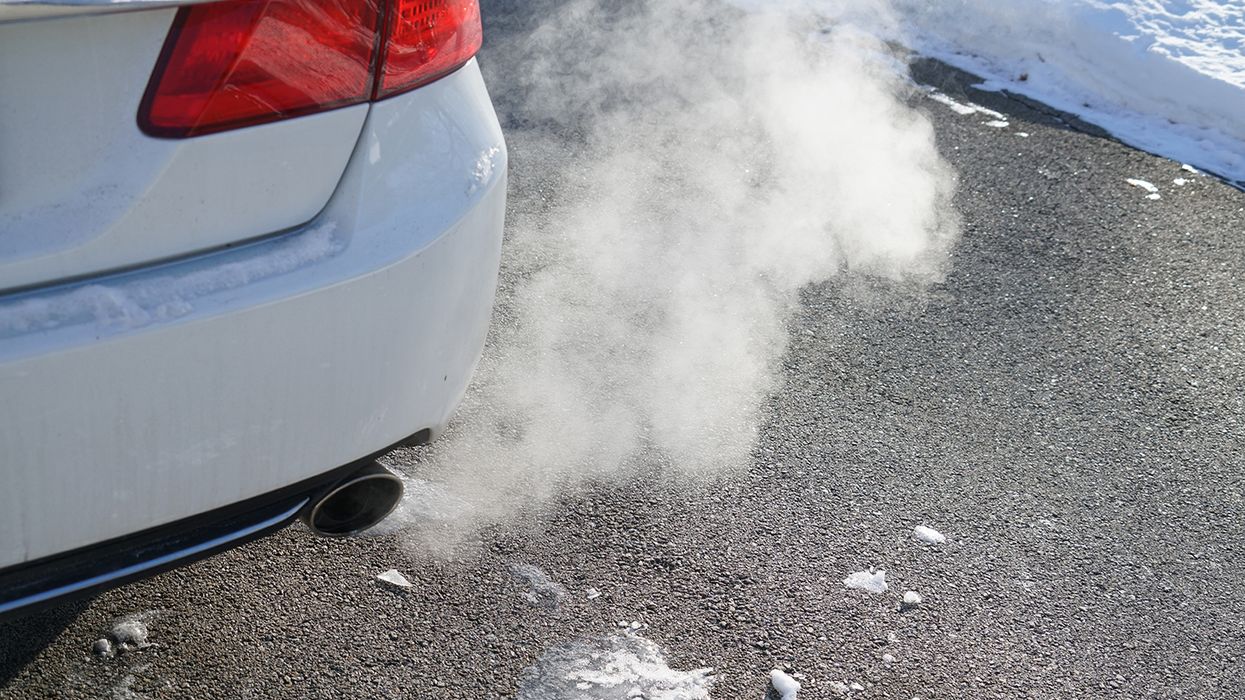
EPA reverses Endangerment Finding, scraps GHG emission standards for vehicles
The Environmental Protection Agency (EPA) published a final rule on February 18, 2026, to rescind the 2009 Endangerment Finding and repeal all federal greenhouse gas (GHG) emission standards for:
- On-highway light-, medium-, and heavy-duty vehicles; and
- On-highway heavy-duty vehicle engines.
The final rule takes effect on April 20, 2026, and applies to vehicles and engines of model years 2012 to 2027 and beyond.
What are the changes?
Manufacturers (including importers) of new motor vehicles and motor vehicle engines no longer have to measure, report, or comply with federal GHG emission standards. The final rule removes all GHG emission regulations in 40 CFR:
- Parts 85, 86, and 600 (light- and medium-duty vehicles);
- Part 1036 (heavy-duty vehicle engines); and
- Part 1037 (heavy-duty vehicles).
The final rule also eliminates:
- All off-cycle credits for the addition of certain technological features (e.g., high-efficiency exterior lighting, waste heat recovery, and active seat ventilation); and
- EPA’s incentives for manufacturers to add a start-stop system (which automatically shuts off a vehicle’s engine during idling).
What doesn’t change?
EPA’s following regulations remain in effect for new motor vehicles and vehicle engines:
- Criteria pollutant and air toxic measurement and standards,
- Corporate Average Fuel Economy testing, and
- Associated fuel economy labeling requirements.
About the 2009 Endangerment Finding
In 2009, EPA issued two findings: the Endangerment Finding and the Cause or Contribute Finding. Collectively, these findings are referred to as the 2009 Endangerment Finding. The agency used the 2009 Endangerment Finding as the legal basis to regulate GHG emissions from new motor vehicles and vehicle engines under Section 202(a) of the Clean Air Act.
EPA regulated GHG emissions from new motor vehicles and vehicle engines through:
- Emission standards and related requirements, and
- Engine and vehicle certification requirements.
However, upon reconsideration, EPA stated that it no longer believes it has the statutory authority under Section 202(a) of the Clean Air Act to regulate GHG emissions from new motor vehicles and vehicle engines. Therefore, the agency has simultaneously rescinded the 2009 Endangerment Finding and repealed the related federal GHG emission regulations.
Key to remember: EPA's final rule eliminates the 2009 Endangerment Finding and the related GHG emission requirements for on-highway vehicles and vehicle engines.

NewsGreenhouse GasesIndustry NewsEnvironmental Protection Agency (EPA)Mobile Emission SourcesCAA ComplianceEnvironmentalIn-Depth ArticleFocus AreaEnglishAir ProgramsUSA
2026-02-25T06:00:00Z
EPA scraps Endangerment Finding, GHG emission standards: What you need to know
“Road Closed Ahead.” That’s the sign that now stands at the entrance of the regulatory road leading to the federal greenhouse gas (GHG) emission standards for vehicle and engine manufacturers.
The Environmental Protection Agency (EPA) finalized a rule on February 18, 2026, to rescind the 2009 Endangerment Finding and repeal all GHG emission standards for new motor vehicles and motor vehicle engines. The final rule applies to vehicles and engines of model years (MYs) 2012 to 2027 and beyond.
This overview will help you navigate EPA’s final rule that puts vehicle GHG emission requirements in the rearview mirror.
What does this mean?
Manufacturers (including importers) of motor vehicles and motor vehicle engines no longer have future obligations to measure, control, report, or comply with federal GHG emission standards for any highway vehicle or engine, including for previously manufactured MYs.
Specifically, the final rule removes the requirements for controlling GHG emissions, which include:
- Emission standards;
- Test procedures;
- Averaging, banking, and trading requirements;
- Reporting requirements; and
- Fleet-average emission requirements.
Additionally, the final rule eliminates off-cycle credits for manufacturers that added certain technologies to their vehicles and engines (like waste heat recovery) and EPA’s incentives for manufacturers to install a start-stop system (which automatically shuts off a vehicle’s engine when idling).
When do the changes apply?
The final rule takes effect on April 20, 2026. However, a legal challenge has already been brought against the rulemaking, and more litigation is likely.
It’s important to keep an eye on the status of the rule. Legal challenges could result in changes to the rule, such as delaying its effective date.
What regulations were removed?
The final rule repeals all GHG emission regulations in 40 CFR:
Why did EPA remove the standards?
The road to reversal begins in 2009. That’s when EPA issued two findings: the Endangerment Finding and the Cause or Contribute Finding. Collectively, these findings are referred to as the 2009 Endangerment Finding. The agency used the 2009 Endangerment Finding as the legal basis under Section 202(a) of the Clean Air Act (CAA) to regulate GHG emissions from new motor vehicles and motor vehicle engines based on global climate change concerns.
However, upon reconsideration, EPA no longer believes that it has the statutory authority under Section 202(a) of the CAA to regulate GHG emissions from new motor vehicles and motor vehicle engines in response to global climate change concerns. The agency bases its determination on three factors:
- EPA concludes that the best reading of Section 202(a) of the CAA authorizes the agency to regulate air pollution that threatens to endanger health and welfare through local and regional exposure. Therefore, the CAA doesn’t give EPA the authority to regulate GHG emissions based on global climate change concerns. The agency conducted the “best reading” by using standard interpretation principles and being informed by the Supreme Court’s overturning of “Chevron deference” in Loper Bright Enterprises v. Raimondo (2024).
- EPA lacks the congressional authorization required to regulate GHG emissions based on global climate change concerns. The agency determined that the major questions doctrine (i.e., federal agencies may not decide issues of major national significance without clear authorization granted by Congress) applies to the 2009 Endangerment Finding and that Congress doesn’t give EPA the authority under Section 202(a) of the CAA to decide a national policy response to global climate change concerns.
- The GHG emission regulations don’t and can’t have a meaningful impact on the identified health and welfare dangers that the 2009 Endangerment Finding attributed to global climate change. EPA based this conclusion on the results of climate impact modeling that the public submitted in response to the proposed rule and on the agency’s modeling analysis used to evaluate the submissions.
By rescinding the 2009 Endangerment Finding, EPA has no legal basis to regulate GHG emissions from new motor vehicles and motor vehicle engines. Accordingly, the final rule also repeals all GHG emission standards for light-, medium-, and heavy-duty vehicles and heavy-duty engines.
Key to remember: EPA’s final rule eliminates the 2009 Endangerment Finding and the related GHG emission requirements for on-highway vehicles and vehicle engines.
NewsIndustry NewsWaste/HazWasteSafety & HealthConstruction SafetyGeneral Industry SafetyWasteEnvironmentalIn-Depth ArticleCWA ComplianceUsed OilEnglishFocus AreaUSA
2025-03-03T06:00:00Z
Used oil disposal: How to stay compliant with EPA, OSHA, and your state
Used oil disposal is a critical issue for safety managers and shop supervisors in industrial settings. Whether your facility generates used oil from machinery, vehicles, or hydraulic systems, you must understand the regulatory requirements to ensure compliance and avoid hefty fines.
Used oil is not always considered hazardous waste, but improper handling, storage, or disposal can lead to regulatory violations and environmental hazards. Understanding how used oil is classified, when it is considered hazardous, and how to manage it in compliance with 40 CFR Part 279 is essential.
Let’s uncover the regulatory framework for used oil disposal, including storage requirements, transportation rules, and best practices to ensure compliance at both the federal and state levels.
What is used oil?
The EPA defines used oil as any petroleum-based or synthetic oil that has been used and is contaminated by physical or chemical impurities. Common sources of used oil in industrial operations include:
- Motor oil and lubricants from vehicle maintenance
- Hydraulic fluids used in heavy machinery
- Metalworking fluids and coolants
- Compressor oils used in air compression systems
According to EPA regulations (40 CFR Part 279), used oil is presumed to be managed under the less stringent used oil management standards unless it meets hazardous waste criteria.
Used oil becomes hazardous waste if:
- It is mixed with hazardous waste (e.g., solvents or heavy metals)
- It contains more than 1,000 parts per million (ppm) of total halogens, unless proven otherwise, or
- It is disposed of improperly, leading to environmental contamination.
If used oil is classified as hazardous waste, it must be managed in accordance with the applicable solid and hazardous waste requirements.
EPA requirements for used oil disposal
The EPA requirements for used oil consist of three different aspects, as outlined below.
1. Storage Requirements
Use leak-proof tanks and containers made of durable, non-earthen materials (e.g., steel, plastic, or concrete). Label all used oil containers with the words "Used Oil" to prevent misidentification. Prevent leaks and spills by using secondary containment systems and regularly inspecting tanks. Never mix used oil with hazardous waste unless authorized.
2. Transportation and Disposal
Used oil generators may transport up to 55 gallons of used oil to a registered collection center without an EPA ID number. If contracting a used oil transporter, ensure they have an EPA Identification Number.
Used oil must be:
- Recycled or re-refined into new oil.
- Burned for energy recovery in approved furnaces or boilers.
- Disposed of at an authorized hazardous waste facility if deemed hazardous.
3. Spill Prevention and Cleanup
Facilities storing large amounts of used oil must have a Spill Prevention, Control, and Countermeasure (SPCC) Plan. SPCC plans establish procedures, methods, and equipment requirements to prevent oil from reaching waterways, and to contain discharges of oil.
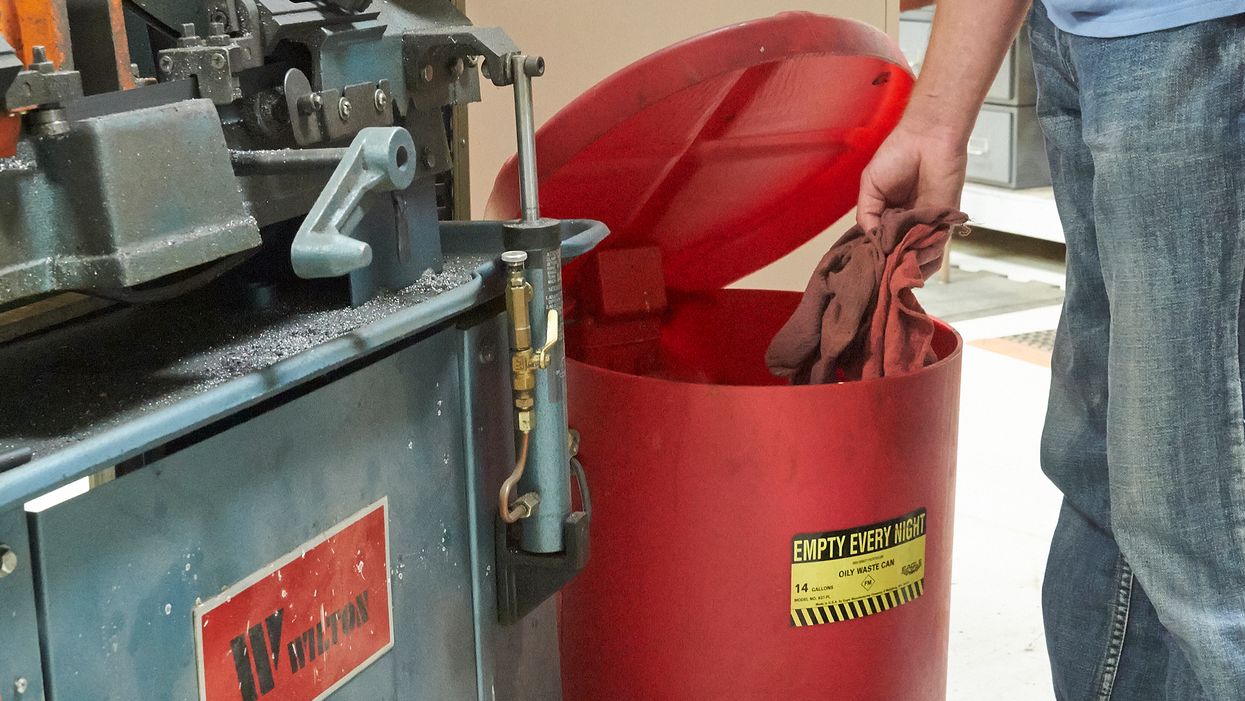
Any spills must be cleaned up immediately, and absorbent materials must be disposed of properly. Rags and shop towels contaminated with hazardous materials may be classified as hazardous waste.
OSHA regulations for handling used oil
While the EPA focuses on environmental compliance, OSHA (29 CFR Part 1910) regulates worker safety when handling used oil. Key OSHA requirements include:
1. Personal Protective Equipment (PPE)
Workers handling used oil must wear gloves and protective clothing to prevent skin exposure. Safety goggles or face shields are also important to avoid eye contact.
2. Hazard communication (HazCom) program
Employers must label all used oil containers with appropriate hazard information and train employees on safe handling procedures and emergency response.
3. Fire and Explosion Safety
Always store used oil away from ignition sources to prevent fire hazards. Ensure storage areas are ventilated to avoid vapor buildup.
State-Specific used oil disposal regulations
Many states have stricter used oil regulations than federal laws. For example:
- California classifies used oil as hazardous waste unless it meets specific recycling criteria.
- Texas requires additional storage permits for large generators.
- New York mandates annual reporting on used oil disposal activities.
To ensure compliance, check with your state’s environmental agency for state-specific used oil disposal rules and whether used oil is considered hazardous. Additional permits for transporting or processing used oil may be necessary.
Staying compliant with used oil disposal requirements
Ensuring compliance with EPA, OSHA, and state laws is essential for safety managers and shop supervisors handling used oil. By following proper storage, transportation, and disposal practices, businesses can reduce environmental risks, improve workplace safety, and avoid costly fines.
Key to remember: By staying informed and proactive, your facility can maintain safe, sustainable, and compliant used oil management practices.

NewsIndustry NewsIndustry NewsCriteria Air PollutantsEnvironmental Protection Agency (EPA)CAA ComplianceEnvironmentalFocus AreaEnglishAir ProgramsUSA
2023-11-27T06:00:00Z
A particulate matter: Stricter emissions limits placed on lead recyclers
The Environmental Protection Agency (EPA) published a final rule for New Source Performance Standards (NSPS) for secondary lead smelters, which include facilities that recycle lead-bearing scrap material, typically lead acid batteries. The final rule imposes stricter regulations on particulate matter (PM) emissions and adds testing, recordkeeping, and reporting requirements.
Who’s impacted?
Secondary lead smelters subject to the NSPS that were constructed, reconstructed, or modified after June 11, 1973, and on or before December 1, 2022, are regulated by 40 CFR 60 Subpart L. While PM emissions and opacity standards remain the same, the final rule adds these requirements:
- Initial performance tests of PM emissions and opacity,
- Periodic performance tests of PM emissions (every 12 months or every 24 months if conditions are met),
- Electronic submission of performance tests through EPA’s Central Data Exchange,
- Monitoring, and
- Recordkeeping and reporting.
Regulated secondary lead smelters that are constructed, reconstructed, or modified after December 1, 2022, are regulated by the newly added Subpart La, which requires the same additions to Subpart L as well as:
- Stricter PM emissions and opacity standards that apply at all times (including periods of startup, shutdown, and malfunction),
- PM standards for all process fugitive emission sources, and
- Periodic performance tests of opacity.
EPA also added Method 22 as an alternative for showing compliance with opacity standards in efforts to reduce testing burdens.

NewsAir QualityIndustry NewsIndustry NewsAir ProgramsEnvironmental Protection Agency (EPA)Hazardous Air PollutantsCAA ComplianceEnvironmentalFocus AreaEnglishAir ProgramsStationary Emission SourcesUSA
2026-04-02T05:00:00Z
EPA releases final NESHAP for chemical manufacturing area sources
The Environmental Protection Agency (EPA) published a final rule on April 1, 2026, amending the National Emission Standards for Hazardous Air Pollutants (NESHAP) for Chemical Manufacturing Area Sources (CMAS). The NESHAP controls hazardous air pollutant (HAP) emissions from facilities that manufacture a range of chemicals and products, such as inorganic chemicals, plastics, and synthetic rubber.
Who’s impacted?
The final rule applies to nine area source categories in the chemical manufacturing sector that are regulated by the CMAS NESHAP (40 CFR 63 Subpart VVVVVV).
What are the changes?
EPA’s final rule:
- Establishes leak detection and repair requirements for equipment leaks and heat exchange systems in organic HAP service,
- Adds detectable emissions monitoring standards for pressure vessels in organic HAP service and emission management practice standards for pressure relief devices (PRDs) in organic HAP service,
- Prohibits closed vent systems in organic HAP service from bypassing an air pollution control device (APCD), and
- Requires recurring performance testing of non-flare APCDs to demonstrate compliance with process vent and storage tank provisions.
The final rule also mandates electronic reporting for notifications of compliance status (NOCs), performance test reports, and periodic reports. Facilities must submit these reports through the Compliance and Emissions Data Reporting Interface (CEDRI) on EPA’s Central Data Exchange.
What didn’t change?
Significantly, the final rule doesn’t add previously proposed regulations for area sources that use ethylene oxide (EtO) to produce materials described by code 325 of the North American Industry Classification System (NAICS).
EPA states that it intends to address the regulation of EtO from area sources and major sources in one final action.
What are the compliance timelines?
Existing facilities must comply with the amendments by April 1, 2029.
New facilities (those that begin construction or reconstruction after January 22, 2025) have to comply with the changes by April 1, 2026, or upon startup, whichever is later.
Additionally, facilities must start electronically submitting:
- Performance tests by June 1, 2026;
- NOCs by August 31, 2026; and
- Periodic reports by April 1, 2029.
Key to remember: EPA’s final HAP emissions rule for chemical manufacturing area sources adds new requirements for certain processing equipment and systems.
Most Popular Highlights In Transportation

NewsDriver qualification and hiringReasonable suspicion drug and alcohol testing - Motor CarrierRecruiting and hiringSafety & HealthFocus AreaAssociate RelationsTransportationDisabilities and ADAReasonable AccommodationsDrug and Alcohol TestingDrug and Alcohol TestingDisabilities and ADAMarijuanaHuman ResourcesUSADrug and Alcohol Testing - DOTDriver qualificationsDrug testing - Motor CarrierDrug and alcohol training - Motor CarrierHiring standards - Motor CarrierHR ManagementEnglishDriver recruiting and retentionTalent Management & RecruitingIndustry NewsIndustry NewsFleet SafetyGeneral Industry SafetyDrivers qualification (DQ file)HR GeneralistApplications/Applicants
2026-04-23T05:00:00Z
Federal government reschedules medical marijuana
Medical marijuana has been reclassified into a lower drug category, placing it into the same classification as some prescription painkillers.
Attorney General Todd Blanche issued an order on April 23 moving medical marijuana from Schedule I of the Controlled Substances Act to Schedule III, a class of drugs with a moderate to low potential for dependence, that includes ketamine, Tylenol with codeine, and anabolic steroids. Schedule III drugs can be obtained with a prescription.
Under the order, products containing marijuana approved by the Food and Drug Administration (FDA) and marijuana products regulated by a state medical marijuana law are now in the lower drug category.
Rescheduling the drug into a lower classification will support research into marijuana safety and use of the drug for medical purposes, the attorney general noted in a press release.
Impact on the workplace
The order doesn’t address how the rescheduling of medical marijuana impacts compliance with other federal laws, but to avoid the risk of a discrimination claim under the federal Americans with Disabilities Act, employers in states where medical marijuana is legal should treat individuals using medical marijuana as they would treat any individual using a prescription medication.
This includes having a discussion with the employee about accommodations, which may include off-duty use of medical marijuana.
In states where medical marijuana isn’t legal, employers would only need to consider accommodations for use of marijuana products approved by the FDA.
Recreational marijuana considerations
The order doesn’t legalize recreational marijuana, but does announce a June 29 hearing to evaluate broader changes to marijuana’s status under federal law.
The order notes that it doesn’t apply to synthetically derived THC, such as Delta-10 products. The final order notes that synthetically derived THC is outside of the definition of marijuana.
The order also establishes a federal licensing system for state medical marijuana manufacturers and dispensaries. It notes that states where medical marijuana is legal have established systems to regulate the sale and use of medical marijuana.
How does this affect safety-sensitive jobs?
The Drug Enforcement Administration’s reclassification order doesn’t address the impact the change would have on federal drug testing regulations. Specifically, it doesn’t offer insights into Department of Transportation (DOT) drug testing of truck drivers, airline pilots, pipeline operators, and others in safety-sensitive positions.
Before any changes can be implemented by the DOT, drug testing procedures in 49 CFR Part 40 must go through the rulemaking process.
Key to remember: The federal government has moved medical marijuana to a lower classification of drug. To reduce the risk of a discrimination claim, employers in states where medical marijuana is legal should treat it as a prescription medication to lower the risk of a discrimination claim. Employers in all states should consider accommodations for FDA-approved marijuana products.

NewsIndustry NewsHazmat SafetyHazmat: HighwayFocus AreaIn-Depth ArticleHazmat EnforcementEnglishTransportationUSA
2022-12-27T06:00:00Z
Placarding responsibility – Whose is it?
Many shippers are unaware of their responsibility to provide placards to drivers, but the responsibility shifts as soon as the driver hits the road.
Check the regulations
According to Section 172.506 of the Hazardous Materials Regulations (HMR), a shipper offering a hazardous material for transportation by highway must provide the motor carrier with the required placards for the material being offered. The shipper must offer the placards to the carrier prior to, or at the same time as, the material is offered for transportation — unless the vehicle is already placarded for the hazmat.
Section 172.506 also states that no motor carrier may transport a hazardous material in a motor vehicle unless the required placards for the hazmat are affixed to the vehicle. Before transport, the driver is responsible for displaying the required placards for all the hazmat that is on the vehicle.
Avoid issues with shippers
Many trailers are equipped with flip placards that represent most classes of hazardous materials but without adequate training, shippers may not understand their responsibility to provide the driver with the required placards. If a driver arrives and the shipper fails to provide placards, the driver should contact dispatch for additional instructions or drive to a truck stop to secure the necessary placards. The driver becomes responsible for placards as soon as the trailer enters a public highway, so train your drivers to temporarily refuse the shipment until the proper placards can be obtained. If necessary, the driver must bobtail or leave empty before driving to pick up placards.
Another common placarding question with shippers involves combination loads. If a driver arrives at a shipper’s location and is already transporting a hazardous material below the placarding threshold, is the shipper required to provide placards for the combination load on the trailer? In this scenario, the driver already has 600 pounds of a Class 8 corrosive material on the trailer, and the shipper is offering an additional 500 pounds of the same commodity. The regulations state that the shipper is only required to provide placards for the commodity that is being offered, not for the aggregate weight of both shipments. In this scenario, the driver is responsible for providing placards since it involves a combination load.
The Hazardous Materials Regulations are complex, especially for newer employees. Drivers that can speak “hazmat” to shippers often secure additional business, so be sure to train your drivers and give them the confidence to have impactful conversations with shippers.
Key to remember: Carry extra placards in case a shipper is unable to supply the required placards or a combination of hazmat on the vehicle requires different placards.

NewsIndustry NewsFleet OperationsEnglishFocus AreaIn-Depth ArticleHighway use - Mileage taxFleet TaxesInternational Fuel Tax Agreement (IFTA)Fleet taxesTransportationUSA
2024-09-19T05:00:00Z
Your HUT decals are expiring: Registration open Oct. 1
For carriers operating in New York, registration and decals expire December 31, 2024, for the Highway Use Tax (HUT) and Automotive Fuel Carrier (AFC) programs. Take steps now to make sure you receive your new decals before the current ones expire. You need a new certificate of registration and decal for each vehicle. And you must place the new decals on your vehicles before January 1, 2025.
The period to renew your 24th series HUT and AFC certificates of registration begins October 1, 2024. Act now to avoid delays and keep your highway use tax credentials active.
To-do before October 1
Get ready for renewal by taking the following steps now:
- File all your highway use tax returns that are due.
- Pay your taxes. The state will not issue a new certificate of registration if you owe back taxes. Before you apply to renew, make sure that you’ve paid all taxes due under any of the programs administered by the New York State Tax Department, including:
- HUT,
- personal income tax,
- International Fuel Tax Agreement (IFTA),
- sales tax, and
- withholding tax.
- Create an online account if you do not already have one and you want to renew your credentials and pay online (https://www.oscar.ny.gov/).
- Make sure your vehicle registration information is correct and accurate. Review and update your information as soon as possible. Incorrect information will delay the processing of your certificates and decals.
Beginning October 1
Once the renewal period opens, renew your credentials and pay your renewal fees online with One Stop Credentialing and Registration (OSCAR).
Submit your renewal application by November 30, 2024, to make sure you receive your decals in time to place them on your vehicles before January 1, 2025.
If you are already enrolled in OSCAR, use your current OSCAR password to renew online.
If you are not enrolled, visit OSCAR, and select Enroll Now. You must have a United States Department of Transportation (USDOT) number and an employer identification number (EIN).
To renew your registration:
- Visit the OSCAR website and select HUT Renewal from the Business Type drop-down.
- Enter your information in the USDOT#, NYS Tax ID#, and Password fields, then select Log in.
- If you have 300 or fewer vehicles, choose either:
- Renew all HUT/AFC Certificates of Registration to renew all your active current series permits, or
- Select HUT/AFC Certificates of Registration to renew specific permits.
- If you have more than 300 vehicles, choose either:
- Renew all to renew all your active current series permits, or
- File renewal to renew select permits.
If you are unable to renew electronically, you may file Form TMT-1.2, Renewal Application for Highway Use Tax (HUT) and Automotive Fuel Carrier (AFC) Certificates of Registrations and Decals – 25th Series.
Key to remember: Take steps now to renew your NY HUT and ensure you receive your new decals before the current ones expire.

NewsIndustry NewsFleet Safety150 air-mile radius exceptionHours of ServiceFocus AreaIn-Depth ArticleEnglishTransportationUSA
2022-08-29T05:00:00Z
The 150 air-mile short-haul exemptions: Widely used and widely misused
The 150 air-mile exemptions, which are in the regulations at 395.1(e)(1) and (2), allow a driver to use a time record in place of a log, provided that certain conditions are met. While this is possibly the most widely used hours-of-service exemption, it may be the most commonly misused exemption, as well.
The basics of logging exemptions
To be able to use this logging exemption in 395.1(e)(1), the driver must:
- Stay within 150 air-miles of the work reporting location for the day (draw a 150 air-mile radius circle around the work reporting location for the day — the driver must stay within this circle),
- Be back to — and released from — the work reporting location for his/her 8- or 10-hour break within 14 hours, and
- Include the starting and ending times for the day and the total hours on duty on the time record for the day.
The company must retain the time record and have it available for inspection for six months.
| Need more info? View our ezExplanation on the 150 air-mile exception. |
What if the driver goes too far or works too many hours?
If the driver cannot meet the terms of the exemption (he or she goes too far or works too many hours), the driver must complete a regular driver’s log for the day as soon as the exemption no longer applies.
If the driver has had to complete a log 8 or fewer days out of the last 30 days, the driver can use a paper log for the day. If the driver had to complete a log more than 8 days out of the last 30 days, the driver needs to use an electronic log for the day (unless one of the ELD exemptions applies, such as operating a vehicle older than model year 2000).
30-minute break exemption
When a property-carrying driver is operating under the 150 air-mile exemption, the driver is also exempt from having to take the required 30-minute break (see 395.3(a)(3)(ii)).
If the driver began the day as a 150 air-mile driver and has driven more than 8 consecutive hours without a break, and something unexpected happens and the driver can no longer use the 150 air-mile exemption, the driver must stop and immediately take the 30-minute break as well as start logging. If the driver went outside of the 150 air-mile area before the driver had 8 hours of driving without a break from driving, the driver would be expected to take the break at the appropriate time.
Common myths
Here are some of the common myths and misunderstandings about the 150 air-mile exemption:
- The driver must have the time records in the vehicle. Myth. The driver simply needs to explain to an officer during a roadside inspection that he/she does not have logs due to operating under the 150 air-mile exemption and that the required time records are back at the carrier’s office (just telling the officer, “I don’t have any logs” will lead to a violation, so the driver needs to know to provide the full explanation).
- The driver must log the previous seven days if he/she had been using this exemption and suddenly can’t. Myth. If the driver cannot use the exemption on one particular day, that is the only day the driver must use a regular log (either paper or electronic).
- Passenger-carrying drivers and drivers hauling hazardous materials cannot use this exemption. Myth. There are no restrictions on the use of this exemption, so any commercial driver can use it.
- A driver that crosses state lines cannot use this exemption. Myth. As this exemption appears in the Federal Motor Carrier Administration (FMCSA) regulations, it can be used by interstate drivers.
- Only drivers that operate out of a “company terminal” can use the 150 air-mile exemption. Myth. As long as the driver makes it back to the work reporting location for the day within the appropriate number of hours, the driver can use the exemption.
- Drivers that move from one jobsite to another every few weeks cannot use this exemption. Myth. If a driver that normally uses this exemption switches work reporting locations, the day the driver switches work reporting locations is the only day the driver cannot use the exemption.
- Drivers covered by this exemption are also exempt from the driver qualification (licensing and medical cards), driving, and vehicle inspection requirements. Myth. The only rules the driver is exempt from are the logging requirement in 395.8 and the 30-minute break requirement in 395.3.
- The driver cannot drive more than 150 miles for the day. Myth. The driver can drive as many miles as he/she wants to or needs to, as long as the driver stays within the 150 air-mile radius circle and gets back to the work reporting location within the appropriate number of hours.
- If a 150 air-mile driver gets into a vehicle with an ELD, the driver must use it. Myth. The carrier can have the driver log in and have the driver entered into the system as an “exempt driver,” or the carrier can request that the driver not log into the device and then attach a comment to the unassigned driving time generated by the driver’s movements. The comment would need to explain that the driver using the vehicle was a 150 air-mile driver who submitted a time record. It is up to the carrier to decide which option to use. If stopped for a roadside inspection, the driver will need to be able to explain to the inspector that he/she is an exempt driver using the 150 air-mile exemption, so using the electronic log is not required.
What’s different with the ‘150 air-mile non-CDL property-carrying drivers’
The 150 air-mile exemption at 395.1(e)(2) only applies to drivers that: Operate property-carrying vehicles that do not require a CDL to operate, and Stay within the 150 air-miles of their work reporting location.
If the driver stays within the 150 air-mile radius of the work reporting location, and returns to the work reporting location within 14 hours on 5 of the last 7 days, and 16 hours on 2 of the last seven days, the driver is allowed to use a time record in place of a log.
If the driver does not meet the terms of the exception, the driver will need to complete a log for the day. If the driver had to log more than 8 days out of the last 30 days, the driver will need to use an electronic log for the day. All of the other issues discussed above would apply to these drivers as well.
Managing the use
If you have drivers that use these exemptions, you will need to check time records to make sure they are complying with the appropriate time limits. You will also need to check movement records to verify that the drivers using these exemptions are staying within the mandated area (within 150 air-miles of the work reporting location for the day).
If a driver is over the hours limit, or has gone too far, you need to verify that the submitted a log for the day, either paper or electronic, depending on how many days the driver had to log out of the previous 30 days.
Verifying compliance is important
During an audit, if it is discovered that your drivers are using these exemptions incorrectly, you will be cited for not having drivers’ logs when required. Each day this occurred will be another violation, so the fine could be rather large if you are not managing the use of these exemptions!

NewsIndustry NewsFleet SafetyFederal Motor Carrier Safety Administration (FMCSA), DOTDrug testing - Motor CarrierDrug and Alcohol Testing - DOTFocus AreaIn-Depth ArticleEnglishSplit specimen - Motor CarrierTransportationUSA
2022-08-03T05:00:00Z
The importance of the split specimen in drug testing
A question we’ve been seeing a lot lately has to do with the split specimen process and the motor carrier’s responsibilities if one of their drivers requests that a split specimen be tested.
Drivers who are informed that they’ve failed a DOT drug test have the right to request that the secondary specimen be tested if they believe that the test result is inaccurate. Due process is an important aspect of our legal system, but waiting for a split specimen to be tested can cause some confusion for motor carriers. Here are some common questions we hear about the split specimen process.
What is a split specimen?
When a driver gives a urine sample for the purposes of DOT drug testing, the collector will split the specimen into two separate containers. The container labeled as the primary specimen will be tested by the lab; the container labeled as the secondary specimen is only tested if the driver requests that it be tested after the primary specimen is verified as positive, adulterated, or substituted.
How does a driver request that the split specimen be tested?
When the medical review officer (MRO) contacts the driver about a verified positive, adulterated, or substituted test, the MRO will inform the driver of the driver’s right to have the split specimen tested. The driver then has 72 hours from the time of notification to request via the MRO that the split specimen be tested.
What happens while the split specimen is being tested?
Because the driver’s primary specimen was verified positive, adulterated, or substituted, the motor carrier should have already pulled the driver from performing safety-sensitive functions. The driver cannot resume driving while the split specimen is being tested. Whether the driver is reassigned to a non-driving position or is suspended depends on the motor carrier’s drug and alcohol policy.
Who pays for the split specimen to be tested?
The regulations specify that the carrier cannot delay lab testing in order to collect payment from the driver. The secondary specimen should be submitted for testing as soon as the driver requests it, and motor carrier will be billed through the carrier’s lab account. In some cases, the motor carrier can seek reimbursement from the driver for full or partial costs of the split-specimen test.
Is the drug violation reported to the Drug and Alcohol Clearinghouse right away, or does the MRO wait for the results of the test on the secondary sample?
The MRO will report the positive, adulterated, or substituted drug test result to the Drug and Alcohol Clearinghouse within two business days of verifying the result for the primary specimen. Once the MRO receives the lab results for the secondary sample, one of three things happens:
- The secondary test result reconfirms the primary test result. The violation stands and remains in the Clearinghouse.
- The test of the secondary sample fails to reconfirm any of the original findings. The test will be canceled, and the MRO will change the result in the Clearinghouse within one business day of receiving the secondary test results.
- The test of the split specimen does not reconfirm the original result but identifies something suspicious in the secondary sample. The regulations in 40.187 spell out a variety of situations that require the driver to be tested again, such as if the secondary sample is invalid or if part of the original result is reconfirmed but the sample also tests as substituted or adulterated. If any of these complex scenarios applies, the MRO will direct the carrier’s designated employer representative (DER) to immediately send the driver for another collection under direct observation. If that test result is negative and is not adulterated or substituted, the MRO will change the result in the Clearinghouse within one business day of receiving the secondary test results. Otherwise, the violation will stand and remain in the Clearinghouse.
Key to remember: Dividing a urine specimen into two samples allows for a driver to request that the secondary sample be tested if the first specimen indicates drug use. This is an important part of the driver’s right to due process.

NewsIndustry NewsCompliance reviews - Motor CarrierFleet SafetyEnglishFines and penalties - Motor CarrierFocus AreaIn-Depth ArticleEnforcement - DOTTransportationUSA
2026-03-31T05:00:00Z
Coming soon: New FMCSA enforcement playbook
The DOT is soon expected to issue a new rule that will affect how the Federal Motor Carrier Safety Administration (FMCSA) writes new guidance and runs enforcement cases. Though it may sound like inside-baseball, for motor carriers it could change the outcome of audits, investigations, and even settlement talks.
According to the DOT, the new “rule on rules” is aimed at making the enforcement process more fair, well-documented, and based on clear legal authority, not a game of “gotcha.” The rule was proposed a year ago and recently got the White House’s stamp of approval, clearing the way for final publication.
No fishing
As proposed, the rule directs the FMCSA and other DOT agencies to avoid “fishing expeditions” without enough evidence in hand to support an enforcement claim. It also spells out what an enforcement notice should include — what rule you allegedly violated, the key facts, and what rights you have to challenge it and “avoid unfair surprise.”
Transparency is another key component. The rule will require agencies to share potentially exculpatory evidence — basically, information in the government’s hands that could help you defend yourself or reduce the penalty. The proposed version of the rule states that “making affirmative disclosures of exculpatory evidence in all enforcement actions will contribute to the [DOT’s] goal of open and fair investigations and administrative enforcement proceedings.”
The rule is also expected to reinforce the fact that guidance documents — including interpretations issued by the FMCSA and often published along with FMCSA regulations — are not legally binding. In addition, agencies will need to take additional steps in the guidance development process, such as doing cost-benefit analyses and legal review, and getting public input.
Many of the changes in the proposed rule were in place prior to 2021 but were rescinded by the previous administration.
A new era for enforcement
One of the most intriguing changes in the rule will allow motor carriers to petition the DOT to argue that their staff violated procedural requirements. If the carrier wins, the proposed remedies go beyond a scolding for the investigators. They could include:
- Removing the enforcement team,
- Excluding certain issues or evidence,
- Ordering certain factual findings, or
- Restarting the enforcement action from the beginning or from an earlier point in the proceedings.
FMCSA enforcement cases dropped dramatically last year even without the new rule; the future may hold even fewer once the proposed changes go into effect.
Key to remember: A new “rule on rules” from the DOT is expected soon, and it could change the FMCSA’s enforcement playbook.
Most Popular Highlights In Human Resources

NewsElements of a General Duty Clause ViolationBehavior Based SafetyRisk Assessment and ManagementTraining & DevelopmentEmployee RelationsSafety CommitteesIn-Depth ArticleAssociate Benefits & CompensationSafety & HealthEmployee RelationsGeneral Duty ClauseHuman ResourcesSafety and Health Programs and TrainingTrainingTrainingGeneral Duty Clause Enforcement AreasWorkplace SecurityHR ManagementEnglishFacility SecurityIndustry NewsWorkplace ViolenceActive ShooterWorkplace ViolenceGeneral Industry SafetyGeneral Duty ClauseHR GeneralistAssociate RelationsFocus AreaUSA
2026-04-24T05:00:00Z
Workplace violence prevention: Working together to create safer work environments
April is Workplace Violence Awareness Month. Organizations earmark April to focus on ways to reduce the risk of a violent incident happening in the workplace. By increasing awareness and fostering a culture of safety, organizations can help protect their employees from harm.
Health care settings
Health workers worldwide face a high risk of violence, with 8–38 percent experiencing physical attacks, while others are subjected to threats or verbal abuse, according to the World Health Organization (WHO). Most incidents involve patients or visitors. Those at greatest risk include nurses, patient-facing staff, emergency room personnel, and paramedics.
Violence against health workers harms staff well-being, morale, and retention, ultimately compromising quality of care and causing significant financial loss.
An OSHA proposed rule — ‘Workplace Violence in Health Care and Social Assistance’ — was moved to Long-Term Action status, according to the Spring 2025 regulatory agenda that was released on September 4, 2025. Long-Term Actions are items under development, but the agency doesn’t expect to have a regulatory action within the 12 months after the latest edition of the agenda.
This turn of events was surprising since OSHA had been working on a standard for preventing workplace violence in health care and social assistance settings. OSHA had planned to publish the proposed rule in the Federal Register in June 2025.
Even without a federal standard addressing workplace violence in health care, several states have their own health care violence prevention laws in place.
General Duty Clause
Although OSHA doesn’t have a workplace violence standard, employers must provide a workplace that’s free of known health and safety hazards. This is addressed in OSHA’s General Duty Clause (GDC), Section 5(a) of the Occupational Safety and Health (OSH) Act.
The following elements are necessary for OSHA to prove a violation of the GDC:
- The employer failed to keep the workplace free of a hazard to which employees of that employer were exposed;
- The hazard was recognized;
- The hazard was causing or was likely to cause death or serious physical harm; and
- There was a feasible and useful method to correct the hazard.
A general duty citation must involve both the presence of a serious hazard and exposure of the cited employer’s own employees.
During a violent incident investigation, OSHA inspectors would likely gather evidence about whether an employer knew that a potential workplace violence hazard existed and whether there were feasible means to prevent or minimize such hazards. Investigators might also look at evidence of any potential whistleblower retaliation in which workers complained about workplace violence risks or reported injuries from workplace violence incidents.
Health care facilities have been cited when staff were injured by violent patients or visitors. In one case, nurses were regularly assaulted, but the hospital had no prevention program, no staff training, and no reporting system. OSHA stepped in using the GDC. Prevention could have included de-escalation training, secure facility layouts, panic buttons, and post-incident support.
Tips for preventing violent acts
In most workplaces where risk factors can be identified, violent acts can be prevented or minimized.
Building respectful workplaces is one way to do this. The most common forms of uncivil behaviors are when employees:
- Address others in disrespectful ways,
- Interrupt those who are speaking, and
- Micromanage people to an excessive degree.
Providing employees with civility training — which differs from anti-harassment training — can help to create more respectful work environments with less conflict. While civility training isn’t only focused on preventing harassment, that could be a component.
Research has shown that incivility can be a precursor to harassment. In contrast to anti-harassment training, civility training tends to give employees positive examples of how to behave, versus actions to avoid.
The training typically includes a focus on:
- Interpersonal communication,
- Conflict resolution, and
- Effective supervisory techniques.
How civility training is presented will depend on the size of the workforce, demographics, location, industry, etc. There is no one-size-fits-all approach. The point is to get employees to be more aware of how their words and actions impact others, and how they should treat everyone with respect.
It’s also important to watch for signs that someone could turn violent. While there’s no guarantee that one or more questionable behaviors equate to a potential incident, some warning signs come from someone experiencing personal or work issues.
They could be struggling financially, going through a divorce, or having health issues. Work triggers could stem from negative employment actions, like a demotion or termination, or other types of conflict.
Key to remember: April is Workplace Violence Prevention Month. Now’s the time to focus on ways to keep all employees safe.

NewsIndustry NewsAssociate Benefits & CompensationHR GeneralistFamily and Medical Leave Act (FMLA)In-Depth ArticleFamily and Medical Leave Act (FMLA)Associate RelationsEnglishHR ManagementFocus AreaHuman ResourcesUSA
2025-03-27T05:00:00Z
Who can fill out FMLA forms? The answer might surprise you
One of the most common questions involving the federal Family and Medical Leave Act (FMLA) that we see is: “Can ________ fill out the medical certification?”
This question stumps a lot of HR people and can be a little confusing.
It might be easier to start with who CAN’T fill out an FMLA certification. That includes your coworker, best friend, neighbor, or pet.
Jokes aside, often (but not always) a doctor fills out the FMLA certification, and since March 30 is “Doctors’ Day,” this is a great time to discuss this topic.
FMLA certification basics
Employers aren’t required to use certifications, but if they do, the U.S. Department of Labor (DOL) has five different certification forms to use for various FMLA leave situations.
The forms are as follows:
- Certification of Health Care Provider for Employee's Serious Health Condition,
- Certification of Health Care Provider for Family Member's Serious Health Condition,
- Certification of Qualifying Exigency for Military Family Leave,
- Certification for Serious Injury or Illness of a Current Servicemember for Military Family Leave, and
- Certification for Serious Injury or Illness of a Veteran for Military Family Leave.
Let’s focus on the first two, as these are the most common ones HR administrators use.
Who can fill out an FMLA certification?
The FMLA regulations describe the person who has the authority to fill out a certification as a “health care provider.” The good news is, the regulations include a lengthy list of medical professionals who fit this role.
Under the FMLA, a health care provider includes:
- A doctor of medicine or osteopathy,
- A podiatrist,
- A dentist,
- A clinical psychologist,
- An optometrist,
- A chiropractor (limited to manual manipulation of the spine as demonstrated by X-ray),
- A nurse practitioner,
- A nurse midwife,
- A clinical social worker,
- A physician assistant,
- A Christian Science practitioner, and
- Any health care provider from whom the employer or the employer's group health plan's benefits manager will accept a medical certification to substantiate a claim for benefits.
To be qualified to fill out FMLA forms, medical professionals must be authorized to practice in the state and perform within the scope of their practice. This means that the provider must be authorized to diagnose and treat physical or mental health conditions.
What about doctors in a foreign country?
If an employee or an employee's family member is visiting another country, or a family member resides in another country, and a serious health condition develops, the employer must accept a medical certification from a health care provider who practices in that country. This includes second and third opinions.
If a medical certification from a foreign health care provider is not in English, the employee may be required to provide a written translation of the certification.
Key to remember: The FMLA regulations spell out which medical professionals can fill out certification forms.

NewsIndustry NewsIndustry NewsHR GeneralistFamily and Medical Leave Act (FMLA)Family and Medical Leave Act (FMLA)USAHR ManagementEnglishFocus AreaHuman Resources
2023-09-06T05:00:00Z
Appellate court sided with employee's (almost) 3-year-delayed FMLA claim
Back in October 2018, Laffon had a medical emergency and needed some time off under the federal Family and Medical Leave Act (FMLA).
Her leave lasted until November 15. Ten days after she returned to work, on November 26, her employer terminated her.
She sued, arguing that the employer retaliated against her because of her FMLA leave.
The catch? She didn't bring the suit until almost three years later.
No link between leave and termination
In court, the employer argued that there was no causal link between Laffon taking FMLA leave and her termination. Although the court documents aren't robust, they do reveal that the employer indicated that Laffon's allegations didn't show that her taking FMLA leave was a factor in the decision to terminate her. The documents showed only that the termination chronologically followed her leave.
The court agreed with the employer. It also agreed that Laffon failed to allege a willful violation of the FMLA, which would allow her to benefit from the FMLA's three-year statute of limitations.
Laffon appealed the case to the Ninth Circuit.
Statute of limitations
Under the FMLA, employees have two years from the date of the last event constituting the alleged violation for which they can bring a claim.
Those two years are extended to three years if the employer's actions were "willful." This means that an employee must show that the employer either knew or showed reckless disregard for whether its conduct violated the FMLA.
Ruling overturned
Fast forward to August 2023, when the Ninth Circuit reversed the lower court's decision. It indicated that, based on Laffon's amended complaint and liberally construing the law, her allegations establish that her leave was causally connected to her termination and that the employer's action (her termination) was willful.
Glymph v. CT Corporation Systems, No. 22-35735, Ninth Circuit Court of Appeals, August 22, 2023.
Key to remember: Terminating an employee soon after returning from FMLA leave is risky, unless there is a clear, well-documented, non-leave-related reason. Case documents did not show such a clear reason, which can also increase the risk of a willful finding. Employees have time to file claims, even years.

NewsIndustry NewsIn-Depth ArticleFamily and Medical Leave Act (FMLA)Family and Medical Leave Act (FMLA)USAHR ManagementEnglishFocus AreaHuman Resources
2023-07-20T05:00:00Z
Dealing with FMLA Monday/Friday absences
The federal Family and Medical Leave Act (FMLA) allows eligible employees to take job-protected leave for certain qualifying reasons. Over the years, employees have gotten creative when scheduling such leave, including taking it on Mondays and/or Fridays to extend a weekend.
Employers trying to oversee schedules and meet other business needs might get frustrated when employees take leave. When employees take leave in suspicious patterns, the frustration swells.
It doesn’t help that the FMLA restricts when and how employers may obtain information on the reasons behind leave.
Employers, however, do have some resources available to them when determining whether a Monday/Friday absence pattern is valid, or if the employee is abusing leave.
Recertifying FMLA leave
Once employers have a certification supporting the need for a leave, they may not request recertification more often than every 30 days, or until the minimum duration of the condition listed on the certification has expired.
Employers may, however, request recertification more often if:
- The employee requests an extension of leave,
- Circumstances described by the initial certification have changed significantly, or
- They receive information that casts doubt upon the reason for leave or the continuing validity of the certification.
When employers suspect FMLA abuse, they should review the information contained in the certification to see if the absences match. If not, they may investigate the situation further.
Asking about absence patterns
To help with this investigation, when requesting a recertification, employers may include a record of the employee’s absences and ask the health care provider if the pattern is consistent with the serious health condition.
It’s true that employers may not generally contact the employee’s health care provider directly for this information, but they may add this type of question to the medical recertification form, and direct the employee to have it completed.
Tracking absences
In such situations, employers might want to review the absence patterns of employees in question and be on the lookout for suspicious absences in the future.
Effectively tracking all leave is a must to identify patterns that could indicate FMLA leave abuse. If employers learn that an absence is not for a valid FMLA-qualifying reason, the employee is not entitled to the protections of the law for such an absence.
Key to remember: If employees are suspiciously taking FMLA leave such as on Mondays and Fridays, employers may request a recertification supporting the leave pattern.

NewsDrug and Alcohol TestingDrug Free WorkplaceMarijuanaSubstance AbuseFamily and Medical Leave Act (FMLA)In-Depth ArticleFamily and Medical Leave Act (FMLA)HR ManagementEnglishHuman ResourcesIndustry NewsHR GeneralistAssociate RelationsFocus AreaUSA
2022-11-30T06:00:00Z
Drugs, alcohol, and the FMLA
The U.S. has an opioid crisis, according to the National Institutes of Health, with opioid-involved deaths at 68,630 in 2020. Based on a survey conducted by the National Safety Council, in 2019, 75 percent of employers reported that opioid use impacted their workplace.
Enter the Family and Medical Leave Act (FMLA). This federal law entitles eligible employees to take job-protected, unpaid leave for qualifying reasons. Substance abuse treatment, some employers might not realize, can be one of those reasons.
Serious health condition
Substance abuse can be an FMLA-qualifying serious health condition as long as it meets the definition. If an employee (or family member) is kept overnight in a health care facility or if continuing treatment is involved, a serious health condition exists.
An FMLA serious health condition involving continuing treatment includes, for example:
- A period of incapacity of more than three, consecutive, full calendar days, and any subsequent treatment.
- Any period of incapacity (or treatment for) a chronic serious health condition requiring treatments at least twice per year.
- A period of incapacity for a permanent or long-term condition in which treatment might not be effective.
- Any period of absence to receive multiple treatments for a condition that would likely result in a period of incapacity of more than three consecutive, full calendar days in the absence of treatment.
Employees in substance abuse treatment programs could be experiencing any of these. As with most FMLA leave requests, you may require that an employee provide a certification to support the need for such leave. A certification should give you enough information to determine if the condition meets the criteria.
Treatment
One of the key words here is “treatment.” An employee who is not receiving treatment for substance abuse might not be entitled to FMLA leave for substance abuse. Employees are not, however, entitled to FMLA leave, for example, due to being under the influence of drugs or alcohol even if they indicate that they are going to obtain treatment in the future. FMLA leave is only for someone actually receiving treatment.
Let’s say, for example, that Jo Employee is selected for a random drug test and tests positive for illegal narcotics. If Jo never requested FMLA leave for the condition, under your company’s drug policy, Jo could be subject to termination. If you don’t have such a policy, your actions, however, may be more limited.
The federal Americans with Disabilities Act (ADA) does not protect employees who illegally use drugs, and neither the FMLA nor the ADA protects employees who are impaired on the job. The ADA could, however, protect employees who receive medication-assisted treatment (MAT) to help reduce or quit the use of opiates, even if the medication is methadone (a narcotic) and shows up in a drug test.
Key takeaway: Employees could be entitled to FMLA leave to receive treatment for a substance abuse disorder, but they are not entitled to FMLA leave simply because they are impaired by a legal or illegal substance. The details of each case need to be considered.
NewsIndustry NewsHR GeneralistFamily and Medical Leave Act (FMLA)In-Depth ArticleFamily and Medical Leave Act (FMLA)HR ManagementEnglishUSAFocus AreaHuman Resources
2022-09-13T05:00:00Z
Does time off for weight loss surgery fall under the FMLA?
A question came up recently: Does time off for weight loss surgery fall under the FMLA? In short, it certainly could.
When it comes to the Family and Medical Leave Act (FMLA), let’s first dispel the myth that employees are not allowed to take FMLA leave for elective procedures. They may. Like any situation involving an employment law, much would depend upon the facts involved, such as whether the surgery resulted in a serious health condition, or a serious health condition existed before the surgery.
Just because a procedure is elective does not mean it does not qualify for FMLA protections. An employee could, for example, elect to donate a kidney. The procedure would result in the employee having a serious health condition and, therefore, the reason for absence would qualify for FMLA protections. Assuming the employee meets the eligibility criteria, the employee would be entitled to the FMLA leave.
FMLA and weight loss surgery
When it comes to weight loss surgery, an employee may have been perfectly healthy before the procedure, so the surgery itself might not be required due to the employee’s health reasons. An employee might, however, have underlying health conditions prompting the procedure.
It’s true that conditions for which cosmetic treatments are given (such as most treatments for acne or certain types of plastic surgery) are not serious health conditions unless inpatient hospital care is needed or complications develop. This caveat generally points to the definition of a serious health condition (inpatient care or continuing treatment). Therefore, if the treatment results in a serious health condition, it qualifies for FMLA protections.
The bottom line is, if you have an employee who needs time off for weight loss surgery that requires an overnight stay in a health care facility, the reason for the absence would qualify for FMLA protections. If the employee is incapacitated for more than three days and receives treatment twice, the reason would also qualify for FMLA protections.
What to do
As with any type of FMLA case, if an employee puts you on notice of the need for leave for elective surgery, including weight loss surgery, treat it as you would any other notice of the need for leave. Provide an eligibility/rights and responsibilities notice, and request a medical certification.
The certification should give you the information needed to determine if the employee has (or will have) a serious health condition.
If the certification indicates that the employee has not had or does not need an overnight stay, move on to whether the employee will be incapacitated for more than three days and will need continuing treatment. Continuing treatment would need to involve treatment at least once, followed by a regimen of continuing treatment (such as a prescription or therapy), or treatment at least twice.
Key to remember: Don’t discount leave for elective surgery without consideration. It very well could qualify for FMLA protections.
Most Popular Highlights In Safety & Health

NewsIndustry NewsSafety and Health Programs and TrainingSafety & HealthConstruction SafetyGeneral Industry SafetySafety and Health Programs and TrainingIn-Depth ArticleEnglishFocus AreaUSA
2026-04-23T05:00:00Z
Got safety handbooks? We asked, you answered
Employee training, onboarding, ongoing reference … We asked the J. J. Keller Insights Community, a group of customers who share feedback about safety-related topics, how they use safety handbooks in their workplaces. These handbooks are purchased – not created in-house by the panelists or their company – and may focus on a specific topic, like personal protective equipment (PPE), or cover a broad range of environmental, health, and safety (EHS) topics.
More than 70 percent of respondents said they require new employees to review safety handbooks during onboarding. Another 58 percent said they use them for refresher or ongoing training, and several respondents mentioned using them for reference purposes.
Handbooks can play an important role in workplace safety and health programs. For new employees, they help set clear expectations before starting work, identify where to find vital safety information, and build safe habits early on. Handbooks also help ensure consistency by delivering the same core safety information to all employees regardless of department, shift, or trainer.
For supervisors and managers, safety handbooks are practical tools for leading toolbox talks, reinforcing or developing training materials, and addressing unsafe behaviors.
Shared versus individual handbooks
Nearly 60 percent of survey respondents bought one handbook (or a few) and shared them among employees, while 42 percent provided individual handbooks for each employee. Of those who purchased one or a few, they typically kept the handbooks in central or safety-related locations, such as:
- Main offices
- Safety or compliance offices
- EHS departments
- Classroom or training spaces
- Shared libraries near Safety Data Sheet binders or training areas
- Shop floors near work areas
Use in training programs
As mentioned, the majority of those surveyed said they use safety handbooks as part of new hire, ongoing, and refresher training. This includes the following uses:
- Building or supporting existing training programs
- Creating quizzes or review questions
- Supporting skills testing (e.g., forklift, ladder, PPE)
- Providing supplementary materials for:
- Toolbox talks
- OSHA 30 courses
- Job-specific trainings (e.g., load securement, bloodborne pathogens, Federal Motor Carrier Safety Regulations)
Additional survey feedback
Open-ended survey responses highlighted that some companies prefer visual presentations or digital formats over print publications, with some expressing concern that hard copy materials may quickly become outdated. Others said they use handbooks only as background reference for the EHS team and see a need to increase handbook use in their company.
Key to remember: Safety handbooks can serve as a core part of safety and health programs by giving employees and supervisors a shared reference for training conversations and expectations.

NewsIndustry NewsSafety & HealthConstruction SafetyGeneral Industry SafetyAgriculture SafetyMaritime SafetyIn-Depth ArticleHazard CommunicationHazCom Written ProgramEnglishFocus AreaUSA
2026-05-06T05:00:00Z
Got chemicals? You may need a written HazCom program
What triggers the need for a written Hazard Communication (HazCom) program? The answer to this popular Expert Help question depends on certain requirements, definitions, and exceptions within the standard at 29 CFR 1910.1200. Simply put, if all four of the following statements apply, you must develop, implement, and maintain a written HazCom program at each workplace:
- Your organization is an employer. OSHA defines “employer” at 1910.1200(c) as “a person engaged in a business where chemicals are either used, distributed, or are produced for use or distribution, including a contractor or subcontractor.”
- The HazCom standard applies. If you’re an employer, the standard applies if you have any hazardous chemical that’s known to be present in the workplace in such a manner that employees may be exposed under normal conditions of use or in a foreseeable emergency. “Hazardous chemical” means any chemical which is classified as a physical or health hazard, simple asphyxiant, combustible dust, or hazard not otherwise classified (HNOC).
- At least one area/operation of the workplace where hazardous chemicals are present is covered by 1910.1200 and not simply exempted under paragraph (b)(3) or (b)(4). According to these paragraphs, OSHA does not require a written HazCom program to be developed for:
- Laboratories [Note: See our Lab applicability FAQ for details on when a laboratory is covered by 1910.1450 or 1910.1200.], or
- Work operations where employees only handle chemicals in sealed containers that are not opened under normal conditions of use, such as those found in marine cargo handling, warehousing, or retail sales.
It should be noted, however, that these operations do have other obligations under the HazCom standard, outlined at 1910.1200(b)(3) and (b)(4).
- At least one hazardous chemical in the workplace is covered by the standard and is not exempted under 1910.1200(b)(6). (Paragraph (b)(6) exempts certain substances from coverage by the HazCom standard.)
What information must the written program include?
Paragraph (e) of 1910.1200 outlines written program requirements. Although the program doesn’t need to be lengthy or complicated, it must include enough detail to explain how your organization is complying with the HazCom standard. There are specific elements OSHA will look for to ensure compliance:
- A list of the hazardous chemicals known to be present in the workplace that matches the identifier on the container label and the safety data sheet (SDS).
- The designation of person(s) responsible for ensuring labeling of in-house containers and the person(s) responsible for ensuring labeling of shipped containers (if any).
- A description of any in-house labeling system(s) and any labeling alternatives used in the facility (if applicable).
- A description of HazCom training provided to employees.
- Procedures to review and update label information when necessary.
- Methods used to inform employees of the hazards of non-routine tasks, such as cleaning reactor vessels, and the hazards of unlabeled pipes in their work areas.
- An explanation of how the employer will comply on multi-employer worksites. Employers on multi-employer worksites who do not use hazardous chemicals, but whose employees are exposed to the chemicals used by other employers on the worksite, are required to have a program and train their employees on the hazards of the chemicals in the work areas.
Key to remember: If you’re covered by the HazCom standard, you may need a written program. It must include specific elements listed in 1910.1200(e).

NewsIndustry NewsSafety & HealthConstruction SafetyGeneral Industry SafetyWalking Working SurfacesIn-Depth ArticleLaddersEnglishFocus AreaUSA
2026-04-22T05:00:00Z
Ladders, familiar work, serious risks
Ladder-related standards consistently rank among OSHA’s top 10 most cited violations. Every year, serious injuries continue to occur, not because ladders are unsafe, but because they’re used in ways people don’t recognize them as risky.
Preventing ladder incidents starts with recognizing when everyday tasks introduce risk and making deliberate choices to use, position, and reassess ladders before unsafe habits take hold.
Ladders feel safe, until they’re not
Ladders don’t usually trigger a sense of risk because they’re seen as a part of everyday work. When tasks feel quick and familiar, people don’t always stop reassessing the setup. That’s how unsafe ladder habits with big consequences can develop, including:
- standing on the top step “just for a second;”
- reaching too far instead of climbing down;
- using whatever ladder is closest, not the right one; and
- skipping ladder inspections because “it worked last time.”
Ladder safety isn’t going away, and that’s not a bad thing
If ladder safety feels like a repeat conversation, that’s because the same risks keep showing up. New employees are hired; facilities and equipment changes, and old habits stick around longer than they should. Even experienced workers fall into this trap. Familiar tasks start to invite rushing. Rushing leads to shortcuts, and shortcuts are where ladder injuries happen.
Emphasis must be placed on recognizing the risk before the climb starts. This means knowing when a ladder is the wrong choice, repositioning is safer than reaching, and when a quick task deserves the same setup as a longer one.
Most incidents don’t start with bad intentions. They start with “just this once” decisions, one more rung, one quick reach, one skipped check. Effective ladder safety training is about breaking routines and refocusing attention on the decisions that make ladder work safer.
Routine work, repeat injuries
Ladder injuries follow a familiar pattern. They don’t usually come from unusual jobs or unexpected hazards, and they happen during everyday tasks that feel common. Injury reports often look the same, such as short tasks, quick setups, and decisions made under time pressure. The ladder didn’t fail. The setup and the decisions around it did.
Injury data from OSHA and the Bureau of Labor Statistics (BLS) consistently point to the same causes. That’s why the same types of ladder injuries keep occurring repeatedly, not because the hazards are unknown, but because routine work makes those hazards easier to overlook. These reasons include:
- people underestimate the risk because ladders feel familiar;
- jobs feel “too small” to stop and reset the ladder;
- time pressure encourages leaning, rushing, and overreaching; and
- experience leads to comfort, and comfort leads to shortcuts.
The rules are written in injuries
OSHA ladder requirements are built around real injury trends and are based on decades of injury data. Falls from ladders remain one of the leading causes of workplace injuries, which is why OSHA keeps ladders near the top of its enforcement priorities year after year:
OSHA 29 CFR 1910.23 defines how ladders are intended to be used, specifically prohibiting practices such as standing on the top step of a stepladder, using ladders for purposes they were not designed for, and climbing ladders that have not been inspected. These requirements exist because improper use, poor setup, and skipped inspections consistently show up in ladder fall investigations.
OSHA 29 CFR 1910.30 reinforces that preventing ladder injuries depends on training employees to recognize hazards before they climb, understand proper ladder selection and positioning, and know when a ladder is not the right tool for the task. Together, these standards emphasize that ladder injuries are not random events, they are predictable outcomes of routine decisions made during everyday work.
Small choices make a big difference
Ladder safety isn’t only about compliance. Incidents develop from a series of small, moment to moment decisions made during routine work. These choices made daily either reduce risk or quietly add to it. Ladder injuries can be avoided by taking the time to make simple improvements including:
- inspecting and securing the ladder,
- climbing down and repositioning,
- selecting the proper ladder for the task, and
- stopping when the ladder no longer feels stable or safe.
Key to remember: Take the time to choose safer setups, stay alert, and prevent routine decisions from turning into preventable injuries. When employees choose the correct ladder, reposition instead of reaching, and inspect before use, the risk of ladder injuries falls, not your employees.

NewsIndustry NewsMaterials Handling and StorageSafety & HealthGeneral Industry SafetyWalking Working SurfacesFocus AreaIn-Depth ArticleWalking Working SurfacesEnglishMaterials Handling and StorageStorage RacksUSA
2026-01-13T06:00:00Z
Does OSHA require posting load limits for storage and working areas?
OSHA does not specifically require posting load limits on storage racks or walking-working surfaces. However, OSHA has issued General Duty Clause citations for overloading storage racks. Storage areas are treated a bit differently from employee working surfaces.
Walking-Working Surfaces
For many years, employers were required to post a plate on mezzanines, platforms, or similar work areas showing the weight capacity or load rating approved by a building official. OSHA removed that requirement in 2017, so these capacity plates are no longer required.
The current regulation at 1910.22(b) simply requires employers to ensure that each walking-working surface can support the maximum intended load. OSHA reasoned that builders consider maximum loads during design and construction.
Employers can certainly leave existing capacity plates in place and may want to check local building codes, which may still require a weight capacity posting.
Storage areas and racks
OSHA doesn’t explicitly require posting storage areas or shelves with weight capacities. Still, the agency has cited employers for unposted storage systems, particularly if a collapse occurred.
The weight of stored materials must not exceed the safe weight limits of shelving. Most industrial shelving is already labeled, helping identify capacities for each shelf or shelving unit. For shelving not labeled or built in-house, OSHA recommends determining capacity limits using sound engineering calculations, then clearly marking storage equipment with safe load capacities. Again, this isn’t technically required, but it can go a long way toward reducing human error and avoiding a possible General Duty Clause citation.
Other storage hazards
OSHA also looks to ANSI/RMI MH16.1 – Specification for the Design, Testing and Utilization of Industrial Steel Storage Racks, which recommends securing storage racks of various types and heights. This increases their stability and decreases the potential for tipping over.
Damaged shelves or supports, improper installation, and unsafe modifications can all increase the risk of worker injury. Storage shelving must be installed appropriately, limited to a safe height, secured properly, and guarded to prevent damage.
Mitigating shelving hazards
Employers are responsible for identifying and mitigating shelving hazards in the workplace. Some effective ways of protecting workers include:
- Inspect shelving and racking regularly for damage or defects. Train workers to report any damage, loose bolts, or other concerns immediately.
- Remove any damaged shelving or immediately isolate the affected area until it can be repaired or replaced.
- Label shelving and storage racks with load capacities and do not exceed storage capacities.
- Install guards on shelving uprights to prevent damage from incidental vehicle or forklift contact.
- Ensure materials stored on shelving, racks, and other storage devices are stacked, blocked, interlocked, and limited in height so they remain stable and secure.
- Ensure that materials don’t protrude from storage areas, such as boards or other items extending into pedestrian or vehicle aisles.
- Train workers to store heavier loads on lower or middle shelves and lighter loads on higher shelves.
Every employer that maintains sales stock or manufacturing supplies needs a safe and secure way to store those items. Following these best practices helps ensure that the storage itself doesn’t create additional hazards to workers.
Key to remember: Although OSHA no longer requires posting load ratings on working surfaces, employers should have load ratings on storage areas to help prevent overloading.

NewsIn-Depth ArticleEnglishLifesaving EquipmentIndustry NewsFleet SafetySafety & HealthConstruction SafetyGeneral Industry SafetyAgriculture SafetyMaritime SafetyFirst Aid and MedicalFocus AreaMine SafetyFirst Aid and MedicalTransportationUSA
2023-11-02T05:00:00Z
First aid supplies: Lock ‘em up or leave ‘em out?
One way employers try to handle skyrocketing inflation is to manage first aid supplies. But do OSHA regulations allow employers to lock first aid supplies as a way to control costs?
Our experts are often asked whether OSHA permits locking first aid supplies. In a January 23, 2007, OSHA letter of interpretation (LOI), OSHA confirmed that first aid cabinets can be locked. The LOI stated, however, that first aid supplies must be readily accessible in the event of an emergency. Additionally, 29 CFR 1910.151(b) states: “In the absence of an infirmary, clinic, or hospital in near proximity to the workplace which is used for the treatment of all injured employees, a person or persons shall be adequately trained to render first aid. Adequate first aid supplies shall be readily available.”
What is “readily available”?
OSHA defines “readily available” as accessible within three to five minutes and warns that locking first aid supplies, whether kits or cabinets, may limit employee accessibility per the standard. The agency advises that if an employer was relying on first aid services not provided by a clinic, infirmary, or hospital and adequate first aid supplies were not available when needed, then the employer would be in violation of 1910.151(b).
But my supplies are disappearing at an alarming rate!
If you’re concerned with supplies being used in a manner not intended by the company, there are ways to manage supplies. For example, employers could use vending machines that allow employees to scan their badges and get basic supplies or personal protective equipment free of charge. This can help employers manage their supply chain and evaluate by whom and for what supplies are being used.
If opting to lock your first aid supplies, remember to make supplies readily accessible (within three to five minutes). This may require that additional keys for locks be made available to multiple personnel at all times when workers are present.
What supplies are required for my first aid kits?
Although their recommendations are non-mandatory, OSHA suggests using the American National Standards Institute (ANSI) for reference to determine what supplies you need to have. The contents for Class A kits listed in the ANSI standard should be adequate for small worksites. Class B kits are designed with a broader range and quantity of supplies to deal with injuries in more complex or high-risk environments (for example, larger operations or multiple operations conducted at the same location).
It’s important to note that although OSHA is still citing ANSI’s 1998 standard, an updated version of the standard, ANSI/International Safety Equipment Association (ISEA) Z308.1-2021, was approved on April 15, 2022, and went into effect on October 15, 2022. Major changes to the standard included:
- Changing tourniquet type to ensure it meets first aid needs. The equipment intended to prevent blood loss should be at least 1.5 inches wide and be effective for limb sizes 7–33 inches around.
- Making foil blankets mandatory. This measure was enacted after assessing similar international standards and recognizing “the multiple purposes that the item can serve to respond to first aid emergencies.”
- Providing further guidance on bleeding control kits. According to ISEA, these “contain more advanced first aid supplies to immediately treat life-threatening external bleeding.”
Determining what first aid supplies should be accessible depends on the workplace hazards and potential injuries. A great place to begin is by assessing your Form 300 injury logs to see the types of injuries already reported. Most employers perform risk assessments, beginning with a review of the Form 300 logs, to drive their decisions. OSHA also provides guidance to employers in 1910.151 Appendix A.
Keys to Remember
Employers must understand the accessibility risks associated with locking first aid cabinets even though OSHA and ANSI do not prohibit this practice. First aid supplies must be readily accessible (within three to five minutes) in the event of an emergency.

NewsIndustry NewsHead ProtectionEye and Face ProtectionPersonal Protective EquipmentSafety & HealthConstruction SafetyHand ProtectionIn-Depth ArticleEnglishFocus AreaUSA
2023-03-15T05:00:00Z
Three reasons construction workers don’t wear their PPE
The hazards in construction work require personal protective equipment (PPE) to be worn on many jobsites. However, serious issues can arise when employees don’t wear their PPE. There are numerous reasons this occurs, but let’s focus on three.
It doesn’t fit properly
PPE that doesn’t fit is often the reason construction workers don’t wear it. Things like safety footwear, hardhats, safety glasses, and gloves all come to mind.
Safety footwear needs to be the proper size and often it’s not. That’s because when it’s tried on in the store, the wrong size is purchased. Feet tend to be smaller in the morning and during the day they expand. That’s because the feet swell, especially if workers are walking around a jobsite all day. That’s why it’s recommended to try on shoes in the late afternoon to ensure they fit right.
Hardhats need to be adjusted correctly to fit properly. That’s why workers are given their own hard hat. Once it’s adjusted properly, you typically don’t have to mess with it again. The hat’s suspension is what’s adjusted, so if the suspension is worn out, or not installed correctly, the hat won’t fit and will be uncomfortable to wear.
People’s heads are different sizes and safety glasses need to be matched to that size. If not, the glasses won’t sit on the face properly. That’s why employers need to have a selection of safety glasses on hand to provide the correct size. If you need a smaller size look for the letter “H” on the frame.
Gloves that don’t fit the user are certainly uncomfortable and potentially dangerous. Hand size can vary greatly from person to person. That’s why gloves come in different sizes and why you need to have all sizes on hand (no pun intended). Measuring the hand is the best way to find the correct size (from XS to XXL).
It gets lost or stolen
Safety glasses, hearing protection, gloves, are three types of PPE that can get misplaced or lost. In fact, some safety glasses are very stylish and rather expensive, compared to your run-of-the mill safety glasses. These stylish glasses tend to disappear if left unattended, which is why workers often have a special place to keep them when wearing them, such as in a locked toolbox.
Employers are often reluctant to keep replacing these high-end safety glasses if they consistently get lost. They may just hand workers a pair of cheaper, but just as effective, glasses.
Other employees aren’t wearing their PPE
On some jobsites every employee is wearing the PPE they’re required to wear, and on other jobsites very few are doing so. There are several reasons for this, including peer pressure or forgetfulness. However, a common dealbreaker for workers failing to wear PPE is not seeing their supervisors or other safety professionals wear theirs.
That sends mixed signals and makes it difficult to enforce PPE usage. Consistent messaging on wearing required PPE must be communicated and enforced as needed.
Key to remember
Because construction jobsites can be hazardous places, it’s important for employees to wear their issued PPE. If it doesn’t fit properly, it’s lost or missing, or if there’s a lack of consistent messaging, injuries will continue to occur.
Saved to my EVENT CALENDAR!
View your saved links by clicking the arrow next to your profile picture located in the header. Then, click “My Activity” to view the Event Calendar on your Activity page.
OK
J. J. Keller is the trusted source for DOT / Transportation, OSHA / Workplace Safety, Human Resources, Construction Safety and Hazmat / Hazardous Materials regulation compliance products and services. J. J. Keller helps you increase safety awareness, reduce risk, follow best practices, improve safety training, and stay current with changing regulations.
Copyright 2026 J. J. Keller & Associate, Inc. For re-use options please contact copyright@jjkeller.com or call 800-558-5011.