Compliance Just Got Easier: Stay ahead of regulatory changes with instant notifications on updates that matter.
['Physical exam - Motor Carrier']
['Medical examiner - Motor Carrier', 'Physical exam - Motor Carrier']
2026-01-26T06:00:00Z
JOIN TODAY TO CONTINUE READING THIS ARTICLE & OTHER INDUSTRY NEWS!
You'll also get exclusive access to:
A database of easy-to-understand regulationsAsk unlimited questions to our expertsPre-led discussions forumsAnd more
TRY IT FREE TODAY
Already have an account? Log in now.

Copyright 2026 J. J. Keller & Associate, Inc. For re-use options please contact copyright@jjkeller.com or call 800-558-5011.
NewsIndustry NewsPhysical exam - Motor CarrierFleet SafetyFocus AreaIn-Depth ArticleUSAEnglishMedical examiner - Motor CarrierTransportationPhysical exam - Motor Carrier
Can commercial drivers obtain a second opinion on a DOT medical exam?
2026-01-26T06:00:00Z
Motor carriers — whether they employ a handful of commercial drivers or thousands — often face an important question: If a driver is disqualified during a Department of Transportation (DOT) medical exam, is the driver allowed to seek a second opinion? For motor carriers, this situation can create uncertainty and raise concerns about compliance, safety, and legal risk.
FMCSA’s guidance on second opinions
According to the Federal Motor Carrier Safety Administration (FMCSA) guidance, a driver who receives a disqualified status may seek a second opinion from another National Registry Certified Medical Examiner.
However, the process has important requirements:
- Drivers should obtain permission from their motor carrier before scheduling a second exam. Carrier that allow drivers to seek a second opinion may choose which Certified Medical Examiner drivers visit.
- Carriers should maintain a list of approved medical vendors to ensure consistent and reliable examinations. Understanding these rules helps carriers manage risk and maintain compliance.
- Carriers, however, should also watch out for these four areas of compliance that, if not followed, could steer them off course when it comes to driver medical exams.
Four watch-outs for motor carriers
1. Drivers must provide the same health information to every examiner
Drivers are required to give complete and truthful medical information at each exam. If a driver withholds or changes information to obtain a medical certificate from a second examiner, it can create serious problems:
- Drivers can face civil penalties.
- Motor carriers may also be liable if the driver is involved in a crash and was certified based on incomplete or inaccurate information.
- Motor carriers could inadvertently place a medically unfit driver behind the wheel of a commercial motor vehicle .
- Let’s say a driver previously reported severe fatigue that raised concerns about possible sleep apnea. That information must be shared with any second examiner. Withholding it in hopes of receiving a 2-year medical card creates significant compliance, legal, and safety risks to both the driver and motor carrier.
2. Carriers aren’t required to review the 'long form' medical report
Motor carriers aren’t required to obtain or review the driver’s DOT Medical Examination Report Form MCSA-5875 (long form). Without this information, it may be difficult for carriers to determine whether the driver disclosed accurate medical history during a second exam.
Carriers that choose to collect or review long form medical information must:
- Obtain written consent from the driver.
- Work closely with HR to ensure a consistent and compliant policy.
- Use clear procedures for authorizing and storing medical information.
3. The FMCSA receives all exam results
All DOT medical exam results are submitted to the FMCSA National Registry. This means:
- A disqualified exam will appear in the driver’s National Registry record.
- If the driver quickly receives a second exam that results in a valid certification, the FMCSA may choose to review the situation more closely.
4. Carriers should watch for ‘doctor shopping’
Motor carriers should be alert for patterns that may indicate drivers are "doctor shopping.” Drivers who repeatedly seek new examiners that will overlook medical concerns pose risks for carriers. The FMCSA frowns upon “doctor shopping” because it undermines the integrity of the medical certification process. Carriers that allow drivers to do this will certainly raise red flags with the FMCSA if multiple exams occur within a short time frame.
Key to remember: Allowing a second opinion can be appropriate when handled correctly, but it must be managed carefully. Carriers should communicate clear guidelines to drivers, understand the FMCSA requirements, and maintain strong internal policies to protect both the company and the public.

NewsIndustry NewsPhysical exam - Motor CarrierFleet SafetyFocus AreaIn-Depth ArticleUSAEnglishMedical examiner - Motor CarrierTransportationPhysical exam - Motor Carrier
Can commercial drivers obtain a second opinion on a DOT medical exam?
2026-01-26T06:00:00Z
Motor carriers — whether they employ a handful of commercial drivers or thousands — often face an important question: If a driver is disqualified during a Department of Transportation (DOT) medical exam, is the driver allowed to seek a second opinion? For motor carriers, this situation can create uncertainty and raise concerns about compliance, safety, and legal risk.
FMCSA’s guidance on second opinions
According to the Federal Motor Carrier Safety Administration (FMCSA) guidance, a driver who receives a disqualified status may seek a second opinion from another National Registry Certified Medical Examiner.
However, the process has important requirements:
- Drivers should obtain permission from their motor carrier before scheduling a second exam. Carrier that allow drivers to seek a second opinion may choose which Certified Medical Examiner drivers visit.
- Carriers should maintain a list of approved medical vendors to ensure consistent and reliable examinations. Understanding these rules helps carriers manage risk and maintain compliance.
- Carriers, however, should also watch out for these four areas of compliance that, if not followed, could steer them off course when it comes to driver medical exams.
Four watch-outs for motor carriers
1. Drivers must provide the same health information to every examiner
Drivers are required to give complete and truthful medical information at each exam. If a driver withholds or changes information to obtain a medical certificate from a second examiner, it can create serious problems:
- Drivers can face civil penalties.
- Motor carriers may also be liable if the driver is involved in a crash and was certified based on incomplete or inaccurate information.
- Motor carriers could inadvertently place a medically unfit driver behind the wheel of a commercial motor vehicle .
- Let’s say a driver previously reported severe fatigue that raised concerns about possible sleep apnea. That information must be shared with any second examiner. Withholding it in hopes of receiving a 2-year medical card creates significant compliance, legal, and safety risks to both the driver and motor carrier.
2. Carriers aren’t required to review the 'long form' medical report
Motor carriers aren’t required to obtain or review the driver’s DOT Medical Examination Report Form MCSA-5875 (long form). Without this information, it may be difficult for carriers to determine whether the driver disclosed accurate medical history during a second exam.
Carriers that choose to collect or review long form medical information must:
- Obtain written consent from the driver.
- Work closely with HR to ensure a consistent and compliant policy.
- Use clear procedures for authorizing and storing medical information.
3. The FMCSA receives all exam results
All DOT medical exam results are submitted to the FMCSA National Registry. This means:
- A disqualified exam will appear in the driver’s National Registry record.
- If the driver quickly receives a second exam that results in a valid certification, the FMCSA may choose to review the situation more closely.
4. Carriers should watch for ‘doctor shopping’
Motor carriers should be alert for patterns that may indicate drivers are "doctor shopping.” Drivers who repeatedly seek new examiners that will overlook medical concerns pose risks for carriers. The FMCSA frowns upon “doctor shopping” because it undermines the integrity of the medical certification process. Carriers that allow drivers to do this will certainly raise red flags with the FMCSA if multiple exams occur within a short time frame.
Key to remember: Allowing a second opinion can be appropriate when handled correctly, but it must be managed carefully. Carriers should communicate clear guidelines to drivers, understand the FMCSA requirements, and maintain strong internal policies to protect both the company and the public.


See More
RELATED NEWS




Specialized Industries
Go beyond the regulations! Visit the Institute for in-depth guidance on a wide range of compliance subjects in safety and health, transportation, environment, and human resources.
J. J. Keller® COMPLIANCE NETWORK is a premier online safety and compliance community, offering members exclusive access to timely regulatory content in workplace safety (OSHA), transportation (DOT), environment (EPA), and human resources (DOL).

Interact With Our Compliance Experts
Puzzled by a regulatory question or issue? Let our renowned experts provide the answers and get your business on track to full compliance!

Upcoming Events
Reference the Compliance Network Safety Calendar to keep track of upcoming safety and compliance events. Browse by industry or search by keyword to see relevant dates and observances, including national safety months, compliance deadlines, and more.

SAFETY & COMPLIANCE NEWS
Keep up with the latest regulatory developments from OSHA, DOT, EPA, DOL, and more.



REGSENSE® REGULATORY REFERENCE
Explore a comprehensive database of word-for-word regulations on a wide range of compliance topics, with simplified explanations and best practices advice from our experts.

THE J. J. KELLER INSTITUTE
The Institute is your destination for in-depth content on 120+ compliance subjects. Discover articles, videos, and interactive exercises that will strengthen your understanding of regulatory concepts relevant to your business.



ADD HAZMAT, ENVIRONMENTAL, & HR RESOURCES
Unlock exclusive content offering expert insights into hazmat, environmental, and human resources compliance with a COMPLIANCE NETWORK EDGE membership.

DIRECT ACCESS TO COMPLIANCE EXPERTS
Struggling with a compliance challenge? Get the solution from our in-house team of experts! You can submit a question to our experts by email, set up a phone or video call, or request a detailed research report.



EVENTS
Register to attend live online events hosted by our experts. These webcasts and virtual conferences feature engaging discussions on important compliance topics in a casual, knowledge-sharing environment.
Most Recent Highlights In Environmental

NewsIndustry NewsSuperfundCERCLA, SARA, EPCRA CERCLA, SARA, EPCRARelease NotificationsEnvironmentalIn-Depth ArticleEnglishSARA ComplianceFocus AreaUSA
2026-09-23T05:00:00Z
CERCLA-first PFAS rule: Court upholds EPA's designation
A court of appeals recently denied challenges to EPA’s 2024 final rule that had addressed two “forever chemicals” under the federal Superfund law. The three-judge decision keeps in place the rule that designates perfluorooctanoic acid (PFOA) and perfluorooctanesulfonic acid (PFOS) as “hazardous substances.”
The designation under 40 CFR 302 provides EPA authority to compel responsible parties to clean up releases of these chemicals or pay cleanup costs.
Background on the rule
EPA explained in the May 8, 2024, final rule that the agency:
- Evaluated the available scientific information about PFOA and PFOS,
- Determined that the substances may present a substantial danger to public health or welfare or the environment when released, and
- Found that the hazardous substance designation is warranted.
Among its provisions, the rule requires entities to immediately report releases of PFOA or PFOS (or their salts and structural isomers) that meet or exceed one pound in any 24-hour period. These notifications must be made to the National Response Center, state or Tribal emergency response commission (SERC), and the local or Tribal emergency planning committee (LEPC). See 40 CFR 302.
Designation as a Comprehensive Environmental Response, Compensation, and Liability Act (CERCLA) hazardous substance under 40 CFR 302 enables EPA to take earlier action. Specifically, the agency can identify, characterize, and clean up the most contaminated sites expeditiously. At the same time, CERCLA ensures that those responsible for contamination pay to clean it up. This is known as “polluter pays.”
This law also generally requires federal agencies selling land contaminated with these substances to provide notice of their presence. In addition, CERCLA requires the Department of Transportation (DOT) to list and regulate PFOA and PFOS as “hazardous materials” under the Hazardous Materials Transportation Act.
How did the petitioners challenge the rule?
According to the latest court opinion, the petitioners submitted three challenges to the designation rule. They argued:
- EPA misinterpreted the term “may present substantial danger” in CERCLA’s definition of a hazardous substance;
- EPA’s cost-benefit analysis provided insufficient notice to the parties; and
- EPA’s cost-benefit analysis and decision to regulate in the face of uncertainties (i.e., the locations and quantities of PFOA/PFOS, economic costs of the rule, and unintended consequences to real estate) were arbitrary and capricious.
What did the Court find?
D.C. Circuit Opinion No. 24-1193, dated August 18, 2026, can be found at https://media.cadc.uscourts.gov/opinions/docs/2026/08/24-1193-2188689.pdf. In over 50 pages of opinion text, the court found, “None of those [petitioner] claims succeeds.” The Court reasoned:
- The plain language of CERCLA allows EPA to designate as “hazardous substances” those chemicals like PFOA and PFOS that repeatedly have been linked to adverse health effects in myriad peer-reviewed studies.
- EPA provided adequate notice of its cost-benefit analysis through its earlier Economic Assessment and request for comments on it.
- EPA acted reasonably based on the record in its calculation of costs and benefits and in its decision to take this regulatory step to designate PFOA and PFOS as hazardous substances.
The appeals court explored the layers of protection for responsible parties faced with liability. It contended, “Petitioners have come forward with no evidence that those responsible for the presence of hazardous substances at a site have been unfairly saddled with liability or that the statute’s operation has hamstrung industry.”
In its concluding remarks, the court summarized, “Having adequately considered and reasonably explained its decision to regulate at this initial stage even in the face of acknowledged uncertainties, EPA made a reasoned decision on the record before it in designating the forever chemicals PFOA and PFOS as hazardous substances … For the foregoing reasons, the petitions for review are denied.”
Why the ruling matters
EPA has remarked that PFOA and PFOS can accumulate and persist in the human body for long periods of time. The agency says that evidence from studies demonstrates that exposure to PFOA and/or PFOS is linked to adverse health effects, including:
- Cancer, and
- The effects on the immune system, cardiovascular system, liver, and developing fetus.
Before the 2024 final rule, commentators observed that EPA had never “directly” listed a substance as a CERCLA hazardous substance under 40 CFR 302 using its authority under CERCLA section 102(a). Historically, EPA had defined CERCLA hazardous substances that were first regulated by:
- Clean Water Act section 307(a),
- Clean Water Act section 311(b)(2)(A),
- Resource Conservation and Recovery Act section 3001,
- Clean Air Act section 112, or
- Toxic Substances Control Act section 7.
Yet, in the 2024 rule, EPA used its section 102(a) authority to declare the two chemicals CERCLA hazardous substances, rather than relying on regulation under those other laws. This is characterized as “CERCLA first.” Therefore, challenges to EPA’s rule were anticipated, but the latest decision leaves it in place.
EPA is using enforcement discretion
PFOA and PFOS are members of the broader class of per- and polyfluoroalkyl substances (PFAS). On April 19, 2024, EPA issued a memo, “PFAS Enforcement Discretion and Settlement Policy under CERCLA.” It describes how the agency will focus on holding responsible entities who significantly contributed to the release of PFAS contamination into the environment. This includes parties that have manufactured PFAS (or used PFAS in the manufacturing process), federal facilities, and other industrial parties.
According to the memo, “EPA does not intend to pursue entities where equitable factors do not support seeking response actions or costs under CERCLA,” such as farmers, municipal landfills, water utilities, municipal airports, and local fire departments.
Key to remember
The U.S. Court of Appeals for the D.C. Circuit denied challenges to EPA’s May 8, 2024, final rule on the designation of PFOA and PFOS as CERCLA hazardous substances. The opinion keeps the rule in effect. In addition to the rule, EPA has a related enforcement discretion memo.

NewsProcess Safety ManagementSafety and Health Programs and TrainingPersonal Protective EquipmentLockout/TagoutFirst Aid and MedicalRisk Management ProgramRisk Management ProgramCAA ComplianceIn-Depth ArticleHazard CommunicationEnglishEmergency Planning - OSHAIndustry NewsSafety & HealthEmergency Planning (OSHA)General Industry SafetyGeneral Duty ClauseEnvironmentalHazard CommunicationHazardous Materials Safety - OSHARespiratory ProtectionGeneral Duty ClauseFocus AreaToxic and Hazardous Substances - OSHAUSA
2026-09-22T05:00:00Z
Fatal Fog video ups ante on OSHA cryogenic asphyxiant rule
In January 2021, six workers died during a liquid nitrogen release at a poultry processing plant in Georgia. During troubleshooting of a freezer, the liquid overflowed the equipment and vaporized, displacing the oxygen in the room. The U.S. Chemical Safety and Hazard Investigation Board (CSB) recently posted an animated video that explores the deadly incident and urges OSHA to issue a comprehensive standard on cryogenic asphyxiants.
The board explains that cryogenic immersion-spiral freezers like the one in the incident are used in various food freezing applications. These include the freezing of poultry, beef, diced luncheon meats, pizza toppings, marinated meats and vegetables, shrimp, and seafood fillets.
The recommendation for a cryogenic asphyxiant standard is not new. CSB first pressed for a regulation in a December 2023 investigation report (No. 2021-03-I-GA) of the event. The latest animation, “Fatal Fog: Liquid Nitrogen Release,” renews attention to a yet-to-be-closed recommendation 2021-03-I-GA-R7 for OSHA.
What happened
The release occurred in a room with an immersion-spiral freezer system. A conveyor belt carried cooked poultry pieces through a liquid nitrogen bath in the immersion freezer before sending them into a spiral freezer.
The immersion freezer had a liquid level measurement device known as a “bubbler tube.” The tube was intended to provide input to the level control system and a high-level safety interlock. At some point, the tube became bent above the overflow level. That meant the system incorrectly measured no liquid level. The system continued calling for more liquid nitrogen to be added and failed to activate the high-level interlock. The substance then overflowed the freezer and vaporized in the room.
High concentrations of nitrogen gas in an enclosed area can displace oxygen, creating an oxygen-deficient atmosphere. In this incident, two maintenance workers (who were were troubleshooting a freezer malfunction) died from asphyxiation. After coworkers spotted a worker on the floor in the freezer room, they reported what they saw to management, and a facility evacuation began.
During the evacuation, at least 14 plant workers responded to the freezer area to try to determine what happened or attempt rescue efforts. Of the workers that responded to the area, four were fatally injured, three were seriously injured, and at least seven sustained minor injuries or were uninjured.
Safety issues
The CSB determined the cause of the release was the failure of the immersion freezer’s liquid level control system to accurately measure and control the liquid level inside the freezer. This resulted from deformation of the system’s bubbler tube component.
The CSB’s investigation and subsequent animation identified five key safety issues that contributed to the severity of the event:
- The immersion freezer design relied on only one device (the bubbler tube) to monitor liquid level. Once the tube became bent, there was nothing else to prevent the overflow.
- No atmospheric monitoring equipment or alarms were installed in the freezer room. As such, no equipment would detect the oxygen-deficient atmosphere, automatically shut off the liquid supply, and notify personnel to evacuate.
- Employees were not informed, trained, equipped, drilled, or otherwise prepared for a release of liquid nitrogen. They did not recognize the oxygen-deficient atmosphere and lacked personal protective equipment to allow safe entry.
- The poultry plant had no documented process safety management (PSM) policy and did not evaluate process hazards.
- The freezer owner leasing the equipment to the poultry plant identified issues with the plant’s safety practices and nonconformance to industry guidance. Yet, the owner continued to supply liquid nitrogen to the plant. CSB concluded that had the owner suspended service until corrections were made, the incident may have been prevented.
Recommendations
CSB made recommendations to the plant and the freezer owner. Yet, it is noteworthy that the video also highlights safety recommendations made to OSHA. Specifically, CSB calls for OSHA to develop a standard on cryogenic asphyxiants. The purpose would be to prevent and/or mitigate hazards arising from the storage, use, and/or handling of these substances. It would address:
- Process equipment design,
- Atmospheric monitoring,
- Emergency shutdown systems,
- Employee training,
- Emergency planning, and
- PSM elements.
Currently, neither OSHA nor EPA define liquid nitrogen as a highly hazardous chemical or extremely hazardous substance. Consequently, OSHA’s PSM standard at 29 CFR 1910.119 and EPA’s Risk Management Program (RMP) rule at 40 CFR 68 did not apply to the Georgia poultry plant’s liquid nitrogen process.
CSB also requested OSHA to publish a guidance document. The document would cover PSM practices applicable to processes involving cryogenic asphyxiants and compressed gases. This recommendation is still open and awaiting a response, but OSHA did publish hazard alert HA-4450 in 2024, “Hazards Associated with the Release of Liquid Nitrogen and Carbon Dioxide During Flash Freezing Processes.”
Other findings
OSHA cited the food plant, freezer owner, sanitation service, and equipment servicing company in this case for a total of 59 alleged violations in July 2021. Proposed penalties were almost $1 million. While the food plant is contesting its nearly $600,000 penalty, the other three employers settled at just over $232,000.
The alleged violations related to walking-working surfaces, exit routes, personal protective equipment, confined spaces, lockout/tagout, eyewash stations, and hazard communication. OSHA also cited under the General Duty Clause of the Occupational Safety and Health Act.
The case is a reminder that not only the site employer but also service providers need to consider safety and health hazards at facilities they work at. OSHA has a Multi-employer Citation Policy for issuing citations on multi-employer worksites.
Key to remember
CSB posted a video that explores a deadly liquid nitrogen release incident. The board urges OSHA to issue a new standard on cryogenic asphyxiants.

NewsGreenhouse GasesIndustry NewsIndustry NewsEnvironmental Protection Agency (EPA)Air ProgramsCAA ComplianceEnvironmentalEnglishFocus AreaAir ProgramsUSA
2026-09-17T05:00:00Z
EPA repeals most 2024 Carbon Pollution Standards for fossil fuel-fired power plants
On September 17, 2026, the Environmental Protection Agency (EPA) finalized a rule repealing a majority of the greenhouse gas (GHG) emission requirements established by the 2024 Carbon Pollution Standards (CPS) for fossil fuel-fired power plants. The agency also issued a supplemental proposed rule to rescind all other GHG emission standards for fossil fuel-fired power plants.
Who’s impacted?
EPA’s final rule applies to the fossil fuel-fired electric generating unit (EGU) source category, including:
- Fossil fuel-fired electric utility steam generating units, and
- Stationary combustion turbine EGUs.
The final rule specifically impacts:
- Existing fossil fuel-fired steam generating EGUs (subject to 40 CFR Part 60 Subpart UUUUb),
- Coal-fired steam generating units conducting a large modification (subject to Part 60 Subpart TTTTa), and
- New base load stationary combustion turbines (subject to Part 60 Subpart TTTTa).
Final rule: Repeal 2024 CPS regulations
The agency finalized the alternative option from its June 2025 proposed rule, repealing parts of the 2024 CPS and revising the associated best system of emission reduction (BSER) determinations.
EPA’s final rule removes most of the 2024 CPS regulations, including:
- The emission guidelines for existing coal-, oil-, and natural gas-fired steam generating units (the entirety of Part 60 Subpart UUUUb);
- The carbon capture and sequestration/storage (CCS)-based standards for coal-fired EGUs conducting a large modification; and
- The CCS-based standards for new base load stationary combustion turbines (the Phase 2 standards).
The final rule doesn’t repeal or revise the 2024 CPS efficiency-based standards for new stationary combustion turbines (the Phase 1 standards). However, EPA addresses them in the supplemental proposed rule.
Proposed rule: Repeal remaining GHG emission requirements
EPA also issued a supplemental proposed rule to rescind all remaining GHG emission requirements for fossil fuel-fired power plants, including the Phase 1 standards for new stationary combustion turbines. It would require the same regulatory changes as the June 2025 proposed rule but for different reasons.
The supplemental proposed rule would repeal all GHG emission standards in 60 Subparts TTTT and TTTTa for the fossil fuel-fired EGU source category, including the 2015 New Source Performance Standards (NSPS) and the 2024 CPS.
Specifically, EPA would repeal the:
- Partial CCS-based standards for new and efficiency-based standards for reconstructed or modified steam generating units and integrated gasification combined cycle facilities, and
- Efficiency-based standards for new or reconstructed stationary combustion turbines.
If the rule is finalized as proposed, fossil fuel-fired EGUs would no longer be required to comply with the GHG emission standards established under the 2015 NSPS or the 2024 CPS regulations.
Key to remember: EPA’s final rule repeals a majority of the greenhouse gas (GHG) emission standards established by the 2024 Carbon Pollution Standards for fossil fuel-fired power plants. The agency also proposes to remove the remaining GHG emission requirements for fossil fuel-fired power plants.

NewsIndustry NewsEnglishEnvironmental Management SystemsEMS PlanningEnvironmentalIn-Depth ArticleEMS Roles and ResponsibilitiesEnvironmental Management SystemsFocus AreaUSA
2026-09-15T05:00:00Z
Expert Insights: The hidden compliance risk of employee turnover
When environmental professionals think about compliance risks, they often focus on permits, inspections, regulatory changes, and reporting deadlines. Those are certainly important concerns. Yet one of the most significant compliance risks faced by many organizations today has little to do with regulations themselves. It's employee turnover.
Environmental compliance programs depend heavily on institutional knowledge. Over time, employees develop an understanding of permit requirements, reporting schedules, waste streams, inspection practices, agency expectations, and operational nuances that may never be fully captured in a written procedure. When those employees retire, resign, or move into different roles, valuable compliance knowledge can leave with them.
This challenge is becoming more common as organizations experience workforce transitions, retirements, organizational restructuring, and ongoing competition for skilled employees. In some cases, a facility may discover that a single individual has been managing key compliance responsibilities for years with little backup or documentation. Everything may appear to function smoothly until that person is no longer available.
The greatest risks are often not the obvious ones. A permit doesn't disappear when an employee leaves. A reporting deadline doesn't change. Hazardous waste, air emissions, and wastewater obligations continue regardless of who occupies a particular position. The risk arises when important information about those obligations exists primarily in someone's memory rather than within the organization's management system.
Consider a few common examples. An environmental manager may know that a particular production process must be included in annual emissions calculations. A maintenance supervisor may understand why certain inspection frequencies were established. An operations employee may know that a wastewater treatment unit requires additional monitoring during specific production conditions. In some cases, long-term employees have developed productive working relationships with regulatory inspectors and agency staff. They understand how the facility has historically addressed compliance challenges, what information regulators typically request, and the context behind prior inspections or permitting decisions. Experienced personnel often carry these insights with them, yet organizations frequently neglect to capture and document the information for their successors.
Organizations sometimes discover these gaps only after an audit, inspection, or missed deadline. By then, correcting the problem can be far more difficult than preventing it. Fortunately, reducing this risk doesn't necessarily require significant investment. It begins with recognizing that compliance knowledge is an organizational asset rather than an individual asset. Facilities can strengthen resiliency by documenting critical compliance activities, maintaining current procedures, developing training materials, and cross-training employees on key responsibilities. Succession planning shouldn't be limited to leadership positions. It should also include the individuals who perform essential environmental compliance functions.
Environmental management systems can play an important role in this effort. Well-documented processes help ensure that compliance activities continue consistently regardless of changes in personnel. Recordkeeping systems, compliance calendars, written procedures, and periodic reviews all contribute to preserving institutional knowledge and reducing dependence on any single employee.
Every organization experiences personnel changes. The question is whether compliance programs are prepared for them. Facilities that proactively capture knowledge and distribute responsibilities are often better positioned to maintain compliance during periods of transition. In contrast, organizations that rely heavily on individual expertise may discover that employee turnover creates risks they never anticipated.
Environmental compliance is often viewed through the lens of regulations. Increasingly, however, it may be equally important to view compliance through the lens of knowledge management. After all, one of the most valuable environmental assets a facility possesses may be what its employees know and how effectively that knowledge is shared.
NewsHazardous WasteIndustry NewsEnglishWaste ManifestsWaste HandlersWasteEnvironmental Protection Agency (EPA)EnvironmentalIn-Depth ArticleWaste/HazWasteFocus AreaUSA
2026-09-14T05:00:00Z
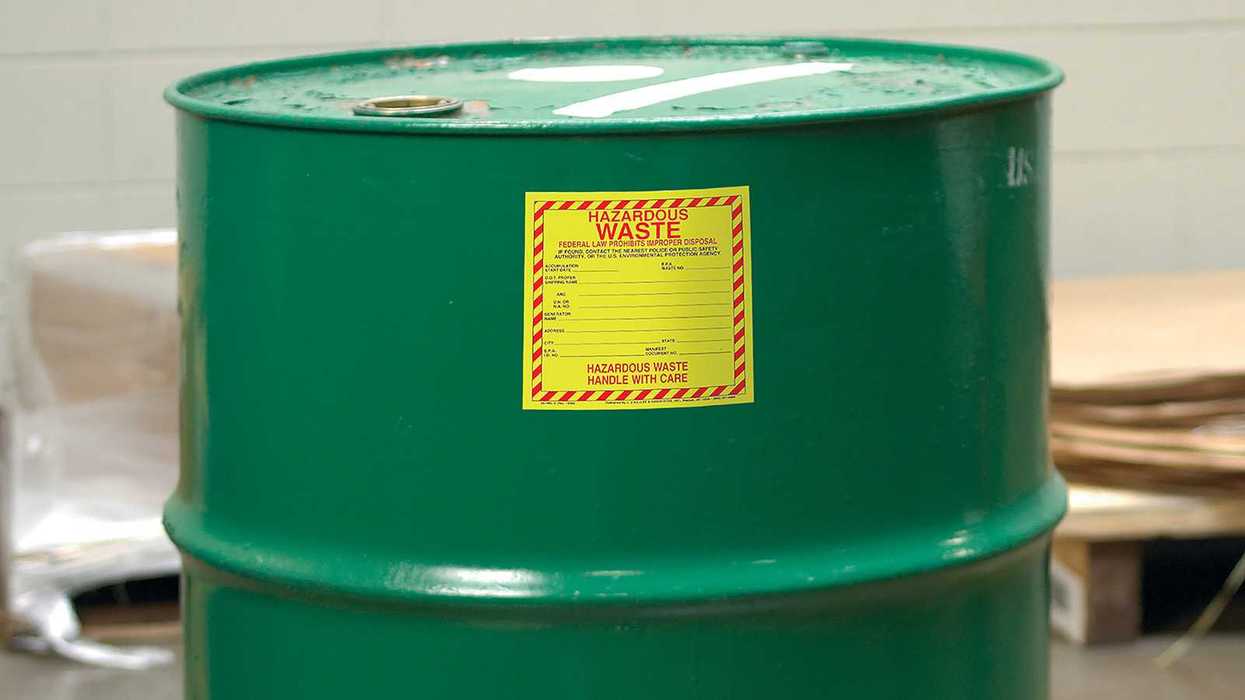
Hazardous waste e-Manifest report card: Tips for improving your facility’s manifests
With the school year fully underway, report cards will soon start to appear. But these performance evaluations aren’t limited to students in the classroom. A recent assessment serves as a “report card” for the federal e-Manifest system, an electronic platform that tracks hazardous waste shipments. And just like a student’s report card, the report reveals areas for improvement.
On August 11, 2026, the Environmental Protection Agency (EPA) Office of Inspector General (OIG) published Evaluation of the EPA’s e-Manifest System. The report identifies the leading errors made by hazardous waste handlers, including:
- Generators;
- Transporters; and
- Treatment, storage, and disposal facilities (TSDFs).
The e-Manifest system’s “report card” offers hazardous waste handlers valuable lessons to help them deliver A+ manifests.
e-Manifest report card results
The OIG analyzed 2022–2024 e-Manifest system data and identified the most frequent errors:
- Incorrect EPA identification (ID) numbers, and
- Overstated shipping volumes of hazardous waste.
The report also found that more than 99 percent of manifest submissions between 2019 and 2024 were “data + image” submissions. With this submission type, all hazardous waste handlers use a paper manifest. The TSDF transcribes the data from the paper manifest into an electronic data file and then uploads a scanned image of the final paper manifest and the electronic data file to the e-Manifest system.
The OIG found that most of the errors occurred when TSDFs manually transcribed data from the final paper manifest into the electronic data file.
Incorrect EPA ID numbers
According to the report, about 40 percent of hazardous waste generator EPA ID number entries and 50 percent of TSDF EPA ID number entries were invalid. Many errors were due to entering EPA ID numbers incorrectly, but a notable number of them were connected to very small quantity generators (VSQGs) using paper manifests. VSQGs need an EPA ID number only to use electronic manifests, not paper ones. On paper manifests, VSQGs frequently leave the EPA ID number blank or enter different information to indicate that they don’t have an EPA ID number.
Overstated shipping volumes
Overall, the OIG concluded the most significant errors involved overstated shipping volumes caused by incorrect manifest entries or inaccurate transcriptions of paper manifest data into the e-Manifest system.
Common errors made when copying data from the paper manifests into electronic data files included:
- Entering incorrect units of measurement (such as using tons for volumes that were calculated in pounds on the paper manifest);
- Omitting or placing decimal points for volumes in the wrong place (e.g., 941,250 tons instead of 94.1250 tons);
- Entering data that’s incorrect on the paper manifest; and
- Duplicating data entries.
Lessons for hazardous waste handlers
Although the OIG’s report was developed for EPA, it offers valuable insights for hazardous waste handlers required to fill out manifests.
Here are some helpful tips gleaned from the report that all hazardous waste handlers can use:
- Verify that your EPA ID number is entered correctly.
- Verify that the stated volumes match the units of measurement.
- Double-check decimal places.
- If you’re filling out a paper manifest, ensure the information is legible. If you encounter illegible information on a paper manifest, confirm the data with the handler who filled it out.
- Look for unreasonable information. For example, if the volume on the manifest indicates that thousands of tons (instead of thousands of pounds) of hazardous waste are being shipped, an error likely occurred.
If you don’t have one already, consider developing a checklist for filling out hazardous waste manifests. You can add the tips above and any other parts of your organization’s manifest process to the checklist.
Benefits of electronic manifests
The OIG’s report also emphasizes that electronic manifests offer specific advantages over paper manifests, especially when all hazardous waste handlers use them.
Potential improvements include the following:
- Increased data accuracy: Because hazardous waste handlers don’t have to copy data from paper manifests into the e-Manifest system, there’s a much lower risk of entering data incorrectly. Plus, electronic manifests solve the issue of illegible entries.
- Streamlined process: Electronic manifests simplify the data-entry process by removing the need to reenter data from paper manifests into the e-Manifest system.
- Easier recordkeeping: The e-Manifest system retains all manifest records, so electronic manifest users don’t have to keep paper copies (except for generators that use hybrid manifests).
- Compliance with possible future regulations: EPA proposed a rule in March 2026 that would require the use of electronic manifests (hybrid or fully electronic) and phase out the use of paper manifests. By shifting to electronic manifests now, hazardous waste handlers would be better prepared to comply with the rule if it’s finalized.
Key to remember: A recent report evaluating EPA’s e-Manifest system offers hazardous waste handlers valuable insights into common manifest errors to avoid.
Most Recent Highlights In Transportation
NewsWater PermittingChange NoticesChange NoticeWater ProgramsWater ReportingWater AnalysisVirginiaEnvironmentalWater MonitoringWater ProgramsEnglishFocus AreaCWA Compliance
2026-09-10T05:00:00Z
Virginia adds PFAS requirements to biosolids permit
Effective date: September 23, 2026
This applies to: Owners of sewage treatment works and other biosolids permit holders that land apply, market, or distribute treated sewage sludge (i.e., biosolids)
Description of change: The Virginia State Water Control Board’s revisions to two rules add requirements for per- and polyfluoroalkyl substances (PFAS) to biosolids permits.
Starting January 1, 2027, treatment works must test biosolids for PFAS and report concentrations of perfluorooctanoic acid (PFOA), perfluorooctane sulfonate (PFOS), and all other target analytes to the Department of Environmental Quality (DEQ) and to the entities that apply the biosolids from the treatment works. The requirement also applies to out-of-state sources of biosolids that will be land applied in the state.
Starting July 1, 2027, the DEQ will limit the distribution, marketing, and land application of PFAS-containing biosolids based on concentrations of PFOA and PFOS. Additionally, companies that land apply PFAS-containing biosolids must provide landowners with PFAS monitoring results at least 2 weeks before application.
Starting July 1, 2029, the DEQ will strengthen limits on the distribution, marketing, and land application of PFAS-containing biosolids, basing them on the combined concentrations of PFOA and PFOS.
NewsGreenhouse GasesAir EmissionsChange NoticesChange NoticeWasteCaliforniaCAA ComplianceEnvironmentalLand Disposal RestrictionsFocus AreaEnglishAir ProgramsAir Programs
2026-09-10T05:00:00Z
California updates Landfill Methane Regulation
Effective date: January 1, 2027
This applies to: Owners and operators of municipal solid waste landfills
Description of change: The California Air Resources Board (CARB) updated the Landfill Methane Regulation (LMR). Major amendments include:
- Requiring inspection and repair when operators are notified of a remotely detected methane emission plume;
- Making the landfill surface and component leak monitoring procedures more stringent by removing monitoring exemptions, reducing corrective action timelines, and increasing monitoring frequency at certain landfills;
- Establishing a process to evaluate and approve emerging alternative leak detection technologies and requiring tools (e.g., drone-mounted laser scanners) to identify leaks in inaccessible areas previously excluded from monitoring;
- Requiring the earlier installation and operation of gas collection infrastructure in new waste deposition areas;
- Limiting periods of gas collection and control system downtime and mitigating the emissions from unavoidable downtime;
- Increasing wellhead monitoring parameters and analysis and requiring response actions for out-of-range values and large value changes;
- Mandating more frequent monitoring, analysis, and mitigation measures (including cover improvements) and requiring more frequent subsurface temperature, oxygen, and liquid level monitoring; and
- Managing declining gas generation at closed landfills.
The changes to the LMR set stricter requirements than the federal environmental regulations for:
- Landfill gas collection and control,
- Component leak testing, and
- Surface emissions monitoring.
NewsTennesseeChange NoticeChange NoticesCAA ComplianceEnvironmentalAir PermittingFocus AreaEnglishAir ProgramsAir Programs
2026-09-10T05:00:00Z
Tennessee extends air quality construction general permit eligibility
Effective date: November 2, 2026
This applies to: Conditional major sources of emissions
Description of change: The Tennessee Air Pollution Control Board approved amendments granting eligibility for air quality construction general permit coverage to conditional major sources of emissions. The general permit must adequately limit the facility’s potential to emit and include recordkeeping requirements for demonstrating compliance.
Conditional major sources accept federally enforceable permit limitations to avoid obtaining an individual major source operating permit (i.e., complying with the Title V operating permit program).
Related state info: Clean air operating permits state comparison — Tennessee
NewsEnforcement and Audits - OSHANon-Point SourcesToxic Substances Control Act - EPASafety and Health Programs and TrainingToxic Subtances Control Act - EPATSCA ComplianceWater ProgramsWater QualityMonthly Roundup VideoMiningSafety and Health Programs and TrainingUSACWA ComplianceEnglishOSHA Emphasis ProgramsIndustry NewsWater PermittingSafety & HealthNew Source PerformanceGeneral Industry SafetySpecialized IndustriesEnvironmentalFocus AreaVideo
EHS Monthly Round Up - August 2026
In this August 2026 monthly roundup video, we'll review the most impactful environmental health and safety news.
Hi everyone! Welcome to the monthly news roundup video, where we’ll review the most impactful environmental health and safety news. Let’s take a look at what happened over the past month.
Citing elevated injury and illness rates, OSHA relaunched a National Emphasis Program, or NEP, on Warehousing and Distribution Center Operations. Retail operations are no longer targeted by this NEP, as they were previously. Inspectors will focus on common hazards in warehousing and distribution such as powered industrial vehicle operations, materials handling and storage, and fire protection. The NEP also offers OSHA greater discretion in whether to expand an inspection.
OSHA state-plan enforcement continued to gain momentum in fiscal year 2025. In an upward trend, inspection numbers, violation counts, and penalty amounts all increased. The latest data stem from the Occupational Safety and Health Plan Association’s Grassroots Worker Protection report.
OSHA’s Safe+Sound Week was held August 10 through the 16. The event gave employers an opportunity to highlight their safety and health programs and bring attention to common workplace hazards.
The Mine Safety and Health Administration reopened the comment period for proposed changes to the approval criteria for its mine roof control and ventilation plans. The new deadline for comments is September 30.
Turning to environmental news, EPA extended the compliance dates of certain Workplace Chemical Protection Program requirements for perchloroethylene and carbon tetrachloride. The revised deadlines affect facilities subject to the TSCA PCE and CTC risk management rules finalized in 2024.
And finally, EPA published a proposed 2027 general stormwater permit for construction. It applies to construction activities in areas where EPA is the NPDES permitting authority, including Massachusetts, New Hampshire, New Mexico, and the District of Columbia. If finalized, the rule will replace the existing 2022 permit, which expires in early 2027.
Thanks for tuning in to the monthly news roundup. We’ll see you next month!

NewsIndustry NewsIndustry NewsAir EmissionsEnvironmental Protection Agency (EPA)Renewable and Alternative EnergyBiofuelCAA ComplianceEnvironmentalFocus AreaEnglishAir ProgramsAir ProgramsUSA
2026-09-03T05:00:00Z
EPA extends RFS annual compliance report deadline
The Environmental Protection Agency (EPA) issued a prepublication of a final rule extending the Renewable Fuel Standard (RFS) annual compliance reporting deadline for the 2025 compliance year from September 1 to October 1, 2026.
Who’s impacted?
The RFS annual compliance report applies to obligated parties, including:
- Refiners of gasoline or diesel fuel (transportation fuel), and
- Importers of transportation fuel.
Under the RFS program, obligated parties with renewable volume obligations (RVOs) must retire enough Renewable Identification Numbers (RINs) to meet their RVOs for the calendar year.
What’s the change?
EPA extended the 2025 RFS compliance reporting deadline to October 1, 2026, giving obligated parties additional time to comply with their 2025 RVOs and submit their annual compliance reports.
Why the change?
EPA recently released its small refinery exemption (SRE) decisions for the 2025 compliance year, exempting 1.76 billion RINs for 29 small refineries. SREs affect the cost and availability of RINs for all obligated parties. The extension gives obligated parties more time to assess the impact of the SRE decisions and adjust their strategies before completing their 2025 RFS reporting obligations.
Key to remember: EPA has extended the Renewable Fuel Standard annual compliance reporting deadline from September 1 to October 1, 2026.
Most Recent Highlights In Safety & Health

NewsEnvironmental Management SystemsEMS PlanningCAA ComplianceEnvironmental Management SystemsIn-Depth ArticleCWA ComplianceWaste/HazWasteEnglishIndustry NewsEMS GoalsEMS Audits and EvaluationsEnvironmentalFocus AreaUSA
2026-09-01T05:00:00Z
10 operational changes that should trigger an environmental compliance review
Environmental compliance issues often arise not because regulations change, but because operations change.
A facility may replace equipment, begin using a new chemical, increase production, or modify a process for legitimate business reasons. However, even routine operational changes can affect permits, reporting obligations, waste generation, emissions, wastewater discharges, or stormwater exposure.
Organizations that review environmental impacts before implementing changes are better positioned to identify compliance obligations early and avoid costly surprises.
What's an environmental compliance review?
An environmental compliance review is a structured evaluation of how a proposed change could affect a facility's environmental obligations.
Many organizations incorporate environmental reviews into an environmental management system (EMS) or formal change-management process. These procedures help ensure that environmental obligations are evaluated before operational changes are implemented. The updated ISO 14001 standard places greater emphasis on managing changes that may affect environmental performance, reinforcing the need to assess environmental impacts before decisions are made.
The review doesn't need to be complicated. In many cases, it involves determining whether the change could affect air permits, wastewater discharges, stormwater permits, hazardous waste management, chemical reporting, spill prevention requirements, or other environmental programs.
The goal is to identify environmental impacts before a change is implemented rather than after a regulator, auditor, or inspector discovers a problem.
Production increases
Increasing production is often viewed as a business decision rather than an environmental one. However, greater production may increase air emissions, wastewater generation, chemical usage, and waste generation.
Facilities should evaluate whether higher throughput could affect permit limits, reporting thresholds, or compliance obligations before production levels increase.
New chemicals or raw materials
A new chemical can trigger a wide range of environmental requirements.
Changes in raw materials may affect hazardous waste determinations, emergency planning requirements, air emissions calculations, Toxics Release Inventory reporting, spill prevention planning, or wastewater characteristics.
Before purchasing or introducing a new chemical, facilities should evaluate its environmental implications and ensure required controls are in place.
Equipment replacements and upgrades
Many organizations assume replacing equipment is simply a maintenance activity. In reality, equipment changes can have environmental consequences.
Replacing a boiler, coating operation, storage tank, dust collector, scrubber, or process equipment may affect emissions, waste streams, monitoring requirements, or permit applicability. Even when equipment serves the same function, environmental impacts should be evaluated before installation.
Process modifications
Changing how a product is manufactured can create environmental consequences even when production levels stay the same.
New process steps, altered operating conditions, different fuels, or modified treatment systems can affect emissions, waste generation, water usage, and permit conditions. Process changes should be reviewed to determine whether existing permits and operating procedures remain appropriate.
Facility expansions
Building additions, new production lines, warehouse expansions, and site development projects often involve environmental considerations beyond construction activities.
Organizations should evaluate potential impacts on air permits, stormwater management, wastewater infrastructure, storage capacity, and environmental monitoring programs before expansion projects begin.
Changes in waste management practices
Facilities occasionally change waste vendors, storage practices, recycling programs, treatment methods, or waste handling procedures to improve efficiency or reduce costs.
While these changes may appear administrative, they can affect generator status, accumulation practices, recordkeeping obligations, and waste determinations. Environmental personnel should review proposed changes before implementation.
New products or services
New products often require new materials, equipment, or processes that may affect existing environmental obligations.
Contractor activities
Contractor activities involving chemicals, waste management, tank cleaning, painting, excavation, demolition, or maintenance may create environmental compliance implications that warrant review.
Property and infrastructure changes
Changes to storage areas, containment systems, drainage patterns, tanks, or utilities can affect stormwater exposure and other environmental obligations.
Acquisitions and ownership changes
Acquiring a facility or business can introduce new permits, reporting obligations, and compliance responsibilities that should be evaluated during due diligence.
Train employees to recognize when a review may be needed
Environmental departments cannot review changes they never hear about.
Engineering, maintenance, operations, purchasing, project management, and production personnel are often the first to learn about proposed changes. Providing basic awareness training can help these groups recognize situations that may have environmental implications.
Employees don't need to become environmental experts. Instead, they should know when to notify EHS and ask whether a compliance review is warranted. A simple "check with EHS before proceeding" expectation can prevent significant compliance problems and reduce the likelihood that environmental requirements will be discovered too late.
Key to remember: Many environmental compliance issues begin with an operational change. Establishing a process to identify and review changes before implementation can help organizations avoid permit problems, reporting errors, and unexpected regulatory obligations.

NewsIndustry NewsWater ProgramsWater QualityEnvironmental Protection Agency (EPA)Industrial WastewaterEnvironmentalIn-Depth ArticleCWA ComplianceEnglishFocus AreaUSA
2026-08-26T05:00:00Z
National wastewater pretreatment program: What type of industrial user is your facility?
Before the wastewater can flow from your facility into a municipal treatment plant, there’s something you need to know: What type of industrial user is your facility? The answer to this question determines the federal environmental regulations your facility must meet.
The Environmental Protection Agency (EPA) regulates wastewater discharges from industrial and commercial facilities to publicly owned treatment works (POTWs) through the National Pretreatment Program. These facilities, known as industrial users (IUs), must obtain a permit or other control mechanism to send wastewater to a POTW. However, IUs must comply with all applicable federal, state, and local pretreatment requirements, regardless of whether the facility has been issued a permit or other control mechanism.
The National Pretreatment Program applies to:
- Industrial users (IUs),
- Significant IUs (SIUs), and
- Categorical IUs (CIUs).
EPA’s regulations at 40 CFR Part 403 contain compliance requirements for all IUs as well as additional requirements for SIUs and CIUs. To know which regulations to comply with, you must identify the types of IUs that apply to your facility.
Is my facility an IU?
The first type of user is the easiest determination to make. If your industrial or commercial facility discharges wastewater to a POTW, it’s an IU.
Is my facility an SIU?
If your facility can answer “yes” to any of these four questions, it qualifies as an SIU:
- Is the facility subject to the categorical pretreatment standards under 403.6 and Subchapter N?
- Does the facility discharge an average of at least 25,000 gallons daily of process wastewater to the POTW (not including sanitary, noncontact cooling, and boiler blowdown wastewater)?
- Does the facility contribute a process waste stream that makes up at least 5 percent of the POTW’s average dry weather hydraulic or organic capacity?
- Is your facility designated as an SIU by the control authority (i.e., the POTW, state, or EPA)?
Even if the first three criteria don’t apply, the control authority may designate your facility as an SIU if it determines that there’s a reasonable potential for your facility’s wastewater discharges:
- To adversely affect the POTW’s operation, or
- To violate the pretreatment standards.
Limited exceptions allow the control authority to designate a facility as a non-significant CIU (if the facility meets specific conditions according to 403.3(v)(2)) or to determine that the facility has no reasonable potential to harm POTW operations or violate the standards (403.3(v)(3)).
Is my facility a CIU?
The National Pretreatment Program has rules that apply to specific industrial processes, known as categorical pretreatment standards. If your facility is subject to a categorical requirement in Parts 405–471, it’s considered a CIU. Examples of covered categories include:
- Metal finishing (Part 433);
- Organic chemical, plastic, and synthetic fiber manufacturing (Part 414); and
- Petroleum refining (Part 419).
Submit a category determination request
The control authority director determines whether any of the categorical standards apply to a facility through a process called “categorical determination.” IUs may submit a category determination request when a new categorical standard is established that could apply to their existing facility. Additionally, EPA requires IUs to request a determination when:
- An existing facility adds or changes an operation or process that may make it subject to an existing categorical pretreatment standard, and
- A facility becomes a new source of discharge to a POTW.
The director will issue a final decision as to whether any of the regulations in Parts 405–471 apply to the facility.
Which pretreatment regulations apply?
The control authority will include the applicable regulations in the facility’s permit or implement the requirements through other control mechanisms. These will be at least as stringent as the following federal standards.
Requirements for all IUs
General and specific prohibitions apply to all types of IUs, banning facilities from discharging pollutants and categories of pollutants that can cause pass through or interference at the POTW.
Additionally, all IUs must report specific discharges and changes to existing discharge practices to the control authority.
Requirements for SIUs
SIUs have additional compliance obligations, such as:
- Conducting self-monitoring and submitting periodic compliance reports every 6 months for SIUs not subject to categorical standards, and
- Developing and implementing a slug control plan if required.
Requirements for CIUs
CIUs also have more requirements, including (but not limited to):
- The applicable categorical pretreatment standards (Parts 405–471),
- The categorical standards at 403.6, and
- Additional reporting and notification requirements.
Understanding the types of IUs that characterize your facility can help clarify which federal wastewater rules apply.
Key to remember: The type of industrial user determines the National Pretreatment Program requirements applicable to facilities that discharge wastewater to publicly owned treatment plants.
NewsEnglishToxic Substances Control Act - EPAChange NoticesChange NoticeTSCA ComplianceWasteToxic Substances - EPAEnvironmentalSolid WasteWaste/HazWasteNew HampshireFocus Area
2026-08-25T05:00:00Z
New Hampshire adopts PFAS product regulations
Effective date: July 17, 2026
This applies to: Any entity that manufactures or supplies specific consumer products with intentionally added per- and polyfluoroalkyl substances (PFAS)
Description of change: The New Hampshire Department of Environmental Services adopted rules to implement the Per- and Polyfluoroalkyl Substances Products Control Program, which bans certain PFAS-added consumer products from being sold, offered for sale, or distributed for sale or promotional purposes.
The regulations:
- Ban certain products with intentionally added PFAS from being sold or distributed in New Hampshire (unless specifically exempt);
- Establish the certificate of compliance (COC) process, under which manufacturers and suppliers must provide a COC upon request of the department to demonstrate compliance; and
- Establish exemptions.
The ban applies to PFAS-added products manufactured on or after January 1, 2027. Product categories include:
- Carpets and rugs;
- Cosmetics;
- Feminine hygiene products;
- Food packaging and containers;
- Juvenile products;
- Textile furnishings;
- Textile treatments;
- Upholstered furniture; and
- Waxes for use on boats; skis; surfboards; bodyboards; and skimboards.
Examples of exempted products include all products manufactured before January 1, 2027; secondhand products; and products with at least 85 percent recycled content.
NewsWater PermittingChange NoticesChange NoticeWater ProgramsWater QualityEnvironmentalWater ProgramsEnglishNew HampshireFocus AreaCWA Compliance
2026-08-25T05:00:00Z
New Hampshire requires electronic applications for AOT permits
Effective date: August 6, 2026
This applies to: Projects that will disturb more than 100,000 square feet of terrain (or 50,000 square feet if it’s within the protected shoreline) and projects that will disturb any area with a 25 percent or steeper land slope that’s within 50 feet of surface water
Description of change: The New Hampshire Department of Environmental Services amended the regulations for Alteration of Terrain (AOT) permitting, requiring applicants to submit all permit applications and permits by notification online through its new e-permitting system, NHEnviro.
The department also made other changes, such as:
- Expanding the general permit rule to cover specific steep slope projects, and
- Exempting excavation and mining projects from the 5-acre open area disturbance limit.

NewsIndustry NewsEnglishEnvironmental Management SystemsSustainabilityIn-Depth ArticleEnvironmentalEMS Roles and ResponsibilitiesEnvironmental Management SystemsFocus AreaUSA
2026-08-21T05:00:00Z
Maintenance and environmental compliance go hand in hand
Environmental compliance is often viewed as the responsibility of the environmental, health, and safety (EHS) department. In reality, many compliance successes and failures occur on the plant floor, in maintenance shops, and around equipment managed by maintenance personnel.
Maintenance employees regularly handle used oil, inspect tanks, repair air pollution control equipment, respond to spills, and maintain secondary containment systems. Their daily decisions can directly affect compliance with federal, state, and local environmental requirements. As facilities face increased scrutiny of air emissions, waste management, and spill prevention programs, coordination between environmental and maintenance personnel has become increasingly important. That's why one of the most valuable members of an environmental compliance team is often someone from maintenance.
Used oil management starts in the shop
Many maintenance departments generate used oil from equipment servicing, vehicle maintenance, and hydraulic system repairs. While used oil can often be managed under streamlined regulations, improper handling can quickly create compliance problems.
Common issues include storing used oil in unlabeled containers, mixing used oil with hazardous waste, and failing to address leaks from storage containers. Even small mistakes can increase disposal costs or change how the waste must be managed.
Maintenance personnel can help reduce these risks by ensuring used oil containers remain closed when not in use, are properly labeled, and are routinely inspected for signs of leakage or deterioration.
Spill response depends on employees closest to the release
When a spill occurs, maintenance staff members are often among the first employees on scene.
Their actions during the first few minutes can affect both environmental impacts and regulatory obligations. Quickly stopping the source of a release, protecting drains, and containing spilled material can prevent a minor incident from becoming a reportable event.
Facilities should ensure maintenance personnel understand spill response procedures, know where response equipment is located, and recognize when environmental staff or emergency responders must be notified.
Even facilities with formal spill response plans depend on maintenance employees to implement many of the initial response actions.
Air compliance requires reliable equipment
Many facilities rely on air pollution control devices such as baghouses, scrubbers, thermal oxidizers, and dust collection systems to comply with permit requirements.
Environmental managers may be responsible for reporting emissions and maintaining permit records, but maintenance staff members are often responsible for keeping control equipment operating properly.
A failed pressure gauge, malfunctioning fan, broken duct connection, or neglected preventive maintenance task can affect emissions performance and potentially result in permit deviations.
Facilities should ensure maintenance programs include environmental control equipment and that maintenance personnel understand which equipment has environmental significance.
Tanks and containment need routine attention
Storage tanks and secondary containment systems are another area where maintenance and environmental responsibilities overlap.
Maintenance personnel may also maintain stormwater controls, drainage structures, and outdoor storage areas that affect permit compliance.
Routine inspections can identify corrosion, damaged coatings, leaking fittings, deteriorated hoses, and cracks before they become larger problems. These conditions may not seem urgent from an operational perspective, but they can increase the risk of releases and regulatory violations.
Facilities should establish inspection procedures, clearly define responsibilities, and document findings. A simple inspection program can often identify problems early, reducing both environmental risk and repair costs.
Communication helps prevent violations
Many environmental compliance issues occur when operational changes are made without considering environmental impacts.
New equipment, replacement tanks, process modifications, and maintenance projects can affect air emissions, waste generation, chemical storage, and spill prevention requirements. Environmental staff may not become aware of these changes until after installation.
Regular communication between maintenance and environmental personnel can help identify potential compliance concerns before work begins. In many cases, a short conversation during project planning can prevent significant compliance challenges later.
Building a partnership between maintenance and environmental teams
Environmental compliance is most effective when it's integrated into daily operations. Maintenance teams often have the best understanding of equipment conditions, storage systems, and operational changes occurring throughout a facility.
Environmental awareness training, maintenance involvement in inspections, and regular communication can strengthen compliance programs and identify problems sooner.
Environmental managers bring regulatory expertise. Maintenance personnel bring operational knowledge. Together, they create a stronger foundation for compliance than either group can achieve alone.
Key to remember: Environmental compliance isn't solely an EHS responsibility. Maintenance staff members play a critical role in preventing spills, managing used oil, maintaining compliance equipment, and identifying problems before they become violations.
Most Recent Highlights In Human Resources
NewsNon-Point SourcesPublicly Owned Treatment WorksMunicipal WastewaterChange NoticesChange NoticeWater ProgramsIndustrial WastewaterVirginiaEnvironmentalWater MonitoringCWA ComplianceEnglishFocus Area
2026-08-14T05:00:00Z
Virginia requires PFAS monitoring for wastewater
Effective date: September 9, 2026
This applies to: Publicly owned treatment works (POTW)
Description of change: The Virginia State Water Control Board adopted amendments to the Virginia Pollutant Discharge Elimination System (VPDES) Permit regulation. The updated regulations:
- Require POTWs to mandate quarterly discharge monitoring for per- and polyfluoroalkyl substances (PFAS) for certain industrial user categories,
- Establish a 30-day reporting deadline for monitoring results, and
- Specify acceptable test methods.
Covered industrial categories include:
- PFAS manufacturing facilities;
- Electroplating and metal finishing facilities using PFAS;
- Semiconductor and circuit board facilities using PFAS;
- Paper and packaging manufacturing facilities using PFAS;
- Textile mills and tanneries using PFAS and leather, fabric, and carpet treaters using PFAS;
- Centralized waste treatment industrial facilities;
- Industrial launderers; and
- Any other facility or site that’s a source of PFAS (such as landfills).
The POTWs must report results quarterly to the Virginia Department of Environmental Quality. Additionally, industrial users must report monitoring results within 30 days of receiving the laboratory results.
Related state info: Industrial water permitting — Virginia
NewsGroundwaterChange NoticesChange NoticeWater ProgramsWater ReportingVirginiaEnvironmentalWater ProgramsEnglishFocus AreaCWA Compliance
2026-08-14T05:00:00Z
Virginia amends water withdrawal reporting requirements
Effective date: September 9, 2026
This applies to: Water users providing water to another person off-site
Description of the change: The Virginia State Water Control Board amended water withdrawal reporting requirements for water users providing water to another person off-site. These users are now required to report monthly (or quarterly if applicable) the total volumes of potable water and reclaimed water that they provided:
- To a data center with an air permit from the Virginia Department of Environmental Quality; and
- For domestic, commercial, industrial, and all other non-categorized purposes.
The reporting requirement takes effect on January 1, 2027.

NewsIndustry NewsToxic Substances Control Act - EPAToxic Subtances Control Act - EPATSCA ComplianceToxic Substances - EPAEnvironmental Protection Agency (EPA)EnvironmentalIn-Depth ArticleEnglishFocus AreaUSA
2026-08-14T05:00:00Z
TSCA Exposure Control Plan: 5 FAQs answered
Do you have a toxic work environment — literally? For facilities that handle chemicals, the answer is likely yes. And for specific chemicals, federal environmental regulations require facilities to protect workers by controlling their exposure to these substances.
The Workplace Chemical Protection Program (WCPP) is one way the Environmental Protection Agency (EPA) protects potentially exposed workers from hazardous chemicals in the workplace. And at the core of the WCPP is the Exposure Control Plan (ECP); it’s the roadmap documenting how a facility will keep its employees safe. If your business manufactures (including imports), processes, distributes, uses, or disposes of a chemical substance subject to risk management regulations under Section 6 of the Toxic Substances Control Act (TSCA), an ECP may be required.
Consider these FAQs to help you implement an effective ECP that guards your workers against a “toxic work environment."
What’s an ECP?
An ECP is a strategic document explaining:
- What exposure controls the facility takes to reduce occupational exposure to a regulated chemical to or below EPA’s exposure limits; and
- How the facility will implement the other WCPP requirements (such as implementing exposure controls, establishing regulated areas, and providing training).
Any time a facility uses a TSCA Section 6 chemical that’s subject to the WCPP regulations (40 CFR Part 751), an ECP is required. This applies even if exposure monitoring determines that the concentration of a regulated chemical substance is below the existing chemical exposure limit or action level.
How do you develop an ECP?
Owners or operators must establish an ECP using the hierarchy of controls framework, following a sequence of actions to identify the control measures that will best reduce hazardous workplace exposures. The hierarchy of controls is ordered from the most to the least effective methods:
- Elimination stops the use of the chemical.
- Substitution replaces the chemical with a safer alternative.
- Engineering controls prevent people from coming into contact with the chemical (e.g., local exhaust ventilation and protective barriers).
- Administrative controls establish work practices that reduce the duration, frequency, or intensity of chemical exposure (like limiting access to exposure areas).
- Personal protective equipment (PPE), such as respirators, reduces or mitigates exposure.
EPA requires owners or operators to consider every level of the hierarchy. PPE should be a last resort and used only when other controls aren’t possible or when other methods don’t sufficiently reduce hazardous exposure to safe levels.
What’s in an ECP?
Generally, an ECP must include the following:
- The exposure control measures that were considered using the hierarchy of controls;
- The reason why each control measure was selected or not selected based on feasibility, effectiveness, or other relevant information;
- The actions required to implement the selected controls (e.g., installation, maintenance, training);
- The regulated areas (workplace locations where worker exposure may exceed exposure limits), how they’re identified, and the people authorized to enter them;
- The process for reviewing and updating the ECP to ensure that the exposure controls are effective, updated when needed, and properly implemented; and
- The procedures for responding to new sources of or increases in exposure to the regulated chemical, including taking corrective actions.
Owners or operators must review and update ECPs when making major changes to the WCPP. However, EPA’s chemical-specific rules limit the length of time between reviews. The review frequency in the chemical-specific rule is the minimum requirement.
For example, the perchloroethylene rule (751.607) requires facilities to review and update the ECP at least every 5 years, while the chrysotile asbestos rule (751.511) requires facilities to review and update the ECP at least annually.
Can an ECP be added to an existing safety program?
Yes! Owners or operators can either:
- Incorporate the ECP into an existing industrial hygiene or chemical management program (like a chemical hygiene plan) if the ECP contains all the required components, or
- Develop an individual document for the ECP.
Can one ECP be used for multiple regulated chemicals?
EPA allows owners or operators to develop one standalone ECP that covers multiple chemicals subject to TSCA Section 6 regulations if the plan complies with each chemical’s specific requirements.
Key to remember: The Exposure Control Plan explains how a facility will implement the Workplace Chemical Protection Program and the exposure controls needed to protect workers from hazardous chemical exposures.

NewsIndustry NewsCERCLA, SARA, EPCRA CERCLA, SARA, EPCRATSCA ComplianceWaste/HazWasteCAA ComplianceEnvironmentalIn-Depth ArticleCWA ComplianceEnglishSARA ComplianceFocus AreaUSA
2026-08-13T05:00:00Z
The environmental compliance program hiding in your chemical inventory
Environmental programs may appear unrelated, but most rely on accurate information about the chemicals a facility uses, stores, or generates. Air permits, hazardous waste determinations, emergency planning, chemical reporting, and spill response programs all depend on knowing what chemicals are on site.
Yet chemical inventory management is often divided among multiple departments. Purchasing tracks what comes in, operations tracks what is used, maintenance stores products for later use, and environmental staff may only become involved when reporting deadlines approach. When inventories are incomplete or outdated, compliance problems can quickly follow.
A single source of truth supports multiple programs
Before a facility can determine its environmental obligations, it must first understand what chemicals are present on site.
The information contained in a chemical inventory supports numerous environmental programs, and different inventory data serve different purposes. Product quantities may affect EPCRA reporting. Chemical constituents help identify TRI chemicals and estimate releases. Usage data support air emissions calculations, while information about spent materials can help determine whether hazardous waste rules apply. Storage quantities, container types, and locations may also affect spill prevention and emergency response planning.
Consider a facility that introduces a new solvent for equipment cleaning. Purchasing may view it as a routine substitution, but the environmental implications may be much broader. The solvent may contain volatile organic compounds (VOCs) that affect air permits, TRI-listed constituents, or chemicals subject to EPCRA. If the spent solvent is discarded, hazardous waste regulations may also come into play. A complete inventory and chemical review process can identify these issues before the product enters service.
When departments maintain separate inventories using different data sources, inconsistencies can develop. One database may show a product as active while another indicates it is no longer used. A chemical stored in a maintenance room may never make its way into environmental records. These gaps can create reporting errors and complicate inspections.
Small changes can have large compliance impacts
Chemical inventories are not static. New products are introduced, suppliers change formulations, production processes evolve, and maintenance departments purchase materials to address operational needs.
Even seemingly minor changes can affect compliance programs. A reformulated product may contain a reportable constituent that it did not contain previously. A new coating operation may increase air emissions. Additional chemical storage may trigger emergency planning requirements or affect secondary containment needs.
Without a chemical review process involving environmental, safety, operations, and purchasing personnel, facilities may not recognize these implications until well after a change has occurred. This approach helps identify regulatory concerns before products are ordered, stored, or put into use.
Inspections often begin with inventory questions
Environmental inspectors often compare records against actual site conditions. Chemical inventories frequently become a focal point because they intersect with multiple regulatory programs.
Inspectors may compare inventory records with container labels, safety data sheets (SDSs), storage areas, waste accumulation locations, or reported chemical quantities. Discrepancies can raise questions about reporting accuracy and program oversight.
A well-maintained inventory shows that a facility has systems to manage compliance and allows personnel to quickly answer questions about chemical storage and use.
Building a stronger inventory program
The challenge is deciding what information to track and how to keep it current. An effective chemical inventory program does not need to be complicated, but it should be consistent.
At a minimum, facilities should track product names, storage locations, quantities on site, usage rates, SDS information, and key chemical constituents. Different data elements support different programs. Storage quantities may affect EPCRA reporting, chemical constituents may drive TRI evaluations, and usage rates often provide critical data for air emissions calculations. Some organizations also identify whether a product contains TRI chemicals, hazardous air pollutants (HAPs), VOCs, PFAS, or other substances subject to reporting or permitting requirements. Centralizing this information can simplify environmental evaluations throughout the year.
Facilities should establish clear ownership of inventory data, periodically verify inventory accuracy in the field, review new chemicals before purchase, and ensure information is shared across departments. Environmental staff should also periodically compare inventory data against reporting submissions, air permits, waste records, and emergency planning documentation. The goal is not simply to maintain a list of chemicals, but to create a reliable foundation for environmental decision making. A well-managed inventory supports air permitting, chemical reporting, emergency planning, spill prevention, and hazardous waste programs. When inventory data is accurate and readily available, environmental professionals spend less time chasing information and more time managing compliance risks.
Key to remember: Chemical inventory management is more than a recordkeeping exercise. A complete and accurate inventory provides the information needed to support air, waste, emergency planning, spill prevention, and chemical reporting programs, helping facilities identify compliance obligations before problems arise.

NewsHazardous WasteSARA ComplianceCommunity Right to KnowPesticidesMine SafetyPesticide Registration and LabelingTSCA ComplianceWater ProgramsBenzeneWater QualitySafety Data Sheet ReportingMiningWaste/HazWasteTier II Inventory ReportingEnforcement and Audits - OSHASafety & HealthToxic and Hazardous Substances - OSHAEnvironmentalAir ProgramsToxic and Hazardous Substances - OSHAVideoAir QualityEnforcement and Audits - OSHACERCLA, SARA, EPCRAToxic Substances Control Act - EPAAir EmissionsMonthly Roundup VideoCAA ComplianceCWA ComplianceEnglishIndustry News
EHS Monthly Round Up - July 2026
In this July 2026 monthly roundup video, we'll review the most impactful environmental health and safety news.
Hi everyone! Welcome to the monthly news roundup video, where we’ll review the most impactful environmental health and safety news. Let’s take a look at what happened over the past month.
OSHA published its 2026 regulatory agenda on July 3. Of note, the agency projects an April 2027 date for the Emergency Response final rule, and the Heat Illness proposal is slated to be finalized in October 2027. In November 2026, OSHA also expects to publish a final rule addressing the use of subpoenas during investigations.
OSHA reopened the comment period for 14 chemical-specific proposals. This allows the public 30 days to comment on recommendations made by OSHA’s Advisory Committee on Construction Safety and Health.
OSHA updated its Voluntary Protection Programs, which recognize workplaces with strong safety and health programs and low injury rates. The changes align with the seven core elements in the agency’s Recommended Practices for Safety and Health Programs.
The Mine Safety and Health Administration withdrew 4 regulations that it says address outdated effective dates and requirements for various industry equipment and procedures. These relate to conveyor belts, blacksmith shops, diesel emission limits, and permissible flame safety lamps.
Turning to environmental news, EPA released detailed instructions and deadlines for pesticide registrants to begin compliance with the bilingual labeling requirements in the My PeST application. The first compliance deadline was July 31.
EPA aligned regulations under EPCRA Sections 311 and 312 with OSHA’s Hazard Communication amendments for hazardous chemical reporting requirements. Facilities must use OSHA’s hazard classes with their categories for safety data sheet submissions and hazardous chemical inventory reports required under EPCRA Sections 311 and 312.
And finally, EPA published its 2026 regulatory agenda on July 3. Many of the proposed and final rules support the agency’s continued deregulatory efforts and may impact regulatory compliance with air, land, and water rules.
Thanks for tuning in to the monthly news roundup. We’ll see you next month!
New Network Poll


No active poll
Please come back soon!
Most Popular Highlights In Environmental
NewsGreenhouse GasesIndustry NewsIndustry NewsEnvironmental Protection Agency (EPA)Air ProgramsCAA ComplianceEnvironmentalEnglishFocus AreaAir ProgramsUSA
2026-09-17T05:00:00Z
EPA repeals most 2024 Carbon Pollution Standards for fossil fuel-fired power plants
On September 17, 2026, the Environmental Protection Agency (EPA) finalized a rule repealing a majority of the greenhouse gas (GHG) emission requirements established by the 2024 Carbon Pollution Standards (CPS) for fossil fuel-fired power plants. The agency also issued a supplemental proposed rule to rescind all other GHG emission standards for fossil fuel-fired power plants.
Who’s impacted?
EPA’s final rule applies to the fossil fuel-fired electric generating unit (EGU) source category, including:
- Fossil fuel-fired electric utility steam generating units, and
- Stationary combustion turbine EGUs.
The final rule specifically impacts:
- Existing fossil fuel-fired steam generating EGUs (subject to 40 CFR Part 60 Subpart UUUUb),
- Coal-fired steam generating units conducting a large modification (subject to Part 60 Subpart TTTTa), and
- New base load stationary combustion turbines (subject to Part 60 Subpart TTTTa).
Final rule: Repeal 2024 CPS regulations
The agency finalized the alternative option from its June 2025 proposed rule, repealing parts of the 2024 CPS and revising the associated best system of emission reduction (BSER) determinations.
EPA’s final rule removes most of the 2024 CPS regulations, including:
- The emission guidelines for existing coal-, oil-, and natural gas-fired steam generating units (the entirety of Part 60 Subpart UUUUb);
- The carbon capture and sequestration/storage (CCS)-based standards for coal-fired EGUs conducting a large modification; and
- The CCS-based standards for new base load stationary combustion turbines (the Phase 2 standards).
The final rule doesn’t repeal or revise the 2024 CPS efficiency-based standards for new stationary combustion turbines (the Phase 1 standards). However, EPA addresses them in the supplemental proposed rule.
Proposed rule: Repeal remaining GHG emission requirements
EPA also issued a supplemental proposed rule to rescind all remaining GHG emission requirements for fossil fuel-fired power plants, including the Phase 1 standards for new stationary combustion turbines. It would require the same regulatory changes as the June 2025 proposed rule but for different reasons.
The supplemental proposed rule would repeal all GHG emission standards in 60 Subparts TTTT and TTTTa for the fossil fuel-fired EGU source category, including the 2015 New Source Performance Standards (NSPS) and the 2024 CPS.
Specifically, EPA would repeal the:
- Partial CCS-based standards for new and efficiency-based standards for reconstructed or modified steam generating units and integrated gasification combined cycle facilities, and
- Efficiency-based standards for new or reconstructed stationary combustion turbines.
If the rule is finalized as proposed, fossil fuel-fired EGUs would no longer be required to comply with the GHG emission standards established under the 2015 NSPS or the 2024 CPS regulations.
Key to remember: EPA’s final rule repeals a majority of the greenhouse gas (GHG) emission standards established by the 2024 Carbon Pollution Standards for fossil fuel-fired power plants. The agency also proposes to remove the remaining GHG emission requirements for fossil fuel-fired power plants.

NewsIndustry NewsIndustry NewsToxic Substances Control Act - EPAToxic Subtances Control Act - EPATSCA ComplianceToxic Substances - EPAEnvironmental Protection Agency (EPA)EnvironmentalEnglishFocus AreaUSA
2026-04-13T05:00:00Z
EPA delays TSCA Section 8(a)(7) PFAS reporting timeline again
On April 13, 2026, the Environmental Protection Agency (EPA) published a final rule that further delays the submission period for the one-time report required of manufacturers on per- and polyfluoroalkyl substances (PFAS) by the PFAS Reporting and Recordkeeping Rule (PFAS Reporting Rule).
This final rule pushes the starting submission period to either 60 days after the effective date of a future final rule updating the PFAS Reporting Rule or January 31, 2027, whichever is earlier.
Who’s impacted?
Established under Toxic Substances Control Act (TSCA) Section 8(a)(7), the PFAS Reporting Rule (40 CFR Part 705) requires any business that manufactured (including imported) any PFAS or PFAS-containing article between 2011 and 2022 to report. Covered manufacturers and importers must submit information on:
- Chemical identity, uses, and volumes made and processed;
- Byproducts;
- Environmental and health effects;
- Worker exposure; and
- Disposal.
What’s the new timeline?
The opening submission period was moved from April 13, 2026, to either 60 days after the effective date of a future final PFAS Reporting Rule or January 31, 2027, whichever is earlier.
Most manufacturers have 6 months to submit the report. Small manufacturers reporting only as importers of PFAS-containing articles have 1 year.
| TSCA Section 8(a)(7) PFAS Reporting Rule submission period | ||
|---|---|---|
| Start date | End date | |
| Most manufacturers | 60 days from effective date of final PFAS Reporting Rule or January 31, 2027 (whichever is earlier) | 6 months from start date or July 31, 2027 (whichever is earlier) |
| Small manufacturers reporting solely as PFAS article importers | 60 days from effective date of final PFAS Reporting Rule or January 31, 2027 (whichever is earlier) | 1 year from start date or January 31, 2028 (whichever is earlier) |
Why the delay?
In November 2025, the agency proposed updates to the PFAS Reporting Rule. EPA has delayed the reporting period to give the agency time to issue a final rule (expected later this year).
Key to remember: EPA has delayed the starting submission deadline for the TSCA Section 8(a)(7) PFAS Reporting Rule from April 2026 to no later than January 2027.

NewsEnforcement and Audits - OSHAPesticidesWorker Protection from PesticidesIn-Depth ArticleHazard CommunicationHR ManagementEnglishUSAIndustry NewsOSHA InspectionsSafety & HealthContingent WorkforceConstruction SafetyGeneral Industry SafetyAgriculture SafetyMaritime SafetyEnvironmentalHazard CommunicationTemporary EmployeesFocus AreaPesticidesHuman Resources
2026-05-26T05:00:00Z
OSHA packs new HazCom directive with enforcement clues
The first compliance date for the amended Hazard Communication (HazCom) standard has arrived, and OSHA finally issued its updated directive. The CPL instructs OSHA officers on how to conduct inspections and issue citations under the standard. However, it also provides chemical manufacturers, importers, distributors, and employers with insight into what officers will be assessing.
In effect, this CPL translates regulatory text into inspector expectations. It shows what adherence to the standard looks like in practice. That makes it a critical resource given recent and upcoming dates at 29 CFR 1910.1200(j).
CPL rewritten for the 2024 standard
On May 19, 2026, OSHA posted a revised CPL 02-02-079, “Inspection Procedures for the Hazard Communication Standard (HCS 2024),” replacing the July 9, 2015, version. The 132-page document reflects the reconfigured HazCom standard published May 20, 2024, effective on July 19, 2024, along with corrections issued through early 2026.
The agency designed this enforcement playbook to maintain uniform inspections during the transition period and after full implementation. Because of the extensive regulatory changes to definitions, hazard classification, labeling, safety data sheets, and trade secrets, the CPL is not a light refresh.
For those familiar with the rulemaking, the new CPL edits will not be surprising. Still, the directive should provide more clarity than the regulatory text.
Front matter and appendices
Updates to Sections I to IX are typical of a CPL, including:
- Cancellation of the 2015 CPL;
- A modified title and references to the 2024 final rule and corrections;
- Alignment with revisions 7 and 8 of the United Nations Globally Harmonized System of Classification and Labelling of Chemicals (GHS); and
- A new summary of changes, historical background, and compliance dates.
OSHA also modernized appendices for dates, hazard lists, pictogram hazards, SDS review guidance, chemical resources, and related directives.
Reworked inspection guidelines
Section X outlines inspector instructions for paragraphs (b) through (j) of the standard. The latest modifications impact most sections:
- Scope, applicability, and exemptions — The directive offers new examples and expanded explanations, such as:
- A formaldehyde hazard example for hair smoothing products;
- An overview of pesticide labeling requirements and exemptions;
- Discussion of the EPA Agricultural Worker Protection standard preemption; and
- Greater detail about biological hazards from plants.
- Definitions — The document introduces terms and explains bulk shipment, immediate outer package, physical hazard, released for shipment, and more. It also revisits the terms combustible dust and manufacturer. Lithium-ion batteries are now referenced in the distributor context.
- Hazard classification — The directive instructs OSHA officers to consider the classification of:
- Hazards associated with a chemical’s intrinsic properties, including changes in physical form and reactions from known or reasonably anticipated uses; and
- Impurities, additives, and individual constituents.
- Written plan — The directive clarifies:
- Employers must revise programs by the compliance dates when new information is received from suppliers;
- The use of computers and third-party administrators of safety data sheets (SDSs); and
- The written program must describe how employees will be trained in a language and at a literacy level they understand.
- Labeling — The directive broadens the sections on Department of Transportation labeling, bulk shipments, and small container labeling. It incorporates final rule flexibility too:
- Phased-in compliance dates for labeling;
- Hazards not otherwise classified (HNOCs) and hazards identified and classified under 1910.1200(d)(1)(ii) don’t need to be addressed on the container;
- The exclamation mark pictogram is permitted (but not required) for HNOCs, under certain conditions;
- Minor textual variations for precautionary statements are allowed; and
- OSHA offers alternatives for chemical containers released for shipment.
- Safety data sheets (SDSs) — Amended text focuses on U.S. jurisdiction and technical provisions, such as:
- Phased-in compliance dates for SDSs;
- Importer SDS responsibilities;
- Using a U.S. address and phone number;
- The hazard class and category reflecting intrinsic properties;
- Required Chemical Abstracts Service (CAS) number or other unique identifiers; and
- No need to obtain updated SDSs to replace already received SDSs.
- Employee information/training — The directive references a temporary workers bulletin. It also emphasizes:
- Phased-in compliance dates for necessary training adjustments; and
- Delivering training in a language employees understand.
- Trade secrets — The instruction aligns with the 2024 rule:
- Allows the exact percentage, exact concentration range, or CAS number to be withheld if certain criteria are met; and
- Addresses the use of confidentiality agreements.
- Dates — The directive overhauls compliance timelines and discusses documentation of due diligence and good faith efforts.
In addition, the directive softens citation language with phrases like “should normally cite” instead of “shall cite.” This shift suggests inspectors may have greater discretion based on case-specific circumstances.
Key to remember
While 1910.1200 remains the baseline for employers and chemical manufacturers, importers, and distributors, the revised CPL 02-02-079 provides an enforcement lens. With implementation underway, regulated entities can use the CPL to steer their efforts and conform with how OSHA will inspect them in the field.

NewsHazardous WasteIndustry NewsIndustry NewsWaste ManifestsWaste/HazWasteTSCA ComplianceWasteEnvironmental Protection Agency (EPA)EnvironmentalEnglishFocus AreaUSA
2024-08-02T05:00:00Z
Hazardous waste export manifests join e-Manifest system
The Environmental Protection Agency (EPA) published the final Third Rule on July 26, 2024, revising hazard waste export manifest regulations under the Resource Conservation and Recovery Act (RCRA). All hazardous waste shipments (regardless of destination) and manifest-related reports will be managed electronically through the e-Manifest program, EPA’s national system that tracks hazardous waste shipments electronically.
What are the changes?
Hazardous waste export manifests
Export manifests track hazardous waste that’s shipped out of the country for treatment, storage, and disposal. The final rule integrates hazardous waste export manifests into the e-Manifest system and designates the exporter as the entity responsible for submitting the manifest and paying the requisite user fee.
EPA’s Third Rule also:
- Expands the international shipment data elements on the manifest form,
- Updates the requirements for the document that tracks hazardous waste movement to better connect the manifest information with the movement document information (assisting with the integration of EPA’s Waste Import Export Tracking System with RCRAInfo), and
- Requires the last transporter (which transports hazardous waste export shipments out of the U.S.) to send a signed copy of the manifest and continuation sheet to the exporter instead of the generator.
Manifest-related reports
The final rule integrates other reports into the e-Manifest system, including:
- Discrepancy Reports for mismatches in the amount of waste,
- Exception Reports for shipment problems, and
- Unmanifested Waste Reports for waste found without proper tracking documents.
Further, small and large quantity generators must register for e-Manifest access to obtain their final signed manifest copies from the system.
Other changes
The final rule aligns the manifest requirements for polychlorinated biphenyls (PCBs) under the Toxic Substances Control Act with the RCRA manifest regulations. It also removes outdated requirements, fixes typographical errors, provides clear definitions, and ensures better alignment with the e-Manifest program.
What are the compliance deadlines?
The final Third Rule takes effect on January 22, 2025. However, these requirements don’t take effect until December 1, 2025:
- Exporters must submit hazardous waste export manifests to the e-Manifest system and pay the user fee.
- Entities must submit Discrepancy, Exception, and Unmanifested Waste Reports to the e-Manifest system.
- The last transporters must provide the export manifests and continuation sheets to the exporters.
Meanwhile, organizations must comply with existing hazardous waste manifest requirements through November 30, 2025.
Key to remember: EPA’s final Third Rule combines hazardous waste export manifests and related reports into the e-Manifest system. All hazardous waste shipments (regardless of destination) and manifest-related reports will be managed electronically.
NewsGreenhouse GasesIndustry NewsIndustry NewsEnvironmental Protection Agency (EPA)Mobile Emission SourcesCAA ComplianceEnvironmentalFocus AreaEnglishAir ProgramsUSA
2026-02-13T06:00:00Z
EPA reverses Endangerment Finding, scraps GHG emission standards for vehicles
The Environmental Protection Agency (EPA) published a final rule on February 18, 2026, to rescind the 2009 Endangerment Finding and repeal all federal greenhouse gas (GHG) emission standards for:
- On-highway light-, medium-, and heavy-duty vehicles; and
- On-highway heavy-duty vehicle engines.
The final rule takes effect on April 20, 2026, and applies to vehicles and engines of model years 2012 to 2027 and beyond.
What are the changes?
Manufacturers (including importers) of new motor vehicles and motor vehicle engines no longer have to measure, report, or comply with federal GHG emission standards. The final rule removes all GHG emission regulations in 40 CFR:
- Parts 85, 86, and 600 (light- and medium-duty vehicles);
- Part 1036 (heavy-duty vehicle engines); and
- Part 1037 (heavy-duty vehicles).
The final rule also eliminates:
- All off-cycle credits for the addition of certain technological features (e.g., high-efficiency exterior lighting, waste heat recovery, and active seat ventilation); and
- EPA’s incentives for manufacturers to add a start-stop system (which automatically shuts off a vehicle’s engine during idling).
What doesn’t change?
EPA’s following regulations remain in effect for new motor vehicles and vehicle engines:
- Criteria pollutant and air toxic measurement and standards,
- Corporate Average Fuel Economy testing, and
- Associated fuel economy labeling requirements.
About the 2009 Endangerment Finding
In 2009, EPA issued two findings: the Endangerment Finding and the Cause or Contribute Finding. Collectively, these findings are referred to as the 2009 Endangerment Finding. The agency used the 2009 Endangerment Finding as the legal basis to regulate GHG emissions from new motor vehicles and vehicle engines under Section 202(a) of the Clean Air Act.
EPA regulated GHG emissions from new motor vehicles and vehicle engines through:
- Emission standards and related requirements, and
- Engine and vehicle certification requirements.
However, upon reconsideration, EPA stated that it no longer believes it has the statutory authority under Section 202(a) of the Clean Air Act to regulate GHG emissions from new motor vehicles and vehicle engines. Therefore, the agency has simultaneously rescinded the 2009 Endangerment Finding and repealed the related federal GHG emission regulations.
Key to remember: EPA's final rule eliminates the 2009 Endangerment Finding and the related GHG emission requirements for on-highway vehicles and vehicle engines.

NewsWaste ManifestsWaste/HazWasteWasteTSCA ComplianceEnvironmental Protection Agency (EPA)EnglishIndustry NewsIndustry NewsWaste HandlersWaste ReportingWasteWaste TransportersWaste ManagementEnvironmentalFocus AreaUSA
2024-12-30T06:00:00Z
Agency adds new temporary hazardous waste storage, transfer codes
The Environmental Protection Agency (EPA) has added new Management Method Codes to describe how hazardous waste will be managed after temporary storage and transfer. The codes are used for Biennial Hazardous Waste Reports and e-Manifests required by the Resource Conservation and Recovery Act (RCRA).
What are the changes?
The new “S Codes” are effective as of January 1, 2025. The S Codes will ultimately replace code H141 for Storage and Transfer for the RCRA Biennial Reports and e-Manifests (to be removed on January 1, 2027).
Hazardous waste handlers will use the S Codes on the Biennial Report Waste Generation and Management (GM) forms. The S Codes indicate that (a) hazardous waste was received to be stored or transferred and (b) the hazardous waste will later be managed by a final receiving facility using a specific method.
What are the new codes?
The new Management Method Codes include the following:
| S Code | Description |
| S010 | Stored and transferred for metals recovery |
| S011 | Stored and transferred for mercury recovery |
| S015 | Stored and transferred for deployment/deactivation of airbag waste |
| S020 | Stored and transferred for solvents recovery |
| S039 | Stored and transferred for other recovery or reclamation for reuse |
| S040 | Stored and transferred for incineration |
| S041 | Stored and transferred for open burning/open detonation |
| S042 | Stored and transferred for thermal desorption |
| S070 | Stored and transferred for chemical treatment |
| S081 | Stored and transferred for biological treatment |
| S090 | Stored and transferred for polymerization |
| S100 | Stored and transferred for physical treatment only |
| S110 | Stored and transferred for stabilization |
| S113 | Stored and transferred for stabilization to remove HW characteristics or to achieve delisting levels |
| S120 | Stored and transferred for comb. of chemical, biological, and/or physical TRT |
| S121 | Stored and transferred for neutralization only |
| S122 | Stored and transferred for evaporation |
| S129 | Stored and transferred for other treatment |
| S130 | Stored and transferred for surface impoundment that will be closed as landfill |
| S131 | Stored and transferred for land treatment or application |
| S132 | Stored and transferred for landfill (with prior treatment and/or stabilization) |
| S134 | Stored and transferred for deepwell or underground injection |
When do the new codes apply?
Handlers may use the new S Codes on the 2025 Biennial Report GM form, on the 2026 Annual Report in some states, and for e-Manifests. While handlers may continue using code H141, EPA recommends shifting to S Codes before January 1, 2027, when code H141 will be removed.
Key to remember: EPA’s new S Codes indicate how the final receiving facility will manage temporarily stored and transferred hazardous waste.
Most Popular Highlights In Transportation

NewsIndustry NewsFederal Motor Carrier Safety RegulationsBusiness planning - Motor CarrierFocus AreaIn-Depth ArticleFleet OperationsEnglishTransportationBusiness planning - Motor CarrierUSA
2026-09-15T05:00:00Z
Properly marking vehicles: The who, what, and how
Marking your vehicles isn’t just a formality, it is a key step in remaining safe and compliant with the Federal Motor Carrier Safety Regulations (FMCSRs). However, determining which vehicles need to display identification and what information must be shown can be confusing.
Several factors influence the answer to these questions. Ask yourself the following questions to determine if you need to mark your vehicles:
- Is the vehicle a self-propelled commercial motor vehicle (CMV) subject to FMCSA regulations?
- Does the vehicle operate in interstate commerce, including crossing state lines or furthering interstate commerce within a state?
- Does the vehicle meet the CMV definition based on weight, passenger capacity, or transportation of a placardable quantity of hazardous materials?
- If the vehicle is rented or leased, are you going to be operating it for more than 30- days?
- If the vehicle operates only intrastate, does that state require you to comply with the federal DOT marking rules?
If your answer to one or more of these questions is “yes,” then you need to mark your vehicles.
What must the markings contain?
Enforcement officers should be able to quickly and easily identify the motor carrier operating the vehicle. The marking must include:
- The legal name or one trade name of the motor carrier operating the vehicle, as listed with FMCSA.
- The carrier’s FMCSA-issued identification number, preceded by “USDOT.”
- If another company name appears on the vehicle, the operating carrier’s name and USDOT number must be shown after the words “operated by.”
If you wish to go above and beyond, you may add your operating location or additional contact information, but this is not required per the FMCSRs.
How should the markings be displayed?
The key to properly displaying your markings is to ensure they are easily legible. To ensure this, the FMCSA has implemented the following guidelines:
- The markings must appear on both sides of the self-propelled CMV;
- The lettering must contrast sharply with the background color;
- The markings must be readable from 50 feet during daylight hours while the vehicle is stationary; and
- The markings must be maintained so they remain legible.
While permanent markings are most common, FMCSA permits removable signs, as long as they meet the visibility, location, and durability requirements listed above.
What about leased vehicles?
Vehicles that are leased for a longer period of time must follow the same marking requirements as listed above. They will need to either change the existing markings to their own information, or add their information after the rental company’s information preceded by the words “operated by.”
In this scenario, the markings should look something like this:
Rental Company
Operated by Trucking Company A
USDOT 123456
However, a vehicle that is rented for a short period of time – (30 days or less) may be marked with the rental company’s name and USDOT number. To qualify for the exceptions:
- The vehicle is rented for 30 days or less;
- The vehicle is properly marked with the rental company’s legal name and USDOT number; and
- A rental agreement — containing all required information and entered into by the lessor and the renting motor carrier — is carried on the rental CMV during the full term of the rental agreement.
Key to remember: Ensure enforcement officials are able to quickly and easily identify your vehicles with clear markings on both sides of your vehicles.

NewsIndustry NewsVehicle inspector requirementsFleet SafetyAnnual inspections - Motor CarrierFocus AreaIn-Depth ArticleUSAEnglishTransportationCMV Inspections
2026-09-21T05:00:00Z
Bringing annual inspections in-house: A smart option for motor carriers
Many motor carriers rely on outside repair facilities to perform their required annual vehicle inspections. However, federal regulations allow carriers to conduct these inspections in their own maintenance facilities, provided they use properly qualified inspectors and maintain the required documentation. For fleets with an established shop operation, bringing annual inspections in-house can improve compliance, reduce costs, and provide greater control over vehicle maintenance programs.
Under Federal Motor Carrier Safety Administration (FMCSA) regulations, most commercial motor vehicles must undergo a periodic inspection at least once every 12 months. These inspections must meet the requirements found in 49 CFR 396.17 and the inspection criteria established in Part 393 and Appendix A to Part 396. Carriers are not required to outsource this process. Qualified employees can perform annual inspections in the carrier's own shop.
Key benefits of internal inspection programs
One of the primary benefits of conducting annual inspections internally is scheduling flexibility. Instead of waiting for service appointments at outside facilities, carriers can inspect vehicles as they become due, reducing downtime and helping prevent expiration-related violations. In-house inspections can also reduce inspection expenses, improve maintenance oversight, and allow fleets to identify defects before they become costly roadside violations or out-of-service conditions.
How do I choose the right inspector?
We often get questions about what certifications a mechanic must have to perform annual inspections. The FMCSA does not outline or require any specific certifications. To perform annual inspections, carriers must ensure inspectors meet the qualification requirements outlined in 49 CFR 396.19. Qualified inspectors must:
- Understand the inspection criteria contained in Part 393 and Appendix A;
- Be knowledgeable in the methods, tools, procedures, and equipment used during inspections; and
- Qualify through either a federal or state-sponsored training program, a state-issued inspection certification, or a combination of training and experience totaling at least one year.
Recordkeeping
Inspector qualification documentation is often overlooked. FMCSA requires carriers to retain evidence of an inspector's qualifications for the period the individual performs annual inspections and for one additional year after they stop performing inspections. Training certificates, resumes, employment records, and experience documentation are commonly used to demonstrate compliance. This documentation can be stored separately from the mechanic’s employment file. During a compliance review, audit, or investigation, this documentation will likely be requested.
Tracking inspection due dates and records
Carriers should also establish a reliable process for tracking inspection due dates and inspector qualification records. Many fleets use maintenance management software or electronic compliance systems that automatically generate reminders before annual inspections expire. Others maintain spreadsheets that track inspection dates and inspector credentials. Regardless of the method used, proactive tracking helps prevent lapses that can result in violations during audits or roadside inspections.
Annual inspection reports must also be retained. Under 49 CFR 396.21, carriers must keep the inspection report for at least 14 months from the date of inspection. The report must be available upon request and maintained where the vehicle is housed or maintained.
Key to remember: With the proper foundation in place, in-house annual inspections can become an efficient and cost-effective component of a carrier's overall maintenance and compliance strategy.

NewsIndustry NewsFleet SafetyRisk Management TransportationRisk Management - Motor CarrierDriver qualificationsDrivers qualification (DQ file)Focus AreaIn-Depth ArticleEnglishTransportationUSA
2023-03-17T05:00:00Z
When a fleet is acquired, are new DQ files and queries needed?
Carrier acquisitions have increased based on 2022 trucking industry data. During and after an acquisition, questions arise regarding driver qualification (DQ) files and Clearinghouse queries for the acquired fleet’s drivers.
Federal Motor Carrier Safety Administration (FMCSA) allows an acquiring carrier to accept the DQ files from the acquired company and forego a pre-employment query. Below are FMCSA’s requirements in more depth and industry best practices to mitigate DQ file and query risks at the time of an acquisition.
FMCSA guidance
1. DQ files - An acquiring carrier does not have to create a new DQ file for drivers when:
- The acquired company deactivates their United States Department of Transportation (USDOT) number and Federal Employer Identification Number (FEIN), and
- There is no break in employment for the drivers.
“No break in employment” means that the acquired company’s drivers did not have to reapply for their job.
Best Practice: To avoid confusion during an FMCSA audit, put a note in each file showing that the driver files were part of an acquisition, along with the date the drivers started working for the acquiring company.
2. Clearinghouse queries - There is no need to run a pre-employment Drug and Alcohol Clearinghouse query for the acquired company’s commercial driver’s license (CDL) drivers if there is no break in employment. However, an annual query must be run within one year of the last query while at the acquired company. The dates of the prior annual query may be a different date for each driver, which is not easy to track.
Best Practice: Run the annual query on the new drivers before they operate a commercial motor vehicle (CMV) requiring a commercial driver’s license (CDL) for the acquiring company. This query is to verify that no driver is in a “Prohibited” status due to a positive test and missing a negative return-to-duty test. The query also resets the next annual query date to a known day a year in advance for each driver.
What are the risks of not creating new DQ files?
The acquiring company owns all errors and omissions in a DQ file. If, for any reason, a driver is not fully qualified and all documents are not current, the acquiring carrier is responsible.
Suppose serious violations on a new driver’s motor vehicle record (MVR) do not meet the company’s hiring criteria. If an MVR wasn’t run as is normally required for new-hire DQ files, a plaintiff’s attorney may accuse the acquiring company of negligent hiring in post-crash litigation.
Best practices:
- Audit each file for compliance gaps as part of the acquisition process.
- Document violations along with remedial actions, if any.
- Review the MVR and any other performance history available for each driver.
If documents are missing or incorrect, the acquiring carrier would still be subject to a violation if audited by FMCSA. Acknowledging errors and documenting “meaningful action” could mitigate penalties.
Keys to remember: Audit the DQ files of an acquired company’s drivers and document compliance issues and remedial actions. Also, run an annual query to detect drivers prohibited from driving a CMV.
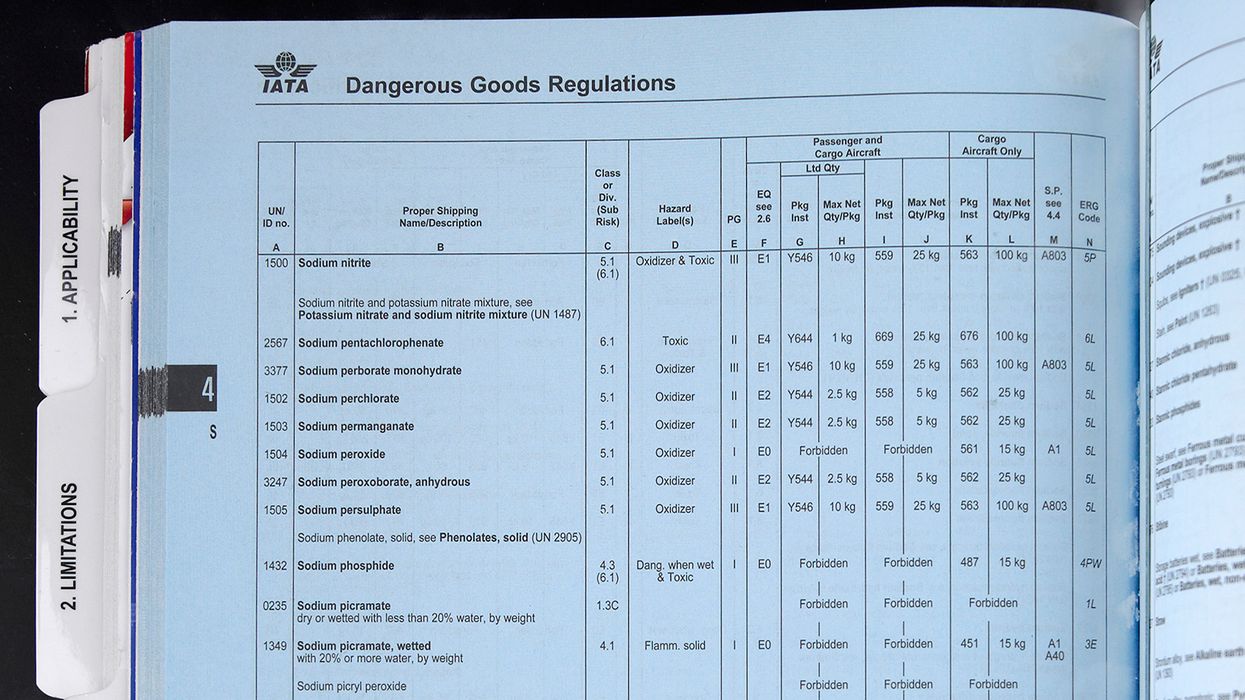
NewsIndustry NewsHazmat SafetyHazmatIn-Depth ArticleFocus AreaUSAEnglishTransportationHazmat Rulemaking procedures
2023-12-22T06:00:00Z
Navigating change: Key updates to 2024 IATA DGR take effect
Every year the International Air Transport Association (IATA) updates its Dangerous Goods Regulations (DGR) to ensure the safe and secure handling of dangerous goods that are shipped or transported by air. While changes to the 2024 IATA DGR (65th edition) are not as plentiful as they were in previous years, they are no less important.
Mandatory compliance with the 2024 IATA DGR begins on January 1, 2024, and will be valid until the 2025 IATA DGR comes into effect. Let’s look at the key updates, listed by Section, for the 65th edition of the IATA DGR:
Need additional information for IATA? Check out this ezExplanation.
Limitations
- Dangerous Goods Carried by Passengers or Crew (2.3)— Provisions for battery-powered mobility aids have been revised to include reference to the guidance on the end-to-end processes associated with the carriage of mobility aids.
Packing
The following packing instructions have been updated:
- 5.2.0.9 - Added a water capacity limit for non-refillable cylinders containing a flammable gas, limited to a water capacity not exceeding 1.25 L.
- PI 952 - Revised to include reference to "equipment."
- PI 954 - Clarified the rules for marking overpacks containing dry ice. The total net quantity of dry ice in the overpack must be marked on the outside of the overpack.
Packaging specifications and performance tests
- 6.0.3 - Clarified the requirements and formatting for UN specification marks on packages.
Documentation
- 8.1.6.9.2, Step 6 – Added a note to "reinforce that there is no requirement for the type, number and net quantity in inner packagings within the outer packaging of a combination packaging to be shown" on the shipping papers (Shippers Declaration for Dangerous Goods).
Radioactive materials
- 10.8.3.9.1—Added an additional example of the description for the first sequence of information on the Shipper's Declaration to address where a radioactive material has a subsidiary hazard, and the proper shipping name must be supplemented by the technical or chemical name.
- 10.8.6—Added two examples to show how radioactive materials with a subsidiary hazard should be described and how packages in an overpack should be shown.
Appendices
IATA has added a new appendix to the list of appendices in the DGR. Appendix H includes a list of changes IATA will make to the 2025 IATA DGR. IATA added Appendix H so that shippers and carriers have time to prepare for the substantial updates that are coming for 2025. Some of the changes include:
- Adding an exception for data loggers and cargo trackers with installed lithium batteries.
- Modifying the exception for COVID-19 vaccines to now apply to all pharmaceutical products.
- Adding a new classification for sodium ion batteries.
- Updating the list of dangerous goods and special provisions.
- Amending and adding several packing instructions.
- Revising the "lithium battery mark", which will be known as the "battery mark" in the future.
Making sure you are keeping up with these regulatory changes and preparing for future updates is extremely important if you want to avoid costly delays, fines, and lost revenue. Keep your hazmat employees up to speed and inform them of any changes they need to be aware of.
Key to Remember: IATA updates their DGR every year and changes to the 2024 IATA DGR become effective on January 1, 2024.

NewsRisk Assessment and ManagementIndustry NewsFleet SafetyDrug and Alcohol Testing - DOTRisk Assessment and ManagementFocus AreaIn-Depth ArticleSafety-sensitive function - Motor CarrierEnglishTransportationUSA
2023-04-13T05:00:00Z
Workplace vs. FMCSA: What is a safety-sensitive position?
A workplace safety definition for “safety-sensitive position” may lead some motor carriers to mistakenly put employees who don’t qualify in their DOT drug and alcohol testing program.
FMCSA: Clearly defined
The Federal Motor Carrier Safety Administration (FMCSA) clearly defines a safety-sensitive position.
It is one where the employee is expected to operate a commercial motor vehicle (CMV) requiring a commercial driver’s license (CDL). Only these drivers can be placed in the motor carrier’s DOT drug and alcohol testing program under 49 CFR Part 382.
As a result, a carrier would not classify a forklift operator, driver helper, and other positions as safety sensitive for purposes of testing under Part
What about non-CDL CMV drivers?
A driver who operates an FMCSA-regulated vehicle that does not require a CDL fits within the scope of workplace safety-sensitive duties, but not FMCSA.
For property-carrying vehicles, a non-CDL CMV is one that is:
- 10,001-26,000 pounds inclusive of a towed trailer, and
- Not transporting placardable quantities of hazmat.
For passenger carriers, a non-CDL CMV is designed to transport 9-15 passengers, including the driver, for compensation.
Even though the above vehicles and drivers are subject to the bulk of FMCSA’s safety regulations, the vehicles (and subsequently the drivers) do not qualify for CDL licensing or FMCSA testing.
If the driver happens to hold CDL, it still does not qualify as a safety-sensitive position. Applicability is always based on whether the employee is assigned to operate a CDL CMV.
Are non-CDL CMV drivers subject to any drug and alcohol prohibitions?
Non-CDL CMV drivers are prohibited from operating while impaired under 49 CFR 392.4 and 392.5, but there is no testing mechanism under DOT authority. Testing would be best practice (non-DOT) and managed under the workplace drug program.
Vague definition under OSHA
If a motor carrier mistakenly uses the workplace criteria for its DOT testing, the number and types of positions placed in the random pool far exceed commercial drivers.
For the general workforce, the term “safety sensitive” has been tossed around, but never clearly defined by OSHA (Occupational Safety and Health Administration). Many safety professionals tie the term to OSHA’s General Duty Clause (GDC), which requires that employers provide all workers with a safe and healthful workplace.
Specifically, the GDC requires employers to recognize hazards that cause or likely will cause death or serious physical harm. Any job title that is likely to cause death or serious harm to someone — including the employee, coworkers, or the general public — is usually put on a list of safety-sensitive positions.
The employer must look at each job’s hazards and decide if the position is classified by its organization as safety sensitive. Examples may include:
- Forklift drivers,
- Heavy machinery operators, and
- Crane operators.
Even someone who works as a roofer may be considered a safety-sensitive position because the employee could trip and fall from a high elevation, causing serious personal harm.
Key to remember: When assembling the list of names for your DOT testing program, only include those individuals who are expected to operate a CDL CMV.
NewsIndustry NewsHazmat SafetyHazmat: HighwayFocus AreaIn-Depth ArticleHazmat EnforcementEnglishTransportationUSA
2022-12-27T06:00:00Z
Placarding responsibility – Whose is it?
Many shippers are unaware of their responsibility to provide placards to drivers, but the responsibility shifts as soon as the driver hits the road.
Check the regulations
According to Section 172.506 of the Hazardous Materials Regulations (HMR), a shipper offering a hazardous material for transportation by highway must provide the motor carrier with the required placards for the material being offered. The shipper must offer the placards to the carrier prior to, or at the same time as, the material is offered for transportation — unless the vehicle is already placarded for the hazmat.
Section 172.506 also states that no motor carrier may transport a hazardous material in a motor vehicle unless the required placards for the hazmat are affixed to the vehicle. Before transport, the driver is responsible for displaying the required placards for all the hazmat that is on the vehicle.
Avoid issues with shippers
Many trailers are equipped with flip placards that represent most classes of hazardous materials but without adequate training, shippers may not understand their responsibility to provide the driver with the required placards. If a driver arrives and the shipper fails to provide placards, the driver should contact dispatch for additional instructions or drive to a truck stop to secure the necessary placards. The driver becomes responsible for placards as soon as the trailer enters a public highway, so train your drivers to temporarily refuse the shipment until the proper placards can be obtained. If necessary, the driver must bobtail or leave empty before driving to pick up placards.
Another common placarding question with shippers involves combination loads. If a driver arrives at a shipper’s location and is already transporting a hazardous material below the placarding threshold, is the shipper required to provide placards for the combination load on the trailer? In this scenario, the driver already has 600 pounds of a Class 8 corrosive material on the trailer, and the shipper is offering an additional 500 pounds of the same commodity. The regulations state that the shipper is only required to provide placards for the commodity that is being offered, not for the aggregate weight of both shipments. In this scenario, the driver is responsible for providing placards since it involves a combination load.
The Hazardous Materials Regulations are complex, especially for newer employees. Drivers that can speak “hazmat” to shippers often secure additional business, so be sure to train your drivers and give them the confidence to have impactful conversations with shippers.
Key to remember: Carry extra placards in case a shipper is unable to supply the required placards or a combination of hazmat on the vehicle requires different placards.
Most Popular Highlights In Human Resources

NewsIndustry NewsIndustry NewsAssociate Benefits & CompensationHR GeneralistFamily and Medical Leave Act (FMLA)Family and Medical Leave Act (FMLA)Associate RelationsEnglishHR ManagementFocus AreaHuman ResourcesUSA
2026-09-16T05:00:00Z
Employer used an algorithm to detect FMLA fraud
In 2018, an employer suspended or fired 81 employees after they used Family and Medical Leave Act (FMLA) leave over the holidays in December 2017 and January 2018. That amounted to about 10 percent of the employees in one area of the company suspected of abusing FMLA leave.
Some of those 80 employees felt that they took FMLA leave that had previously been approved and that, by disciplining them for taking the leave, the employer interfered with their FMLA rights and retaliated against them for taking pre-approved leave. As a result, they sued.
Ferreting out leave abuse
From the employer’s perspective, using FMLA leave solely to avoid working on or around holidays, weekends, vacations, and rest days constituted dishonesty in violation of company policy.
Jolanda from HR had an automated system that ferreted out FMLA misuse. Each week, the system looked back at every employee’s FMLA usage over the preceding 12 weeks. If an employee had 5 suspicious uses of FMLA leave within 12 weeks, the algorithm flagged that employee. A suspicious use was any FMLA use on a weekend and any FMLA use that was taken immediately before or after a day off.
If Jolanda believed that an employee’s actions amounted to FMLA “pattern use,” she would conduct an individualized review. This involved reviewing each employee’s:
- Medical information,
- Absences that were identified as pattern use, and
- Statuses of those absences.
To further investigate this FMLA usage, Jolanda used a modified version of the algorithm, which flagged any employee who had used FMLA leave on 4 of the 10 most recent holidays and other special occasions (such as Black Friday and Christmas Eve). Jolanda removed from the list anyone whose leave involved cancer, a terminal illness, or was about to give birth.
Court disagrees with employer
Despite dozens of employees being terminated for misusing their leave, only three of the employees continued their lawsuit. In court, the judge pointed out that the algorithm didn’t show their total FMLA leave, just their holiday use. It didn’t include non-holiday use, so it didn’t give the whole picture.
If an employee used FMLA leave for 10 days in 12 months, and 5 of those days were holidays, an employer might have reason to suspect misuse. If an employee used FMLA leave for 60 days in 12 months and 5 of those days were holidays, there would be much less reason for an investigation. The employer focused on employees’ use of FMLA leave on holidays without considering the context of each situation.
The employer argued in court that it acted on its honest belief that the employees were abusing FMLA leave.
The employees argued that the company’s stated reason for the discipline was untrue and that retaliation was the actual reason for the discipline. The employees were given an internal hearing, but the hearings were suspicious, as a company manager acted both as judge by conducting the hearing and ruling on objections, and as prosecutor by questioning witnesses. The company witness told the hearing manager which questions the prosecutor (the same manager) should ask.
Employees, on the other hand, weren’t allowed to have legal counsel present, nor were there formal rules of evidence that governed the hearings. They also didn’t know the questions in advance, as the employer did.
In denying the employer’s request to have the entire case dismissed, the court determined that the employer’s decision process wasn’t credible and its reliance on that process was, therefore, not honestly held. It sent the case to a jury.
Burgess, et al., v. CSX Transportation, Inc., District of Maryland, No. JKB-18-0744, July 6, 2026.
Court decisions are based on the specific facts presented and each court’s interpretation of the law. Because courts may reach different conclusions, similar situations can lead to different outcomes. Employers should avoid relying on a single case as definitive guidance and instead assess each situation carefully, considering applicable laws and seeking advice when needed.
Key to remember: Employers may use procedures and tools to discern FMLA leave abuse, but they have to use those procedures and tools through the lens of the big picture.

NewsIndustry NewsIndustry NewsHR GeneralistFamily and Medical Leave Act (FMLA)Family and Medical Leave Act (FMLA)USAHR ManagementEnglishFocus AreaHuman Resources
2023-09-06T05:00:00Z
Appellate court sided with employee's (almost) 3-year-delayed FMLA claim
Back in October 2018, Laffon had a medical emergency and needed some time off under the federal Family and Medical Leave Act (FMLA).
Her leave lasted until November 15. Ten days after she returned to work, on November 26, her employer terminated her.
She sued, arguing that the employer retaliated against her because of her FMLA leave.
The catch? She didn't bring the suit until almost three years later.
No link between leave and termination
In court, the employer argued that there was no causal link between Laffon taking FMLA leave and her termination. Although the court documents aren't robust, they do reveal that the employer indicated that Laffon's allegations didn't show that her taking FMLA leave was a factor in the decision to terminate her. The documents showed only that the termination chronologically followed her leave.
The court agreed with the employer. It also agreed that Laffon failed to allege a willful violation of the FMLA, which would allow her to benefit from the FMLA's three-year statute of limitations.
Laffon appealed the case to the Ninth Circuit.
Statute of limitations
Under the FMLA, employees have two years from the date of the last event constituting the alleged violation for which they can bring a claim.
Those two years are extended to three years if the employer's actions were "willful." This means that an employee must show that the employer either knew or showed reckless disregard for whether its conduct violated the FMLA.
Ruling overturned
Fast forward to August 2023, when the Ninth Circuit reversed the lower court's decision. It indicated that, based on Laffon's amended complaint and liberally construing the law, her allegations establish that her leave was causally connected to her termination and that the employer's action (her termination) was willful.
Glymph v. CT Corporation Systems, No. 22-35735, Ninth Circuit Court of Appeals, August 22, 2023.
Key to remember: Terminating an employee soon after returning from FMLA leave is risky, unless there is a clear, well-documented, non-leave-related reason. Case documents did not show such a clear reason, which can also increase the risk of a willful finding. Employees have time to file claims, even years.
NewsChange NoticesChange NoticeAssociate Benefits & CompensationCaliforniaAssociate RelationsHR GeneralistFamily and Medical Leave Act (FMLA)Family and Medical Leave Act (FMLA)HR ManagementEnglishFocus AreaHuman Resources
2026-09-29T05:00:00Z
California bereavement leave expanded
Effective date: January 1, 2027
This applies to: California employers with five or more employees
Description of change: On September 27, California Gov. Gavin Newsom signed SB 1149, which expands the state law entitling employees to bereavement leave. The law will now allow employees to take bereavement leave for the death of a “designated person,” which means any individual related to the employee by blood or whose association with the employee is the equivalent of a family relationship.
Employees may identify a designated person when they request the leave.
Employers may limit employees to one designated person per 12-month period for bereavement leave.
The law still requires employees to have worked for the employer for at least 30 days before taking bereavement leave, and entitles employees to take up to 5 days of bereavement leave, which may be taken intermittently. If employers don’t have an existing bereavement leave policy, the bereavement leave may be unpaid, but employees may use their paid time off.
View related state info: FMLA - California
NewsChange NoticesWage and HourChange NoticeMaineAssociate Benefits & CompensationAssociate RelationsHR GeneralistMinimum WageHR ManagementEnglishFocus AreaHuman Resources
2026-09-24T05:00:00Z
Maine to increase minimum wage
Effective date: January 1, 2027
This applies to: Employers with employees in Maine Description of change: Effective January 1, 2027, Maine’s minimum wage will increase from $15.10 to $15.70 per hour.
The tipped minimum wage will increase from $7.55 to $7.85 per hour.
The salary threshold for overtime will increase from $871.16 per week ($45,300.32 per year) to $905.79 per week ($47,101.08 per year).
View related state info: Minimum wage - Maine

NewsIndustry NewsHR GeneralistFamily and Medical Leave Act (FMLA)In-Depth ArticleFamily and Medical Leave Act (FMLA)Associate RelationsEnglishUSAHR ManagementFocus AreaHuman Resources
2026-09-15T05:00:00Z
The interplay between FMLA leave amount and employee eligibility
Let’s say you have a pregnant employee who’s due October 5. She won’t have worked for your company for at least 12 months until November 15. If the employee recovers from the delivery on November 16, how much leave under the federal Family and Medical Leave Act (FMLA) would she get, and when would it start?
Here are some further questions to consider:
- Would the 12 weeks of FMLA leave begin November 15, even though it would be only for bonding with the baby?
- What about the time taken before November 15?
- If the baby is early, and the employee returns to work before becoming eligible for FMLA leave, would she be eligible once she meets the 12 months of employment threshold (November 15)? If so, when would the FMLA leave begin?
Eligibility and leave amount
Once the employee meets the eligibility criteria, she’s entitled to take FMLA leave for a qualifying reason.
Therefore, as of November 15, the employee would be taking FMLA leave, and the employer has to count it as such. As long as the leave reason is a qualifying one, such as pregnancy, delivery, recovery, or bonding, the employee gets the FMLA job protections.
Employers wouldn’t count the time taken off before the employee met the eligibility criteria as FMLA leave. This can result in the employee having more than the 12 weeks of FMLA leave, since the FMLA leave wouldn’t start until November 15.
If, for example, the employee has the baby on its due date of October 5, the employee’s time off from October 5 to November 15 wouldn’t be FMLA leave and couldn’t be counted as such. The employee might have leave benefits for that time under a company policy or a state leave law.
If the baby were to be born early on September 28, and the employee recovers in 6 weeks (by November 9), she would still be entitled to take FMLA leave starting November 15.
Key to remember: Once employees meet the FMLA eligibility criteria, they’re entitled to take protected leave for any qualifying reason. Leave taken before they meet the FMLA eligibility criteria isn’t FMLA leave.

NewsNational Labor Relations Board (NLRB)Employee RelationsIn-Depth ArticleDress codesUnions/Labor RelationsEnglishHR ManagementUSAIndustry NewsHR GeneralistUnions/Labor RelationsAssociate RelationsFocus AreaHuman Resources
2026-09-11T05:00:00Z
Understanding dress code limits can be a tall order for employers
Between a more casual approach to work attire and the increase in remote work, dress code policies have been on HR’s back burner. A recent case, however, returns dress codes to the limelight.
The case
In early September, the U.S. Court of Appeals for the Second Circuit rejected the National Labor Relations Board’s (NLRB) view of employer dress code policies adopted in 2022.
In the case, a union representing workers in a New York City location of a national coffeehouse chain challenged these three parts of the company’s dress code policy:
- In addition to company-approved or issued pins, cafe employees may wear on their apron “one reasonably sized and placed button or pin that identifies a particular labor organization or a partner’s support for that organization, except if it interferes with safety or threatens to harm customer relations or otherwise unreasonably interferes with the company’s public image.”
- Employees are “not permitted to wear buttons or pins that advocate a political, religious or personal issue.”
- While employee shirts may have a small manufacturer logo, they may not have “other colors, designs, logos or writings” other than those pre-approved by the company.
The Second Circuit refused to enforce the NLRB’s findings that these policies were unlawful, reasoning that the NLRB’s reliance on its decision in Tesla, Inc., 371 NLRB No. 131 (Aug. 29, 2022), misapplies precedent and rests on “erroneous legal foundations.”
Finding the right balance
In Tesla, the NLRB adopted the presumption that all employer dress code policies that limit an employee’s right to display union insignia are presumed to be unlawful. The Second Circuit now joins the Fifth Circuit in refusing to enforce Tesla. The Second Circuit said that Tesla was inconsistent with precedent.
Referencing U.S. Supreme Court precedent from Republic Aviation, 324 U.S. 793 (1945), the Second Circuit urged a return to the balancing test between “the undisputed right of self-organization assured to employees … and the equally undisputed right of employers to maintain discipline in their establishments.”
The court added that employees have the right to wear items that relate to unionization and other protected matters at work, but employers aren’t prevented from making and enforcing reasonable rules covering the conduct of employees on company time, because “working time is for work.”
The Second Circuit sent the case back to the NLRB asking the board to “apply a more evenly measured balancing test” and suggested what to consider in its analysis, including:
- How much the rule limits employees’ Section 7 rights (i.e., whether the employer enforces a full or partial ban on union insignia during working time);
- Whether the employer’s policy is neutral on its face, nondiscriminatory, and consistently enforced; and
- The context, or legitimate business reasons underlying the rule.
The Second Circuit also addressed how much weight courts must give NLRB decisions. Under the U.S. Supreme Court’s 2024 decision in Loper Bright Enterprises v. Raimondo, courts aren't required to defer to a federal agency’s interpretation of the law it administers.
Takeaways for employers
The decision gives employers in the Second and Fifth Circuits more leeway to draft neutral dress code policies that limit union insignia.
Employers should also be aware that the legal standard may continue to change. In August, the NLRB’s General Counsel listed dress codes and a possible reversal of Tesla as future priorities. Employers should, therefore, review appearance policies carefully, document the reasons for restrictions, and consult counsel before limiting union-related clothing or insignia.
Key to remember: A federal appeals court rejected the NLRB’s presumption that dress-code limits on union insignia are automatically unlawful.
Starbucks Reserve Roastery v. National Labor Relations Board, No. 24-3168 (2nd Cir. September 2, 2026)
Most Popular Highlights In Safety & Health

NewsAccident Investigation Preparation and ResponseIndustry NewsAccident Investigation - OSHAAccident Investigation - OSHAAccident Corrective and Preventative ActionsSafety & HealthConstruction SafetyGeneral Industry SafetyAgriculture SafetyAccident responseIn-Depth ArticleEnglishFocus AreaUSA
2026-09-21T05:00:00Z
ASTM guidance on SIFs has updated; it’s time to update too!
What if your safety program is hitting its target, but is still missing the one condition that could kill or seriously harm someone if unchanged? Shifting from a safety scoreboard to a risk spotlight could be the solution that takes you from responding to incidents to preventing them.
A change in perspective
For decades, safety performance has been measured using metrics such as TRIR and LTIR. While those measures remain valuable, they primarily tell us what happened yesterday. They don't always reveal the hazards that could cause a serious injury or fatality (SIF) tomorrow.
That's the thinking behind ASTM International’s updates to ASTM-E2920-26, which encourages organizations to look beyond injury counts and focus on identifying, prioritizing, and controlling high-consequence risks before tragedy occurs. In other words, moving from looking at incidents in the rearview mirror to looking through the windshield at what’s headed their way.
A new way to look at safety
ASTM’s hope is to change the lens through which risk is evaluated from hindsight to foresight and from injury tracking to risk recognition and hazard prevention. In addition to broadening the scope of “what” is evaluated, they’ve expanded serious injuries and fatalities (SIF) to include operational risks and system conditions.
Prioritizing what matters most
A key change in ASTM E2920 26 encourages employers to prioritize incidents in levels:
- Level 1: Actual SIFs (aSIF) (life-ending, life-threatening, or life-altering injuries/illnesses),
- Level 2: Priority injuries/illnesses with significant impact that call for a closer look,
- Level 3: Regulatory recordables that don’t meet Level 1 or Level 2 criteria, and
- Level 4: Minor injuries and near misses such as first aid incidents or low-risk events.
Somewhere between Levels 2 and 4 lies the potential SIF (pSIF) where incidents could have had significant impact or severe consequences. It shifts the focus from "What happened?" to "What could have happened?" Consider a forklift backing out of an aisle with a raised load. As the operator turns, the load shifts and falls from the forks, landing a few feet from a nearby employee. No injuries occurred.
In many organizations, this would have been classified as a near miss triggering a safety refresher about safe forklift operation, then closed out. The ASTM E2920-26 challenges employers to new thinking by asking:
- What if the employee had been one step closer?
- What if the load had fallen directly onto them?
- Would the result have been life-altering or fatal?
If the answers to these questions is “yes,” the near miss shifts to a pSIF and changes the response. Rather than a simple safety reminder, an investigation would be launched to determine contributing factors or conditions allowing the event to occur (load stability, operator visibility, travel routes, and pedestrian controls). Afterward, stronger safeguards would be implemented, creating even more employee protection.
Organizations that focus on pSIFs learn from close calls before they become life-changing incidents, allowing them to direct resources where they can have the biggest impact: preventing serious injuries and saving lives.
Shifting focus to controls
ASTM E2920 26 also challenges employers to emphasize hazard controls, moving from reaction to proaction. Training, policies, procedures, and signage are important, but they rely on infallible human behavior and workers consistently making the right decisions. Higher levels of control, such as elimination, substitution, and engineering controls, remove or reduce exposure to hazards regardless of human behavior.
Here’s how to shift into gear:
- Reframing injury prevention to a focus on risk rather than just rates.
- Adding pertinent investigation questions when incidents have the potential to cause a fatal or life-altering outcome.
- Flagging incidents or near misses involves high energy or line-of-fire exposures.
- Escalating identified pSIF events for formal review and corrective action.
- Tracking incident trends involving energy sources, failed or missing safeguards, and potential worst-case outcomes.
- Evaluating controls realistically. Initially, you may see higher SIF numbers, which is expected and is a good thing!
- Ensuring adequate resources are available for incident investigations and training.
- Updating reporting tools that can track pSIF trends and tie them directly to effective controls.
- Communicating program goals with workers so employees understand the purpose of pSIF reporting is prevention, not blame.
Key to remember: ASTM E2920 26 reframes safety in a powerful way, encouraging employers to shift focus from reactive assessments to proactive controls. By looking not just at what happened, but what could have happened, employers move beyond measuring injuries and start identifying the events that could have resulted in serious injury or death.
NewsEmergency Planning - OSHAIndustry NewsSafety & HealthEmergency Planning (OSHA)General Industry SafetyIn-Depth ArticleEnglishFocus AreaUSA
2022-06-27T05:00:00Z
Will employees fight fires or evacuate?
Employers might choose to provide portable fire extinguishers for employees to fight incipient stage fires. An incipient stage fire is one that can be controlled or extinguished using portable fire extinguishers. However, the regulation on portable fire extinguishers at 1910.157 provides alternatives for employers that do not want employees fighting these fires.
Many employers plan to evacuate in the event of a fire. However, training some employees on fire extinguisher use may be necessary.
Employers who opt for evacuation do not have to comply with certain requirements of 1910.157, depending on the option chosen. These options are:
- Evacuate all employees when a fire occurs. Employers who select this option are relieved from compliance with 1910.157 unless some other regulation requires that portable fire extinguishers be provided. For example, workers assigned to a fire watch after welding must be trained to use fire extinguishers. If the employer opts to evacuate everyone, it must have an emergency action plan under 1910.38.
- Evacuate all employees except those designated to use portable fire extinguishers. Employers who select this option need not comply with 1910.157(d), which describes the distance to an extinguisher based on the class of fire. Under this option, the employer makes extinguishers available to the employees who are designated to use them. Complying with the emergency action plan provisions is still required.
- The employer has portable fire extinguishers but does not want employees fighting fires and evacuates everyone to safety. Fire extinguishers may be required by insurance companies or local fire departments. However, extinguishers not intended for employee use may still pose a hazard if not properly maintained. Employers who follow this option must comply only with the extinguisher maintenance, inspection, and testing requirements of 1910.157.
Extinguishers for everyone
The other option is to provide portable fire extinguishers for use by any employee to fight incipient stage fires. In that case, the employer must comply with 1910.157 in its entirety, but there is no requirement to comply with the emergency action plan provisions of 1910.38 as it pertains to fire.
If any employee could grab an extinguisher to fight an incipient stage fire, the employer must provide an educational program for all employees that covers the principles of fire extinguisher use. Employees expected to use portable fire extinguishers must be provided with “hands on” training in the use of the equipment, and this training must be repeated annually.

NewsIndustry NewsSafety & HealthConstruction SafetyGeneral Industry SafetyMaritime SafetyOccupational Safety and Health Administration (OSHA), DOLIn-Depth ArticleHazard CommunicationHazard CommunicationEnglishFocus AreaUSA
2026-09-17T05:00:00Z
Heads up! HazCom employer compliance deadline approaching fast
OSHA’s revised Hazard Communication (HazCom) standard contains multiple compliance dates at 29 CFR 1910.1200 paragraph (j) for chemical manufacturers, importers, distributors, and employers. In fact, the next compliance date is for employers, and it’s just over two months away! The November 20, 2026, employer deadline is driven by changes to chemical hazard classifications for aerosols, desensitized explosives, and flammable gases.
Reclassification impacts downstream chemical users
According to 1910.1200(j), chemical manufacturers, importers, and distributors evaluating substances (see the definition in 1910.1200(c)) based on the new classifications had until May 19, 2026, to:
- Reclassify the substances under revised criteria,
- Update their safety data sheets (SDSs) and shipping labels for these substances, and
- Otherwise be in compliance with all the modified provisions of the standard for those substances.
Hazard classification is the process of identifying a chemical’s hazards and determining how severe those hazards are. Chemical manufacturers and importers use 1910.1200(d), along with Appendix A (for health hazards) and Appendix B (for physical hazards) to make these determinations. When OSHA aligned HazCom with Revision 7 of the Globally Harmonized System of Classification and Labeling of Chemicals (GHS) in 2024, the agency revised its classification categories for aerosols, desensitized explosives, and flammable gases.
Once a classification is determined, it dictates the warnings, pictograms, hazard statements, and other safety and health information that must appear on SDSs and shipping labels. OSHA explains that the classification should provide downstream users with sufficient information to perform a hazard assessment specific to their own workplace and to understand how employees must use the chemical product there.
How the November 20 deadline impacts employers
Employers who purchase substances that are aerosols, desensitized explosives, and flammable gases will receive (or may already have received) revised SDSs and see updated container labels with their shipments.
In addition, according to 1910.1200(j), all employers must, as necessary:
- Update any alternative workplace (in-house) labeling per 1910.1200(f)(6);
- Update their HazCom training program required by 1910.1200(h)(1); and
- Provide additional employee training in line with 1910.1200(h)(3) for newly identified physical, health, or other hazards covered by the standard.
Employers will also need to retain any new SDSs they receive. However, if they have not purchased new inventory, they’re not required to contact the manufacturer, importer, or distributor for a new SDS. Still, an employer may proactively request new ones from their suppliers anyway.
Further HazCom compliance dates in paragraph (j)
Chemical manufacturers, importers, and distributors evaluating mixtures (as defined in 1910.1200(c)) based on the new classifications have until November 19, 2027, to reclassify them based on the new criteria, update their SDSs and shipping labels, and otherwise be in compliance with all the modified provisions of the standard for those mixtures.
Also, for mixtures, employers have until May 19, 2028, to update any alternative workplace labeling, update their HazCom training program, and provide additional employee training for newly identified physical, health, or other hazards.
Key to remember: OSHA paragraph (j) to 1910.1200 has several compliance dates for chemical manufacturers, importers, distributors, and employers. One date has already passed, and the next one (November 20, 2026) applies to employers. Two more are slated for November 19, 2027, and May 19, 2028.

NewsEnforcement and Audits - OSHAErgonomicsIn-Depth ArticleUSAEnglishHeat StressOSHA Violations and PenaltiesErgonomicsIndustry NewsWorkplace ViolenceHeat and Cold ExposureWorkplace ViolenceSafety & HealthInjury and Illness RecordkeepingConstruction SafetyInfectious DiseasesGeneral Industry SafetyAgriculture SafetyMaritime SafetyGeneral Duty ClauseGeneral Duty ClauseFocus AreaToxic and Hazardous Substances - OSHAInjury and Illness Recordkeeping
2026-02-03T06:00:00Z
9 OSHA bills to mandate gap-closing rules, wider coverage, steeper fines
As OSHA leans into “deregulatory” actions, lawmakers are moving to pressure the agency to issue “regulatory” rulemaking to protect American workers. The House and Senate have nine bills on the table so far. The latest legislative wave aims to fill regulatory gaps, tackle emerging hazards, expand OSHA authority, and raise penalties. (Note: Please see our news update near the end of this article announcing the 10th OSHA-related bill to mandate regulatory action.)
Topics and worker types covered
Topics addressed by these Congressional bills include musculoskeletal disorders, heat stress, infectious diseases, wildfire smoke, and workplace violence. Federal OSHA does not have comprehensive standards for any of those hazards. Some existing standards are related — sanitation, first aid, personal protective equipment, and injury/illness recordkeeping and reporting.
Without comprehensive standards, OSHA may turn to enforce these hazards under the General Duty Clause (GDC), Section 5(a)(1) of the Occupational Safety and Health Act. Yet, the GDC poses a high bar for inspectors. OSHA can only cite under Section 5(a)(1) if the alleged hazard: exists, is recognized, is serious, and has a feasible means to reduce that hazard.
If any one of the four criteria is missing, a GDC citation will not hold. On the other hand, putting a standard in place both mandates protections and makes it much easier for OSHA to cite employers for the hazards.
Worth noting, some of the bills specifically cover domestic workers, firefighters, warehouse workers, public sector workers, and healthcare and social service workers.
Nine bills to watch
Below is a list of the nine pieces of legislation (and companion bills) currently under consideration in this 119th United States Congress:
- LET’S Protect Workers Act, H.R. 6597 — Introduced 12/10/2025. This bill would raise civil monetary penalties for employers that violate occupational safety and health requirements. Willful and repeat violations would jump to $800,000 each. The bill would also direct OSHA to close a loophole that prevents citations for failing to maintain required injury and illness records if the violation is not discovered within six months. Instead, every day an employer fails to make or maintain a record during the five-year record retention period would be a violation.
- Domestic Workers Bill of Rights Act, S. 3396 and H.R. 3971 — Introduced 12/9/2025 and 6/12/2025, respectively. This bill would require a board to make recommendations to OSHA for standards that affect the well-being of domestic employees, including infectious diseases protections.
- Healthy Lungs for Heroes Act, S. 3183 — Introduced 11/18/2025. This bill would require OSHA to develop an appropriate exposure limit for wildfire smoke for wildland firefighters and supporting staff where current PELs are not a good fit for wildfire situations. The bill would also require the incorporation by reference of a National Fire Protection Association standard on respirators for wildland fire-fighting operations.
- Warehouse Worker Protection Act, H.R. 4896 and S. 2613 — Introduced 8/5/2025 and 7/31/2025, respectively. This bill would require OSHA to publish a standard for ergonomic program management with elements including hazard identification, job evaluations, hazard control, training, and medical management. The bill also calls for OSHA to publish a standard on first aid and employer-provided occupational medicine consultation services. Finally, it would update the Occupational Safety and Health Act (OSH Act) so a contest notice would not stay abatement of a violation.
- Asunción Valdivia Heat Illness, Injury, and Fatality Prevention Act, H.R. 4443 and S. 2298 — Both introduced 7/16/2025. These bills would require OSHA to promulgate a standard to protect workers from heat-related injuries and illnesses. Such a standard may have measures like engineering controls, administrative controls, personal protective equipment, medical and emergency protocols, training, and a written plan.
- Recognizing that climate change poses a growing threat to public health and necessitates coordinated action to mitigate its impacts and safeguard the health and well-being of all people in the United States, H.Res. 568 and S.Res. 318 — Both introduced 7/10/2025. These bills say that OSHA “should” promulgate a worker heat protection standard that, in accordance with the best available evidence, establishes the highest degree of health and safety protection feasible.
- Protecting America’s Workers Act, H.R. 3036 — Introduced 4/28/2025. This bill would require OSHA to update its incorporations by reference of national consensus standards, with some exceptions. The bill makes other changes to the OSH Act to expand coverage to public sector workers, increase protections, and raise penalties.
- Safe Workplaces Act, H.R. 2647 — Introduced 4/3/2025. This bill taps OSHA to issue nonmandatory guidance on activities and work practice controls that can be implemented at work to reduce workplace violence.
- Workplace Violence Prevention for Health Care and Social Service Workers, H.R. 2531 and S. 1232 — Both introduced 4/1/2025. These bills mandate OSHA to issue a standard that requires covered employers within the healthcare and social service industries to develop and implement a comprehensive workplace violence prevention plan. The plan must include procedures and methods for risk assessment and identification of risks, hazard prevention and controls, reporting and investigation, emergency response, and training.
| News update: On February 10, 2026, House and Senate members introduced the Workplace Overdose Reversal Kits (WORK) to Save Lives Act (H.R. 7479 and S. 3812). The companion bills, if passed, would require OSHA to issue regulations to require each federal government agency to acquire and maintain opioid overdose reversal medication and offer voluntary, annual worker training on usage of the medication. OSHA would also be required to publish nonmandatory guidance on the topic for all employers. The Bureau of Labor Statistics tallied 162 opioid-related deaths at private and public workplaces in 2023 (the latest data). OSHA statistics do not reveal the number of opioid fatality investigation cases but show the agency has investigated 172 “drug overdose” fatality cases since 1984, with 78 cases from calendar years 2021 to 2024. |
Key to remember
Several bills in the 119th Congress would modernize the OSH Act and mandate OSHA rulemaking to strengthen or increase worker protections.

NewsFire Protection and PreventionIn-Depth ArticleEnglishEmergency Planning - OSHAIndustry NewsSafety & HealthEmergency PreparednessEmergency Planning (OSHA)Emergency ExitsExit RoutesConstruction SafetyGeneral Industry SafetyAgriculture SafetyMaritime SafetyFire Protection and PreventionMine SafetyFocus AreaUSA
2023-12-28T06:00:00Z
Does my office need an exit sign?
One of the most common questions inspectors get when evaluating workplace emergency safeguards is, “Does my office need an exit sign?” Section 29 CFR 1910.37 requires employers to provide specific safeguards and operational features for exit routes. OSHA’s intent is to minimize danger to employees and requiring proper exit route marking is one way to do so.
In short, smaller rooms or offices with only one door don’t necessarily need an exit sign. OSHA standards for exit signage are based on NFPA 101, Life Safety Code, which OSHA incorporated by reference. OSHA 1910.37(b)(4) states, “If the direction of travel to the exit or exit discharge is not immediately apparent, signs must be posted along the exit access indicating the direction of travel to the nearest exit and exit discharge. Additionally, the line-of-sight to an exit sign must clearly be visible at all times.”
Other exit signage requirements to consider
The International Fire Code (IFC) was not adopted by OSHA; however, it’s likely to be referenced by local fire marshals. The IFC states, “Exit signs are not required in rooms or areas that require only one exit or exit access.” Generally, a room or area that holds fewer than 50 people is permitted to have only one exit. These rooms are typically smaller with an exit that is close and obvious, so an exit sign shouldn’t be needed inside the room. For example, individual offices, small conference rooms, storage rooms, and bathrooms usually don’t have exit signs because the way out is obvious.
Additional requirements for office exits require they:
- Are free of obstructions. No materials or equipment may be placed, either permanently or temporarily, within the exit route.
- Are arranged so that employees aren’t required to travel toward a high hazard area unless the path of travel is effectively shielded from the high hazard area by suitable partitions or other physical barriers.
- Don’t pass through a room that can be locked, such as a bathroom, to reach an exit or exit discharge, or lead into a dead-end corridor.
- Are adequately lighted so that an employee with normal vision can see along the exit route.
- Have each exit route door be free of decorations or signs that obscure the visibility of the exit route door.
Key to remember
When considering exit signs for smaller offices, employers must determine the size of the room, path of travel to an exit, and how obvious the exit would be based on room size. Generally, a room intended to hold fewer than 50 people is permitted to have only one exit and would not require an exit sign.

NewsIndustry NewsSafety & HealthHand and Other Portable Powered ToolsGeneral Industry SafetyTool SafetyAir Compressor SystemsIn-Depth ArticleTool SafetyEnglishFocus AreaUSA
2022-06-13T05:00:00Z
Cleaning with compressed air: Making sense of the OSHA regulation
It is a common sight in many workplaces to see employees using compressed air to clean parts, equipment, and even clothing. What many workers and some employers do not realize is that compressed air can be deadly. That is why OSHA has a regulation prohibiting the use of compressed air for cleaning unless the dead-end pressure is reduced to below 30 psi, and then only with effective chip guarding and PPE.
The regulation Federal OSHA’s requirement for cleaning with compressed air is in 1910.242(b):
- “Compressed air used for cleaning. Compressed air shall not be used for cleaning purposes except where reduced to less than 30 psi and then only with effective chip guarding and personal protective equipment.” Because the regulation is short and somewhat vague, OSHA has clarified the issue in a compliance directive and letters of interpretation.
What is “chip guarding”?
“Effective chip guarding” means any method or equipment which will prevent a chip or particle (of whatever size) from being blown into the eyes or unbroken skin of the operator or other workers.
Effective chip guarding may be separate from the air nozzle as in the case where screens or barriers are used. The use of protective cone air nozzles are acceptable in general for protection of the operator, but barriers, baffles or screens may be required to protect other workers if they are exposed to flying chips or particles.
What about the psi requirement?
The regulation requires the psi at the nozzle to be less than 30 when using compressed air for cleaning.
However, OSHA has said in interpretive guidance that the use of compressed air for cleaning purposes at pressures at or greater than 30 psi is permissible if the outlet or source is fitted with a relief device or air ports that drop the pressure to less than 30 psi if the flow is dead-ended.
What about cleaning clothing/bodies?
While the regulation does not specifically address the issue, in a letter of interpretation OSHA said that employers should not allow employees to use compressed air for cleaning themselves or their clothing in general industry situations. The eyes and other body parts, such as the respiratory system, may be damaged as the result of inadequate personal protective equipment, lack of chip guards, and/or uncontrolled release of compressed air.
The dangers
There are numerous dangers of improperly using compressed air:
- Embolism: If compressed air enters the bloodstream through a body opening or skin break, it can create an embolism (air bubble) that can be life threatening.
- Eye damage: Particles that are being blown can “blow back” and strike the eyes. The air itself can also cause injury if it is pointed toward the eyes.
- Hearing loss: Some compressed air equipment can be loud enough to damage hearing. Always wear proper PPE.
- Combustible dust: If compressed air is used to blow certain dusts, it can create a suspension in the air that could ignite if there is an ignition source.
- Respiratory: Particles or air can enter the respiratory system, posing deadly hazards.
- Whips: If not properly secured, hoses can whip and cause severe injury.
Workers must be trained that even extremely low pressures, such as 5 or 10 psi, can still cause severe damage if pointed toward the body, particularly the mouth, eyes, ears, or open areas in the skin.
Employers should train employees on the dangers of compressed air, and ensure the equipment is equipped with the necessary safety features and is properly maintained.
Supervisors should watch for improper use, particularly horseplay, and initiate corrective action. In addition, for many applications, a broom or shop vacuum may be just as effective at cleaning, and much safer. Compressed air may seem harmless, but if strict safeguards and practices are not utilized it can be deadly.
Saved to my EVENT CALENDAR!
View your saved links by clicking the arrow next to your profile picture located in the header. Then, click “My Activity” to view the Event Calendar on your Activity page.
OK
J. J. Keller is the trusted source for DOT / Transportation, OSHA / Workplace Safety, Human Resources, Construction Safety and Hazmat / Hazardous Materials regulation compliance products and services. J. J. Keller helps you increase safety awareness, reduce risk, follow best practices, improve safety training, and stay current with changing regulations.
Copyright 2026 J. J. Keller & Associate, Inc. For re-use options please contact copyright@jjkeller.com or call 800-558-5011.