Compliance Just Got Easier: Stay ahead of regulatory changes with instant notifications on updates that matter.
['Drug and Alcohol Testing - DOT']
['Alcohol testing - Motor Carrier', 'Drug testing - Motor Carrier']
02/16/2026

Copyright 2026 J. J. Keller & Associate, Inc. For re-use options please contact copyright@jjkeller.com or call 800-558-5011.
:
|
InstituteEnglishFleet SafetyIn Depth Sub Topics (Level 4)Drug testing - Motor CarrierDrug and Alcohol Testing - DOTFocus AreaAlcohol testing - Motor CarrierAnalysisTransportationUSA
In-house DOT testing sites
['Drug and Alcohol Testing - DOT']
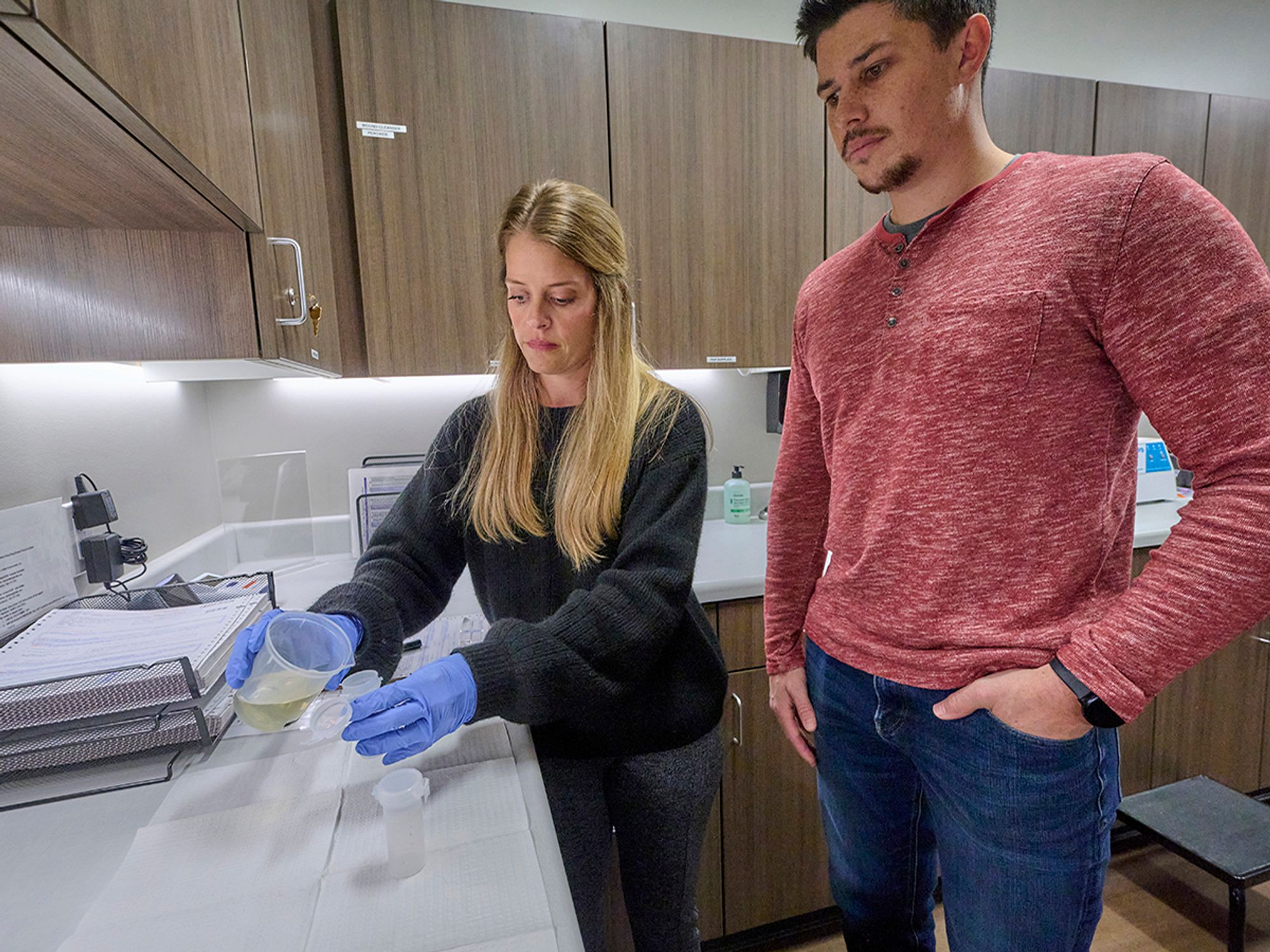
- There are several considerations when deciding whether an in-house DOT drug and alcohol testing facility is a fit for your motor carrier.
The headache of finding a clinic or the cost of arranging a test could be reasons why a motor carrier may toy with the idea of bringing DOT testing in-house.
But the plan may be more of an undertaking than you realize when you look at the detailed requirements in 49 CFR Part 40, in addition to potential liabilities.
Consider the following areas if you’re looking into the option of conducting DOT tests internally.
Trained internal personnel
Both drug specimen collectors and alcohol testing personnel must receive specific training at least once every 5 years. Training covers basic regulatory information and procedures, step-by-step instructions on conducting a drug or alcohol test, and how to handle problems that may occur during the test. Training is concluded by demonstrating proficiency through error-free mock tests monitored by a qualified collector or technician.
In the event a collector or technician’s mistake causes a drug or alcohol test to be cancelled, the testing personnel must undergo error correction training within 30 days of learning of the mistake. This training is overseen by qualified collectors or technicians who observe error-free mock tests addressing the area that caused the test to be cancelled.
Claims of wrongdoing
To reduce any claims of wrongdoing, many carriers keep testing out of the hands of safety or operations personnel. An on-site facility may be the best option — using a company nurse or doctor with no relationship with drivers. This is especially important for urine collections that require direct observation.
“To avoid the appearance of a conflict of interest,” the drug testing rules limit who may act as a specimen collector, including:
- Anyone related to the employee being tested (e.g., spouse, ex-spouse, relative) or a close friend; and
- The immediate supervisor of the employee, unless no other collector is available and permitted under 49 CFR Part 382.
The alcohol testing rules have a similar stipulation restricting the immediate supervisor of the employee, unless no other technician is available and it’s permitted under Part 382.
When you examine Part 382, there’s one absolute to note in 382.307. The trained supervisor who requests a reasonable suspicion alcohol test can’t conduct the test. But it’s probably best not to allow this supervisor to conduct a drug test either, unless no one else is available.
Facility requirements
Both drug and alcohol clinics must be secure and private. For urine specimen collections:
- The water must be turned off in the bathroom,
- There must be no access to soap or other adulterants, and
- The toilet water must be blue.
Collectors must secure areas and items (e.g., ledges, trash receptacles, paper towel holders, under-sink areas) that appear suitable for concealing contaminants. If this facility is used for other purposes, access to collection materials and specimens must be restricted, and no one is permitted access during the collection.
For alcohol testing, in addition to general privacy and security requirements, the site must have a suitable clean surface for writing, and all testing equipment must be stored in a secure place when not in use.
Equipment and forms
Only approved drug specimen collection kits can be used for DOT drug tests, along with Federal Drug Testing Custody and Control Forms (CCFs). Employers aren’t permitted to use rapid tests or other testing methods (e.g., hair, blood), use a non-DOT (forensic) testing form, or test for drugs or thresholds outside of the DOT drug panel.
For alcohol testing, tests can only be performed using a device on the approved DOT list, along with a DOT alcohol testing form (ATF). If the employer’s site is only equipped with a non-evidential device for screening tests — and they’re unable to perform a confirmation test using an evidential breath testing (EBT) device — the in-house clinic must be prepared to transport the driver to an alternative facility to complete the test.
And just like an off-site alcohol testing facility:
- The employer’s clinic must maintain records on the EBT’s inspection, maintenance, and calibration.
- The technician must report the results to the company’s designated employer representative (DER). If the confirmation test is .02 BAC or greater, they immediately transmit the result directly to the DER in a confidential manner.
Handling of drug testing specimens
The employer-based clinic is required to send drug test specimens for analysis to a certified lab. The results must be reviewed by a medical review officer (MRO) who’ll provide an official result. This means the in-house facility must securely store the collected specimen until it can be sent via courier to the lab as soon as possible (no later than 24 hours or during the next business day). The collector must send the MRO and DER their respective copies of the CCF within 24 hours and retain the clinic’s copies for at least 30 days.
:
drug-and-alcohol-testing-dot
FOUNDATIONAL LEARNING
InstituteDrug and alcohol policy - Motor CarrierAlcohol testing - Motor CarrierFleet SafetyDrug and Alcohol Testing - DOTDrug testing - Motor CarrierTransportationSafety-sensitive function - Motor CarrierEnglishAnalysisFocus AreaCompliance and Exceptions (Level 2)USA
What regulations apply to DOT drug and alcohol testing?
InstituteDrug and alcohol policy - Motor CarrierMedical review officer (MRO) - Motor CarrierDrug testing - Motor CarrierDrug and Alcohol Testing - DOTUSAEnglishFleet SafetyBreath alcohol technician - Motor CarrierConsortium: third-party administrator (TPA) - Motor CarrierDesignated employer representative (DER) - Motor CarrierSubstance abuse professional (SAP) - Motor CarrierFocus AreaAlcohol testing - Motor CarrierAnalysisTransportationIn Depth (Level 3)
Key definitions
InstituteDrug and alcohol policy - Motor CarrierAlcohol testing - Motor CarrierFleet SafetyDrug and Alcohol Testing - DOTDrug testing - Motor CarrierTransportationIn Depth (Level 3)Consortium: third-party administrator (TPA) - Motor CarrierDesignated employer representative (DER) - Motor CarrierSafety-sensitive function - Motor CarrierEnglishAnalysisFocus AreaUSA
What is the designated employer representative’s (DER’s) role?
InstituteDrug and alcohol policy - Motor CarrierAlcohol testing - Motor CarrierMedical review officer (MRO) - Motor CarrierFleet SafetyDrug and Alcohol Testing - DOTDrug testing - Motor CarrierTransportationFocus AreaDesignated employer representative (DER) - Motor CarrierConsortium: third-party administrator (TPA) - Motor CarrierEnglishAnalysisIn Depth Sub Topics (Level 4)USA
DER as contact person
InstituteDrug and alcohol policy - Motor CarrierEnglishMedical review officer (MRO) - Motor CarrierFleet SafetyDrug and Alcohol Testing - DOTDrug testing - Motor CarrierConsortium: third-party administrator (TPA) - Motor CarrierFocus AreaUSAAlcohol testing - Motor CarrierAnalysisTransportationIn Depth (Level 3)
What service providers will a motor carrier need to manage its testing program?
InstituteDrug and alcohol policy - Motor CarrierMedical review officer (MRO) - Motor CarrierDrug testing - Motor CarrierDrug and Alcohol Testing - DOTTransportationEnglishFleet SafetyBreath alcohol technician - Motor CarrierFocus AreaConsortium: third-party administrator (TPA) - Motor CarrierSubstance abuse professional (SAP) - Motor CarrierAlcohol testing - Motor CarrierAnalysisIn Depth Sub Topics (Level 4)USA
Auditing service providers
InstituteDrug and alcohol policy - Motor CarrierEnglishFleet SafetyIn Depth Sub Topics (Level 4)Drug and Alcohol Testing - DOTDrug testing - Motor CarrierFocus AreaConsortium: third-party administrator (TPA) - Motor CarrierAlcohol testing - Motor CarrierAnalysisTransportationUSA
Consortium/Third-party administrators
InstituteNon-evidential alcohol screening devices - Motor CarrierDrug and alcohol policy - Motor CarrierEvidential breath testing device (EBT) - Motor CarrierFleet SafetyEnglishIn Depth Sub Topics (Level 4)Drug and Alcohol Testing - DOTDrug testing - Motor CarrierBreath alcohol technician - Motor CarrierFocus AreaAlcohol testing - Motor CarrierAnalysisTransportationUSA
On-site audits of collection sites
InstituteDrug and alcohol policy - Motor CarrierEnglishMedical review officer (MRO) - Motor CarrierFleet SafetyIn Depth Sub Topics (Level 4)Drug and Alcohol Testing - DOTDrug testing - Motor CarrierFocus AreaDesignated employer representative (DER) - Motor CarrierAlcohol testing - Motor CarrierAnalysisTransportationUSA
Providing collectors with necessary information
In-house DOT testing sites
InstituteEnglishFleet SafetyIn Depth Sub Topics (Level 4)Drug testing - Motor CarrierDrug and Alcohol Testing - DOTFocus AreaAlcohol testing - Motor CarrierAnalysisTransportationUSA
['Drug and Alcohol Testing - DOT']
- There are several considerations when deciding whether an in-house DOT drug and alcohol testing facility is a fit for your motor carrier.
The headache of finding a clinic or the cost of arranging a test could be reasons why a motor carrier may toy with the idea of bringing DOT testing in-house.
But the plan may be more of an undertaking than you realize when you look at the detailed requirements in 49 CFR Part 40, in addition to potential liabilities.
Consider the following areas if you’re looking into the option of conducting DOT tests internally.
Trained internal personnel
Both drug specimen collectors and alcohol testing personnel must receive specific training at least once every 5 years. Training covers basic regulatory information and procedures, step-by-step instructions on conducting a drug or alcohol test, and how to handle problems that may occur during the test. Training is concluded by demonstrating proficiency through error-free mock tests monitored by a qualified collector or technician.
In the event a collector or technician’s mistake causes a drug or alcohol test to be cancelled, the testing personnel must undergo error correction training within 30 days of learning of the mistake. This training is overseen by qualified collectors or technicians who observe error-free mock tests addressing the area that caused the test to be cancelled.
Claims of wrongdoing
To reduce any claims of wrongdoing, many carriers keep testing out of the hands of safety or operations personnel. An on-site facility may be the best option — using a company nurse or doctor with no relationship with drivers. This is especially important for urine collections that require direct observation.
“To avoid the appearance of a conflict of interest,” the drug testing rules limit who may act as a specimen collector, including:
- Anyone related to the employee being tested (e.g., spouse, ex-spouse, relative) or a close friend; and
- The immediate supervisor of the employee, unless no other collector is available and permitted under 49 CFR Part 382.
The alcohol testing rules have a similar stipulation restricting the immediate supervisor of the employee, unless no other technician is available and it’s permitted under Part 382.
When you examine Part 382, there’s one absolute to note in 382.307. The trained supervisor who requests a reasonable suspicion alcohol test can’t conduct the test. But it’s probably best not to allow this supervisor to conduct a drug test either, unless no one else is available.
Facility requirements
Both drug and alcohol clinics must be secure and private. For urine specimen collections:
- The water must be turned off in the bathroom,
- There must be no access to soap or other adulterants, and
- The toilet water must be blue.
Collectors must secure areas and items (e.g., ledges, trash receptacles, paper towel holders, under-sink areas) that appear suitable for concealing contaminants. If this facility is used for other purposes, access to collection materials and specimens must be restricted, and no one is permitted access during the collection.
For alcohol testing, in addition to general privacy and security requirements, the site must have a suitable clean surface for writing, and all testing equipment must be stored in a secure place when not in use.
Equipment and forms
Only approved drug specimen collection kits can be used for DOT drug tests, along with Federal Drug Testing Custody and Control Forms (CCFs). Employers aren’t permitted to use rapid tests or other testing methods (e.g., hair, blood), use a non-DOT (forensic) testing form, or test for drugs or thresholds outside of the DOT drug panel.
For alcohol testing, tests can only be performed using a device on the approved DOT list, along with a DOT alcohol testing form (ATF). If the employer’s site is only equipped with a non-evidential device for screening tests — and they’re unable to perform a confirmation test using an evidential breath testing (EBT) device — the in-house clinic must be prepared to transport the driver to an alternative facility to complete the test.
And just like an off-site alcohol testing facility:
- The employer’s clinic must maintain records on the EBT’s inspection, maintenance, and calibration.
- The technician must report the results to the company’s designated employer representative (DER). If the confirmation test is .02 BAC or greater, they immediately transmit the result directly to the DER in a confidential manner.
Handling of drug testing specimens
The employer-based clinic is required to send drug test specimens for analysis to a certified lab. The results must be reviewed by a medical review officer (MRO) who’ll provide an official result. This means the in-house facility must securely store the collected specimen until it can be sent via courier to the lab as soon as possible (no later than 24 hours or during the next business day). The collector must send the MRO and DER their respective copies of the CCF within 24 hours and retain the clinic’s copies for at least 30 days.
2656867053
2656872214
UPGRADE TO CONTINUE READING
RELATED TOPICS
J. J. Keller is the trusted source for DOT / Transportation, OSHA / Workplace Safety, Human Resources, Construction Safety and Hazmat / Hazardous Materials regulation compliance products and services. J. J. Keller helps you increase safety awareness, reduce risk, follow best practices, improve safety training, and stay current with changing regulations.
Copyright 2026 J. J. Keller & Associate, Inc. For re-use options please contact copyright@jjkeller.com or call 800-558-5011.