Compliance Just Got Easier: Stay ahead of regulatory changes with instant notifications on updates that matter.
['Sustainability']
['Sustainability']
2022-06-30T05:00:00Z
JOIN TODAY TO CONTINUE READING THIS ARTICLE & OTHER INDUSTRY NEWS!
You'll also get exclusive access to:
A database of easy-to-understand regulationsAsk unlimited questions to our expertsPre-led discussions forumsAnd more
TRY IT FREE TODAY
Already have an account? Log in now.

Copyright 2026 J. J. Keller & Associate, Inc. For re-use options please contact copyright@jjkeller.com or call 800-558-5011.
NewsIndustry NewsSafety & HealthSustainabilityGeneral Industry SafetyIn-Depth ArticleEnglishSustainabilityFocus AreaUSA
Facility landscaping and the Pollinator Protection Initiative
2022-06-30T05:00:00Z
Corporate facility landscaping can quickly become a large expense. Line items may include annual lawn seeding and aeration, mowing, mulching, irrigation, landscape design, and regular chemical treatments, not to mention labor and cost of materials. While manicured lawns and ornamental greenery may appear to have a positive effect on the environment, the need for species protection is becoming more evident.
To address the decline in pollinator species, the White House established a Pollinator Task Force and developed a strategy to reestablish pollinator populations. Companies of all types may be in a position to help, which could reduce landscaping costs.
Companies can implement a pollinator protection initiative in four different categories: habitat, species management, education and awareness, and other options. These programs do not require special skills and can show immediate results.
Habitat and species management
This includes projects that focus on protecting, restoring, and managing different habitats and their host species. One key strategy is to incorporate pollinator gardens that target butterflies and bees. This involves identifying current areas of lawn as “mow” and “no-mow” zones, as well as areas that are not typically accessed by employees, and re-zoning them as pollinator garden areas.
Planting milkweed, wildflowers, shrubs, and trees that provide shelter, nectar and pollen sources will help to attract or enhance the habitat for pollinators. Seed mixes are readily available and relatively inexpensive. Native plant nurseries are also helpful in selecting beneficial perennials.
Other strategies include providing nesting habitats for bees, which include bee blocks, bee poles, reed bundles, and patches of bare ground. Consider educational signage in the area due to stinging concerns.
Education and awareness
Providing educational programs to both employees and the community helps improve awareness, understanding and skills relating to conservation and the environment. Some employees may already have the knowledge and can provide additional expertise. If you intend on changing the facility landscape, inform the community of your environmental efforts.
Other options
This includes any specialized projects that add value to your conservation efforts. One option includes establishing an Integrated Pest Management program in places where chemical applications or other site operations may harm pollinator species.
Forward thinking companies are beginning to change their landscape design to incorporate more pollinator-friendly gardens, conserve pollinator habitats, preserve specific endangered species, and offer educational opportunities on clean-up sites, among other things. Companies can support pollinators by rethinking their facility landscaping approach.
Applying habitat management strategies, companies can help to decrease the honeybee colony loss during the winter, aid in the recovery of the monarch butterfly population, and join efforts to restore or enhance the landscape that pollinators rely on for survival.

NewsIndustry NewsSafety & HealthSustainabilityGeneral Industry SafetyIn-Depth ArticleEnglishSustainabilityFocus AreaUSA
Facility landscaping and the Pollinator Protection Initiative
2022-06-30T05:00:00Z
Corporate facility landscaping can quickly become a large expense. Line items may include annual lawn seeding and aeration, mowing, mulching, irrigation, landscape design, and regular chemical treatments, not to mention labor and cost of materials. While manicured lawns and ornamental greenery may appear to have a positive effect on the environment, the need for species protection is becoming more evident.
To address the decline in pollinator species, the White House established a Pollinator Task Force and developed a strategy to reestablish pollinator populations. Companies of all types may be in a position to help, which could reduce landscaping costs.
Companies can implement a pollinator protection initiative in four different categories: habitat, species management, education and awareness, and other options. These programs do not require special skills and can show immediate results.
Habitat and species management
This includes projects that focus on protecting, restoring, and managing different habitats and their host species. One key strategy is to incorporate pollinator gardens that target butterflies and bees. This involves identifying current areas of lawn as “mow” and “no-mow” zones, as well as areas that are not typically accessed by employees, and re-zoning them as pollinator garden areas.
Planting milkweed, wildflowers, shrubs, and trees that provide shelter, nectar and pollen sources will help to attract or enhance the habitat for pollinators. Seed mixes are readily available and relatively inexpensive. Native plant nurseries are also helpful in selecting beneficial perennials.
Other strategies include providing nesting habitats for bees, which include bee blocks, bee poles, reed bundles, and patches of bare ground. Consider educational signage in the area due to stinging concerns.
Education and awareness
Providing educational programs to both employees and the community helps improve awareness, understanding and skills relating to conservation and the environment. Some employees may already have the knowledge and can provide additional expertise. If you intend on changing the facility landscape, inform the community of your environmental efforts.
Other options
This includes any specialized projects that add value to your conservation efforts. One option includes establishing an Integrated Pest Management program in places where chemical applications or other site operations may harm pollinator species.
Forward thinking companies are beginning to change their landscape design to incorporate more pollinator-friendly gardens, conserve pollinator habitats, preserve specific endangered species, and offer educational opportunities on clean-up sites, among other things. Companies can support pollinators by rethinking their facility landscaping approach.
Applying habitat management strategies, companies can help to decrease the honeybee colony loss during the winter, aid in the recovery of the monarch butterfly population, and join efforts to restore or enhance the landscape that pollinators rely on for survival.


See More
RELATED NEWS


NewsSpecies ProtectionSpecies ProtectionEnvironmental Management SystemsCAA ComplianceIn-Depth ArticleCWA ComplianceEnglishAir ProgramsEnvironmental Management SystemsIndustry NewsEnvironmental EdgeAir ProgramsEnvironmentalFocus AreaPesticidesUSA
12/19/2022
5 easy ways to keep up with environmental regulatory changes



Specialized Industries
Go beyond the regulations! Visit the Institute for in-depth guidance on a wide range of compliance subjects in safety and health, transportation, environment, and human resources.
J. J. Keller® COMPLIANCE NETWORK is a premier online safety and compliance community, offering members exclusive access to timely regulatory content in workplace safety (OSHA), transportation (DOT), environment (EPA), and human resources (DOL).

Interact With Our Compliance Experts
Puzzled by a regulatory question or issue? Let our renowned experts provide the answers and get your business on track to full compliance!

Upcoming Events
Reference the Compliance Network Safety Calendar to keep track of upcoming safety and compliance events. Browse by industry or search by keyword to see relevant dates and observances, including national safety months, compliance deadlines, and more.

SAFETY & COMPLIANCE NEWS
Keep up with the latest regulatory developments from OSHA, DOT, EPA, DOL, and more.



REGSENSE® REGULATORY REFERENCE
Explore a comprehensive database of word-for-word regulations on a wide range of compliance topics, with simplified explanations and best practices advice from our experts.

THE J. J. KELLER INSTITUTE
The Institute is your destination for in-depth content on 120+ compliance subjects. Discover articles, videos, and interactive exercises that will strengthen your understanding of regulatory concepts relevant to your business.



ADD HAZMAT, ENVIRONMENTAL, & HR RESOURCES
Unlock exclusive content offering expert insights into hazmat, environmental, and human resources compliance with a COMPLIANCE NETWORK EDGE membership.

DIRECT ACCESS TO COMPLIANCE EXPERTS
Struggling with a compliance challenge? Get the solution from our in-house team of experts! You can submit a question to our experts by email, set up a phone or video call, or request a detailed research report.



EVENTS
Register to attend live online events hosted by our experts. These webcasts and virtual conferences feature engaging discussions on important compliance topics in a casual, knowledge-sharing environment.
Most Recent Highlights In Environmental

NewsHazardous WasteIndustry NewsWaste GeneratorsWaste ManifestsWaste/HazWasteWaste HandlersWasteEnvironmental Protection Agency (EPA)TSD FacilitiesEnvironmentalIn-Depth ArticleEnglishFocus AreaUSA
2026-04-28T05:00:00Z
Hazardous waste manifests: Hybrid vs. fully electronic
More industries are embracing the exclusive use of electronic platforms. For example, digital payments are replacing cash, news sites are going fully online, and cloud storage is eclipsing external computer storage. And, based on recent proposed rulemaking, hazardous waste manifests may join the list.
The Environmental Protection Agency (EPA) proposed the Paper Manifest Sunset Rule in March 2026, planning to shift to electronic-only manifests for tracking hazardous waste that’s regulated by the Resource Conservation and Recovery Act (RCRA).
If the proposed rule is finalized, regulated entities will have to track all hazardous waste shipments electronically. Specifically, generators, transporters, and receiving facilities could only use hybrid or fully electronic manifests on the Hazardous Waste Electronic Manifest System (e-Manifest).
So, what are the differences between hybrid and fully electronic manifests? Let’s compare the distinctions and explore some of the benefits that electronic manifests can offer.
What’s a hybrid manifest?
EPA initially established the hybrid manifest for generators that couldn’t fully participate in electronic manifests when the e-Manifest launched in 2018. The hybrid manifest combines paper and electronic manifests, allowing generators that aren’t registered in e-Manifest or don’t have an EPA identification (ID) number to sign printed copies of electronic manifests.
Here’s the general hybrid manifest process:
- The first transporter initiates an electronic manifest in e-Manifest. A hard copy of the electronic manifest is printed out, and the generator and initial transporter sign the paper copy.
- The generator keeps a signed paper copy on-site. The transporter keeps a signed paper copy with the shipment until it’s delivered to the receiving facility.
- From that point forward, the initial transporter and all subsequent waste handlers track the shipment in e-Manifest (using electronic signatures and electronic transmissions).
- The manifest is complete when the receiving facility or exporter electronically signs it on e-Manifest.
What’s a fully electronic manifest?
The fully electronic manifest is tracked completely online. All handlers — generators, transporters, and receiving facilities or exporters — must have an EPA ID number and be registered in e-Manifest to use the fully electronic manifest.
The entire process is conducted on e-Manifest:
- The manifest is created electronically in e-Manifest.
- All handlers electronically sign the manifest in e-Manifest.
- The manifest is complete when the receiving facility or exporter electronically signs it on e-Manifest.
What benefits do electronic manifests offer?
Regardless of whether EPA’s rule is finalized as is, electronic manifests offer hazardous waste handlers a range of benefits. Consider the following potential perks.
Compliance with existing regulations
Many handlers are already required to embrace electronic manifesting. In July 2024, EPA finalized the e-Manifest Third Rule, which requires:
- Large quantity generators and small quantity generators to register for e-Manifest,
- Exporters to submit manifests and continuation sheets to e-Manifest (and pay the associated fees), and
- Waste handlers to submit manifest-related reports and data corrections to e-Manifest.
Streamlined recordkeeping for generators
Hazardous waste handlers using e-Manifest automatically meet the recordkeeping requirements to maintain records of manifests (paper or electronic) since the manifests are retained electronically in the system.
This eliminates the need to keep hard copies. It also provides a centralized place where handlers can access these documents at any time.
However, the provision doesn’t apply to generators using hybrid manifests; they must keep the initial paper copies of the electronic manifest for 3 years.
Reduced costs
Embracing electronic manifesting removes the costs associated with printing paper manifests from EPA-approved sources.
Keep in mind, there’s an unavoidable cost for receiving facilities and exporters. These entities have to pay user fees for each manifest they submit to e-Manifest.
Proactive preparation
EPA’s proposed Paper Manifest Sunset Rule would prohibit the use of paper manifests 2 years after the publication of a final rule. Hazardous waste handlers who transition to using only electronic manifests now will be better prepared to comply with future regulations. It gives businesses time to coordinate resources and address any unexpected issues.
Key to remember: Do you know the differences between hybrid and fully electronic hazardous waste manifests? The distinctions could be the difference between compliance and noncompliance.

NewsIndustry NewsIndustry NewsToxic Substances Control Act - EPAToxic Subtances Control Act - EPATSCA ComplianceEnvironmental Protection Agency (EPA)EnvironmentalEnglishFocus AreaUSA
2026-04-27T05:00:00Z
EPA publishes first round of expiring TSCA CBI claims
The Environmental Protection Agency (EPA) published the first list of expiring Confidential Business Information (CBI) claims for information submitted under the Toxic Substances Control Act (TSCA). The list covers CBI claims that expire from June 22, 2026, to July 31, 2026.
What are expiring CBI claims?
The Frank R. Lautenberg Chemical Safety for the 21st Century Act (which became law in June 2016) set an automatic 10-year expiration for most CBI claims made under TSCA. The first round of claims submitted since the act took effect will expire in June 2026.
EPA allows businesses to request extensions of CBI protection for up to another 10 years.
How do I know if my CBI claims are expiring?
EPA will notify businesses of expiring CBI claims directly through the Central Data Exchange (CDX), the agency's electronic reporting platform.
The agency will also release public lists of upcoming expiring CBI claims monthly on the “CBI Claim Expiration” webpage. EPA encourages businesses to review the lists to verify whether any of their claims are included.
How do I request an extension of expiring CBI claims?
Businesses seeking to extend a CBI claim beyond its expiration date must submit an extension request at least 30 days before the claim expires using the newly launched TSCA Section 14(e) CBI Claim Extension Request application in EPA’s CDX.
Here’s the general process:
- EPA notifies the business of an expiring CBI claim directly through CDX and via the public lists on the “CBI Claim Expiration” webpage.
- The business submits a request for extension through EPA’s CDX at least 30 days before the CBI claim expires. Requests must comply with the substantiation requirements at 40 CFR 703.5(a) and (b).
- EPA reviews the submission and either grants or denies the request.
What are the possible outcomes?
If EPA approves the extension request, the information in the CBI claim will remain protected for up to another 10 years.
If EPA denies the extension request, the agency can publicize the information in the claim 30 days after notifying the submitter in CDX. Additionally, if a business doesn’t submit an extension request at least 30 days before the expiration date, EPA may publicize the information without notifying the submitter.
Key to remember: EPA published the first round of expiring CBI claims for information submitted under TSCA. Businesses must submit extension requests to keep the information protected.
NewsChange NoticesAboveground Storage TanksChange NoticeEnvironmentalStorage TanksFocus AreaEnglishNorth DakotaTank Systems
2026-04-24T05:00:00Z
North Dakota establishes AST regulations
Effective date: April 1, 2026
This applies to: Owners and operators of aboveground storage tanks (ASTs) and liquid fuel storage tanks
Description of change: The Department of Environmental Quality adopted technical standards and corrective action requirements for ASTs. The department also approved amendments to the registration dates and fee categories of the Petroleum Tank Release Compensation Fund for liquid fuels storage tanks.
Related state info: Aboveground storage tanks (ASTs) state comparison — ASTs
NewsWater PermittingPublicly Owned Treatment WorksChange NoticesChange NoticeOhioWater ProgramsEnvironmentalWater ProgramsEnglishFocus AreaCWA Compliance
2026-04-24T05:00:00Z
Ohio finalizes sewage sludge amendments
Effective date: March 1, 2026
This applies to: Facilities regulated by the sewage sludge program
Description of change: The Ohio Environmental Protection Agency finalized changes to the sewage sludge program through its 5-year review of the regulations. The approved amendments:
- Add professional operator of record requirements for privately owned treatment works;
- Increase and add isolation distances for facilities;
- Prohibit beneficial use of biosolids within a vulnerable hydrogeological setting;
- Remove dioxin monitoring requirements; and
- Add requirements for beneficial user certification (including the application and examination process, recordkeeping requirements, and reasons for suspending or revoking a certification).
NewsNew MexicoNew Mexico Environment Department (NMED)Change NoticesChange NoticeMobile Emission SourcesCAA ComplianceEnvironmentalFocus AreaEnglishAir Programs
2026-04-24T05:00:00Z
New Mexico adopts Clean Transportation Fuel Program rules
Effective date: April 1, 2026
This applies to: Transportation fuel produced in, imported into, or dispensed for use in New Mexico
Description of change: The New Mexico Environment Department finalized regulations to implement the Clean Transportation Fuel Program (CTFP) to reduce the carbon intensity of transportation fuel (including gasoline and diesel). The program covers transportation fuel producers, importers, and dispensers.
The CTFP:
- Establishes annual statewide carbon intensity standards that apply to transportation fuel (e.g., gasoline and diesel) produced, imported, and dispensed for use in New Mexico;
- Allocates credits and calculates deficits for regulated entities based on the fuel’s carbon intensity; and
- Sets up a marketplace for selling and purchasing credits to comply with the carbon intensity standards.
The first compliance period runs from April 1, 2026, to December 31, 2027. The first compliance period report is due by April 30, 2028. Annual compliance reports will be due by April 30 for the previous calendar year.
Most Recent Highlights In Transportation
NewsRecyclingChange NoticesChange NoticeMaineSustainabilityProduct StewardshipSustainabilityWaste MinimizationEnvironmentalEnglishSustainabilityFocus Area
2026-04-24T05:00:00Z
Maine lists materials covered for packaging stewardship program
Effective date: March 3, 2026
This applies to: Entities subject to the Stewardship Program for Packaging Regulations
Description of change: The Maine Department of Environmental Protection’s amendments to the Stewardship Program for Packaging Regulations (06-096 C.M.R. Chapter 428) include:
- Aligning the rules with changes made by An Act to Improve Recycling by Updating the Stewardship Program for Packaging (L.D. 1423), and
- Adding Appendix A — The Packaging Material Types List to the Stewardship Program for Packaging Regulations.
L.D. 1423:
- Excludes certain commercial, cosmetic, medical, environmental, dangerous, hazardous, and flammable product packaging from the program requirements;
- Excludes packaging of products related to public health and water quality testing from the program requirements;
- Requires the department to adopt a process for approving a producer payment system; and
- Updates definitions for clarity.
Appendix A defines packaging material and designates the material types readily recyclable as applicable. It may also designate materials as compostable or reusable.
NewsWaste/HazWasteChange NoticesChange NoticeWasteCaliforniaEnvironmentalSolid WasteEnglishFocus Area
2026-04-24T05:00:00Z
California adopts permanent illegal disposal rules
Effective date: March 4, 2026
This applies to: Entities that handle, transfer, compost, transform, or dispose of solid waste
Description of change: CalRecycle made permanent the current illegal disposal emergency regulations, allowing enforcement agencies to take action against any person who illegally disposes of solid waste.
The rule also:
- Adds the land application activities to the regulations, making the activities subject to the permitting tier structure and associated requirements (i.e., operator filing requirements, state minimum standards, recordkeeping, and enforcement agency inspection requirements); and
- Amends sampling and recordkeeping for solid waste facilities, operations, and activities.
NewsWest VirginiaChange NoticesChange NoticeWater ProgramsEnvironmentalCWA ComplianceEnglishUnderground Injection ControlFocus Area
2026-04-24T05:00:00Z
West Virginia establishes fee schedule for UIC Program
Effective date: March 4, 2026
This applies to: Underground Injection Control (UIC) Program permittees
Description of change: This rule establishes the schedules of fees for carbon dioxide capture and sequestration authorized by the West Virginia Department of Environmental Protection’s (WVDEP’s) Division of Water and Waste Management.
EPA granted primacy to the WVDEP to implement the UIC Program for Class VI wells in February 2025.
NewsGreenhouse GasesChange NoticesChange NoticeColoradoCAA ComplianceEnvironmentalFocus AreaEnglishAir Programs
2026-04-24T05:00:00Z
Colorado extends timeline to comply with GHG intensity targets
Effective date: April 14, 2026
This applies to: Small operators in the oil and gas sector
Description of change: The Colorado Air Quality Control Commission revised the intensity targets for reducing greenhouse gas (GHG) emissions for small oil and gas operators (those with less than 45 thousand barrels of oil equivalent (kBOE) production in 2025). The commission extended the first deadline to 2030 for small operators to meet applicable intensity requirements.
However, small operators must still submit the intensity plan for the 2027 targets, which is due by June 30, 2026.
Related state info: Clean air operating permits state comparison — Clean air operating permits
NewsWater PermittingChange NoticesChange NoticeWater ProgramsColoradoEnvironmentalCWA ComplianceEnglishFocus Area
2026-04-24T05:00:00Z
Colorado finalizes state dredge and fill permit regulations
Effective date: March 30, 2026
This applies to: Projects that require preconstruction notification or compensatory mitigation
Description of change: The Colorado Water Quality Control Division finalized rules for implementing a state dredge and fill discharge authorization program established by HB24-1379. The program covers state waters that aren’t subject to federal dredge and fill permitting requirements under Section 404 of the Clean Water Act.
The division will continue issuing Temporary Authorizations until August 31, 2026. After that, applicants must apply for coverage under General Authorizations. The division already accepts applications for Individual Authorizations.
Related state info: Construction water permitting — Colorado
Most Recent Highlights In Safety & Health
NewsNew YorkWater PermittingPublicly Owned Treatment WorksMunicipal WastewaterChange NoticesChange NoticeWater ProgramsWater ReportingIndustrial WastewaterEnvironmentalCWA ComplianceEnglishFocus Area
2026-04-24T05:00:00Z
New York adds wastewater cybersecurity rules
Effective date: March 26, 2026
This applies to: Wastewater treatment facilities
Description of change: The New York State Department of Environmental Conservation added cybersecurity regulations for wastewater treatment facilities. The rules:
- Require all State Pollutant Discharge Elimination System (SPDES) permittees to report cybersecurity incidents,
- Require publicly owned treatment works (POTWs) to establish, maintain, and implement an Emergency Response Plan and certify compliance with the provisions annually by March 28;
- Establish baseline cybersecurity control requirements;
- Add network monitoring and logging for certain POTWs with design flows of 10 million+ gallons per day; and
- Require wastewater treatment plant operators to complete a minimum number of training hours within their existing required hours on cybersecurity to renew certification every 5 years.
NewsHazardous WasteWaste/HazWasteChange NoticesChange NoticeWasteSpecial WasteCaliforniaEnvironmentalEnglishFocus Area
2026-04-24T05:00:00Z
California permanently adopts EPA’s conditional exemption for airbag waste
Effective date: March 6, 2026
This applies to: Airbag waste handlers and transporters
Description of change: The California Department of Toxic Substances Control permanently adopted the Environmental Protection Agency’s (EPA’s) interim final rule that allows airbag waste handlers and transporters to meet less stringent hazardous waste requirements (e.g., not manifesting the waste) if they meet certain conditions. Once the airbag waste is received at a collection facility or designated facility for proper disposal, it must be managed as hazardous waste.
The scope of the rule applies to all airbag waste, including recalled airbag inflators.
Related state info: Hazardous waste generators — California
NewsWaste/HazWasteChange NoticesChange NoticeWasteNew JerseyEnvironmentalSolid WasteEnglishFocus Area
2026-04-24T05:00:00Z
New Jersey extends polystyrene foam exemption
Effective date: March 12, 2026
This applies to: Certain polystyrene foam food service products
Description of change: The New Jersey Department of Environmental Protection extended the exemption from the Single-Use Paper and Plastic Carryout Bags and Polystyrene Foam Food Service Products Rules for certain polystyrene foam products from May 4, 2026, to May 4, 2027. It applies to these polystyrene foam products:
- Trays used for raw or butchered meat or fish that’s sold from a refrigerator or similar retail appliance;
- Food products pre-packaged by the manufacturer in a polystyrene foam food service product;
- Polystyrene foam food service products that are used for the health or safety of hospital, nursing home, or correctional facility patients or residents; and
- Any other polystyrene foam food service product as determined needed by the department.

NewsIndustry NewsWater PermittingPoint SourcesWater ProgramsEnvironmental Protection Agency (EPA)Industrial WastewaterEnvironmentalIn-Depth ArticleWater ProgramsUSAEnglishFocus AreaCWA Compliance
2026-04-16T05:00:00Z
Effluent limitations: FAQs for direct dischargers of industrial wastewater
Facilities across the country conduct industrial activities that generate wastewater containing pollutants and then release it directly into nearby surface waters, such as streams, rivers, or lakes. However, before any industrial wastewater can be discharged from a site, the facility must obtain a National Pollutant Discharge Elimination System (NPDES) permit.
The Environmental Protection Agency (EPA) uses effluent limitations as the primary method to regulate direct discharges of industrial wastewater into waters of the United States. These restrictions are incorporated into NPDES permits.
Meeting effluent limitations is the key to compliance with NPDES permits. But like other environmental regulations, these standards can get complex quickly without a solid foundation of understanding. We’ve compiled common FAQs to help you become fluent in effluent limitations.
What’s effluent?
There’s no specific statutory or regulatory definition of “effluent.” Thankfully, a 1997 document from EPA entitled Terms of Environment: Glossary, Abbreviations, and Acronyms, Revised December 1997 (EPA 175-B-97-001) provides clarity, defining effluent as “wastewater — treated or untreated — that flows out of a treatment plant, sewer, or industrial outfall.”
What’s the difference between effluent guidelines and limitations?
There are subtle but important distinctions between these two terms.
Effluent guidelines (also known as effluent limitations guidelines and standards or ELGs) are the national industrial wastewater discharge standards established by EPA for all facilities in an industrial category.
The federal agency develops effluent guidelines based on the performance of the best available technology that’s economically achievable for an industry. Notably, effluent guidelines are technology-based; they’re not based on risk or impacts to receiving waters (i.e., water quality-based).
Federal effluent guidelines (40 CFR Subchapter N) for direct dischargers of industrial wastewater are implemented through the NPDES permitting program.
Effluent limitations are any restrictions imposed “on quantities, discharge rates, and concentrations of pollutants” from industrial wastewater discharges (122.2). Simply put, effluent limitations are the specific numeric and non-numeric requirements developed for facilities to comply with the effluent guidelines. Unlike effluent guidelines, effluent limitations may be both technology- and water quality-based.
Most states issue NPDES permits, except for the District of Columbia, Massachusetts, New Hampshire, and New Mexico, where EPA serves as the permitting authority. The permit writer develops effluent limitations for NPDES permits and issues them to facilities. The permit may be general (covering multiple facilities with similar operations and discharges) or individual (customized with site-specific conditions).
What’s the bottom line? Effluent guidelines aren’t directly enforceable permit conditions, whereas effluent limitations are.
What are the types of effluent limitations?
Two categories of effluent limitations may appear in NPDES permits:
- Technology-based effluent limitations (TBELs), and
- Water quality-based effluent limitations (WQBELs).
TBELs are based on available treatment technologies and require facilities to meet a minimum level of treatment of pollutants in wastewater discharges.
WQBELs apply only when TBELs aren’t enough to achieve water quality standards. States develop total maximum daily loads (TMDLs). A TMDL is the maximum amount of a pollutant that can be discharged into a waterbody while still meeting the water quality standards. Specific portions of the TMDL are then allotted to permitted facilities (called wasteload allocation). Facilities can’t release more than their allocated amounts.
Any applicable wasteload allocations are incorporated into a facility’s NPDES permit.
Do facilities have to use specific control technologies?
Although EPA’s effluent guidelines are based on the use of a specific control technology, facilities aren’t required to install the same technology system. As long as they comply with the standards, facilities may implement other treatment technologies.
Key to remember: Understanding effluent limitations is key to complying with industrial wastewater discharge permits.

NewsClosuresIndustry NewsIndustry NewsWaste/HazWasteWasteEnvironmental Protection Agency (EPA)Waste ManagementEnvironmentalSolid WasteEnglishFocus AreaUSA
2026-04-16T05:00:00Z
EPA proposes major changes to coal combustion residuals rules
The Environmental Protection Agency (EPA) published a proposed rule on April 13, 2026, to revise the existing regulations governing the disposal of coal combustion residuals (CCR) in landfills and surface impoundments as well as the beneficial use of CCR.
Who’s impacted?
The proposed rule affects coal-fired electric utilities and independent power producers subject to the CCR disposal and beneficial use regulations at 40 CFR Part 257.
What are the changes?
Significant changes the EPA proposes include:
- Adding an option for facilities to certify the closure of legacy CCR surface impoundments by CCR removal that were closed before November 8, 2024, under regulatory oversight;
- Expanding the eligibility criteria for facilities to defer CCR closure requirements until site-specific determinations are made for legacy surface impoundments that were closed before November 8, 2024, under regulatory oversight;
- Exempting CCR dewatering structures (used to dewater CCR waste for the disposal of CCR elsewhere) from federal CCR regulations (Part 257);
- Rescinding all CCR management unit (CCRMU) requirements or revising the existing CCRMU regulations;
- Allowing permit authorities to make site-specific determinations regarding certain requirements during permitting for CCR units complying with federal CCR groundwater monitoring, corrective action, and closure requirements under a federal or an approved-state CCR permit; and
- Revising the beneficial use requirements by:
- Removing the environmental demonstration requirement for non-roadway use of more than 12,400 tons of unencapsulated CCR; and
- Excluding these beneficial uses from federal CCR regulations (Part 257):
- CCR used in cement manufacturing at cement kilns,
- Flue gas desulfurization (FGD) gypsum used in agriculture, and
- FGD gypsum used in wallboard.
Key to remember: EPA plans to make significant amendments to the coal combustion residuals requirements.
Most Recent Highlights In Human Resources

NewsHazardous WasteIndustry NewsEnglishWaste ManifestsSafety & HealthGeneral Industry SafetyWasteEnvironmentalIn-Depth ArticleEnvironmental Management SystemsFocus AreaUSA
2026-04-14T05:00:00Z
What to know about the EPA’s proposed manifest sunset rule
The U.S. Environmental Protection Agency (EPA) is taking another major step toward modernizing hazardous waste tracking. The Agency’s proposed “manifest sunset rule” would officially phase out paper hazardous waste manifests and require the exclusive use of the e-Manifest system. For employers, especially those generating or managing hazardous waste, it’s a fundamental shift in how waste shipments are documented, tracked, and audited.
Since 2018, EPA’s e-Manifest system has been available as a digital alternative to paper manifests. Over the years, the agency has added requirements pushing the industry toward adoption, including mandatory registration and electronic data submission. But despite those efforts, many companies have continued to rely on paper manifests, either out of habit, convenience, or because parts of their waste chain weren’t ready to go digital. EPA even states in the proposed rule that less than one percent of all e-manifest users have completely switched to digital manifest. The proposed sunset rule is designed to close that gap. Once finalized, it would set a firm deadline (24 months) after which paper manifests would no longer be allowed.
Why EPA wants to eliminate paper manifests
EPA’s reasoning is pretty straightforward. Paper manifests are slower, easier to lose, and more prone to errors. They rely on manual handling and delayed processing, which can create gaps in tracking and compliance. A fully electronic system, on the other hand, allows for real-time visibility, standardized data entry, and faster correction of mistakes. It also gives regulators a clearer, more immediate picture of what’s happening across the entire waste life cycle.
Addressing one of the biggest digital barriers: signatures
One overlooked part of the proposed rule is how EPA is trying to solve one of the biggest barriers to going fully digital, which is signatures in the field. Anyone who has dealt with manifests knows that the weak point is often the hand-off between the generator and the transporter, especially when drivers don’t have system access or reliable connectivity. To address that, EPA is proposing new functionality that would allow users to sign manifests using quick response (QR) codes or even short message service (SMS). In practice, this could mean a driver scans a QR code or receives a text prompt, then completes the signature process directly from their phone. So, no login or full system access needed. EPA is also exploring the ability to use SMS and QR-based tools to make updates to manifest data without needing full system permissions. That’s a big deal operationally, because it removes one of the most common bottlenecks in needing a registered user at a specific site to make even minor corrections.
Operational challenges companies should expect
With that said, moving to a fully digital system still comes with potential issues. It requires coordination across your entire operation. Generators, transporters, and disposal facilities all have to be aligned and capable of using the system effectively. If one party in that chain struggles, it can create delays or compliance issues for everyone involved. There’s also an upfront investment to consider. Companies may need to upgrade internal systems, ensure reliable connectivity, and train employees in new work processes. For organizations with multiple sites or field operations, which can take some planning. But over time, many of those burdens are expected to decrease. Electronic signatures, reusable templates, and centralized record-keeping can significantly reduce administrative work.
One of the biggest shifts employers will notice is the level of visibility. With paper manifests, there’s often a lag between shipment and final documentation. In a digital system, that lag disappears. Information becomes available almost immediately, and regulators have access to the same data. That means errors or discrepancies are easier to find and harder to ignore.
The good news is that companies don’t have to wait for the final rule to start preparing. Taking a close look at your current manifest process is a good first step. If paper is still a major part of your workflow, that’s a clear signal that changes are coming. Making sure your e-Manifest account is fully set up and that employees understand how to use it, will go a long way in avoiding future disruptions.
Keys to remember: The EPA’s proposed Paper Manifest Sunset Rule would set a firm date to phase out paper hazardous waste manifests and require that all covered shipments be tracked through the agency’s electronic e‑Manifest system, in which the Agency says will improve hazardous‑waste tracking and transparency while reducing administrative burden and saving regulated entities roughly $28.5 million per year.

NewsIndustry NewsCAA ComplianceEnvironmentalIn-Depth ArticleFocus AreaEnglishAir PermittingAir ProgramsUSA
2026-04-13T05:00:00Z
How incinerators are permitted: A look at the regulatory framework and EPA’s new streamlining proposal
Incinerators in the United States operate under a complex permitting framework designed to protect air quality, public health, and the environment. Under the Clean Air Act (CAA), facilities that burn waste must meet strict emission standards, maintain operating controls, and follow extensive monitoring and reporting rules. These requirements ensure that incineration, while a valuable tool for waste management, wildfire mitigation, and disaster recovery, remains safe and consistent with federal air quality objectives. Against this backdrop, the Environmental Protection Agency (EPA) recently proposed a rule to streamline permitting for specific types of incinerators used in wildfire prevention and disaster cleanup, a move that could reduce delays for state and local governments.
The regulatory basis for incinerator permitting
Most incinerators fall under Section 129 of the CAA, which mandates EPA to establish performance standards and emission guidelines for categories of solid waste combustion units. These standards govern pollutants such as particulate matter, carbon monoxide, sulfur dioxide, nitrogen oxides, lead, cadmium, mercury, hydrogen chloride, and dioxins/furans. Operators must also conduct emissions testing, maintain continuous monitoring equipment, track operational parameters, and submit regular compliance reports.
Permitting generally occurs through Title V operating permits, which consolidate all applicable air quality requirements into a single enforceable document. A Title V permit typically requires annual certifications, detailed recordkeeping, periodic emissions tests, and reporting of deviations. While the Title V program doesn't impose new standards, it ensures that incinerators comply with all existing federal and state air quality rules.
Different categories of incinerators, such as large municipal waste combustors (LMWC), small municipal waste combustors (SMWC), commercial and industrial solid waste incinerators (CISWI), and other solid waste incinerators (OSWI), have distinct requirements. These subcategories reflect variations in unit size, waste composition, and operational design, and each has its own subpart under EPA’s air quality regulations.
Air curtain incinerators: A special case
Air curtain incinerators (ACIs), which burn wood waste, yard debris, and clean lumber, occupy a niche segment of the permitting landscape. They use a mechanized “curtain” of air to increase combustion efficiency and reduce particulate emissions compared to open burning. However, their regulatory treatment has historically been inconsistent.
Because ACIs fit partly within several existing subparts, operators often face confusion about which monitoring, opacity limits, and reporting duties apply. Overlap across four regulatory categories can create delays, particularly during emergencies when ACIs are deployed to remove vegetative fuels that increase wildfire risk or to process debris after storms.
EPA’s emergent focus on streamlining
In March 2026, EPA announced a proposal to consolidate the regulatory requirements for ACIs used solely to burn wood-derived materials into a single subpart under Section 129 of the CAA. The proposal would also allow these ACIs to operate without a Title V permit unless located at a facility that otherwise requires one.
EPA stated that the change would “cut red tape” and provide clarity for state, local, and Tribal governments, allowing them to respond more effectively to natural disasters and conduct wildfire mitigation activities without unnecessary administrative delays. The agency emphasized that unprocessed debris contributes to poor air and water quality and poses safety risks, particularly in post disaster environments.
Context: Broader federal actions on disaster-related incineration
The proposal follows earlier federal steps to ease the temporary use of incinerators during emergencies. In 2025, EPA issued an interim final rule permitting CISWI units to burn nonhazardous disaster debris for up to 8 weeks without prior EPA approval, a provision intended to accelerate cleanup after hurricanes, wildfires, and floods. These units must still operate their pollution control equipment, and extensions beyond 8 weeks require EPA authorization.
Such measures reflect the increasing volume of debris associated with severe weather events and the need for rapid, environmentally sound disposal mechanisms. The current proposal for ACIs builds on these efforts by targeting the specific regulatory bottlenecks associated with vegetative and wood waste disposal.
Looking ahead
EPA’s streamlined permitting proposal doesn't alter emission standards but rather clarifies and simplifies administrative pathways. If finalized, it may make ACIs more accessible during periods of heightened wildfire risk and in the critical early stages of disaster recovery.
Key to remember: At its core, the permitting system for incinerators aims to balance environmental protection with operational flexibility. The new proposal underscores EPA’s recognition that, in emergency contexts, speed matters but so does environmental stewardship.

NewsIndustry NewsIndustry NewsToxic Substances Control Act - EPAToxic Subtances Control Act - EPATSCA ComplianceToxic Substances - EPAEnvironmental Protection Agency (EPA)EnvironmentalEnglishFocus AreaUSA
2026-04-13T05:00:00Z
EPA delays TSCA Section 8(a)(7) PFAS reporting timeline again
On April 13, 2026, the Environmental Protection Agency (EPA) published a final rule that further delays the submission period for the one-time report required of manufacturers on per- and polyfluoroalkyl substances (PFAS) by the PFAS Reporting and Recordkeeping Rule (PFAS Reporting Rule).
This final rule pushes the starting submission period to either 60 days after the effective date of a future final rule updating the PFAS Reporting Rule or January 31, 2027, whichever is earlier.
Who’s impacted?
Established under Toxic Substances Control Act (TSCA) Section 8(a)(7), the PFAS Reporting Rule (40 CFR Part 705) requires any business that manufactured (including imported) any PFAS or PFAS-containing article between 2011 and 2022 to report. Covered manufacturers and importers must submit information on:
- Chemical identity, uses, and volumes made and processed;
- Byproducts;
- Environmental and health effects;
- Worker exposure; and
- Disposal.
What’s the new timeline?
The opening submission period was moved from April 13, 2026, to either 60 days after the effective date of a future final PFAS Reporting Rule or January 31, 2027, whichever is earlier.
Most manufacturers have 6 months to submit the report. Small manufacturers reporting only as importers of PFAS-containing articles have 1 year.
| TSCA Section 8(a)(7) PFAS Reporting Rule submission period | ||
|---|---|---|
| Start date | End date | |
| Most manufacturers | 60 days from effective date of final PFAS Reporting Rule or January 31, 2027 (whichever is earlier) | 6 months from start date or July 31, 2027 (whichever is earlier) |
| Small manufacturers reporting solely as PFAS article importers | 60 days from effective date of final PFAS Reporting Rule or January 31, 2027 (whichever is earlier) | 1 year from start date or January 31, 2028 (whichever is earlier) |
Why the delay?
In November 2025, the agency proposed updates to the PFAS Reporting Rule. EPA has delayed the reporting period to give the agency time to issue a final rule (expected later this year).
Key to remember: EPA has delayed the starting submission deadline for the TSCA Section 8(a)(7) PFAS Reporting Rule from April 2026 to no later than January 2027.

NewsGreenhouse GasesIndustry NewsIndustry NewsAir ProgramsEnvironmental Protection Agency (EPA)CAA ComplianceEnvironmentalFocus AreaEnglishVolatile Organic CompoundsAir ProgramsStationary Emission SourcesUSA
2026-04-10T05:00:00Z
EPA amends specific oil and gas emission standards
On April 9, 2026, the Environmental Protection Agency (EPA) published a final rule that makes technical changes to the emission standards established in March 2024 (2024 Final Rule) for crude oil and natural gas facilities. This rule (2026 Final Rule) amends the requirements for:
- Temporary flaring of associated gas, and
- Vent gas net heating value (NHV) monitoring provisions for flares and enclosed combustion devices (ECDs).
Who’s impacted?
The 2026 Final Rule affects new and existing oil and gas facilities. Specifically, it applies to the regulations for the Crude Oil and Natural Gas source category, including the:
- New Source Performance Standards at 40 CFR 60 Subpart OOOOb, and
- Emission guidelines at 60 Subpart OOOOc.
These emission standards are commonly referred to as OOOOb/c.
What are the changes?
The 2026 Final Rule implements technical changes to the temporary flaring and vent gas NHV monitoring requirements set by the 2024 Final Rule.
Temporary flaring
The rule extends the baseline time limit for temporary flaring of associated gas at well sites in certain situations (like conducting repairs or maintenance) from 24 to 72 hours. Owners and operators must stop temporary flaring as soon as the situation is resolved or the temporary flaring limit is reached (whichever happens first).
It also grants allowances beyond the 72-hour limit if exigent circumstances occur (such as severe weather that prevents safe access to a well site to address an emergency or maintenance issue) and there’s a need to extend duration for repairs, maintenance, or safety issues. Owners and operators must keep records of exigent circumstances and include the information in their annual reports.
NHV monitoring
For new and existing sources, the 2026 Final Rule exempts all flare types (unassisted and assisted) and ECDs from monitoring due to high NHV content, except when inert gases are added to the process streams or for other scenarios that decrease the NHV content of the inlet stream gas. In these cases, EPA requires NHV monitoring via continuous monitoring or the alternative performance test (sampling demonstration) option for all flares and ECDs.
Other significant changes include:
- Replacing the general exemption from NHV monitoring for associated gas for any control device used at well site affected facilities with NHV monitoring requirements,
- Granting operational pauses during weekends and holidays for the consecutive 14-day sampling demonstration requirements (limiting it to no more than 3 operating days from the previous sampling day), and
- Permitting less than 1-hour sampling times for twice daily samples where low or intermittent flow makes it infeasible (as long as owners and operators report the sampling time used and the reason for the reduced time).
The 2026 Final Rule takes effect on June 8, 2026.
Key to remember: EPA’s technical changes to the emission standards for oil and gas facilities apply to temporary flaring provisions and vent gas NHV monitoring requirements.

NewsWaste ManifestsEnforcement and Audits - OSHAWaste/HazWasteWater ProgramsMonthly Roundup VideoCAA ComplianceUSACWA ComplianceStormwaterEnglishAir ProgramsIndustry NewsEnforcement and Audits - OSHAMunicipal WastewaterSafety & HealthGeneral Industry SafetyWasteEnvironmentalFocus AreaAir ProgramsVideo
EHS Monthly Round Up - March 2026
In this March 2026 roundup video, we'll review the most impactful environmental health and safety news.
Hi everyone! Welcome to the monthly news roundup video, where we’ll review the most impactful environmental health and safety news. Let’s take a look at what happened over the past month.
OSHA released an updated Job Safety and Health poster. Employers can use either the revised version or the older one, but the poster must be displayed in a conspicuous place where workers can easily see it.
OSHA recently removed a link from its Data topic webpage that displayed a list of “high-penalty cases” at or over $40,000 since 2015. The agency says it discontinued and removed it in December. The data is frozen and archived elsewhere.
OSHA published two new resources as part of its newly launched Safety Champions Program. The fact sheet provides an overview of how the program works, eligibility criteria, and key benefits. The step-by-step guide helps businesses navigate the core elements of OSHA’s Recommended Practices for Safety and Health Programs.
Several forces are nudging OSHA to address a number of workplace hazards and high-hazard industries. This comes from other agencies, safety organizations, watchdogs, legislative proposals, and persistent injury/fatality data. Among the hazards are combustible dust; first aid; personal protective equipment; and workplace violence. How all this translates into new regulations, guidance, programmed inspections, or other initiatives remains to be seen.
Turning to environmental news, EPA issued a proposed rule to require waste handlers to use electronic manifests to track all RCRA hazardous waste shipments. Stakeholders have until May 4 to comment on the proposal.
On March 10, EPA finalized stronger emission limits for new and existing large municipal waste combustors and made other changes to related standards.
And finally, EPA temporarily extended coverage under the 2021 Multi-Sector General Permit for industrial stormwater discharges until the agency issues a new general permit. The permit expired February 28 and remains in effect for facilities previously covered. EPA won’t take enforcement action against new facilities for unpermitted stormwater discharges if the facilities meet specific conditions.
Thanks for tuning in to the monthly news roundup. We’ll see you next month!
New Network Poll

When are they required?
Apr 30, 2026
- If injurious corrosive materials are present and onsite and employees may be exposed, then an emergency eyewash and/or shower is required.
- OSHA expects the employer to determine the level of potential risk to employees and provide protection accordingly.
- Whether an emergency shower is needed in addition to an eyewash is dependent upon several factors, including what the SDS says about eye vs. bodily injury.
When is an eyewash and/or shower required?
The Occupational Safety and Health Administration (OSHA) eyewash/shower requirement at 1910.151(c) states, “Where the eyes or body of any person may be exposed to injurious corrosive materials, suitable facilities for quick drenching or flushing of the eyes and body shall be provided within the work area for immediate emergency use.” [bold emphasis added]
OSHA further addresses this issue in a Letter of Interpretation dated April 14, 2008, which says, “the employer must determine if employees can or will be exposed during the course of their duties to hazardous materials in such a way that the protections of an eyewash or emergency shower would be necessary. If hazardous materials are present at a worksite in such a way that exposure could not occur (for example, in sealed containers that will not be opened, or caustic materials in building piping), then an eyewash or emergency shower would not be necessary. However, if the building piping containing caustic materials has, at certain locations, a spigot or tap from which the contents are to be sampled or withdrawn and employees are expected to perform such tasks, then, certainly, an eyewash and/or emergency shower would be needed where this task is to occur.”
Ask:
- Are injurious corrosive materials present on-site? (Refer to the SDS for guidance.)
- Are employees exposed?
If the answer to both of these questions is ‘yes,’ then an emergency eyewash and/or shower is required. If the answer is ‘no’ to either of these questions, then a unit would not need to be provided.
Ultimately, OSHA expects the employer to determine the level of potential risk to employees and provide protection accordingly.
When is an emergency shower required as opposed to just an eyewash?
Whether an emergency shower is needed in addition to an eyewash is dependent upon several factors, including what the SDS says about eye vs. bodily injury. The need for one or the other is sometimes specified. Also, what is the possibility that the chemical could splash or spill onto the employee’s body vs. just the eyes? How much chemical are employees being exposed to, etc.? These are all questions employers need to ask during a hazard assessment. Based on the answers, an employer then must decide what the level of exposure and risk is and provide the necessary protection accordingly.
Should an eyewash be made available to remove metal fragments, wood chips, etc.?
OSHA says that eyewashes (and showers) are intended to be used for strong acids and alkalis. That doesn’t mean, however, that they wouldn’t be useful under other circumstances. In these cases, employers should consult with a medical professional regarding the best course of treatment when workers are exposed to potential eye hazards.
Is an eyewash or shower required for small amounts of corrosive chemicals?
The OSHA standard requires that an emergency eyewash or shower be provided if the eyes or body is exposed to any amount of injurious corrosive material.

No active poll
Please come back soon!
Most Popular Highlights In Environmental

NewsAir QualityIndustry NewsIndustry NewsAir ProgramsEnvironmental Protection Agency (EPA)Hazardous Air PollutantsCAA ComplianceEnvironmentalFocus AreaEnglishAir ProgramsStationary Emission SourcesUSA
2026-04-02T05:00:00Z
EPA releases final NESHAP for chemical manufacturing area sources
The Environmental Protection Agency (EPA) published a final rule on April 1, 2026, amending the National Emission Standards for Hazardous Air Pollutants (NESHAP) for Chemical Manufacturing Area Sources (CMAS). The NESHAP controls hazardous air pollutant (HAP) emissions from facilities that manufacture a range of chemicals and products, such as inorganic chemicals, plastics, and synthetic rubber.
Who’s impacted?
The final rule applies to nine area source categories in the chemical manufacturing sector that are regulated by the CMAS NESHAP (40 CFR 63 Subpart VVVVVV).
What are the changes?
EPA’s final rule:
- Establishes leak detection and repair requirements for equipment leaks and heat exchange systems in organic HAP service,
- Adds detectable emissions monitoring standards for pressure vessels in organic HAP service and emission management practice standards for pressure relief devices (PRDs) in organic HAP service,
- Prohibits closed vent systems in organic HAP service from bypassing an air pollution control device (APCD), and
- Requires recurring performance testing of non-flare APCDs to demonstrate compliance with process vent and storage tank provisions.
The final rule also mandates electronic reporting for notifications of compliance status (NOCs), performance test reports, and periodic reports. Facilities must submit these reports through the Compliance and Emissions Data Reporting Interface (CEDRI) on EPA’s Central Data Exchange.
What didn’t change?
Significantly, the final rule doesn’t add previously proposed regulations for area sources that use ethylene oxide (EtO) to produce materials described by code 325 of the North American Industry Classification System (NAICS).
EPA states that it intends to address the regulation of EtO from area sources and major sources in one final action.
What are the compliance timelines?
Existing facilities must comply with the amendments by April 1, 2029.
New facilities (those that begin construction or reconstruction after January 22, 2025) have to comply with the changes by April 1, 2026, or upon startup, whichever is later.
Additionally, facilities must start electronically submitting:
- Performance tests by June 1, 2026;
- NOCs by August 31, 2026; and
- Periodic reports by April 1, 2029.
Key to remember: EPA’s final HAP emissions rule for chemical manufacturing area sources adds new requirements for certain processing equipment and systems.
NewsIndustry NewsIndustry NewsToxic Substances Control Act - EPAToxic Subtances Control Act - EPATSCA ComplianceToxic Substances - EPAEnvironmental Protection Agency (EPA)EnvironmentalEnglishFocus AreaUSA
2026-04-13T05:00:00Z
EPA delays TSCA Section 8(a)(7) PFAS reporting timeline again
On April 13, 2026, the Environmental Protection Agency (EPA) published a final rule that further delays the submission period for the one-time report required of manufacturers on per- and polyfluoroalkyl substances (PFAS) by the PFAS Reporting and Recordkeeping Rule (PFAS Reporting Rule).
This final rule pushes the starting submission period to either 60 days after the effective date of a future final rule updating the PFAS Reporting Rule or January 31, 2027, whichever is earlier.
Who’s impacted?
Established under Toxic Substances Control Act (TSCA) Section 8(a)(7), the PFAS Reporting Rule (40 CFR Part 705) requires any business that manufactured (including imported) any PFAS or PFAS-containing article between 2011 and 2022 to report. Covered manufacturers and importers must submit information on:
- Chemical identity, uses, and volumes made and processed;
- Byproducts;
- Environmental and health effects;
- Worker exposure; and
- Disposal.
What’s the new timeline?
The opening submission period was moved from April 13, 2026, to either 60 days after the effective date of a future final PFAS Reporting Rule or January 31, 2027, whichever is earlier.
Most manufacturers have 6 months to submit the report. Small manufacturers reporting only as importers of PFAS-containing articles have 1 year.
| TSCA Section 8(a)(7) PFAS Reporting Rule submission period | ||
|---|---|---|
| Start date | End date | |
| Most manufacturers | 60 days from effective date of final PFAS Reporting Rule or January 31, 2027 (whichever is earlier) | 6 months from start date or July 31, 2027 (whichever is earlier) |
| Small manufacturers reporting solely as PFAS article importers | 60 days from effective date of final PFAS Reporting Rule or January 31, 2027 (whichever is earlier) | 1 year from start date or January 31, 2028 (whichever is earlier) |
Why the delay?
In November 2025, the agency proposed updates to the PFAS Reporting Rule. EPA has delayed the reporting period to give the agency time to issue a final rule (expected later this year).
Key to remember: EPA has delayed the starting submission deadline for the TSCA Section 8(a)(7) PFAS Reporting Rule from April 2026 to no later than January 2027.

NewsIndustry NewsTSCA ComplianceCAA ComplianceSustainabilityIn-Depth ArticleCWA ComplianceEnvironmentalEnglishSustainabilityESG (Environmental, Social, and Governance)Focus AreaUSA
2025-12-05T06:00:00Z
EPA’s 2026 regulatory shift: How environmental managers can stay ahead
The clock is ticking for environmental teams. By 2026, several new EPA regulations will reshape compliance obligations for U.S. companies. Organizations that act now will avoid costly penalties and operational disruptions.
What’s changing and why it matters
Although EPA has been deregulating or loosening some requirements, there are still some standards being tightened across multiple fronts in the coming year:
- Renewable fuel standards (RFS): The EPA proposed higher volume requirements for 2026, including 24.02 billion renewable identification numbers (RINs), up nearly 8% from 2025. This increase pushes stricter expectations on fuel producers and organizations purchasing renewable fuels.
- Stormwater multi-sector general permit (MSGP): A new MSGP set to take effect by February 2026 will require quarterly PFAS indicator monitoring, expanded benchmark sampling, and resiliency measures in stormwater control designs.
- PFAS Reporting under the Toxic Substances Control Act (TSCA): TSCA Section 8(a)(7) mandates PFAS manufacturing and import data collection beginning in April 2026, through October 2026, with extended deadlines for certain small manufacturers.
Failure to prepare could lead to fines, reputational damage, supply chain disruptions, and permit delays. Companies that weave compliance planning into their 2026 strategy will be positioned not just to meet legal deadlines but to sustain operations smoothly.
Key areas of impact
- Renewable fuel standards (RFS) and air emissions The proposed increase in 2026 Renewable Identification Numbers (RIN) volumes, from 24.02 billion to 24.46 billion for 2027, signals tightening air and fuels policy that affects fuel use and emissions accounting.
- Stormwater management The upcoming 2026 MSGP requires expanded quarterly PFAS monitoring, new benchmark triggers, corrective action plans, and integration of climate resilience in design standards.
- PFAS disclosure (TSCA Section 8(a)(7)) Manufacturers and importers of PFAS must submit electronic reporting of usage, volumes, disposal, and exposure data between April and October 2026, with extensions available for smaller operations.
Steps to take now
- Audit compliance programs: Cross-check operations against RIN inventory, stormwater permits, and TSCA reporting duties.
- Upgrade monitoring and recordkeeping: Implement robust electronic systems to track PFAS, stormwater quality, fuel volumes, and emissions.
- Staff training: Educate teams on PFAS obligations, new stormwater protocols, and RFS structures.
- Engage regulators early: Comment on proposed rules, consult during permit drafting, and flag issues during the notice-and-comment period.
Looking ahead
The EPA’s 2026 updates reflect a trend toward increased transparency and environmental accountability. Companies that treat compliance as strategic will not only avoid enforcement but also gain resilience and stakeholder trust.
Key to remember: Start planning now. Early action on EPA rule changes will save time, money, and headaches when enforcement begins.

NewsIndustry NewsWaste/HazWasteSafety & HealthConstruction SafetyGeneral Industry SafetyWasteEnvironmentalIn-Depth ArticleCWA ComplianceUsed OilEnglishFocus AreaUSA
2025-03-03T06:00:00Z
Used oil disposal: How to stay compliant with EPA, OSHA, and your state
Used oil disposal is a critical issue for safety managers and shop supervisors in industrial settings. Whether your facility generates used oil from machinery, vehicles, or hydraulic systems, you must understand the regulatory requirements to ensure compliance and avoid hefty fines.
Used oil is not always considered hazardous waste, but improper handling, storage, or disposal can lead to regulatory violations and environmental hazards. Understanding how used oil is classified, when it is considered hazardous, and how to manage it in compliance with 40 CFR Part 279 is essential.
Let’s uncover the regulatory framework for used oil disposal, including storage requirements, transportation rules, and best practices to ensure compliance at both the federal and state levels.
What is used oil?
The EPA defines used oil as any petroleum-based or synthetic oil that has been used and is contaminated by physical or chemical impurities. Common sources of used oil in industrial operations include:
- Motor oil and lubricants from vehicle maintenance
- Hydraulic fluids used in heavy machinery
- Metalworking fluids and coolants
- Compressor oils used in air compression systems
According to EPA regulations (40 CFR Part 279), used oil is presumed to be managed under the less stringent used oil management standards unless it meets hazardous waste criteria.
Used oil becomes hazardous waste if:
- It is mixed with hazardous waste (e.g., solvents or heavy metals)
- It contains more than 1,000 parts per million (ppm) of total halogens, unless proven otherwise, or
- It is disposed of improperly, leading to environmental contamination.
If used oil is classified as hazardous waste, it must be managed in accordance with the applicable solid and hazardous waste requirements.
EPA requirements for used oil disposal
The EPA requirements for used oil consist of three different aspects, as outlined below.
1. Storage Requirements
Use leak-proof tanks and containers made of durable, non-earthen materials (e.g., steel, plastic, or concrete). Label all used oil containers with the words "Used Oil" to prevent misidentification. Prevent leaks and spills by using secondary containment systems and regularly inspecting tanks. Never mix used oil with hazardous waste unless authorized.
2. Transportation and Disposal
Used oil generators may transport up to 55 gallons of used oil to a registered collection center without an EPA ID number. If contracting a used oil transporter, ensure they have an EPA Identification Number.
Used oil must be:
- Recycled or re-refined into new oil.
- Burned for energy recovery in approved furnaces or boilers.
- Disposed of at an authorized hazardous waste facility if deemed hazardous.
3. Spill Prevention and Cleanup
Facilities storing large amounts of used oil must have a Spill Prevention, Control, and Countermeasure (SPCC) Plan. SPCC plans establish procedures, methods, and equipment requirements to prevent oil from reaching waterways, and to contain discharges of oil.
Any spills must be cleaned up immediately, and absorbent materials must be disposed of properly. Rags and shop towels contaminated with hazardous materials may be classified as hazardous waste.
OSHA regulations for handling used oil
While the EPA focuses on environmental compliance, OSHA (29 CFR Part 1910) regulates worker safety when handling used oil. Key OSHA requirements include:
1. Personal Protective Equipment (PPE)
Workers handling used oil must wear gloves and protective clothing to prevent skin exposure. Safety goggles or face shields are also important to avoid eye contact.
2. Hazard communication (HazCom) program
Employers must label all used oil containers with appropriate hazard information and train employees on safe handling procedures and emergency response.
3. Fire and Explosion Safety
Always store used oil away from ignition sources to prevent fire hazards. Ensure storage areas are ventilated to avoid vapor buildup.
State-Specific used oil disposal regulations
Many states have stricter used oil regulations than federal laws. For example:
- California classifies used oil as hazardous waste unless it meets specific recycling criteria.
- Texas requires additional storage permits for large generators.
- New York mandates annual reporting on used oil disposal activities.
To ensure compliance, check with your state’s environmental agency for state-specific used oil disposal rules and whether used oil is considered hazardous. Additional permits for transporting or processing used oil may be necessary.
Staying compliant with used oil disposal requirements
Ensuring compliance with EPA, OSHA, and state laws is essential for safety managers and shop supervisors handling used oil. By following proper storage, transportation, and disposal practices, businesses can reduce environmental risks, improve workplace safety, and avoid costly fines.
Key to remember: By staying informed and proactive, your facility can maintain safe, sustainable, and compliant used oil management practices.

NewsIndustry NewsIndustry NewsWaste ManifestsWaste/HazWasteToxic Substances Control Act - EPAWaste HandlersTSCA ComplianceWasteEnvironmental Protection Agency (EPA)EnvironmentalEnglishPolychlorinated BiphenylsFocus AreaUSA
2026-03-06T06:00:00Z
EPA proposes electronic-only hazardous waste manifests
On March 5, 2026, the Environmental Protection Agency (EPA) issued a proposed rule to end the use of paper hazardous waste manifests and require waste handlers to use electronic manifests on the Hazardous Waste Electronic Manifest (e-Manifest) System to track all shipments of hazardous waste regulated under the Resource Conservation and Recovery Act (RCRA).
What are the proposed changes?
EPA proposes to “sunset” (i.e., phase out) the use of paper manifests and shift to using only electronic manifests (either fully electronic or hybrid) to track RCRA hazardous waste shipments.
The sunset compliance date would be 2 years from the publication date of a final rule. On and after the sunset compliance date, EPA would no longer accept paper hazardous waste manifests (image-only and data-plus-image submission types). In other words, regulated waste handlers would have to use fully electronic or hybrid manifests on the e-Manifest System for all hazardous waste shipments initiated on and after the sunset compliance date.
Who would be impacted?
The proposed rule would affect waste handlers involved in manifesting hazardous waste, including:
- Generators,
- Transporters, and
- Receiving facilities.
Many of the proposed changes would align RCRA regulations with the shift to electronic-only manifesting and with the 2024 e-Manifest Third Rule’s changes. The proposed rule also contains technical corrections to import and export regulations.
Additionally, EPA’s proposed rule would add requirements for:
- Very small quantity generators (VSQGs) managing episodic events,
- RCRA hazardous waste transporters,
- Healthcare facilities and reverse distributors subject to RCRA’s hazardous waste pharmaceutical requirements,
- Certain polychlorinated biphenyl (PCB) waste generators,
- PCB waste transporters, and
- Hazardous waste treatment or storage facilities with standardized RCRA permits.
Examples of these requirements include:
- Mandating specific waste handlers to register with the e-Manifest System;
- Requiring VSQGs, healthcare facilities, and reverse distributors to submit data corrections to the e-Manifest System within 30 days of a request from EPA or an authorized state; and
- Requiring hazardous waste generators and PCB waste generators to identify brokers on the manifest.
EPA will accept public comments on the proposed rule (Docket ID No. EPA-HQ-OLEM-2025-3456) through May 4, 2026.
Key to remember: EPA proposes to end the use of paper manifests and require waste handlers to use electronic manifests to track all RCRA hazardous waste shipments.
NewsClosuresIndustry NewsIndustry NewsWaste/HazWasteWasteEnvironmental Protection Agency (EPA)Waste ManagementEnvironmentalSolid WasteEnglishFocus AreaUSA
2026-04-16T05:00:00Z
EPA proposes major changes to coal combustion residuals rules
The Environmental Protection Agency (EPA) published a proposed rule on April 13, 2026, to revise the existing regulations governing the disposal of coal combustion residuals (CCR) in landfills and surface impoundments as well as the beneficial use of CCR.
Who’s impacted?
The proposed rule affects coal-fired electric utilities and independent power producers subject to the CCR disposal and beneficial use regulations at 40 CFR Part 257.
What are the changes?
Significant changes the EPA proposes include:
- Adding an option for facilities to certify the closure of legacy CCR surface impoundments by CCR removal that were closed before November 8, 2024, under regulatory oversight;
- Expanding the eligibility criteria for facilities to defer CCR closure requirements until site-specific determinations are made for legacy surface impoundments that were closed before November 8, 2024, under regulatory oversight;
- Exempting CCR dewatering structures (used to dewater CCR waste for the disposal of CCR elsewhere) from federal CCR regulations (Part 257);
- Rescinding all CCR management unit (CCRMU) requirements or revising the existing CCRMU regulations;
- Allowing permit authorities to make site-specific determinations regarding certain requirements during permitting for CCR units complying with federal CCR groundwater monitoring, corrective action, and closure requirements under a federal or an approved-state CCR permit; and
- Revising the beneficial use requirements by:
- Removing the environmental demonstration requirement for non-roadway use of more than 12,400 tons of unencapsulated CCR; and
- Excluding these beneficial uses from federal CCR regulations (Part 257):
- CCR used in cement manufacturing at cement kilns,
- Flue gas desulfurization (FGD) gypsum used in agriculture, and
- FGD gypsum used in wallboard.
Key to remember: EPA plans to make significant amendments to the coal combustion residuals requirements.
Most Popular Highlights In Transportation

NewsIndustry NewsCompliance reviews - Motor CarrierFleet SafetyEnglishFines and penalties - Motor CarrierFocus AreaIn-Depth ArticleEnforcement - DOTTransportationUSA
2026-03-31T05:00:00Z
Coming soon: New FMCSA enforcement playbook
The DOT is soon expected to issue a new rule that will affect how the Federal Motor Carrier Safety Administration (FMCSA) writes new guidance and runs enforcement cases. Though it may sound like inside-baseball, for motor carriers it could change the outcome of audits, investigations, and even settlement talks.
According to the DOT, the new “rule on rules” is aimed at making the enforcement process more fair, well-documented, and based on clear legal authority, not a game of “gotcha.” The rule was proposed a year ago and recently got the White House’s stamp of approval, clearing the way for final publication.
No fishing
As proposed, the rule directs the FMCSA and other DOT agencies to avoid “fishing expeditions” without enough evidence in hand to support an enforcement claim. It also spells out what an enforcement notice should include — what rule you allegedly violated, the key facts, and what rights you have to challenge it and “avoid unfair surprise.”
Transparency is another key component. The rule will require agencies to share potentially exculpatory evidence — basically, information in the government’s hands that could help you defend yourself or reduce the penalty. The proposed version of the rule states that “making affirmative disclosures of exculpatory evidence in all enforcement actions will contribute to the [DOT’s] goal of open and fair investigations and administrative enforcement proceedings.”
The rule is also expected to reinforce the fact that guidance documents — including interpretations issued by the FMCSA and often published along with FMCSA regulations — are not legally binding. In addition, agencies will need to take additional steps in the guidance development process, such as doing cost-benefit analyses and legal review, and getting public input.
Many of the changes in the proposed rule were in place prior to 2021 but were rescinded by the previous administration.
A new era for enforcement
One of the most intriguing changes in the rule will allow motor carriers to petition the DOT to argue that their staff violated procedural requirements. If the carrier wins, the proposed remedies go beyond a scolding for the investigators. They could include:
- Removing the enforcement team,
- Excluding certain issues or evidence,
- Ordering certain factual findings, or
- Restarting the enforcement action from the beginning or from an earlier point in the proceedings.
FMCSA enforcement cases dropped dramatically last year even without the new rule; the future may hold even fewer once the proposed changes go into effect.
Key to remember: A new “rule on rules” from the DOT is expected soon, and it could change the FMCSA’s enforcement playbook.

NewsDriver qualification and hiringReasonable suspicion drug and alcohol testing - Motor CarrierRecruiting and hiringSafety & HealthFocus AreaAssociate RelationsTransportationDisabilities and ADAReasonable AccommodationsDrug and Alcohol TestingDrug and Alcohol TestingDisabilities and ADAMarijuanaHuman ResourcesUSADrug and Alcohol Testing - DOTDriver qualificationsDrug testing - Motor CarrierDrug and alcohol training - Motor CarrierHiring standards - Motor CarrierHR ManagementEnglishDriver recruiting and retentionTalent Management & RecruitingIndustry NewsIndustry NewsFleet SafetyGeneral Industry SafetyDrivers qualification (DQ file)HR GeneralistApplications/Applicants
2026-04-23T05:00:00Z
Federal government reschedules medical marijuana
Medical marijuana has been reclassified into a lower drug category, placing it into the same classification as some prescription painkillers.
Attorney General Todd Blanche issued an order on April 23 moving medical marijuana from Schedule I of the Controlled Substances Act to Schedule III, a class of drugs with a moderate to low potential for dependence, that includes ketamine, Tylenol with codeine, and anabolic steroids. Schedule III drugs can be obtained with a prescription.
Under the order, products containing marijuana approved by the Food and Drug Administration (FDA) and marijuana products regulated by a state medical marijuana law are now in the lower drug category.
Rescheduling the drug into a lower classification will support research into marijuana safety and use of the drug for medical purposes, the attorney general noted in a press release.
Impact on the workplace
The order doesn’t address how the rescheduling of medical marijuana impacts compliance with other federal laws, but to avoid the risk of a discrimination claim under the federal Americans with Disabilities Act, employers in states where medical marijuana is legal should treat individuals using medical marijuana as they would treat any individual using a prescription medication.
This includes having a discussion with the employee about accommodations, which may include off-duty use of medical marijuana.
In states where medical marijuana isn’t legal, employers would only need to consider accommodations for use of marijuana products approved by the FDA.
Recreational marijuana considerations
The order doesn’t legalize recreational marijuana, but does announce a June 29 hearing to evaluate broader changes to marijuana’s status under federal law.
The order notes that it doesn’t apply to synthetically derived THC, such as Delta-10 products. The final order notes that synthetically derived THC is outside of the definition of marijuana.
The order also establishes a federal licensing system for state medical marijuana manufacturers and dispensaries. It notes that states where medical marijuana is legal have established systems to regulate the sale and use of medical marijuana.
How does this affect safety-sensitive jobs?
The Drug Enforcement Administration’s reclassification order doesn’t address the impact the change would have on federal drug testing regulations. Specifically, it doesn’t offer insights into Department of Transportation (DOT) drug testing of truck drivers, airline pilots, pipeline operators, and others in safety-sensitive positions.
Before any changes can be implemented by the DOT, drug testing procedures in 49 CFR Part 40 must go through the rulemaking process.
Key to remember: The federal government has moved medical marijuana to a lower classification of drug. To reduce the risk of a discrimination claim, employers in states where medical marijuana is legal should treat it as a prescription medication to lower the risk of a discrimination claim. Employers in all states should consider accommodations for FDA-approved marijuana products.

NewsIndustry NewsFleet SafetyTransportation SecurityDriver securityBorder crossing - Motor CarrierFocus AreaIn-Depth ArticleEnglishTransportationUSA
2022-07-20T05:00:00Z
Carrying a personal weapon in a CMV
The legality of transporting a weapon for personal protection in a commercial motor vehicle (CMV) has long been a source of confusion for truckers.
The Federal Motor Carrier Safety Regulations do not address carrying a weapon in a CMV or on the driver’s person. Instead, the laws that must be followed by the commercial driver are the same as those that must be followed by the general public.
Differences between states
Since other states may not accept a home state’s gun license — and there is not national reciprocity — drivers who wish to take along a personal firearm must check whether the states in which they travel:
- Have a concealed-carry law,
- Accept another state’s concealed-carry permit, and
- Have any concealed-carry differences from their home state’s allowances.
Also note that possession of other weapons (e.g., knife, bat, club) might be a state or municipal criminal offense. Mace may also be considered a weapon based on jurisdiction and is restricted to some extent in all states.
Crossing into Canada with a gun
Crossing the Canadian border with a gun is much different than traveling through different states.
First, the U. S. Department of State requires travelers to file Electronic Export Information for temporary export of personally owned firearms. Travelers must use the Automated Export System prior to departing the United States so the gun can re-enter the United States. Individuals must complete CBP Form 4457, a form used when U.S. travelers take personal effects abroad. If taking ammunition, and there is a possibility it will not be used while outside the United States, it must be re-imported along with the gun using CBP Form 4457.
Next, travelers must declare firearms to the Canada Border Services Agency (CBSA). Visitors must have necessary documents available for border agents, and the weapon must be stored and transported properly. In addition, visitors need to be aware that Canadian law prohibits more than 1,500 models of assault-style firearms.
If a driver arrives at the Canadian border with an undeclared firearm, the following consequences can occur:
- Significant delay at the border
- Fines
- Criminal charges
- Confiscation of the undeclared gun
- A ban on the driver from returning to Canada
Anyone wishing to enter Canada with a firearm should compete the Non-Resident Firearms Declaration form before arriving at the border. The form should not be signed prior to reaching Canada because a CBSA customs officer must witness the gun owner’s signature. The Declaration is considered a temporary license that is valid for 60 days. A fee of $25 is charged to the traveler for this temporary permit. The Declaration can be renewed for free before it expires.
Re-entering the United States with a gun
There is a similar process when re-entering the United States with a previously exported firearm. Upon returning to the United States, a traveler must make a regular declaration regarding the personal effects and goods that they are carrying and ensure that they declare any firearm and ammunition.
The Bureau of Alcohol, Tobacco, Firearms and Explosives (ATF) regulations allow for the use of the CBP Form 4457 upon re-importation, and does not require an approved import permit, provided that CBP is satisfied that the firearm was previously exported from the United States and is now being returned.
Create a company policy on weapons
The hot topic of gun ownership and concealed-carry laws may be an opportunity for motor carriers to weigh the pros and cons of allowing their commercial drivers to carry a weapon where permissible.
Carriers may need to speak with their insurance provider and/or an attorney as it comes to a decision.
In addition to weapons in CMVs, a policy needs to address:
- Concealed-carry permits at motor carrier facilities, and
- Abiding by a weapons policy at customer locations.
Whichever direction the motor carrier takes, drivers need to know the policy so there is little doubt about the company’s stand on the matter.

NewsIndustry NewsFleet SafetyIn-Depth ArticlePrivate carrier authorityFocus AreaOperating AuthorityEnglishFor-Hire Carrier AuthorityTransportationUSA
2021-03-10T06:00:00Z
For-hire and private carriers: What’s the difference?
If you’re planning to start a motor carrier operation or add a different type of service to an existing business, you need to know what type of carrier you will be. Motor carriers are considered either a for-hire carrier or a private carrier. To be a private carrier, 100 percent of the company’s movements must be to support its own operation. If the carrier is engaged in any for-hire activities, the Federal Motor Carrier Safety Administration (FMCSA) considers them a for-hire carrier.
For-hire vs. private
For-hire carriers use vehicles to transport people or property and are paid for their service. The fee could be a direct fee like a fare or a rate but could also be other indirect forms of compensation. Examples of for-hire operations include a trucking company that hauls other people’s property for a fee (direct compensation) or a hotel that includes in its service the transportation to and from the airport to the hotel (indirect compensation).
Private carriers, on the other hand, transport only their own goods or people. Examples include a manufacturer that uses its own commercial vehicles to transport its product, a construction or landscaping company that uses commercial vehicles to transport equipment and employees to job sites, or a utility company that operates commercial vehicles in support of its operations.
For-hire operating authority
While private carriers are not required to obtain operating authority from the FMCSA, for-hire carriers are required to get authority to move property or people that belong to somebody else and get paid for their service. Having authority is often referred to as having an MC Number.
The most common types of authority are:
- Property for-hire
- Passenger for-hire
- Household goods
- Broker
- Freight forwarder
If a company never operates a commercial motor vehicle (CMV), it is possible to have authority, but not have a USDOT number. For example, straight brokers or freight forwarders.
As part of obtaining for-hire authority, carriers must designate process agents and demonstrate financial responsibility (have proper insurance coverage).
One size does not fit all
Authorities are not all-inclusive. Separate authority is needed for each type of service offered. For instance, a for-hire, over-the-road carrier that also wants to be able to resell its extra demand will need both for-hire and brokerage authorities. A company is required to pay a $300 one-time fee for each type of authority needed.
Permanent authority required
There are no temporary permits available to substitute for authority. For-hire operations may not be performed until the proper authority has been granted. It’s not uncommon for otherwise private carriers to become for-hire carriers to generate revenue on back-hauls or help balance capacity and demand during slow periods or seasons.
Getting it right
Carriers need to get it right when it comes to authority. Carriers required to have authority — but don’t and operate anyway — can get themselves into trouble. Penalties for operating without proper authority can get expensive and can result in out-of-service orders.
Key to remember: Carriers are either for-hire or private, with for-hire carriers being paid for their services while private carriers transport only their own goods or people.
Related article: Process agents — what are they and do you need them?
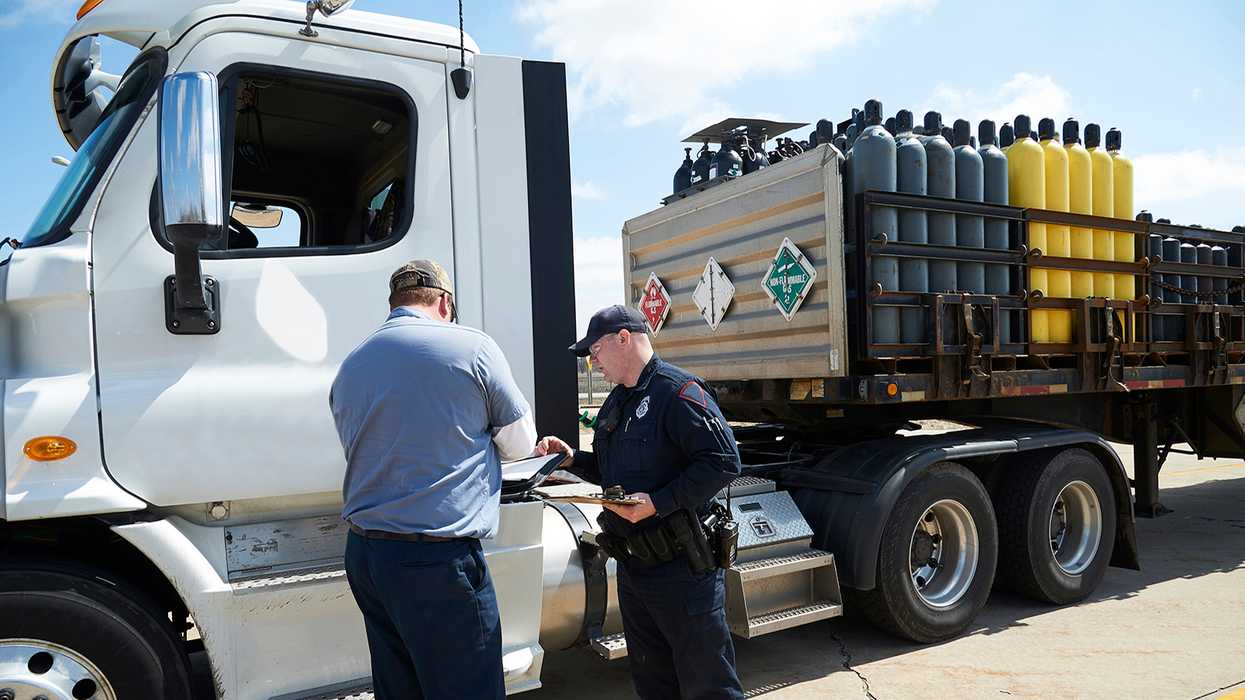
NewsIndustry NewsFleet SafetyDrug and Alcohol Testing - DOTFocus AreaIn-Depth ArticleUSAEnglishTransportationDrug and Alcohol Clearinghouse - Motor Carrier
2026-04-22T05:00:00Z
Setting the Clearinghouse record straight for DUIs in CMVs
It’s not the news any employer wants to hear. One of your drivers was charged with driving under the influence (DUI) while operating a vehicle requiring a commercial driver’s license (CDL). What’s next? Can the driver fight it? What if they get it tossed out in court?
Motor carrier responsibilities
Under DOT drug and alcohol testing rules, “actual knowledge” occurs when an employer learns of drug or alcohol use based on specific scenarios, including a traffic citation for DUI in a CDL commercial motor vehicle (CMV). A traffic citation includes a ticket, complaint, or other document charging a driver.
An employer’s actual knowledge of a Part 382 violation is treated the same as any other drug or alcohol violation (e.g., failed test, refusal to test). The motor carrier must:
- Pull the driver from all safety-sensitive functions (SSFs),
- Provide the driver with a list of substance abuse professionals, and
- Report the actual knowledge to the Drug and Alcohol Clearinghouse.
The driver’s Clearinghouse status is changed to Prohibited at this point.
Even if the driver wants to fight the charges in court, the driver can’t resume SSFs. Instead, the driver must complete the return-to-duty (RTD) process, get the citation dismissed, or be adjudicated not guilty.
Drivers who are convicted of DUI in a CDL CMV must comply with the RTD requirements and follow-up testing.
DUIs that result in ‘non-convictions’
Suppose your driver wins in court. The Federal Motor Carrier Safety Administration (FMCSA) won’t enforce the RTD process for the DUI when the citation results in a non-conviction.
The term “non-conviction” means that the charge of DUI in a CMV is dismissed without the imposition of fines, court costs, or other punitive actions, or there is an unvacated adjudicated finding of not guilty. Terms that states may use to indicate a dismissal include:
- Nolle Prosequi (Nolle Pros’d or Nolle Prossed),
- Withdrawn, or
- Discontinued.
The term “non-conviction” does not include pleading guilty to a lesser charge (e.g., reckless driving).
Petitioning FMCSA
Does FMCSA automatically update the driver’s record following a non-conviction? No, the court system doesn’t notify FMCSA of the case’s final disposition. The driver must notify FMCSA of the non-conviction by submitting a petition along with documentation. Documentation may include:
- A certificate of disposition from the court,
- A letter from a prosecutor stating that the charge has been dropped, or
- A screenshot from a court online docket system that displays the disposition.
A statement from the driver, even if provided in the form of an affidavit, will not be considered unless accompanied by documentary evidence.
The driver may resume safety-sensitive functions when FMCSA accepts the evidence and changes the Clearinghouse status from Prohibited to Not Prohibited.
The driver whose charges resulted in a non-conviction is no longer required to pursue the RTD program and follow-up testing.
Key to remember: An employer who learns of a DUI in a CDL CMV must report it as actual knowledge, even if the driver plans on challenging it in court. The driver can’t return to SSFs unless there is proof of a non-conviction or successful completion of the RTD process.

NewsIndustry NewsFleet OperationsEnglishIRP and IFTA recordkeepingFocus AreaIn-Depth ArticleHighway use - Mileage taxFleet TaxesInternational Fuel Tax Agreement (IFTA)Fleet taxesTransportationUSA
2025-02-11T06:00:00Z
IFTA miles: All are reportable, some are taxable
Knowing the key differences between taxable and non-taxable miles can help you avoid costly errors, minimize payments, and claim your rightful refunds when filing your quarterly fuel tax returns.
ALL miles are reportable
Quarterly fuel tax returns required under the International Fuel Tax Agreement (IFTA) consider the fuel purchased and miles traveled to calculate a net tax balance. You must track and report all miles traveled, including empty or deadhead miles, personal conveyance miles, yard moves, etc., whether the miles are taxable or nontaxable. Exemptions allowed under other programs – like hours of service, for example – do not apply to this program.
Reporting all miles traveled and fuel purchased is important because the “total miles” and “total gallons” are used to calculate the average miles per gallon (mpg) for your fleet vehicles. Incorrectly reporting these totals will throw off the rest of your calculations, including your tax due or refund amounts.
Include all miles traveled for the total miles calculation to achieve the most accurate mpg, and then account for any exempt or non-taxable miles later in the report to keep them out of the “taxable miles” total.
SOME miles are taxable
Exempt miles under IFTA vary considerably by state. A few examples of exempt miles include:
- Forest and agricultural roads in California,
- Turnpike miles in Massachusetts and Nova Scotia, and
- Off-highway and private roads in several states.
In addition, some jurisdictions allow fuel permit exemptions, where any miles driven under the permit are not taxable.
Note that all jurisdictions require documentation to support any claim of tax-exempt or non-taxable miles.
Also, be sure to understand and comply with the terms of any exemptions you claim. Remember those Massachusetts Turnpike miles? To claim those miles as exempt from IFTA, you must:
- Retain all turnpike receipts and fuel invoices, and
- File a separate “Use Tax Return” to the state by April 15 each year the exemption is taken.
Read the fine print for your exemptions
One common mistake is taking IFTA credit for toll miles in New York. While toll miles can be deducted from the New York Highway Use Tax (HUT) return, they are not deductible under IFTA.
Also, special rules apply when reporting travel in Oregon because that state does not impose a tax on motor fuels under IFTA. Instead, they charge a weight-mile tax through a separate filing (similar to those Massachusetts Turnpike miles). Still, for your IFTA return, miles traveled in Oregon are included with your “Total IFTA miles,” and the gallons delivered into your IFTA vehicles in Oregon are included with your “Total gallons purchased,” to calculate your fleet’s average miles per gallon.
Key to remember: Under IFTA, ALL miles must be tracked and reported, but SOME miles are exempt or non-taxable. Understand the difference to avoid errors, minimize payments, and claim refunds when qualified.
Most Popular Highlights In Human Resources

NewsIndustry NewsIndustry NewsHR GeneralistFamily and Medical Leave Act (FMLA)Family and Medical Leave Act (FMLA)USAHR ManagementEnglishFocus AreaHuman Resources
2023-09-06T05:00:00Z
Appellate court sided with employee's (almost) 3-year-delayed FMLA claim
Back in October 2018, Laffon had a medical emergency and needed some time off under the federal Family and Medical Leave Act (FMLA).
Her leave lasted until November 15. Ten days after she returned to work, on November 26, her employer terminated her.
She sued, arguing that the employer retaliated against her because of her FMLA leave.
The catch? She didn't bring the suit until almost three years later.
No link between leave and termination
In court, the employer argued that there was no causal link between Laffon taking FMLA leave and her termination. Although the court documents aren't robust, they do reveal that the employer indicated that Laffon's allegations didn't show that her taking FMLA leave was a factor in the decision to terminate her. The documents showed only that the termination chronologically followed her leave.
The court agreed with the employer. It also agreed that Laffon failed to allege a willful violation of the FMLA, which would allow her to benefit from the FMLA's three-year statute of limitations.
Laffon appealed the case to the Ninth Circuit.
Statute of limitations
Under the FMLA, employees have two years from the date of the last event constituting the alleged violation for which they can bring a claim.
Those two years are extended to three years if the employer's actions were "willful." This means that an employee must show that the employer either knew or showed reckless disregard for whether its conduct violated the FMLA.
Ruling overturned
Fast forward to August 2023, when the Ninth Circuit reversed the lower court's decision. It indicated that, based on Laffon's amended complaint and liberally construing the law, her allegations establish that her leave was causally connected to her termination and that the employer's action (her termination) was willful.
Glymph v. CT Corporation Systems, No. 22-35735, Ninth Circuit Court of Appeals, August 22, 2023.
Key to remember: Terminating an employee soon after returning from FMLA leave is risky, unless there is a clear, well-documented, non-leave-related reason. Case documents did not show such a clear reason, which can also increase the risk of a willful finding. Employees have time to file claims, even years.
NewsIndustry NewsCompensationPayrollCompensationHR GeneralistFamily and Medical Leave Act (FMLA)In-Depth ArticleFamily and Medical Leave Act (FMLA)Associate RelationsEnglishUSAHR ManagementFocus AreaHuman Resources
2026-04-16T05:00:00Z
May employers transfer employees on intermittent leave?
When employees take intermittent leave under the federal Family and Medical Leave Act (FMLA), employers might want to move them into a different position that better suits the needs of the business. Employers must, however, tread carefully, because they may make such transfers or reassignments only in limited circumstances.
Foreseeable leave only
Employers may require employees on intermittent or reduced schedule leave only if the leave is foreseeable based on planned medical treatment for the employee, a family member, or a covered servicemember, including during a period of recovery from:
- The employee’s own serious health condition;
- A serious health condition of a spouse, parent, or child; or
- A serious injury or illness of a covered servicemember.
Employers may also require employees to transfer to an alternative position in cases of intermittent or reduced-schedule leave for bonding with a healthy child.
Unforeseeable intermittent leave might cause the majority of the headaches, but employers may not permanently transfer employees who take this type of leave.
Instead, in these situations, employers may require an employee to transfer temporarily, while the employee needs leave, to an available alternative position for which the employee is qualified and which better accommodates recurring periods of leave than does the employee's regular position.
Alternative positions
In situations when employers may transfer employees to an alternative position, the position must have equivalent pay and benefits, but it doesn’t have to have equivalent duties.
Employers may increase the pay and benefits of an existing alternative position to make them equivalent to the pay and benefits of the employee's regular job.
Employers may also transfer the employee to a part-time job with the same hourly rate of pay and benefits, provided they don’t make the employee take more leave than is medically necessary.
For example, employers could transfer an employee who wants to take leave in increments of 4 hours per day to a half-time job. They could also keep the employee in their original job on a part-time schedule, paying the same hourly rate as the employee's previous job and enjoying the same benefits.
Employers may not eliminate benefits that they otherwise wouldn’t give to part-time employees. They may, however, proportionately reduce benefits, such as vacation leave, where their normal practice is to base such benefits on the number of hours worked.
Employers may not transfer an employee to an alternative position to discourage them from taking FMLA leave or impose a hardship on the employee. They may not, for example:
- Transfer a white-collar employee to perform laborer's work,
- Reassign an employee working the day shift to the graveyard shift, or
- Reassign an employee working in the headquarters facility to a branch at a significant distance away from the employee's normal job location.
Job reinstatement
When employers may transfer employees to an alternative position, and those employees no longer need FMLA leave, employers must put them in the same or equivalent job as before.
Key to remember: Employers may transfer employees who take intermittent leave to an alternative position, but only if the leave is foreseeable.

NewsElements of a General Duty Clause ViolationBehavior Based SafetyRisk Assessment and ManagementTraining & DevelopmentEmployee RelationsSafety CommitteesIn-Depth ArticleAssociate Benefits & CompensationSafety & HealthEmployee RelationsGeneral Duty ClauseHuman ResourcesSafety and Health Programs and TrainingTrainingTrainingGeneral Duty Clause Enforcement AreasWorkplace SecurityHR ManagementEnglishFacility SecurityIndustry NewsWorkplace ViolenceActive ShooterWorkplace ViolenceGeneral Industry SafetyGeneral Duty ClauseHR GeneralistAssociate RelationsFocus AreaUSA
2026-04-24T05:00:00Z
Workplace violence prevention: Working together to create safer work environments
April is Workplace Violence Awareness Month. Organizations earmark April to focus on ways to reduce the risk of a violent incident happening in the workplace. By increasing awareness and fostering a culture of safety, organizations can help protect their employees from harm.
Health care settings
Health workers worldwide face a high risk of violence, with 8–38 percent experiencing physical attacks, while others are subjected to threats or verbal abuse, according to the World Health Organization (WHO). Most incidents involve patients or visitors. Those at greatest risk include nurses, patient-facing staff, emergency room personnel, and paramedics.
Violence against health workers harms staff well-being, morale, and retention, ultimately compromising quality of care and causing significant financial loss.
An OSHA proposed rule — ‘Workplace Violence in Health Care and Social Assistance’ — was moved to Long-Term Action status, according to the Spring 2025 regulatory agenda that was released on September 4, 2025. Long-Term Actions are items under development, but the agency doesn’t expect to have a regulatory action within the 12 months after the latest edition of the agenda.
This turn of events was surprising since OSHA had been working on a standard for preventing workplace violence in health care and social assistance settings. OSHA had planned to publish the proposed rule in the Federal Register in June 2025.
Even without a federal standard addressing workplace violence in health care, several states have their own health care violence prevention laws in place.
General Duty Clause
Although OSHA doesn’t have a workplace violence standard, employers must provide a workplace that’s free of known health and safety hazards. This is addressed in OSHA’s General Duty Clause (GDC), Section 5(a) of the Occupational Safety and Health (OSH) Act.
The following elements are necessary for OSHA to prove a violation of the GDC:
- The employer failed to keep the workplace free of a hazard to which employees of that employer were exposed;
- The hazard was recognized;
- The hazard was causing or was likely to cause death or serious physical harm; and
- There was a feasible and useful method to correct the hazard.
A general duty citation must involve both the presence of a serious hazard and exposure of the cited employer’s own employees.
During a violent incident investigation, OSHA inspectors would likely gather evidence about whether an employer knew that a potential workplace violence hazard existed and whether there were feasible means to prevent or minimize such hazards. Investigators might also look at evidence of any potential whistleblower retaliation in which workers complained about workplace violence risks or reported injuries from workplace violence incidents.
Health care facilities have been cited when staff were injured by violent patients or visitors. In one case, nurses were regularly assaulted, but the hospital had no prevention program, no staff training, and no reporting system. OSHA stepped in using the GDC. Prevention could have included de-escalation training, secure facility layouts, panic buttons, and post-incident support.
Tips for preventing violent acts
In most workplaces where risk factors can be identified, violent acts can be prevented or minimized.
Building respectful workplaces is one way to do this. The most common forms of uncivil behaviors are when employees:
- Address others in disrespectful ways,
- Interrupt those who are speaking, and
- Micromanage people to an excessive degree.
Providing employees with civility training — which differs from anti-harassment training — can help to create more respectful work environments with less conflict. While civility training isn’t only focused on preventing harassment, that could be a component.
Research has shown that incivility can be a precursor to harassment. In contrast to anti-harassment training, civility training tends to give employees positive examples of how to behave, versus actions to avoid.
The training typically includes a focus on:
- Interpersonal communication,
- Conflict resolution, and
- Effective supervisory techniques.
How civility training is presented will depend on the size of the workforce, demographics, location, industry, etc. There is no one-size-fits-all approach. The point is to get employees to be more aware of how their words and actions impact others, and how they should treat everyone with respect.
It’s also important to watch for signs that someone could turn violent. While there’s no guarantee that one or more questionable behaviors equate to a potential incident, some warning signs come from someone experiencing personal or work issues.
They could be struggling financially, going through a divorce, or having health issues. Work triggers could stem from negative employment actions, like a demotion or termination, or other types of conflict.
Key to remember: April is Workplace Violence Prevention Month. Now’s the time to focus on ways to keep all employees safe.
NewsChange NoticesWage and HourChange NoticeOregonAssociate Benefits & CompensationAssociate RelationsHR GeneralistMinimum WageHR ManagementEnglishFocus AreaHuman Resources
2026-04-23T05:00:00Z
Oregon minimum wage to increase
Effective date: July 1, 2026
This applies to: Employers with employees in Oregon
Description of change: The Oregon Bureau of Labor and Industries released information on the hourly minimum wage increases effective July 1, 2026:
- Standard: $15.55
- Portland Metro: $16.80
- Non-Urban Counties: $14.55
The Oregon minimum wage rate is indexed to inflation based on the Consumer Price Index, a figure published by the United States Bureau of Labor Statistics.
View related state info: Minimum wage - Oregon

NewsIndustry NewsHR GeneralistFamily and Medical Leave Act (FMLA)In-Depth ArticleFamily and Medical Leave Act (FMLA)HR ManagementEnglishUSAFocus AreaHuman Resources
2024-05-07T05:00:00Z
May employees take FMLA leave to care for family members outside the U.S.?
Yes, employees may take leave under the federal Family and Medical Leave Act (FMLA) to care for family members who are outside U.S. borders.
If the employee meets the eligibility criteria of the FMLA, the family member has an FMLA serious health condition, and the employee is needed to care for the family member, the employee’s time off would be protected. It doesn’t really matter where the family member is.
To figure out whether the family member’s condition meets the criteria under the FMLA, employers may require that the employee provide a certification supporting the leave.
Certifications in other languages
If an employee or a family member is visiting in another country, or a family member lives in another country, and a serious health condition develops, employers must accept a medical certification from a health care provider who practices in that country. This rule applies to an original certification, a recertification, and when requesting a second or third opinion from a provider.
If a certification by a health care provider from another country is in a language other than English, employers may require that the employee provide a written translation of the certification.
Traveling to care for family member
If family members are outside the U.S., employees will need to spend some time traveling. The employee’s travel time would likely be seen as part of the FMLA leave if:
- The travel is so intertwined with the care, or
- If it is needed to obtain the care.
Handling intermittent leave
Employees may also take intermittent FMLA leave to care for far-away family members. Employers would manage such leave the same way they do for intermittent leave inside the U.S. Employers should:
- Give the employee an eligibility/rights & responsibilities notice within five days of being put on notice,
- Ask for a certification if desired (including a translation),
- Give the employee a designation notice within five days of getting enough information, and
- Track the employee’s leave time.
Whenever employees are away from the physical worksite, tracking how much intermittent FMLA leave they are taking has its own challenges. Employers may use a simple honor system of self-reporting or technology to keep track of when the employee is taking FMLA leave and when the employee is working.
Key to remember: Eligible employees may take FMLA leave to care for family members who are outside the U.S.

NewsIndustry NewsAssociate Benefits & CompensationHR GeneralistFamily and Medical Leave Act (FMLA)In-Depth ArticleFamily and Medical Leave Act (FMLA)Associate RelationsEnglishHR ManagementFocus AreaHuman ResourcesUSA
2025-03-27T05:00:00Z
Who can fill out FMLA forms? The answer might surprise you
One of the most common questions involving the federal Family and Medical Leave Act (FMLA) that we see is: “Can ________ fill out the medical certification?”
This question stumps a lot of HR people and can be a little confusing.
It might be easier to start with who CAN’T fill out an FMLA certification. That includes your coworker, best friend, neighbor, or pet.
Jokes aside, often (but not always) a doctor fills out the FMLA certification, and since March 30 is “Doctors’ Day,” this is a great time to discuss this topic.
FMLA certification basics
Employers aren’t required to use certifications, but if they do, the U.S. Department of Labor (DOL) has five different certification forms to use for various FMLA leave situations.
The forms are as follows:
- Certification of Health Care Provider for Employee's Serious Health Condition,
- Certification of Health Care Provider for Family Member's Serious Health Condition,
- Certification of Qualifying Exigency for Military Family Leave,
- Certification for Serious Injury or Illness of a Current Servicemember for Military Family Leave, and
- Certification for Serious Injury or Illness of a Veteran for Military Family Leave.
Let’s focus on the first two, as these are the most common ones HR administrators use.
Who can fill out an FMLA certification?
The FMLA regulations describe the person who has the authority to fill out a certification as a “health care provider.” The good news is, the regulations include a lengthy list of medical professionals who fit this role.
Under the FMLA, a health care provider includes:
- A doctor of medicine or osteopathy,
- A podiatrist,
- A dentist,
- A clinical psychologist,
- An optometrist,
- A chiropractor (limited to manual manipulation of the spine as demonstrated by X-ray),
- A nurse practitioner,
- A nurse midwife,
- A clinical social worker,
- A physician assistant,
- A Christian Science practitioner, and
- Any health care provider from whom the employer or the employer's group health plan's benefits manager will accept a medical certification to substantiate a claim for benefits.
To be qualified to fill out FMLA forms, medical professionals must be authorized to practice in the state and perform within the scope of their practice. This means that the provider must be authorized to diagnose and treat physical or mental health conditions.
What about doctors in a foreign country?
If an employee or an employee's family member is visiting another country, or a family member resides in another country, and a serious health condition develops, the employer must accept a medical certification from a health care provider who practices in that country. This includes second and third opinions.
If a medical certification from a foreign health care provider is not in English, the employee may be required to provide a written translation of the certification.
Key to remember: The FMLA regulations spell out which medical professionals can fill out certification forms.
Most Popular Highlights In Safety & Health

NewsIndustry NewsSafety & HealthConstruction SafetyGeneral Industry SafetyWalking Working SurfacesIn-Depth ArticleLaddersEnglishFocus AreaUSA
2026-04-22T05:00:00Z
Ladders, familiar work, serious risks
Ladder-related standards consistently rank among OSHA’s top 10 most cited violations. Every year, serious injuries continue to occur, not because ladders are unsafe, but because they’re used in ways people don’t recognize them as risky.
Preventing ladder incidents starts with recognizing when everyday tasks introduce risk and making deliberate choices to use, position, and reassess ladders before unsafe habits take hold.
Ladders feel safe, until they’re not
Ladders don’t usually trigger a sense of risk because they’re seen as a part of everyday work. When tasks feel quick and familiar, people don’t always stop reassessing the setup. That’s how unsafe ladder habits with big consequences can develop, including:
- standing on the top step “just for a second;”
- reaching too far instead of climbing down;
- using whatever ladder is closest, not the right one; and
- skipping ladder inspections because “it worked last time.”
Ladder safety isn’t going away, and that’s not a bad thing
If ladder safety feels like a repeat conversation, that’s because the same risks keep showing up. New employees are hired; facilities and equipment changes, and old habits stick around longer than they should. Even experienced workers fall into this trap. Familiar tasks start to invite rushing. Rushing leads to shortcuts, and shortcuts are where ladder injuries happen.
Emphasis must be placed on recognizing the risk before the climb starts. This means knowing when a ladder is the wrong choice, repositioning is safer than reaching, and when a quick task deserves the same setup as a longer one.
Most incidents don’t start with bad intentions. They start with “just this once” decisions, one more rung, one quick reach, one skipped check. Effective ladder safety training is about breaking routines and refocusing attention on the decisions that make ladder work safer.
Routine work, repeat injuries
Ladder injuries follow a familiar pattern. They don’t usually come from unusual jobs or unexpected hazards, and they happen during everyday tasks that feel common. Injury reports often look the same, such as short tasks, quick setups, and decisions made under time pressure. The ladder didn’t fail. The setup and the decisions around it did.
Injury data from OSHA and the Bureau of Labor Statistics (BLS) consistently point to the same causes. That’s why the same types of ladder injuries keep occurring repeatedly, not because the hazards are unknown, but because routine work makes those hazards easier to overlook. These reasons include:
- people underestimate the risk because ladders feel familiar;
- jobs feel “too small” to stop and reset the ladder;
- time pressure encourages leaning, rushing, and overreaching; and
- experience leads to comfort, and comfort leads to shortcuts.
The rules are written in injuries
OSHA ladder requirements are built around real injury trends and are based on decades of injury data. Falls from ladders remain one of the leading causes of workplace injuries, which is why OSHA keeps ladders near the top of its enforcement priorities year after year:
OSHA 29 CFR 1910.23 defines how ladders are intended to be used, specifically prohibiting practices such as standing on the top step of a stepladder, using ladders for purposes they were not designed for, and climbing ladders that have not been inspected. These requirements exist because improper use, poor setup, and skipped inspections consistently show up in ladder fall investigations.
OSHA 29 CFR 1910.30 reinforces that preventing ladder injuries depends on training employees to recognize hazards before they climb, understand proper ladder selection and positioning, and know when a ladder is not the right tool for the task. Together, these standards emphasize that ladder injuries are not random events, they are predictable outcomes of routine decisions made during everyday work.
Small choices make a big difference
Ladder safety isn’t only about compliance. Incidents develop from a series of small, moment to moment decisions made during routine work. These choices made daily either reduce risk or quietly add to it. Ladder injuries can be avoided by taking the time to make simple improvements including:
- inspecting and securing the ladder,
- climbing down and repositioning,
- selecting the proper ladder for the task, and
- stopping when the ladder no longer feels stable or safe.
Key to remember: Take the time to choose safer setups, stay alert, and prevent routine decisions from turning into preventable injuries. When employees choose the correct ladder, reposition instead of reaching, and inspect before use, the risk of ladder injuries falls, not your employees.

NewsIndustry NewsHeat and Cold ExposureSafety & HealthConstruction SafetyGeneral Industry SafetyAgriculture SafetyMaritime SafetyIn-Depth ArticleExtreme Temperature PreparationEnglishMine SafetyHeat StressFocus AreaUSA
2026-04-20T05:00:00Z
How heat becomes fatal
Imagine a workplace where the real danger is something you can’t even see. Extreme temperatures don’t just make workers uncomfortable; they can silently push the human body past its limits, triggering a deadly chain reaction. When cooling mechanisms fail, organs shut down, and what starts as simple dehydration can spiral into heatstroke which kills more workers than many realize. Understanding how heat becomes lethal is the first step toward preventing tragedy.
What’s happening to the body?
No one is immune from extreme heat when controls are lacking. While some workers are more vulnerable (e.g., older workers, seasonal workers, or those not acclimatized to the heat), the human body still reacts to heat when temperatures soar.
As temperatures rise, the heart pumps harder to maintain core body temperature. Blood helps millions of sweat glands in the body to send moisture to the skin’s surface, allowing heat to evaporate into the air. This process is meant to cool the body. However, when it’s extremely hot and humid, the sweat glands just can’t keep up, and cooling becomes impossible without the additional help of cooling aids.
Humidity, or moisture in the air, prevents sweat from evaporating off the skin. This keeps the body from cooling effectively which can create overheating. As the body continues to overheat, it sweats more, which results in reduced blood volume and dehydration. This can quickly lead to two additional negative consequences:
- Blood pressure drops. The heart is required to pump more to maintain pressure so blood can reach vital organs. When blood can’t effectively reach the lungs or brain, the body begins to shut down quickly and cognitive abilities can decrease rapidly or cease altogether.
- Dehydration ensues. Typically, by the time you feel thirsty, you are already dehydrated. Continued fluid loss means the body has nothing to create sweat with to send to the skins surface.
A lack of blood flow to vital organs, along with dehydration, lead to poor decision-making and impaired judgment, which can result in serious workplace incidents; some of which can be fatal.
What are the warning signs?
The body will tell you when it’s in trouble. Heat exhaustion warning signs begin with symptoms such as:
- Excessive sweating;
- Cool, pale, or clammy skin;
- Light-headedness from a weak pulse;
- Nausea or vomiting;
- Muscle cramps; and /or
- Unusual irritability.
These are tell-tale signs that your body is dehydrated and starting to lose the ability to self-cool. If protective measures like hydration, rest, and external cooling aren’t taken right away, heat exhaustion can quickly become heat stroke. This can happen within minutes, creating a quick downward spiral to disorientation, unconsciousness, organ shutdown, and heart failure.
How can killer heat be stopped?
Heat can be deadly, but it doesn’t have to be. By applying these simple controls and safe work practices, you can help protect workers from life-threatening heat exposure:
- Water: Ensure workers consume at least 1 quart of suitably cool water per hour (or 8 oz every 15 minutes) during excessive heat. Avoiding caffeinated or sugary drinks will also help ward off dehydration.
- Rest: Encourage workers to take frequent breaks from the heat in artificially or naturally shaded areas, where there is air movement, or in an air-conditioned area.. Ensure break areas are as close as possible to the work area and are sufficient enough to hydrate, remove PPE, and cool down.
- Shade: Provide shade areas (e.g., tents), fans, air-conditioning, or cooling stations.
- Acclimatization: Gradually increase employee exposure over time so the body isn’t more stressed in the heat, then monitor workers closely during this time.
- Administrative controls: Plan more intensive work activities for cooler parts of the day, implement a buddy system for monitoring workers, and rotate workers so frequent breaks are possible. Monitor weather conditions so work can be adjusted accordingly.
- Clothing and PPE: Provide hats and cooling gear for workers and encourage them to wear lightweight, loose-fitting, and light-colored clothing.
- Training: Train workers to understand dangerous temperatures and how to recognize and respond to symptoms of heat stress.
- Be prepared! Implement a heat injury and illness prevention plan that includes quick medical access and care.
Keys to remember: Heat becomes lethal when the body’s cooling mechanisms fail, allowing core temperature to rise beyond control. Prevention methods are essential for halting heat stress that can trigger widespread cellular damage, inflammation, and organ failure.

NewsIndustry NewsSafety & HealthForklifts and Powered TrucksConstruction SafetyGeneral Industry SafetyForklifts and Powered TrucksPIT Training RequirementsIn-Depth ArticleEnglishSafe Operation of PITsFocus AreaUSA
2024-01-10T06:00:00Z
Clear vision, sound safety: The role of vision and hearing tests for forklift operators
The powered industrial truck standard at 1910.178 does not specifically address the vision and hearing requirements of operators. However, there are obviously some potential concerns and safety issues. These need to be evaluated by the employer (and appropriate medical personnel) in light of specific operations and work environment.
OSHA has issued letters of interpretation (LOI) addressing both vision (LOI dated October 20,1976) and hearing (LOI dated January 26, 1998) impaired potential forklift operators. These letters make no mention of vision or hearing requirements but do point out an ANSI B56.1 standard which suggests “an examination…include such things as field of vision, hearing, depth perception and reaction timing”, as well as “require employers to assure that operators are qualified as to visual, auditory, and mental ability to operate the equipment safely."
It should be noted that OSHA has not incorporated these ANSI requirements as an OSHA standard as of yet. That means it is up to the employer, through consultation with the appropriate medical personnel, to ensure their forklift operators can operate the equipment safely. Employers may not discriminate against an employee based on any impairment.
OSHA encourages employers to explore reasonable accommodations that will allow otherwise-qualified individuals to remain on the job while eliminating threats to the health or safety of others in the workplace.
Understand impairment concerns
Employers may have concerns for those workers with a hearing and/or vision impairment that wish to be trained as forklift operators. By recognizing potential safety issues, they can work to implement appropriate measures for the operator.
Around 15 percent of adult Americans say they have trouble hearing. For those with a hearing impairment, potential safety concerns with forklift operation may include difficulty or inability to hear the following:
- pedestrians nearby;
- horns or other warning signals;
- verbal instructions and training;
- other equipment;
- potential malfunction of the forklift; and
- emergency signals.
In addition, 18.4 percent of adult Americans are either blind or experience “a lot” or “some” visual impairment, even with corrective glasses in place . Potential safety risks associated with forklift operation for those who have a vision impairment may include:
- inadequate depth perception;
- insufficient peripheral vision;
- difficulty seeing pedestrians; and
- trouble differentiating different work environments.
Focus on appropriate measures
Hearing and vision impairment does not mean forklift operation is impossible, it simply suggests the employer may need to consider reasonable accommodations and implement appropriate measures for the operator.
For those with hearing impairments, this could include:
- installing vibrating alarms or lights to notify the operator of potential threats;
- utilizing hand signals or written instructions as a form of communication;
- increasing usage of mirrors and/or cameras to improve situational awareness; and
- providing specialized training for operators with hearing impairments.
For those with vision impairments, this could include:
- installing audible proximity detectors or sensors;
- enforcing pedestrian walkways and requiring hi-vis apparel;
- establishing clear communication methods and large signage where appropriate;
- maintaining floor markings, clear pathways, and adequate lighting; and
- providing specialized training for operators with vision impairments.
Remember the operation requirements
At a minimum, workers must receive proper training and certification before being allowed to operate a forklift. Such training includes a combination of formal instruction, practical training, and evaluation. Operators must be re-evaluated every three years, and refresher training provided to those who meet certain criteria. Also keep in mind, it is a violation of Federal law for anyone under the age of 18 to operate a forklift regardless of ability.
Key to remember
Ultimately, it is up to each employer (with a physician’s guidance, if necessary) to determine if an employee can operate the forklift in a safe manner.

NewsSafety Data SheetsIndustry NewsSafety & HealthConstruction SafetyGeneral Industry SafetyIn-Depth ArticleHazard CommunicationEnglishFocus AreaUSA
2025-01-17T06:00:00Z
Are you meeting OSHA’s requirements for electronic SDS storage?
OSHA allows employers to maintain Safety Data Sheets (SDSs) in hard copy or electronic format as long as there are no barriers to employee access. Informal polls conducted during our recent Hazard Communication (HazCom) webcasts show that attendees are close to evenly divided in their preference for maintaining SDSs in hard copy versus electronically, with many attendees choosing both methods. If you maintain SDSs electronically, be sure you’re meeting OSHA’s requirements.
Electronic storage doesn’t mean an internet search
Employers may make SDSs available to employees on a company website or contract with an off-site/web-based SDS provider. It’s not acceptable to require employees to perform an internet search to view or obtain an SDS.
If you maintain SDSs electronically, you must ensure that:
- All employees have adequate computer access, with no restrictions;
- There’s a backup procedure or system (e.g., paper, another electronic system) in place in case the primary system isn’t functioning;
- Employees are trained on how to access the SDSs (both on the computer and the backup procedure or system); and
- There’s a procedure or system in place to ensure that employees can receive a hard copy if they request one and in cases of emergency (which must be transmitted to medical personnel). It’s not acceptable to only transmit the information verbally.
Back it up!
What does OSHA mean by a backup procedure or system? This could be as simple as hard copies of SDSs in binders. If the internet or power goes down, it’s the most reliable option. However, if you have hundreds (or thousands!) of hazardous chemicals, this can be a challenge to maintain. I asked two of my colleagues about their industry experience with SDSs. One colleague said that in his previous position, he printed his SDS library once a year and kept the file in his office, but also placed the SDS inventory on a backup drive that he could access on another computer if necessary.
Another colleague said a second server may be an option, or an up-to-date thumb drive that can be plugged into another computer (provided there’s power). A lot depends on if power outages or internet interferences are of concern (which can be the case at any time). Some employers have the luxury of a secondary location that could provide digital access for some employees, but usually paper backups are the fallback.
Key to remember: If you store SDSs electronically, make sure you meet OSHA’s requirements, including that of a backup system or procedure.

NewsIndustry NewsSafety and Health Programs and TrainingSafety & HealthConstruction SafetyGeneral Industry SafetySafety and Health Programs and TrainingIn-Depth ArticleEnglishFocus AreaUSA
2026-04-23T05:00:00Z
Got safety handbooks? We asked, you answered
Employee training, onboarding, ongoing reference … We asked the J. J. Keller Insights Community, a group of customers who share feedback about safety-related topics, how they use safety handbooks in their workplaces. These handbooks are purchased – not created in-house by the panelists or their company – and may focus on a specific topic, like personal protective equipment (PPE), or cover a broad range of environmental, health, and safety (EHS) topics.
More than 70 percent of respondents said they require new employees to review safety handbooks during onboarding. Another 58 percent said they use them for refresher or ongoing training, and several respondents mentioned using them for reference purposes.
Handbooks can play an important role in workplace safety and health programs. For new employees, they help set clear expectations before starting work, identify where to find vital safety information, and build safe habits early on. Handbooks also help ensure consistency by delivering the same core safety information to all employees regardless of department, shift, or trainer.
For supervisors and managers, safety handbooks are practical tools for leading toolbox talks, reinforcing or developing training materials, and addressing unsafe behaviors.
Shared versus individual handbooks
Nearly 60 percent of survey respondents bought one handbook (or a few) and shared them among employees, while 42 percent provided individual handbooks for each employee. Of those who purchased one or a few, they typically kept the handbooks in central or safety-related locations, such as:
- Main offices
- Safety or compliance offices
- EHS departments
- Classroom or training spaces
- Shared libraries near Safety Data Sheet binders or training areas
- Shop floors near work areas
Use in training programs
As mentioned, the majority of those surveyed said they use safety handbooks as part of new hire, ongoing, and refresher training. This includes the following uses:
- Building or supporting existing training programs
- Creating quizzes or review questions
- Supporting skills testing (e.g., forklift, ladder, PPE)
- Providing supplementary materials for:
- Toolbox talks
- OSHA 30 courses
- Job-specific trainings (e.g., load securement, bloodborne pathogens, Federal Motor Carrier Safety Regulations)
Additional survey feedback
Open-ended survey responses highlighted that some companies prefer visual presentations or digital formats over print publications, with some expressing concern that hard copy materials may quickly become outdated. Others said they use handbooks only as background reference for the EHS team and see a need to increase handbook use in their company.
Key to remember: Safety handbooks can serve as a core part of safety and health programs by giving employees and supervisors a shared reference for training conversations and expectations.

NewsAccident Investigation Preparation and ResponseIndustry NewsAccident Investigation - OSHASafety & HealthConstruction SafetyGeneral Industry SafetyAgriculture SafetyIn-Depth ArticleEnglishFocus AreaUSA
2023-05-04T05:00:00Z
Tips and tricks for interviewing witnesses after an accident
Witness interviews are critical to any accident investigation and should be taken as quickly as possible after an accident. That’s when the information is fresh, and there’s less time for witnesses to talk with each other or come up with creative versions of the events that occurred. Interviews should focus on the facts of the event, including what happened before and after, and should avoid opinions and assumptions. Ultimately, the investigator needs to know who was involved, what they were doing, what was happening at the time, and when and where the accident occurred.
Interviews should be conducted privately with no more than two interviewers. By keeping the interviews small and away from others, you have a much better chance of having a factual and productive conversation. It may be tempting to let management sit in, but they’re likely to cause the employee to clam up and not be forthcoming. Keeping this conversation informal can help employees relax and talk more freely. Simply ask what happened and let the witnesses tell the story in their own words. Remind them that the goal of this conversation isn’t to get anyone in trouble.
Ask open-ended questions like “what happened next?” and avoid leading questions. A leading question might cause someone to make things up in an attempt to answer the question. Witnesses might give their opinions, and you can make notes, but distinguish between the facts and their opinions. Along the same lines, avoid questions that suggest an accusation, such as “do you think he wasn’t paying attention?” Repeat their conclusions back to them to confirm your understanding.
Something else to remember when interviewing is that people aren’t perfect. Statements from multiple witnesses might be contradictory because both statements can’t possibly be factual. This doesn’t mean either worker is lying. It could just be how they remember the events or are worried they may get in trouble.
Suppose the incident involved a forklift operator who stopped suddenly, and the load he was carrying slid off the tines, nearly striking a pedestrian. You might hear statements like, “I didn’t see the forklift” or “the pedestrian just came out of nowhere.” Now, that may be how the witnesses remember things. But there’s probably something else going on here. Follow-up questions might be along the lines of, “what were you focused on at the time of the accident?” Maybe the pedestrian was checking his cell phone and didn’t see or hear the forklift approaching. Or perhaps the forklift operator was going too fast or failed to stop and sound the horn at an intersection. There could be several contributing factors, and you’ll want to identify all of them.
Key to remember
Witness interviews provide valuable information in determining what happened when an incident occurs. It’s essential to make the witnesses comfortable and remind them the goal of investigating is to help prevent reoccurrence, not to blame employees.
Saved to my EVENT CALENDAR!
View your saved links by clicking the arrow next to your profile picture located in the header. Then, click “My Activity” to view the Event Calendar on your Activity page.
OK
J. J. Keller is the trusted source for DOT / Transportation, OSHA / Workplace Safety, Human Resources, Construction Safety and Hazmat / Hazardous Materials regulation compliance products and services. J. J. Keller helps you increase safety awareness, reduce risk, follow best practices, improve safety training, and stay current with changing regulations.
Copyright 2026 J. J. Keller & Associate, Inc. For re-use options please contact copyright@jjkeller.com or call 800-558-5011.