Compliance Just Got Easier: Stay ahead of regulatory changes with instant notifications on updates that matter.
['Injury and Illness Recordkeeping']
['Injury and Illness Recordkeeping Forms', 'Injury and Illness Recordkeeping', 'OSHA Recordkeeping', 'Electronic Reporting of Injury and Illness Records']
06/16/2026

Copyright 2026 J. J. Keller & Associate, Inc. For re-use options please contact copyright@jjkeller.com or call 800-558-5011.
:
|
InstituteElectronic Reporting of Injury and Illness RecordsInjury and Illness RecordkeepingInjury and Illness Recordkeeping FormsOSHA RecordkeepingUSAEnglishAnalysisFocus AreaCompliance and Exceptions (Level 2)Injury and Illness Recordkeeping
What are the recordkeeping forms?
['Injury and Illness Recordkeeping']
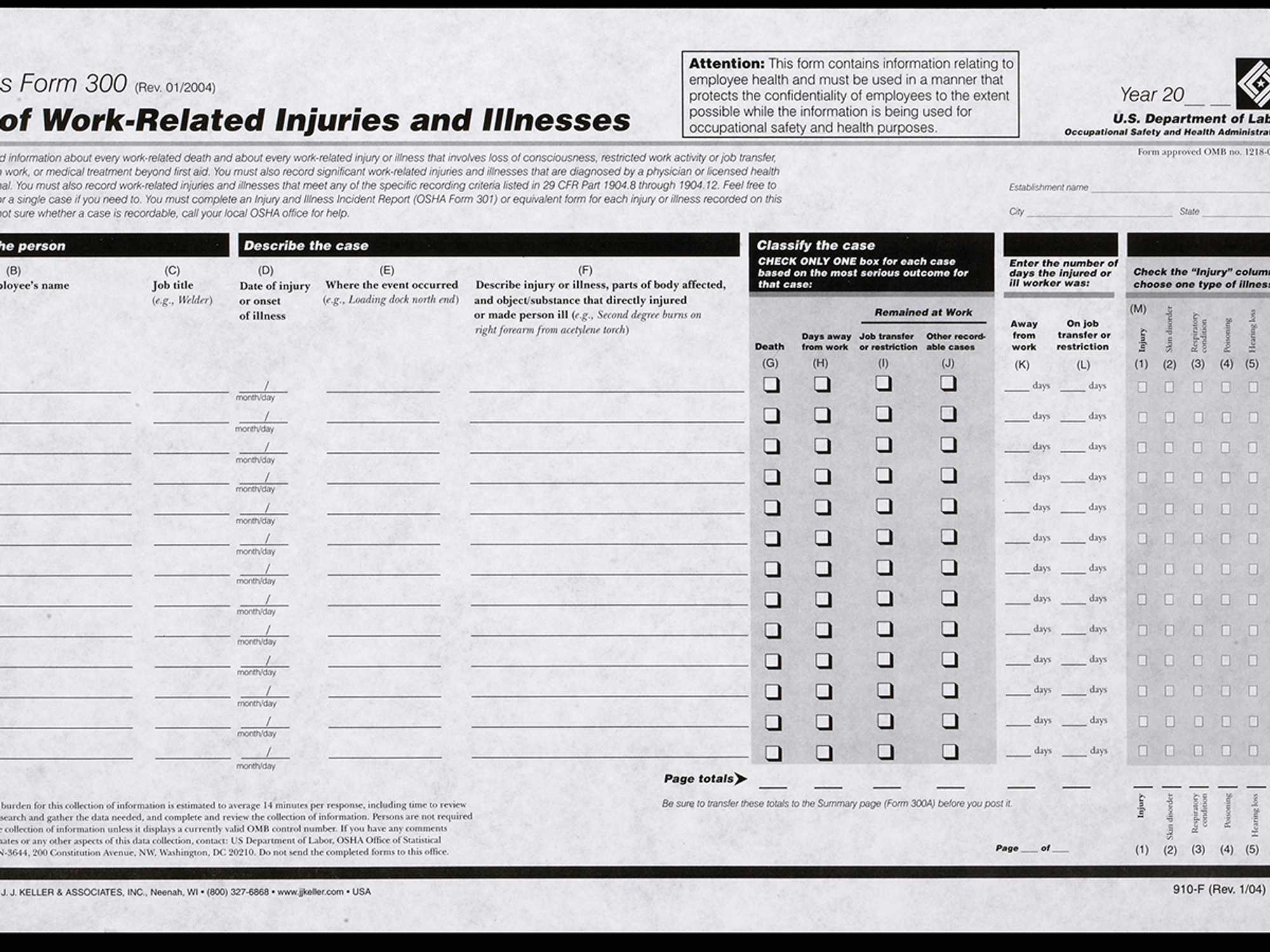
- OSHA injury and illness records should be recorded on Forms 300, 300A, and 301, or other equivalent forms if applicable.
The Occupational Safety and Health Administration (OSHA) 300, 300A, and 301 forms, or equivalent forms, are used for recordable injuries and illnesses. The OSHA 300 form is called the Log of Work-Related Injuries and Illnesses, the OSHA 300A is the Summary of Work-Related Injuries and Illnesses, and the OSHA 301 form is called the Injury and Illness Incident Report.
What are equivalent forms?
An equivalent form is one that has the same information, is as readable and understandable, and is completed using the same instructions as the OSHA form it replaces. Many employers use an insurance form instead of the OSHA 301 Incident Report or supplement an insurance form by adding any additional information required by OSHA.
May records be kept on a computer?
If the computer can produce equivalent forms when they are needed, as described under 1904.35 and 1904.40, records may be kept using the computer system.
:
injury-and-illness-recordkeeping
injury-and-illness-recordkeeping
FOUNDATIONAL LEARNING
InstituteInjury and Illness Record Retention and UpdatingElectronic Reporting of Injury and Illness RecordsInjury and Illness RecordkeepingInjury and Illness Recording CriteriaUSAEnglishCovered Employees for Injury and Illness RecordkeepingAnalysisFocus AreaCompliance and Exceptions (Level 2)Injury and Illness Recordkeeping
What are the recordkeeping criteria?
InstituteIn Depth Sub Topics (Level 4)Injury and Illness RecordkeepingReporting Fatalities and Severe InjuriesInjury and Illness Recording CriteriaInjury and Illness Recordkeeping ApplicabilityOSHA RecordkeepingUSAEnglishAnalysisFocus AreaInjury and Illness Recordkeeping
How should an employer record a case that results in death?
InstituteIn Depth Sub Topics (Level 4)Injury and Illness RecordkeepingInjury and Illness Recording CriteriaInjury and Illness Recordkeeping ApplicabilityOSHA RecordkeepingUSAEnglishAnalysisFocus AreaInjury and Illness Recordkeeping
How should an employer record a case that results in days away from work?
What are the recordkeeping forms?
InstituteElectronic Reporting of Injury and Illness RecordsInjury and Illness RecordkeepingInjury and Illness Recordkeeping FormsOSHA RecordkeepingUSAEnglishAnalysisFocus AreaCompliance and Exceptions (Level 2)Injury and Illness Recordkeeping
['Injury and Illness Recordkeeping']
- OSHA injury and illness records should be recorded on Forms 300, 300A, and 301, or other equivalent forms if applicable.
The Occupational Safety and Health Administration (OSHA) 300, 300A, and 301 forms, or equivalent forms, are used for recordable injuries and illnesses. The OSHA 300 form is called the Log of Work-Related Injuries and Illnesses, the OSHA 300A is the Summary of Work-Related Injuries and Illnesses, and the OSHA 301 form is called the Injury and Illness Incident Report.
What are equivalent forms?
An equivalent form is one that has the same information, is as readable and understandable, and is completed using the same instructions as the OSHA form it replaces. Many employers use an insurance form instead of the OSHA 301 Incident Report or supplement an insurance form by adding any additional information required by OSHA.
May records be kept on a computer?
If the computer can produce equivalent forms when they are needed, as described under 1904.35 and 1904.40, records may be kept using the computer system.
2656870807
2656871884
UPGRADE TO CONTINUE READING
J. J. Keller is the trusted source for DOT / Transportation, OSHA / Workplace Safety, Human Resources, Construction Safety and Hazmat / Hazardous Materials regulation compliance products and services. J. J. Keller helps you increase safety awareness, reduce risk, follow best practices, improve safety training, and stay current with changing regulations.
Copyright 2026 J. J. Keller & Associate, Inc. For re-use options please contact copyright@jjkeller.com or call 800-558-5011.