Compliance Just Got Easier: Stay ahead of regulatory changes with instant notifications on updates that matter.
['CMV Parts and Maintenance']
['Rear bumper']
07/07/2026

Copyright 2026 J. J. Keller & Associate, Inc. For re-use options please contact copyright@jjkeller.com or call 800-558-5011.
:
|
InstituteCMV Parts and MaintenanceFocus AreaUSAFleet OperationsEnglishAnalysisTransportationRear bumperIn Depth (Level 3)
Trailer rear bumper
['CMV Parts and Maintenance']
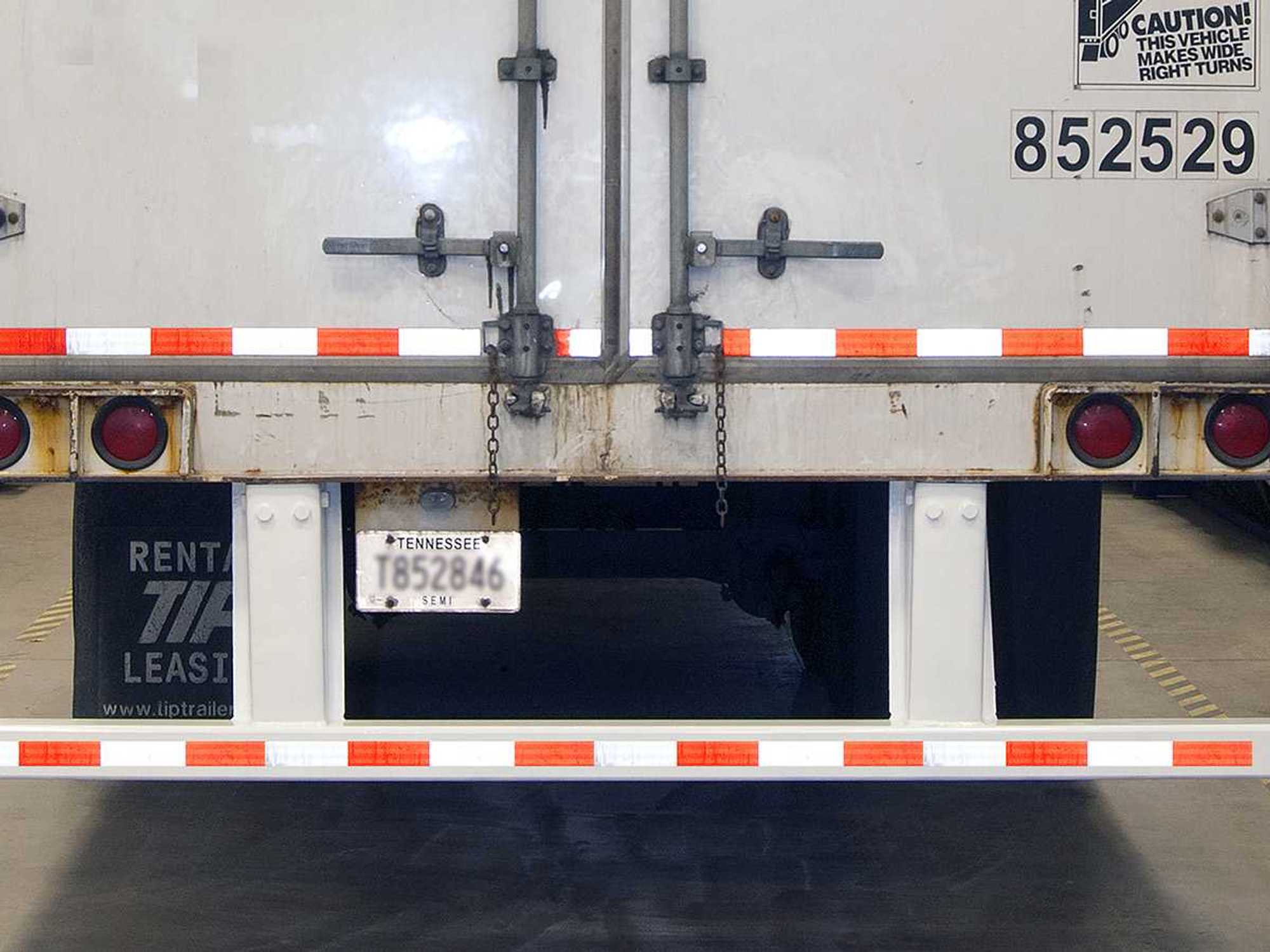
- Trailers and semitrailers with a GVWR of 10,000 pounds or more, and manufactured on or after January 26, 1998, must be equipped with (or have installed) a rear impact guard that meets FMVSS requirements in effect at the time the vehicle was manufactured.
- Specific requirements govern the height, width, distance from the ground, surface area, certification, and labeling of rear impact guards.
- The rear impact guard requirements do not apply to pole trailers, pulpwood trailers, low chassis vehicles, special purpose vehicles, wheels back vehicles, and trailers towed in driveaway-towaway operations.
The rear end protection requirements (the rear bumper requirements) for trailers and semitrailers vary based on vehicle type and year of manufacture. The regulations state the required size and location of the bumper, and the associated National Highway Traffic Safety Administration (NHTSA) regulations (571.223 and 224), include the energy absorption and certification labeling requirements. (393.86).
Vehicles manufactured on or after January 26, 1998
Trailers and semitrailers with a gross vehicle weight rating (GVWR) of 10,000 pounds or more, and manufactured on or after January 26, 1998, must be equipped with a rear impact guard that meets the requirements of Federal Motor Vehicle Safety Standard (FMVSS) No. 223 (571.223) in effect at the time the vehicle was manufactured. When the rear impact guard is installed on the trailer or semitrailer, the vehicle must, at a minimum, meet the requirements of FMVSS No. 224 (571.224) in effect at the time the vehicle was manufactured. (393.86(a))
The rear impact guard must also meet these requirements:
- Impact guard width — Must extend to within four inches of the side extremities of the vehicle, but not beyond the side extremity of the vehicle.
- Impact guard height — The vertical distance between the bottom edge of the guard and the ground must not exceed 22 inches.
- Guard rear surface — At any height 22 inches or more above the ground, the rearmost surface guard must be within 12 inches of the rear extremity of the vehicle. Theguard, however, may extend beyond the rear extremity of the vehicle.
- Cross-sectional vertical height — The horizontal member of each guard must have a cross sectional vertical height of at least 3.94 inches at any point across the guard width.
Exceptions: These general rear impact guard requirements do not apply to pole trailers, pulpwood trailers, low chassis vehicles, special purpose vehicles, wheels back vehicles, road construction controlled horizontal discharge trailers, and trailers towed in driveaway-towaway operations. (393.86(a))
Vehicles manufactured after December 31, 1952
The regulations governing rear impact guards for motor vehicles manufactured after December 31, 1952 (except trailer or semitrailers manufactured on or after January 26, 1998) are found in 393.86(b).
:
cmv-parts-and-maintenance
FOUNDATIONAL LEARNING
InstituteOverview (Level 1)TiresVehicle breakdown and road repairCMV Parts and MaintenanceTransportationCMV lights, reflectors, and reflective tapeParts and Accessories - Motor CarrierEnglishVehicle maintenanceRear bumperWarning devicesFire extinguishers - Motor CarrierFleet OperationsBrakesAnalysisFocus AreaUSA
CMV parts and maintenance
InstituteVehicle breakdown and road repairTiresCMV Parts and MaintenanceCMV lights, reflectors, and reflective tapeParts and Accessories - Motor CarrierEnglishVehicle maintenanceRear bumperWarning devicesFire extinguishers - Motor CarrierFocus AreaFleet OperationsBrakesAnalysisTransportationCompliance and Exceptions (Level 2)USA
Who must comply?
InstituteVehicle breakdown and road repairTiresCMV Parts and MaintenanceCMV lights, reflectors, and reflective tapeParts and Accessories - Motor CarrierUSAEnglishVehicle maintenanceRear bumperWarning devicesFire extinguishers - Motor CarrierFocus AreaFleet OperationsBrakesAnalysisTransportationIn Depth (Level 3)
Exemptions
Trailer rear bumper
InstituteCMV Parts and MaintenanceFocus AreaUSAFleet OperationsEnglishAnalysisTransportationRear bumperIn Depth (Level 3)
['CMV Parts and Maintenance']
- Trailers and semitrailers with a GVWR of 10,000 pounds or more, and manufactured on or after January 26, 1998, must be equipped with (or have installed) a rear impact guard that meets FMVSS requirements in effect at the time the vehicle was manufactured.
- Specific requirements govern the height, width, distance from the ground, surface area, certification, and labeling of rear impact guards.
- The rear impact guard requirements do not apply to pole trailers, pulpwood trailers, low chassis vehicles, special purpose vehicles, wheels back vehicles, and trailers towed in driveaway-towaway operations.
The rear end protection requirements (the rear bumper requirements) for trailers and semitrailers vary based on vehicle type and year of manufacture. The regulations state the required size and location of the bumper, and the associated National Highway Traffic Safety Administration (NHTSA) regulations (571.223 and 224), include the energy absorption and certification labeling requirements. (393.86).
Vehicles manufactured on or after January 26, 1998
Trailers and semitrailers with a gross vehicle weight rating (GVWR) of 10,000 pounds or more, and manufactured on or after January 26, 1998, must be equipped with a rear impact guard that meets the requirements of Federal Motor Vehicle Safety Standard (FMVSS) No. 223 (571.223) in effect at the time the vehicle was manufactured. When the rear impact guard is installed on the trailer or semitrailer, the vehicle must, at a minimum, meet the requirements of FMVSS No. 224 (571.224) in effect at the time the vehicle was manufactured. (393.86(a))
The rear impact guard must also meet these requirements:
- Impact guard width — Must extend to within four inches of the side extremities of the vehicle, but not beyond the side extremity of the vehicle.
- Impact guard height — The vertical distance between the bottom edge of the guard and the ground must not exceed 22 inches.
- Guard rear surface — At any height 22 inches or more above the ground, the rearmost surface guard must be within 12 inches of the rear extremity of the vehicle. Theguard, however, may extend beyond the rear extremity of the vehicle.
- Cross-sectional vertical height — The horizontal member of each guard must have a cross sectional vertical height of at least 3.94 inches at any point across the guard width.
Exceptions: These general rear impact guard requirements do not apply to pole trailers, pulpwood trailers, low chassis vehicles, special purpose vehicles, wheels back vehicles, road construction controlled horizontal discharge trailers, and trailers towed in driveaway-towaway operations. (393.86(a))
Vehicles manufactured after December 31, 1952
The regulations governing rear impact guards for motor vehicles manufactured after December 31, 1952 (except trailer or semitrailers manufactured on or after January 26, 1998) are found in 393.86(b).
2656871537
2656866706
UPGRADE TO CONTINUE READING
RELATED TOPICS
J. J. Keller is the trusted source for DOT / Transportation, OSHA / Workplace Safety, Human Resources, Construction Safety and Hazmat / Hazardous Materials regulation compliance products and services. J. J. Keller helps you increase safety awareness, reduce risk, follow best practices, improve safety training, and stay current with changing regulations.
Copyright 2026 J. J. Keller & Associate, Inc. For re-use options please contact copyright@jjkeller.com or call 800-558-5011.