Compliance Just Got Easier: Stay ahead of regulatory changes with instant notifications on updates that matter.
['CMV Parts and Maintenance']
['Tires']
07/07/2026

Copyright 2026 J. J. Keller & Associate, Inc. For re-use options please contact copyright@jjkeller.com or call 800-558-5011.
:
|
InstituteTiresCMV Parts and MaintenanceFocus AreaUSAFleet OperationsEnglishAnalysisTransportationIn Depth (Level 3)
Tires
['CMV Parts and Maintenance']
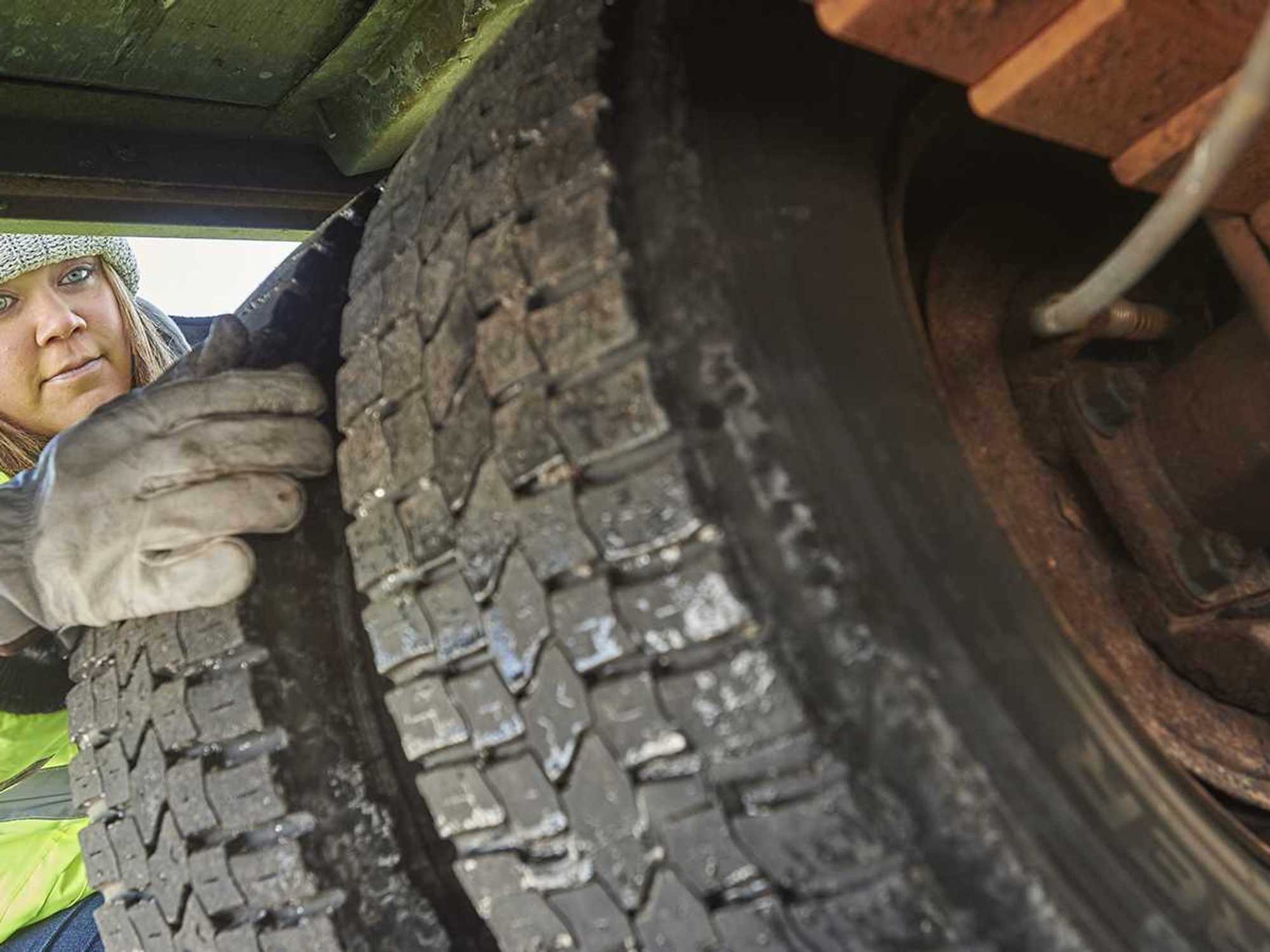
- Buses, trucks, and truck tractors must have a tread depth of at least 4/32 of an inch for its front (steering) tire and 2/32 of an inch for all other tires.
- A bus must not be operated with regrooved, recapped or retreaded tires on the front (steering) wheels, and trucks and truck tractors must not use regrooved tires with a load-carrying capacity equal to or over 4,920 pounds on its front wheels.
- Motor vehicles, except manufactured homes, must not be operated with tires that carry a weight greater than that marked on the sidewall of the tire or, in the absence of such a marking, a weight greater than that specified for the tires in any of the publications of any of the organizations listed in FMVSS No. 119.
General rules
The tire regulations state what tread depth is required for any bus, truck, or truck tractor (4/32 of an inch for a front (steering) tire and 2/32 of an inch for all other tires, when measured at any point in the tire’s major tread grooves). The regulations also provide that a motor vehicle cannot be operated on any tire that:
- Has body ply or belt material exposed through the tread or sidewall,
- Has any tread or sidewall separation,
- Is flat or has an audible leak, or
- Has a cut to the extent that the ply or belt material is exposed.
- Is speed-restricted and labeled with a maximum speed of 55 mph or less at speeds that exceed the rated limit of the tire.
In addition, a bus must not be operated with regrooved, recapped or retreaded tires on the front (steering) wheels, and trucks and truck tractors must not use regrooved tires with a load-carrying capacity equal to or over 4,920 pounds on its front wheels. (393.75(a)-(f))
Load restrictions
Motor vehicles, except manufactured homes (see 393.75(h)), must not be operated with tires that carry a weight greater than that marked on the sidewall of the tire or, in the absence of such a marking, a weight greater than that specified for the tires in any of the publications of any of the organizations listed in Federal Motor Vehicle Safety Standard (FMVSS) No. 119 (571.119, S5.1(b)). Exceptions to this weight rule exists for vehicles:
- Operated under the terms of a special permit issued by the state; and
- Operated at a reduced speed to compensate for loads in excess of the manufacturer’s rated capacity for the tire, but in no case may the reduced speed exceed 50 mph. (393.75(g))
Tire inflation pressure
Motor vehicles must not be operated on a tire that has a cold inflation pressure less than that specified for the load being carried. However, when the inflation pressure of the tire has been increased by heat because of the recent driving, the cold inflation pressure will be estimated by subtracting the inflation buildup factor from the measured inflation pressure (see 393.75(i), Table 1).
Plugged and patched tires
The use of plugged and patched tire is an area of confusion because there is no regulation delineating which tires can be patched or plugged or limiting how many times a tire can be patched or plugged. Tire manufacturers, carriers, and others, however, have recommended practices and policies that limit the use of patched or plugged tires. Therefore, many tire repair facilities will counsel a carrier to not use tires that have been plugged or patched on the steer axle (due to safety concerns related to possible future failure). Also, many carriers will not use a tire that has undergone any repair on the steer axle as a matter of policy. An exception to this exists in situations where a replacement tire cannot be purchased where the truck is located. In these situations, the vehicle may be operated on a repaired steer tire temporarily, until the vehicle can get to a location where a replacement tire can be installed.
:
cmv-parts-and-maintenance
FOUNDATIONAL LEARNING
InstituteOverview (Level 1)TiresVehicle breakdown and road repairCMV Parts and MaintenanceTransportationCMV lights, reflectors, and reflective tapeParts and Accessories - Motor CarrierEnglishVehicle maintenanceRear bumperWarning devicesFire extinguishers - Motor CarrierFleet OperationsBrakesAnalysisFocus AreaUSA
CMV parts and maintenance
InstituteVehicle breakdown and road repairTiresCMV Parts and MaintenanceCMV lights, reflectors, and reflective tapeParts and Accessories - Motor CarrierEnglishVehicle maintenanceRear bumperWarning devicesFire extinguishers - Motor CarrierFocus AreaFleet OperationsBrakesAnalysisTransportationCompliance and Exceptions (Level 2)USA
Who must comply?
InstituteVehicle breakdown and road repairTiresCMV Parts and MaintenanceCMV lights, reflectors, and reflective tapeParts and Accessories - Motor CarrierUSAEnglishVehicle maintenanceRear bumperWarning devicesFire extinguishers - Motor CarrierFocus AreaFleet OperationsBrakesAnalysisTransportationIn Depth (Level 3)
Exemptions
Tires
InstituteTiresCMV Parts and MaintenanceFocus AreaUSAFleet OperationsEnglishAnalysisTransportationIn Depth (Level 3)
['CMV Parts and Maintenance']
- Buses, trucks, and truck tractors must have a tread depth of at least 4/32 of an inch for its front (steering) tire and 2/32 of an inch for all other tires.
- A bus must not be operated with regrooved, recapped or retreaded tires on the front (steering) wheels, and trucks and truck tractors must not use regrooved tires with a load-carrying capacity equal to or over 4,920 pounds on its front wheels.
- Motor vehicles, except manufactured homes, must not be operated with tires that carry a weight greater than that marked on the sidewall of the tire or, in the absence of such a marking, a weight greater than that specified for the tires in any of the publications of any of the organizations listed in FMVSS No. 119.
General rules
The tire regulations state what tread depth is required for any bus, truck, or truck tractor (4/32 of an inch for a front (steering) tire and 2/32 of an inch for all other tires, when measured at any point in the tire’s major tread grooves). The regulations also provide that a motor vehicle cannot be operated on any tire that:
- Has body ply or belt material exposed through the tread or sidewall,
- Has any tread or sidewall separation,
- Is flat or has an audible leak, or
- Has a cut to the extent that the ply or belt material is exposed.
- Is speed-restricted and labeled with a maximum speed of 55 mph or less at speeds that exceed the rated limit of the tire.
In addition, a bus must not be operated with regrooved, recapped or retreaded tires on the front (steering) wheels, and trucks and truck tractors must not use regrooved tires with a load-carrying capacity equal to or over 4,920 pounds on its front wheels. (393.75(a)-(f))
Load restrictions
Motor vehicles, except manufactured homes (see 393.75(h)), must not be operated with tires that carry a weight greater than that marked on the sidewall of the tire or, in the absence of such a marking, a weight greater than that specified for the tires in any of the publications of any of the organizations listed in Federal Motor Vehicle Safety Standard (FMVSS) No. 119 (571.119, S5.1(b)). Exceptions to this weight rule exists for vehicles:
- Operated under the terms of a special permit issued by the state; and
- Operated at a reduced speed to compensate for loads in excess of the manufacturer’s rated capacity for the tire, but in no case may the reduced speed exceed 50 mph. (393.75(g))
Tire inflation pressure
Motor vehicles must not be operated on a tire that has a cold inflation pressure less than that specified for the load being carried. However, when the inflation pressure of the tire has been increased by heat because of the recent driving, the cold inflation pressure will be estimated by subtracting the inflation buildup factor from the measured inflation pressure (see 393.75(i), Table 1).
Plugged and patched tires
The use of plugged and patched tire is an area of confusion because there is no regulation delineating which tires can be patched or plugged or limiting how many times a tire can be patched or plugged. Tire manufacturers, carriers, and others, however, have recommended practices and policies that limit the use of patched or plugged tires. Therefore, many tire repair facilities will counsel a carrier to not use tires that have been plugged or patched on the steer axle (due to safety concerns related to possible future failure). Also, many carriers will not use a tire that has undergone any repair on the steer axle as a matter of policy. An exception to this exists in situations where a replacement tire cannot be purchased where the truck is located. In these situations, the vehicle may be operated on a repaired steer tire temporarily, until the vehicle can get to a location where a replacement tire can be installed.
2657098155
2656872772
UPGRADE TO CONTINUE READING
RELATED TOPICS
J. J. Keller is the trusted source for DOT / Transportation, OSHA / Workplace Safety, Human Resources, Construction Safety and Hazmat / Hazardous Materials regulation compliance products and services. J. J. Keller helps you increase safety awareness, reduce risk, follow best practices, improve safety training, and stay current with changing regulations.
Copyright 2026 J. J. Keller & Associate, Inc. For re-use options please contact copyright@jjkeller.com or call 800-558-5011.