Compliance Just Got Easier: Stay ahead of regulatory changes with instant notifications on updates that matter.
['CMV Parts and Maintenance']
['Fire extinguishers - Motor Carrier', 'Warning devices']
07/07/2026

Copyright 2026 J. J. Keller & Associate, Inc. For re-use options please contact copyright@jjkeller.com or call 800-558-5011.
:
|
InstituteCMV Parts and MaintenanceWarning devicesFire extinguishers - Motor CarrierFocus AreaUSAFleet OperationsEnglishAnalysisTransportationIn Depth (Level 3)
Emergency equipment
['CMV Parts and Maintenance']
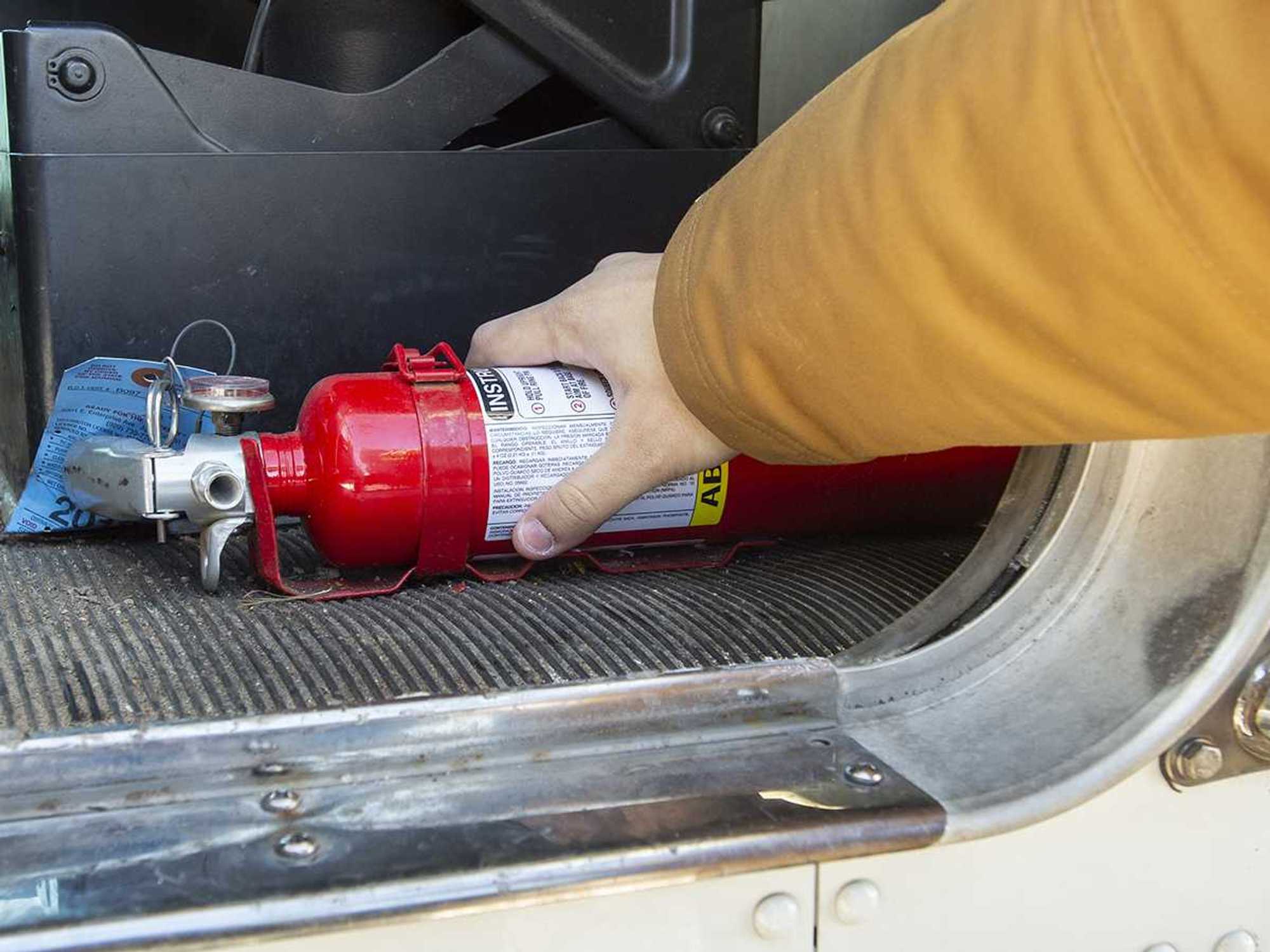
- Each truck, truck tractor, or bus must be equipped with either: (1) a fire extinguisher having a UL rating of 5 B:C or more; or (2) two fire extinguishers, each of which has a UL rating of 4 B:C or more.
- Vehicles, when stopped, must use as a warning device either three bidirectional emergency reflective triangles that conform to the requirements of the applicable FMVSS, or at least six fusees.
All trucks, truck tractors, and buses (except those towed in driveaway-towaway operations) must be equipped with fire extinguishers, and warning devices. (393.95)
Fire extinguishers
Each truck, truck tractor, or bus must be equipped with either (1) a fire extinguisher having an Underwriters’ Laboratories (UL) rating of 5 B:C or more; or (2) two fire extinguishers, each of which has a UL rating of 4 B:C or more. If the vehicle is used to transport hazardous materials in a quantity that requires placarding, it must be equipped with a fire extinguisher having a UL rating of 10 B:C or more.
Each fire extinguisher must:
- Be labeled or marked by the manufacturer with its UL rating.
- Be designed, constructed, and maintained to permit visual determination of whether it is fully charged.
- Be filled and located so that it is readily accessible.
- Be securely mounted to prevent sliding, rolling, or vertical movement relative to the motor vehicle.
- Use an extinguishing agent that does not need protection from freezing.
- Use extinguishing agents that comply with the toxicity provisions of the Environmental Protection Agency’s Significant New Alternatives Policy (SNAP) regulations. (393.95(a))
Warning devices
Vehicles must use one of the following warning devices when stopped:
- Three bidirectional emergency reflective triangles that conform to the requirements of Federal Motor Vehicle Safety Standard (FMVSS) No. 125, 571.125; or
- At least six solid-fuel flares (fusees) and as many additional fusees as necessary.
Other warning devices may be used in addition to, but not in lieu of, the required warning devices. The additional warning devices must not decrease the effectiveness of the required warning devices. When red flags are used as warning devices, they must be at least 12 inches square, with standards adequate to maintain the flags in an upright position. (393.95(f), (k))
Note that at least one specific brand of battery-operated LED light has been approved for use as a warning device in place of the devices mentioned above.
Minimum burning requirements for flares
Each fusee must be capable of burning for 30 minutes. Fusees must conform to the applicable UL requirements and be marked with the UL symbol. (393.95(h))
Hazardous material exception
Liquid-burning flares, fusees, oil lanterns, or any warning signal produced by a flame must not be carried on any:
- Commercial motor vehicle (CMV) transporting Division 1.1, 1.2, or 1.3 (explosives) hazardous materials;
- Cargo tank motor vehicle used for the transportation of Division 2.1 (flammable gas) or Class 3 (flammable liquid) hazardous materials whether loaded or empty; or
- CMV using compressed gas as a motor fuel. (393.95(g))
:
cmv-parts-and-maintenance
FOUNDATIONAL LEARNING
InstituteOverview (Level 1)TiresVehicle breakdown and road repairCMV Parts and MaintenanceTransportationCMV lights, reflectors, and reflective tapeParts and Accessories - Motor CarrierEnglishVehicle maintenanceRear bumperWarning devicesFire extinguishers - Motor CarrierFleet OperationsBrakesAnalysisFocus AreaUSA
CMV parts and maintenance
InstituteVehicle breakdown and road repairTiresCMV Parts and MaintenanceCMV lights, reflectors, and reflective tapeParts and Accessories - Motor CarrierEnglishVehicle maintenanceRear bumperWarning devicesFire extinguishers - Motor CarrierFocus AreaFleet OperationsBrakesAnalysisTransportationCompliance and Exceptions (Level 2)USA
Who must comply?
InstituteVehicle breakdown and road repairTiresCMV Parts and MaintenanceCMV lights, reflectors, and reflective tapeParts and Accessories - Motor CarrierUSAEnglishVehicle maintenanceRear bumperWarning devicesFire extinguishers - Motor CarrierFocus AreaFleet OperationsBrakesAnalysisTransportationIn Depth (Level 3)
Exemptions
Emergency equipment
InstituteCMV Parts and MaintenanceWarning devicesFire extinguishers - Motor CarrierFocus AreaUSAFleet OperationsEnglishAnalysisTransportationIn Depth (Level 3)
['CMV Parts and Maintenance']
- Each truck, truck tractor, or bus must be equipped with either: (1) a fire extinguisher having a UL rating of 5 B:C or more; or (2) two fire extinguishers, each of which has a UL rating of 4 B:C or more.
- Vehicles, when stopped, must use as a warning device either three bidirectional emergency reflective triangles that conform to the requirements of the applicable FMVSS, or at least six fusees.
All trucks, truck tractors, and buses (except those towed in driveaway-towaway operations) must be equipped with fire extinguishers, and warning devices. (393.95)
Fire extinguishers
Each truck, truck tractor, or bus must be equipped with either (1) a fire extinguisher having an Underwriters’ Laboratories (UL) rating of 5 B:C or more; or (2) two fire extinguishers, each of which has a UL rating of 4 B:C or more. If the vehicle is used to transport hazardous materials in a quantity that requires placarding, it must be equipped with a fire extinguisher having a UL rating of 10 B:C or more.
Each fire extinguisher must:
- Be labeled or marked by the manufacturer with its UL rating.
- Be designed, constructed, and maintained to permit visual determination of whether it is fully charged.
- Be filled and located so that it is readily accessible.
- Be securely mounted to prevent sliding, rolling, or vertical movement relative to the motor vehicle.
- Use an extinguishing agent that does not need protection from freezing.
- Use extinguishing agents that comply with the toxicity provisions of the Environmental Protection Agency’s Significant New Alternatives Policy (SNAP) regulations. (393.95(a))
Warning devices
Vehicles must use one of the following warning devices when stopped:
- Three bidirectional emergency reflective triangles that conform to the requirements of Federal Motor Vehicle Safety Standard (FMVSS) No. 125, 571.125; or
- At least six solid-fuel flares (fusees) and as many additional fusees as necessary.
Other warning devices may be used in addition to, but not in lieu of, the required warning devices. The additional warning devices must not decrease the effectiveness of the required warning devices. When red flags are used as warning devices, they must be at least 12 inches square, with standards adequate to maintain the flags in an upright position. (393.95(f), (k))
Note that at least one specific brand of battery-operated LED light has been approved for use as a warning device in place of the devices mentioned above.
Minimum burning requirements for flares
Each fusee must be capable of burning for 30 minutes. Fusees must conform to the applicable UL requirements and be marked with the UL symbol. (393.95(h))
Hazardous material exception
Liquid-burning flares, fusees, oil lanterns, or any warning signal produced by a flame must not be carried on any:
- Commercial motor vehicle (CMV) transporting Division 1.1, 1.2, or 1.3 (explosives) hazardous materials;
- Cargo tank motor vehicle used for the transportation of Division 2.1 (flammable gas) or Class 3 (flammable liquid) hazardous materials whether loaded or empty; or
- CMV using compressed gas as a motor fuel. (393.95(g))
2656872772
2657098224
UPGRADE TO CONTINUE READING
RELATED TOPICS
J. J. Keller is the trusted source for DOT / Transportation, OSHA / Workplace Safety, Human Resources, Construction Safety and Hazmat / Hazardous Materials regulation compliance products and services. J. J. Keller helps you increase safety awareness, reduce risk, follow best practices, improve safety training, and stay current with changing regulations.
Copyright 2026 J. J. Keller & Associate, Inc. For re-use options please contact copyright@jjkeller.com or call 800-558-5011.