
Signs, signals, and markings
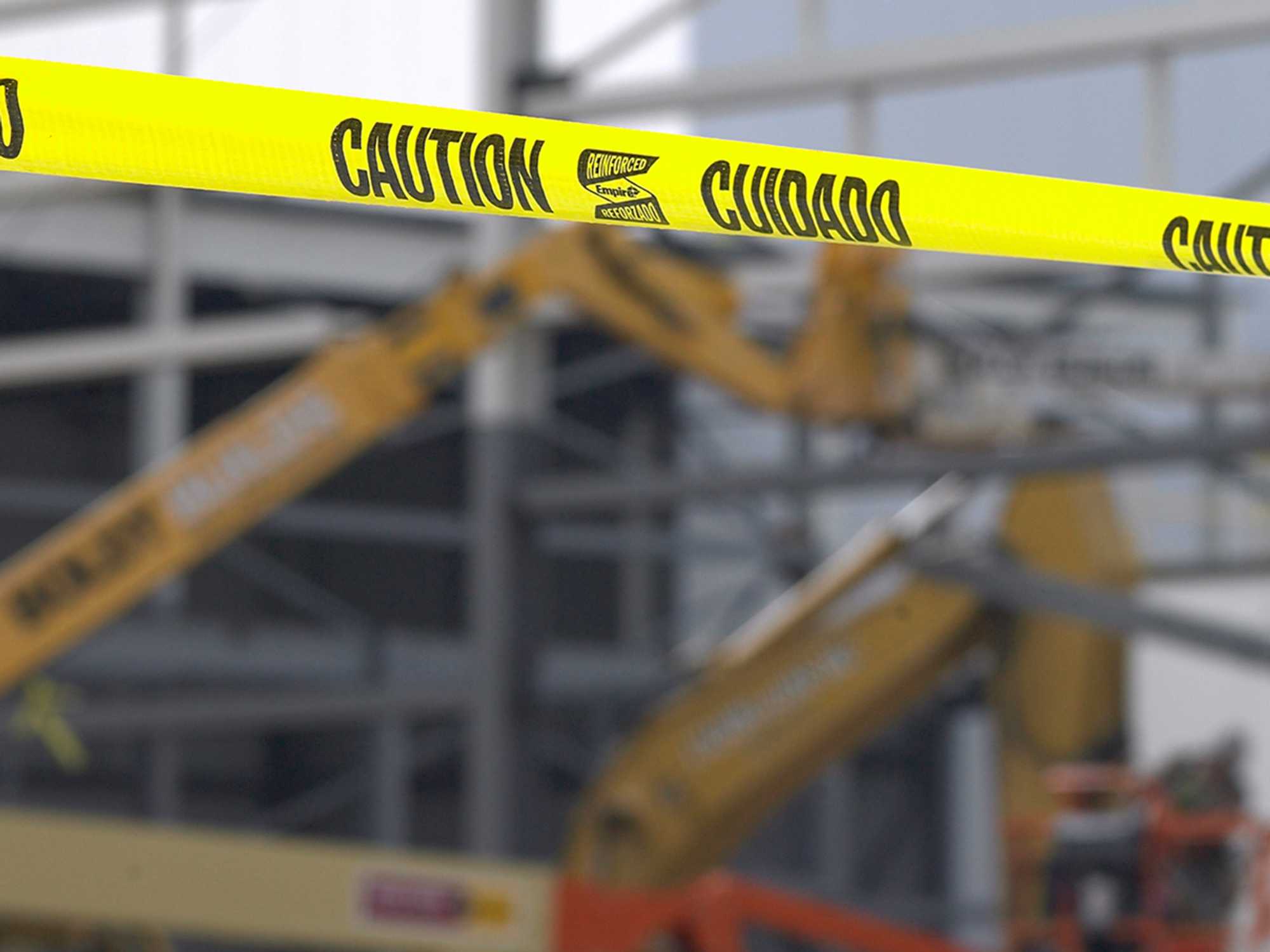
- When equipment is left unattended, barricades or caution lines and must be used to keep employees from entering the fall zone.
- Equipment that’s out of service must be clearly tagged as such.
The requirements for signs, signals, and markings in the Occupational Safety & Health Association’s (OSHA) 29 CFR 1926 Subpart CC include the following.
Leaving the equipment unattended — Barricades/Caution lines and notices
When the equipment is left unattended, barricades or caution lines and notices must be erected to prevent all employees from entering the fall zone. No employees are permitted in the fall zone when the equipment is unattended, including those who are:
- Engaged in hooking, unhooking, or guiding a load;
- Engaged in the initial attachment of the load to a component or structure; or
- Operating a concrete hopper or concrete bucket.
Out of service — Tag-out
When the employer has taken the equipment out of service, a tag must be placed in the cab stating that the equipment is out of service and is not to be used. When the employer has taken a crane function(s) out of service, a tag must be placed in a conspicuous position stating that the function is out of service and is not to be used.
If there is a warning (tag-out or maintenance/do not operate) sign on:
- The equipment,
- The starting control, or
- Any other switch or control,
then the operator must not activate the switch or start the equipment until the sign has been removed by a person authorized to remove it, or until the operator has verified that:
- No one is servicing, working on, or otherwise in a dangerous position on the machine; and
- The equipment has been repaired and is working properly.