Compliance Just Got Easier: Stay ahead of regulatory changes with instant notifications on updates that matter.
['Cranes, Lifts, and Scaffolding']
['Cranes, Lifts, and Scaffolding', 'Mobile Cranes']
05/02/2025

Copyright 2026 J. J. Keller & Associate, Inc. For re-use options please contact copyright@jjkeller.com or call 800-558-5011.
:
|
InstituteMobile CranesCranes, Lifts, and ScaffoldingCranes, Lifts, and ScaffoldingFocus AreaEnglishAnalysisIn Depth Sub Topics (Level 4)USA
Operator documentation, retraining, and validation
['Cranes, Lifts, and Scaffolding']
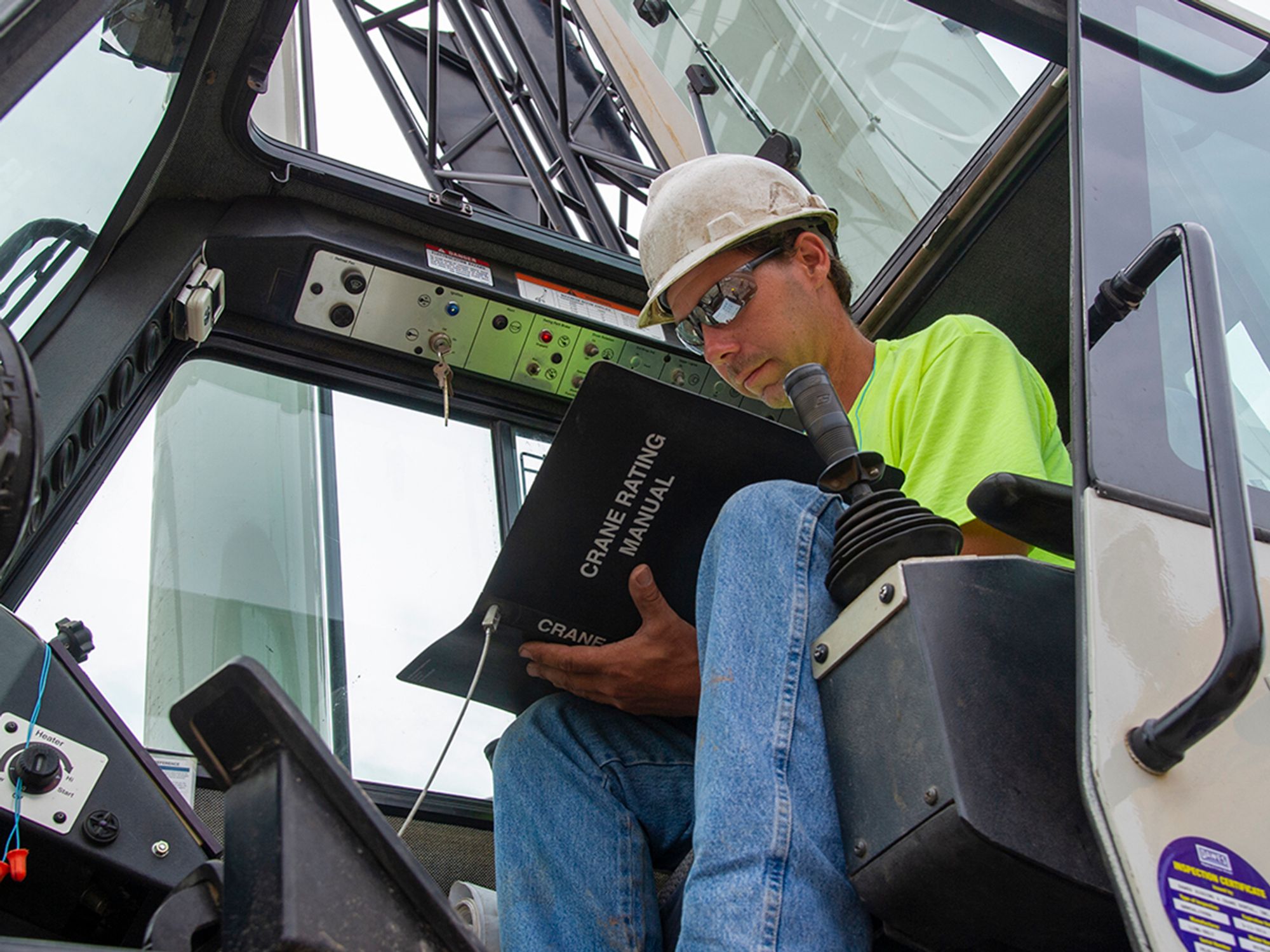
- Employers should document operator evaluations and provide retraining as necessary or requested.
- If an operator was certified by a now-defunct organization, employers should check the expiration date of the certification and search online to confirm the legitimacy of the organization.
Employers should document each evaluation, providing:
- The operator’s name;
- The evaluator’s name and signature;
- The date; and
- The make, model, and configuration of equipment used in the evaluation.
Keep the documentation available on the worksite for the duration of the operator’s employment.
(Note: If an operator was hired prior to December 10, 2018, employers are allowed to rely on previous documentation and evaluations rather than conducting new ones.)
If there is an indication that an operator may need retraining, then the employer must provide retraining based on the topic(s) in question. Sometimes, an operator might forget information needed to safely operate equipment, and an accident could occur.
Of course, retraining won’t always happen because of an accident. If an operator indicates a lack of clarity about something, retraining is required. Retraining is ongoing. After the initial evaluation, operator retraining should be required as needed.
Validation of operator certification
As mentioned above, operators can be certified through a crane operator testing organization. These certifications are issued only after the operator has demonstrated through written and practical tests the knowledge and skills required to operate a crane.
In some cases, employers may hire an operator whose certification was acquired through a nationally accredited organization that no longer exists. In these cases, how can an employer ensure sure their operators are adequately certified?
It’s actually an easy question to answer, and options for solving the problem are available.
- Expiration date. There may be an expiration date on the certification. Before restarting the certification process or finding a new testing organization, an employer can check to see if the operator’s current certification identifies an expiration date. This can give some time to look for new testing organizations.
- The regulations. In the Occupational Safety & Health Association’s (OSHA) operator training, certification, and evaluation regulation, the Agency states that a certification issued by an accredited crane operator testing organization is valid for 5 years. If the operator knows when the certification was acquired, the regulations can be used to figure out when it expires.
If an operator’s certification may not really have been issued by a nationally accredited organization, the best way to proceed is to do some digging and find information on the organization. Just because the organization no longer exists doesn’t mean information on its credibility or history isn’t available.
All findings should be clearly documented. Having information ready for immediate evaluation can prove useful should an OSHA inspection occur.
:
cranes-lifts-and-scaffolding
cranes-lifts-and-scaffolding
FOUNDATIONAL LEARNING
Operator documentation, retraining, and validation
InstituteMobile CranesCranes, Lifts, and ScaffoldingCranes, Lifts, and ScaffoldingFocus AreaEnglishAnalysisIn Depth Sub Topics (Level 4)USA
['Cranes, Lifts, and Scaffolding']
- Employers should document operator evaluations and provide retraining as necessary or requested.
- If an operator was certified by a now-defunct organization, employers should check the expiration date of the certification and search online to confirm the legitimacy of the organization.
Employers should document each evaluation, providing:
- The operator’s name;
- The evaluator’s name and signature;
- The date; and
- The make, model, and configuration of equipment used in the evaluation.
Keep the documentation available on the worksite for the duration of the operator’s employment.
(Note: If an operator was hired prior to December 10, 2018, employers are allowed to rely on previous documentation and evaluations rather than conducting new ones.)
If there is an indication that an operator may need retraining, then the employer must provide retraining based on the topic(s) in question. Sometimes, an operator might forget information needed to safely operate equipment, and an accident could occur.
Of course, retraining won’t always happen because of an accident. If an operator indicates a lack of clarity about something, retraining is required. Retraining is ongoing. After the initial evaluation, operator retraining should be required as needed.
Validation of operator certification
As mentioned above, operators can be certified through a crane operator testing organization. These certifications are issued only after the operator has demonstrated through written and practical tests the knowledge and skills required to operate a crane.
In some cases, employers may hire an operator whose certification was acquired through a nationally accredited organization that no longer exists. In these cases, how can an employer ensure sure their operators are adequately certified?
It’s actually an easy question to answer, and options for solving the problem are available.
- Expiration date. There may be an expiration date on the certification. Before restarting the certification process or finding a new testing organization, an employer can check to see if the operator’s current certification identifies an expiration date. This can give some time to look for new testing organizations.
- The regulations. In the Occupational Safety & Health Association’s (OSHA) operator training, certification, and evaluation regulation, the Agency states that a certification issued by an accredited crane operator testing organization is valid for 5 years. If the operator knows when the certification was acquired, the regulations can be used to figure out when it expires.
If an operator’s certification may not really have been issued by a nationally accredited organization, the best way to proceed is to do some digging and find information on the organization. Just because the organization no longer exists doesn’t mean information on its credibility or history isn’t available.
All findings should be clearly documented. Having information ready for immediate evaluation can prove useful should an OSHA inspection occur.
2656866640
2656871834
UPGRADE TO CONTINUE READING
J. J. Keller is the trusted source for DOT / Transportation, OSHA / Workplace Safety, Human Resources, Construction Safety and Hazmat / Hazardous Materials regulation compliance products and services. J. J. Keller helps you increase safety awareness, reduce risk, follow best practices, improve safety training, and stay current with changing regulations.
Copyright 2026 J. J. Keller & Associate, Inc. For re-use options please contact copyright@jjkeller.com or call 800-558-5011.