Compliance Just Got Easier: Stay ahead of regulatory changes with instant notifications on updates that matter.
['Cranes, Lifts, and Scaffolding']
['Cranes, Lifts, and Scaffolding', 'Mobile Cranes']
05/02/2025

Copyright 2026 J. J. Keller & Associate, Inc. For re-use options please contact copyright@jjkeller.com or call 800-558-5011.
:
|
InstituteMobile CranesCranes, Lifts, and ScaffoldingCranes, Lifts, and ScaffoldingUSAEnglishAnalysisFocus AreaIn Depth (Level 3)
Danger of getting close to or touching equipment and load
['Cranes, Lifts, and Scaffolding']
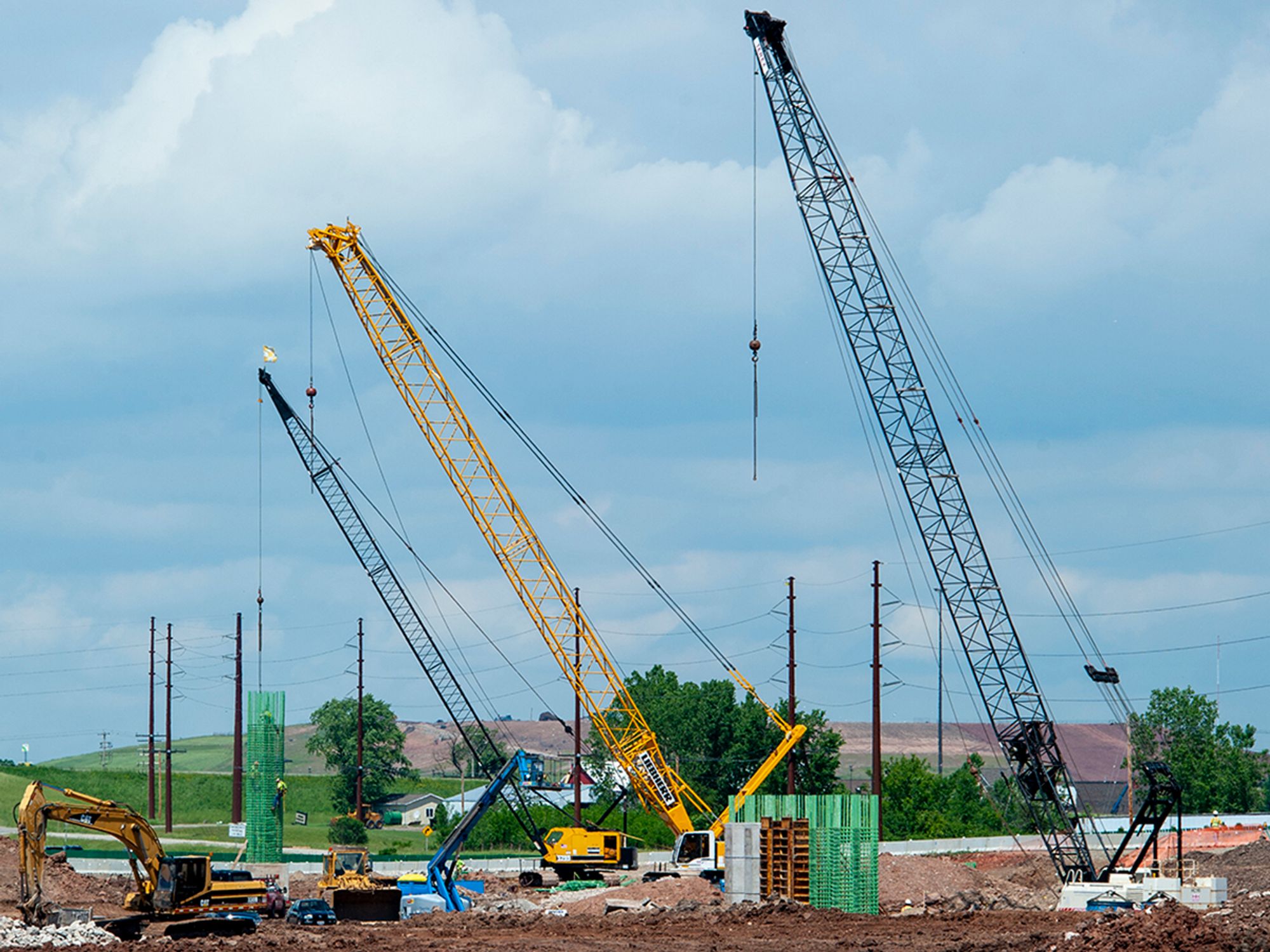
- The possibility of getting close enough to the power line to act as a ground is called “touch potential.”
When cranes are operating near overhead power lines, the crane, load line, or load could come into contact with the lines. If that happens, the electric current will pass through the equipment to the ground.
Anyone touching the crane in this situation will act as a ground, and the electric current will pass through the person. Even if the person doesn’t touch the equipment, the ground near the crane will be energized and present an electrocution hazard.
The Occupational Safety & Health Association (OSHA) refers to this hazard as “touch potential.” Touch potential is the voltage between the energized object and the feet of a person in contact with the object. It is equal to the difference in voltage between the object and a point some distance away.
Note that the touch potential could be nearly the full voltage across the grounded object if that object is grounded at a point remote from the place where the person is in contact with it. For example, a crane that was grounded to the system neutral and that contacted an energized line would expose any person in contact with the crane, or its uninsulated load line, to a touch potential nearly equal to the full voltage of the power line.
People should avoid approaching or coming into contact with any equipment that is operating, or any load being moved, near power lines.
:
cranes-lifts-and-scaffolding
cranes-lifts-and-scaffolding
FOUNDATIONAL LEARNING
Danger of getting close to or touching equipment and load
InstituteMobile CranesCranes, Lifts, and ScaffoldingCranes, Lifts, and ScaffoldingUSAEnglishAnalysisFocus AreaIn Depth (Level 3)
['Cranes, Lifts, and Scaffolding']
- The possibility of getting close enough to the power line to act as a ground is called “touch potential.”
When cranes are operating near overhead power lines, the crane, load line, or load could come into contact with the lines. If that happens, the electric current will pass through the equipment to the ground.
Anyone touching the crane in this situation will act as a ground, and the electric current will pass through the person. Even if the person doesn’t touch the equipment, the ground near the crane will be energized and present an electrocution hazard.
The Occupational Safety & Health Association (OSHA) refers to this hazard as “touch potential.” Touch potential is the voltage between the energized object and the feet of a person in contact with the object. It is equal to the difference in voltage between the object and a point some distance away.
Note that the touch potential could be nearly the full voltage across the grounded object if that object is grounded at a point remote from the place where the person is in contact with it. For example, a crane that was grounded to the system neutral and that contacted an energized line would expose any person in contact with the crane, or its uninsulated load line, to a touch potential nearly equal to the full voltage of the power line.
People should avoid approaching or coming into contact with any equipment that is operating, or any load being moved, near power lines.
2656869832
2656871294
UPGRADE TO CONTINUE READING
J. J. Keller is the trusted source for DOT / Transportation, OSHA / Workplace Safety, Human Resources, Construction Safety and Hazmat / Hazardous Materials regulation compliance products and services. J. J. Keller helps you increase safety awareness, reduce risk, follow best practices, improve safety training, and stay current with changing regulations.
Copyright 2026 J. J. Keller & Associate, Inc. For re-use options please contact copyright@jjkeller.com or call 800-558-5011.