Compliance Just Got Easier: Stay ahead of regulatory changes with instant notifications on updates that matter.
['Cranes, Lifts, and Scaffolding']
['Cranes, Lifts, and Scaffolding', 'Mobile Cranes']
10/12/2025

Copyright 2026 J. J. Keller & Associate, Inc. For re-use options please contact copyright@jjkeller.com or call 800-558-5011.
:
|
InstituteMobile CranesCranes, Lifts, and ScaffoldingCranes, Lifts, and ScaffoldingIn Depth (Level 3)EnglishAnalysisFocus AreaUSA
Employer requirements
['Cranes, Lifts, and Scaffolding']
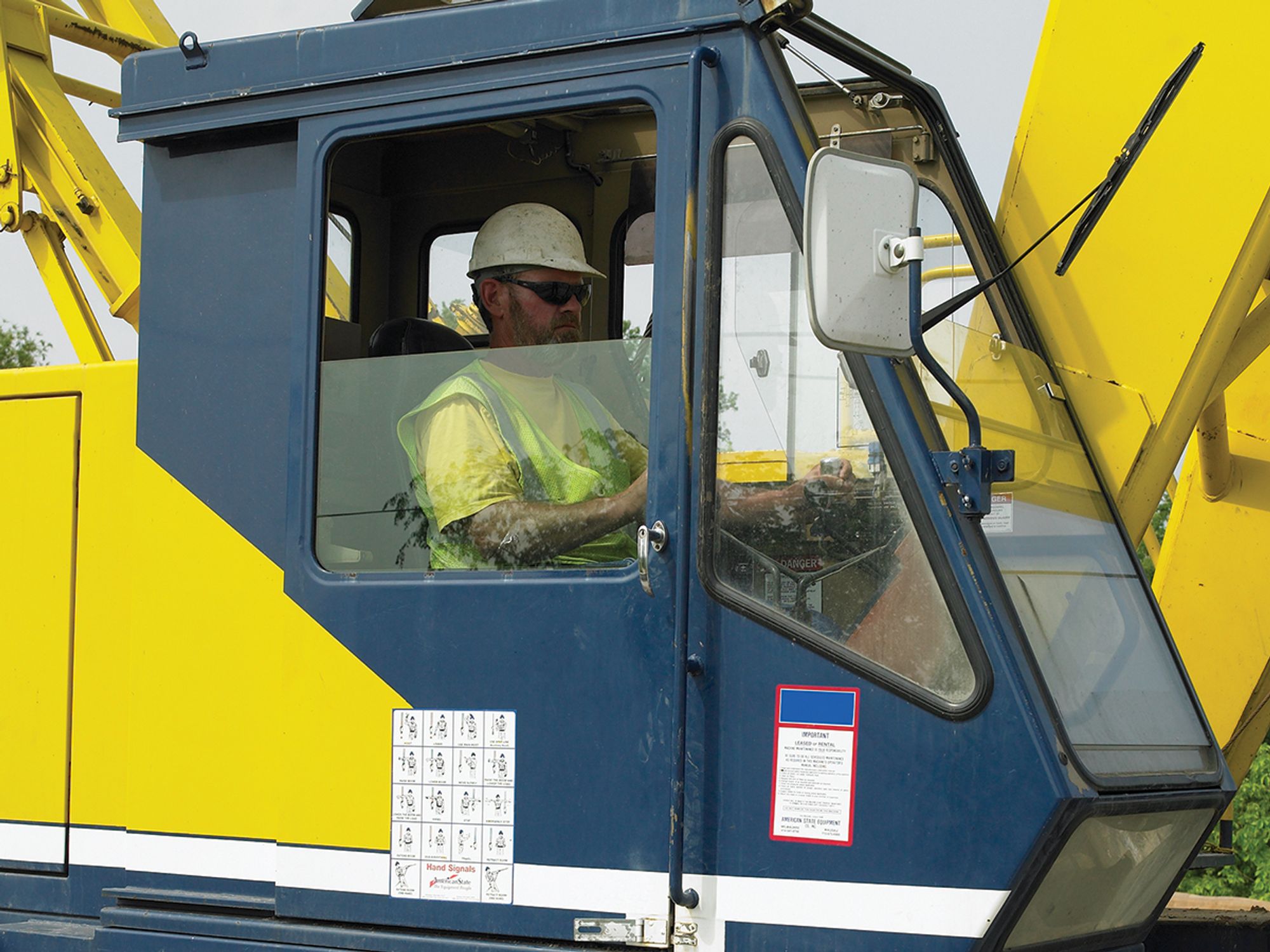
- The OSHA standard requires covered employers to keep employees safe from mobile-crane-related hazards via personnel choice, design specifications, and adherence to maximum load ratings.
In general, the standard requires covered employers to:
- Permit only designated personnel to operate a crane. The Occupational Safety & Health Association (OSHA) allows only designated personnel to operate a crane. OSHA defines designated as “selected or assigned by the employer or the employer’s representative as being qualified to perform specific duties.”
- Ensure proper design specifications are followed. Mobile cranes constructed after August 31, 1971, must meet the design specifications of the Safety Code for Crawler, Locomotive, and Truck Cranes, ANSI B30.5-1968, which OSHA incorporates by reference. The most recent revision of this standard is ASME B30.5-2021, Mobile and Locomotive Cranes.
- Follow the maximum load ratings where stability governs lifting performance. The margin of stability for determination of load ratings (with booms of stipulated lengths at stipulated working radii for the various types of crane mountings) is determined by taking a percentage of the loads that will produce a condition of tipping or balance if the boom is in the least stable direction, relative to the mounting.
- Provide a load rating chart to help determine stability. Employers must provide a substantial and durable rating chart with clearly legible letters and figures for each crane and securely affix it to the crane cab in a location that is easily visible to an operator who is seated at the control station.
:
cranes-lifts-and-scaffolding
cranes-lifts-and-scaffolding
FOUNDATIONAL LEARNING
Employer requirements
InstituteMobile CranesCranes, Lifts, and ScaffoldingCranes, Lifts, and ScaffoldingIn Depth (Level 3)EnglishAnalysisFocus AreaUSA
['Cranes, Lifts, and Scaffolding']
- The OSHA standard requires covered employers to keep employees safe from mobile-crane-related hazards via personnel choice, design specifications, and adherence to maximum load ratings.
In general, the standard requires covered employers to:
- Permit only designated personnel to operate a crane. The Occupational Safety & Health Association (OSHA) allows only designated personnel to operate a crane. OSHA defines designated as “selected or assigned by the employer or the employer’s representative as being qualified to perform specific duties.”
- Ensure proper design specifications are followed. Mobile cranes constructed after August 31, 1971, must meet the design specifications of the Safety Code for Crawler, Locomotive, and Truck Cranes, ANSI B30.5-1968, which OSHA incorporates by reference. The most recent revision of this standard is ASME B30.5-2021, Mobile and Locomotive Cranes.
- Follow the maximum load ratings where stability governs lifting performance. The margin of stability for determination of load ratings (with booms of stipulated lengths at stipulated working radii for the various types of crane mountings) is determined by taking a percentage of the loads that will produce a condition of tipping or balance if the boom is in the least stable direction, relative to the mounting.
- Provide a load rating chart to help determine stability. Employers must provide a substantial and durable rating chart with clearly legible letters and figures for each crane and securely affix it to the crane cab in a location that is easily visible to an operator who is seated at the control station.
2656870233
2656867142
UPGRADE TO CONTINUE READING
J. J. Keller is the trusted source for DOT / Transportation, OSHA / Workplace Safety, Human Resources, Construction Safety and Hazmat / Hazardous Materials regulation compliance products and services. J. J. Keller helps you increase safety awareness, reduce risk, follow best practices, improve safety training, and stay current with changing regulations.
Copyright 2026 J. J. Keller & Associate, Inc. For re-use options please contact copyright@jjkeller.com or call 800-558-5011.