Compliance Just Got Easier: Stay ahead of regulatory changes with instant notifications on updates that matter.
['Cranes, Lifts, and Scaffolding']
['Cranes, Lifts, and Scaffolding', 'Mobile Cranes']
10/12/2025

Copyright 2026 J. J. Keller & Associate, Inc. For re-use options please contact copyright@jjkeller.com or call 800-558-5011.
:
|
InstituteMobile CranesCranes, Lifts, and ScaffoldingCranes, Lifts, and ScaffoldingEnglishAnalysisFocus AreaCompliance and Exceptions (Level 2)USA
Mobile cranes in general industry
['Cranes, Lifts, and Scaffolding']
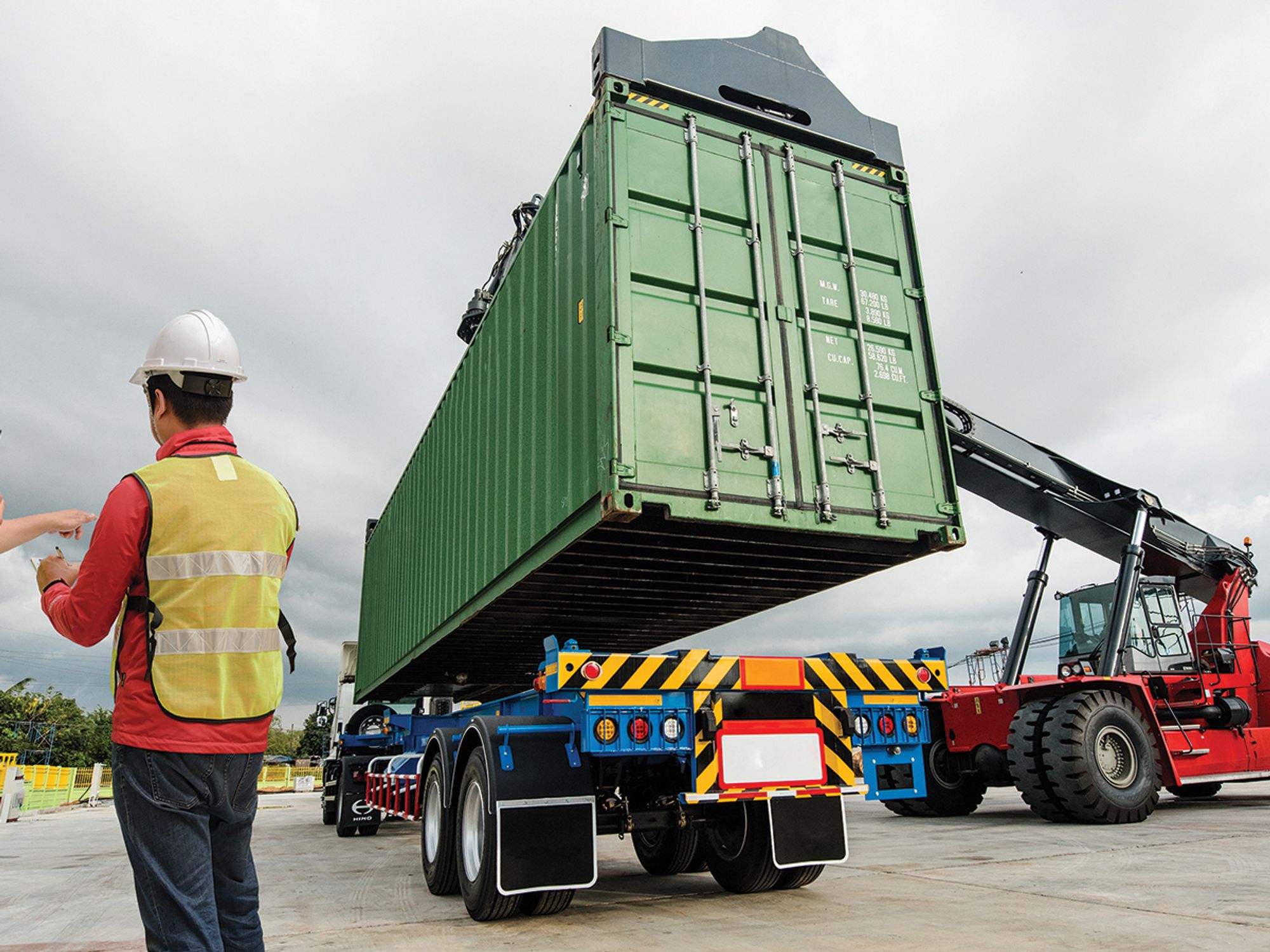
- Mobile cranes lift and lower loads and move them horizontally.
- OSHA regulates mobile cranes at 29 CFR 1910.180 but does not have specific requirements for operator training.
A mobile crane is designed to lift and lower a load and move it horizontally. Mobile cranes come in all sizes so that the task of manipulating materials can be made safer and easier.
Scope/who must comply
The Occupational Safety & Health Association (OSHA) regulates mobile cranes at 29 CFR 1910.180 — Crawler locomotive and truck cranes.
The OSHA rule applies to crawler cranes, locomotive cranes, wheel-mounted cranes of both truck and self-propelled wheel type, and any variations thereof that retain the same fundamental characteristics. This includes only cranes of the above types, which are basically powered by internal combustion engines or electric motors and which utilize drums and ropes. Cranes designed for railway and automobile wreck clearances are excepted.
Training
OSHA’s mobile crane standard does not provide much detail about crane operator training. The standard simply states at 1910.180(b)(3), “Only designated personnel shall be permitted to operate a crane covered by this section.” OSHA defines designated as “selected or assigned by the employer or the employer’s representative as being qualified to perform specific duties.”
:
cranes-lifts-and-scaffolding
cranes-lifts-and-scaffolding
FOUNDATIONAL LEARNING
Mobile cranes in general industry
InstituteMobile CranesCranes, Lifts, and ScaffoldingCranes, Lifts, and ScaffoldingEnglishAnalysisFocus AreaCompliance and Exceptions (Level 2)USA
['Cranes, Lifts, and Scaffolding']
- Mobile cranes lift and lower loads and move them horizontally.
- OSHA regulates mobile cranes at 29 CFR 1910.180 but does not have specific requirements for operator training.
A mobile crane is designed to lift and lower a load and move it horizontally. Mobile cranes come in all sizes so that the task of manipulating materials can be made safer and easier.
Scope/who must comply
The Occupational Safety & Health Association (OSHA) regulates mobile cranes at 29 CFR 1910.180 — Crawler locomotive and truck cranes.
The OSHA rule applies to crawler cranes, locomotive cranes, wheel-mounted cranes of both truck and self-propelled wheel type, and any variations thereof that retain the same fundamental characteristics. This includes only cranes of the above types, which are basically powered by internal combustion engines or electric motors and which utilize drums and ropes. Cranes designed for railway and automobile wreck clearances are excepted.
Training
OSHA’s mobile crane standard does not provide much detail about crane operator training. The standard simply states at 1910.180(b)(3), “Only designated personnel shall be permitted to operate a crane covered by this section.” OSHA defines designated as “selected or assigned by the employer or the employer’s representative as being qualified to perform specific duties.”
2656870229
2656866065
UPGRADE TO CONTINUE READING
J. J. Keller is the trusted source for DOT / Transportation, OSHA / Workplace Safety, Human Resources, Construction Safety and Hazmat / Hazardous Materials regulation compliance products and services. J. J. Keller helps you increase safety awareness, reduce risk, follow best practices, improve safety training, and stay current with changing regulations.
Copyright 2026 J. J. Keller & Associate, Inc. For re-use options please contact copyright@jjkeller.com or call 800-558-5011.