
InstituteCranes, Lifts, and ScaffoldingAerial LiftsCranes, Lifts, and ScaffoldingUSAEnglishAnalysisFocus AreaIn Depth (Level 3)
Safety practices
['Cranes, Lifts, and Scaffolding']
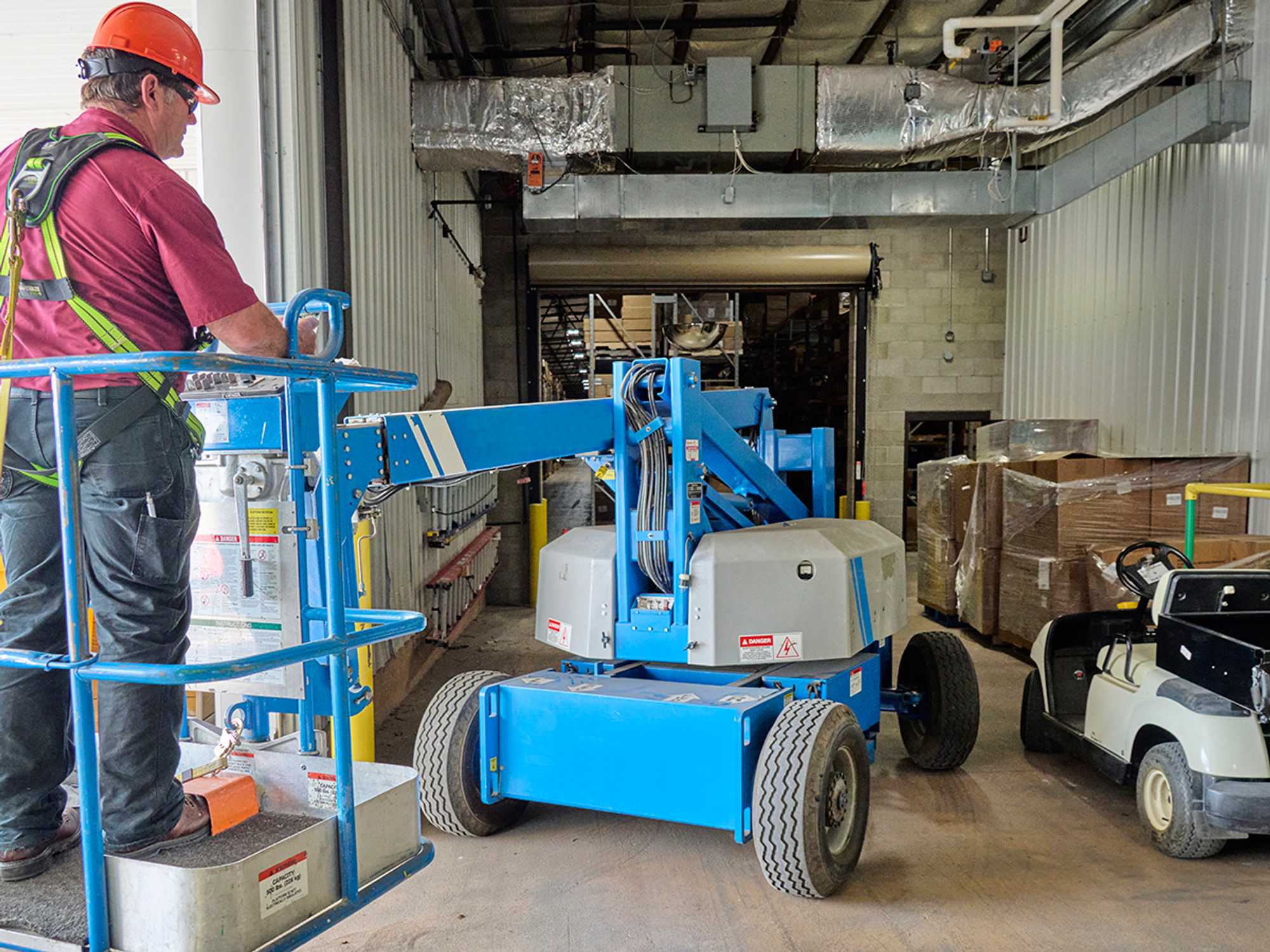
- To operate an aerial lift safely while traveling, workers should stay within load, reach, and windspeed limits and avoid overriding any safety devices.
- Overhead protection practices include being aware of clearance and ceilings and treating power lines as energized unless confirmed otherwise.
Safety practices that must be observed when aerial lifts are used include fall protection, safe travel procedures, overhead protection, and maintaining stability of the aerial lift.
Fall protection
When using aerial lifts, workers should take the following precautions to prevent falls:
- Ensure that access gates or openings are closed.
- Stand firmly on the floor of the bucket or lift platform.
- Do not climb on or lean over guardrails or handrails.
- Do not use planks, ladders, or other devices as a working position.
- Use a personal fall arrest or travel restraint system that meets the requirements in 1910 Subpart I and is attached to the boom or basket.
- Do not belt off to adjacent structures or poles while in the bucket.
Operation when traveling
Workers should follow these rules for safe operation when traveling:
- Do not exceed the load-capacity limits. The combined weight of the worker(s), tools, and materials must be taken into account when calculating the load.
- Do not use the aerial lift as a crane.
- Do not carry objects larger than the platform.
- Do not drive with the lift platform raised (unless the manufacturer’s instructions allow this).
- Do not operate lower-level controls unless permission is obtained from the worker(s) in the lift (except in emergencies).
- Do not exceed vertical or horizontal reach limits.
- Do not operate an aerial lift in high winds above those recommended by the manufacturer.
- Do not override hydraulic, mechanical, or electrical safety devices.
Overhead protection
Employees can be injured when contracting with overhead objects. To prevent this, they should follow these rules:
- Be aware of overhead clearance and overhead objects, including ceilings.
- Do not position aerial lifts between overhead hazards if possible.
- Treat all overhead power lines and communication cables as energized and observe appropriate approach distances.
- Ensure that the power-utility or power-line workers de-energize power lines in the vicinity of the work.
Aerial lift stability
To ensure the stability of the aerial lift and keep workers safe, these rules should be followed:
- Set outriggers on pads or on a level, solid surface.
- Set brakes when outriggers are used.
- Use wheel chocks on sloped surfaces when it is safe to do so.
- Set up work zone warnings, such as cones and signs, when necessary to warn others.