
Improper use of extension and flexible cords
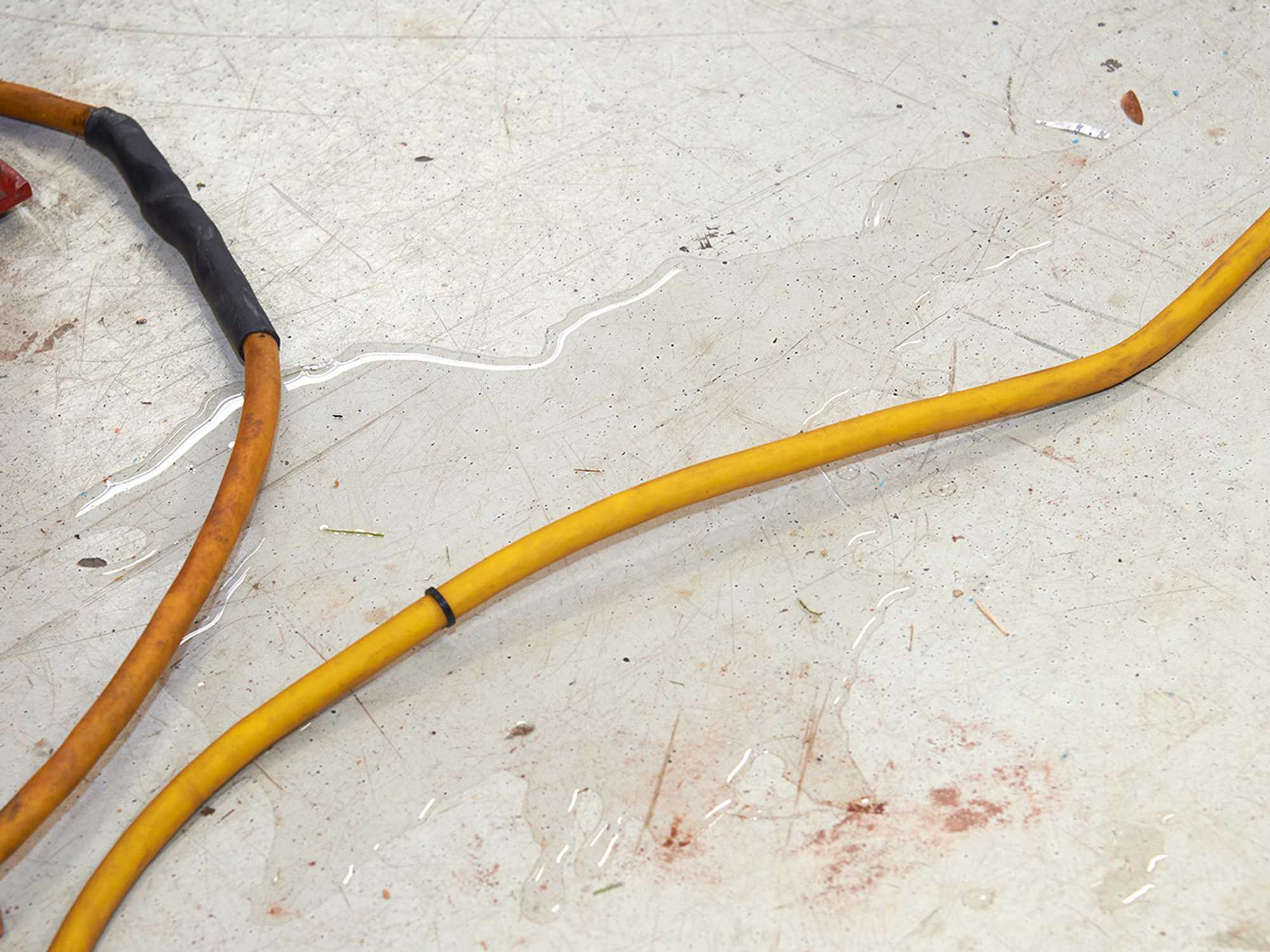
- Exposed wires in cords can create hazardous conditions.
The normal wear and tear on extension and flexible cords can loosen or expose wires, creating a hazardous condition. Cords that are not 3-wire type, not designed for hard-usage, or that have been modified, increase the risk of contacting electrical current. With the wide use of power tools on construction sites, flexible extension cords are often necessary. Because they are exposed, flexible, and unsecured, they are more susceptible to damage than fixed wiring. Hazards are created when cords, cord connectors, receptacles, and cord- and plug connected equipment are improperly used and maintained. To reduce hazards, flexible cords must connect to devices and to fittings in ways that prevent tension at joints and terminal screws. A flexible cord may be damaged by door or window edges, staples and fastenings, abrasion from adjacent materials, or simply by aging. If the electrical conductors become exposed, there is a danger of shocks, burns, or fire.
When a cord connector is wet, electric current can leak to the equipment grounding conductor, and to anyone who picks up that connector if they provide a path to ground. Such leakage can occur not just on the face of the connector, but at any wetted portion.