
Identify sources of fall hazards
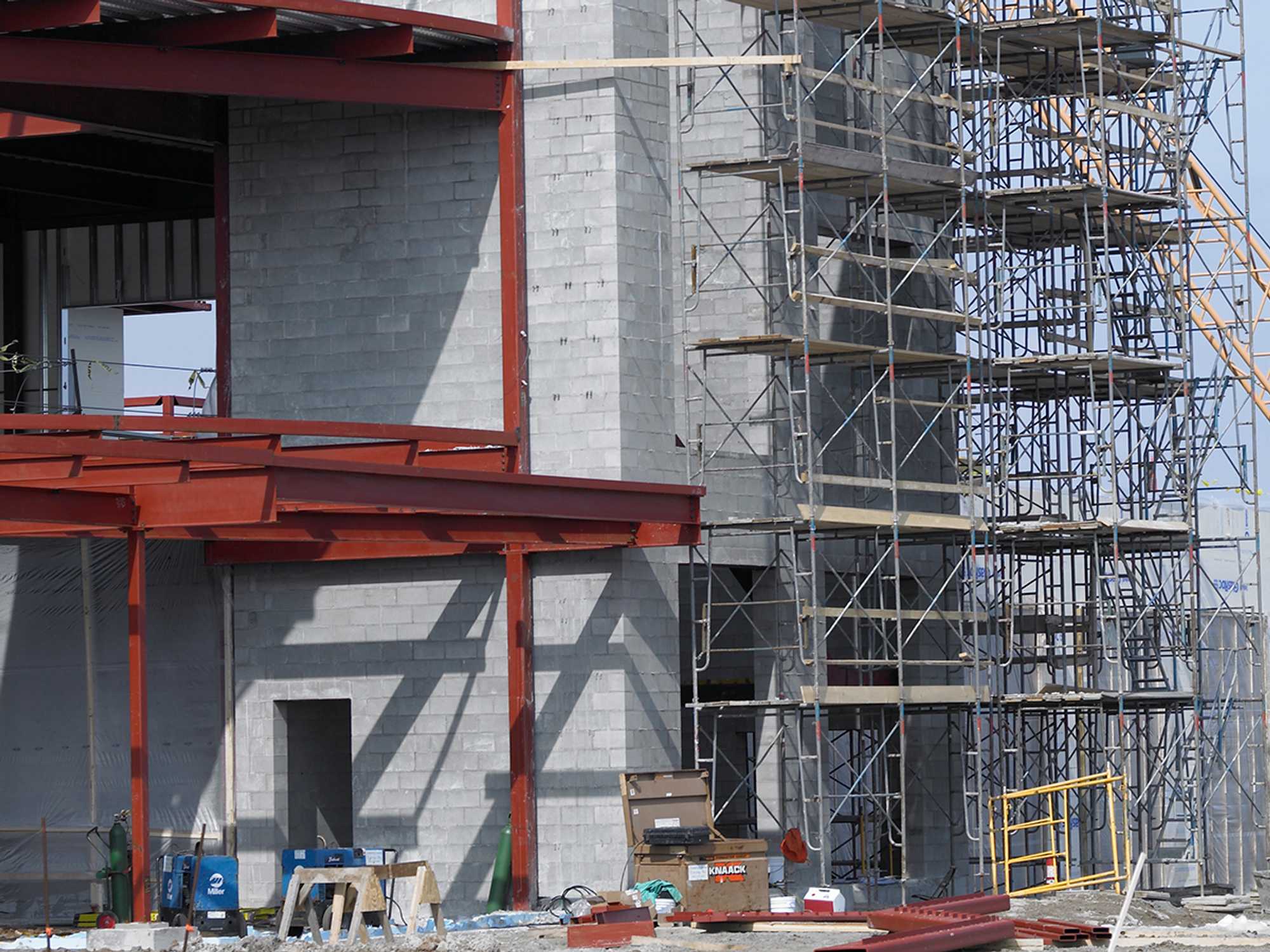
The following are sources of fall hazards:
- Unprotected roof edges, roof and floor openings, structural steel, and leading edges
- Improper scaffold construction
- Unsafe portable ladders
Unprotected roof edges, roof and floor openings, structural steel, and leading edges
Almost all sites have unprotected sides and edges, wall openings, or floor holes at some point during construction. If these sides and openings are not protected at the site, injuries from falls or falling objects may result, ranging from sprains and concussions to death. Falls to a lower level are a major cause of fatalities in construction. Factors such as improperly covered or protected floor holes and openings are a common fall hazard. It‘s easy to step into a hole or opening when carrying something that blocks one’s forward view.
Roofing falls are the leading cause of roofing injuries and fatalities. Roofing, siding, and sheet metal work have the highest rate of occupational injuries and illnesses for a non-manufacturing industry. One of the most frequently cited serious Occupational Safety and Health Administration (OSHA) violations involving roofing and fall protection is unprotected sides and edges.
Workers involved in steel erection are exposed to fall hazards. Typically, more ironworkers are killed from falls than workers in any other construction occupation. The rate of work-related deaths among ironworkers is 10 times higher than the construction average. The most frequently cited serious OSHA violations involving steel erection are fall protection, fall hazard training and fall protection for connectors.
Improper scaffold construction
Working with heavy equipment and building materials on the limited space of a scaffold is difficult. Without fall protection or safe access, it becomes hazardous. Falls from improperly constructed scaffolds can result in injuries ranging from sprains to death. Guardrails or personal fall arrest systems for fall prevention/protection are required for workers on platforms 10 feet or higher.
Most of the workers injured in scaffold accidents attribute the accident to factors like the planking or support giving way, or to lack of guardrails or other fall protection. OSHA’s most frequently cited serious scaffold violations include lack of fall protection; scaffold access; use of aerial lifts without body belts and lanyards, platform construction and no worker training.
Unsafe portable ladders
A person can risk falling if a portable ladder is not safely positioned each time it is used. While on a ladder, it may move and slip from its supports. A person can also lose balance while getting on or off an unsteady ladder. Falls from ladders can cause injuries ranging from sprains to death. Bureau of Labor Statistics (BLS) data show that falls from ladders account for over 100 fatalities each year.
Factors that contribute to falls from ladders are ladder slip (top or bottom), overreaching, slipping on rungs/steps, defective equipment and improper ladder selection for a given task. Frequently cited OSHA ladder violations include not having a portable ladder extend three feet above the landing, no worker training, and improper use of the top of stepladders.