Compliance Just Got Easier: Stay ahead of regulatory changes with instant notifications on updates that matter.
['HAZWOPER']
['HAZWOPER']
06/01/2026

Copyright 2026 J. J. Keller & Associate, Inc. For re-use options please contact copyright@jjkeller.com or call 800-558-5011.
:
|
InstituteHAZWOPERSafety & HealthGeneral Industry SafetyHAZWOPERUSAEnglishAnalysisFocus AreaIn Depth (Level 3)
Confined spaces
['HAZWOPER']
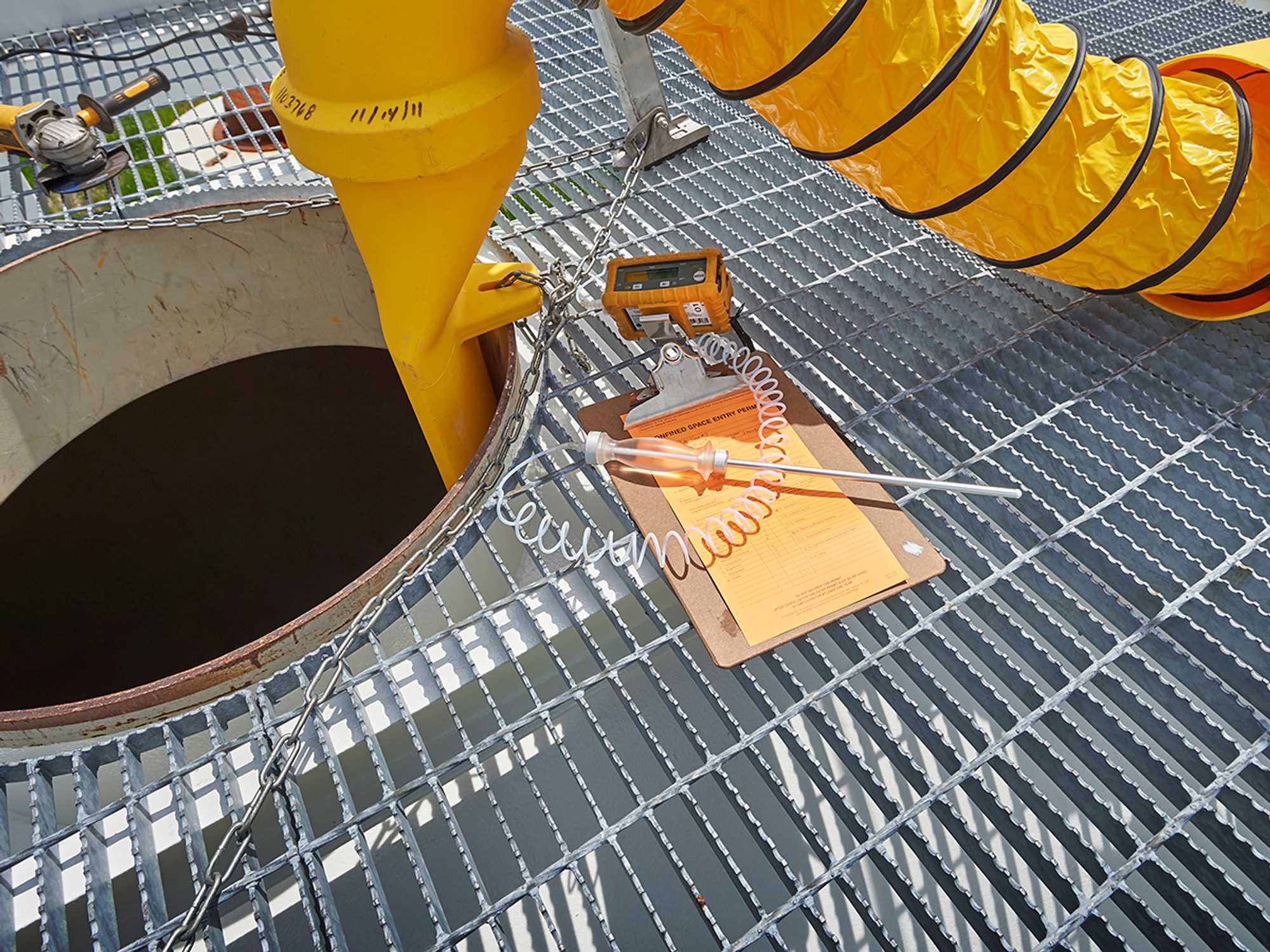
- Confined spaces are difficult to enter, exit, and move within, and they pose a serious risk of asphyxiation.
There are safety and health hazards involved in responding to incidents in confined spaces. The openings are usually small and are difficult to move through easily, which makes the transport of protective equipment a chore.
Simply put, a confined space is any space that meets three criteria:
- It’s large enough for a worker to enter,
- It has limited means of entry or exit, and
- It’s not designed for continuous occupancy.
Examples of confined spaces include tanks, vessels, silos, storage bins, hoppers, vaults, boilers, pits, sewers, and crawl spaces.
Confined space hazards
Because air may not move in or out of confined spaces freely due to the design, the atmosphere inside a confined space can be very different from the atmosphere outside. Deadly gases may be trapped inside, or there may not be enough oxygen to support life. Therefore, occasional worker entry for inspection, maintenance, repair, cleanup, or similar tasks is often difficult and dangerous due to chemical or physical hazards within the space.
In addition to oxygen deficiency and toxic air contaminants, confined spaces may contain combustible gases, electrical hazards, moving parts, and even snakes.
Permit spaces
With so many hazards, permits are often required just to perform work in a confined space. In fact, a confined space is considered a permit-required confined space (called a permit space) if it has:
- A hazardous atmosphere;
- The potential for engulfment or suffocation;
- An internal layout that might trap an entrant, such as by inwardly converging walls or a sloped floor; or
- Any other recognized serious hazard.
Please refer to the Confined spaces subject for further information.
:
hazwoper
hazwoper
FOUNDATIONAL LEARNING
InstituteAir QualityHazardous Waste Cleanup OperationsHAZWOPERHazardous Air PollutantsIn Depth (Level 3)EnglishHeat StressHeat and Cold ExposureSafety & HealthCriteria Air PollutantsGeneral Industry SafetyExtreme Temperature PreparationHeat and Cold ExposureCold StressAnalysisFocus AreaUSA
Heat stress and cold exposure
Confined spaces
InstituteHAZWOPERSafety & HealthGeneral Industry SafetyHAZWOPERUSAEnglishAnalysisFocus AreaIn Depth (Level 3)
['HAZWOPER']
- Confined spaces are difficult to enter, exit, and move within, and they pose a serious risk of asphyxiation.
There are safety and health hazards involved in responding to incidents in confined spaces. The openings are usually small and are difficult to move through easily, which makes the transport of protective equipment a chore.
Simply put, a confined space is any space that meets three criteria:
- It’s large enough for a worker to enter,
- It has limited means of entry or exit, and
- It’s not designed for continuous occupancy.
Examples of confined spaces include tanks, vessels, silos, storage bins, hoppers, vaults, boilers, pits, sewers, and crawl spaces.
Confined space hazards
Because air may not move in or out of confined spaces freely due to the design, the atmosphere inside a confined space can be very different from the atmosphere outside. Deadly gases may be trapped inside, or there may not be enough oxygen to support life. Therefore, occasional worker entry for inspection, maintenance, repair, cleanup, or similar tasks is often difficult and dangerous due to chemical or physical hazards within the space.
In addition to oxygen deficiency and toxic air contaminants, confined spaces may contain combustible gases, electrical hazards, moving parts, and even snakes.
Permit spaces
With so many hazards, permits are often required just to perform work in a confined space. In fact, a confined space is considered a permit-required confined space (called a permit space) if it has:
- A hazardous atmosphere;
- The potential for engulfment or suffocation;
- An internal layout that might trap an entrant, such as by inwardly converging walls or a sloped floor; or
- Any other recognized serious hazard.
Please refer to the Confined spaces subject for further information.
2656948762
2656949745
UPGRADE TO CONTINUE READING
RELATED TOPICS
J. J. Keller is the trusted source for DOT / Transportation, OSHA / Workplace Safety, Human Resources, Construction Safety and Hazmat / Hazardous Materials regulation compliance products and services. J. J. Keller helps you increase safety awareness, reduce risk, follow best practices, improve safety training, and stay current with changing regulations.
Copyright 2026 J. J. Keller & Associate, Inc. For re-use options please contact copyright@jjkeller.com or call 800-558-5011.