Compliance Just Got Easier: Stay ahead of regulatory changes with instant notifications on updates that matter.
['HAZWOPER']
['Hazardous Waste Treatment, Storage, and/or Disposal', 'Hazardous Waste Cleanup Operations', 'HAZWOPER', 'HAZWOPER Emergency Response']
06/01/2026

Copyright 2026 J. J. Keller & Associate, Inc. For re-use options please contact copyright@jjkeller.com or call 800-558-5011.
:
|
InstituteHAZWOPERHAZWOPER Emergency ResponseSafety & HealthConstruction SafetyGeneral Industry SafetyMaritime SafetyHazardous Waste Treatment, Storage, and/or DisposalHAZWOPERHazardous Waste Cleanup OperationsUSAEnglishAnalysisFocus AreaIn Depth (Level 3)
Radioactive or infectious materials
['HAZWOPER']
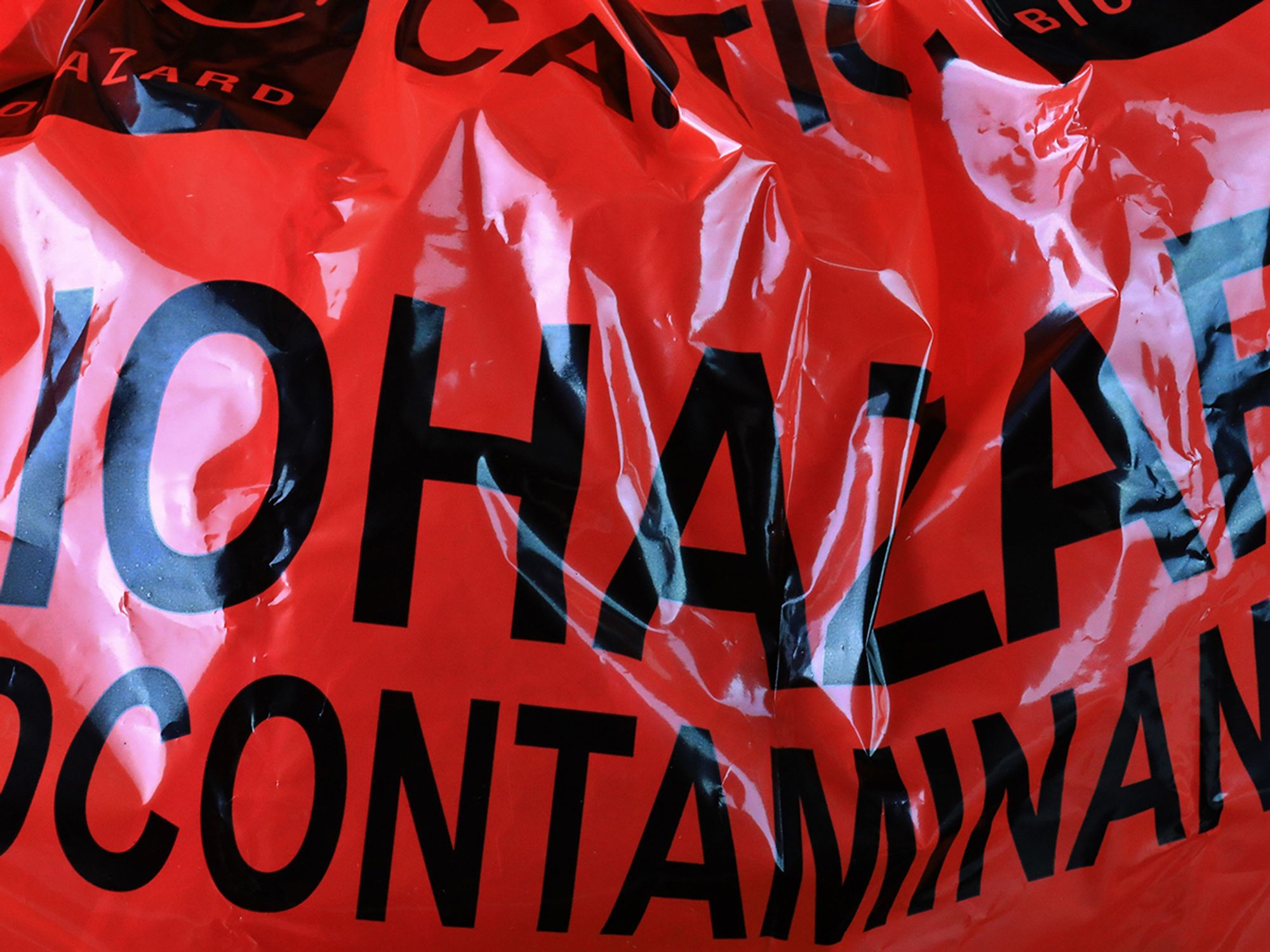
- Radioactive waste and infectious materials can both fall under the HAZWOPER Standard, depending on the circumstances.
Radioactive waste
The term “hazardous substance” as defined by 29 CFR 1910.120 includes radioactive waste in addition to hazardous waste. It should not be confused with the definition of “hazardous chemical” in 29 CFR 1910.1200, Hazard Communication, which specifically excludes any radioactive chemicals.
The U.S. Nuclear Regulatory Commission (NRC) has jurisdiction “inside the fence” at NRC-licensed nuclear facilities for the risks involved with licensed radioactive materials, including emergency response procedures. The Occupational Safety and Health Administration (OSHA) has jurisdiction “inside the fence” for non-licensed radioactive materials, such as x-ray equipment, accelerators, some electron microscopes, and some naturally occurring radioactive materials (see the memo of understanding between OSHA and the NRC that delineates employee protection responsibilities for each agency at facilities licensed by the NRC, effective October 21, 1988).
There may be both NRC and OSHA jurisdiction when there is an emergency involving mixed wastes (licensed radioactive materials and other hazardous substances) “inside the fence.” HAZWOPER may also be applicable “outside the fence” to emergency response and cleanup activities involving hazardous substances, including licensed radioactive wastes.
Infectious materials
Employers must include infectious materials in their effort to comply with 1910.120(q) if there is a possibility that a release could cause an emergency. Employers with employees engaged in emergency response activities involving infectious materials must comply with the requirements in 1910.120(q) and may also have to comply with the Bloodborne Pathogens Standard, 29 CFR 1910.1030. If there is a conflict or overlap between the standards, the provision that is more protective of employee safety and health applies.
:
hazwoper
hazwoper
FOUNDATIONAL LEARNING
Radioactive or infectious materials
InstituteHAZWOPERHAZWOPER Emergency ResponseSafety & HealthConstruction SafetyGeneral Industry SafetyMaritime SafetyHazardous Waste Treatment, Storage, and/or DisposalHAZWOPERHazardous Waste Cleanup OperationsUSAEnglishAnalysisFocus AreaIn Depth (Level 3)
['HAZWOPER']
- Radioactive waste and infectious materials can both fall under the HAZWOPER Standard, depending on the circumstances.
Radioactive waste
The term “hazardous substance” as defined by 29 CFR 1910.120 includes radioactive waste in addition to hazardous waste. It should not be confused with the definition of “hazardous chemical” in 29 CFR 1910.1200, Hazard Communication, which specifically excludes any radioactive chemicals.
The U.S. Nuclear Regulatory Commission (NRC) has jurisdiction “inside the fence” at NRC-licensed nuclear facilities for the risks involved with licensed radioactive materials, including emergency response procedures. The Occupational Safety and Health Administration (OSHA) has jurisdiction “inside the fence” for non-licensed radioactive materials, such as x-ray equipment, accelerators, some electron microscopes, and some naturally occurring radioactive materials (see the memo of understanding between OSHA and the NRC that delineates employee protection responsibilities for each agency at facilities licensed by the NRC, effective October 21, 1988).
There may be both NRC and OSHA jurisdiction when there is an emergency involving mixed wastes (licensed radioactive materials and other hazardous substances) “inside the fence.” HAZWOPER may also be applicable “outside the fence” to emergency response and cleanup activities involving hazardous substances, including licensed radioactive wastes.
Infectious materials
Employers must include infectious materials in their effort to comply with 1910.120(q) if there is a possibility that a release could cause an emergency. Employers with employees engaged in emergency response activities involving infectious materials must comply with the requirements in 1910.120(q) and may also have to comply with the Bloodborne Pathogens Standard, 29 CFR 1910.1030. If there is a conflict or overlap between the standards, the provision that is more protective of employee safety and health applies.
2665776541
2656951063
UPGRADE TO CONTINUE READING
RELATED TOPICS
J. J. Keller is the trusted source for DOT / Transportation, OSHA / Workplace Safety, Human Resources, Construction Safety and Hazmat / Hazardous Materials regulation compliance products and services. J. J. Keller helps you increase safety awareness, reduce risk, follow best practices, improve safety training, and stay current with changing regulations.
Copyright 2026 J. J. Keller & Associate, Inc. For re-use options please contact copyright@jjkeller.com or call 800-558-5011.