Compliance Just Got Easier: Stay ahead of regulatory changes with instant notifications on updates that matter.
['First Aid and Medical']
['Eyewashes and Showers', 'First Aid and Medical']
04/16/2026

Copyright 2026 J. J. Keller & Associate, Inc. For re-use options please contact copyright@jjkeller.com or call 800-558-5011.
:
|
InstituteAnalysisSafety & HealthIn Depth Sub Topics (Level 4)General Industry SafetyFirst Aid and MedicalEyewashes and ShowersEnglishFirst Aid and MedicalFocus AreaUSA
Common eye/skin hazardous chemicals
['First Aid and Medical']
- OSHA expects the employer to determine the level of potential risk to employees and provide protection accordingly.
- What protection is appropriate at the workplace should be based on a hazard assessment and exposure determination.
- Commonly encountered hazardous materials may be liquids, gases or solids.
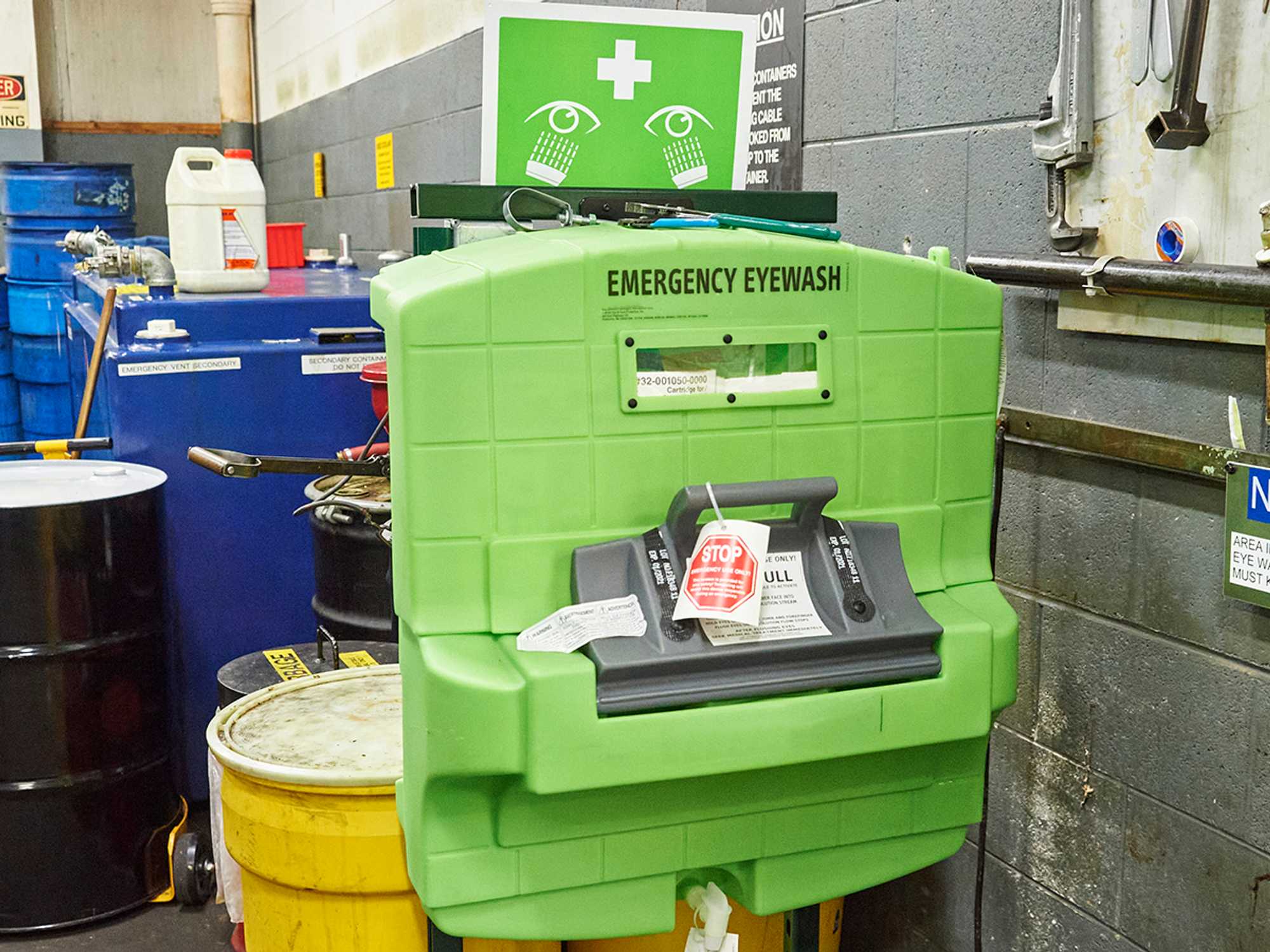
There are times when the use of emergency eyewash and shower equipment becomes crucial in the workplace. In instances where employees are exposed to injurious corrosive materials, The Occupational Safety and Health Administration (OSHA) requires at 29 CFR 1910.151(c) that employers provide suitable facilities for quick drenching or flushing of the eyes and body within the immediate work area. OSHA provides no additional requirements, and as a result, employers often ask whether or not emergency eyewashes or showers are needed at their facility. OSHA says in an April 14, 2008, letter of interpretation (LOI) that “the employer must determine if employees can or will be exposed during the course of their duties to hazardous materials in such a way that the protections of an eyewash or emergency shower would be necessary.”
Essentially, OSHA expects the employer to determine the level of potential risk to employees and provide protection accordingly.
What protection is appropriate should be based on a hazard assessment and exposure determination because an employer doesn’t always need an eyewash or shower just because they have chemicals.
| Common eye/Skin hazardous chemicals | ||
|---|---|---|
| Source: Minnesota Department of Labor and Industries’ Fact Sheet | ||
| Some commonly encountered chemicals that present eye and/or skin hazards are listed below. This list does not include all hazardous chemicals that may be encountered. The hazardous materials may be liquids, gases or solids | ||
| Very acidic (low pH) | Highly alkaline (high pH) | Other |
|
|
|
OSHA says employers should refer to the chemical’s safety data sheet (SDS) when making this evaluation. For example, if the SDS indicates irritation only, an eyewash or shower may not be required. On the other hand, if the SDS states that burns, corneal damage, or blindness could happen, the material would be considered hazardous and an eyewash and possibly a shower must be provided.
Employers should also consult with the product manufacturer and sources such as the NIOSH Pocket Guide to Chemical Hazards. The guide lists the physical and chemical properties and health hazards for many different substances. If the entry for the material in question says, “provide quick drench,” this would obviously be an indication that an eyewash or shower is needed. Also, in a May 5, 2004, LOI, OSHA says that employers should consult references such as W. Morton Grant’s “Toxicology of the Eye” when considering potential chemical exposures to the eye and the appropriateness of installing eyewashes to protect employees against hazards associated with particular chemicals and substances.
An emergency eyewash or shower isn’t necessarily needed just because an employer possesses an injurious corrosive material. In an April 14, 2008, letter of interpretation, OSHA also says that: “If hazardous materials are present at a worksite in such a way that exposure could not occur (for example, in sealed containers that will not be opened, or caustic materials in building piping), then an eyewash or emergency shower would not be necessary. However, if the building piping containing caustic materials has, at certain locations, a spigot or tap from which the contents are to be sampled or withdrawn and employees are expected to perform such tasks, then, certainly, an eyewash and/or emergency shower would be needed where this task is to occur.” Therefore, when determining exposure, an employer should evaluate the potential for the material to get into the eyes or on the skin.
Employers must consider the type of equipment, worksite conditions, and quantity of exposure among other things. For example, if there is the potential for substantial exposure to the body, then a shower would be needed also. If only the eyes could be impacted, then an eyewash may be all that is needed.
:
first-aid-and-medical
first-aid-and-medical
FOUNDATIONAL LEARNING
Common eye/skin hazardous chemicals
InstituteAnalysisSafety & HealthIn Depth Sub Topics (Level 4)General Industry SafetyFirst Aid and MedicalEyewashes and ShowersEnglishFirst Aid and MedicalFocus AreaUSA
['First Aid and Medical']
- OSHA expects the employer to determine the level of potential risk to employees and provide protection accordingly.
- What protection is appropriate at the workplace should be based on a hazard assessment and exposure determination.
- Commonly encountered hazardous materials may be liquids, gases or solids.
There are times when the use of emergency eyewash and shower equipment becomes crucial in the workplace. In instances where employees are exposed to injurious corrosive materials, The Occupational Safety and Health Administration (OSHA) requires at 29 CFR 1910.151(c) that employers provide suitable facilities for quick drenching or flushing of the eyes and body within the immediate work area. OSHA provides no additional requirements, and as a result, employers often ask whether or not emergency eyewashes or showers are needed at their facility. OSHA says in an April 14, 2008, letter of interpretation (LOI) that “the employer must determine if employees can or will be exposed during the course of their duties to hazardous materials in such a way that the protections of an eyewash or emergency shower would be necessary.”
Essentially, OSHA expects the employer to determine the level of potential risk to employees and provide protection accordingly.
What protection is appropriate should be based on a hazard assessment and exposure determination because an employer doesn’t always need an eyewash or shower just because they have chemicals.
| Common eye/Skin hazardous chemicals | ||
|---|---|---|
| Source: Minnesota Department of Labor and Industries’ Fact Sheet | ||
| Some commonly encountered chemicals that present eye and/or skin hazards are listed below. This list does not include all hazardous chemicals that may be encountered. The hazardous materials may be liquids, gases or solids | ||
| Very acidic (low pH) | Highly alkaline (high pH) | Other |
|
|
|
OSHA says employers should refer to the chemical’s safety data sheet (SDS) when making this evaluation. For example, if the SDS indicates irritation only, an eyewash or shower may not be required. On the other hand, if the SDS states that burns, corneal damage, or blindness could happen, the material would be considered hazardous and an eyewash and possibly a shower must be provided.
Employers should also consult with the product manufacturer and sources such as the NIOSH Pocket Guide to Chemical Hazards. The guide lists the physical and chemical properties and health hazards for many different substances. If the entry for the material in question says, “provide quick drench,” this would obviously be an indication that an eyewash or shower is needed. Also, in a May 5, 2004, LOI, OSHA says that employers should consult references such as W. Morton Grant’s “Toxicology of the Eye” when considering potential chemical exposures to the eye and the appropriateness of installing eyewashes to protect employees against hazards associated with particular chemicals and substances.
An emergency eyewash or shower isn’t necessarily needed just because an employer possesses an injurious corrosive material. In an April 14, 2008, letter of interpretation, OSHA also says that: “If hazardous materials are present at a worksite in such a way that exposure could not occur (for example, in sealed containers that will not be opened, or caustic materials in building piping), then an eyewash or emergency shower would not be necessary. However, if the building piping containing caustic materials has, at certain locations, a spigot or tap from which the contents are to be sampled or withdrawn and employees are expected to perform such tasks, then, certainly, an eyewash and/or emergency shower would be needed where this task is to occur.” Therefore, when determining exposure, an employer should evaluate the potential for the material to get into the eyes or on the skin.
Employers must consider the type of equipment, worksite conditions, and quantity of exposure among other things. For example, if there is the potential for substantial exposure to the body, then a shower would be needed also. If only the eyes could be impacted, then an eyewash may be all that is needed.
2656870831
2656867078
UPGRADE TO CONTINUE READING
RELATED TOPICS
J. J. Keller is the trusted source for DOT / Transportation, OSHA / Workplace Safety, Human Resources, Construction Safety and Hazmat / Hazardous Materials regulation compliance products and services. J. J. Keller helps you increase safety awareness, reduce risk, follow best practices, improve safety training, and stay current with changing regulations.
Copyright 2026 J. J. Keller & Associate, Inc. For re-use options please contact copyright@jjkeller.com or call 800-558-5011.