Compliance Just Got Easier: Stay ahead of regulatory changes with instant notifications on updates that matter.
['First Aid and Medical']
['First Aid and Medical']
04/30/2026

Copyright 2026 J. J. Keller & Associate, Inc. For re-use options please contact copyright@jjkeller.com or call 800-558-5011.
:
|
InstituteAnalysisSafety & HealthFirst Aid and MedicalGeneral Industry SafetyUSAEnglishFirst Aid and MedicalFocus AreaIn Depth (Level 3)
First-aid kit supplies and inspections
['First Aid and Medical']
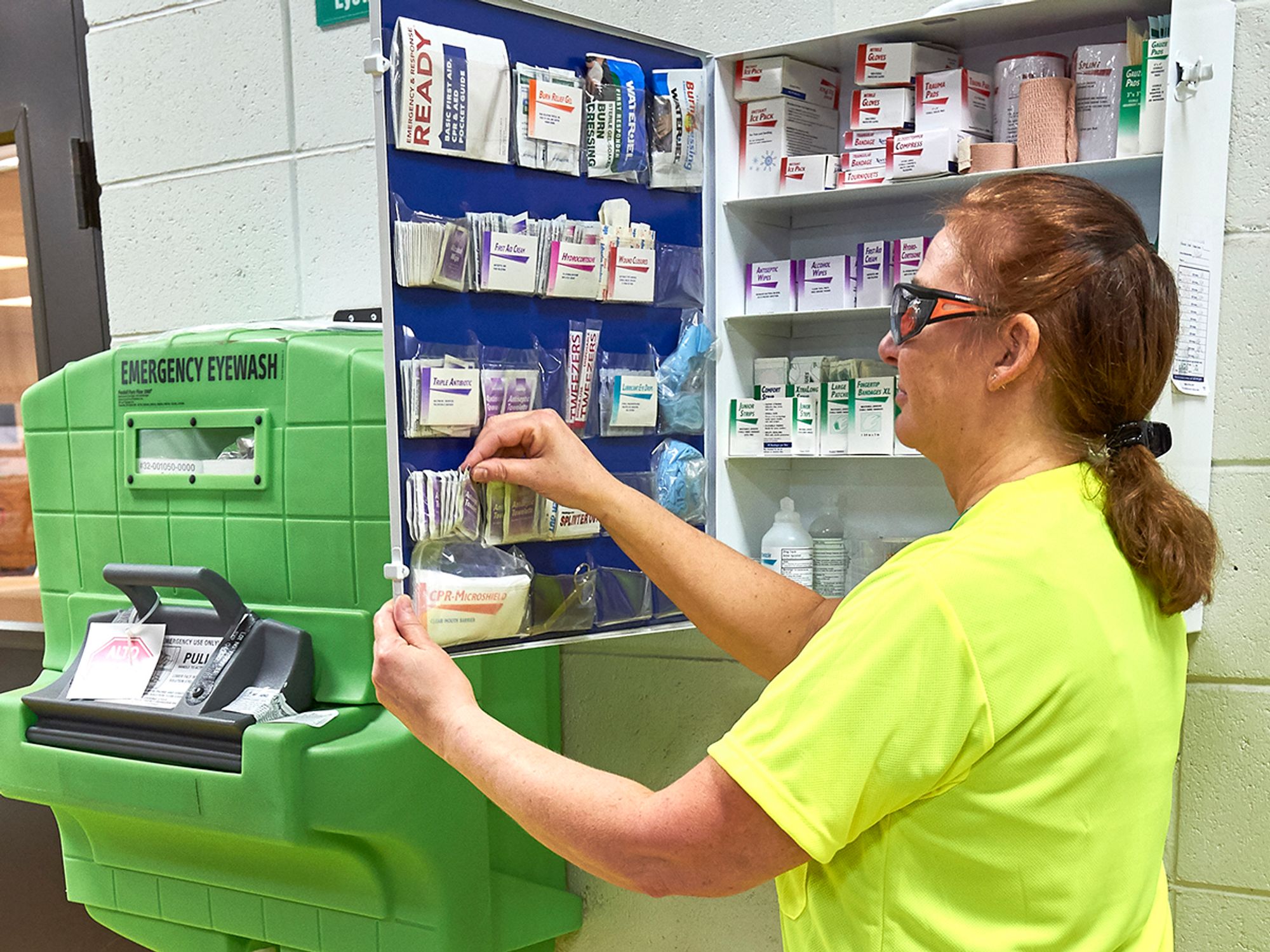
- First-aid kits should be regularly inspected to ensure completeness, condition of supplies, and expiration dates to maintain compliance.
- OSHA standards require first-aid supplies to be always available regardless of how often employers inspect first-aid kits.
- The amount of first-aid kits should be based on several factors including the size of the workplace, number of employees, likelihood and location of possible accidents
How often do first-aid kits need to be inspected?
The American National Standards Institute (ANSI)/International Safety Equipment Association standard (ISEA) Z308.1-2021 standard states that first-aid kits should be regularly inspected to ensure completeness, condition of supplies, and expiration dates to maintain compliance. Expired supplies should be removed, and additional quantities should be added as needed.
Also, the Occupational Safety and Health Administration (OSHA) states at 1910.151(b) that “adequate first-aid supplies shall be readily available.” By readily available, OSHA means always available regardless of how often employers inspect first-aid kits. Some employers maintain a check-off list with the kit so that items can be marked off as they are taken out/used. This may make the task of keeping track of kit contents easier.
Must a first-aid log be kept of the number and quantity of supplies?
Neither OSHA nor ANSI requires that employers maintain a first-aid log.
Must first-aid kits be marked with a label or sign?
The location of first-aid kits, supplies, or cabinets and rooms should be clearly marked using prominent signs and labels so that employees can quickly find them in an emergency. While 1910.151 makes no mention of a first-aid kit label and/or location sign, the following voluntary consensus standards do:
- ANSI/ISEA Z308.1, American National Standard — Minimum Requirements for Workplace First Aid Kits and Supplies, requires a visible marking on the kit and/or its location. The consensus standard also requires a label detailing the kit class and type and contents, along with the particular edition of ANSI/ISEA Z308.1 for which it meets.
- ANSI / National Electrical Manufacturers Association (NEMA) standard Z535.2, American National Standard for Environmental and Facility Safety Signs, requires specific formats and color schemes for all “safety equipment location signs.” These signs include signs for the location of first-aid equipment.
How many first-aid kits are needed in a workplace?
OSHA does not require employers to have a certain number of kits in the workplace. The number of first-aid kits should be based on several factors including the size of the workplace, number of employees, likelihood and location of possible accidents, etc. Also, 1910.151(a) states that the employer must have a medical professional to advise on matters of plant health, such as what first-aid supplies should be available, the amount of supplies needed, and where those supplies should be placed. In other words, OSHA would expect employers to consult their medical professional for guidance.
In addition, employers may also discuss this issue with a local ambulance service or outside emergency responders for suggestions. First-aid supply vendors might also be able to provide specific recommendations for a workplace.
Can first-aid kits or cabinets be locked?
OSHA addresses this issue in a January 23, 2007, letter of interpretation in which the agency states, “Yes, first-aid cabinets can be locked; however, they must be readily accessible in the event of an emergency. Locking the cabinet may limit accessibility.” Therefore, employers need to ensure that employees and/or first-aid providers/emergency responders can quickly get to the key and the supplies in an emergency. If adequate first-aid supplies were not available when needed, then the employer would be in violation of 1910.151(b).
:
first-aid-and-medical
first-aid-and-medical
FOUNDATIONAL LEARNING
First-aid kit supplies and inspections
InstituteAnalysisSafety & HealthFirst Aid and MedicalGeneral Industry SafetyUSAEnglishFirst Aid and MedicalFocus AreaIn Depth (Level 3)
['First Aid and Medical']
- First-aid kits should be regularly inspected to ensure completeness, condition of supplies, and expiration dates to maintain compliance.
- OSHA standards require first-aid supplies to be always available regardless of how often employers inspect first-aid kits.
- The amount of first-aid kits should be based on several factors including the size of the workplace, number of employees, likelihood and location of possible accidents
How often do first-aid kits need to be inspected?
The American National Standards Institute (ANSI)/International Safety Equipment Association standard (ISEA) Z308.1-2021 standard states that first-aid kits should be regularly inspected to ensure completeness, condition of supplies, and expiration dates to maintain compliance. Expired supplies should be removed, and additional quantities should be added as needed.
Also, the Occupational Safety and Health Administration (OSHA) states at 1910.151(b) that “adequate first-aid supplies shall be readily available.” By readily available, OSHA means always available regardless of how often employers inspect first-aid kits. Some employers maintain a check-off list with the kit so that items can be marked off as they are taken out/used. This may make the task of keeping track of kit contents easier.
Must a first-aid log be kept of the number and quantity of supplies?
Neither OSHA nor ANSI requires that employers maintain a first-aid log.
Must first-aid kits be marked with a label or sign?
The location of first-aid kits, supplies, or cabinets and rooms should be clearly marked using prominent signs and labels so that employees can quickly find them in an emergency. While 1910.151 makes no mention of a first-aid kit label and/or location sign, the following voluntary consensus standards do:
- ANSI/ISEA Z308.1, American National Standard — Minimum Requirements for Workplace First Aid Kits and Supplies, requires a visible marking on the kit and/or its location. The consensus standard also requires a label detailing the kit class and type and contents, along with the particular edition of ANSI/ISEA Z308.1 for which it meets.
- ANSI / National Electrical Manufacturers Association (NEMA) standard Z535.2, American National Standard for Environmental and Facility Safety Signs, requires specific formats and color schemes for all “safety equipment location signs.” These signs include signs for the location of first-aid equipment.
How many first-aid kits are needed in a workplace?
OSHA does not require employers to have a certain number of kits in the workplace. The number of first-aid kits should be based on several factors including the size of the workplace, number of employees, likelihood and location of possible accidents, etc. Also, 1910.151(a) states that the employer must have a medical professional to advise on matters of plant health, such as what first-aid supplies should be available, the amount of supplies needed, and where those supplies should be placed. In other words, OSHA would expect employers to consult their medical professional for guidance.
In addition, employers may also discuss this issue with a local ambulance service or outside emergency responders for suggestions. First-aid supply vendors might also be able to provide specific recommendations for a workplace.
Can first-aid kits or cabinets be locked?
OSHA addresses this issue in a January 23, 2007, letter of interpretation in which the agency states, “Yes, first-aid cabinets can be locked; however, they must be readily accessible in the event of an emergency. Locking the cabinet may limit accessibility.” Therefore, employers need to ensure that employees and/or first-aid providers/emergency responders can quickly get to the key and the supplies in an emergency. If adequate first-aid supplies were not available when needed, then the employer would be in violation of 1910.151(b).
2656872499
2656870357
UPGRADE TO CONTINUE READING
RELATED TOPICS
J. J. Keller is the trusted source for DOT / Transportation, OSHA / Workplace Safety, Human Resources, Construction Safety and Hazmat / Hazardous Materials regulation compliance products and services. J. J. Keller helps you increase safety awareness, reduce risk, follow best practices, improve safety training, and stay current with changing regulations.
Copyright 2026 J. J. Keller & Associate, Inc. For re-use options please contact copyright@jjkeller.com or call 800-558-5011.