Compliance Just Got Easier: Stay ahead of regulatory changes with instant notifications on updates that matter.
['First Aid and Medical']
['First Aid and Medical']
04/30/2026

Copyright 2026 J. J. Keller & Associate, Inc. For re-use options please contact copyright@jjkeller.com or call 800-558-5011.
:
|
InstituteAnalysisSafety & HealthIn Depth Sub Topics (Level 4)First Aid and MedicalGeneral Industry SafetyEnglishFirst Aid and MedicalFocus AreaUSA
Location
['First Aid and Medical']
- OSHA does not specify the placement of first-aid kits based on employee numbers, density or geography.
- Adequate first-aid kits must be readily available, and the first-aid provider generally should not have to travel through several doorways, hallways, and/or stairways to access them.
- First-aid kits should not be stored in employee break areas.
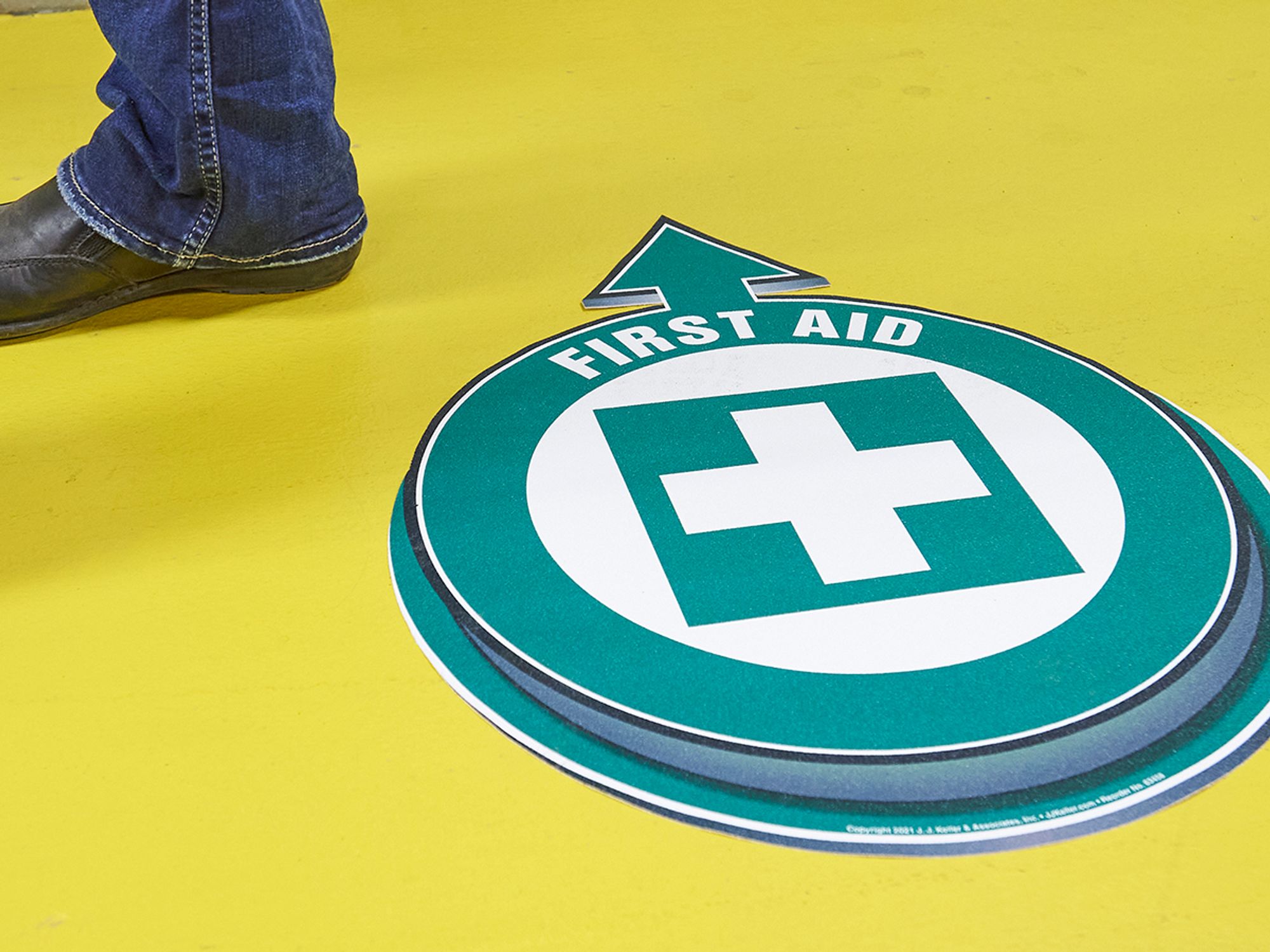
- The location of first-aid kits, supplies, or cabinets and rooms should be clearly marked
Some Occupational Safety and Health Administration (OSHA) standards address location/placement requirements for first-aid kits, e.g., for telecommunication, logging, and diving operations.
However, OSHA 1910.151 does not specify the placement of first-aid kits and/or cabinets based on employee numbers, density, or geography. As a result, when no other first-aid kit location requirements apply, it is the employer's responsibility to assess the particular needs of the workplace and tailor first-aid kits and their placement to the workplace-specific needs. Learn more in an April 18, 2002, OSHA letter of interpretation.
Section 1910.151 does state that supplies must be “readily available.” Yet, the term “readily available” is not defined in the standard. At the same time, OSHA has emphasized that responding in a timely manner can mean the difference between life and death. In fact, medical literature establishes that, for serious injuries such as those involving stopped breathing, cardiac arrest, or uncontrolled bleeding, first-aid treatment must be provided within the first few minutes to avoid permanent medical impairment or death, according to a January 16, 2007, OSHA letter of interpretation.
Accessibility
Given the importance of timely response, the person trained to render first aid must be able to quickly access first-aid supplies in order to effectively provide injured or ill employees with first-aid attention. The April 18, 2002, letter of interpretation explains that, under 1910.151, the first-aid supplies should be located in an easily accessible area, and the first-aid provider generally should not have to travel through several doorways, hallways, and/or stairways to access them.
The standard does not specify whether first-aid supplies may be locked up. In a January 23, 2007, letter of interpretation, OSHA remarks that first-aid cabinets can be locked, but the catch is they must be readily accessible in the event of an emergency. The agency makes it clear that locking a cabinet might limit accessibility, and 1910.151(b) requires that “adequate first aid supplies shall be readily available.”
The same letter goes on to say that, per 1910.151, employers may elect not to provide first-aid services if all such services will be provided by a hospital, infirmary, or clinic in “near proximity” to the workplace, but if the employer has persons who are trained in first aid, then adequate first-aid supplies must be readily available for use. These supplies need to be stored in a convenient area available for emergency access.
The January 23, 2007, letter adds that if OSHA finds that an employer was relying on first-aid services not provided by a clinic, infirmary, or hospital and adequate first-aid supplies were not available when needed, then the employer would be in violation of 1910.151(b).
Another location consideration
It is worth noting that OSHA has cited employers because medical supplies were located in the same room in which employees eat or drink. If applicable, this violates 1910.1030(d)(2)(ix) which prohibits eating, drinking, smoking, applying cosmetics or lip balm, and handling contact lenses where there is a possibility of exposure to bloodborne pathogens.
Posting
The location of first-aid kits, supplies, or cabinets and rooms should be clearly marked using prominent signs and labels so that employees can quickly find them in an emergency. While 1910.151 makes no mention of a first-aid kit label and/or location sign, the following voluntary consensus standards do:
- American National Standards Institute (ANSI) / International Safety Equipment Association (ISEA) standard Z308.1, American National Standard — Minimum Requirements for Workplace First Aid Kits and Supplies, requires a visible marking on the kit and/or its location. The consensus standard also requires a label detailing the kit class and type and contents, along with the particular edition of ANSI/ISEA Z308.1 for which it meets.
- ANSI / National Electrical Manufacturers Association (NEMA) standard Z535.2, American National Standard for Environmental and Facility Safety Signs, requires specific formats and color schemes for all “safety equipment location signs.” These signs include signs for the location of first-aid equipment.
:
first-aid-and-medical
first-aid-and-medical
FOUNDATIONAL LEARNING
- OSHA does not specify the placement of first-aid kits based on employee numbers, density or geography.
- Adequate first-aid kits must be readily available, and the first-aid provider generally should not have to travel through several doorways, hallways, and/or stairways to access them.
- First-aid kits should not be stored in employee break areas.
- The location of first-aid kits, supplies, or cabinets and rooms should be clearly marked
Some Occupational Safety and Health Administration (OSHA) standards address location/placement requirements for first-aid kits, e.g., for telecommunication, logging, and diving operations.
However, OSHA 1910.151 does not specify the placement of first-aid kits and/or cabinets based on employee numbers, density, or geography. As a result, when no other first-aid kit location requirements apply, it is the employer's responsibility to assess the particular needs of the workplace and tailor first-aid kits and their placement to the workplace-specific needs. Learn more in an April 18, 2002, OSHA letter of interpretation.
Section 1910.151 does state that supplies must be “readily available.” Yet, the term “readily available” is not defined in the standard. At the same time, OSHA has emphasized that responding in a timely manner can mean the difference between life and death. In fact, medical literature establishes that, for serious injuries such as those involving stopped breathing, cardiac arrest, or uncontrolled bleeding, first-aid treatment must be provided within the first few minutes to avoid permanent medical impairment or death, according to a January 16, 2007, OSHA letter of interpretation.
Accessibility
Given the importance of timely response, the person trained to render first aid must be able to quickly access first-aid supplies in order to effectively provide injured or ill employees with first-aid attention. The April 18, 2002, letter of interpretation explains that, under 1910.151, the first-aid supplies should be located in an easily accessible area, and the first-aid provider generally should not have to travel through several doorways, hallways, and/or stairways to access them.
The standard does not specify whether first-aid supplies may be locked up. In a January 23, 2007, letter of interpretation, OSHA remarks that first-aid cabinets can be locked, but the catch is they must be readily accessible in the event of an emergency. The agency makes it clear that locking a cabinet might limit accessibility, and 1910.151(b) requires that “adequate first aid supplies shall be readily available.”
The same letter goes on to say that, per 1910.151, employers may elect not to provide first-aid services if all such services will be provided by a hospital, infirmary, or clinic in “near proximity” to the workplace, but if the employer has persons who are trained in first aid, then adequate first-aid supplies must be readily available for use. These supplies need to be stored in a convenient area available for emergency access.
The January 23, 2007, letter adds that if OSHA finds that an employer was relying on first-aid services not provided by a clinic, infirmary, or hospital and adequate first-aid supplies were not available when needed, then the employer would be in violation of 1910.151(b).
Another location consideration
It is worth noting that OSHA has cited employers because medical supplies were located in the same room in which employees eat or drink. If applicable, this violates 1910.1030(d)(2)(ix) which prohibits eating, drinking, smoking, applying cosmetics or lip balm, and handling contact lenses where there is a possibility of exposure to bloodborne pathogens.
Posting
The location of first-aid kits, supplies, or cabinets and rooms should be clearly marked using prominent signs and labels so that employees can quickly find them in an emergency. While 1910.151 makes no mention of a first-aid kit label and/or location sign, the following voluntary consensus standards do:
- American National Standards Institute (ANSI) / International Safety Equipment Association (ISEA) standard Z308.1, American National Standard — Minimum Requirements for Workplace First Aid Kits and Supplies, requires a visible marking on the kit and/or its location. The consensus standard also requires a label detailing the kit class and type and contents, along with the particular edition of ANSI/ISEA Z308.1 for which it meets.
- ANSI / National Electrical Manufacturers Association (NEMA) standard Z535.2, American National Standard for Environmental and Facility Safety Signs, requires specific formats and color schemes for all “safety equipment location signs.” These signs include signs for the location of first-aid equipment.
2656867075
2656866586
UPGRADE TO CONTINUE READING
RELATED TOPICS
J. J. Keller is the trusted source for DOT / Transportation, OSHA / Workplace Safety, Human Resources, Construction Safety and Hazmat / Hazardous Materials regulation compliance products and services. J. J. Keller helps you increase safety awareness, reduce risk, follow best practices, improve safety training, and stay current with changing regulations.
Copyright 2026 J. J. Keller & Associate, Inc. For re-use options please contact copyright@jjkeller.com or call 800-558-5011.