Compliance Just Got Easier: Stay ahead of regulatory changes with instant notifications on updates that matter.
['First Aid and Medical']
['Automated External Defibrillators', 'First Aid and Medical', 'Lifesaving Equipment']
05/01/2026

Copyright 2026 J. J. Keller & Associate, Inc. For re-use options please contact copyright@jjkeller.com or call 800-558-5011.
:
|
InstituteAnalysisSafety & HealthFirst Aid and MedicalGeneral Industry SafetyFocus AreaUSAEnglishFirst Aid and MedicalAutomated External DefibrillatorsLifesaving EquipmentIn Depth (Level 3)
Additional first-aid considerations
['First Aid and Medical']
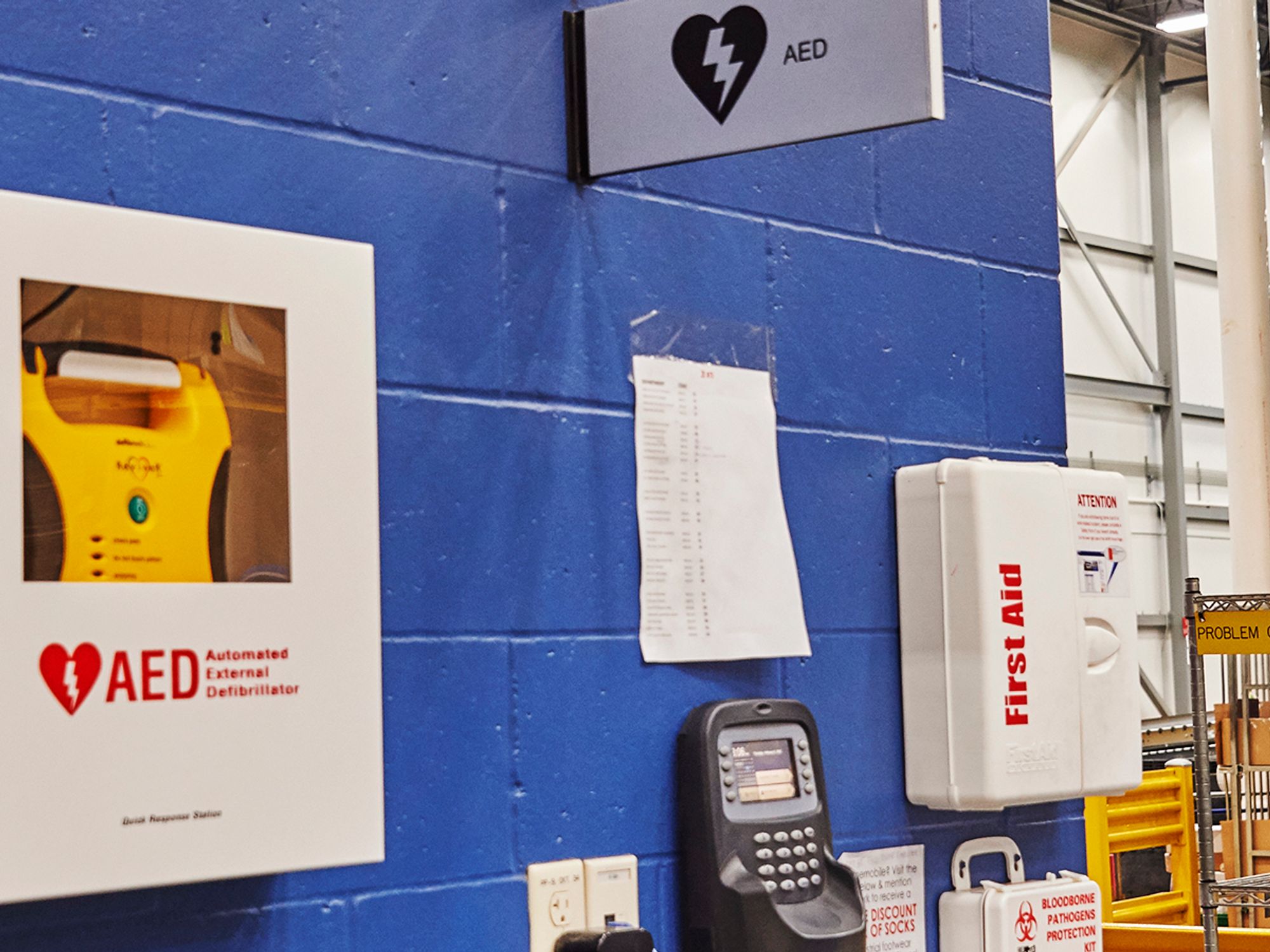
- AEDs are not required to be included in first-aid supplies.
- OSHA recommends employers consider AED equipment as part of a medical and first-aid program.
- If it is reasonably anticipated that employees will be exposed to blood or other potentially infectious materials while using first-aid supplies, employers are required to provide appropriate PPE.
- OSHA recommends
On-site workplace clinics (OWCs)
An OSHA publication, "Best Practices for Non-Health Care Employers with On-site Health Care Services," OSHA 3160-05R 2024, provides information that can help employers create and operate an appropriate medical management program for their workplace. The 60-page document covers first-aid and medical management, developing a medical management program, and medical management’s role in workplace safety and health programs. It also goes over occupational healthcare professionals and scope of practice, the types of healthcare professionals, additional background and operations considerations, and ethical concerns. In addition, case studies are provided.
Automated external defibrillators (AEDs)
AEDs are not required to be included in first-aid supplies; however, the Occupational Safety and Health Administration (OSHA) recommends employers consider the equipment as part of a medical and first-aid program. All worksites are potential candidates for AED programs because of the possibility of sudden cardiac arrest (SCA) and the need for timely defibrillation. Each workplace must make a determination based upon its own requirements.
AEDs provide the critical and necessary treatment for SCA caused by ventricular fibrillation, the uncoordinated beating of the heart leading to collapse and death. Using AEDs as soon as possible after SCA, within 3-4 minutes, can lead to a 60 percent survival rate among victims of SCA, according to OSHA.
Personal protective equipment (PPE)
If it is reasonably anticipated that employees will be exposed to blood or other potentially infectious materials while using first-aid supplies, employers are required to provide appropriate PPE. See 1910.1030(d)(3) for further information about PPE related to bloodborne pathogens.
:
first-aid-and-medical
first-aid-and-medical
FOUNDATIONAL LEARNING
Additional first-aid considerations
InstituteAnalysisSafety & HealthFirst Aid and MedicalGeneral Industry SafetyFocus AreaUSAEnglishFirst Aid and MedicalAutomated External DefibrillatorsLifesaving EquipmentIn Depth (Level 3)
['First Aid and Medical']
- AEDs are not required to be included in first-aid supplies.
- OSHA recommends employers consider AED equipment as part of a medical and first-aid program.
- If it is reasonably anticipated that employees will be exposed to blood or other potentially infectious materials while using first-aid supplies, employers are required to provide appropriate PPE.
- OSHA recommends
On-site workplace clinics (OWCs)
An OSHA publication, "Best Practices for Non-Health Care Employers with On-site Health Care Services," OSHA 3160-05R 2024, provides information that can help employers create and operate an appropriate medical management program for their workplace. The 60-page document covers first-aid and medical management, developing a medical management program, and medical management’s role in workplace safety and health programs. It also goes over occupational healthcare professionals and scope of practice, the types of healthcare professionals, additional background and operations considerations, and ethical concerns. In addition, case studies are provided.
Automated external defibrillators (AEDs)
AEDs are not required to be included in first-aid supplies; however, the Occupational Safety and Health Administration (OSHA) recommends employers consider the equipment as part of a medical and first-aid program. All worksites are potential candidates for AED programs because of the possibility of sudden cardiac arrest (SCA) and the need for timely defibrillation. Each workplace must make a determination based upon its own requirements.
AEDs provide the critical and necessary treatment for SCA caused by ventricular fibrillation, the uncoordinated beating of the heart leading to collapse and death. Using AEDs as soon as possible after SCA, within 3-4 minutes, can lead to a 60 percent survival rate among victims of SCA, according to OSHA.
Personal protective equipment (PPE)
If it is reasonably anticipated that employees will be exposed to blood or other potentially infectious materials while using first-aid supplies, employers are required to provide appropriate PPE. See 1910.1030(d)(3) for further information about PPE related to bloodborne pathogens.
2656871351
2656872499
UPGRADE TO CONTINUE READING
RELATED TOPICS
J. J. Keller is the trusted source for DOT / Transportation, OSHA / Workplace Safety, Human Resources, Construction Safety and Hazmat / Hazardous Materials regulation compliance products and services. J. J. Keller helps you increase safety awareness, reduce risk, follow best practices, improve safety training, and stay current with changing regulations.
Copyright 2026 J. J. Keller & Associate, Inc. For re-use options please contact copyright@jjkeller.com or call 800-558-5011.