
Boom hoist brake failure
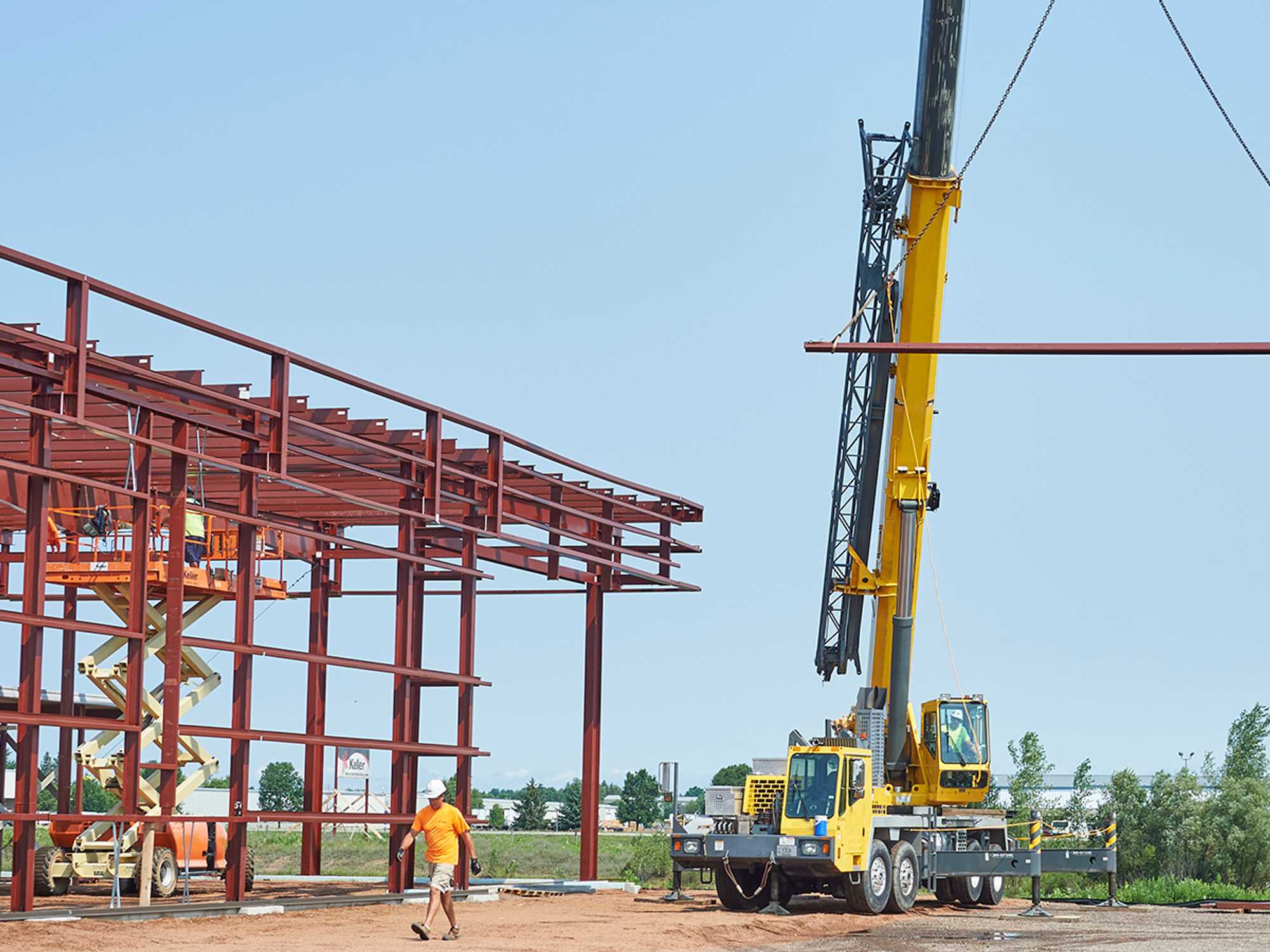
- To avoid boom hoist brake failure, it’s important to accurately account for the loads that will be placed on the brake, including additional boom that may be added to the crane.
Boom hoist brake failure is a hazard that can be present during both assembly and disassembly, although it is more typically an assembly hazard. In many older cranes, the boom hoist brake mechanism has an external or internal mechanical brake band that operates by pressing against the hoist drum. As the configuration of the crane changes and, for example, more boom is added, this type of boom hoist brake may slip unless it has been adjusted to hold the extra weight.
The inability of an unadjusted brake to hold the increased load will not be evident until the additional boom section has been added and the operator attempts to rely on the brake in a subsequent phase of the operation. If the operator does not first raise the boom a small amount after the section has been added (with the crew clear of the boom) to test the brake, employees could be injured later in the process when the operator manipulates the boom and is unexpectedly unable to brake it.
In many cases, if the brake is insufficient, an adjustment to it will correct the problem. If it remains insufficient, the employer is required to use a boom hoist pawl, other locking device, backup braking device, or another method of preventing dangerous boom movement (such as blocking or using an assist crane to support the load) from a boom hoist brake failure.
The brake test needs to be performed before anyone relies on the brake. It needs to accurately account for the loads that will be placed on the brake.