Compliance Just Got Easier: Stay ahead of regulatory changes with instant notifications on updates that matter.
['Family and Medical Leave Act (FMLA)']
['Family and Medical Leave Act (FMLA)']
2025-03-19T05:00:00Z
JOIN TODAY TO CONTINUE READING THIS ARTICLE & OTHER INDUSTRY NEWS!
You'll also get exclusive access to:
A database of easy-to-understand regulationsAsk unlimited questions to our expertsPre-led discussions forumsAnd more
TRY IT FREE TODAY
Already have an account? Log in now.

Copyright 2026 J. J. Keller & Associate, Inc. For re-use options please contact copyright@jjkeller.com or call 800-558-5011.
NewsIndustry NewsIndustry NewsAssociate Benefits & CompensationHR GeneralistFamily and Medical Leave Act (FMLA)Family and Medical Leave Act (FMLA)Associate RelationsEnglishHR ManagementFocus AreaHuman ResourcesUSA
Employer, supervisor missteps foil request to have case dismissed
2025-03-19T05:00:00Z
Kimberly worked for a company for approximately three years. After a couple of years, in March 2021, she began experiencing health issues and told Sean, her supervisor, about them, saying she needed time off work.
She didn’t request leave under the Family and Medical Leave Act (FMLA) at this time. Instead, Sean told her just to take the time she needed.
Shortly thereafter, the employer gave Kimberly a verbal warning after canceling a meeting with a colleague. A few months later, she received a written warning for various performance issues.
Kimberly responded to the written warning but also saw her primary care physician (PCP). She then emailed the company’s HR department asking about FMLA leave but without making a specific request. The employer gave Kimberly FMLA paperwork two days later.
Kimberly’s PCP did not complete FMLA paperwork at that time, but the employer granted her intermittent FMLA leave in July 2021.
Employer minimizes the need for FMLA paperwork
Over concern for her employment, Kimberly repeatedly sought, and received, reassurance from Sean about her performance and asked about legal paperwork to account for her absences. Consistent with the company’s FMLA policy, Sean told Kimberly that she did not need FMLA paperwork.
As her health issues worsened, the employer questioned her more about her health but without mention of the FMLA. In December 2021, Kimberly had a lengthy hospital stay and recovery for which HR gave her FMLA paperwork again.
Kimberly returned to work, working from home when needed. She also provided a certification estimating about six months’ worth of intermittent leave. The employer denied receiving it.
Kimberly met with Todd from HR upon returning from her hospital stay and asked about intermittent FMLA leave for ongoing appointments. During this meeting, Todd, per company policy, discouraged her from taking intermittent FMLA leave and instead told her to work out a schedule with her manager. Todd thought Kimberly’s FMLA coverage ended when she returned to work, so he did not follow up on intermittent leave.
In May 2022, Kimberly asked Todd when she would need to update her FMLA paperwork and the tracking of FMLA hours. Todd responded that Kimberly had nothing listed about FMLA going forward.
The company fired Kimberly in June 2022, allegedly for poor job performance, despite receiving positive feedback. Kimberly sued, claiming FMLA interference and retaliation.
In court, the employer argued that other than when she was hospitalized, Kimberly was never eligible for FMLA leave because she never returned any completed FMLA paperwork and intermittent leave was not medically necessary. The court, however, found enough issues to allow the case to proceed to a jury.
Missteps:
- The employer told Kimberly that her first paperwork was misplaced or not received, but didn’t tell Kimberly about submitting paperwork again.
- The information from Kimberly’s physicians might have indicated that she needed intermittent FMLA leave.
- The facts indicated that Kimberly might have given the employer enough information to put it on notice of her need for FMLA leave.
- The employer continuously told Kimberly that she did not need to use FMLA for her absences and that instead, she should just work out a schedule with her supervisor.
- If she were on intermittent FMLA leave, the employer would have considered Kimberly’s FMLA absences when evaluating her job performance.
- Kimberly claimed that her supervisor repeatedly asked about her health and recovery, often in a hostile manner, and that only after Kimberly asked about FMLA leave again did the supervisor put Kimberly’s underperformance in writing.
Ahmann v. Blattner Holding Company, LLC; District Court of Minnesota; No. 23-cv-02620; March 11, 2025.
Key to remember: Employers should take careful steps to ensure they follow the FMLA process, including certification requests and receipts. Supervisors should be able to recognize leave notices, and should not retaliate against employees for asking for or taking leave.

NewsIndustry NewsIndustry NewsAssociate Benefits & CompensationHR GeneralistFamily and Medical Leave Act (FMLA)Family and Medical Leave Act (FMLA)Associate RelationsEnglishHR ManagementFocus AreaHuman ResourcesUSA
Employer, supervisor missteps foil request to have case dismissed
2025-03-19T05:00:00Z

Written by
Michelle Higgins
Associate Editor
Michelle Higgins
B.A., University of Wisconsin - Green Bay
With J. J. Keller since 2011, Michelle is a subject matter expert on a variety of compliance topics, including FMLA, human resources, workplace safety, and transportation issues.
Kimberly worked for a company for approximately three years. After a couple of years, in March 2021, she began experiencing health issues and told Sean, her supervisor, about them, saying she needed time off work.
She didn’t request leave under the Family and Medical Leave Act (FMLA) at this time. Instead, Sean told her just to take the time she needed.
Shortly thereafter, the employer gave Kimberly a verbal warning after canceling a meeting with a colleague. A few months later, she received a written warning for various performance issues.
Kimberly responded to the written warning but also saw her primary care physician (PCP). She then emailed the company’s HR department asking about FMLA leave but without making a specific request. The employer gave Kimberly FMLA paperwork two days later.
Kimberly’s PCP did not complete FMLA paperwork at that time, but the employer granted her intermittent FMLA leave in July 2021.
Employer minimizes the need for FMLA paperwork
Over concern for her employment, Kimberly repeatedly sought, and received, reassurance from Sean about her performance and asked about legal paperwork to account for her absences. Consistent with the company’s FMLA policy, Sean told Kimberly that she did not need FMLA paperwork.
As her health issues worsened, the employer questioned her more about her health but without mention of the FMLA. In December 2021, Kimberly had a lengthy hospital stay and recovery for which HR gave her FMLA paperwork again.
Kimberly returned to work, working from home when needed. She also provided a certification estimating about six months’ worth of intermittent leave. The employer denied receiving it.
Kimberly met with Todd from HR upon returning from her hospital stay and asked about intermittent FMLA leave for ongoing appointments. During this meeting, Todd, per company policy, discouraged her from taking intermittent FMLA leave and instead told her to work out a schedule with her manager. Todd thought Kimberly’s FMLA coverage ended when she returned to work, so he did not follow up on intermittent leave.
In May 2022, Kimberly asked Todd when she would need to update her FMLA paperwork and the tracking of FMLA hours. Todd responded that Kimberly had nothing listed about FMLA going forward.
The company fired Kimberly in June 2022, allegedly for poor job performance, despite receiving positive feedback. Kimberly sued, claiming FMLA interference and retaliation.
In court, the employer argued that other than when she was hospitalized, Kimberly was never eligible for FMLA leave because she never returned any completed FMLA paperwork and intermittent leave was not medically necessary. The court, however, found enough issues to allow the case to proceed to a jury.
Missteps:
- The employer told Kimberly that her first paperwork was misplaced or not received, but didn’t tell Kimberly about submitting paperwork again.
- The information from Kimberly’s physicians might have indicated that she needed intermittent FMLA leave.
- The facts indicated that Kimberly might have given the employer enough information to put it on notice of her need for FMLA leave.
- The employer continuously told Kimberly that she did not need to use FMLA for her absences and that instead, she should just work out a schedule with her supervisor.
- If she were on intermittent FMLA leave, the employer would have considered Kimberly’s FMLA absences when evaluating her job performance.
- Kimberly claimed that her supervisor repeatedly asked about her health and recovery, often in a hostile manner, and that only after Kimberly asked about FMLA leave again did the supervisor put Kimberly’s underperformance in writing.
Ahmann v. Blattner Holding Company, LLC; District Court of Minnesota; No. 23-cv-02620; March 11, 2025.
Key to remember: Employers should take careful steps to ensure they follow the FMLA process, including certification requests and receipts. Supervisors should be able to recognize leave notices, and should not retaliate against employees for asking for or taking leave.


See More
RELATED NEWS



NewsIndustry NewsIndustry NewsAssociate Benefits & CompensationHR GeneralistFamily and Medical Leave Act (FMLA)Family and Medical Leave Act (FMLA)Associate RelationsEnglishHR ManagementFocus AreaHuman ResourcesUSA
03/25/2026
Employee’s notice of upcoming transplant was enough for FMLA claim to proceed


Specialized Industries
Go beyond the regulations! Visit the Institute for in-depth guidance on a wide range of compliance subjects in safety and health, transportation, environment, and human resources.
J. J. Keller® COMPLIANCE NETWORK is a premier online safety and compliance community, offering members exclusive access to timely regulatory content in workplace safety (OSHA), transportation (DOT), environment (EPA), and human resources (DOL).

Interact With Our Compliance Experts
Puzzled by a regulatory question or issue? Let our renowned experts provide the answers and get your business on track to full compliance!

Upcoming Events
Reference the Compliance Network Safety Calendar to keep track of upcoming safety and compliance events. Browse by industry or search by keyword to see relevant dates and observances, including national safety months, compliance deadlines, and more.

SAFETY & COMPLIANCE NEWS
Keep up with the latest regulatory developments from OSHA, DOT, EPA, DOL, and more.



REGSENSE® REGULATORY REFERENCE
Explore a comprehensive database of word-for-word regulations on a wide range of compliance topics, with simplified explanations and best practices advice from our experts.

THE J. J. KELLER INSTITUTE
The Institute is your destination for in-depth content on 120+ compliance subjects. Discover articles, videos, and interactive exercises that will strengthen your understanding of regulatory concepts relevant to your business.



ADD HAZMAT, ENVIRONMENTAL, & HR RESOURCES
Unlock exclusive content offering expert insights into hazmat, environmental, and human resources compliance with a COMPLIANCE NETWORK EDGE membership.

DIRECT ACCESS TO COMPLIANCE EXPERTS
Struggling with a compliance challenge? Get the solution from our in-house team of experts! You can submit a question to our experts by email, set up a phone or video call, or request a detailed research report.



EVENTS
Register to attend live online events hosted by our experts. These webcasts and virtual conferences feature engaging discussions on important compliance topics in a casual, knowledge-sharing environment.
Most Recent Highlights In Environmental
NewsGroundwaterSafe Drinking WaterWater ProgramsWater QualityWater ProgramsCWA ComplianceEnglishWater PermittingMunicipal WastewaterChange NoticesChange NoticeWater ReportingIndustrial WastewaterEnvironmentalNew HampshireFocus Area
2026-06-24T05:00:00Z
New Hampshire updates sludge management rules
Effective date: May 15, 2026
This applies to: Owners and operators of drinking water and wastewater treatment plants that generate sludge; land application sites; and facilities that treat, manage, or dispose of sludge
Description of change: The New Hampshire Department of Environmental Services amended sludge management rules. Major changes include:
- Reinstating 5-year site and facility permit renewals (instead of 10 years),
- Adding annual reporting requirements for sludge haulers (which already apply to septage haulers), and
- Requiring all applications to be submitted electronically.
The rule also codifies per- and polyfluoroalkyl substances (PFAS) sampling (implemented in 2019 for the sludge quality certificate program).
NewsGroundwaterToxic/Hazardous Substance ReleasesCERCLA, SARA, EPCRASafe Drinking WaterChange NoticesChange NoticeWater ProgramsNew JerseyEnvironmentalCWA ComplianceEnglishFocus Area
2026-06-24T05:00:00Z
New Jersey adopts permanent remediation standards for PFAS
Effective date: June 15, 2026
This applies to: Contaminated sites subject to the remediation regulations for contaminated groundwater, soil, and soil leachate
Description of change: The New Jersey Department of Environmental Protection (NJDEP) formally adopted its interim remediation standards for specific per- and polyfluoroalkyl substances (PFAS), including:
- Groundwater quality standards for hexafluoropropylene oxide dimer acid and its ammonium salt (GenX chemicals); and
- Soil and soil leachate remediation standards for:
- Perfluorononanoic acid (PFNA);
- Perfluorooctane sulfonate (PFOS);
- Perfluorooctanoic acid (PFOA);
- GenX chemicals; and
- Methanol.
The interim standards have been in place since 2022 and 2023, requiring regulated entities to conduct remediation to ensure these PFAS are cleaned up.
Additionally, the NJDEP amended the technical requirements to mandate analyses of the following chemicals in all media when contaminants are unknown or not well documented at a contaminated site:
- PFNA,
- PFOS,
- PFOA,
- GenX chemicals, and
- 2,3,7,8-tetrachlorodibenzo-p-dioxin.
NewsIndianaSafe Drinking WaterChange NoticesChange NoticeWater ProgramsEnvironmentalCWA ComplianceEnglishUnderground Injection ControlFocus Area
2026-06-24T05:00:00Z
Indiana adds permanent underground carbon dioxide storage rules
Effective date: June 10, 2026
This applies to: Entities that seek to participate in carbon sequestration projects
Description of change: The Natural Resources Commission adopted rules for permanent underground carbon dioxide storage, establishing:
- The applicability of carbon sequestration projects, and
- The rules for the Department of Natural Resources issuing involuntary integration orders and certificates of project completion.
The rules impact entities seeking to participate in carbon sequestration projects under IC 14-39. The regulations also affect pore space owners and surface owners.
NewsHazardous WasteWaste HandlersChange NoticesChange NoticeWasteWaste/HazWasteWaste ManagementEnvironmentalNevadaEnglishFocus Area
2026-06-24T05:00:00Z
Nevada adds requirements for hazardous waste recyclers
Effective date: June 8, 2026
This applies to: Hazardous waste recyclers
Description of change: The State Environmental Commission adopted regulations to add requirements for entities that recycle certain hazardous waste, including compliance with:
- Certain federal requirements;
- Local zoning requirements, if applicable;
- Specific reporting and notification requirements; and
- Other particular regulations of the commission.
The rules also:
- Exempt owners and operators of certain facilities that recycle certain hazardous materials without storing those materials before they’re recycled from the above requirements, and
- Add fees for written determinations (required to construct or operate a facility or mobile unit for hazardous waste recycling) and for the facilities that recycle certain hazardous materials without storing those materials before they’re recycled.
NewsGreenhouse GasesAir QualityAir EmissionsChange NoticesChange NoticeVirginiaCAA ComplianceEnvironmentalFocus AreaEnglishAir ProgramsAir Programs
2026-06-24T05:00:00Z
Virginia reinstates power plant CO2 budget program
Effective date: April 24, 2026
This applies to: Power plant owners
Description of change: The Virginia Department of Environmental Quality reinstated the Virginia CO2 Budget Trading Program Regulation, which implements the Regional Greenhouse Gas Initiative (RGGI). Participation in the RGGI was stopped in 2023, but the state will resume participation on July 1, 2026, the same date on which the compliance requirements take effect.
The regulation requires fossil fuel-fired units that serve an electricity generator with a capacity of 25 megawatts or more to obtain enough allowances to cover CO2 emissions, which they can purchase in the September and December RGGI auctions.
The department also adopted amendments to the regulations, including establishing a one-time 6-month control period from July 1, 2026, to December 31, 2026.
Related state info: Clean air operating permits state comparison
Most Recent Highlights In Transportation
NewsGroundwaterSafe Drinking WaterWater ProgramsWater QualityWater ProgramsCWA ComplianceEnglishMunicipal WastewaterWater PermittingChange NoticesChange NoticeWater ReportingIndustrial WastewaterEnvironmentalNew HampshireFocus Area
2026-06-24T05:00:00Z
New Hampshire updates sludge management rules
Effective date: May 15, 2026
This applies to: Owners and operators of drinking water and wastewater treatment plants that generate sludge; land application sites; and facilities that treat, manage, or dispose of sludge
Description of change: The New Hampshire Department of Environmental Services amended sludge management rules. Major changes include:
- Reinstating 5-year site and facility permit renewals (instead of 10 years),
- Adding annual reporting requirements for sludge haulers (which already apply to septage haulers), and
- Requiring all applications to be submitted electronically.
The rule also codifies per- and polyfluoroalkyl substances (PFAS) sampling (implemented in 2019 for the sludge quality certificate program).
NewsGroundwaterToxic/Hazardous Substance ReleasesCERCLA, SARA, EPCRASafe Drinking WaterChange NoticesChange NoticeWater ProgramsNew JerseyEnvironmentalCWA ComplianceEnglishFocus Area
2026-06-24T05:00:00Z
New Jersey adopts permanent remediation standards for PFAS
Effective date: June 15, 2026
This applies to: Contaminated sites subject to the remediation regulations for contaminated groundwater, soil, and soil leachate
Description of change: The New Jersey Department of Environmental Protection (NJDEP) formally adopted its interim remediation standards for specific per- and polyfluoroalkyl substances (PFAS), including:
- Groundwater quality standards for hexafluoropropylene oxide dimer acid and its ammonium salt (GenX chemicals); and
- Soil and soil leachate remediation standards for:
- Perfluorononanoic acid (PFNA);
- Perfluorooctane sulfonate (PFOS);
- Perfluorooctanoic acid (PFOA);
- GenX chemicals; and
- Methanol.
The interim standards have been in place since 2022 and 2023, requiring regulated entities to conduct remediation to ensure these PFAS are cleaned up.
Additionally, the NJDEP amended the technical requirements to mandate analyses of the following chemicals in all media when contaminants are unknown or not well documented at a contaminated site:
- PFNA,
- PFOS,
- PFOA,
- GenX chemicals, and
- 2,3,7,8-tetrachlorodibenzo-p-dioxin.
NewsHazardous WasteWaste HandlersChange NoticesChange NoticeWasteWaste/HazWasteWaste ManagementEnvironmentalNevadaEnglishFocus Area
2026-06-24T05:00:00Z
Nevada adds requirements for hazardous waste recyclers
Effective date: June 8, 2026
This applies to: Hazardous waste recyclers
Description of change: The State Environmental Commission adopted regulations to add requirements for entities that recycle certain hazardous waste, including compliance with:
- Certain federal requirements;
- Local zoning requirements, if applicable;
- Specific reporting and notification requirements; and
- Other particular regulations of the commission.
The rules also:
- Exempt owners and operators of certain facilities that recycle certain hazardous materials without storing those materials before they’re recycled from the above requirements, and
- Add fees for written determinations (required to construct or operate a facility or mobile unit for hazardous waste recycling) and for the facilities that recycle certain hazardous materials without storing those materials before they’re recycled.
NewsGreenhouse GasesAir QualityAir EmissionsChange NoticesChange NoticeVirginiaCAA ComplianceEnvironmentalFocus AreaEnglishAir ProgramsAir Programs
2026-06-24T05:00:00Z
Virginia reinstates power plant CO2 budget program
Effective date: April 24, 2026
This applies to: Power plant owners
Description of change: The Virginia Department of Environmental Quality reinstated the Virginia CO2 Budget Trading Program Regulation, which implements the Regional Greenhouse Gas Initiative (RGGI). Participation in the RGGI was stopped in 2023, but the state will resume participation on July 1, 2026, the same date on which the compliance requirements take effect.
The regulation requires fossil fuel-fired units that serve an electricity generator with a capacity of 25 megawatts or more to obtain enough allowances to cover CO2 emissions, which they can purchase in the September and December RGGI auctions.
The department also adopted amendments to the regulations, including establishing a one-time 6-month control period from July 1, 2026, to December 31, 2026.
Related state info: Clean air operating permits state comparison
NewsGroundwaterSafe Drinking WaterWater ProgramsWater QualityWater ProgramsCWA ComplianceEnglishWater PermittingMunicipal WastewaterChange NoticesChange NoticeWater ReportingIndustrial WastewaterEnvironmentalNew HampshireFocus Area
2026-06-24T05:00:00Z
New Hampshire updates sludge management rules
Effective date: May 15, 2026
This applies to: Owners and operators of drinking water and wastewater treatment plants that generate sludge; land application sites; and facilities that treat, manage, or dispose of sludge
Description of change: The New Hampshire Department of Environmental Services amended sludge management rules. Major changes include:
- Reinstating 5-year site and facility permit renewals (instead of 10 years),
- Adding annual reporting requirements for sludge haulers (which already apply to septage haulers), and
- Requiring all applications to be submitted electronically.
The rule also codifies per- and polyfluoroalkyl substances (PFAS) sampling (implemented in 2019 for the sludge quality certificate program).
Most Recent Highlights In Safety & Health
NewsGroundwaterToxic/Hazardous Substance ReleasesCERCLA, SARA, EPCRASafe Drinking WaterChange NoticesChange NoticeWater ProgramsNew JerseyEnvironmentalCWA ComplianceEnglishFocus Area
2026-06-24T05:00:00Z
New Jersey adopts permanent remediation standards for PFAS
Effective date: June 15, 2026
This applies to: Contaminated sites subject to the remediation regulations for contaminated groundwater, soil, and soil leachate
Description of change: The New Jersey Department of Environmental Protection (NJDEP) formally adopted its interim remediation standards for specific per- and polyfluoroalkyl substances (PFAS), including:
- Groundwater quality standards for hexafluoropropylene oxide dimer acid and its ammonium salt (GenX chemicals); and
- Soil and soil leachate remediation standards for:
- Perfluorononanoic acid (PFNA);
- Perfluorooctane sulfonate (PFOS);
- Perfluorooctanoic acid (PFOA);
- GenX chemicals; and
- Methanol.
The interim standards have been in place since 2022 and 2023, requiring regulated entities to conduct remediation to ensure these PFAS are cleaned up.
Additionally, the NJDEP amended the technical requirements to mandate analyses of the following chemicals in all media when contaminants are unknown or not well documented at a contaminated site:
- PFNA,
- PFOS,
- PFOA,
- GenX chemicals, and
- 2,3,7,8-tetrachlorodibenzo-p-dioxin.
NewsHazardous WasteWaste HandlersChange NoticesChange NoticeWasteWaste/HazWasteWaste ManagementEnvironmentalNevadaEnglishFocus Area
2026-06-24T05:00:00Z
Nevada adds requirements for hazardous waste recyclers
Effective date: June 8, 2026
This applies to: Hazardous waste recyclers
Description of change: The State Environmental Commission adopted regulations to add requirements for entities that recycle certain hazardous waste, including compliance with:
- Certain federal requirements;
- Local zoning requirements, if applicable;
- Specific reporting and notification requirements; and
- Other particular regulations of the commission.
The rules also:
- Exempt owners and operators of certain facilities that recycle certain hazardous materials without storing those materials before they’re recycled from the above requirements, and
- Add fees for written determinations (required to construct or operate a facility or mobile unit for hazardous waste recycling) and for the facilities that recycle certain hazardous materials without storing those materials before they’re recycled.
NewsGreenhouse GasesAir QualityAir EmissionsChange NoticesChange NoticeVirginiaCAA ComplianceEnvironmentalFocus AreaEnglishAir ProgramsAir Programs
2026-06-24T05:00:00Z
Virginia reinstates power plant CO2 budget program
Effective date: April 24, 2026
This applies to: Power plant owners
Description of change: The Virginia Department of Environmental Quality reinstated the Virginia CO2 Budget Trading Program Regulation, which implements the Regional Greenhouse Gas Initiative (RGGI). Participation in the RGGI was stopped in 2023, but the state will resume participation on July 1, 2026, the same date on which the compliance requirements take effect.
The regulation requires fossil fuel-fired units that serve an electricity generator with a capacity of 25 megawatts or more to obtain enough allowances to cover CO2 emissions, which they can purchase in the September and December RGGI auctions.
The department also adopted amendments to the regulations, including establishing a one-time 6-month control period from July 1, 2026, to December 31, 2026.
Related state info: Clean air operating permits state comparison
NewsMunicipal WastewaterChange NoticesChange NoticeWater ProgramsEnvironmentalCWA ComplianceEnglishFocus AreaNorth Carolina
2026-06-24T05:00:00Z
North Carolina approved revisions to wastewater discharge rules
Effective date: May 1, 2026
This applies to: Facilities with domestic wastewater discharges up to 2 million gallons per day
Description of change: The North Carolina Department of Environmental Quality (DEQ) adopted a rule that adds a permitting option to the National Pollutant Discharge Elimination System (NPDES) program for facilities with domestic wastewater discharges of up to 2 million gallons per day.
DEQ removed the ban on new or expanded discharges of oxygen-consuming waste when the 7Q10 and 30Q2 flows are both 0 for these facilities. In other words, it allows systems to discharge domestic wastewater to zero-flow receiving streams, provided the system:
- Meets qualifying criteria,
- Complies with specific effluent limits, and
- Uses low-energy methods before discharging wastewater to the receiving stream.
It’ll likely benefit areas where the cost of piping to a higher-flowing stream farther away is prohibitive.
NewsGroundwaterSafe Drinking WaterWater ProgramsWater QualityWater ProgramsCWA ComplianceEnglishWater PermittingMunicipal WastewaterChange NoticesChange NoticeWater ReportingIndustrial WastewaterEnvironmentalNew HampshireFocus Area
2026-06-24T05:00:00Z
New Hampshire updates sludge management rules
Effective date: May 15, 2026
This applies to: Owners and operators of drinking water and wastewater treatment plants that generate sludge; land application sites; and facilities that treat, manage, or dispose of sludge
Description of change: The New Hampshire Department of Environmental Services amended sludge management rules. Major changes include:
- Reinstating 5-year site and facility permit renewals (instead of 10 years),
- Adding annual reporting requirements for sludge haulers (which already apply to septage haulers), and
- Requiring all applications to be submitted electronically.
The rule also codifies per- and polyfluoroalkyl substances (PFAS) sampling (implemented in 2019 for the sludge quality certificate program).
Most Recent Highlights In Human Resources
NewsGroundwaterToxic/Hazardous Substance ReleasesCERCLA, SARA, EPCRASafe Drinking WaterChange NoticesChange NoticeWater ProgramsNew JerseyEnvironmentalCWA ComplianceEnglishFocus Area
2026-06-24T05:00:00Z
New Jersey adopts permanent remediation standards for PFAS
Effective date: June 15, 2026
This applies to: Contaminated sites subject to the remediation regulations for contaminated groundwater, soil, and soil leachate
Description of change: The New Jersey Department of Environmental Protection (NJDEP) formally adopted its interim remediation standards for specific per- and polyfluoroalkyl substances (PFAS), including:
- Groundwater quality standards for hexafluoropropylene oxide dimer acid and its ammonium salt (GenX chemicals); and
- Soil and soil leachate remediation standards for:
- Perfluorononanoic acid (PFNA);
- Perfluorooctane sulfonate (PFOS);
- Perfluorooctanoic acid (PFOA);
- GenX chemicals; and
- Methanol.
The interim standards have been in place since 2022 and 2023, requiring regulated entities to conduct remediation to ensure these PFAS are cleaned up.
Additionally, the NJDEP amended the technical requirements to mandate analyses of the following chemicals in all media when contaminants are unknown or not well documented at a contaminated site:
- PFNA,
- PFOS,
- PFOA,
- GenX chemicals, and
- 2,3,7,8-tetrachlorodibenzo-p-dioxin.
NewsHazardous WasteWaste HandlersChange NoticesChange NoticeWasteWaste/HazWasteWaste ManagementEnvironmentalNevadaEnglishFocus Area
2026-06-24T05:00:00Z
Nevada adds requirements for hazardous waste recyclers
Effective date: June 8, 2026
This applies to: Hazardous waste recyclers
Description of change: The State Environmental Commission adopted regulations to add requirements for entities that recycle certain hazardous waste, including compliance with:
- Certain federal requirements;
- Local zoning requirements, if applicable;
- Specific reporting and notification requirements; and
- Other particular regulations of the commission.
The rules also:
- Exempt owners and operators of certain facilities that recycle certain hazardous materials without storing those materials before they’re recycled from the above requirements, and
- Add fees for written determinations (required to construct or operate a facility or mobile unit for hazardous waste recycling) and for the facilities that recycle certain hazardous materials without storing those materials before they’re recycled.
NewsToxic Substances Control Act - EPAChange NoticesChange NoticeTSCA ComplianceToxic Substances - EPACaliforniaEnvironmentalEnglishFocus Area
2026-06-24T05:00:00Z
California adds TPhP nail products to Priority Products list
Effective date: October 1, 2026
This applies to: Nail products containing triphenyl phosphate (TPhP) at concentrations greater than 250 parts per million (ppm)
Description of change: The California Department of Toxic Substances Control added nail products with concentrations of 250 ppm or more of TPhP to the Priority Product list, making the substance subject to the Safer Consumer Products (SCP) Regulations.
By November 30, 2026, manufacturers must submit a Priority Product Notification. By March 30, 2027, manufacturers must submit:
- A Chemical Removal Intent/Confirmation Notification,
- A Product Removal Intent/Confirmation Notification,
- A Product-Chemical Replacement Intent/Confirmation Notification, or
- A Preliminary Alternatives Analysis Report or alternate reporting options.
NewsIndianaSafe Drinking WaterChange NoticesChange NoticeWater ProgramsEnvironmentalCWA ComplianceEnglishUnderground Injection ControlFocus Area
2026-06-24T05:00:00Z
Indiana adds permanent underground carbon dioxide storage rules
Effective date: June 10, 2026
This applies to: Entities that seek to participate in carbon sequestration projects
Description of change: The Natural Resources Commission adopted rules for permanent underground carbon dioxide storage, establishing:
- The applicability of carbon sequestration projects, and
- The rules for the Department of Natural Resources issuing involuntary integration orders and certificates of project completion.
The rules impact entities seeking to participate in carbon sequestration projects under IC 14-39. The regulations also affect pore space owners and surface owners.
NewsTier II Inventory ReportingIndustry NewsIndustry NewsCERCLA, SARA, EPCRAEnvironmental Protection Agency (EPA)Safety Data Sheet ReportingEnvironmentalEnglishSARA ComplianceFocus AreaUSA
2026-06-24T05:00:00Z
EPA aligns EPCRA rules with OSHA’s HazCom amendments
The Environmental Protection Agency (EPA) published a final rule on June 22, 2026, conforming the hazardous chemical inventory reporting regulations under the Emergency Planning and Community Right-to-Know Act (EPCRA) to the Occupational Safety and Health Administration’s (OSHA’s) Hazardous Communication (HazCom) standard amendments of 2012 and 2024.
Who’s covered?
The final rule applies to facilities regulated under EPCRA Sections 311 and 312. These facilities are:
- Required by OSHA’s HazCom standard to maintain Safety Data Sheets (SDSs) for hazardous chemicals on-site at or above the reporting threshold, and
- Required by EPA’s EPCRA Section 312 rules (40 CFR Part 370) to submit annual hazardous chemical inventory reports (commonly known as Tier II reports) for the same chemicals by March 1.
Covered facilities submit SDSs and annual inventory reports to the State Emergency Response Commission (SERC), Local Emergency Planning Committee (LEPC), and local fire department.
How does this impact facilities?
EPA’s final rule replaces the previous EPCRA hazard categories with OSHA’s GHS-aligned hazard classes and hazard categories (totaling 118), which are already used in SDSs. Facilities must use OSHA’s hazard classes with their categories for SDS submissions and hazardous chemical inventory reports required under EPCRA Sections 311 and 312.
Note: SDSs for substances already contain the updated hazard classes and hazard categories. SDSs for mixtures must incorporate them by November 2027.
What’s the compliance timeline?
Covered facilities must use the new hazard categories by January 1, 2028. EPA expects facilities to incorporate them into the reporting year 2027 Tier II report (due March 1, 2028).
Key to remember: EPA has aligned regulations under EPCRA Sections 311 and 312 with OSHA’s HazCom amendments for hazardous chemical reporting requirements.
New Network Poll


No active poll
Please come back soon!
Most Popular Highlights In Environmental

NewsIndustry NewsTSCA ComplianceCAA ComplianceSustainabilityIn-Depth ArticleCWA ComplianceEnvironmentalEnglishSustainabilityESG (Environmental, Social, and Governance)Focus AreaUSA
2025-12-05T06:00:00Z
EPA’s 2026 regulatory shift: How environmental managers can stay ahead
The clock is ticking for environmental teams. By 2026, several new EPA regulations will reshape compliance obligations for U.S. companies. Organizations that act now will avoid costly penalties and operational disruptions.
What’s changing and why it matters
Although EPA has been deregulating or loosening some requirements, there are still some standards being tightened across multiple fronts in the coming year:
- Renewable fuel standards (RFS): The EPA proposed higher volume requirements for 2026, including 24.02 billion renewable identification numbers (RINs), up nearly 8% from 2025. This increase pushes stricter expectations on fuel producers and organizations purchasing renewable fuels.
- Stormwater multi-sector general permit (MSGP): A new MSGP set to take effect by February 2026 will require quarterly PFAS indicator monitoring, expanded benchmark sampling, and resiliency measures in stormwater control designs.
- PFAS Reporting under the Toxic Substances Control Act (TSCA): TSCA Section 8(a)(7) mandates PFAS manufacturing and import data collection beginning in April 2026, through October 2026, with extended deadlines for certain small manufacturers.
Failure to prepare could lead to fines, reputational damage, supply chain disruptions, and permit delays. Companies that weave compliance planning into their 2026 strategy will be positioned not just to meet legal deadlines but to sustain operations smoothly.
Key areas of impact
- Renewable fuel standards (RFS) and air emissions The proposed increase in 2026 Renewable Identification Numbers (RIN) volumes, from 24.02 billion to 24.46 billion for 2027, signals tightening air and fuels policy that affects fuel use and emissions accounting.
- Stormwater management The upcoming 2026 MSGP requires expanded quarterly PFAS monitoring, new benchmark triggers, corrective action plans, and integration of climate resilience in design standards.
- PFAS disclosure (TSCA Section 8(a)(7)) Manufacturers and importers of PFAS must submit electronic reporting of usage, volumes, disposal, and exposure data between April and October 2026, with extensions available for smaller operations.
Steps to take now
- Audit compliance programs: Cross-check operations against RIN inventory, stormwater permits, and TSCA reporting duties.
- Upgrade monitoring and recordkeeping: Implement robust electronic systems to track PFAS, stormwater quality, fuel volumes, and emissions.
- Staff training: Educate teams on PFAS obligations, new stormwater protocols, and RFS structures.
- Engage regulators early: Comment on proposed rules, consult during permit drafting, and flag issues during the notice-and-comment period.
Looking ahead
The EPA’s 2026 updates reflect a trend toward increased transparency and environmental accountability. Companies that treat compliance as strategic will not only avoid enforcement but also gain resilience and stakeholder trust.
Key to remember: Start planning now. Early action on EPA rule changes will save time, money, and headaches when enforcement begins.

NewsIndustry NewsSafety & HealthVentilationGeneral Industry SafetyIndoor Air QualityIndustrial HygieneCAA ComplianceEnvironmentalIn-Depth ArticleEnglishFocus AreaUSA
2022-10-26T05:00:00Z
CDC and EPA offer guidance on MERV rating for air filters
Indoor air quality took a front seat during the pandemic and the need to filter COVID-19-containing particles from the air became paramount. A Minimum Efficiency Reporting Value (MERV) rating between 9 and 12 is considered a generally good filter for commercial spaces wanting a higher level of indoor air quality. The CDC and EPA recommend filters with a MERV rating of 13 or higher to trap smaller particles, including viruses.
Air filters are rated on their effectiveness through the MERV system, which is a filter’s ability to capture larger particles between 0.3 and 10 microns (µm). This value is helpful in comparing the performance of different filters. The rating is derived from a test method developed by the American Society of Heating, Refrigerating, and Air Conditioning Engineers. The higher the MERV rating the better the filter is at trapping specific types of particles.
| MERV Rating | Average Particle Size Efficiency in Microns |
|---|---|
| 1 - 7 | 3.0 - 10.0 |
| 8 - 10 | 1.0 - 3.0 |
| 11 - 16 | 0.3 - 1.0 |
In general, increasing ventilation and filtration is usually appropriate when improving indoor air quality; however, due to the complexity and diversity of building types, sizes, construction styles, HVAC system components, and other building features, one should use caution when selecting a filter solely based on the MERV rating. Even if the filter fits, your system may not be designed to support that specific filter and it could actually impair system performance.
Higher MERV rated filters are typically designed for environments where air quality is critical, such as hospital laboratories and surgery centers. HVAC systems in these environments are designed to operate with these filters in place due to the extra energy required. A higher-rated filter used in the wrong environment can create resistance to air flow, which can lower efficiency, impair indoor air quality, and put a strain on the inner workings of the system.
If your system does not allow higher-rated filters, there are additional tools you can implement to improve indoor ventilation. Keep in mind, while these strategies can help reduce particle concentration, not all interventions will work in all scenarios, and caution should be taken in highly polluted areas. The following tools identify ways to improve ventilation:
- Increasing the introduction of outdoor air by opening outdoor air dampers, windows, and doors;
- Using fans to increase the effectiveness of open windows;
- Rebalancing or adjusting HVAC systems to increase total airflow to occupied spaces;
- Turning off any demand-controlled ventilation controls that reduce air supply based on occupancy or temperature during occupied hours;
- Ensuring restroom exhaust fans are functional and operating;
- Using portable high-efficiency particulate air (HEPA) fan/filtrations systems; and
- Running the HVAC system at maximum outside airflow for 2 hours before and after the building is occupied.
Key to remember: Air filters with a higher MERV rating are more effective at improving indoor air quality.

NewsHazardous WasteIndustry NewsWaste/HazWasteWasteSafety & HealthConstruction SafetyGeneral Industry SafetyWasteWaste ManagementEnvironmentalIn-Depth ArticleEnglishFocus AreaUSA
2026-01-28T06:00:00Z
Dust collector to disposal: Understanding dust as a waste stream
When the topic of dust is brought up, the conversation usually starts and ends with worker exposure. How much is in the air? Is ventilation adequate? Are employees protected? Once that dust has been captured and removed from the process, the critical question shifts: how should this material be classified and disposed of? That’s where many facilities run into trouble. Collected dust may no longer be floating in the air, but it hasn’t stopped being regulated. In fact, once it’s captured, dust often enters a much more complicated regulatory world.
When captured dust becomes a regulated waste
Under EPA regulations, most collected dust qualifies as a solid waste once it’s removed from a dust collector, hopper, or filter. And despite the name, “solid waste” doesn’t mean solid, benign, or harmless. It simply means a discarded material. At that point, facilities are expected to determine whether the dust is hazardous or non-hazardous under the Resource Conservation and Recovery Act (RCRA). This determination is based on what the dust contains, not how dusty it looks or how long it has been managed that way. Dust generated from metalworking, surface coatings, chemical processing, plastics, or specialty manufacturing can contain regulated constituents such as heavy metals or chemical residues. In these cases, facilities are required to make a waste determination using process knowledge, testing, or a combination of both. This step is often overlooked. Many companies assume that if dust has not caused problems in the past, it must be non-hazardous. Unfortunately, regulators do not accept assumptions as documentation. If there’s no clear waste determination on file, that alone can be cited during an inspection. Misclassifying dust can also have ripple effects. If collected dust is later found to be hazardous, the facility may face issues related to improper disposal, incorrect generator status, or even cleanup liability at the disposal site. What began as a routine housekeeping task can suddenly become a significant compliance issue.
Storage, Disposal, and the Risks of Getting It Wrong
Even when dust is correctly identified as non-hazardous, it still needs to be managed properly. Open containers, poor labeling, and inconsistent handling practices are common findings during inspections. These issues are often viewed as minor, but they can quickly escalate if dust is released, mixed with other waste streams, or stored improperly. Recycling adds another layer of complexity. Many facilities recycle metal dusts or other recoverable materials, which can be a smart environmental and economic decision. However, recyclable does not mean unregulated. Dust being recycled still needs to be stored safely, managed to prevent releases, and documented as legitimate recycling. Without proper controls, regulators may view the material as improperly managed waste. Outdoor storage creates additional risk. Dust stored outside, transferred outdoors, or tracked out of the building can easily become a stormwater concern. Even non-hazardous dust can be considered a pollutant if it migrates off-site during rain events. This is a frequent source of violations under stormwater permits and Stormwater Pollution Prevention Plans (SWPPP), especially when dust management isn’t addressed in the plan. Another common issue is mixing dust with general trash or other waste streams. Once mixed, otherwise manageable dust can become more difficult or impossible to classify correctly. This can complicate disposal, increase costs, and raise questions during audits or inspections. What makes dust especially challenging is that responsibility for it often falls into a gray area. Safety teams may assume environmental is managing disposal. Environmental teams may assume safety has already classified the material. When no one clearly owns the waste determination and disposal process, gaps are almost guaranteed. The most effective facilities treat dust as a waste stream that deserves the same attention as any other regulated material. They document waste determinations, define storage and labeling requirements, train employees on proper handling, and periodically revisit those determinations as processes change.
Keys to remember: Captured dust doesn’t stop being regulated once it leaves the air. Understanding whether collected dust is hazardous or non-hazardous, how it must be stored, and where it can legally go is essential to staying compliant.
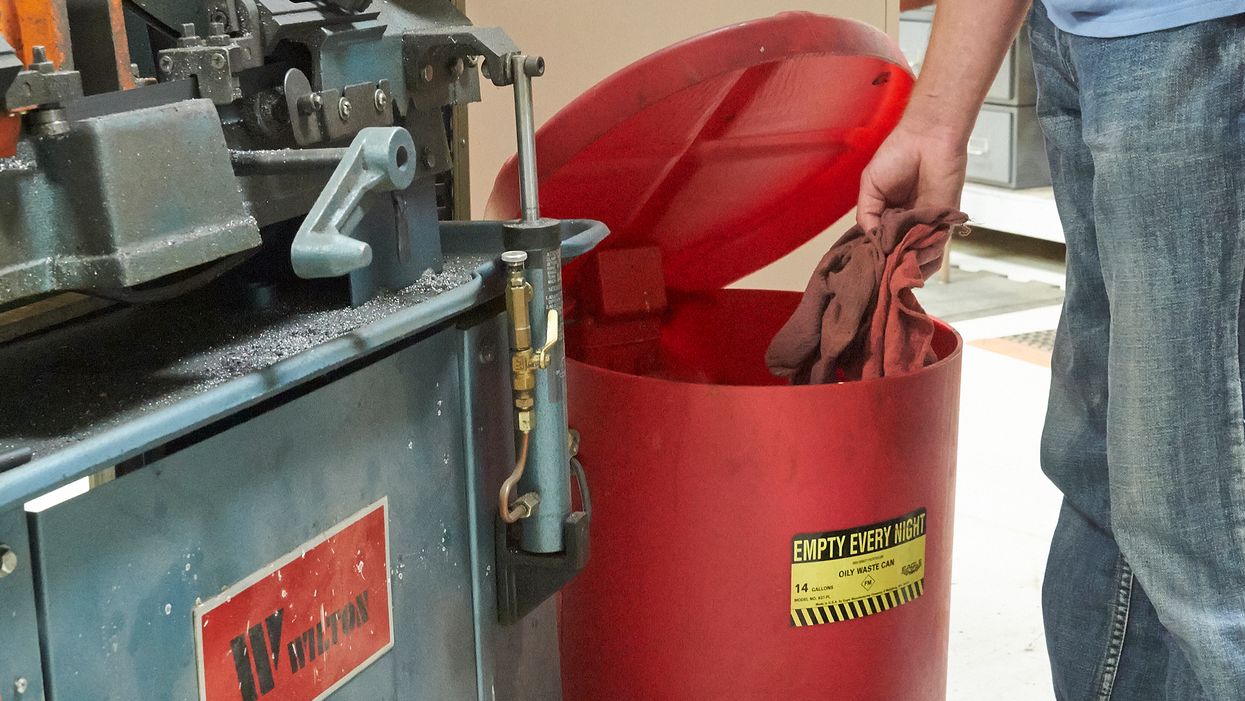
NewsIndustry NewsWaste/HazWasteSafety & HealthConstruction SafetyGeneral Industry SafetyWasteEnvironmentalIn-Depth ArticleCWA ComplianceUsed OilEnglishFocus AreaUSA
2025-03-03T06:00:00Z
Used oil disposal: How to stay compliant with EPA, OSHA, and your state
Used oil disposal is a critical issue for safety managers and shop supervisors in industrial settings. Whether your facility generates used oil from machinery, vehicles, or hydraulic systems, you must understand the regulatory requirements to ensure compliance and avoid hefty fines.
Used oil is not always considered hazardous waste, but improper handling, storage, or disposal can lead to regulatory violations and environmental hazards. Understanding how used oil is classified, when it is considered hazardous, and how to manage it in compliance with 40 CFR Part 279 is essential.
Let’s uncover the regulatory framework for used oil disposal, including storage requirements, transportation rules, and best practices to ensure compliance at both the federal and state levels.
What is used oil?
The EPA defines used oil as any petroleum-based or synthetic oil that has been used and is contaminated by physical or chemical impurities. Common sources of used oil in industrial operations include:
- Motor oil and lubricants from vehicle maintenance
- Hydraulic fluids used in heavy machinery
- Metalworking fluids and coolants
- Compressor oils used in air compression systems
According to EPA regulations (40 CFR Part 279), used oil is presumed to be managed under the less stringent used oil management standards unless it meets hazardous waste criteria.
Used oil becomes hazardous waste if:
- It is mixed with hazardous waste (e.g., solvents or heavy metals)
- It contains more than 1,000 parts per million (ppm) of total halogens, unless proven otherwise, or
- It is disposed of improperly, leading to environmental contamination.
If used oil is classified as hazardous waste, it must be managed in accordance with the applicable solid and hazardous waste requirements.
EPA requirements for used oil disposal
The EPA requirements for used oil consist of three different aspects, as outlined below.
1. Storage Requirements
Use leak-proof tanks and containers made of durable, non-earthen materials (e.g., steel, plastic, or concrete). Label all used oil containers with the words "Used Oil" to prevent misidentification. Prevent leaks and spills by using secondary containment systems and regularly inspecting tanks. Never mix used oil with hazardous waste unless authorized.
2. Transportation and Disposal
Used oil generators may transport up to 55 gallons of used oil to a registered collection center without an EPA ID number. If contracting a used oil transporter, ensure they have an EPA Identification Number.
Used oil must be:
- Recycled or re-refined into new oil.
- Burned for energy recovery in approved furnaces or boilers.
- Disposed of at an authorized hazardous waste facility if deemed hazardous.
3. Spill Prevention and Cleanup
Facilities storing large amounts of used oil must have a Spill Prevention, Control, and Countermeasure (SPCC) Plan. SPCC plans establish procedures, methods, and equipment requirements to prevent oil from reaching waterways, and to contain discharges of oil.
Any spills must be cleaned up immediately, and absorbent materials must be disposed of properly. Rags and shop towels contaminated with hazardous materials may be classified as hazardous waste.
OSHA regulations for handling used oil
While the EPA focuses on environmental compliance, OSHA (29 CFR Part 1910) regulates worker safety when handling used oil. Key OSHA requirements include:
1. Personal Protective Equipment (PPE)
Workers handling used oil must wear gloves and protective clothing to prevent skin exposure. Safety goggles or face shields are also important to avoid eye contact.
2. Hazard communication (HazCom) program
Employers must label all used oil containers with appropriate hazard information and train employees on safe handling procedures and emergency response.
3. Fire and Explosion Safety
Always store used oil away from ignition sources to prevent fire hazards. Ensure storage areas are ventilated to avoid vapor buildup.
State-Specific used oil disposal regulations
Many states have stricter used oil regulations than federal laws. For example:
- California classifies used oil as hazardous waste unless it meets specific recycling criteria.
- Texas requires additional storage permits for large generators.
- New York mandates annual reporting on used oil disposal activities.
To ensure compliance, check with your state’s environmental agency for state-specific used oil disposal rules and whether used oil is considered hazardous. Additional permits for transporting or processing used oil may be necessary.
Staying compliant with used oil disposal requirements
Ensuring compliance with EPA, OSHA, and state laws is essential for safety managers and shop supervisors handling used oil. By following proper storage, transportation, and disposal practices, businesses can reduce environmental risks, improve workplace safety, and avoid costly fines.
Key to remember: By staying informed and proactive, your facility can maintain safe, sustainable, and compliant used oil management practices.
NewsRenewablesChange NoticesChange NoticeSustainabilityWashingtonProduct StewardshipEnvironmentalEnglishSustainabilityFocus Area
2026-01-28T06:00:00Z
Washington adopts regulations for battery collection program
Effective date: January 16, 2026
This applies to: Producers of batteries and battery-containing products
Description of change: The Washington Department of Ecology adopted a new rule for the Battery Stewardship Program, required by a law passed in 2023 to establish an extended producer responsibility program for battery collection. The regulations implement the law, requiring battery producers to fund a statewide recycling program with collection sites where people can drop off used or unwanted batteries.
Covered batteries include most rechargeable and single-use batteries that people use daily (e.g., AAs, AAAs, Cs, Ds, 9-Volts, and button batteries). The regulations also cover battery-containing products.
The new rule establishes program requirements (e.g., adding required information on batteries), applicable fees, and battery collection and handling standards. It requires battery producers to join and fully fund a nonprofit to serve as a Battery Stewardship Organization, which administers the program.

NewsWaste/HazWasteHazmat SafetyIn-Depth ArticleUSASanitationEnglishHR ManagementIndustry NewsFleet SafetySafety & HealthConstruction SafetyGeneral Industry SafetyAgriculture SafetyMaritime SafetySanitationRestroomsHandwashingEnvironmentalFocus AreaFleet OperationsMine SafetyTransportationHuman Resources
2023-04-06T05:00:00Z
Giving truck drivers rights to your restrooms
OSHA requires employers to provide all workers with immediately available and sanitary restroom or toilet facilities. But does this include truckers and delivery drivers that stop at your facilities? The sanitation standards (1910.141, 1926.51, and 1928.110) are meant to protect all workers from adverse health effects from unsanitary toilets facilities, or the unavailability of facilities when needed.
Proposed legislation
Bipartisan legislation has recently been introduced in the House that would require businesses to provide restroom access to truckers who are loading or delivering cargo at their warehouses, manufacturers, distribution centers, retailers, and ports.
Supported by leading organizations in the trucking industry, the Trucker Bathroom Access Act (H.R. 9592) was introduced on Dec. 15, 2022. The bill requires retailers, warehouses, and other establishments with existing restrooms to provide access to drivers who are loading or delivering cargo. Additionally, operators of ports and marine terminals must provide access for drayage and parking while accessing such restrooms.
This amendment to Title 49 would exempt some employers from the bill including filling and service stations, and restaurants 800-square feet or smaller with restrooms intended for employee use only. The bill doesn’t require employers to construct new restrooms but to give truck drivers the same access as employees or customers.
Your restroom availability affects their health
Commercial truckers and delivery drivers are the lifeline of our supply chain of supplies, products, and consumables. Working tirelessly all hours, during holidays and weekends, and throughout the pandemic, they continue to deliver critical food and emergency supplies to companies everywhere. Employers have the privilege of demonstrating gratitude to truckers and delivery drivers with a positive work environment.
The benefits of allowing truckers and delivery drivers the convenience and safety of readily available, sanitary restroom facilities are plenty. They’re able to rest and reset when necessary, which keeps them and others safer on the roads. Equally important, restroom availability prevents drivers from having to search for available facilities elsewhere, allowing them to keep a timely delivery schedule, limit supply chain delays, and ultimately lower costs for employers and customers.
Keys to remember
The proposed Trucker Bathroom Access Act will require retailers, warehouses, and other establishments with existing restrooms to provide access to truckers and delivery drivers who are loading or delivering cargo. Access to restrooms keeps them refreshed and ready to deliver essential supplies to companies across the country.
Most Popular Highlights In Transportation

NewsIndustry NewsFleet SafetyExpert InsightsBusiness policies and procedures - Motor CarrierBusiness planning - Motor CarrierFocus AreaFleet OperationsEnglishTransportationBusiness planning - Motor CarrierUSA
2026-06-12T05:00:00Z
Expert Insights: Motus — FMCSA's forward momentum
The Federal Motor Carrier Safety Administration (FMCSA) has rolled out the first phase of Motus, a new USDOT registration system designed to streamline compliance and modernize the way motor carriers, brokers, and supporting companies manage their regulatory obligations. Motus, which is Latin for movement/motion, represents a significant shift from the current systems and will involve consolidating USDOT numbers, biennial updates, hazmat registrations, and other filings into one secure, user friendly platform.
The initiative aims to simplify processes, enhance fraud prevention, and provide registrants with intuitive tools such as auto population, real time data validation, and mobile accessibility.
Troubleshooting Motus issues
Many carriers are running into obstacles when registering for Motus. The most frequent issue is not being able to claim DOT numbers, and the most common reason for this is that the carrier didn’t update its information before the deadline.
For example, only the company official can claim your USDOT number. This means that if your company official left earlier this year and you didn’t update this information in your portal, then you won’t be able to claim your USDOT number.
If you’re struggling to get your Motus account set up or claim your USDOT number, you must contact FMCSA at 800-832-5660. FMCSA will only work directly with the motor carrier at this point. Once you have set up your account, you can then grant permissions to other individuals — both within and outside of your organization.
Motus watchouts
Motus gives you more control over your registration, but it also puts more responsibility on you. For example, Motus has simplified applying for operating authority, but knowing which authority your company needs remains unclear. Obtaining the incorrect authority type can be costly, and making mistakes on your application can lead to long delays.
Without the correct authority in place, you may run into:
- A delay in approval, which would lead to a delay in beginning operations.
- Additional application fees, as you may need to reapply.
- Compliance issues, which could lead to expensive fees, audits, or even being placed out of service.
Key to remember: FMCSA has rolled out the first phase of Motus, which aims to streamline and simplify compliance, but it also comes with a few additional challenges for motor carriers.

NewsIndustry NewsFleet OperationsEnglishFocus AreaIn-Depth ArticleHighway use - Mileage taxFleet TaxesInternational Fuel Tax Agreement (IFTA)Fleet taxesTransportationUSA
2024-09-19T05:00:00Z
Your HUT decals are expiring: Registration open Oct. 1
For carriers operating in New York, registration and decals expire December 31, 2024, for the Highway Use Tax (HUT) and Automotive Fuel Carrier (AFC) programs. Take steps now to make sure you receive your new decals before the current ones expire. You need a new certificate of registration and decal for each vehicle. And you must place the new decals on your vehicles before January 1, 2025.
The period to renew your 24th series HUT and AFC certificates of registration begins October 1, 2024. Act now to avoid delays and keep your highway use tax credentials active.
To-do before October 1
Get ready for renewal by taking the following steps now:
- File all your highway use tax returns that are due.
- Pay your taxes. The state will not issue a new certificate of registration if you owe back taxes. Before you apply to renew, make sure that you’ve paid all taxes due under any of the programs administered by the New York State Tax Department, including:
- HUT,
- personal income tax,
- International Fuel Tax Agreement (IFTA),
- sales tax, and
- withholding tax.
- Create an online account if you do not already have one and you want to renew your credentials and pay online (https://www.oscar.ny.gov/).
- Make sure your vehicle registration information is correct and accurate. Review and update your information as soon as possible. Incorrect information will delay the processing of your certificates and decals.
Beginning October 1
Once the renewal period opens, renew your credentials and pay your renewal fees online with One Stop Credentialing and Registration (OSCAR).
Submit your renewal application by November 30, 2024, to make sure you receive your decals in time to place them on your vehicles before January 1, 2025.
If you are already enrolled in OSCAR, use your current OSCAR password to renew online.
If you are not enrolled, visit OSCAR, and select Enroll Now. You must have a United States Department of Transportation (USDOT) number and an employer identification number (EIN).
To renew your registration:
- Visit the OSCAR website and select HUT Renewal from the Business Type drop-down.
- Enter your information in the USDOT#, NYS Tax ID#, and Password fields, then select Log in.
- If you have 300 or fewer vehicles, choose either:
- Renew all HUT/AFC Certificates of Registration to renew all your active current series permits, or
- Select HUT/AFC Certificates of Registration to renew specific permits.
- If you have more than 300 vehicles, choose either:
- Renew all to renew all your active current series permits, or
- File renewal to renew select permits.
If you are unable to renew electronically, you may file Form TMT-1.2, Renewal Application for Highway Use Tax (HUT) and Automotive Fuel Carrier (AFC) Certificates of Registrations and Decals – 25th Series.
Key to remember: Take steps now to renew your NY HUT and ensure you receive your new decals before the current ones expire.

NewsIndustry NewsFleet SafetyCompliance, Safety, Accountability CSAPerformance ManagementCompliance, Safety, Accountability CSAFocus AreaIn-Depth ArticleEnglishTransportationRegistration and Permits - Motor CarrierUSA
2022-12-02T06:00:00Z
Understanding the National Safety Code (NSC): Part 1
These days, operating a commercial fleet involves many different compliance issues, regulations, standardized licensing, and permits involved with operating a commercial trucking vehicle are the norm. In Canada, provincial regulations governing commercial vehicles, drivers, and motor carriers are based on the National Safety Code (NSC) standards.
But what is the NSC and what are the standards? It’s a complicated answer because there are 16 standards involved. The NSC is designed to create a comprehensive code of minimum performance standards for the safe operation of passenger and commercial vehicles. The NSC provides guidance for legislative, regulatory, and administrative action by each jurisdiction and focuses on three components:
- Drivers,
- Vehicles, and
- Motor carriers.
Over this three-part article series, we will look at each of these components and break down the NSC standards that fit within each of the three. You’ll learn what is key to know to ensure compliance, and more importantly, a safer operation.
What is the NSC?
In 1987, the federal, provincial, and territorial Ministers responsible for Transportation and Highway Safety recognized that due to the deregulation of transportation, there was a need for harmonization and reciprocity in the management of commercial vehicles across Canada. The ministers then signed a memorandum of understanding to develop and implement the NSC to encourage road safety, promote efficiency in the motor carrier industry, and achieve consistent safety standards. The National Safety Code standards remain important instruments of public policy in promoting public safety and the safe and efficient movement of people and goods on Canadian roads.
What are the 16 standards?
The NSC is a set of minimum performance standards, applying to all persons responsible for the safe operation of commercial vehicles. There are 16 NSC standards made up of the following:
- Standard 1 Single Driver Licence Concept
- Standard 2 Knowledge and Performance Tests (Drivers)
- Standard 3 Driver Examiner Training Program
- Standard 4 Driver Licencing Classification
- Standard 5 Self-Certification Standards and Procedures
- Standard 6 Determining Driver Fitness in Canada
- Standard 7 Carrier and Driver Profiles
- Standard 8 Short-Term Suspension
- Standard 9 Commercial Vehicle Drivers Hours of Service
- Standard 10 Cargo Securement
- Standard 11 Maintenance and Periodic Inspection
- Standard 12 CVSA On-Road Inspection
- Standard 13 Trip Inspection
- Standard 14 Safety Rating
- Standard 15 Facility Audits
- Standard 16 Entry Level Training (Class 1)
Now that we have a better understanding of what the NSC represents and what the 16 standards are, let’s take a deeper dive into the standards that apply, starting with Motor Carriers.
NSC Standard 14 — Safety Rating
You might be wondering why we are starting with Standard 14. All provinces in Canada are required to issue an NSC number to all commercial carriers in their governing jurisdiction. A Safety Fitness Certificate (SFC) contains the NSC number, which is the unique identifier for each commercial operator. Ontario calls this number a Commercial Vehicle Operator’s Registration or CVOR.
If you have registered a vehicle that is regulated under the National Safety Code program in Canada, you are required to apply for a SFC or CVOR (Ontario). The SFC or CVOR gives you permission to operate a commercial vehicle.
There have been many new changes recently to the process of not only applying for an SFC but also in maintaining the required certificate. For example, in Alberta, it includes completing an NSC knowledge test online or NSC in a registry office, completing an NSC audit within 12 months of obtaining your SFC, and renewing your certificate every three years.
A provincial authority may not issue a safety fitness certificate to an extra-provincial motor carrier undertaking unless the provincial authority has determined that the undertaking has a “satisfactory”, “satisfactory unaudited” or “conditional” safety rating, as set out in section 5 of Part C of NSC Standard #14.
Safety Rating Categories
Responsibility for motor carrier safety resides, first and foremost, with motor carrier management. The Safety Rating Standard (Standard 14) establishes the motor carrier safety rating framework by which each jurisdiction shall assess the safety performance of motor carriers. There are four safety rating categories as follows:
| Rating | Details |
| Satisfactory-Unaudited | Assigned to all new commercial motor carriers. This rating does not change until a carrier has been audited. |
| Satisfactory-Audited | Assigned when a motor carrier has successfully passed a facility audit and all 3 thresholds - convictions, at-fault collisions and inspections - are below 85%. |
| Conditional | Assigned to a motor carrier who has failed a facility audit and/or 1 or more thresholds are at or above 85%. |
| Unsatisfactory | Assigned by Carrier and Vehicle Safety Services when a carrier is deemed unfit. |
- Using the information in the motor carrier profile;
- Assigning a value to each of the data listed in the motor carrier profile taking into account its severity and potential safety impact, in accordance with the National Safety Code Standard 7, Carrier Profile:
- For the 24 months preceding the determination; or
- In the case of a motor carrier whose motor carrier profile was established less than 24 months prior to the determination, for the period since its establishment;
- Normalizing the weighted data using the motor carrier’s fleet size to reflect the motor carrier’s exposure to risk; and
- Assigning a safety rating to the motor carrier in accordance with the safety rating categories.
The NSC’s safety fitness rests on three building blocks:
- NSC Standard 7: Carrier and Driver Profiles
- NSC Standard 14: Safety Rating
- NSC Standard 15: Facility Audit
Together, these standards provide the safety rating and management framework by which each jurisdiction assesses the safety performance of motor carriers. In part 3, we’ll cover Standards 7 and 15 in greater detail.
Key to remember: We have just touched the surface of the NSC standards and covered likely one of the most important when it comes to maintaining a safe rating and compliance with Jurisdictional regulations.

NewsDrug and Alcohol TestingDrug and alcohol policy - Motor CarrierDrug and Alcohol TestingDrug and Alcohol Testing - DOTDrug testing - Motor CarrierDrug and alcohol training - Motor CarrierIn-Depth ArticleUSAHR ManagementEnglishIndustry NewsFleet SafetySafety & HealthGeneral Industry SafetyFocus AreaPre-employment drug testing - Motor CarrierSafety-sensitive function - Motor CarrierTransportationHuman Resources
2023-09-28T05:00:00Z
Canada’s drug testing rules will leave you in a haze
Ever since Canada legalized recreational cannabis back in 2018, it has left many motor carriers wondering if they can drug test their drivers. Impairment from cannabis use is a safety risk, and for most employers, performing drug tests to manage the risk is not an option. Where do motor carriers and drivers fit in, and what are their options?
Submitting employees to drug tests
Can motor carriers drug test their drivers? The short answer is no. Canada does not have a federal regulation that requires drug testing for drivers. However, this does not mean that Canadian motor carriers cannot implement and enforce a drug and alcohol policy for their drivers. In fact, many carriers have developed successful policies that minimize the risk of getting in trouble with the law and ensure the safety of their drivers and the public.
For the most part, drug testing not only violates the Human Rights Code, but it is also a gross infringement on an individual’s reasonable right to protection of privacy. Motor carriers operating in Canada need to make sure they consider the human rights and privacy rights of their drivers when implementing any type of drug testing program and policy.
Motor carriers have the right to expect their drivers to arrive at work fit for duty and remain that way throughout the duration of their shift. Communicating this expectation to them is important and, at a minimum, should be communicated by implementing a ”fit-for-work” policy that makes your expectations around impairment of any kind clear.
When drug testing may be permissible
There are some circumstances in which drug testing is allowed, though they are rare and very specific.
1. Safety-sensitive positions: Universal random drug testing would be acceptable in workplaces that can be shown to be extremely dangerous and where a worker’s impairment would likely result in catastrophe. Based on this definition commercial truck drivers would be considered to be in a safety-sensitive position.
2. Reasonable suspicion of impairment: If an employee appears to be obviously impaired, drug testing may be permissible, especially if they’re involved in a collision and there is reasonable suspicion that they are under the influence of drugs.
3. As part of a rehabilitation/return-to-work program: A driver with substance abuse disorder may be subject to unannounced drug testing to be carried out as part of a rehabilitation program and return-to-work program.
Unlike in the United States, pre-employment drug testing is generally not permitted in Canada, except in limited circumstances. Each Canadian province has its own legislation regarding testing for drugs. In Alberta, the courts have been less protective of individual privacy rights and have allowed drug testing in the oil and gas sector. Most companies in Ontario and British Columbia opt not to test for drugs, adhering to human rights legislation and privacy concerns.
Policies must be clear
Motor carriers must inform their drivers about the drug and alcohol policy and unlike U.S. testing programs, are required to obtain their consent before conducting any test. By working together, motor carriers and drivers can create a safe and healthy work environment for everyone involved.
Carriers should update their policies addressing drug and alcohol use at least once per year. Carriers must pay close attention to:
- Permissible testing for the jurisdictions they operate in, including if they cross the border into the United States;
- Frequent reminders for drivers on their obligations under the policies; and
- Training for managers and supervisors on detecting impairment through physical symptoms.
Key to remember: Drug testing in Canada is legal but not regulated, so carriers must exercise caution when implementing a drug testing policy. There’s a fine line between allowable testing and human rights/employee privacy violations.

NewsIndustry NewsInternational Registration Plan (IRP)Vehicle Registration PermitsFocus AreaIn-Depth ArticleFleet OperationsCommercial motor vehicle definitionEnglishCommercial motor vehicle definitionTransportationRegistration and Permits - Motor CarrierUSA
2021-12-13T06:00:00Z
Your vehicle weight might not be what you thought
The International Registration Plan (IRP) uses several different weight terms and acronyms, and it can be easy to misinterpret the meaning of some of them. Check out the descriptions below to make sure you understand the terms and acronyms — and what they mean — when registering your vehicles.
Gross vehicle weight rating (GVWR)
The gross vehicle weight rating is the maximum operating weight of a vehicle as specified by the manufacturer including the vehicle’s chassis, body, engine, engine fluids, fuel, accessories, driver, passengers, and cargo but excluding that of any trailers.
Gross combined weight rating (GCWR)
The gross combined weight rating is the specific weight determined by the manufacturer to be the maximum weight of a loaded vehicle and its attached loaded trailer. This is the weight that is shown on the IRP cab card.
- Insider tip:
- Weight plate: A vehicle’s GVWR and GCWR are normally found on a manufacturer’s plate attached to the door or glove box, or on the front of each trailer.
Registered weight
Registered weight means the weight for which a vehicle or combination of vehicles has been licensed or registered.
Note that this weight will not always be the same as the GVWR or GCWR. It can be less if the carrier never travels at the maximum weight, but never more than the vehicle is rated to carry as this presents a safety issue.
- Insider tip:
- A vehicle’s weight rating should not be confused with its registered weight. To reduce registration fees, vehicles are often registered at a lower weight than they are rated to carry.
Gross vehicle weight (GVW)
Though not defined by IRP, a vehicle’s gross vehicle weight is commonly held to be the actual weight of the vehicle itself (curb weight) plus all cargo and passengers. The GVW is not a limit or specification; rather it is the actual weight that is obtained when the fully loaded vehicle is driven onto a scale at any given time.
Gross combination weight (GCW)
Also not specifically defined by IRP, the gross combination weight is understood to be the weight of a loaded towing vehicle (GVW) plus the weight of the fully loaded trailer(s) (plus passengers, fuel, etc.). It is the actual weight obtained when the vehicle and trailer(s) are weighed together on a scale.
Which numbers should be used under IRP?
Apportionable vehicles must be registered under IRP. The Plan defines an apportionable vehicle as any vehicle that is used or intended for use in two or more member jurisdictions and that is used for the transportation of persons for hire or designed, used, or maintained primarily for the transportation of property, and:
- Has two axles and a gross vehicle weight or registered gross vehicle weight in excess of 26,000 pounds (11,793.401 kilograms), or
- Has three or more axles, regardless of weight, or
- Is used in combination, when the gross vehicle weight of such combination (GCW) exceeds 26,000 pounds (11,793.401 kilograms).
Apportionment optional for smaller trucks
Two-axle vehicles, or combinations thereof, having a GVW of 26,000 pounds or less may be issued apportioned registration (IRP) at the option of the registrant. Why would you choose to do this?
For trucks between 10,001 and 26,000 pounds, some jurisdictions — but not all — require trip permits or apportioned plates to operate legally. Permits may be required for traveling through the jurisdiction or when engaging in intrastate transportation. If you frequently operate vehicles over 10,000 pounds in a state with this requirement, it might make sense to register with apportioned plates. Be sure to check with the jurisdictions in which your vehicles operate to learn the requirements.
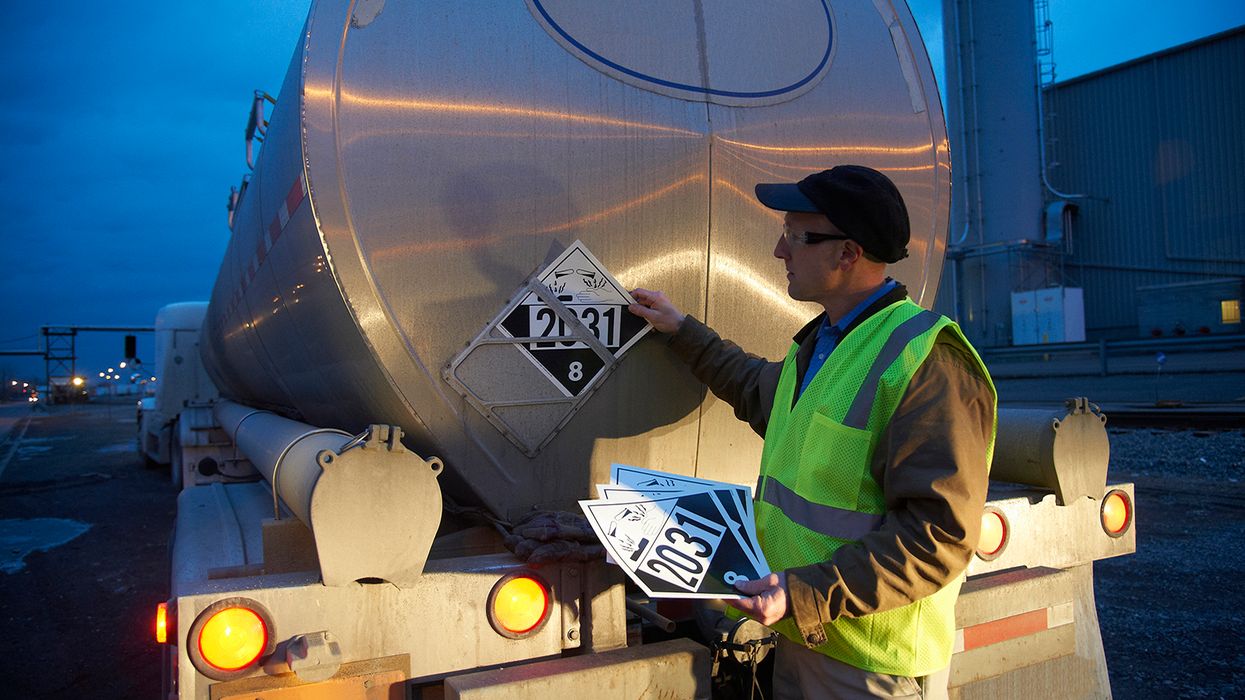
NewsIndustry NewsHazmat SafetyHazmat: HighwayFocus AreaIn-Depth ArticleHazmat EnforcementEnglishTransportationUSA
2022-12-27T06:00:00Z
Placarding responsibility – Whose is it?
Many shippers are unaware of their responsibility to provide placards to drivers, but the responsibility shifts as soon as the driver hits the road.
Check the regulations
According to Section 172.506 of the Hazardous Materials Regulations (HMR), a shipper offering a hazardous material for transportation by highway must provide the motor carrier with the required placards for the material being offered. The shipper must offer the placards to the carrier prior to, or at the same time as, the material is offered for transportation — unless the vehicle is already placarded for the hazmat.
Section 172.506 also states that no motor carrier may transport a hazardous material in a motor vehicle unless the required placards for the hazmat are affixed to the vehicle. Before transport, the driver is responsible for displaying the required placards for all the hazmat that is on the vehicle.
Avoid issues with shippers
Many trailers are equipped with flip placards that represent most classes of hazardous materials but without adequate training, shippers may not understand their responsibility to provide the driver with the required placards. If a driver arrives and the shipper fails to provide placards, the driver should contact dispatch for additional instructions or drive to a truck stop to secure the necessary placards. The driver becomes responsible for placards as soon as the trailer enters a public highway, so train your drivers to temporarily refuse the shipment until the proper placards can be obtained. If necessary, the driver must bobtail or leave empty before driving to pick up placards.
Another common placarding question with shippers involves combination loads. If a driver arrives at a shipper’s location and is already transporting a hazardous material below the placarding threshold, is the shipper required to provide placards for the combination load on the trailer? In this scenario, the driver already has 600 pounds of a Class 8 corrosive material on the trailer, and the shipper is offering an additional 500 pounds of the same commodity. The regulations state that the shipper is only required to provide placards for the commodity that is being offered, not for the aggregate weight of both shipments. In this scenario, the driver is responsible for providing placards since it involves a combination load.
The Hazardous Materials Regulations are complex, especially for newer employees. Drivers that can speak “hazmat” to shippers often secure additional business, so be sure to train your drivers and give them the confidence to have impactful conversations with shippers.
Key to remember: Carry extra placards in case a shipper is unable to supply the required placards or a combination of hazmat on the vehicle requires different placards.
Most Popular Highlights In Human Resources

NewsIndustry NewsEnglishTraining & DevelopmentHR GeneralistIn-Depth ArticleEmployee Mental HealthAssociate RelationsWellnessUSAHR ManagementFocus AreaHuman Resources
2026-06-12T05:00:00Z
Joy to the workplace
If you look around your office and see happy people, it’s likely that you and other coworkers have a hand in making this happen. New research from Wiley Workplace Intelligence shows that colleagues are a major influence on happiness in the workplace.
Both work and the people we work with can lead to an upbeat feeling. More than 75 percent of the employees surveyed said they feel joy in their work, according to the report. Most also said they:
- Feel motivated to do their best work,
- Feel connected to the people they work with (85 percent), and
- Understand how their role contributes to organizational success (93 percent).
Many employees (39 percent) cited their team as a major influence on their happiness at work. Another 19 percent said they shape their own joy, while only 6 percent credited senior leadership.
This research indicates that the team level is where workplace joy is won or lost. Specifically, it says that "Joy is local.” It’s found in:
- Daily interactions,
- Moments of collaboration, and
- The small but consistent experience of feeling seen by the people you work alongside.
On the other hand, efforts to build joy company-wide through announcements, campaigns, or top-down culture initiatives, may miss the mark.
The research points to these five practical interventions that can help increase joy:
- Focusing on capacity, not just commitment. Even when motivation is high, a shortage of time and resources can cause a frustrating bottleneck. Organizations that want to strengthen hope and joy should ask hard questions about workload, support structures, and whether employees have what they genuinely need to succeed, not just survive.
- Aiming for clarity at every level. Direction doesn’t flow automatically through organizations. It must be actively communicated and reinforced at every level.
- Support managers as a primary intervention. The road to greater hope and joy in an organization runs directly through its managers. Manager well-being should be a priority, not an afterthought. When managers receive clear direction, adequate resources, and more time to accomplish goals, those conditions extend to the people they lead.
- Investing at the team level. Factors that strengthen the relationships of team members, such as everyday recognition and true psychological safety, are investments in the actual source of workplace joy. Joy lives closest to coworkers, not leadership.
- Being intentional about development. Viewing a role as a starting point and working to help people thrive in roles that fit their strengths adds value to their workplace goals. This is an area where intentional development conversations and role design can make a real difference.
Key to remember: Joy in the workplace starts at the team level. Strengthening relationships at the team level can influence overall happiness in the workplace.

NewsIndustry NewsRecordkeepingRecordkeepingHR GeneralistFamily and Medical Leave Act (FMLA)In-Depth ArticleFamily and Medical Leave Act (FMLA)HR ManagementEnglishUSAFocus AreaHuman Resources
2026-05-20T05:00:00Z
Do the FMLA notices and certifications expire in June?
The answer to that question for employers is, “No.” The answer to that question for the U.S. Government’s Office of Management and Budget (OMB), however, is, “Yes.”
Employers might notice that the following federal Family and Medical Leave Act (FMLA) documents from the U.S. Department of Labor (DOL) have an expiration date listed as “6/30/26” in the upper right-hand corner:
- WH-381: Eligibility/Rights and Responsibilities Notice
- WH-382: Designation notice
- WH-380-E: Certification of an employee’s serious health condition
- WH-380-F: Certification of a family member’s serious health condition
- WH-384: Certification of a qualifying exigency
- WH-385: Certification for military caregiver of a current military member
- WH-385-V: Certification for military caregiver of a veteran
This, however, doesn’t mean that employers aren’t allowed to use these forms after that date. They may. Employers and employees are allowed to use the current forms beyond that date because the content remains applicable under FMLA law.
The June 30, 2026, date on the FMLA notices and certification forms, doesn’t represent a deadline for FMLA leave itself. It’s the OMB’s expiration date for the forms’ collection and recordkeeping requirements, not the end of the forms’ legal validity.
What the date means
These government documents are subject to certain checks and balances, such as the following:
- OMB control number 1235‑0003 governs the collection of information from employers and employees for DOL compliance purposes.
- The June 30, 2026, date is when the latest version of the forms will be replaced by a new OMB‑approved version.
The OMB has to review the FMLA notices and certification forms every 3 years. The last time it did so, it didn’t make any material changes.
The OMB is part of the U.S. Executive Office and helps the president meet policy and budget, manage details, oversee regulatory objectives, and helps fulfill the agency’s statutory responsibilities.
Model forms optional
Employers aren’t required to use the DOL’s model forms. Many do, however, because it’s easier than creating their own forms. Using the DOL’s forms also helps ensure the notices provide enough information and the certifications don’t ask employees for information beyond what the FMLA allows.
Key to remember: The June 30, 2026, expiration date of FMLA documents is just a form‑collection deadline, not a legal cutoff for FMLA leave or certification. Employers may still use the current forms until a new version is issued.

NewsIndustry NewsIndustry NewsHR GeneralistFamily and Medical Leave Act (FMLA)Family and Medical Leave Act (FMLA)USAHR ManagementEnglishFocus AreaHuman Resources
2023-09-06T05:00:00Z
Appellate court sided with employee's (almost) 3-year-delayed FMLA claim
Back in October 2018, Laffon had a medical emergency and needed some time off under the federal Family and Medical Leave Act (FMLA).
Her leave lasted until November 15. Ten days after she returned to work, on November 26, her employer terminated her.
She sued, arguing that the employer retaliated against her because of her FMLA leave.
The catch? She didn't bring the suit until almost three years later.
No link between leave and termination
In court, the employer argued that there was no causal link between Laffon taking FMLA leave and her termination. Although the court documents aren't robust, they do reveal that the employer indicated that Laffon's allegations didn't show that her taking FMLA leave was a factor in the decision to terminate her. The documents showed only that the termination chronologically followed her leave.
The court agreed with the employer. It also agreed that Laffon failed to allege a willful violation of the FMLA, which would allow her to benefit from the FMLA's three-year statute of limitations.
Laffon appealed the case to the Ninth Circuit.
Statute of limitations
Under the FMLA, employees have two years from the date of the last event constituting the alleged violation for which they can bring a claim.
Those two years are extended to three years if the employer's actions were "willful." This means that an employee must show that the employer either knew or showed reckless disregard for whether its conduct violated the FMLA.
Ruling overturned
Fast forward to August 2023, when the Ninth Circuit reversed the lower court's decision. It indicated that, based on Laffon's amended complaint and liberally construing the law, her allegations establish that her leave was causally connected to her termination and that the employer's action (her termination) was willful.
Glymph v. CT Corporation Systems, No. 22-35735, Ninth Circuit Court of Appeals, August 22, 2023.
Key to remember: Terminating an employee soon after returning from FMLA leave is risky, unless there is a clear, well-documented, non-leave-related reason. Case documents did not show such a clear reason, which can also increase the risk of a willful finding. Employees have time to file claims, even years.
NewsEnglishChange NoticesChange NoticeColoradoAssociate RelationsAssociate Benefits & CompensationHR GeneralistLeaveTime offHR ManagementLeaveFocus AreaHuman Resources
2026-06-16T05:00:00Z
Colorado employee voting leave law expands
Effective date: June 1, 2026
This applies to: Employers with employees in Colorado
Description of change: Effective June 1, 2026, employees may take up to 2 hours of job-protected, paid time off any day when voter service and polling centers are open.
Previously, voting leave was only required on the day of the election.
Because polling centers are open well before Election Day, employees now have a bigger window during which they may request this leave.
Employees must apply for the voting absence before the day of the election for which leave is requested.
The change also specifies that employers may deny an employee's request for voting leave if the employee has 3 or more consecutive hours off while the polls are open.
View related state info: Leave - Colorado

NewsEnforcement and Audits - OSHAIn-Depth ArticleUSAHR ManagementEnglishOSHA Violations and PenaltiesIndustry NewsEnforcement and Audits - OSHASafety & HealthConstruction SafetyHR GeneralistLabor Law PostersAssociate RelationsLabor Law PostersFocus AreaHuman Resources
2024-05-10T05:00:00Z
Construction sites not exempt from posting requirements
Construction season is in full swing across the country, which means it’s the time of year for a question about labor law posters to gain momentum.
How do employers display posters for workers who report to a construction site to do their job?
It’s the law: Posters are required
There are hundreds of laws nationwide that require employers to display a workplace posting that makes employees aware of their rights under that specific law.
This includes commonly required federal postings such as the Job Safety and Health: It’s the Law posting from the Occupational Health and Safety Administration (OSHA) and the Employee Rights Under the Fair Labor Standards Act posting from the Wage and Hour Division of the Department of Labor (DOL).
If employers neglect to display required postings, they could face a fine or a greater risk of an employee lawsuit.
Additional posters for federal contractors
When a company has a contract to do work with the federal government, or a state or local government agency in some cases, additional posters must be displayed.
This could include:
- The Employee Rights Under the Davis-Bacon Act posting and a wage determination that applies to the project
- The Employee Rights Under the National Labor Relations Act posting
- The Know Your Rights: Workplace Discrimination is Illegal posting
The postings required for contractors will be listed in contract clauses. Failing to display them could result in the loss of the contract.
No excuses: Display at the work site
Although an active construction site is a vastly different work setting than the quiet hallways of an office building, the DOL emphasizes that workplace posters need to be placed in a conspicuous and visible location at both.
The agency addresses this in one of its Frequently Asked Questions about labor law posters:
Question: I am a homebuilder, and my construction crews do not report to our main office before commencing work but report directly to various construction sites. Where should I post the required federal posters?
Answer: The required posters should be posted at the location to which employees report each day.
Options for construction sites
The DOL makes it clear that when workers report to a construction site to do their job, that is where posters must be displayed. To meet this requirement, labor law posters could be placed:
- On a piece of plywood at the work site,
- On a fence at the work site,
- In the job trailer,
- In a frame that is leaned against a wall or hung up at the work site.
Employers could also have a link to the required posters on their company intranet, but this would not take the place of the physical posters that need to be displayed. Electronic postings can supplement physical postings but can’t be the only postings used when employees report to a work site to do their job.
Keep posters in good shape
Posters need to remain readable, and the OSHA posting requirement notes that employers need to ensure that they are not altered or defaced.
To make sure they remain in good shape, laminated posters could be used in locations where posters are exposed to the elements.
Who’s responsible? You are
Each employer is responsible for making sure that labor law posters are displayed in a location where their employees can see them.
That doesn’t mean each contractor or sub-contractor at a construction site needs to display their own set of posters. Only one set of posters needs to be posted at the work site.
Employers should not assume that someone else is taking care of this, however. Each employer has an obligation to make sure that that their employees have access to postings.
Sub-contractors can work with the general contractor at the work site to make sure all required labor law posters are properly displayed, and that the posters are up to date. If something is missing, they can work the general contractor to have them placed in a conspicuous spot.
Key to remember: All required labor law postings must be displayed at construction sites. Employers should ensure that the proper postings are placed in a visible location.

NewsIndustry NewsIn-Depth ArticleFamily and Medical Leave Act (FMLA)Family and Medical Leave Act (FMLA)USAHR ManagementEnglishFocus AreaHuman Resources
2023-07-20T05:00:00Z
Dealing with FMLA Monday/Friday absences
The federal Family and Medical Leave Act (FMLA) allows eligible employees to take job-protected leave for certain qualifying reasons. Over the years, employees have gotten creative when scheduling such leave, including taking it on Mondays and/or Fridays to extend a weekend.
Employers trying to oversee schedules and meet other business needs might get frustrated when employees take leave. When employees take leave in suspicious patterns, the frustration swells.
It doesn’t help that the FMLA restricts when and how employers may obtain information on the reasons behind leave.
Employers, however, do have some resources available to them when determining whether a Monday/Friday absence pattern is valid, or if the employee is abusing leave.
Recertifying FMLA leave
Once employers have a certification supporting the need for a leave, they may not request recertification more often than every 30 days, or until the minimum duration of the condition listed on the certification has expired.
Employers may, however, request recertification more often if:
- The employee requests an extension of leave,
- Circumstances described by the initial certification have changed significantly, or
- They receive information that casts doubt upon the reason for leave or the continuing validity of the certification.
When employers suspect FMLA abuse, they should review the information contained in the certification to see if the absences match. If not, they may investigate the situation further.
Asking about absence patterns
To help with this investigation, when requesting a recertification, employers may include a record of the employee’s absences and ask the health care provider if the pattern is consistent with the serious health condition.
It’s true that employers may not generally contact the employee’s health care provider directly for this information, but they may add this type of question to the medical recertification form, and direct the employee to have it completed.
Tracking absences
In such situations, employers might want to review the absence patterns of employees in question and be on the lookout for suspicious absences in the future.
Effectively tracking all leave is a must to identify patterns that could indicate FMLA leave abuse. If employers learn that an absence is not for a valid FMLA-qualifying reason, the employee is not entitled to the protections of the law for such an absence.
Key to remember: If employees are suspiciously taking FMLA leave such as on Mondays and Fridays, employers may request a recertification supporting the leave pattern.
Most Popular Highlights In Safety & Health
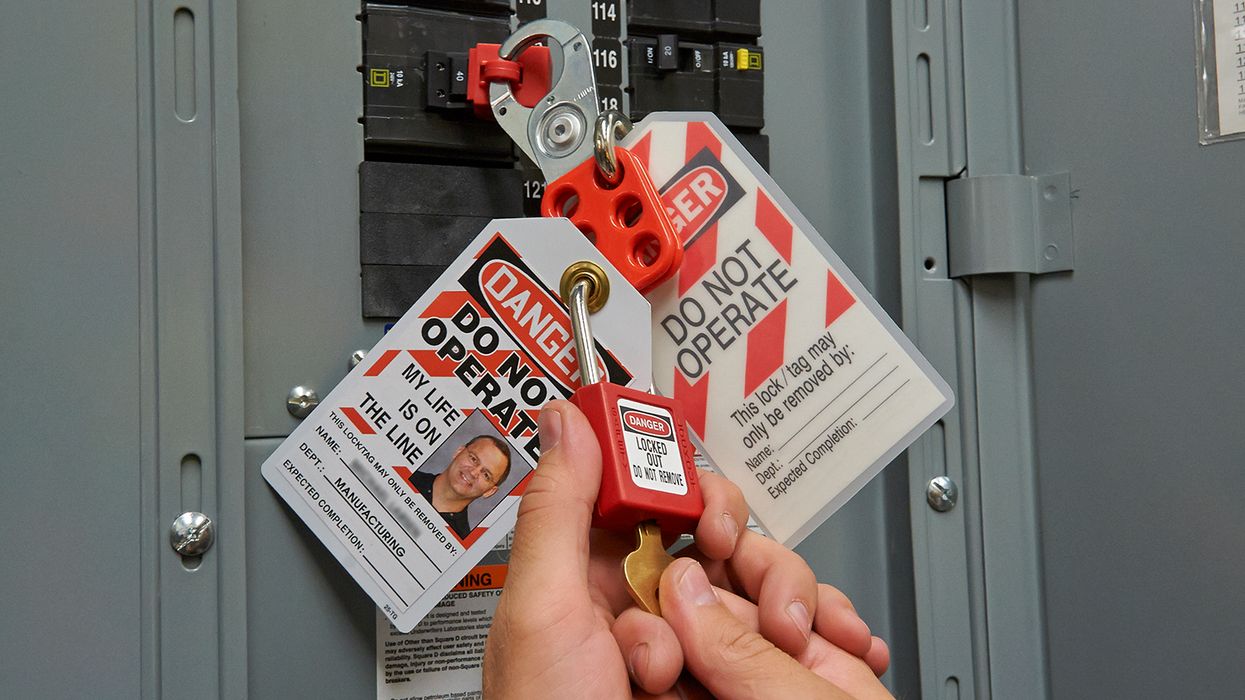
NewsIndustry NewsLockout/TagoutSafety & HealthLockout/TagoutGeneral Industry SafetyIn-Depth ArticleEnglishLockout/Tagout Authorized WorkersFocus AreaUSA
2020-12-30T06:00:00Z
Recognizing lockout/tagout training concerns
All employees involved in lockout/tagout require training. The authorized employees (those doing the maintenance work) have the most responsibility and require the most training. However, affected employees (those who operate machines being serviced) also need some training. In addition, some other employees (those working in an area where lockout or tagout is used) may require training so they don’t inadvertently interfere with the lockout/tagout process.
Retraining is required when there’s a change in the job, equipment, or process. Those changes could impact all categories of employees (authorized, affected, and other).
Retraining is also required when a periodic inspection reveals a problem. The periodic inspection is an annual review of the energy control procedure to ensure that it is adequate and is actually being followed.
Follow the procedures
Mechanics may work on dozens of machines, and each machine may have unique lockout/tagout procedures. But do the mechanics actually read and follow the procedures for each machine? Or do they just “know what to do” based on experience? Could other maintenance staff follow the procedures as written?
Make sure that authorized employees actually follow the procedures. If they are unsure about any part of a procedure, or if they skip a step that doesn’t make sense, then the procedure should be updated.
If additional training is needed, it may be best to conduct the training at the machine and ask the mechanics to indicate where the procedure is unclear. If the questions are more than the training group can handle, you may need to call in an expert (electrician, engineer, etc.).
As necessary, revise the procedure until it’s understandable. You want the procedures to be accurate and easy to use. If veteran mechanics think the procedure is hard to follow (or if they have ideas on how to improve the written steps), you want to correct those issues before contractors or new employees need to rely on the procedure.
Complete and accurate procedures not only keep your company in compliance, but help keep your employees safe.

NewsIndustry NewsAccident Investigation - OSHAAccident Investigation - OSHASafety & HealthConstruction SafetyGeneral Industry SafetyIn-Depth ArticleEnglishFocus AreaUSA
2026-06-16T05:00:00Z
Tank implosion tragedy highlights pressure hazards
A May 2026 incident at a paper mill in Washington put a spotlight on a hazard that doesn’t always get the same attention as over-pressure, vacuum induced tank collapse. The event involved a large chemical storage vessel and led to multiple fatalities and serious injuries. The U.S. Chemical Safety and Hazard Investigation Board (CSB) has opened an investigation to figure out what went wrong and how to keep it from happening again.
While that investigation plays out, there’s a clear takeaway, tank failures aren’t just an over-pressure problem. Vacuum conditions, or under pressure, can be just as destructive. We design for it, we talk about it, but it doesn’t always get the same focus in day‑to‑day operations, maintenance, or hazard reviews, and that’s where things can break down.
Understanding what happened
An implosion happens when the pressure inside a tank drops below the pressure outside it. When that happens, the outside air pushes in and the tank can collapse. Most people think about explosions. Fewer think about implosions. But the damage can be just as severe.
The tricky part is how this can develop during normal work. It doesn’t take a rare event and can happen during everyday tasks like:
- Draining a tank too fast without letting air flow back in;
- Cooling vapors or condensing material inside the tank;
- Steam cleaning and then cooling things down too quickly; and
- Vents that are blocked, closed, or just not sized right.
In industries like pulp and paper, chemical processing, and wastewater treatment, these situations aren’t unusual. In many cases, they’re part of day-to-day operations. That’s what makes vacuum-induced failure a real risk and a preventable one.
What OSHA expects for tank safety
While this incident puts a spotlight on an implosion hazard, OSHA’s expectations go beyond just one type of failure. The focus is on overall tank and pressure vessel safety, which includes both over-pressure and vacuum conditions.
Under the General Duty Clause, employers are required to protect workers from recognized hazards. Tank failure, whether it’s caused by pressure or vacuum, is a known risk, so OSHA expects it to be addressed. In practice, that means employers need to:
- Design for how the system actually operates, including pressure going in both directions;
- Control pressure risks with properly sized relief devices and venting systems that work when needed;
- Follow recognized engineering practices like ASME (American Society of Mechanical Engineers) and API (American Petroleum Institute) standards; and
- Keep equipment in good shape through inspection, testing, and maintenance.
Additionally, if Process Safety Management (29 CFR 1910.119) applies, expectations get more specific. Employers need to have:
- A mechanical integrity program that covers tanks and relief systems;
- Process hazard analyses that look at normal operations, abnormal conditions, and maintenance work; and
- Clear procedures and training so people know how to manage the risks.
Even if PSM doesn’t apply, the expectation doesn’t change. You still need to understand how the system can fail and make sure the right protections are in place.
Strengthening tank safety where it counts
This incident is a good reminder to take a step back and look at your organization’s overall tank and pressure vessel safety, not just one specific hazard. Strong programs come down to solid controls and making sure they hold up in day-to-day operations. Here’s where to focus your attention:
- Evaluate all pressure scenarios: Consider both over-pressure and vacuum conditions during normal, shutdown, and when things don’t go as planned;
- Verify relief and venting systems: Ensure devices are properly sized, installed, and not isolated or obstructed;
- Confirm design limits: Validate that tanks are rated for the full range of expected conditions;
- Strengthen inspection and maintenance: Regularly check vents, valves, and vessel integrity as part of a structured program; and
- Train employees on system behavior: Help operators understand how everyday actions, like emptying a tank, rinsing it out, or closing vents, can affect pressure conditions.
Key to remember: Expectation is clear, tanks must be safe under all operating conditions, not just ideal ones. That only happens when design, controls, and maintenance all line up with how the system really runs.

NewsIndustry NewsEnglishSafety & HealthConstruction SafetyGeneral Industry SafetyAgriculture SafetyMaritime SafetyIn-Depth ArticleHazard CommunicationHazcom LabelingFocus AreaUSA
2022-09-19T05:00:00Z
Labeling secondary containers in the workplace
“Do we have to label secondary containers?” That’s a common question regarding the requirements of the hazard communication, or HazCom, standard, so if you’ve ever wondered about that, you’re not alone.
And the answer is… It depends
The HazCom standard says, in part, “the employer is not required to label portable containers into which hazardous chemicals are transferred from labeled containers, and which are intended only for the immediate use of the employee who performs the transfer.”
The regulations define “immediate use” to mean that “the hazardous chemical will be under the control of and used only by the person who transfers it from a labeled container and only within the work shift in which it is transferred.”
So if the situation is such that the definition of immediate use is met, no label is needed. If this isn’t the case, however, you’ll need to label the container.
What kind of labeling is needed?
All workplace HazCom labels must include the product identifier and general information regarding all of the hazards of the chemical(s) even when using the NFPA or HMIS® system. In some cases, all hazards are not addressed by a particular rating system (e.g., chronic health hazards), and therefore, hazards not addressed must be communicated by words, pictures, symbols, or a combination thereof in addition to the NFPA or HMIS® rating system.
The HazCom regulations provide a few workplace labeling options. You can use:
- The elements required under HazCom on shipped containers, with the exception of contact information — product identifier, signal word, hazard statement(s), pictogram(s), and precautionary statement(s).
- In-house labels that include the product identifier and words, pictures, symbols, or a combination of these, which provide at least general information regarding the hazards of the chemicals.
- The HMIS® III or NFPA system.
Regardless of the workplace labeling option you use for secondary containers, you must ensure that your training program instructs employees on how to use and understand the labeling systems.
Keep in mind that the purpose of a label under HazCom is to serve as an immediate visual warning of the hazards associated with the chemical. The identity of the chemical leads to the more detailed information on the safety data sheet (SDS), but the hazard warning gives immediate information to employees working with the substance about the hazards associated with exposure.
Key to remember: A label is needed for secondary containers if the definition of “immediate use” is not met. “Immediate use” means that “the hazardous chemical will be under the control of and used only by the person who transfers it from a labeled container and only within the work shift in which it is transferred.”
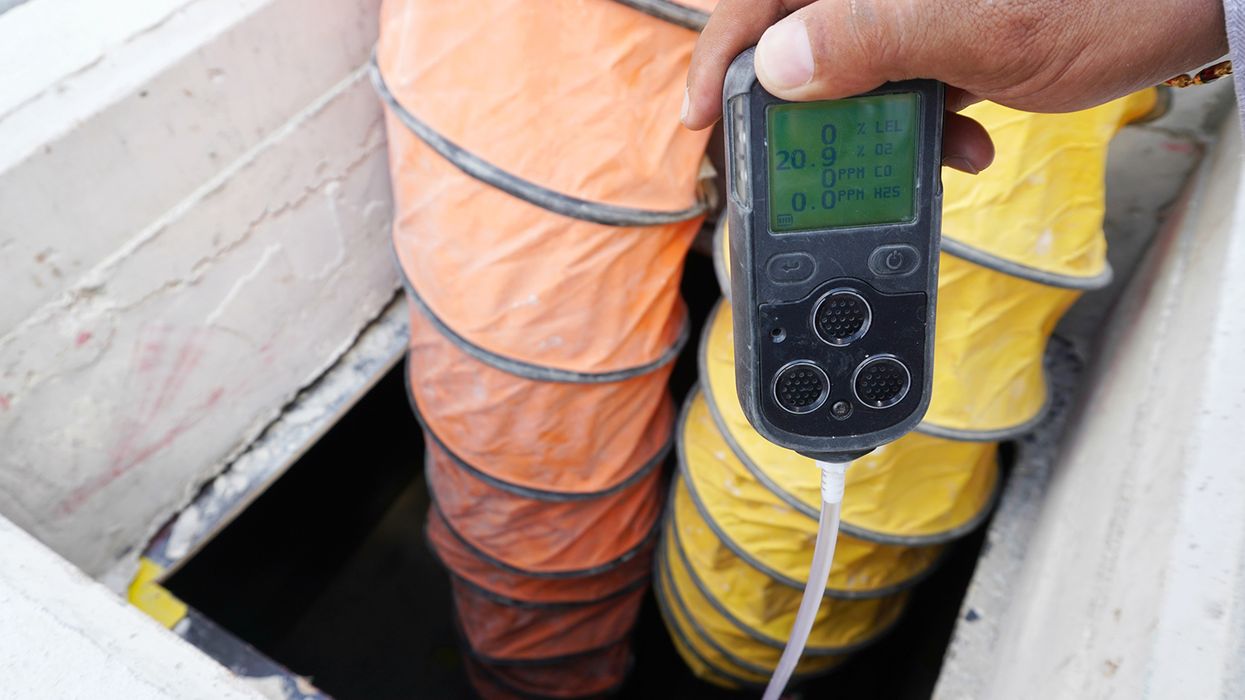
NewsIndustry NewsConfined SpacesSafety & HealthConfined SpacesConstruction SafetyGeneral Industry SafetyPermit-Required Confined SpacesConfined Space HazardsConfined Space Entry PermitIn-Depth ArticleEnglishFocus AreaUSA
2023-05-18T05:00:00Z
Breaking the plane of a confined space doesn’t require a complete entry
Did you know that OSHA’s standard on permit-required confined spaces (PRCS) says entry occurs as soon as any part of the entrant’s body breaks the plane of the opening into the permit space?
Many workers and employers mistakenly think that placing part of the body or hands into a confined space isn’t entry. Knowing the difference between when entry occurs and not will help employers determine if a permit is required.
Letters of Interpretation
As clarified in an OSHA Letter of Interpretation (LOI) dated October 18, 1995, “When any part of the body of an entrant breaks the plane of the opening of a PRCS large enough to allow full entry, entry is considered to have occurred and a permit is required, regardless of whether there is an intent to fully enter the space.”
This definition of “entry” might seem to be too strict. Still, OSHA’s letter clarifies that there are situations where a partial entry would be hazardous: “Examples of situations where entry by only part of the body into a PRCS can expose an entrant to the possibility of injury or illness are as follows:
- An entrant can possibly suffer a burn while reaching into a PRCS, which is so classified because it contains a thermal hazard.
- An entrant can possibly fall into a below-grade PRCS while standing on a vertical ladder in the opening of the space, which is so classified because it contains an oxygen-deficient atmosphere.
- An entrant can possibly become unconscious as result of his head accidentally entering a PRCS while they are reaching into a PRCS, which is so classified because it contains an oxygen deficient atmosphere.”
As another example, if the space contains a flammable or oxygen-enriched atmosphere, and if the activities during a partial entry could produce a spark or other ignition source, then a fire in the space could flash out of the opening and cause serious injuries to the employee.
OSHA’s guidance continues
This doesn’t necessarily mean you’d be fined if a permit wasn’t followed when someone reached a tank. OSHA’s guidance continues: “However, if entry by only part of the body does not expose the entrant to the possibility of injury or illness, then the violation may be considered a ‘de minimis’ violation.”
A de minimis violation is one in which a standard is violated, but the violation has no direct or immediate relationship to employee safety or health. These violations are documented but no citations are issued.
OSHA says examples of situations where entry by only part of the body into a PRCS would not expose an entrant to the possibility of injury or illness are as follows:
- An entrant reaches through the opening of a horizontal PRCS, which is so classified only because it contains exposed live electrical parts ten feet from the opening.
- An entrant puts his head through the opening of an overhead PRCS, which is so classified only because it contains unguarded rotating parts ten feet from the opening.
Also, consider a situation such as a worker reaching through a small grate to take a sample from a permitted space. The LOI further states, “If a part of the body were placed in an opening through which the worker could not pass into the permit-required confined space, no PRCS entry will have occurred.”
Keep in mind, however, that the employee would still need protection from any hazards involved in the task, but a permit would not be needed.
Key to remember
When any part of the body of an entrant breaks the plane of the opening of a PRCS large enough to allow full entry, entry is considered to have occurred, and a permit is required.
NewsIndustry NewsEnglishSafety & HealthConstruction SafetyGeneral Industry SafetyIn-Depth ArticleHazard CommunicationHazard CommunicationHazcom LabelingUSAFocus AreaHazCom Written ProgramHazCom Information and Training
2026-05-28T05:00:00Z
November's HazCom GHS 7 Deadline: What employers need to know
OSHA’s updated Hazard Communication Standard, now aligned with the 7th revised edition of the Globally Harmonized System of Classification and Labeling of Chemicals (GHS 7), is being rolled out in phases. One deadline passed in May, and the next arrives in November. For employers, this means now is the time to start making updates. This revision introduces enough meaningful changes that relying on an old hazard communication checklist will not be enough.
First, a Quick Refresher on What HazCom Actually Is
At its core, OSHA’s Hazard Communication Standard is designed to make sure workers know what chemicals they are working with and what hazards those chemicals present. It covers the labels on chemical containers, the Safety Data Sheets (SDSs) that provide detailed hazard information, and the training employees need so they can understand and use that information effectively.
HazCom is tied to the Globally Harmonized System, or GHS, an international framework developed by the United Nations to create a more consistent approach to classifying and communicating chemical hazards. When the UN updates the GHS, OSHA eventually updates HazCom to better align with it. That is what is happening now with GHS 7, and those updates are beginning to work their way into supplier documents and workplace compliance expectations.
What’s Actually Changing in GHS 7
So what is different this time? GHS 7 includes several substantive changes that affect how chemicals are classified, how SDSs are written, and how labels are presented. These are not just wording updates. In some cases, they can change how hazards are described and how information is communicated to workers. The changes are:
- New and Revised Hazard Categories: GHS 7 expands classification for certain health and physical hazards. Desensitized explosives, for example, now have their own hazard class. Some existing categories have been refined with new subcategories that require different labeling and SDS language.
- Updated SDS Requirements: Section formatting and content requirements are being revised in several areas. Employers and chemical manufacturers will need to review existing SDS documents to ensure they reflect the updated classification criteria and language. If you’re an employer who receives SDS from suppliers, you’ll need to verify that incoming documents meet the new standard.
- Label Changes: Some products will require updated pictograms, signal words, or hazard statements based on reclassification under GHS 7. That means physical labels on containers may need to be reprinted and replaced.
- Exposure Limits and Inhalation Hazards: GHS 7 brings more specificity to how inhalation hazards are communicated, particularly for aerosols and mixtures.
What the May Deadline Covered
OSHA’s GHS 7 update was not designed as a single cutoff date. Instead, it was rolled out in phases, with different obligations applying at different points in time. The May 2026 deadline primarily affected chemical manufacturers, importers, and distributors. By then, those upstream parties were expected to update chemical classifications and begin issuing labels and SDSs that align with the revised standard.
For employers, that phase matters because it marks the point when updated information should begin flowing into the workplace. If you receive hazardous chemicals from suppliers, the SDSs and shipped labels you get should increasingly reflect the new classification language and formatting requirements.
That does not mean employers can treat compliance as only a supplier issue. You are still responsible for making sure the SDSs in your workplace are current, your labels reflect the hazards of the chemicals in use, and employees are trained on the information they rely on. If a supplier is slow to update documentation, that gap can quickly become your problem during an inspection.
That is why now is the time to start reaching out to chemical vendors and reviewing your own program. Ask suppliers whether their SDSs have been updated to GHS 7 standards, track what you receive, and follow up on anything that is missing or unclear. November will arrive quickly, and employers that wait too long may find themselves rushing through updates that should have been planned in advance.
Roadmap for November Update
The best way to approach the November deadline is as a practical compliance project rather than a last-minute document review.
- Chemical inventory audit: You cannot update what you have not identified, so pull together a complete inventory of every chemical in the workplace, including cleaning products, maintenance supplies, and production materials. That inventory becomes the baseline for everything that follows.
- Review and update your SDS library: Contact suppliers and request GHS 7-compliant SDSs for each product on your inventory. Do not assume existing files are already current. Create a simple tracking system so you know which documents have been updated, which are still pending, and where follow-up is needed.
- Audit your physical labels: Walk the facility and compare container labels to the updated hazard information you are receiving. If products have been reclassified or now use different pictograms, signal words, or hazard statements, your in-house labels may also need to change. Starting early is important, especially for larger facilities where relabeling can take time.
- Revise your written HazCom program: This should be treated as a living document that reflects current practice. Review it carefully and update language, procedures, and responsibilities so they align with the revised standard and with the way your facility actually manages chemical hazards.
- Retrain your workforce and brief supervisors: Employees need to understand what changed, what updated labels and SDSs mean, and how those changes affect handling, storage, and response expectations. Supervisors should receive deeper guidance so they can answer questions, recognize compliance gaps, and reinforce the updated program in day-to-day operations.
Key to remember: Now is the time to prepare for November's Hazard Communication Standard deadline.
NewsIndustry NewsSafety & HealthConstruction SafetyGeneral Industry SafetyGeneral Duty Clause Enforcement AreasIn-Depth ArticleEnglishGeneral Duty ClauseFocus AreaUSA
2023-02-14T06:00:00Z
If long hours and fatigue increase injuries, can OSHA cite you?
Employees working long hours can experience fatigue-related accidents. The National Institute for Occupational Safety and Health (NIOSH) noted that many studies show a relationship between fatigue and injuries, but the extent of this relationship is unclear.
More injuries occur during evening shifts (18 percent higher) and night shifts (30 percent higher) compared to day shifts, and fatigue is likely a factor. This leads employers to question how many hours OSHA will allow employees to work. However, OSHA does not regulate the number of hours worked, does not require breaks, and does not require a minimum sleeping or rest period between shifts.
The federal Fair Labor Standards Act does address hours worked. That law requires overtime pay after 40 hours, at least for most employees, but it does not require breaks. Under federal law, employers could require employees to work 16 hours per day (or more) without breaks. For most workers aged 18 and older, there is no federal limit on daily or weekly hours. However, state agencies may require employers to provide breaks or meal periods, or may require paying overtime after eight hours per day (including Alaska, California, and Nevada).
Minors under 18 years of age may have restrictions on hours worked, and certain occupations have limited hours, such as airline pilots or interstate truck drivers. In addition, states may limit consecutive hours for professions like nurses. However, OSHA does not enforce those limits.
OSHA citations
Even though OSHA does not limit working hours, the agency can cite employers under the General Duty Clause. A Letter of Interpretation dated July 12, 2016, says, “OSHA has long been aware of the hazards of sleep deprivation from working night shifts and has addressed this serious issue in public forums. OSHA has also issued citations to companies when they ignored the human factor of employee fatigue from excessive overtime.”
This doesn’t mean OSHA can cite a company just because employees felt tired and someone got injured. To prove a violation of the General Duty Clause, OSHA must show that:
- The employer failed to address a hazard to employees;
- The hazard was recognized;
- The hazard was causing or was likely to cause death or serious physical harm; and
- There was a feasible and useful method to correct the hazard.
How much is too much?
Factors such as age, health conditions, and activities outside of work all affect the number of hours an employee can work before fatigue becomes a safety concern. In addition, the type of work affects the seriousness of potential injuries, since some jobs are more dangerous than others.
The General Duty Clause applies to hazards likely to cause “death or serious physical harm,” so a fatigued office worker might not generate a citation. However, if a machine operator gets seriously injured after working long hours, OSHA might issue a citation.
Considering the adverse effects of fatigue on both safety and productivity, employers should watch for signs of fatigue and encourage employees to take sick time or vacation if their fatigued condition may pose a threat to themselves or others. Employers can even send employees home if they arrive unfit for work, such as showing up hungover on two hours of sleep. If that employee holds a safety-sensitive position, the worker’s condition might even be a “recognized hazard” that employers are obligated to address.
Key to remember: Employers should evaluate work duties and hours to determine if fatigue might be contributing to increased injuries.
Saved to my EVENT CALENDAR!
View your saved links by clicking the arrow next to your profile picture located in the header. Then, click “My Activity” to view the Event Calendar on your Activity page.
OK
J. J. Keller is the trusted source for DOT / Transportation, OSHA / Workplace Safety, Human Resources, Construction Safety and Hazmat / Hazardous Materials regulation compliance products and services. J. J. Keller helps you increase safety awareness, reduce risk, follow best practices, improve safety training, and stay current with changing regulations.
Copyright 2026 J. J. Keller & Associate, Inc. For re-use options please contact copyright@jjkeller.com or call 800-558-5011.