
InstituteAnalysisSafety & HealthFirst Aid and MedicalGeneral Industry SafetyEyewashes and ShowersUSAEnglishFirst Aid and MedicalFocus AreaIn Depth (Level 3)
What is required of employers and employees?
['First Aid and Medical']
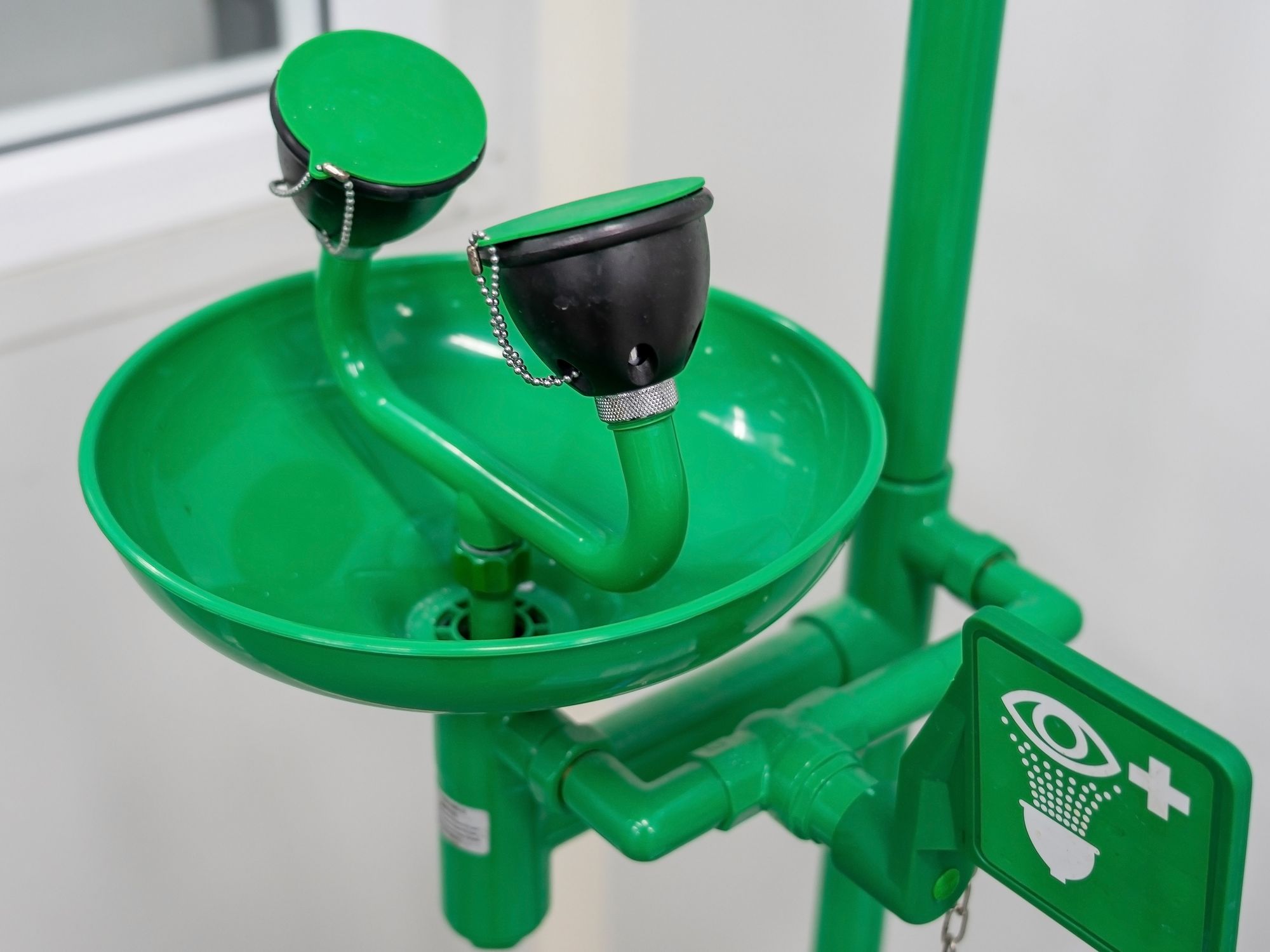
- A chemical’s SDS is generally the indicator that an eyewash/shower is needed for exposure to the substance.
- If there is the possibility of exposure to injurious corrosive materials, provide suitable facilities for drenching or flushing of the eyes and body.
- To protect employees from dangerous chemicals, ensure they follow work rules and wear the right PPE.
Employers must:
- Assess the workplace for substances that could cause harm or adverse effects to the eyes or body. The chemical’s Safety Data Sheet (SDS) is generally the indicator that an eyewash/shower is needed for exposure to the substance. However, there are other guidance available, such as W. Morton Grant’s Toxicology of the Eye (Charles C Thomas Pub. Ltd., 4th edition, August 1993) and the National Institute for Occupational Safety and Health (NIOSH) Pocket Guide to Chemical Hazards.
- Provide suitable facilities for drenching or flushing of the eyes and body where there is exposure to injurious corrosive materials. The Occupational Safety and Health Administration (OSHA) says a plumbed or self-contained eyewash or shower unit that meets the specifications of American National Standards Institute (ANSI) Z358.1 would be compliant. A personal wash unit (e.g., eyewash bottle) would not be compliant. Eyewash bottles can only be used to support a plumbed or self-contained unit but cannot replace them.
- Ensure eyewash/showers are located within 10 seconds of the hazard.
- Ensure eyewashes can deliver a minimum of .4 gallons of flushing fluid per minute for 15 minutes.
- Ensure showers can deliver a minimum of 20 gallons of flushing fluid per minute for 15 minutes.
- Inspect and maintain eyewash/shower equipment per manufacturer’s specifications and instructions.
- Train employees on locations and use of eyewash/shower equipment.
Training for employees
The best protection from dangerous chemicals is to ensure that employees follow work rules and wear the right personal protective equipment (PPE). Employees should know how to get first aid and where the eyewash and shower stations are located. Employees must also know how to activate the emergency medical system.
Provide the following instructions to employees on how to use the emergency eyewash:
- Don’t panic. Calmly make your way to the eyewash station. If there’s a coworker nearby, ask him or her to help you.
- Start the eyewash and place your eyes in the stream of water.
- Use your fingers to hold your eyelids open.
- Periodically, lift your eyelids further and roll your eyeballs around.
- Flush for at least 15 minutes. Have someone time you, if possible.
- Seek medical attention right away.
Following using the eyewash or shower, instruct employees to follow company rules for notifying management of the need to use the eyewash/shower, and seek follow-up medical care.