Compliance Just Got Easier: Stay ahead of regulatory changes with instant notifications on updates that matter.
['Signs and Markings']
['Signs and Markings', 'Safety Color Coding']
04/09/2025

Copyright 2026 J. J. Keller & Associate, Inc. For re-use options please contact copyright@jjkeller.com or call 800-558-5011.
:
|
InstituteSafety Color CodingSigns and MarkingsUSASigns and MarkingsEnglishAnalysisFocus AreaIn Depth (Level 3)
Safety label regulations and standards
['Signs and Markings']
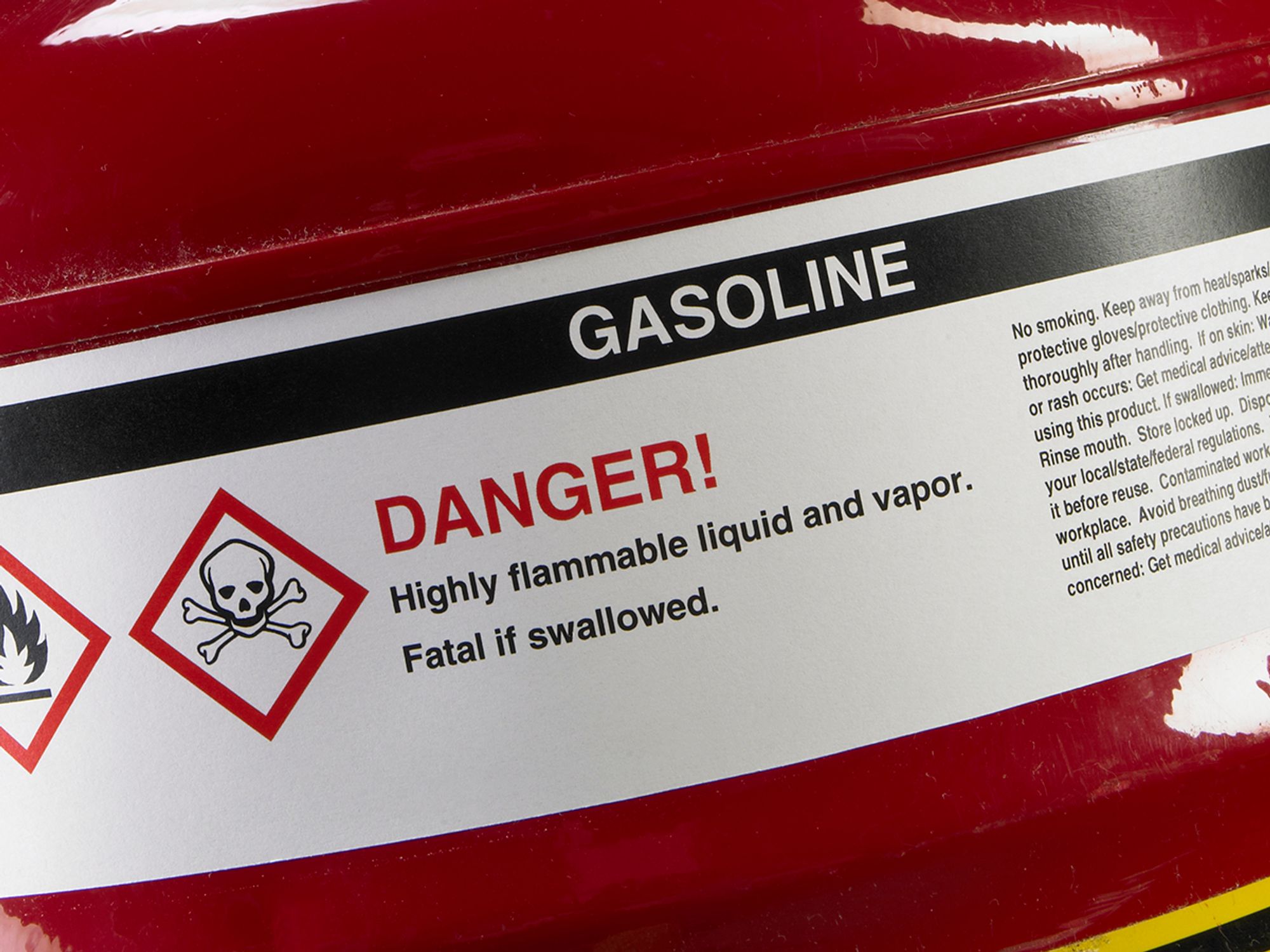
- OSHA has numerous labeling requirements in its regulations, while ANSI has a non-mandatory product labeling standard.
Several Occupational Safety and Health Administration (OSHA) regulations call for safety labels. It is also worth noting that the American National Standards Institute (ANSI) has a non-mandatory standard on product safety labels.
General industry regulations
The following regulations include a labeling requirement, but there may be many others:
- 29 CFR 1910.66 — Powered platforms for building maintenance.
- 29 CFR 1910.67 — Vehicle-mounted elevating and rotating work platforms.
- 29 CFR 1910.101 — Compressed gases (general requirements).
- 29 CFR 1910.102 — Acetylene.
- 29 CFR 1910.106 — Flammable liquids.
- 29 CFR 1910.110 — Storage and handling of liquefied petroleum gases.
- 29 CFR 1910.111 — Storage and handling of anhydrous ammonia.
- 29 CFR 1910.120 — Hazardous waste operations and emergency response.
- 29 CFR 1910.134 — Respiratory protection.
- 29 CFR 1910.178 — Powered industrial trucks.
- 29 CFR 1910.179 — Overhead and gantry cranes.
- 29 CFR 1910.213 — Woodworking machinery requirements.
- 29 CFR 1910.217 — Mechanical power presses.
- 29 CFR 1910.252 — General requirements (welding, cutting, and brazing).
- 29 CFR 1910.303 — General (electrical).
- 29 CFR 1910.304 — Wiring design and protection.
- 29 CFR 1910.305 — Wiring methods, components, and equipment for general use.
- 29 CFR 1910.306 — Specific purpose equipment and installations.
- 29 CFR 1910.399 — Definitions applicable to this subpart.
- 29 CFR 1910.1001 — Asbestos.
- 29 CFR 1910.1003 — 13 carcinogens (4-nitrobiphenyl, etc.).
- 29 CFR 1910.1017 — Vinyl chloride.
- 29 CFR 1910.1018 — Inorganic arsenic.
- 29 CFR 1910.1024 — Beryllium.
- 29 CFR 1910.1025 — Lead.
- 29 CFR 1910.1026 — Chromium (VI).
- 29 CFR 1910.1027 — Cadmium.
- 29 CFR 1910.1028 — Benzene.
- 29 CFR 1910.1029 — Coke oven emissions.
- 29 CFR 1910.1030 — Bloodborne pathogens.
- 29 CFR 1910.1044 — 1,2-dibromo-3-chloropropane.
- 29 CFR 1910.1045 — Acrylonitrile.
- 29 CFR 1910.1047 — Ethylene oxide.
- 29 CFR 1910.1048 — Formaldehyde.
- 29 CFR 1910.1050 — Methylenedianiline.
- 29 CFR 1910.1052 — Methylene chloride.
- 29 CFR 1910.1053 — Respirable crystalline silica.
- 29 CFR 1910.1096 — Ionizing radiation.
- 29 CFR 1910.1200 — Hazard communication.
- 29 CFR 1910.1201 — Retention of DOT markings, placards, and labels.
- 29 CFR 1910.1450 — Occupational exposure to hazardous chemicals in laboratories.
Construction industry regulations
The following regulations include a labeling requirement, but there may be many others:
- 29 CFR 1926.54 — Nonionizing radiation.
- 29 CFR 1926.59 — Hazard communication.
- 29 CFR 1926.60 — Methylenedianiline.
- 29 CFR 1926.61 — Retention of DOT markings, placards and labels.
- 29 CFR 1926.62 — Lead.
- 29 CFR 1926.65 — Hazardous waste operations and emergency response.
- 29 CFR 1926.102 — Eye and face protection.
- 29 CFR 1926.103 — Respiratory protection.
- 29 CFR 1926.105 — Safety nets.
- 29 CFR 1926.152 — Flammable liquids.
- 29 CFR 1926.403 — General requirements.
- 29 CFR 1926.404 — Wiring design and protection.
- 29 CFR 1926.405 — Wiring methods, components, and equipment for general use.
- 29 CFR 1926.407 — Hazardous (classified) locations.
- 29 CFR 1926.449 — Definitions applicable to this subpart.
- 29 CFR 1926.800 — Underground construction.
- 29 CFR 1926.1000 — Scope (Rollover Protective Structures; Overhead Protection).
- 29 CFR 1926.1053 — Ladders.
- 29 CFR 1926.1101 — Asbestos.
- 29 CFR 1926.1126 — Chromium (VI).
- 29 CFR 1926.1103 — 13 carcinogens (4-Nitrobiphenyl, etc.).
- 29 CFR 1926.1117 — Vinyl chloride.
- 29 CFR 1926.1118 — Inorganic arsenic.
- 29 CFR 1926.1124 — Beryllium.
- 29 CFR 1926.1126 — Chromium (VI).
- 29 CFR 1926.1127 — Cadmium.
- 29 CFR 1926.1144 — 1,2-dibromo-3-chloropropane.
- 29 CFR 1926.1145 — Acrylonitrile.
- 29 CFR 1926.1147 — Ethylene oxide.
- 29 CFR 1926.1148 — Formaldehyde.
- 29 CFR 1926.1152 — Methylene chloride.
- 29 CFR 1926.1153 — Respirable crystalline silica.
- 29 CFR 1926.1401 — Definitions (cranes and derricks in construction).
- 29 CFR 1926.1412 — Inspections (cranes and derricks in construction).
Labeling regulations for the construction industry are identical to those for general industry found under 1910.1200.
Maritime industry regulations
Labeling regulations for the maritime industry are identical to those for general industry found under 1910.1200. There may be other labeling requirements for the maritime industry found in 29 CFR 1915, 1917, and 1918.
Agriculture industry regulations
Labeling regulations for the agriculture industry are identical to those for general industry found under 1910.1200. There may be other labeling requirements for the agricultural industry found in 29 CFR 1928.
ANSI standard
American National Standards Institute (ANSI) Z535.4-2017, American National Standard for Product Safety Signs and Labels, offers non-mandatory guidance for design, use, and placement of safety labels on products. These labels communicate hazards, instructions, consequences of ignoring the hazards or instructions, and other information.
The standard covers the following:
- Signal words (DANGER, WARNING, CAUTION, NOTICE, and SAFETY INSTRUCTIONS);
- Label format and color schemes; and
- Label placement, maintenance, and replacement.
:
signs-and-markings
signs-and-markings
FOUNDATIONAL LEARNING
Safety label regulations and standards
InstituteSafety Color CodingSigns and MarkingsUSASigns and MarkingsEnglishAnalysisFocus AreaIn Depth (Level 3)
['Signs and Markings']
- OSHA has numerous labeling requirements in its regulations, while ANSI has a non-mandatory product labeling standard.
Several Occupational Safety and Health Administration (OSHA) regulations call for safety labels. It is also worth noting that the American National Standards Institute (ANSI) has a non-mandatory standard on product safety labels.
General industry regulations
The following regulations include a labeling requirement, but there may be many others:
- 29 CFR 1910.66 — Powered platforms for building maintenance.
- 29 CFR 1910.67 — Vehicle-mounted elevating and rotating work platforms.
- 29 CFR 1910.101 — Compressed gases (general requirements).
- 29 CFR 1910.102 — Acetylene.
- 29 CFR 1910.106 — Flammable liquids.
- 29 CFR 1910.110 — Storage and handling of liquefied petroleum gases.
- 29 CFR 1910.111 — Storage and handling of anhydrous ammonia.
- 29 CFR 1910.120 — Hazardous waste operations and emergency response.
- 29 CFR 1910.134 — Respiratory protection.
- 29 CFR 1910.178 — Powered industrial trucks.
- 29 CFR 1910.179 — Overhead and gantry cranes.
- 29 CFR 1910.213 — Woodworking machinery requirements.
- 29 CFR 1910.217 — Mechanical power presses.
- 29 CFR 1910.252 — General requirements (welding, cutting, and brazing).
- 29 CFR 1910.303 — General (electrical).
- 29 CFR 1910.304 — Wiring design and protection.
- 29 CFR 1910.305 — Wiring methods, components, and equipment for general use.
- 29 CFR 1910.306 — Specific purpose equipment and installations.
- 29 CFR 1910.399 — Definitions applicable to this subpart.
- 29 CFR 1910.1001 — Asbestos.
- 29 CFR 1910.1003 — 13 carcinogens (4-nitrobiphenyl, etc.).
- 29 CFR 1910.1017 — Vinyl chloride.
- 29 CFR 1910.1018 — Inorganic arsenic.
- 29 CFR 1910.1024 — Beryllium.
- 29 CFR 1910.1025 — Lead.
- 29 CFR 1910.1026 — Chromium (VI).
- 29 CFR 1910.1027 — Cadmium.
- 29 CFR 1910.1028 — Benzene.
- 29 CFR 1910.1029 — Coke oven emissions.
- 29 CFR 1910.1030 — Bloodborne pathogens.
- 29 CFR 1910.1044 — 1,2-dibromo-3-chloropropane.
- 29 CFR 1910.1045 — Acrylonitrile.
- 29 CFR 1910.1047 — Ethylene oxide.
- 29 CFR 1910.1048 — Formaldehyde.
- 29 CFR 1910.1050 — Methylenedianiline.
- 29 CFR 1910.1052 — Methylene chloride.
- 29 CFR 1910.1053 — Respirable crystalline silica.
- 29 CFR 1910.1096 — Ionizing radiation.
- 29 CFR 1910.1200 — Hazard communication.
- 29 CFR 1910.1201 — Retention of DOT markings, placards, and labels.
- 29 CFR 1910.1450 — Occupational exposure to hazardous chemicals in laboratories.
Construction industry regulations
The following regulations include a labeling requirement, but there may be many others:
- 29 CFR 1926.54 — Nonionizing radiation.
- 29 CFR 1926.59 — Hazard communication.
- 29 CFR 1926.60 — Methylenedianiline.
- 29 CFR 1926.61 — Retention of DOT markings, placards and labels.
- 29 CFR 1926.62 — Lead.
- 29 CFR 1926.65 — Hazardous waste operations and emergency response.
- 29 CFR 1926.102 — Eye and face protection.
- 29 CFR 1926.103 — Respiratory protection.
- 29 CFR 1926.105 — Safety nets.
- 29 CFR 1926.152 — Flammable liquids.
- 29 CFR 1926.403 — General requirements.
- 29 CFR 1926.404 — Wiring design and protection.
- 29 CFR 1926.405 — Wiring methods, components, and equipment for general use.
- 29 CFR 1926.407 — Hazardous (classified) locations.
- 29 CFR 1926.449 — Definitions applicable to this subpart.
- 29 CFR 1926.800 — Underground construction.
- 29 CFR 1926.1000 — Scope (Rollover Protective Structures; Overhead Protection).
- 29 CFR 1926.1053 — Ladders.
- 29 CFR 1926.1101 — Asbestos.
- 29 CFR 1926.1126 — Chromium (VI).
- 29 CFR 1926.1103 — 13 carcinogens (4-Nitrobiphenyl, etc.).
- 29 CFR 1926.1117 — Vinyl chloride.
- 29 CFR 1926.1118 — Inorganic arsenic.
- 29 CFR 1926.1124 — Beryllium.
- 29 CFR 1926.1126 — Chromium (VI).
- 29 CFR 1926.1127 — Cadmium.
- 29 CFR 1926.1144 — 1,2-dibromo-3-chloropropane.
- 29 CFR 1926.1145 — Acrylonitrile.
- 29 CFR 1926.1147 — Ethylene oxide.
- 29 CFR 1926.1148 — Formaldehyde.
- 29 CFR 1926.1152 — Methylene chloride.
- 29 CFR 1926.1153 — Respirable crystalline silica.
- 29 CFR 1926.1401 — Definitions (cranes and derricks in construction).
- 29 CFR 1926.1412 — Inspections (cranes and derricks in construction).
Labeling regulations for the construction industry are identical to those for general industry found under 1910.1200.
Maritime industry regulations
Labeling regulations for the maritime industry are identical to those for general industry found under 1910.1200. There may be other labeling requirements for the maritime industry found in 29 CFR 1915, 1917, and 1918.
Agriculture industry regulations
Labeling regulations for the agriculture industry are identical to those for general industry found under 1910.1200. There may be other labeling requirements for the agricultural industry found in 29 CFR 1928.
ANSI standard
American National Standards Institute (ANSI) Z535.4-2017, American National Standard for Product Safety Signs and Labels, offers non-mandatory guidance for design, use, and placement of safety labels on products. These labels communicate hazards, instructions, consequences of ignoring the hazards or instructions, and other information.
The standard covers the following:
- Signal words (DANGER, WARNING, CAUTION, NOTICE, and SAFETY INSTRUCTIONS);
- Label format and color schemes; and
- Label placement, maintenance, and replacement.
2656867484
2656870410
UPGRADE TO CONTINUE READING
J. J. Keller is the trusted source for DOT / Transportation, OSHA / Workplace Safety, Human Resources, Construction Safety and Hazmat / Hazardous Materials regulation compliance products and services. J. J. Keller helps you increase safety awareness, reduce risk, follow best practices, improve safety training, and stay current with changing regulations.
Copyright 2026 J. J. Keller & Associate, Inc. For re-use options please contact copyright@jjkeller.com or call 800-558-5011.