Compliance Just Got Easier: Stay ahead of regulatory changes with instant notifications on updates that matter.
['Signs and Markings']
['Signs and Markings']
10/19/2025

Copyright 2026 J. J. Keller & Associate, Inc. For re-use options please contact copyright@jjkeller.com or call 800-558-5011.
:
|
Signage needs assessment
['Signs and Markings']
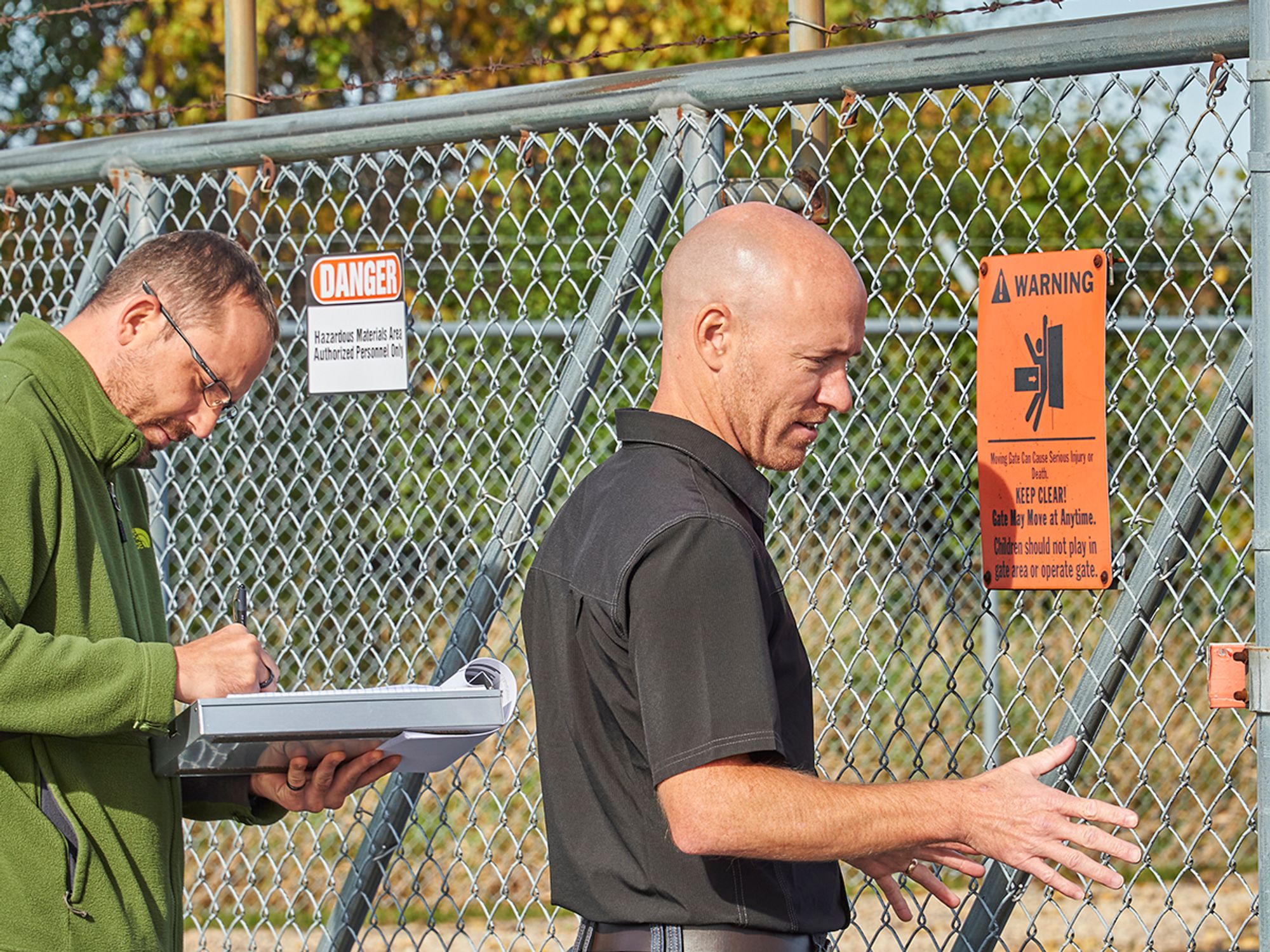
- The employer should assess the signage in the workplace to see whether signs need to be moved, updated, replaced, or added.
Even if a facility has safety signs, it’s beneficial to conduct a site survey to:
- Assess what signs are present. This includes documenting where signs are in place and looking for signage concerns, such as illegible, inaccurate, or obstructed signs; inconsistent sign formats; signs overloading the same location; or “signs” scribbled on a piece of paper.
- Determine which signs are needed. The following should be noted if they are unmarked: hazards, hazardous areas, safety/fire equipment, exit pathways, clearances, traffic areas, and machinery. Employers should jot down any entrances leading to areas that require personal protective equipment (PPE) and think about changes at work, maintenance areas, or company policies that may call for a sign.
Employees may be able acquaint employers with needed safety signs in their work areas. It may also be helpful to develop a checklist for each area of the workplace to ensure the assessment doesn’t miss anything. The following list of sign types offer some ideas:
|
|
|
After evaluating the workplace and reviewing the notes, an employer should implement a plan to correct any signage issues and meet the sign needs of the facility.
:
signs-and-markings
signs-and-markings
FOUNDATIONAL LEARNING
Signage needs assessment
['Signs and Markings']
- The employer should assess the signage in the workplace to see whether signs need to be moved, updated, replaced, or added.
Even if a facility has safety signs, it’s beneficial to conduct a site survey to:
- Assess what signs are present. This includes documenting where signs are in place and looking for signage concerns, such as illegible, inaccurate, or obstructed signs; inconsistent sign formats; signs overloading the same location; or “signs” scribbled on a piece of paper.
- Determine which signs are needed. The following should be noted if they are unmarked: hazards, hazardous areas, safety/fire equipment, exit pathways, clearances, traffic areas, and machinery. Employers should jot down any entrances leading to areas that require personal protective equipment (PPE) and think about changes at work, maintenance areas, or company policies that may call for a sign.
Employees may be able acquaint employers with needed safety signs in their work areas. It may also be helpful to develop a checklist for each area of the workplace to ensure the assessment doesn’t miss anything. The following list of sign types offer some ideas:
|
|
|
After evaluating the workplace and reviewing the notes, an employer should implement a plan to correct any signage issues and meet the sign needs of the facility.
2656870411
2656871063
UPGRADE TO CONTINUE READING
J. J. Keller is the trusted source for DOT / Transportation, OSHA / Workplace Safety, Human Resources, Construction Safety and Hazmat / Hazardous Materials regulation compliance products and services. J. J. Keller helps you increase safety awareness, reduce risk, follow best practices, improve safety training, and stay current with changing regulations.
Copyright 2026 J. J. Keller & Associate, Inc. For re-use options please contact copyright@jjkeller.com or call 800-558-5011.