Compliance Just Got Easier: Stay ahead of regulatory changes with instant notifications on updates that matter.
['First Aid and Medical']
['Eyewashes and Showers', 'First Aid and Medical']
04/30/2026

Copyright 2026 J. J. Keller & Associate, Inc. For re-use options please contact copyright@jjkeller.com or call 800-558-5011.
:
|
InstituteAnalysisSafety & HealthIn Depth Sub Topics (Level 4)General Industry SafetyFirst Aid and MedicalEyewashes and ShowersEnglishFirst Aid and MedicalFocus AreaUSA
Fluids
['First Aid and Medical']
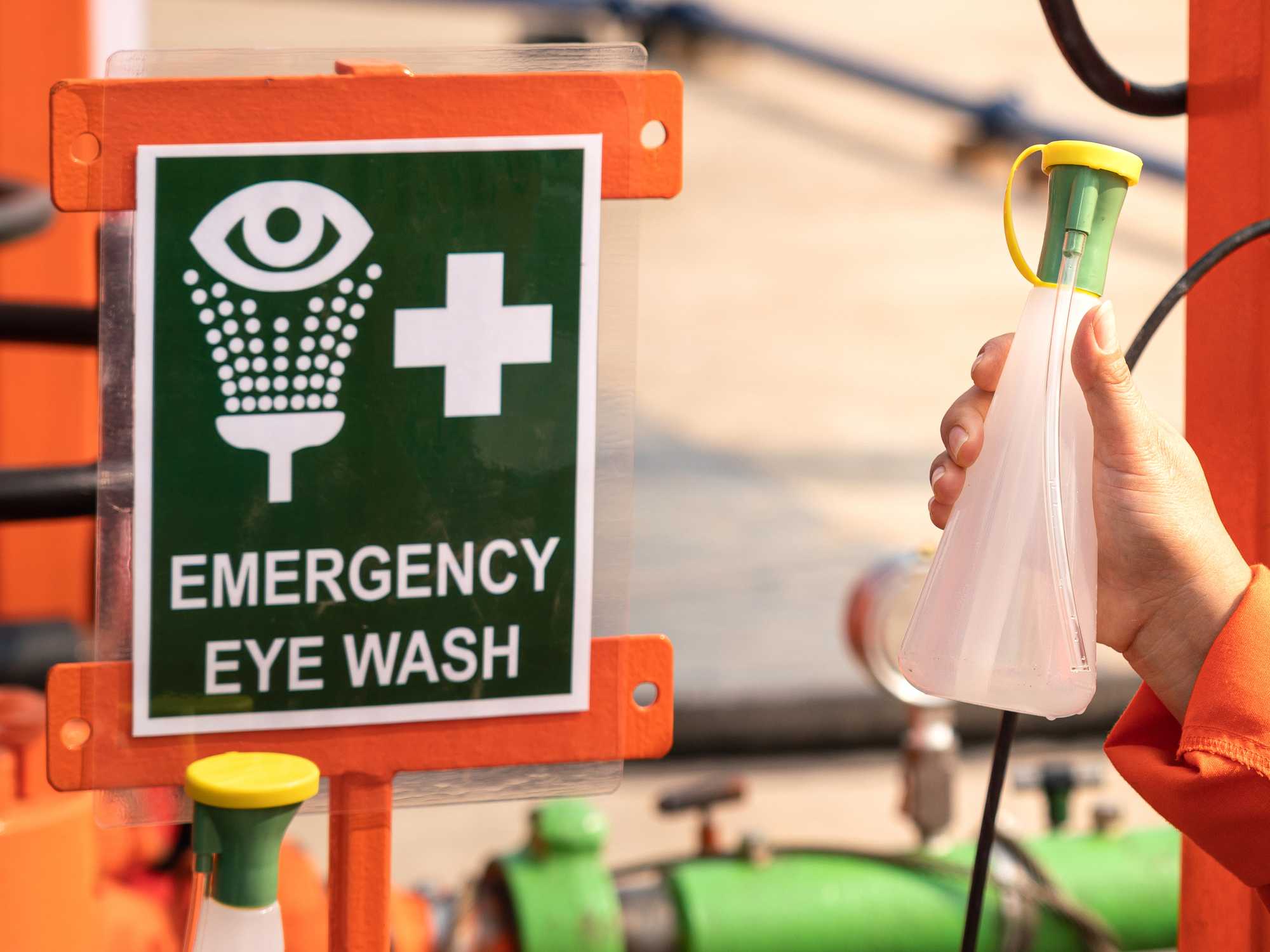
- Because eyewash bottles do not provide an adequate amount of flushing fluid, they cannot be considered a primary means of protection.
- Both eyewashes and showers should deliver tepid flushing fluid, which is defined in the ANSI standard as a temperature range of 60 to 100 degrees Fahrenheit.
Eyewash bottles
Eyewash bottles do not provide an adequate amount of flushing fluid and cannot be considered a primary means of protection. Employers can provide eyewash bottles in instances where plumbed or self-contained units can’t reasonably be provided (e.g., an outside yard) in the immediate work area, but only until they can reach a plumbed or self-contained unit which can provide the amount of flushing fluid necessary to flush the eyes for at least 15 minutes.
Flushing fluid requirements
Eyewashes should deliver a minimum of 1.5 liters a minute (0.4 gallons a minute) of a potable water or commercial flush for 15 minutes. Showers should deliver a minimum of 75.7 liters a minute (20 gallons a minute) flow of flushing fluid dispersed throughout the pattern.
Both eyewashes and showers should deliver tepid flushing fluid, which is defined in the American National Standards Institute (ANSI) standard as a general temperature range of 60 to 100 degrees Fahrenheit.
:
first-aid-and-medical
first-aid-and-medical
FOUNDATIONAL LEARNING
- Because eyewash bottles do not provide an adequate amount of flushing fluid, they cannot be considered a primary means of protection.
- Both eyewashes and showers should deliver tepid flushing fluid, which is defined in the ANSI standard as a temperature range of 60 to 100 degrees Fahrenheit.
Eyewash bottles
Eyewash bottles do not provide an adequate amount of flushing fluid and cannot be considered a primary means of protection. Employers can provide eyewash bottles in instances where plumbed or self-contained units can’t reasonably be provided (e.g., an outside yard) in the immediate work area, but only until they can reach a plumbed or self-contained unit which can provide the amount of flushing fluid necessary to flush the eyes for at least 15 minutes.
Flushing fluid requirements
Eyewashes should deliver a minimum of 1.5 liters a minute (0.4 gallons a minute) of a potable water or commercial flush for 15 minutes. Showers should deliver a minimum of 75.7 liters a minute (20 gallons a minute) flow of flushing fluid dispersed throughout the pattern.
Both eyewashes and showers should deliver tepid flushing fluid, which is defined in the American National Standards Institute (ANSI) standard as a general temperature range of 60 to 100 degrees Fahrenheit.
2656867082
2656871984
UPGRADE TO CONTINUE READING
RELATED TOPICS
J. J. Keller is the trusted source for DOT / Transportation, OSHA / Workplace Safety, Human Resources, Construction Safety and Hazmat / Hazardous Materials regulation compliance products and services. J. J. Keller helps you increase safety awareness, reduce risk, follow best practices, improve safety training, and stay current with changing regulations.
Copyright 2026 J. J. Keller & Associate, Inc. For re-use options please contact copyright@jjkeller.com or call 800-558-5011.