Compliance Just Got Easier: Stay ahead of regulatory changes with instant notifications on updates that matter.
['First Aid and Medical']
['Lifesaving Equipment', 'First Aid and Medical', 'Automated External Defibrillators']
10/25/2026

Copyright 2026 J. J. Keller & Associate, Inc. For re-use options please contact copyright@jjkeller.com or call 800-558-5011.
:
|
InstituteSafety & HealthGeneral Industry SafetyFirst Aid and MedicalFirst Aid and MedicalAutomated External DefibrillatorsIn Depth (Level 3)EnglishAnalysisFocus AreaLifesaving EquipmentUSA
Additional first-aid considerations
['First Aid and Medical']
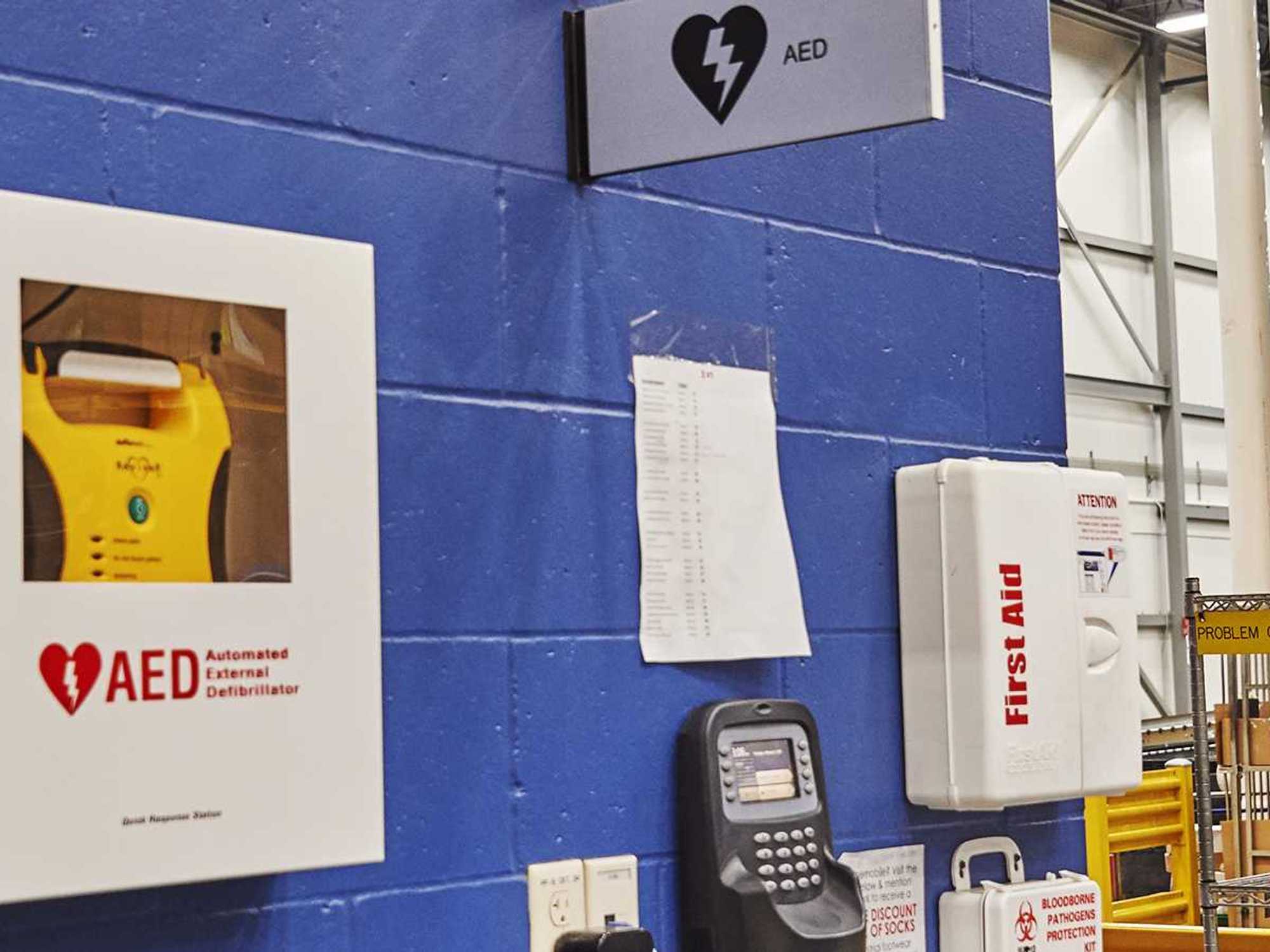
- AEDs are not required to be included in first-aid supplies.
- OSHA recommends employers consider AED equipment as part of a medical and first-aid program.
- If it is reasonably anticipated that employees will be exposed to blood or other potentially infectious materials while using first-aid supplies, employers are required to provide appropriate PPE.
- OSHA recommends
On-site workplace clinics (OWCs)
An Occupational Safety and Health Administration (OSHA) publication, "Best Practices for Non-Health Care Employers with On-site Health Care Services," OSHA 3160-05R 2024, provides information that can help employers create and operate an appropriate medical management program for their workplace. The 60-page document covers first-aid and medical management, developing a medical management program, and medical management’s role in workplace safety and health programs. It also goes over occupational healthcare professionals and scope of practice, the types of healthcare professionals, additional background and operations considerations, and ethical concerns. In addition, case studies are provided.
Automated external defibrillators (AEDs)
AEDs are not required to be included in first-aid supplies; however, the Occupational Safety and Health Administration (OSHA) recommends employers consider the equipment as part of a medical and first-aid program. All worksites are potential candidates for AED programs because of the possibility of sudden cardiac arrest (SCA) and the need for timely defibrillation. Each workplace must make a determination based upon its own requirements.
AEDs provide the critical and necessary treatment for SCA caused by ventricular fibrillation, the uncoordinated beating of the heart leading to collapse and death. Using AEDs as soon as possible after SCA, within 3-4 minutes, can lead to a 60 percent survival rate among victims of SCA, according to OSHA.
Opioid overdose rescue with reversal medications
When someone takes more opioids than their body can handle, their breathing can slow down and stop. Opioid overdose reversal medications (OORMs) can help while waiting for paramedics to arrive. These medications are available in two forms: nasal sprays and injectables.
OSHA fact sheet 4519 and a September 24, 2026, OSHA news release highlight keeping lifesaving FDA-approved reversal medications, such as naloxone or nalmefene, on hand. The agency suggests storing overdose kits in highly visible, easily accessible locations, such as with AEDs or standard first-aid kits. The fact sheet adds that it is important that employees understand how OORMs work and that employers consider a voluntary training program covering 10 topics.
Similarly, the International Safety Equipment Association (ISEA) states that the 2026 edition of ANSI/ISEA Z308.1, American National Standard for Minimum Requirements for Workplace First Aid Kits and Supplies, recommends that workplaces include naloxone in or nearby their first-aid kits.
Personal protective equipment (PPE)
If it is reasonably anticipated that employees will be exposed to blood or other potentially infectious materials while using first-aid supplies, employers are required to provide appropriate PPE. See 1910.1030(d)(3) for further information about PPE related to bloodborne pathogens.
:
first-aid-and-medical
first-aid-and-medical
FOUNDATIONAL LEARNING
Additional first-aid considerations
InstituteSafety & HealthGeneral Industry SafetyFirst Aid and MedicalFirst Aid and MedicalAutomated External DefibrillatorsIn Depth (Level 3)EnglishAnalysisFocus AreaLifesaving EquipmentUSA
['First Aid and Medical']
- AEDs are not required to be included in first-aid supplies.
- OSHA recommends employers consider AED equipment as part of a medical and first-aid program.
- If it is reasonably anticipated that employees will be exposed to blood or other potentially infectious materials while using first-aid supplies, employers are required to provide appropriate PPE.
- OSHA recommends
On-site workplace clinics (OWCs)
An Occupational Safety and Health Administration (OSHA) publication, "Best Practices for Non-Health Care Employers with On-site Health Care Services," OSHA 3160-05R 2024, provides information that can help employers create and operate an appropriate medical management program for their workplace. The 60-page document covers first-aid and medical management, developing a medical management program, and medical management’s role in workplace safety and health programs. It also goes over occupational healthcare professionals and scope of practice, the types of healthcare professionals, additional background and operations considerations, and ethical concerns. In addition, case studies are provided.
Automated external defibrillators (AEDs)
AEDs are not required to be included in first-aid supplies; however, the Occupational Safety and Health Administration (OSHA) recommends employers consider the equipment as part of a medical and first-aid program. All worksites are potential candidates for AED programs because of the possibility of sudden cardiac arrest (SCA) and the need for timely defibrillation. Each workplace must make a determination based upon its own requirements.
AEDs provide the critical and necessary treatment for SCA caused by ventricular fibrillation, the uncoordinated beating of the heart leading to collapse and death. Using AEDs as soon as possible after SCA, within 3-4 minutes, can lead to a 60 percent survival rate among victims of SCA, according to OSHA.
Opioid overdose rescue with reversal medications
When someone takes more opioids than their body can handle, their breathing can slow down and stop. Opioid overdose reversal medications (OORMs) can help while waiting for paramedics to arrive. These medications are available in two forms: nasal sprays and injectables.
OSHA fact sheet 4519 and a September 24, 2026, OSHA news release highlight keeping lifesaving FDA-approved reversal medications, such as naloxone or nalmefene, on hand. The agency suggests storing overdose kits in highly visible, easily accessible locations, such as with AEDs or standard first-aid kits. The fact sheet adds that it is important that employees understand how OORMs work and that employers consider a voluntary training program covering 10 topics.
Similarly, the International Safety Equipment Association (ISEA) states that the 2026 edition of ANSI/ISEA Z308.1, American National Standard for Minimum Requirements for Workplace First Aid Kits and Supplies, recommends that workplaces include naloxone in or nearby their first-aid kits.
Personal protective equipment (PPE)
If it is reasonably anticipated that employees will be exposed to blood or other potentially infectious materials while using first-aid supplies, employers are required to provide appropriate PPE. See 1910.1030(d)(3) for further information about PPE related to bloodborne pathogens.
2656871351
2656872499
UPGRADE TO CONTINUE READING
RELATED TOPICS
J. J. Keller is the trusted source for DOT / Transportation, OSHA / Workplace Safety, Human Resources, Construction Safety and Hazmat / Hazardous Materials regulation compliance products and services. J. J. Keller helps you increase safety awareness, reduce risk, follow best practices, improve safety training, and stay current with changing regulations.
Copyright 2026 J. J. Keller & Associate, Inc. For re-use options please contact copyright@jjkeller.com or call 800-558-5011.