Compliance Just Got Easier: Stay ahead of regulatory changes with instant notifications on updates that matter.
['First Aid and Medical']
['Eyewashes and Showers', 'First Aid and Medical']
04/30/2026

Copyright 2026 J. J. Keller & Associate, Inc. For re-use options please contact copyright@jjkeller.com or call 800-558-5011.
:
|
InstituteAnalysisSafety & HealthIn Depth Sub Topics (Level 4)General Industry SafetyFirst Aid and MedicalEyewashes and ShowersEnglishFirst Aid and MedicalFocus AreaUSA
Eyewash and emergency shower FAQs
['First Aid and Medical']
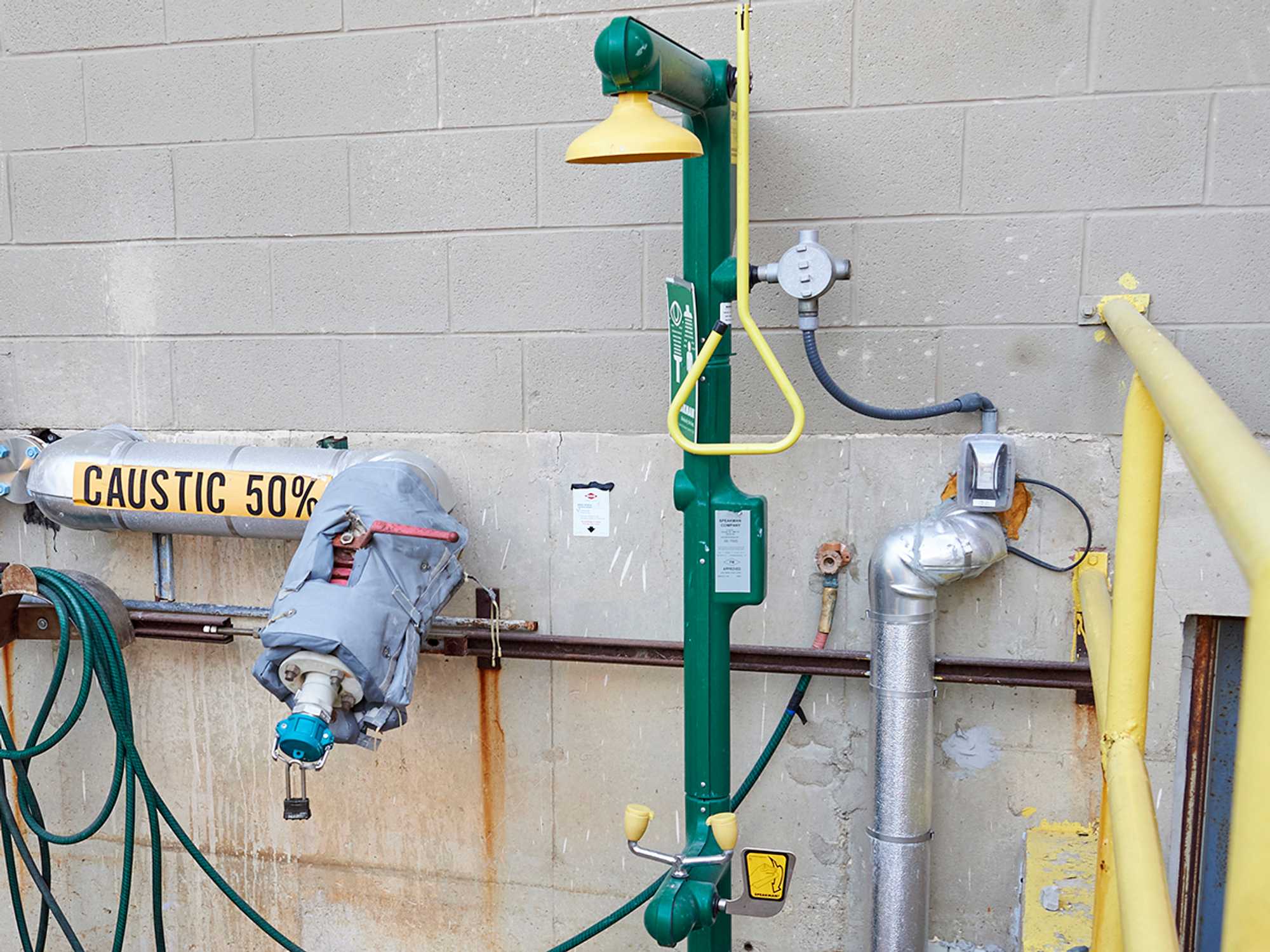
- ANSI standards require that plumbed and self-contained eyewash units must provide flushing fluid to “both eyes simultaneously.”
- Although OSHA does not have a specific requirement for eyewash fluid temperature, the agency notes that water which is too hot or too cold will prevent the affected person from flushing the eyes for the recommended full 15 minutes.
- If a chemical splashes into the eye, it should be flushed out for 15 minutes; serious burns (i.e., strong alkalis or acids) should be flushed for 20 to 30 minutes.
Do eyewashes always have to have two separate flush heads?
The Occupational Health and Safety Administration (OSHA) regulates eyewash stations in its 1910.151(c) standard on medical services and first aid. Unfortunately, OSHA does not go into much more detail on eyewashes. However, where the regulations are silent on the details regarding eyewashes and showers, OSHA has referred to the American National Standards Institute (ANSI) / International Safety Equipment Association (ISEA) Z358.1, American National Standard for Emergency Eyewash and Shower Equipment, for specific requirements.
The ANSI/ISEA standard requires that plumbed and self-contained eyewash units must provide flushing fluid to “both eyes simultaneously.” It may be a good idea to check with your safety supplier as to whether or not this “simultaneous” flushing can be accomplished with one flush head.
How many eyewash stations are required and where must they be located?
The OSHA standard which requires emergency eyewashes and showers does not provide detail on the location or number of eyewash stations at a facility, but states that suitable facilities for quick flushing of the eyes and body are to be provided “within the work area for immediate emergency use.”
ANSI/ISEA Z358.1 requires that eyewash units must be in accessible locations that can be reached within 10 seconds. The path of travel to the eyewash or shower station must remain clear of obstructions and the eyewash must be located on the same level as the hazard.
What is the required water temperature in a plumbed eyewash station?
OSHA does not have a specific requirement for eyewash fluid temperature. In a letter of interpretation dated April 18, 2002, OSHA notes that water which is too hot or too cold will prevent the affected person from flushing the eyes for the recommended full 15 minutes.
The ANSI/ISEA Z358.1 industry consensus standard for emergency eyewash and shower equipment states that the water should be “tepid,” which is defined as a temperature range of 60 to 100 degrees Fahrenheit.
If a chemical splashes into an eye, what procedure is recommended?
- Quickly flush the eyes with lots of water for at least 15 minutes (for best results, do so at an eyewash station or safety shower).
- For serious burns (i.e., strong alkalis or acids), flushing should continue for 20 to 30 minutes which requires a considerable amount of water.
- Force the eyes open to wash chemical out.
- Do not bandage eyes.
- Seek medical attention.
Is a sign required to indicate the location of an eyewash or shower?
OSHA does not address eyewash or shower signs, but ANSI/ISEA Z358.1 states that a highly visible sign must be positioned to clearly identify the location of the unit.
Is ANSI/ISEA Z358.1 enforced by the OSHA?
Since OSHA has not adopted ANSI/ISEA Z358.1, the agency does not "enforce" the consensus standard. At the same time, the agency can and does refer to the standard when determining the suitability of an eyewash or emergency shower station. ANSI/ISEA Z358.1 provides specifications for the design, testing, maintenance, and use of emergency eyewash and shower facilities.
Under 1910.151(c), OSHA requires that “suitable” facilities for the quick drenching of the eyes and body be provided where employees may be exposed to injurious corrosive materials. In other words, OSHA accepts equipment meeting ANSI/ISEA Z358.1 specifications as being sufficient for compliance with 1910.151(c).
In a November 1, 2002, letter of interpretation, OSHA explains that, “If OSHA inspects a workplace and finds unsuitable facilities for quick drenching or flushing of the eyes and body, a citation under 29 CFR 1910.151(c) would be issued. When determining whether the eyewash or shower facilities are suitable given the circumstances of a particular worksite, OSHA may refer to the most recent consensus standard regarding eyewash or shower equipment ...”
Without the ANSI/ISEA standard, employers may find it difficult to demonstrate to OSHA exactly how their eyewash and/or shower units are “suitable” exclusive to the regulatory language under 1910.151(c) since it is limited and vague.
:
first-aid-and-medical
first-aid-and-medical
FOUNDATIONAL LEARNING
Eyewash and emergency shower FAQs
InstituteAnalysisSafety & HealthIn Depth Sub Topics (Level 4)General Industry SafetyFirst Aid and MedicalEyewashes and ShowersEnglishFirst Aid and MedicalFocus AreaUSA
['First Aid and Medical']
- ANSI standards require that plumbed and self-contained eyewash units must provide flushing fluid to “both eyes simultaneously.”
- Although OSHA does not have a specific requirement for eyewash fluid temperature, the agency notes that water which is too hot or too cold will prevent the affected person from flushing the eyes for the recommended full 15 minutes.
- If a chemical splashes into the eye, it should be flushed out for 15 minutes; serious burns (i.e., strong alkalis or acids) should be flushed for 20 to 30 minutes.
Do eyewashes always have to have two separate flush heads?
The Occupational Health and Safety Administration (OSHA) regulates eyewash stations in its 1910.151(c) standard on medical services and first aid. Unfortunately, OSHA does not go into much more detail on eyewashes. However, where the regulations are silent on the details regarding eyewashes and showers, OSHA has referred to the American National Standards Institute (ANSI) / International Safety Equipment Association (ISEA) Z358.1, American National Standard for Emergency Eyewash and Shower Equipment, for specific requirements.
The ANSI/ISEA standard requires that plumbed and self-contained eyewash units must provide flushing fluid to “both eyes simultaneously.” It may be a good idea to check with your safety supplier as to whether or not this “simultaneous” flushing can be accomplished with one flush head.
How many eyewash stations are required and where must they be located?
The OSHA standard which requires emergency eyewashes and showers does not provide detail on the location or number of eyewash stations at a facility, but states that suitable facilities for quick flushing of the eyes and body are to be provided “within the work area for immediate emergency use.”
ANSI/ISEA Z358.1 requires that eyewash units must be in accessible locations that can be reached within 10 seconds. The path of travel to the eyewash or shower station must remain clear of obstructions and the eyewash must be located on the same level as the hazard.
What is the required water temperature in a plumbed eyewash station?
OSHA does not have a specific requirement for eyewash fluid temperature. In a letter of interpretation dated April 18, 2002, OSHA notes that water which is too hot or too cold will prevent the affected person from flushing the eyes for the recommended full 15 minutes.
The ANSI/ISEA Z358.1 industry consensus standard for emergency eyewash and shower equipment states that the water should be “tepid,” which is defined as a temperature range of 60 to 100 degrees Fahrenheit.
If a chemical splashes into an eye, what procedure is recommended?
- Quickly flush the eyes with lots of water for at least 15 minutes (for best results, do so at an eyewash station or safety shower).
- For serious burns (i.e., strong alkalis or acids), flushing should continue for 20 to 30 minutes which requires a considerable amount of water.
- Force the eyes open to wash chemical out.
- Do not bandage eyes.
- Seek medical attention.
Is a sign required to indicate the location of an eyewash or shower?
OSHA does not address eyewash or shower signs, but ANSI/ISEA Z358.1 states that a highly visible sign must be positioned to clearly identify the location of the unit.
Is ANSI/ISEA Z358.1 enforced by the OSHA?
Since OSHA has not adopted ANSI/ISEA Z358.1, the agency does not "enforce" the consensus standard. At the same time, the agency can and does refer to the standard when determining the suitability of an eyewash or emergency shower station. ANSI/ISEA Z358.1 provides specifications for the design, testing, maintenance, and use of emergency eyewash and shower facilities.
Under 1910.151(c), OSHA requires that “suitable” facilities for the quick drenching of the eyes and body be provided where employees may be exposed to injurious corrosive materials. In other words, OSHA accepts equipment meeting ANSI/ISEA Z358.1 specifications as being sufficient for compliance with 1910.151(c).
In a November 1, 2002, letter of interpretation, OSHA explains that, “If OSHA inspects a workplace and finds unsuitable facilities for quick drenching or flushing of the eyes and body, a citation under 29 CFR 1910.151(c) would be issued. When determining whether the eyewash or shower facilities are suitable given the circumstances of a particular worksite, OSHA may refer to the most recent consensus standard regarding eyewash or shower equipment ...”
Without the ANSI/ISEA standard, employers may find it difficult to demonstrate to OSHA exactly how their eyewash and/or shower units are “suitable” exclusive to the regulatory language under 1910.151(c) since it is limited and vague.
2656871984
2656867635
UPGRADE TO CONTINUE READING
RELATED TOPICS
J. J. Keller is the trusted source for DOT / Transportation, OSHA / Workplace Safety, Human Resources, Construction Safety and Hazmat / Hazardous Materials regulation compliance products and services. J. J. Keller helps you increase safety awareness, reduce risk, follow best practices, improve safety training, and stay current with changing regulations.
Copyright 2026 J. J. Keller & Associate, Inc. For re-use options please contact copyright@jjkeller.com or call 800-558-5011.