Compliance Just Got Easier: Stay ahead of regulatory changes with instant notifications on updates that matter.
['First Aid and Medical']
['First Aid and Medical', 'Lifesaving Equipment', 'Eyewashes and Showers']
05/01/2026

Copyright 2026 J. J. Keller & Associate, Inc. For re-use options please contact copyright@jjkeller.com or call 800-558-5011.
:
|
InstituteAnalysisSafety & HealthFirst Aid and MedicalGeneral Industry SafetyEyewashes and ShowersUSAEnglishFirst Aid and MedicalFocus AreaLifesaving EquipmentIn Depth (Level 3)
Eyewash and shower regulations
['First Aid and Medical']
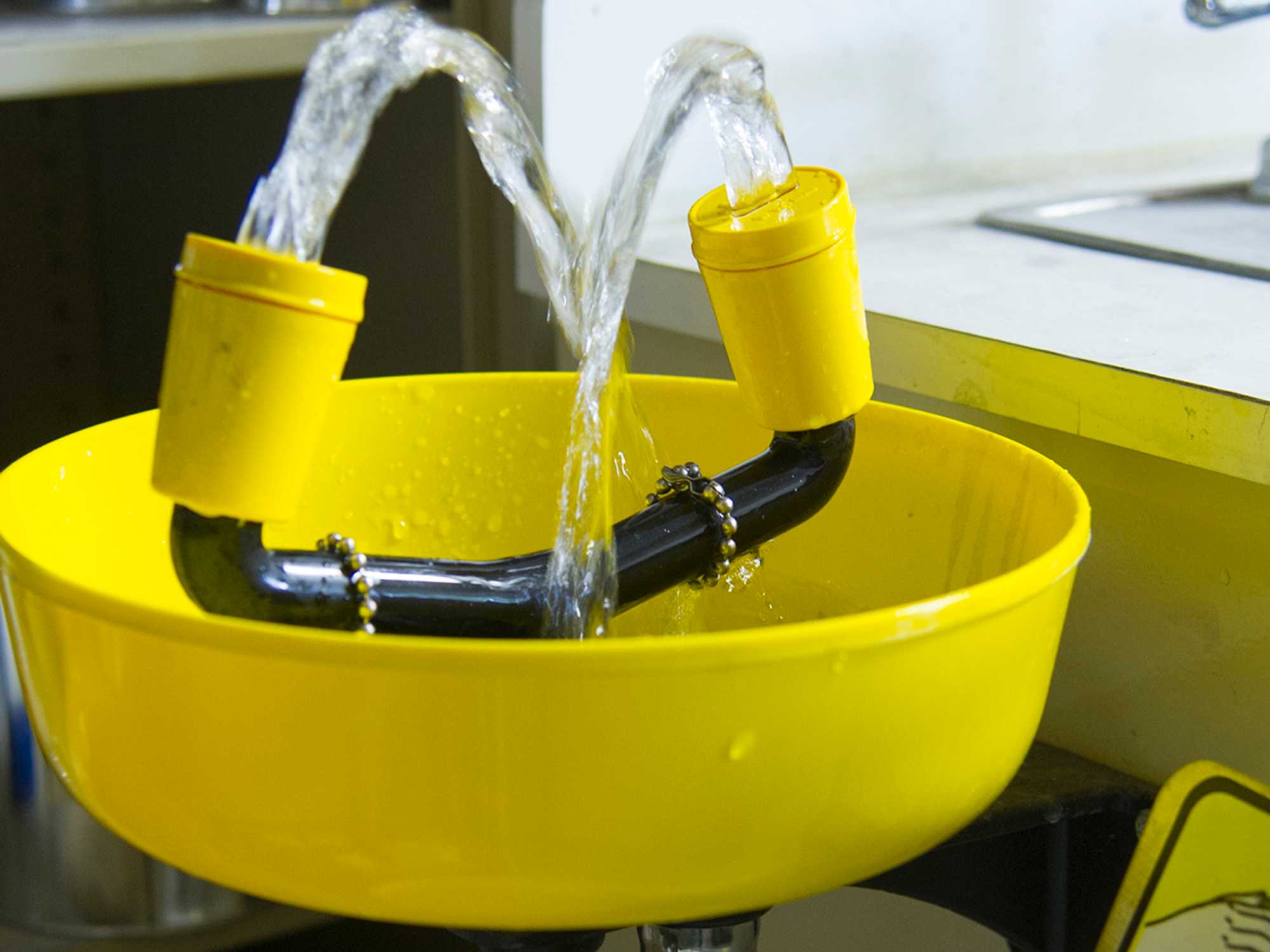
- Eyewashes and showers come in three types: Plumbed, self-contained and personal.
- Various regulations apply to the use of medical services and first aid.
- Consult the applicable standard to determine the requirements for first aid, eyewashes and showers in the workplace.
There are several types of wash stations and showers. You should be aware of a few distinctions:
- Plumbed eyewashes are stations connected permanently to a potable water source.
- Self-contained eyewashes and showers contain their own flushing fluid and are similar to plumbed eyewashes and showers but do not have an unlimited water supply.
- Personal eyewashes are supplemental stations that support plumbed units with immediate flushing fluid, such as a squeeze bottle.
OSHA’s emergency eyewash/shower requirements apply to all employers who have employees who may be exposed to injurious corrosive materials. Corrosive materials are defined by the Safety Data Sheet (SDS). In addition, a few industry-specific standards have requirements.
OSHA
- 29 CFR 1910.151 — Medical services and first aid.
- 29 CFR 1926.50 — Medical services and first aid.
Consensus standard
- ANSI/ISEA Z358.1-2014 (R2020) — American National Standard for Emergency Eyewash and Shower Equipment.
Other sources of information
- STD 01-08-002 — OSHA instruction on eyewash and body flushing facilities required for electric storage battery charging and maintenance areas.
- OSHA 3317-06N 2006 — "Best Practices Guide: Fundamentals of a Workplace First-Aid Program."
:
first-aid-and-medical
first-aid-and-medical
FOUNDATIONAL LEARNING
Eyewash and shower regulations
InstituteAnalysisSafety & HealthFirst Aid and MedicalGeneral Industry SafetyEyewashes and ShowersUSAEnglishFirst Aid and MedicalFocus AreaLifesaving EquipmentIn Depth (Level 3)
['First Aid and Medical']
- Eyewashes and showers come in three types: Plumbed, self-contained and personal.
- Various regulations apply to the use of medical services and first aid.
- Consult the applicable standard to determine the requirements for first aid, eyewashes and showers in the workplace.
There are several types of wash stations and showers. You should be aware of a few distinctions:
- Plumbed eyewashes are stations connected permanently to a potable water source.
- Self-contained eyewashes and showers contain their own flushing fluid and are similar to plumbed eyewashes and showers but do not have an unlimited water supply.
- Personal eyewashes are supplemental stations that support plumbed units with immediate flushing fluid, such as a squeeze bottle.
OSHA’s emergency eyewash/shower requirements apply to all employers who have employees who may be exposed to injurious corrosive materials. Corrosive materials are defined by the Safety Data Sheet (SDS). In addition, a few industry-specific standards have requirements.
OSHA
- 29 CFR 1910.151 — Medical services and first aid.
- 29 CFR 1926.50 — Medical services and first aid.
Consensus standard
- ANSI/ISEA Z358.1-2014 (R2020) — American National Standard for Emergency Eyewash and Shower Equipment.
Other sources of information
- STD 01-08-002 — OSHA instruction on eyewash and body flushing facilities required for electric storage battery charging and maintenance areas.
- OSHA 3317-06N 2006 — "Best Practices Guide: Fundamentals of a Workplace First-Aid Program."
2656866580
2656869040
UPGRADE TO CONTINUE READING
RELATED TOPICS
J. J. Keller is the trusted source for DOT / Transportation, OSHA / Workplace Safety, Human Resources, Construction Safety and Hazmat / Hazardous Materials regulation compliance products and services. J. J. Keller helps you increase safety awareness, reduce risk, follow best practices, improve safety training, and stay current with changing regulations.
Copyright 2026 J. J. Keller & Associate, Inc. For re-use options please contact copyright@jjkeller.com or call 800-558-5011.