Compliance Just Got Easier: Stay ahead of regulatory changes with instant notifications on updates that matter.
['First Aid and Medical']
['Eyewashes and Showers', 'First Aid and Medical']
04/30/2026

Copyright 2026 J. J. Keller & Associate, Inc. For re-use options please contact copyright@jjkeller.com or call 800-558-5011.
:
|
InstituteAnalysisSafety & HealthFirst Aid and MedicalGeneral Industry SafetyEyewashes and ShowersUSAEnglishFirst Aid and MedicalFocus AreaIn Depth (Level 3)
Emergency eyewashes in general industry
['First Aid and Medical']
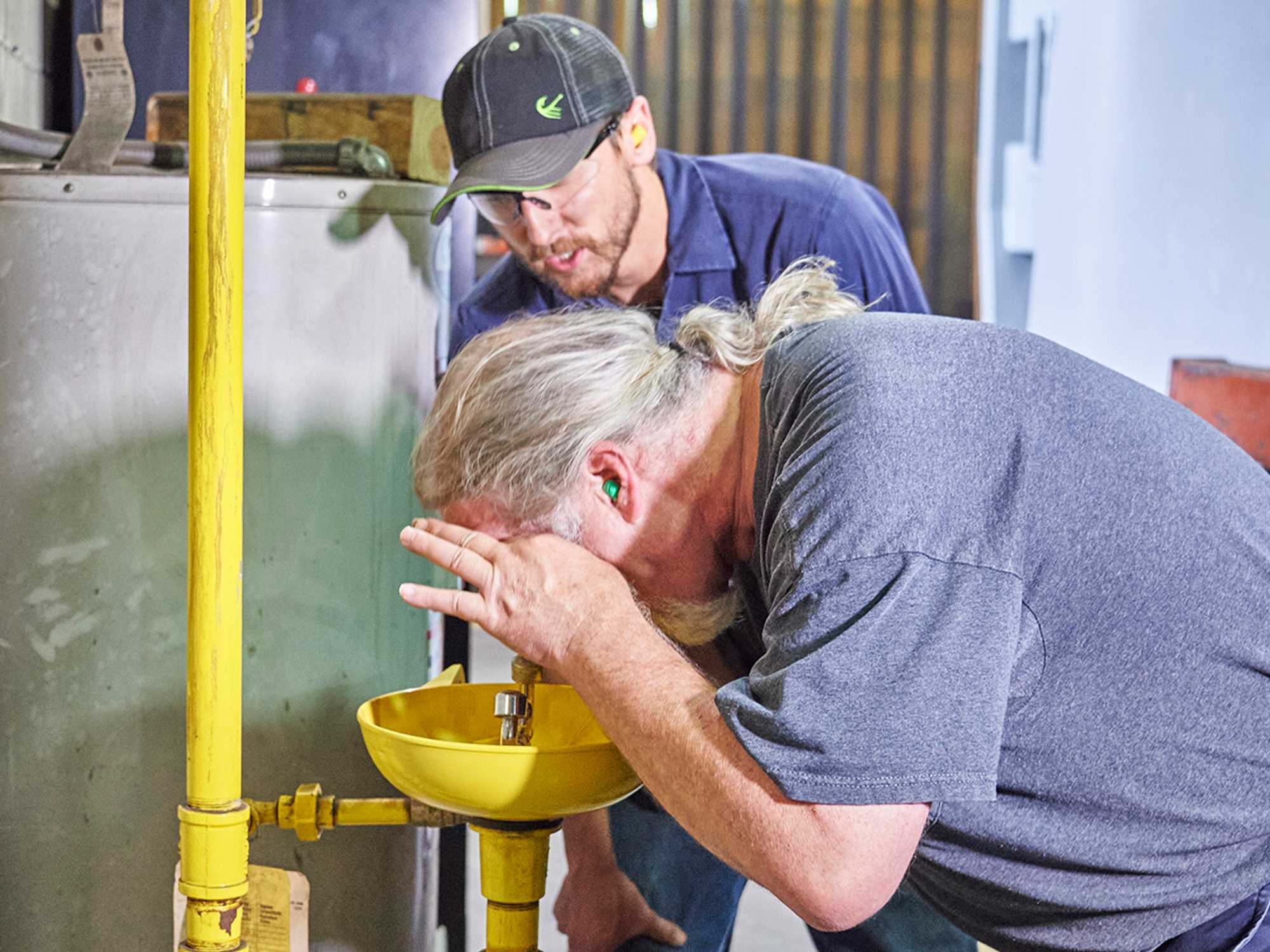
- Employers must provide suitable facilities for quick drenching and flushing of the eyes from exposure to injurious corrosive materials.
- Various ANSI standards regulate the design, installation, location, marking, labeling, operation, flushing fluid, maintenance, and inspection of emergency eyewashes.
- Employees must be trained on the proper use and application of emergency eyewashes.
General requirements for emergency eyewashes include:
- Suitable facilities must be provided for quick drenching and flushing of the eyes from exposure to injurious corrosive materials (1910.151(c));
- Eyewashes shall be used only for emergency cleansing of the eye and have no other purpose;
- Installation of eyewashes must be in accordance with manufacturer's instructions including:
- Proper plumbing and easily located valve activators;
- Nozzle protection from contaminants;
- Eye/face clearances; and
- Protection from freezing.
- Installation, design, and positioning of eyewashes can't pose a safety hazard to users;
- Units must:
- Be clearly identified (signage) and easily accessible (without obstructions and on the same level as the hazardous materials);
- Be located within 10 seconds of the exposure hazard;
- Have valves that activate water flow within one second or less and don't require use of the hands;
- Have a "tepid" flushing temperature (generally between 60 and 100 degrees Fahrenheit);
- Deliver a minimum of 0.4 gallons of flushing fluid per minute (to both eyes simultaneously) for 15 minutes at 30 psi;
- Have eye nozzles positioned between 33 inches minimum and 53 inches maximum from the standing surface, and at least six inches from the nearest wall or object; and
- Be inspected (for operation, cleanliness, etc.) and maintained per the manufacturer's specifications and instructions.
- Inspection and maintenance require:
- Running the plumbed units weekly to ensure the availability of tempered water;
- Visually inspecting the self-contained units to verify they are in good condition and changing the water as required (typically done monthly);
- Annually inspecting the units; and
- Inspecting units in accordance with the manufacturer’s instructions.
Saline bottles use
Saline bottles are intended for minor debris that may find its way into a worker's eye(s). These bottles can only be used to support a plumbed or self-contained unit or as a temporary aid on the way to a plumbed or self-contained unit. These bottles cannot replace eyewashes in areas where there's a potential for exposure to corrosive materials.
NOTE: While ANSI/ISEA Z358.1 is considered a voluntary standard, OSHA often uses it as a guide when inspecting facilities for compliance.
:
first-aid-and-medical
first-aid-and-medical
FOUNDATIONAL LEARNING
Emergency eyewashes in general industry
InstituteAnalysisSafety & HealthFirst Aid and MedicalGeneral Industry SafetyEyewashes and ShowersUSAEnglishFirst Aid and MedicalFocus AreaIn Depth (Level 3)
['First Aid and Medical']
- Employers must provide suitable facilities for quick drenching and flushing of the eyes from exposure to injurious corrosive materials.
- Various ANSI standards regulate the design, installation, location, marking, labeling, operation, flushing fluid, maintenance, and inspection of emergency eyewashes.
- Employees must be trained on the proper use and application of emergency eyewashes.
General requirements for emergency eyewashes include:
- Suitable facilities must be provided for quick drenching and flushing of the eyes from exposure to injurious corrosive materials (1910.151(c));
- Eyewashes shall be used only for emergency cleansing of the eye and have no other purpose;
- Installation of eyewashes must be in accordance with manufacturer's instructions including:
- Proper plumbing and easily located valve activators;
- Nozzle protection from contaminants;
- Eye/face clearances; and
- Protection from freezing.
- Installation, design, and positioning of eyewashes can't pose a safety hazard to users;
- Units must:
- Be clearly identified (signage) and easily accessible (without obstructions and on the same level as the hazardous materials);
- Be located within 10 seconds of the exposure hazard;
- Have valves that activate water flow within one second or less and don't require use of the hands;
- Have a "tepid" flushing temperature (generally between 60 and 100 degrees Fahrenheit);
- Deliver a minimum of 0.4 gallons of flushing fluid per minute (to both eyes simultaneously) for 15 minutes at 30 psi;
- Have eye nozzles positioned between 33 inches minimum and 53 inches maximum from the standing surface, and at least six inches from the nearest wall or object; and
- Be inspected (for operation, cleanliness, etc.) and maintained per the manufacturer's specifications and instructions.
- Inspection and maintenance require:
- Running the plumbed units weekly to ensure the availability of tempered water;
- Visually inspecting the self-contained units to verify they are in good condition and changing the water as required (typically done monthly);
- Annually inspecting the units; and
- Inspecting units in accordance with the manufacturer’s instructions.
Saline bottles use
Saline bottles are intended for minor debris that may find its way into a worker's eye(s). These bottles can only be used to support a plumbed or self-contained unit or as a temporary aid on the way to a plumbed or self-contained unit. These bottles cannot replace eyewashes in areas where there's a potential for exposure to corrosive materials.
NOTE: While ANSI/ISEA Z358.1 is considered a voluntary standard, OSHA often uses it as a guide when inspecting facilities for compliance.
2656870832
2656867077
UPGRADE TO CONTINUE READING
RELATED TOPICS
J. J. Keller is the trusted source for DOT / Transportation, OSHA / Workplace Safety, Human Resources, Construction Safety and Hazmat / Hazardous Materials regulation compliance products and services. J. J. Keller helps you increase safety awareness, reduce risk, follow best practices, improve safety training, and stay current with changing regulations.
Copyright 2026 J. J. Keller & Associate, Inc. For re-use options please contact copyright@jjkeller.com or call 800-558-5011.