Compliance Just Got Easier: Stay ahead of regulatory changes with instant notifications on updates that matter.
['General Packaging Requirements - Hazmat']
['General Packaging Requirements - Hazmat', 'Non-bulk packaging - Hazmat', 'Salvage drum - Hazmat']
10/01/2026

Copyright 2026 J. J. Keller & Associate, Inc. For re-use options please contact copyright@jjkeller.com or call 800-558-5011.
:
|
InstituteGeneral Packaging Requirements - HazmatNon-bulk packaging - HazmatHazmat SafetyFocus AreaUSAGeneral Packaging Requirements - HazmatSalvage drum - HazmatEnglishAnalysisTransportationIn Depth (Level 3)
Reusing packagings
['General Packaging Requirements - Hazmat']
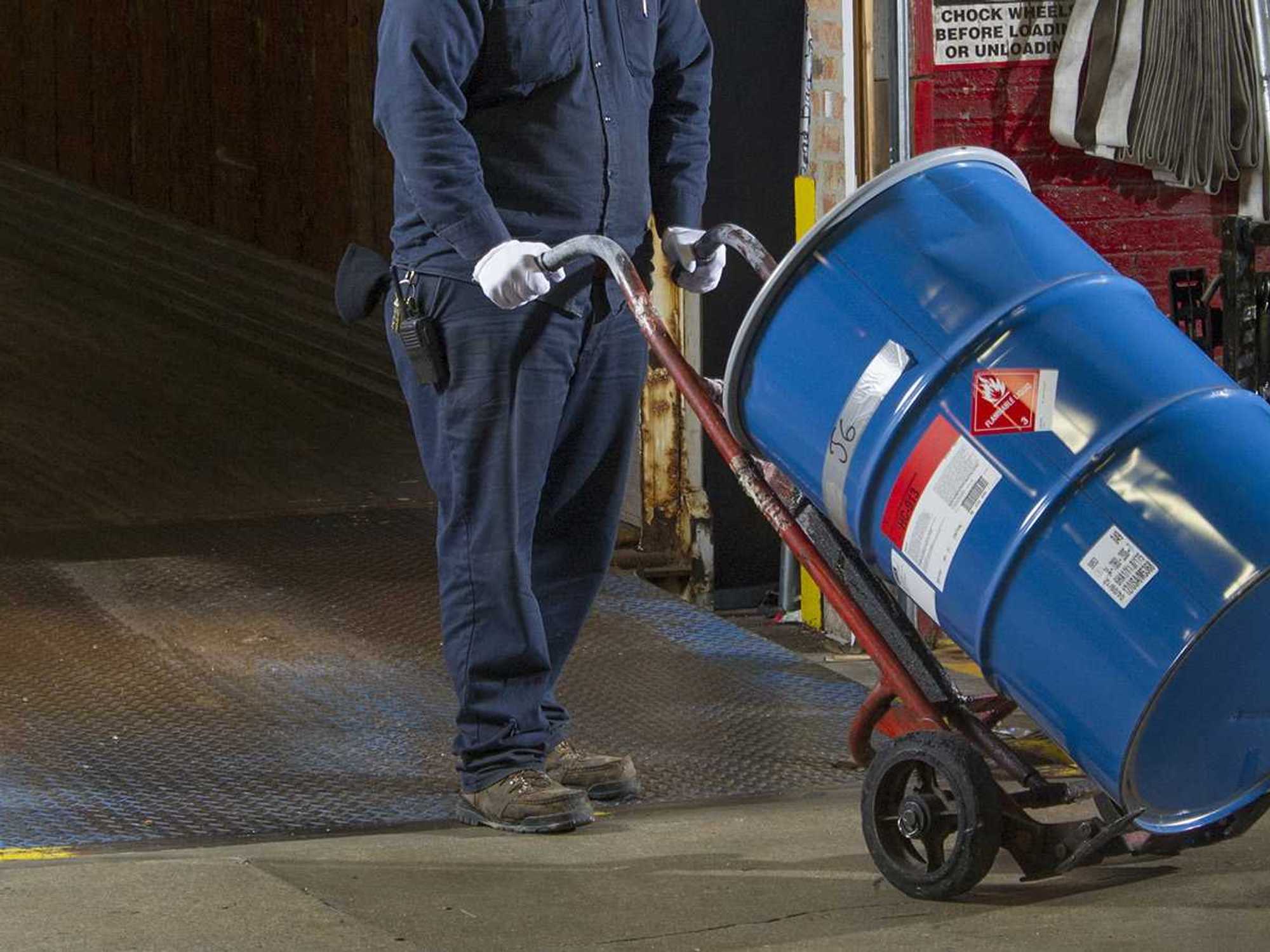
- Packagings must be inspected and free from incompatible residue, rupture, or other damage which reduces its structural integrity before being reused.
- Metal drums may be reconditioned according to the HMR.
Packagings and receptacles used more than once must be in such condition, including closure devices and cushioning materials, that they conform in all respects to the prescribed requirements of the Hazardous Materials Regulations (HMR). Before reuse, each packaging must be inspected and may not be reused unless free from incompatible residue, rupture, or other damage which reduces its structural integrity.
A non-bulk packaging used more than once must conform to the provisions and limitations detailed in Section 173.28(b).
What is reconditioning?
Reconditioning of metal drums according to the HMR means:
- Cleaning to the base material of construction, with all former contents, internal and external corrosion, and any external coatings and labels removed;
- Restoring to the original shape and contour, with chimes (if any) straightened and sealed, and all non-integral gaskets replaced; and
- Inspecting after cleaning but before painting.
Packagings that have visible pitting, significant reduction in material thickness, metal fatigue, damaged threads or closures, or other significant defects, must be rejected.
Reconditioning of a non-bulk packaging other than a metal drum is restoring the packaging by repair or replacement of non-integral packaging components (such as removable gaskets, closure devices, cushioning material, etc.) to a condition such that it conforms in all respects with the prescribed requirements of the HMR.
For a United Nations (UN) 1H1 plastic drum, replacing a removable gasket or closure device with a replacement of the same design and material which provides equivalent performance does not constitute reconditioning. Packagings which have significant unrepairable defects may not be reused.
A person who reconditions a packaging manufactured and marked under the provisions of Subpart L of Part 178 of the HMR, must mark that packaging as required by Section 178.503(c) and (d). The marking is the certification of the reconditioner that the packaging conforms to the standard for which it is marked and that all functions performed by the reconditioner which are prescribed by the HMR have been performed in compliance with the HMR.
The markings applied by the reconditioner may be different from those applied by the manufacturer at the time of original manufacture but may not identify a greater performance capability than that for which the original design type had been tested. For example, the reconditioner may mark a drum which was originally marked as 1A1/Y1.8 as 1A1/Y1.2 or 1A1/Z2.0.
What is remanufacturing?
Remanufacturing of non-bulk packagings for the purpose of the HMR, is:
- The conversion of a non-specification, non-bulk packaging to a DOT specification of UN standard;
- The conversion of a packaging meeting one specification or standard to another specification or standard (such as conversion of 1A1 non-removable head drums to 1A2 removable head drums); or
- The replacement of integral structural packaging components (such as non-removable heads on drums).
A person who remanufactures a non-bulk packaging to conform to a specification or standard in Part 178 of the HMR is subject to the requirements of Part 178 of the HMR as a manufacturer.
What does NRC mean?
A packaging marked as NRC (non-reusable container) according to the Department of Transportation (DOT) specification or UN standard requirements in Part 178 of the HMR may be reused for the shipment of any material not required by the HMR to be shipped in a DOT specification or UN standard packaging.
Notes: The requirements for reuse of packagings are very specific. Be sure to include a thorough discussion of these guidelines in all function-specific training if a company reuses, reconditions, or remanufactures packagings.
:
general-packaging-requirements-hazmat
general-packaging-requirements-hazmat
FOUNDATIONAL LEARNING
InstituteCargo tanks - HazmatBulk packaging - HazmatPortable tanks - HazmatTransportationHazmat SafetyGeneral Packaging Requirements - HazmatEnglishGeneral Packaging Requirements - HazmatNon-bulk packaging - HazmatEmpty packaging - HazmatIntermediate bulk containers (IBCs) - HazmatCylinders - HazmatAnalysisFocus AreaCompliance and Exceptions (Level 2)USA
Requirements for specific types of packagings
Reusing packagings
InstituteGeneral Packaging Requirements - HazmatNon-bulk packaging - HazmatHazmat SafetyFocus AreaUSAGeneral Packaging Requirements - HazmatSalvage drum - HazmatEnglishAnalysisTransportationIn Depth (Level 3)
['General Packaging Requirements - Hazmat']
- Packagings must be inspected and free from incompatible residue, rupture, or other damage which reduces its structural integrity before being reused.
- Metal drums may be reconditioned according to the HMR.
Packagings and receptacles used more than once must be in such condition, including closure devices and cushioning materials, that they conform in all respects to the prescribed requirements of the Hazardous Materials Regulations (HMR). Before reuse, each packaging must be inspected and may not be reused unless free from incompatible residue, rupture, or other damage which reduces its structural integrity.
A non-bulk packaging used more than once must conform to the provisions and limitations detailed in Section 173.28(b).
What is reconditioning?
Reconditioning of metal drums according to the HMR means:
- Cleaning to the base material of construction, with all former contents, internal and external corrosion, and any external coatings and labels removed;
- Restoring to the original shape and contour, with chimes (if any) straightened and sealed, and all non-integral gaskets replaced; and
- Inspecting after cleaning but before painting.
Packagings that have visible pitting, significant reduction in material thickness, metal fatigue, damaged threads or closures, or other significant defects, must be rejected.
Reconditioning of a non-bulk packaging other than a metal drum is restoring the packaging by repair or replacement of non-integral packaging components (such as removable gaskets, closure devices, cushioning material, etc.) to a condition such that it conforms in all respects with the prescribed requirements of the HMR.
For a United Nations (UN) 1H1 plastic drum, replacing a removable gasket or closure device with a replacement of the same design and material which provides equivalent performance does not constitute reconditioning. Packagings which have significant unrepairable defects may not be reused.
A person who reconditions a packaging manufactured and marked under the provisions of Subpart L of Part 178 of the HMR, must mark that packaging as required by Section 178.503(c) and (d). The marking is the certification of the reconditioner that the packaging conforms to the standard for which it is marked and that all functions performed by the reconditioner which are prescribed by the HMR have been performed in compliance with the HMR.
The markings applied by the reconditioner may be different from those applied by the manufacturer at the time of original manufacture but may not identify a greater performance capability than that for which the original design type had been tested. For example, the reconditioner may mark a drum which was originally marked as 1A1/Y1.8 as 1A1/Y1.2 or 1A1/Z2.0.
What is remanufacturing?
Remanufacturing of non-bulk packagings for the purpose of the HMR, is:
- The conversion of a non-specification, non-bulk packaging to a DOT specification of UN standard;
- The conversion of a packaging meeting one specification or standard to another specification or standard (such as conversion of 1A1 non-removable head drums to 1A2 removable head drums); or
- The replacement of integral structural packaging components (such as non-removable heads on drums).
A person who remanufactures a non-bulk packaging to conform to a specification or standard in Part 178 of the HMR is subject to the requirements of Part 178 of the HMR as a manufacturer.
What does NRC mean?
A packaging marked as NRC (non-reusable container) according to the Department of Transportation (DOT) specification or UN standard requirements in Part 178 of the HMR may be reused for the shipment of any material not required by the HMR to be shipped in a DOT specification or UN standard packaging.
Notes: The requirements for reuse of packagings are very specific. Be sure to include a thorough discussion of these guidelines in all function-specific training if a company reuses, reconditions, or remanufactures packagings.
2656872351
2656867528
UPGRADE TO CONTINUE READING
RELATED TOPICS
J. J. Keller is the trusted source for DOT / Transportation, OSHA / Workplace Safety, Human Resources, Construction Safety and Hazmat / Hazardous Materials regulation compliance products and services. J. J. Keller helps you increase safety awareness, reduce risk, follow best practices, improve safety training, and stay current with changing regulations.
Copyright 2026 J. J. Keller & Associate, Inc. For re-use options please contact copyright@jjkeller.com or call 800-558-5011.