Compliance Just Got Easier: Stay ahead of regulatory changes with instant notifications on updates that matter.
['Toxic and Hazardous Substances - OSHA']
['Toxic and Hazardous Substances - OSHA', 'Lead']
04/30/2026

Copyright 2026 J. J. Keller & Associate, Inc. For re-use options please contact copyright@jjkeller.com or call 800-558-5011.
:
|
InstituteLeadSafety & HealthGeneral Industry SafetyToxic and Hazardous Substances - OSHAUSAEnglishAnalysisFocus AreaToxic and Hazardous Substances - OSHAIn Depth (Level 3)
Personal protective equipment
['Toxic and Hazardous Substances - OSHA']
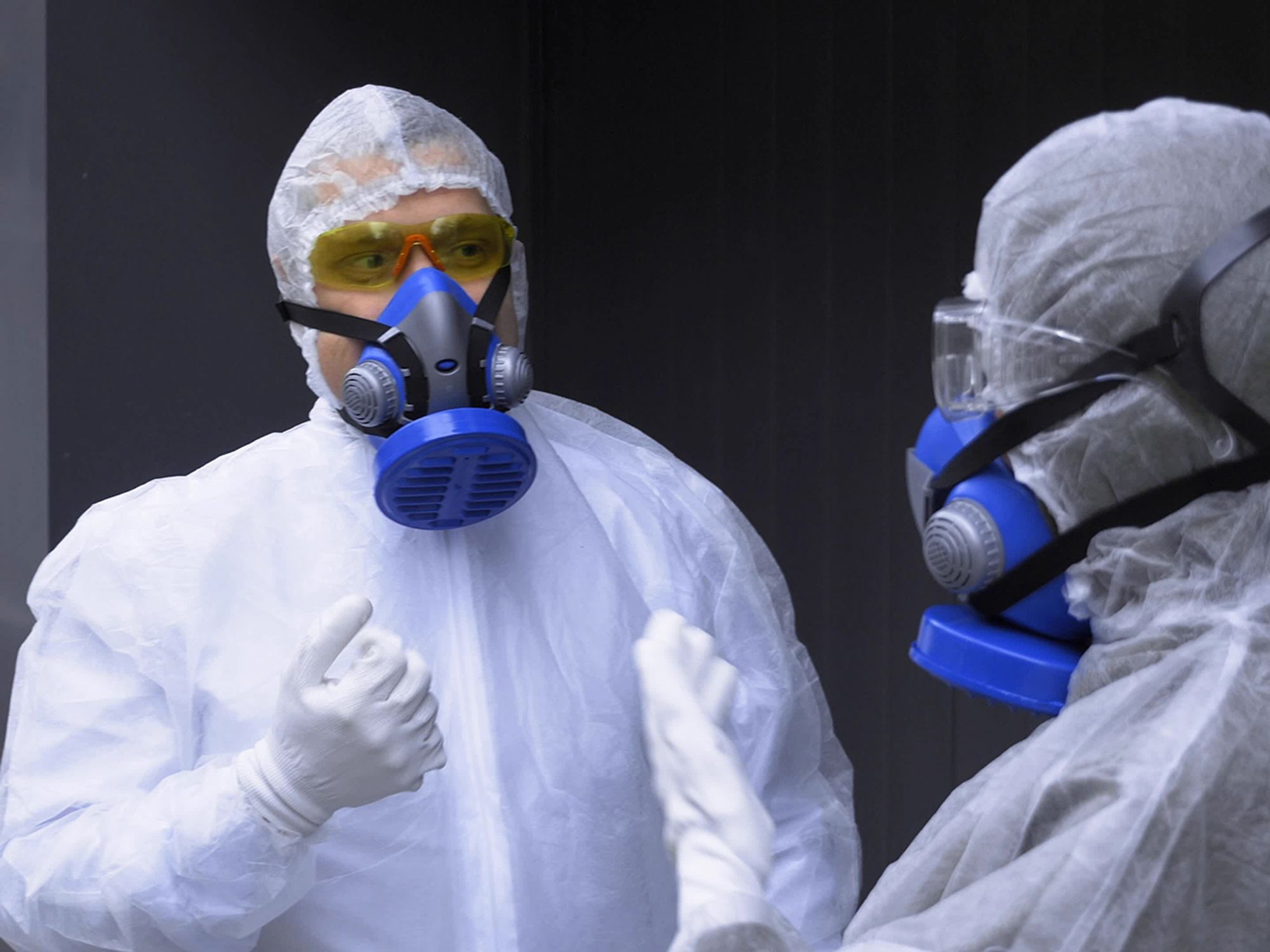
- Personal protective equipment for workers who face lead exposure may include respirators, coveralls, gloves, hats, and shoes, and goggles or face shields.
Where engineering and work practice controls do not reduce employee exposure to or below the 50 μg/m3 permissible exposure limit, employers must supplement engineering and work practice controls with respirators. Employers should implement a respiratory program according to 1910.134(b) through (d) (except (d)(1)(iii)), and (f) through (m)).
Where respirators are required, employers must provide them at no cost to the employee and ensure their appropriate use during:
- Periods necessary to install or implement engineering or work practice controls.
- Work operations for which engineering and work practice controls are not sufficient to reduce exposures to or below the permissible exposure limit; and
- Periods when an employee requests a respirator.
If an employee is exposed to lead above the permissible exposure limit (PEL), without regard to the use of respirators, or where the possibility of skin or eye irritation exists, employers must provide protective work clothing and equipment at no cost to the employee and ensure that the employee uses the appropriate protective work clothing and equipment such as, but not limited to:
- Coveralls or similar full-body work clothing;
- Gloves, hats, and shoes or disposable shoe coverlets; and
- Face shields, vented goggles, or other appropriate protective equipment.
Employers must provide the protective clothing in a clean and dry condition at least weekly, and daily to employees whose exposure levels without regard to a respirator are over 200 μg/m3 of lead as an eight-hour time-weighted average (TWA).
The removal of lead from protective clothing or equipment by blowing, shaking, or any other means which disperses lead into the air is prohibited.
:
toxic-and-hazardous-substances-osha
toxic-and-hazardous-substances-osha
FOUNDATIONAL LEARNING
Personal protective equipment
InstituteLeadSafety & HealthGeneral Industry SafetyToxic and Hazardous Substances - OSHAUSAEnglishAnalysisFocus AreaToxic and Hazardous Substances - OSHAIn Depth (Level 3)
['Toxic and Hazardous Substances - OSHA']
- Personal protective equipment for workers who face lead exposure may include respirators, coveralls, gloves, hats, and shoes, and goggles or face shields.
Where engineering and work practice controls do not reduce employee exposure to or below the 50 μg/m3 permissible exposure limit, employers must supplement engineering and work practice controls with respirators. Employers should implement a respiratory program according to 1910.134(b) through (d) (except (d)(1)(iii)), and (f) through (m)).
Where respirators are required, employers must provide them at no cost to the employee and ensure their appropriate use during:
- Periods necessary to install or implement engineering or work practice controls.
- Work operations for which engineering and work practice controls are not sufficient to reduce exposures to or below the permissible exposure limit; and
- Periods when an employee requests a respirator.
If an employee is exposed to lead above the permissible exposure limit (PEL), without regard to the use of respirators, or where the possibility of skin or eye irritation exists, employers must provide protective work clothing and equipment at no cost to the employee and ensure that the employee uses the appropriate protective work clothing and equipment such as, but not limited to:
- Coveralls or similar full-body work clothing;
- Gloves, hats, and shoes or disposable shoe coverlets; and
- Face shields, vented goggles, or other appropriate protective equipment.
Employers must provide the protective clothing in a clean and dry condition at least weekly, and daily to employees whose exposure levels without regard to a respirator are over 200 μg/m3 of lead as an eight-hour time-weighted average (TWA).
The removal of lead from protective clothing or equipment by blowing, shaking, or any other means which disperses lead into the air is prohibited.
2656868364
2656866212
UPGRADE TO CONTINUE READING
RELATED TOPICS
J. J. Keller is the trusted source for DOT / Transportation, OSHA / Workplace Safety, Human Resources, Construction Safety and Hazmat / Hazardous Materials regulation compliance products and services. J. J. Keller helps you increase safety awareness, reduce risk, follow best practices, improve safety training, and stay current with changing regulations.
Copyright 2026 J. J. Keller & Associate, Inc. For re-use options please contact copyright@jjkeller.com or call 800-558-5011.