Compliance Just Got Easier: Stay ahead of regulatory changes with instant notifications on updates that matter.
['Toxic and Hazardous Substances - OSHA']
['Toxic and Hazardous Substances - OSHA', 'Carcinogens']
09/19/2025

Copyright 2026 J. J. Keller & Associate, Inc. For re-use options please contact copyright@jjkeller.com or call 800-558-5011.
:
|
InstituteSafety & HealthIn Depth Sub Topics (Level 4)General Industry SafetyToxic and Hazardous Substances - OSHACarcinogensEnglishAnalysisFocus AreaToxic and Hazardous Substances - OSHAUSA
Cleanup of leaks or spills
['Toxic and Hazardous Substances - OSHA']
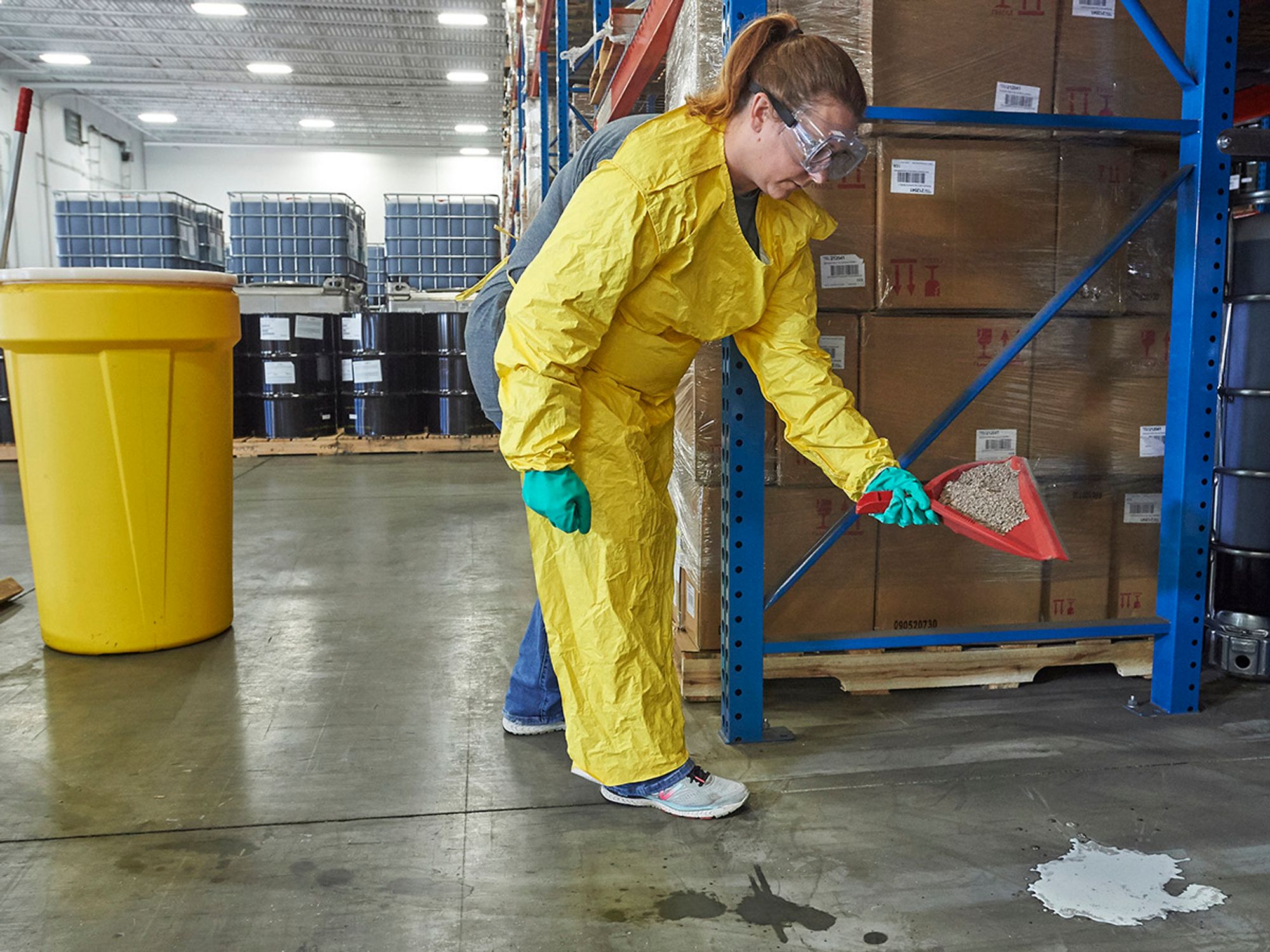
- During cleanup of leaks or spills, employees must be provided protective gear and must go through decontamination following the cleanup.
- In an emergency, additional provisions apply such as prompt reporting, medical surveillance, emergency showers and eyewash stations, and more.
- Appropriate warning signage may be required.
In cleanup of leaks or spills, maintenance, or repair operations on contaminated systems or equipment, or any operations involving work in an area where direct contact with a carcinogen could result, each authorized employee entering that area must be:
- Provided with and required to wear clean, impervious garments, including gloves, boots, and continuous-air supplied hood in accordance with 1910.134;
- Decontaminated before removing the protective garments and hood; and
- Required to shower upon removing the protective garments and hood.
In an emergency, immediate measures must be implemented, including:
- Promptly reporting the emergency.
- Evacuating the potentially affected area as soon as the emergency has been determined.
- Eliminating hazardous conditions created by the emergency, and decontaminating the potentially affected area prior to the resumption of normal operations.
- Instituting special medical surveillance by a physician within 24 hours for employees present in the potentially affected area at the time of the emergency. A report of the medical surveillance and any treatment must be included in the incident report.
- Where an employee has a known contact with a carcinogen, requiring such employees to shower as soon as possible, unless contraindicated by physical injuries.
- Installing emergency deluge showers and eyewash fountains supplied with running potable water near, within sight of, and on the same level with locations where a direct exposure to Ethyleneimine or beta-Propiolactone only would be most likely as a result of equipment failure or improper work practice.
In addition, in areas where cleanup of leaks of spills, maintenance, or repair operations on contaminated systems or equipment, or any operations involving work in an area where direct contact with a carcinogen, are possible, the employer must post signs bearing the legend:
- DANGER
- (CHEMICAL IDENTIFICATION)
- MAY CAUSE CANCER
- WEAR AIR-SUPPLIED HOODS, IMPERVIOUS SUITS, AND PROTECTIVE EQUIPMENT IN THIS AREA
- AUTHORIZED PERSONNEL ONLY
:
toxic-and-hazardous-substances-osha
toxic-and-hazardous-substances-osha
FOUNDATIONAL LEARNING
Cleanup of leaks or spills
InstituteSafety & HealthIn Depth Sub Topics (Level 4)General Industry SafetyToxic and Hazardous Substances - OSHACarcinogensEnglishAnalysisFocus AreaToxic and Hazardous Substances - OSHAUSA
['Toxic and Hazardous Substances - OSHA']
- During cleanup of leaks or spills, employees must be provided protective gear and must go through decontamination following the cleanup.
- In an emergency, additional provisions apply such as prompt reporting, medical surveillance, emergency showers and eyewash stations, and more.
- Appropriate warning signage may be required.
In cleanup of leaks or spills, maintenance, or repair operations on contaminated systems or equipment, or any operations involving work in an area where direct contact with a carcinogen could result, each authorized employee entering that area must be:
- Provided with and required to wear clean, impervious garments, including gloves, boots, and continuous-air supplied hood in accordance with 1910.134;
- Decontaminated before removing the protective garments and hood; and
- Required to shower upon removing the protective garments and hood.
In an emergency, immediate measures must be implemented, including:
- Promptly reporting the emergency.
- Evacuating the potentially affected area as soon as the emergency has been determined.
- Eliminating hazardous conditions created by the emergency, and decontaminating the potentially affected area prior to the resumption of normal operations.
- Instituting special medical surveillance by a physician within 24 hours for employees present in the potentially affected area at the time of the emergency. A report of the medical surveillance and any treatment must be included in the incident report.
- Where an employee has a known contact with a carcinogen, requiring such employees to shower as soon as possible, unless contraindicated by physical injuries.
- Installing emergency deluge showers and eyewash fountains supplied with running potable water near, within sight of, and on the same level with locations where a direct exposure to Ethyleneimine or beta-Propiolactone only would be most likely as a result of equipment failure or improper work practice.
In addition, in areas where cleanup of leaks of spills, maintenance, or repair operations on contaminated systems or equipment, or any operations involving work in an area where direct contact with a carcinogen, are possible, the employer must post signs bearing the legend:
- DANGER
- (CHEMICAL IDENTIFICATION)
- MAY CAUSE CANCER
- WEAR AIR-SUPPLIED HOODS, IMPERVIOUS SUITS, AND PROTECTIVE EQUIPMENT IN THIS AREA
- AUTHORIZED PERSONNEL ONLY
2656870588
2656866185
UPGRADE TO CONTINUE READING
RELATED TOPICS
J. J. Keller is the trusted source for DOT / Transportation, OSHA / Workplace Safety, Human Resources, Construction Safety and Hazmat / Hazardous Materials regulation compliance products and services. J. J. Keller helps you increase safety awareness, reduce risk, follow best practices, improve safety training, and stay current with changing regulations.
Copyright 2026 J. J. Keller & Associate, Inc. For re-use options please contact copyright@jjkeller.com or call 800-558-5011.