Compliance Just Got Easier: Stay ahead of regulatory changes with instant notifications on updates that matter.
['Hazard Communication']
['Hazard Communication', 'Safety Data Sheets']
07/29/2026

Copyright 2026 J. J. Keller & Associate, Inc. For re-use options please contact copyright@jjkeller.com or call 800-558-5011.
:
|
InstituteSafety Data SheetsSafety & HealthGeneral Industry SafetyHazard CommunicationHazard CommunicationEnglishAnalysisFocus AreaCompliance and Exceptions (Level 2)USA
Safety data sheets (SDSs)
['Hazard Communication']
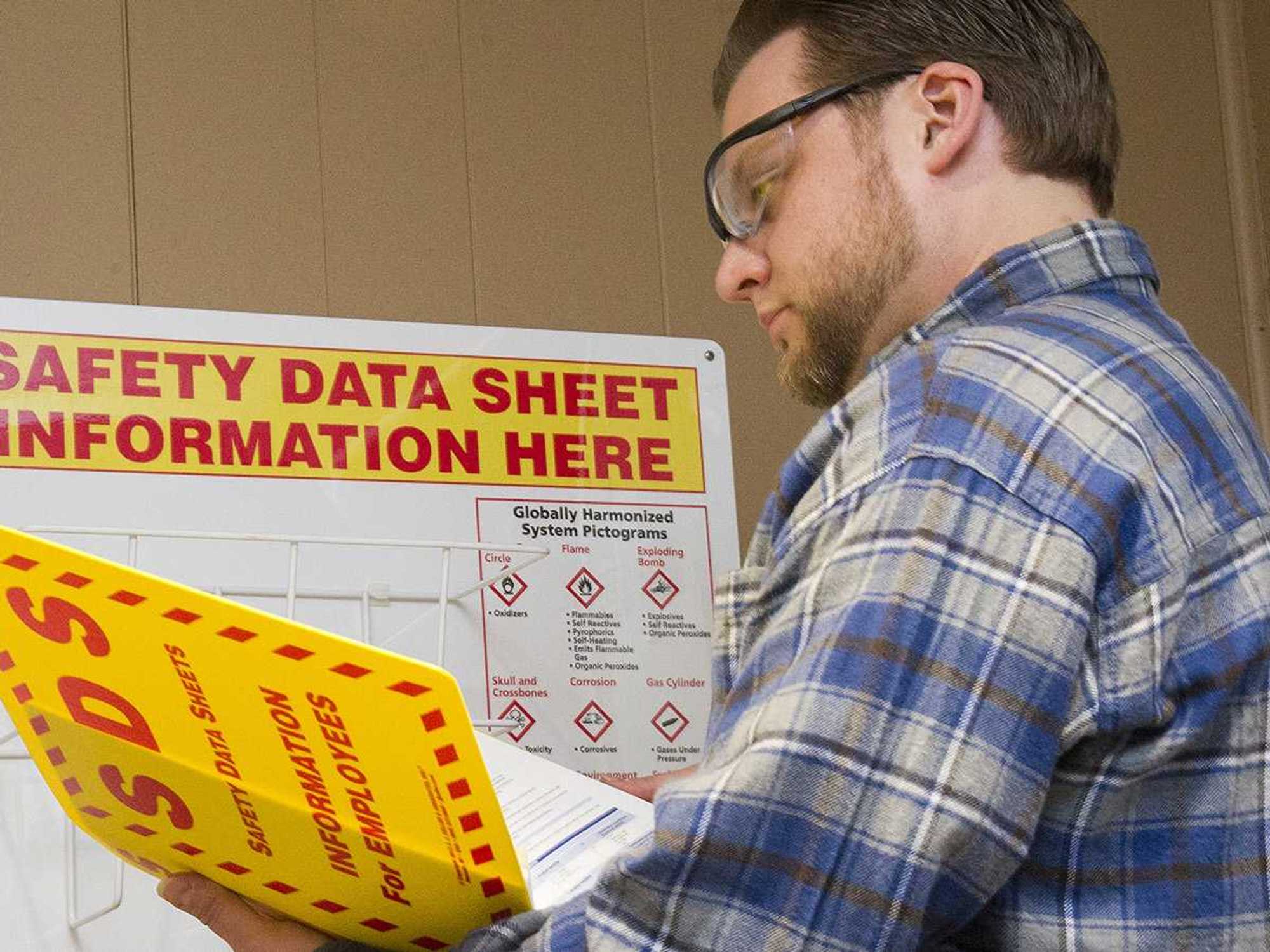
- Safety data sheets must be readily accessible.
- New information must be added to the safety data sheet within three months.
A hazardous chemical’s safety data sheet (SDS) is the source of detailed information on the physical, health, and environmental hazards of the chemical; protective measures; and safety precautions for handling, storing, and transporting the chemical. The SDS includes information for many different audiences — employers, workers, safety and health professionals, emergency responders, government agencies, and consumers. The HazCom standard requires that:
- Chemical manufacturers or importers obtain or develop an SDS for each hazardous chemical produced or imported.
- Distributors provide SDSs to other distributors and employers with their initial shipment and with the first shipment after a safety data sheet is updated.
- Employers maintain the most recently received SDS for each hazardous chemical in the facility.
- SDSs be readily accessible to employees in their work areas during each work shift.
- SDS files must be updated as new data sheets are received.
- HazCom training must be considered when new data sheets are received to determine if training must be revised.
Updating SDSs
If the chemical manufacturer, importer, or employer preparing the SDS becomes newly aware of any significant information regarding the hazards of a chemical, or ways to protect against the hazards, this new information must be added to the SDS within three months. If the chemical is not currently being produced or imported, the chemical manufacturer or importer must add the information to the SDS before the chemical is introduced into the workplace again.
:
hazard-communication
hazard-communication
FOUNDATIONAL LEARNING
Safety data sheets (SDSs)
InstituteSafety Data SheetsSafety & HealthGeneral Industry SafetyHazard CommunicationHazard CommunicationEnglishAnalysisFocus AreaCompliance and Exceptions (Level 2)USA
['Hazard Communication']
- Safety data sheets must be readily accessible.
- New information must be added to the safety data sheet within three months.
A hazardous chemical’s safety data sheet (SDS) is the source of detailed information on the physical, health, and environmental hazards of the chemical; protective measures; and safety precautions for handling, storing, and transporting the chemical. The SDS includes information for many different audiences — employers, workers, safety and health professionals, emergency responders, government agencies, and consumers. The HazCom standard requires that:
- Chemical manufacturers or importers obtain or develop an SDS for each hazardous chemical produced or imported.
- Distributors provide SDSs to other distributors and employers with their initial shipment and with the first shipment after a safety data sheet is updated.
- Employers maintain the most recently received SDS for each hazardous chemical in the facility.
- SDSs be readily accessible to employees in their work areas during each work shift.
- SDS files must be updated as new data sheets are received.
- HazCom training must be considered when new data sheets are received to determine if training must be revised.
Updating SDSs
If the chemical manufacturer, importer, or employer preparing the SDS becomes newly aware of any significant information regarding the hazards of a chemical, or ways to protect against the hazards, this new information must be added to the SDS within three months. If the chemical is not currently being produced or imported, the chemical manufacturer or importer must add the information to the SDS before the chemical is introduced into the workplace again.
2656870855
2656868310
UPGRADE TO CONTINUE READING
RELATED TOPICS
J. J. Keller is the trusted source for DOT / Transportation, OSHA / Workplace Safety, Human Resources, Construction Safety and Hazmat / Hazardous Materials regulation compliance products and services. J. J. Keller helps you increase safety awareness, reduce risk, follow best practices, improve safety training, and stay current with changing regulations.
Copyright 2026 J. J. Keller & Associate, Inc. For re-use options please contact copyright@jjkeller.com or call 800-558-5011.