Compliance Just Got Easier: Stay ahead of regulatory changes with instant notifications on updates that matter.
['Hazard Communication']
['Hazard Communication', 'Hazard Classifications', 'Hazcom Labeling']
07/29/2026

Copyright 2026 J. J. Keller & Associate, Inc. For re-use options please contact copyright@jjkeller.com or call 800-558-5011.
:
|
InstituteEnglishHazard ClassificationsSafety & HealthIn Depth Sub Topics (Level 4)General Industry SafetyHazard CommunicationHazard CommunicationHazcom LabelingAnalysisFocus AreaUSA
HMIS® and NFPA® labeling systems
['Hazard Communication']
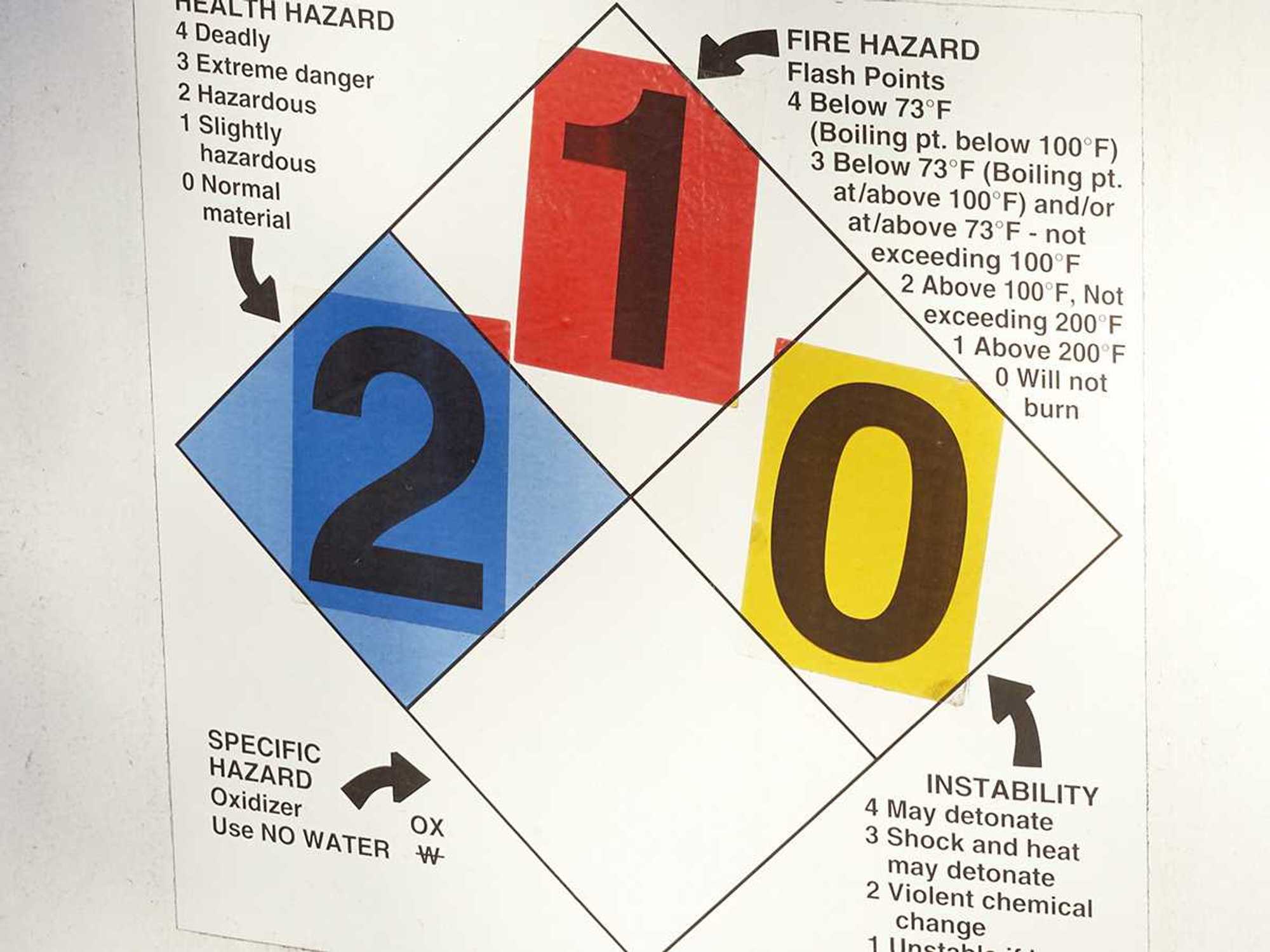
- If using an alternative labeling system, it cannot conflict with HazCom.
The Occupational Safety and Health Administration (OSHA) says that employers who use general, nonspecific in-plant labeling systems such as the Hazardous Materials Identification System (HMIS) or the National Fire Protection Association (NFPA) must ensure through their hazard communication program that their employees can correlate the visual warning on the in-plant container with the applicable chemical and its appropriate hazard warnings.
If an employer chooses to use an alternative labeling system, it may not conflict with HazCom. For example, under the HazCom standard, chemical labels that present specific target organ toxicity hazards must display the health hazard symbol. The skull and crossbones symbol is used only for certain acute toxicity hazards. If an in-house label used the skull and crossbones symbol for a specific target organ toxin, it would conflict with 1910.1200.
Where all hazards are not addressed by a particular rating system, such as chronic health hazards, the hazards not addressed must be communicated by words, pictures, symbols, or a combination, in addition to the rating system number.
NFPA® or HMIS® rating systems do not directly correlate with the HazCom standard (HCS) classifications (e.g., the NFPA® rating of 1 (“low”) does not correlate with HCS classification of 1 (“high”). Category numbers do not appear on HazCom shipped container labels and are not equivalent to the numbers used in the hazard rating systems. A user of the HMIS® or NFPA® system should use those systems as they are designed, and not try to include HazCom standard classifications as part of the label.
:
hazard-communication
hazard-communication
FOUNDATIONAL LEARNING
HMIS® and NFPA® labeling systems
InstituteEnglishHazard ClassificationsSafety & HealthIn Depth Sub Topics (Level 4)General Industry SafetyHazard CommunicationHazard CommunicationHazcom LabelingAnalysisFocus AreaUSA
['Hazard Communication']
- If using an alternative labeling system, it cannot conflict with HazCom.
The Occupational Safety and Health Administration (OSHA) says that employers who use general, nonspecific in-plant labeling systems such as the Hazardous Materials Identification System (HMIS) or the National Fire Protection Association (NFPA) must ensure through their hazard communication program that their employees can correlate the visual warning on the in-plant container with the applicable chemical and its appropriate hazard warnings.
If an employer chooses to use an alternative labeling system, it may not conflict with HazCom. For example, under the HazCom standard, chemical labels that present specific target organ toxicity hazards must display the health hazard symbol. The skull and crossbones symbol is used only for certain acute toxicity hazards. If an in-house label used the skull and crossbones symbol for a specific target organ toxin, it would conflict with 1910.1200.
Where all hazards are not addressed by a particular rating system, such as chronic health hazards, the hazards not addressed must be communicated by words, pictures, symbols, or a combination, in addition to the rating system number.
NFPA® or HMIS® rating systems do not directly correlate with the HazCom standard (HCS) classifications (e.g., the NFPA® rating of 1 (“low”) does not correlate with HCS classification of 1 (“high”). Category numbers do not appear on HazCom shipped container labels and are not equivalent to the numbers used in the hazard rating systems. A user of the HMIS® or NFPA® system should use those systems as they are designed, and not try to include HazCom standard classifications as part of the label.
2656872505
2656867652
UPGRADE TO CONTINUE READING
RELATED TOPICS
J. J. Keller is the trusted source for DOT / Transportation, OSHA / Workplace Safety, Human Resources, Construction Safety and Hazmat / Hazardous Materials regulation compliance products and services. J. J. Keller helps you increase safety awareness, reduce risk, follow best practices, improve safety training, and stay current with changing regulations.
Copyright 2026 J. J. Keller & Associate, Inc. For re-use options please contact copyright@jjkeller.com or call 800-558-5011.